Key takeaways
- AI traffic converts at roughly 4x the rate of traditional Google traffic, making citation rate one of the most valuable metrics to improve in 2026.
- Most "AI visibility" advice fails because it can't be measured. This checklist focuses on testable, trackable actions.
- The biggest leverage points are entity clarity, structured data, content gap coverage, and external citation signals -- not just "writing better content."
- Monitoring is not optional and not a one-time exercise. LLM training and retrieval patterns shift constantly.
- Tools like Promptwatch can help you close the loop between finding gaps, creating content, and tracking whether your citation rate actually improves.
There's a version of AI visibility advice that goes something like: "Be authoritative. Add schema. Write good content." That's not wrong, exactly. It's just useless. You can't run an experiment on "be authoritative." You can't tell your team to ship "good content" and expect a measurable result.
This checklist is different. Each of the 12 actions below is specific enough to assign to someone, complete in a sprint, and track over time. Some will move your citation rate in days. Others take weeks. But all of them have a clear mechanism -- a reason why AI models would be more likely to cite you after you do them.
Let's get into it.
Why citation rate is the metric that matters
Before the checklist, a quick framing point. There are a lot of AI visibility metrics floating around: brand mention rate, sentiment score, share of voice. They all matter to some degree. But citation rate -- the percentage of relevant prompts where an AI model links or attributes a response to your site -- is the one that connects most directly to traffic and revenue.
A brand mention without a citation is nice. A citation means the model is treating your content as a source. That's the difference between being mentioned in passing and being on the shelf.
Gartner projects traditional search volume will drop 25% by end of 2026 as AI agents absorb more discovery behavior. AI-powered search is projected to route $750 billion in U.S. revenue by 2028. If your site isn't being cited, you're not just missing rankings -- you're missing the distribution channel.
Now, the checklist.
Section 1: Entity and brand foundation
These first four actions are about making sure AI models have a clear, consistent picture of who you are. LLMs don't see you as a collection of pages the way Google does. They see you as an entity. If that entity is fuzzy or contradictory, models will either describe you inaccurately or skip you entirely.
Action 1: Audit your brand name consistency across every surface
Pick one canonical spelling of your brand name -- capitalization, spacing, abbreviations -- and make it identical across your website, LinkedIn, G2, Crunchbase, press releases, and every directory listing you control.
This sounds trivial. It isn't. If your homepage says "TechCo," your LinkedIn says "Techco," and your press kit says "TECHCO," you're giving LLMs conflicting signals about a single entity. Models trained on this data will hedge or average out the inconsistency, which means lower confidence and lower citation rates.
Run a quick search for your brand name across your own properties. Fix every variant you find.
Action 2: Lock in a single category definition
What category does your brand belong to? Not three categories. One primary one.
If your homepage says "AI-powered marketing platform," your About page says "growth automation tool," and your LinkedIn says "SaaS company for revenue teams," AI models will struggle to place you accurately when someone asks a category-level question like "what are the best AI marketing platforms?"
Pick the most specific, accurate category definition and make it consistent everywhere. This is one of the highest-leverage things you can do for category-level citation visibility.
Action 3: Build or claim your Wikipedia and Wikidata entries
Wikipedia is one of the most heavily weighted sources in LLM training data. If your brand has a Wikipedia page, it dramatically increases the likelihood that models have a confident, structured understanding of your entity.
If you're not notable enough for a Wikipedia article yet, Wikidata is the next best option. Create a structured entity record with your brand name, category, founding date, website, and key facts. It's free and takes less than an hour.
For brands that do qualify for Wikipedia, make sure the article is accurate and up to date. Outdated or incorrect Wikipedia entries get ingested into model training and can persist for a long time.
Action 4: Standardize your structured data (schema markup)
Schema markup is the most direct signal you can send to AI crawlers about what your content means. At minimum, you should have:
Organizationschema on your homepage with your name, URL, logo, and social profilesProductorServiceschema on relevant pagesFAQPageschema on any page that answers common questionsArticleschema on blog posts and guides
Use Google's Rich Results Test to verify your markup is valid. Then check whether AI crawlers are actually reading those pages -- which brings us to Section 2.
Section 2: Technical foundations for AI crawlability
Action 5: Check your robots.txt and crawler access
This one catches a lot of teams off guard. Many sites have robots.txt rules that were written for Google and Bing but inadvertently block AI crawlers like GPTBot (OpenAI), ClaudeBot (Anthropic), or PerplexityBot.
Check your robots.txt file right now. If you see Disallow: / for any of these bots, you're blocking the very crawlers that feed the models you want to appear in.
Beyond robots.txt, check whether your most important pages are actually being crawled. AI crawler log analysis -- seeing which pages GPTBot or ClaudeBot actually visited, how often, and whether they hit errors -- gives you ground truth on what AI models have actually read on your site.
Promptwatch includes real-time AI crawler logs that show exactly which pages each AI crawler is reading, how frequently they return, and what errors they encounter. Most teams have no idea what AI crawlers are actually doing on their site.

Action 6: Fix JavaScript rendering issues
Many modern websites rely heavily on JavaScript to render content. The problem: AI crawlers often don't execute JavaScript. They see a blank page or a loading spinner instead of your actual content.
Test this by disabling JavaScript in your browser and visiting your key pages. If the content disappears, AI crawlers are probably seeing the same empty shell.
Solutions include server-side rendering (SSR), static site generation (SSG), or a prerendering service that serves a fully rendered HTML version to bots. This is a technical fix but it's worth prioritizing -- if your content isn't visible to crawlers, it can't be cited.
Action 7: Improve page speed and Core Web Vitals
AI crawlers, like all crawlers, have crawl budgets. Slow pages get crawled less frequently and sometimes abandoned mid-crawl. A page that takes 8 seconds to load is less likely to be fully indexed than one that loads in under 2 seconds.
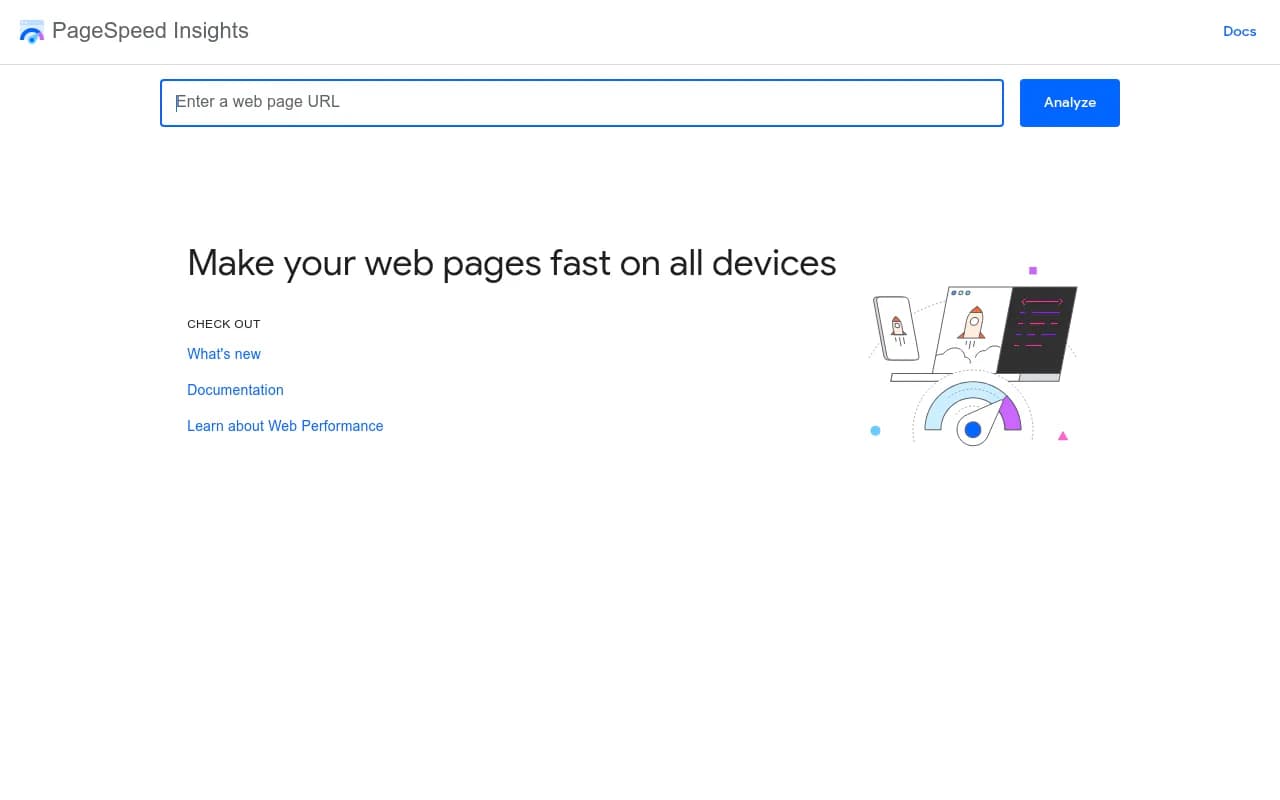
Run your key pages through Google PageSpeed Insights and fix the highest-impact issues. Focus especially on Largest Contentful Paint (LCP) and Time to First Byte (TTFB) -- these affect how quickly a crawler can access your actual content.
Section 3: Content that AI models actually cite
Action 8: Run an answer gap analysis
This is probably the highest-leverage action on this list. An answer gap analysis shows you which prompts your competitors are being cited for that you're not. Those gaps represent content your site is missing -- topics, angles, and questions that AI models want to answer but can't find on your pages.
The output of a good gap analysis is a list of specific content pieces to create, ranked by prompt volume and competitive difficulty. It turns "write more content" into "write these specific articles, in this order, targeting these prompts."
Promptwatch's Answer Gap Analysis does exactly this -- it shows you the specific prompts where competitors appear but you don't, then helps you generate content grounded in real citation data to close those gaps.
Action 9: Structure your content for direct extraction
AI models don't read pages the way humans do. They extract. They're looking for clear, self-contained answers to specific questions. Content that's buried in long narrative paragraphs is harder to extract than content that's structured with clear headings, concise definitions, and explicit answers.
Practical changes that help:
- Add a direct answer to the main question within the first 100 words of any article
- Use H2 and H3 headings that match the exact phrasing of questions people ask
- Include a FAQ section at the bottom of key pages with question-and-answer pairs in schema markup
- Write definitions explicitly ("X is...") rather than implying them
This isn't about dumbing down your content. It's about making the extractable parts easy to find.
Action 10: Publish content that covers the full topic depth
AI models favor sources that cover a topic thoroughly, not just superficially. A 400-word overview of a topic is less likely to be cited than a 2,000-word piece that covers the main concept, related subtopics, common questions, and practical applications.
This is sometimes called "topical authority" -- the idea that covering a topic cluster comprehensively signals expertise to both traditional search engines and AI models.
Map out the full topic cluster around your core subject areas. Find the gaps in your coverage. Prioritize creating content for subtopics where you have no existing pages.
Tools like MarketMuse can help you identify content gaps within a topic cluster.
Section 4: External citation signals
Action 11: Build external citations from sources AI models trust
AI models don't just cite your own website. They cite the sources that cite you. If your brand is mentioned in industry publications, Reddit threads, YouTube videos, and authoritative directories, models have more evidence that you're a credible source worth citing.
Specific tactics that work:
- Get featured in "best of" listicles and comparison articles in your category. These are heavily cited by AI models when someone asks "what are the best X tools?"
- Participate in relevant Reddit communities where your expertise is genuinely useful. Reddit discussions are a significant source for models like Perplexity and ChatGPT.
- Create YouTube content that answers questions in your category. YouTube is increasingly cited as a source in AI responses.
- Submit to authoritative directories in your industry (G2, Capterra, Product Hunt, etc.)
The goal is to build a web of external signals that all point to your brand as a credible entity in your category.
Action 12: Track your citation rate and iterate
None of the above matters if you can't measure whether it's working. Most teams are still reporting vanity signals like "we showed up once in ChatGPT." That's not a metric you can optimize.
A proper measurement model tracks:
- Brand Mention Rate (BMR): what percentage of relevant prompts include your brand name
- Citation Rate (CR): what percentage of relevant prompts link or attribute to your site
- Share of voice by AI model: are you stronger on Perplexity than on ChatGPT? Why?
- Page-level citation data: which specific pages are being cited, and which aren't
Set up a baseline measurement before you start making changes. Then re-measure every two weeks. The only way to know which actions are moving your citation rate is to track it consistently over time.
Platforms built for this kind of tracking include Promptwatch (which covers all 10 major AI models and connects visibility to actual traffic), as well as lighter-weight options for teams just getting started.
Otterly.AI

Profound

Putting it all together: a scoring framework
Here's a quick self-assessment. Score yourself 1 point for each item you've completed, 0 for each gap.
| Action | Done? |
|---|---|
| Brand name consistent across all surfaces | 0 or 1 |
| Single primary category definition everywhere | 0 or 1 |
| Wikipedia/Wikidata entry exists and is accurate | 0 or 1 |
| Schema markup implemented and validated | 0 or 1 |
| AI crawlers not blocked in robots.txt | 0 or 1 |
| JavaScript rendering issues resolved | 0 or 1 |
| Core Web Vitals passing on key pages | 0 or 1 |
| Answer gap analysis completed | 0 or 1 |
| Content structured for direct extraction | 0 or 1 |
| Full topic depth covered for core subject areas | 0 or 1 |
| External citations built from trusted sources | 0 or 1 |
| Citation rate tracked with a baseline measurement | 0 or 1 |
10-12: Strong foundation. Focus on iteration and content gap closure. 7-9: Good progress. Prioritize the technical and measurement gaps. 4-6: Significant gaps. Start with entity clarity and crawler access -- these unlock everything else. 0-3: Start from the top. Entity clarity first, then crawlability, then content.
Where to start if you're overwhelmed
If you're looking at this list and wondering where to begin, the answer is almost always: entity clarity first, then crawlability, then content gaps.
Entity clarity (Actions 1-4) is the foundation. If AI models have a confused picture of who you are, no amount of content will fix it. Crawlability (Actions 5-7) is the prerequisite for everything else -- if AI crawlers can't read your pages, your content doesn't exist to them. Content gaps (Actions 8-10) are where most of the citation rate improvement actually comes from once the foundation is solid. External signals (Action 11) amplify everything. Measurement (Action 12) is what keeps you honest.
The teams winning at AI visibility in 2026 aren't doing anything exotic. They're doing these fundamentals consistently, measuring the results, and iterating. That's the whole game.