Key takeaways
- Reddit, YouTube, and LinkedIn are the only social platforms that AI models consistently cite in their answers -- every other platform is largely ignored.
- YouTube recently overtook Reddit as the top social citation source, appearing in 16% of LLM answers vs. 10% for Reddit, according to Bluefish's analysis.
- A citation-first content calendar means planning posts around what AI models are actually looking for, not just what performs well on the platforms themselves.
- The most effective approach treats each platform differently: Reddit for conversational authority, YouTube for instructional depth, LinkedIn for professional credibility.
- Tools like Promptwatch can show you which prompts your competitors are being cited for -- and which ones you're missing entirely.
Most social media calendars are built around engagement metrics: likes, shares, follower growth, reach. That made sense when social was primarily a distribution channel. In 2026, it's not enough.
AI models -- ChatGPT, Perplexity, Claude, Gemini -- are now answering millions of questions that used to send people to Google. And when those models construct their answers, they pull from a very specific set of sources. Your website, sure. But also Reddit threads. YouTube videos. LinkedIn posts.
The brands showing up in AI answers aren't necessarily the ones with the biggest social followings. They're the ones whose content looks like a credible source to an LLM. That's a different game, and it requires a different kind of calendar.
This guide walks through how to build one.
Why these three platforms and not others
Before getting into the calendar itself, it's worth understanding why Reddit, YouTube, and LinkedIn are the platforms that matter here.
Bluefish's analysis found YouTube appearing as a cited source in 16% of LLM answers over a six-month period, with Reddit at 10%. LinkedIn rounds out the top three. No other social platform comes close.
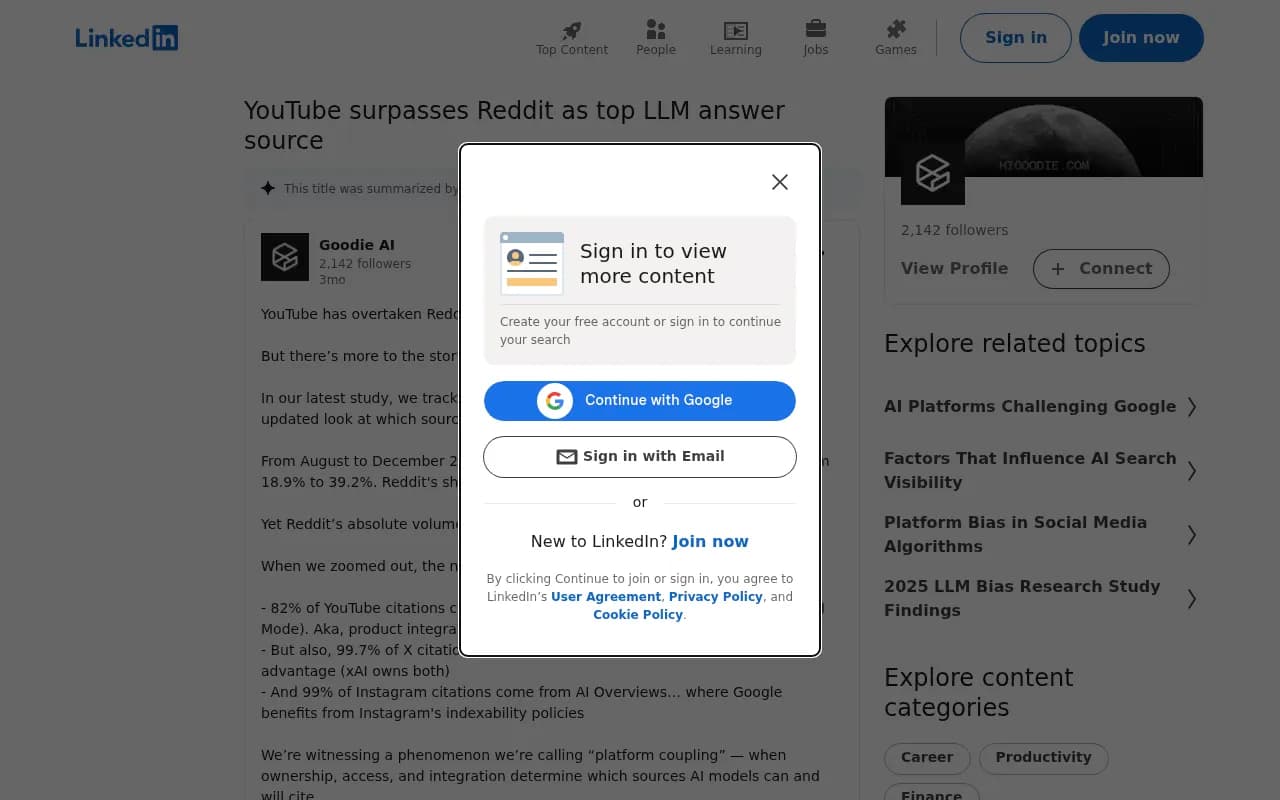
The reason comes down to how AI models evaluate trustworthiness. Reddit has millions of genuine human conversations about almost every topic imaginable -- it's messy, specific, and authentic in ways that AI models have learned to value. YouTube has transcripts, structured instructional content, and a massive authority signal from being owned by Google. LinkedIn has professional credibility and a high signal-to-noise ratio for B2B topics.
Instagram, TikTok, X/Twitter? Almost never cited. The content is either too ephemeral, too visual without text, or too low-signal for LLMs to use as a reference.

This isn't going to change soon. AI models are trained on text, they reward depth and specificity, and they need sources they can actually cite. That's exactly what these three platforms provide.
Step 1: Start with citation data, not content ideas
The old way to build a content calendar: brainstorm topics, check search volume, write content.
The new way: find out what questions AI models are answering in your space, see which sources they're citing, and build content that fits into that citation ecosystem.
This is a fundamentally different starting point. You're not asking "what do people search for?" You're asking "what are AI models saying about my category, and where are they getting that information?"
A few ways to do this:
Query AI models directly. Ask ChatGPT, Perplexity, and Claude the questions your customers would ask. Note which sources appear in the citations. If Reddit threads and YouTube videos keep showing up, that tells you something about the format and platform that works.
Use an AI visibility platform. Tools like Promptwatch track which prompts your brand appears in across 10+ AI models, which competitors are being cited, and -- critically -- which prompts you're missing. The Answer Gap Analysis feature shows you the specific questions where competitors show up but you don't. That's your content calendar, basically handed to you.

Look at what's already being cited in your niche. If you're in B2B SaaS, search Perplexity for your category and read the citations carefully. You'll start to see patterns: certain subreddits, specific YouTube channels, a handful of LinkedIn creators. Those are the formats and voices that LLMs trust.
Step 2: Build your platform strategy
Each platform requires a different approach. Here's how to think about each one.
Reddit: conversational authority
Reddit is cited because it contains genuine human expertise in conversational form. LLMs pull from it because the answers feel real -- they're written by people who've actually done the thing, not marketing teams trying to rank.
The implication: you can't game Reddit with promotional content. You have to actually participate.
What works for AI citation on Reddit:
- Detailed, specific answers in relevant subreddits (r/marketing, r/SEO, r/b2bmarketing, r/startups, etc.)
- Posts that frame a real problem and walk through how you solved it
- Comments that add genuine value to existing threads -- not just "great post, check out our tool"
- AMA-style posts where you share expertise without a sales pitch
The content calendar angle: identify the 5-10 subreddits where your customers are active. Each week, schedule 2-3 genuine contributions -- a mix of new posts and substantive comments. The goal isn't to go viral. It's to build a body of work in places where AI models are already looking.
One thing that's working well in 2026: posting detailed "what I learned" threads after running experiments or solving a hard problem. These tend to be highly specific, include real numbers, and read like the kind of source an LLM would want to cite.
YouTube: instructional depth
YouTube's rise to the top citation spot makes sense when you think about it. Video transcripts are indexed, the platform has enormous authority, and instructional content maps directly to the kinds of questions people ask AI models.
What works for AI citation on YouTube:
- Tutorials that answer a specific question in the title (not "our product demo" but "how to track AI search visibility in 2026")
- Videos with detailed descriptions that include the key information from the video in text form
- Content that covers a topic thoroughly rather than teasing viewers to click elsewhere
- Chapters and timestamps that make the structure clear to both viewers and crawlers
The content calendar angle: plan one YouTube video per week or fortnight that directly addresses a question your target audience is asking AI models. Use the same citation research from Step 1 to identify which questions are driving AI answers in your space.
A practical tip: after publishing each video, post a written summary on LinkedIn or your blog. This creates multiple citation opportunities from a single piece of content -- the video itself, the transcript, and the written summary.
LinkedIn: professional credibility
LinkedIn is the odd one out here because it's not primarily a search platform. But AI models cite it because LinkedIn content tends to be written by identifiable professionals, it has high editorial standards (people care about their professional reputation), and it covers B2B topics with genuine depth.
What works for AI citation on LinkedIn:
- Long-form posts that take a clear position on a topic (not just sharing news, but analyzing it)
- Original data or research -- even small-scale surveys or experiments
- Posts that synthesize information across multiple sources into a clear point of view
- Content from people with visible professional credibility (job title, company, track record)
The content calendar angle: LinkedIn is where you build the professional authority signal that makes your other content more citable. Plan 3-4 substantive posts per week. Mix original analysis, lessons learned, and responses to things happening in your industry.
Step 3: Map your calendar to citation intent
Here's where most people get this wrong. They treat their social content calendar as a distribution plan -- the same content reformatted for different platforms. For AI citation purposes, that doesn't work.
Each platform needs content that's native to how AI models use that platform. Reddit answers should read like Reddit answers. YouTube videos should be genuinely instructional. LinkedIn posts should reflect professional expertise.
A practical weekly structure:
| Day | Platform | Content type | Citation goal |
|---|---|---|---|
| Monday | Original analysis or data point | Professional authority | |
| Tuesday | Detailed answer in relevant subreddit | Conversational expertise | |
| Wednesday | YouTube | Tutorial or explainer video | Instructional depth |
| Thursday | Synthesis post (lessons, frameworks) | Topical authority | |
| Friday | New thread or AMA-style post | Community credibility | |
| Ongoing | All | Respond to comments and threads | Engagement signals |
This isn't a rigid template -- it's a starting point. The key principle is that you're producing content on each platform that's designed to be cited, not just consumed.
Step 4: Track what's actually getting cited
Building the calendar is only half the job. You need to know whether it's working.
The challenge: standard social analytics don't tell you whether your content is being cited by AI models. Likes and shares are irrelevant here. What matters is whether ChatGPT or Perplexity is pulling your Reddit thread or YouTube video into its answers.
A few ways to track this:
Manual spot-checking. Query AI models with the questions you're targeting and see if your content appears. This is slow but free.
AI visibility platforms. Promptwatch tracks citations across 10 AI models and can show you page-level data -- which specific URLs are being cited, how often, and by which models. If your YouTube video starts appearing in Perplexity answers, you'll see it. If your Reddit thread gets picked up by Claude, that shows up too.
Traffic from AI referrals. Look at your analytics for referral traffic from AI platforms. This is imperfect (much AI-driven traffic doesn't show a referral source), but it's a useful signal. Promptwatch's traffic attribution feature connects AI visibility to actual site visits using a code snippet or server log analysis.
The goal is to close the loop: you publish content, you track whether it gets cited, you double down on what's working and adjust what isn't.
Step 5: Use citation data to prioritize topics
One of the most useful things you can do with AI citation data is prioritize your content calendar around topics where you have a realistic chance of getting cited.
This is where prompt intelligence becomes valuable. Not all questions are equally competitive. Some topics are dominated by a handful of authoritative sources that AI models consistently cite. Others are more open -- the citations are scattered, the sources are weak, and there's a real opportunity to become the go-to reference.
Promptwatch's prompt difficulty scoring helps with this. It shows you which prompts are high-volume but also winnable -- where you can realistically build enough citation authority to show up in AI answers.
For your social calendar, this means:
- Identify 10-15 high-priority prompts in your space
- For each prompt, check which Reddit threads, YouTube videos, and LinkedIn posts are currently being cited
- Plan content that directly addresses those prompts, in the format and on the platform that's already getting traction
This is more work than a traditional content calendar, but the payoff is different too. You're not just building an audience -- you're building citation authority that compounds over time.
Practical tools for managing the calendar
A few tools worth knowing about for different parts of this workflow:
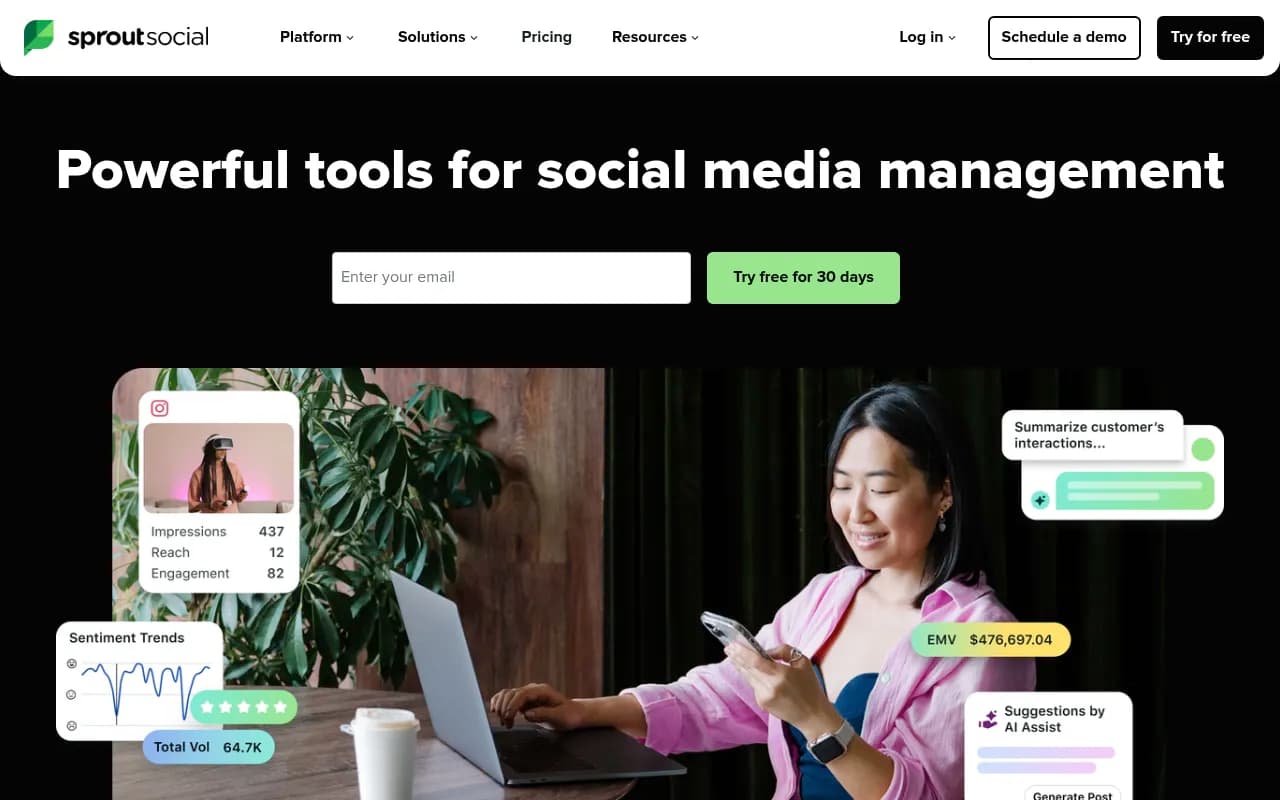
For social scheduling and management, Sprout Social handles cross-platform scheduling with solid analytics.
Buffer is simpler and cheaper if you don't need enterprise features.
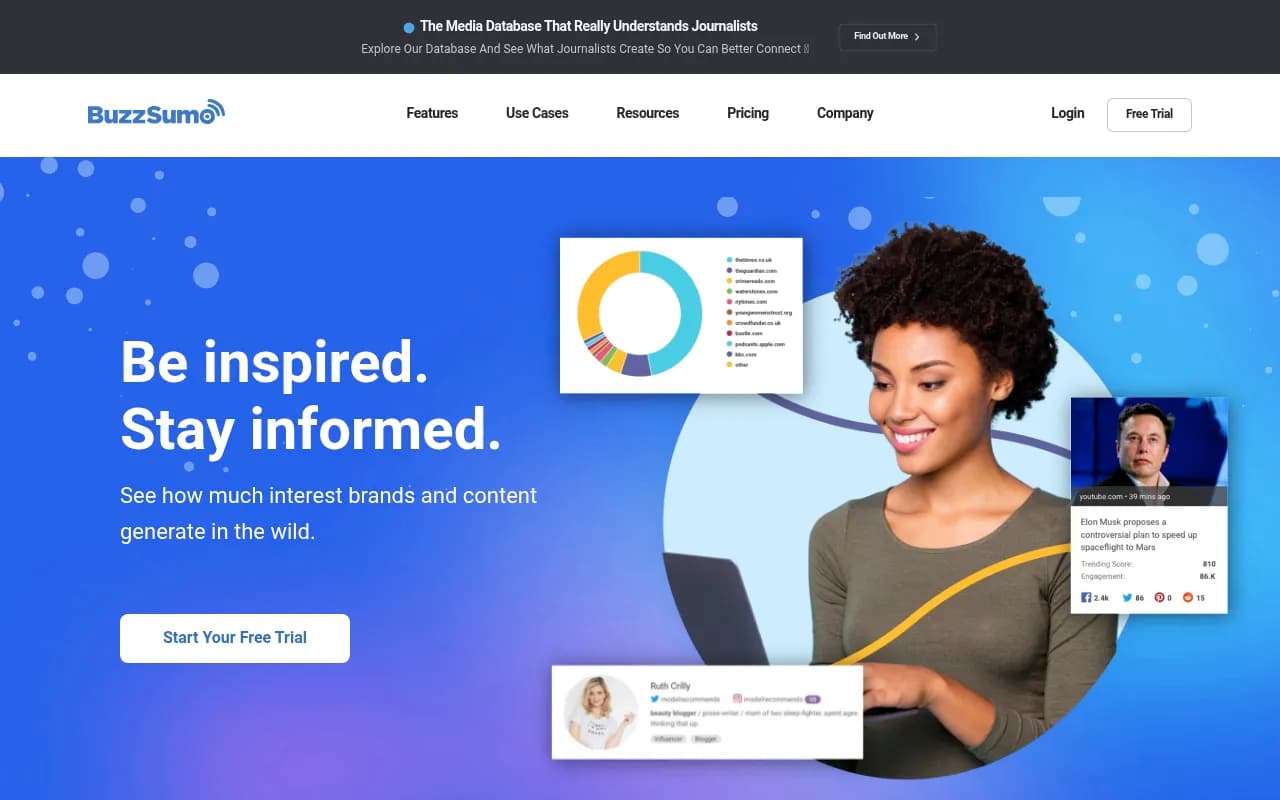
For content research and ideation, BuzzSumo is useful for finding what's resonating in your space.
For AI visibility tracking -- which is the core of this whole approach -- Promptwatch is the most complete option, covering citation tracking, answer gap analysis, and content generation in one platform.
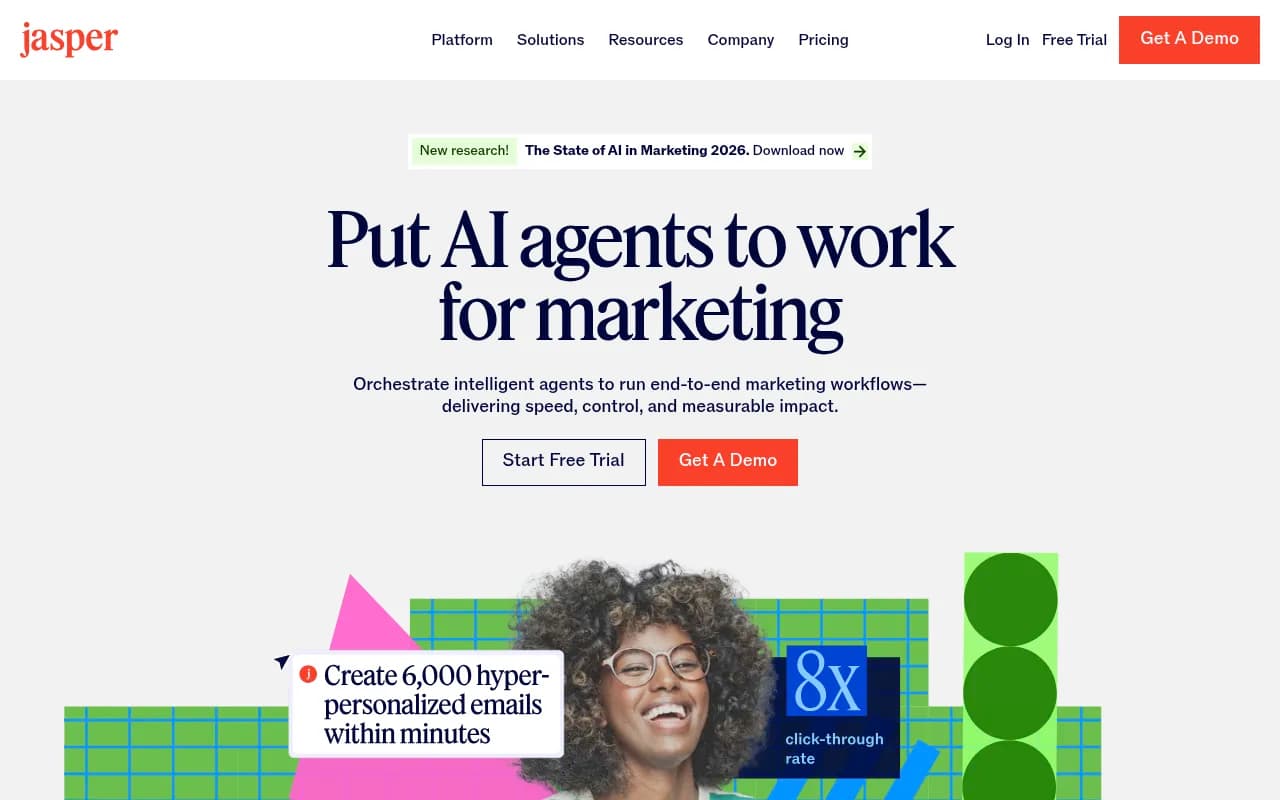
For the content itself, Jasper can help scale production, though the best-performing Reddit and LinkedIn content tends to be written with a genuine human voice.
The mindset shift that makes this work
The biggest obstacle to building a citation-first social calendar isn't tools or tactics. It's mindset.
Most marketing teams are optimizing for platform metrics: follower growth, engagement rate, reach. Those metrics matter for some things, but they're largely irrelevant to AI citation. A Reddit thread with 47 upvotes can be cited by ChatGPT thousands of times. A LinkedIn post from someone with 500 followers can become a go-to reference for Claude on a specific topic.
What AI models care about: specificity, credibility, depth, and relevance to the question being asked. A post that clearly answers a real question, from someone with visible expertise, in a format that's easy to parse -- that's what gets cited.
The practical implication: stop optimizing for virality and start optimizing for citability. Write Reddit posts that would make a good footnote in an AI answer. Make YouTube videos that directly answer the question in the title. Write LinkedIn posts that take a clear, defensible position with real reasoning behind it.
That's the shift. It's not complicated, but it does require rethinking what success looks like on social media in 2026.
A note on consistency
One thing that comes up repeatedly in discussions about AI citation: it's not a one-time thing. AI models update their knowledge, new content gets indexed, and citation patterns shift.
The brands that build durable AI visibility are the ones that show up consistently over time. A single great Reddit thread might get cited for a while, but a consistent presence in relevant subreddits -- a body of work that covers a topic from multiple angles -- is much harder to displace.
The same applies to YouTube and LinkedIn. One viral video doesn't make you a citable authority. Fifty videos that consistently answer questions in your space does.
Build the calendar. Stick to it. Track what's working. Adjust. That's the whole system.