Key takeaways
- HR tech buyers increasingly use ChatGPT, Perplexity, and Google AI Overviews to shortlist recruiting software before visiting any vendor website -- if you're not cited, you're not considered.
- Most GEO tools only monitor where you appear; the best ones help you identify content gaps and generate content that actually gets cited.
- Promptwatch is the only platform rated "Leader" across all GEO categories in 2026, with built-in content gap analysis and an AI writing agent -- not just a dashboard.
- For HR tech vendors, the highest-value prompts to target are comparison queries, use-case-specific questions, and "best X for Y" searches that buyers run during active evaluation.
- Smaller HR tech brands can compete with established players by publishing structured, specific content that answers the exact questions AI models are trained to surface.
Why HR tech vendors have an AI visibility problem right now
If you sell recruiting software, an ATS, or any HR tech platform, your buyers have quietly changed how they research. A hiring manager at a 500-person company doesn't start with a Google search anymore. They open ChatGPT and type something like "what's the best ATS for a mid-size company with hourly workers?" or "compare Greenhouse vs Lever for structured hiring." They get a synthesized answer back -- with specific vendor recommendations -- and they use that to build their shortlist.
The problem: most HR tech vendors have no idea whether they appear in those answers. And the ones that do know are often surprised to find that a competitor with half their feature set is getting cited constantly, while they're invisible.
This isn't a fluke. AI models cite sources based on the quality, structure, and specificity of content they can find about a vendor. If your website is thin on comparison content, use-case pages, or direct answers to buyer questions, you won't show up -- regardless of how good your product actually is.
That's the core problem GEO (Generative Engine Optimization) tools are built to solve. But not all of them are equally useful for HR tech companies specifically. Let me walk through what actually matters here.
What makes HR tech a uniquely challenging vertical for GEO
HR tech is a crowded, high-consideration category. Buyers are comparing 5-10 vendors, reading G2 reviews, watching demos, and -- increasingly -- asking AI assistants to help them shortlist. The buying cycle is long, the decision involves multiple stakeholders, and the prompts buyers use are highly specific.
That specificity is actually an opportunity. Prompts like "best recruiting software for healthcare staffing" or "ATS with built-in DEI reporting" are winnable if you have content that directly addresses them. The challenge is knowing which prompts exist, which ones your competitors are winning, and what content you'd need to create to compete.
Most GEO tools will show you whether your brand appears in AI responses. That's useful but incomplete. What HR tech vendors actually need is:
- A way to discover which buyer research queries are happening in AI search
- Visibility into which competitors are getting cited for those queries
- The ability to create content specifically engineered to get cited
- Traffic attribution that connects AI visibility to actual pipeline
Very few platforms do all four. Here's how the main options stack up.
The GEO tools worth considering for HR tech in 2026
Promptwatch: the full-cycle option
Promptwatch is the platform I'd start with if you're serious about AI visibility for an HR tech brand. The reason isn't just the monitoring -- it's the action loop.
Most tools show you a dashboard. Promptwatch shows you a dashboard and then tells you what to do about it. The Answer Gap Analysis feature identifies specific prompts where competitors are being cited but you're not. For an HR tech vendor, that might surface queries like "best ATS for remote teams" or "recruiting software with video interviewing" -- prompts you didn't know existed but that buyers are actively running.
From there, the built-in AI writing agent generates content grounded in actual citation data (over 880 million citations analyzed). This isn't generic blog content -- it's structured to match the patterns AI models use when deciding what to cite. The platform also tracks AI crawler activity on your site, so you can see whether ChatGPT's bot is actually reading your pages and whether it's hitting errors.
For HR tech specifically, the multi-persona and multi-region tracking matters. A head of talent acquisition prompts differently than a CFO evaluating HR software costs. Promptwatch lets you configure different personas and track visibility across each.

Profound: strong enterprise option, higher price point
Profound is a well-built platform with solid monitoring across multiple AI engines. It's a reasonable choice for larger HR tech vendors with dedicated analytics teams who want deep data. The tradeoff is cost -- it's positioned at the enterprise end of the market -- and it doesn't have the content generation capabilities that Promptwatch does. You get the visibility data; you still have to figure out what to do with it yourself.
Profound

Otterly.AI: good for brand monitoring, limited for optimization
Otterly.AI is one of the more accessible monitoring tools. It tracks brand mentions across ChatGPT, Perplexity, and Google AI Overviews, and the interface is clean. For an HR tech vendor that just wants to know "are we showing up?", it's a reasonable starting point. But it stops there. No content gap analysis, no AI writing, no crawler logs. If you want to actually improve your visibility rather than just measure it, you'll hit a ceiling quickly.
Otterly.AI

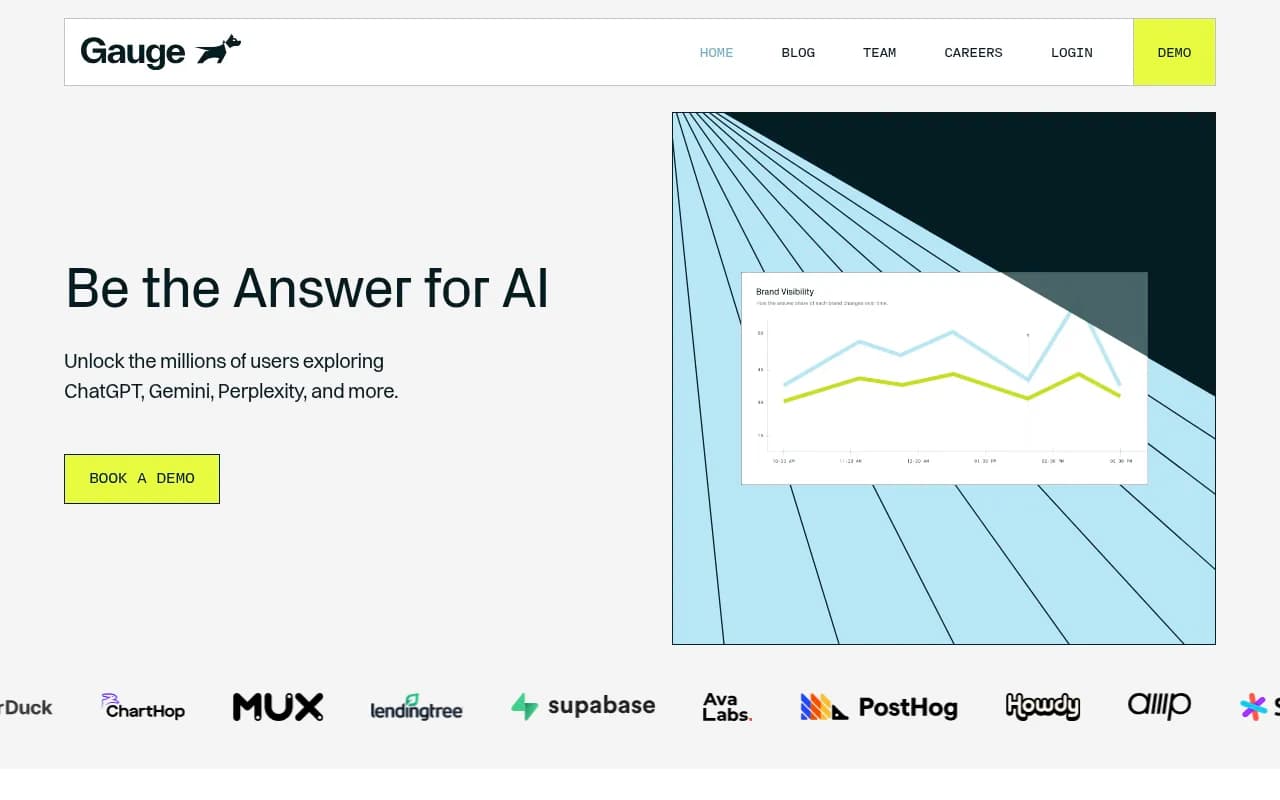
Gauge: built specifically for HR tech visibility
Gauge deserves a mention here because it's one of the few platforms that has explicitly focused on HR tech and people analytics companies as a use case. Their research into AI visibility for this vertical is worth reading. The platform tracks brand mentions across AI engines and surfaces optimization recommendations. It's not as comprehensive as Promptwatch on the content generation side, but if you want a tool that understands the HR tech buyer journey specifically, it's worth evaluating.
Peec AI: prompt-level analytics for marketing teams
Peec AI takes a different angle -- it focuses on prompt-level analytics, showing you which specific prompts are driving AI visibility for you and your competitors. For HR tech marketing teams that want to understand the search behavior patterns of their buyers, this is useful data. It's more of a research and monitoring tool than an optimization platform, but the prompt intelligence is genuinely good.

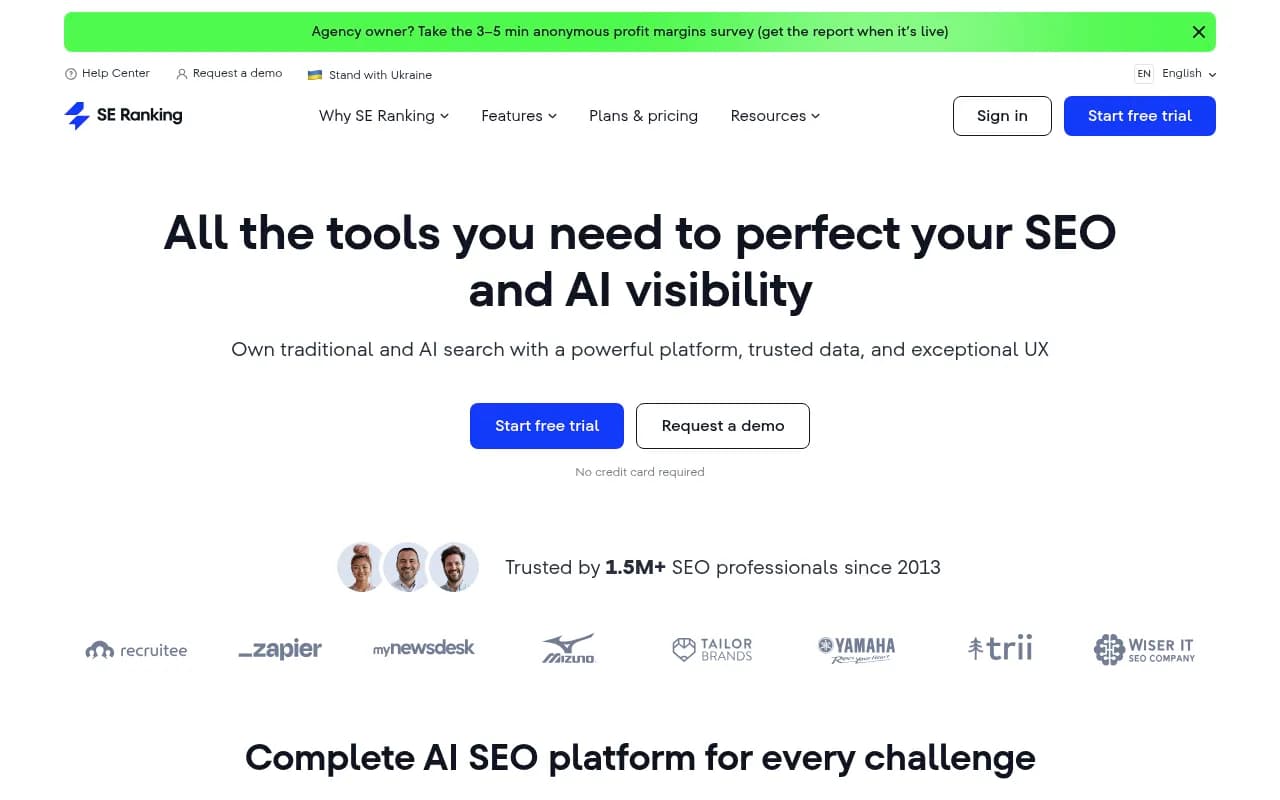
SE Ranking: for teams already invested in traditional SEO
SE Ranking has added AI Overviews tracking to its existing SEO suite, which makes it convenient if your team is already using it for traditional rank tracking. The AI visibility features are less deep than dedicated GEO platforms, but the integration with keyword data and site auditing is a real advantage for teams that want one tool to cover both traditional and AI search.
AthenaHQ: enterprise GEO with revenue attribution
AthenaHQ is positioned at enterprise HR tech vendors that need GEO tied to revenue metrics. It has solid monitoring and some automation capabilities. The gap, compared to Promptwatch, is on the content creation side -- AthenaHQ is more focused on tracking and reporting than on helping you generate the content that improves your visibility.

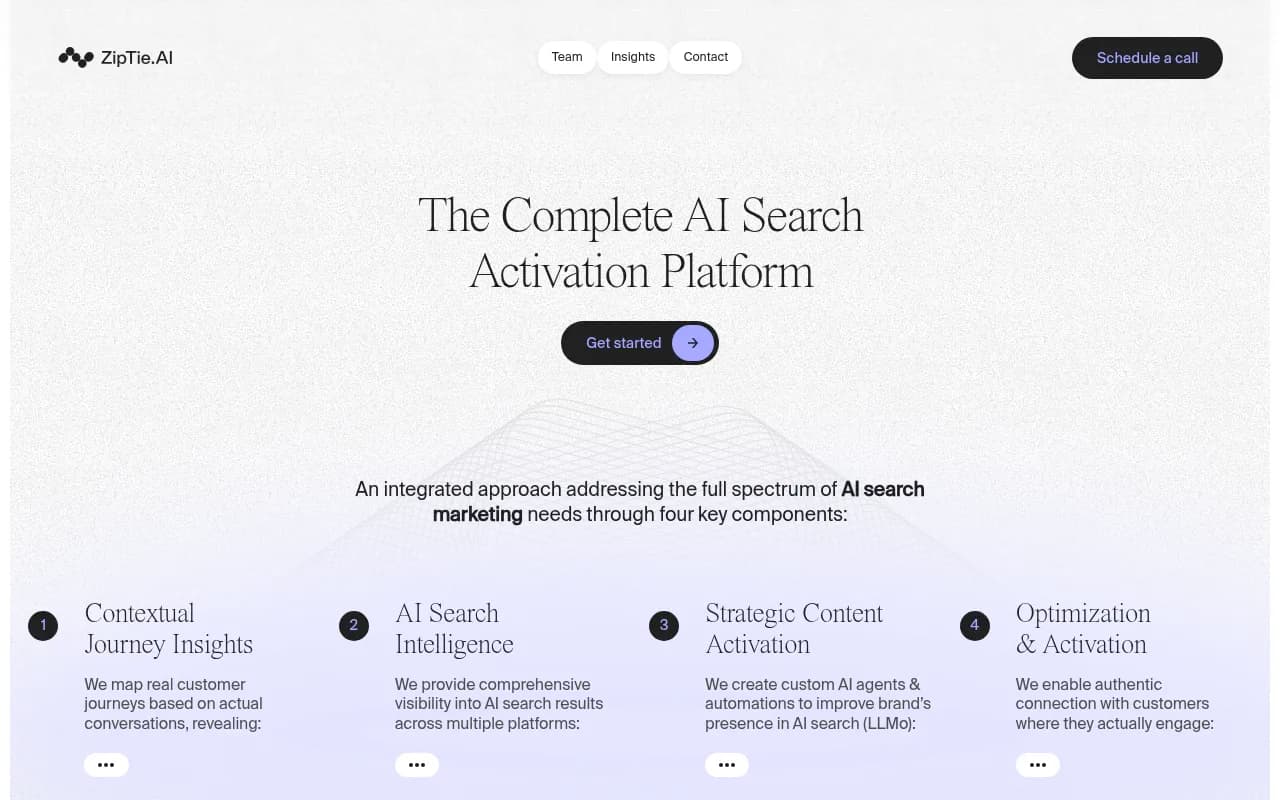
ZipTie: deep answer-level auditing
ZipTie does something specific that's worth knowing about: it gives you a detailed breakdown of how AI models construct their answers for specific prompts, including which sources they pull from and why. For HR tech vendors trying to understand why a competitor keeps getting cited for a particular query, this level of analysis is useful. It's more of a research tool than a full GEO platform.
Platform comparison
| Platform | Monitors AI engines | Content gap analysis | AI content generation | Crawler logs | HR tech focus | Pricing |
|---|---|---|---|---|---|---|
| Promptwatch | 10+ engines | Yes | Yes (built-in agent) | Yes | General (configurable personas) | From $99/mo |
| Profound | 9+ engines | Limited | No | No | General | Enterprise |
| Otterly.AI | ChatGPT, Perplexity, AI Overviews | No | No | No | General | From ~$49/mo |
| Gauge | Multiple engines | Partial | No | No | HR tech specific | Contact for pricing |
| Peec AI | Multiple engines | Partial | No | No | General | From ~$49/mo |
| SE Ranking | AI Overviews + traditional | No | No | No | General | From $52/mo |
| AthenaHQ | Multiple engines | Limited | No | No | General | Enterprise |
| ZipTie | ChatGPT, Perplexity, AI Overviews | No | No | No | General | From ~$99/mo |
The prompts that HR tech buyers actually run
Understanding which queries to target is half the battle. Based on how AI search behavior works in the HR tech vertical, here are the prompt categories that matter most:
Comparison queries are the highest-value targets. "Greenhouse vs Lever", "Workday vs BambooHR for mid-market", "best ATS alternatives to iCIMS" -- these are active evaluation queries from buyers who are close to a decision. If your brand appears in these answers (even as an alternative), you get consideration.
Use-case-specific queries are winnable for niche players. "Best recruiting software for healthcare staffing", "ATS with built-in compliance tracking", "recruiting platform for high-volume hourly hiring" -- these are specific enough that a well-structured page can dominate.
"Best X for Y" queries follow the same pattern. "Best HR software for companies under 500 employees", "best ATS for remote-first teams", "best recruiting software for agencies". AI models love to answer these with specific recommendations, and they pull from content that directly addresses the combination.
Problem-first queries are often overlooked. "How do I reduce time-to-hire", "why is my applicant drop-off rate so high", "how to improve candidate experience in recruiting" -- buyers who ask these questions are in early research mode, and if your content answers them, you get cited as a trusted source before they even start comparing vendors.
How to actually improve your AI visibility as an HR tech vendor
Monitoring is the starting point, not the destination. Here's what the improvement process looks like in practice:
Step 1: run a baseline visibility audit
Before you can improve, you need to know where you stand. Pick 20-30 prompts that your buyers would realistically run -- a mix of comparison queries, use-case queries, and problem-first queries. Run them across ChatGPT, Perplexity, and Google AI Overviews. Note which competitors appear and which sources they cite.
Tools like Promptwatch automate this at scale, but you can start manually to get a feel for the landscape.
Step 2: identify the content gaps
For every prompt where a competitor appears and you don't, ask: do we have a page that directly answers this? Usually the answer is no, or the answer is "we have a blog post that sort of touches on it but doesn't directly address the question."
This is the gap. AI models need to find a clear, structured answer to a specific question. If your content is too general or too product-focused, it won't get cited.
Step 3: create content engineered for AI citation
This is where most HR tech vendors underinvest. The content that gets cited by AI models tends to share a few characteristics:
- It directly answers a specific question in the first 100-200 words
- It uses structured formatting (headers, lists, comparison tables)
- It's specific about use cases, not generic about features
- It includes concrete data points or examples
- It's published on a domain that AI crawlers trust and visit regularly
A page titled "Best ATS for Healthcare Staffing: What to Look For in 2026" that opens with a direct answer and includes a comparison table will outperform a generic "Our ATS Features" page every time.
Step 4: make sure AI crawlers can actually read your site
This is the technical side that most vendors ignore. If your site is heavy on JavaScript rendering, has crawl errors, or blocks AI bots in your robots.txt, none of the content work matters. Platforms like Promptwatch show you real-time logs of AI crawler activity -- which pages they're reading, how often they return, and what errors they encounter.
Step 5: track the results and connect them to pipeline
The final step is attribution. When your AI visibility improves and traffic from AI referrals increases, you need to be able to connect that to actual demo requests and pipeline. This requires either a tracking code snippet, Google Search Console integration, or server log analysis. Without this, you're flying blind on ROI.
A note on content strategy for HR tech specifically
One thing that's specific to HR tech: your buyers are often practitioners, not just buyers. A head of talent acquisition who uses ChatGPT to research ATS options is also someone who might share a useful article with their team, cite it in a vendor evaluation doc, or reference it in a LinkedIn post. This means content that's genuinely useful to practitioners -- not just optimized for AI citation -- tends to perform better in both channels.
The best HR tech content I've seen cited by AI models tends to be opinionated and specific. Not "here are 10 things to consider when choosing an ATS" but "here's why most ATS implementations fail for high-volume hiring, and what to look for instead." That specificity is what AI models reward, and it's also what practitioners actually find useful.
Bottom line
The HR tech vendors who will win AI search visibility in 2026 are the ones who treat it as an optimization problem, not a monitoring problem. Knowing you're invisible is the easy part. The harder work is identifying which prompts to target, creating content that earns citations, and tracking whether it's actually driving pipeline.
Most GEO tools stop at step one. If you want a platform that covers the full cycle -- from gap analysis through content generation to traffic attribution -- Promptwatch is the most complete option available right now. For teams with more limited budgets or narrower needs, Otterly.AI or Peec AI are reasonable starting points, with the understanding that you'll need to do the content work yourself.
The buyers are already asking AI assistants which recruiting software to use. The question is whether your brand is in the answer.