Key takeaways
- Peec AI is a solid AI visibility monitor, but it stops at reporting -- it doesn't help you create content or close the gaps it finds.
- Content teams in 2026 need platforms that complete the full loop: find gaps, generate optimized content, and track whether it gets cited.
- The best alternatives vary by use case: some are full GEO optimization platforms, others are AI writing tools, and a few combine both.
- Promptwatch is the only platform in this comparison rated "Leader" across all GEO categories, with built-in content generation grounded in 880M+ citation data points.
- Budget matters: options range from free tiers to enterprise contracts, so there's something for every team size.
Here's the situation most content teams find themselves in: you've set up Peec AI, you're watching your brand visibility scores, and you can see exactly which prompts your competitors are winning. Great data. But then what?
Peec AI doesn't write the article that closes the gap. It doesn't tell you which angle to take, which questions to answer, or which sources ChatGPT actually cites when it recommends your category. You get a report, and then you're on your own.
That's fine if you have a dedicated SEO strategist who can translate monitoring data into a content brief, hand it to a writer, and wait six weeks for results. Most content teams don't work that way anymore.
This guide covers seven alternatives that go further -- platforms built for teams that want to move from "we're invisible here" to "we published something that fixed it" without losing a month in the process.
Why Peec AI falls short for content teams
Peec AI tracks how your brand appears in AI-generated answers across ChatGPT, Perplexity, Claude, and Gemini. It does this reasonably well. Pricing starts around €89/month, and the UI is clean enough that non-technical marketers can use it.
The problem isn't what it does. It's what it doesn't do.
When you find a gap -- say, your brand never appears when someone asks ChatGPT for a comparison in your category -- Peec AI has no answer for "so what do I do about it?" There's no content generator, no brief builder, no citation analysis to tell you what sources AI models actually pull from. You're left exporting a CSV and figuring it out yourself.
For teams that just need monitoring, that's fine. But if your job is to actually improve AI visibility, not just measure it, you need something that closes the loop.

The 7 best Peec AI alternatives for content teams
1. Promptwatch -- best for the full optimization loop
Promptwatch is the most complete option on this list if your goal is to improve AI visibility, not just track it. It's the only platform in a 2026 comparison of 12 GEO tools rated as a "Leader" across every category -- and the reason is simple: it's built around action, not just reporting.
The workflow goes like this. Answer Gap Analysis shows you exactly which prompts competitors rank for that you don't. You see the specific topics and questions AI models want to answer but can't find on your site. Then the built-in AI writing agent generates articles, listicles, and comparisons grounded in real citation data -- 880M+ citations analyzed -- plus prompt volumes, persona targeting, and competitor context. Once you publish, page-level tracking shows which pages are getting cited, by which models, and how often. Traffic attribution (via code snippet, GSC integration, or server log analysis) connects visibility to actual revenue.
That's the full loop. Most competitors stop at step one.
Other things worth knowing: Promptwatch monitors 10 AI models (ChatGPT, Perplexity, Claude, Gemini, Google AI Overviews, Google AI Mode, Grok, DeepSeek, Copilot, Meta/Llama), logs AI crawler activity in real time, tracks Reddit and YouTube discussions that influence AI recommendations, and includes ChatGPT Shopping tracking. Pricing starts at $99/month for the Essential plan (1 site, 50 prompts, 5 articles), with Professional at $249/month and Business at $579/month.

2. AthenaHQ -- best for brand sentiment and monitoring depth
AthenaHQ takes a more brand-centric approach to AI visibility. Where Peec AI focuses on citation tracking, AthenaHQ goes deeper into how AI models characterize your brand -- the sentiment, the framing, the associations. If you're in a category where reputation matters as much as presence (financial services, healthcare, B2B SaaS), that distinction matters.
The platform covers the major AI engines and gives you competitive benchmarking across them. The gap compared to Promptwatch is on the content side: AthenaHQ is primarily a monitoring and analysis tool. It'll tell you what's wrong, but you'll need to take that insight elsewhere to fix it.

3. Otterly.AI -- best for focused GEO tracking without complexity
Otterly.AI is a cleaner, more focused alternative to Peec AI for teams that want solid AI search monitoring without a steep learning curve. It tracks brand mentions across ChatGPT, Perplexity, and Google AI Overviews, and the interface is genuinely easy to use.
What it does well: prompt tracking, share-of-voice comparisons, and visibility trends over time. What it doesn't do: content generation, crawler logs, or traffic attribution. It's a monitoring tool, and a good one, but content teams will still need to handle the "fix it" part themselves.
Good fit for smaller teams or agencies that want a lightweight Peec AI replacement without paying for features they won't use.
Otterly.AI

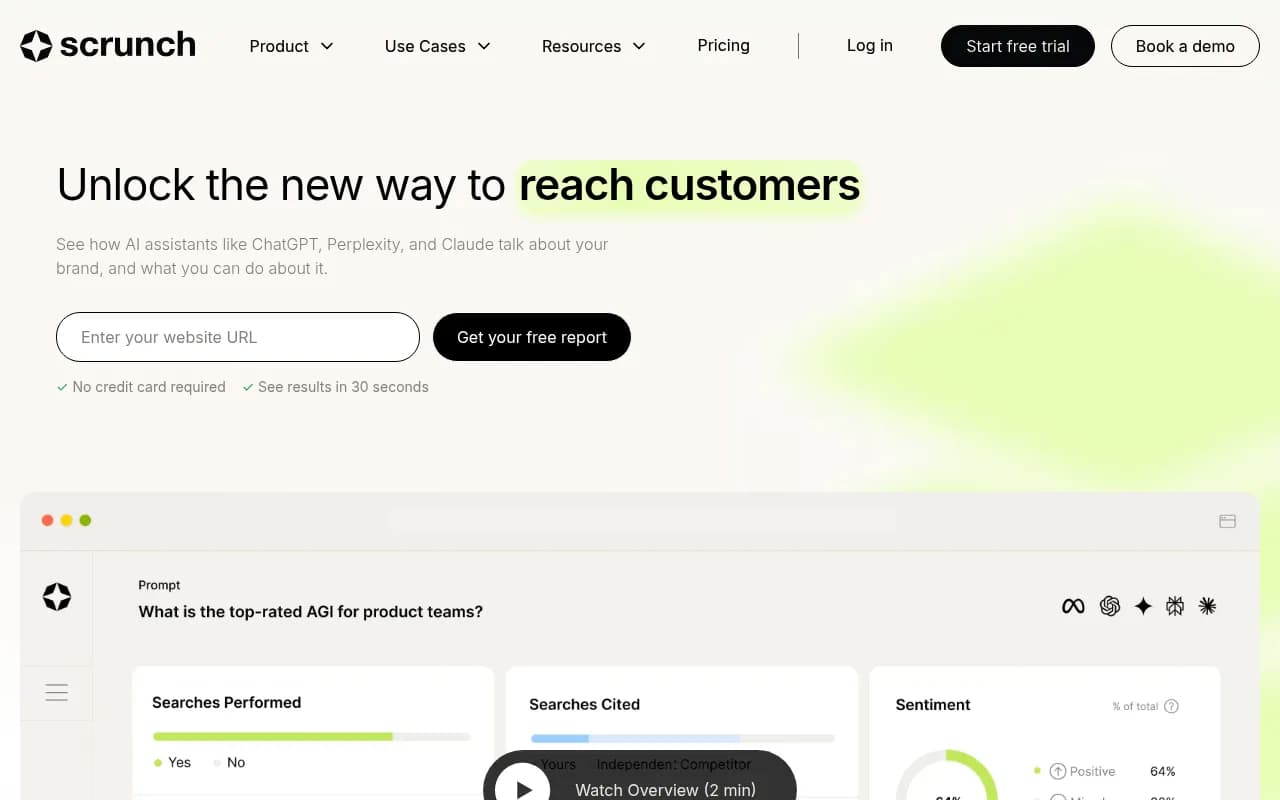
4. Scrunch AI -- best for enterprise AI monitoring with partnership intelligence
Scrunch AI stands out in one specific way: it combines AI visibility tracking with content and partnership intelligence. That means it's not just tracking where your brand appears -- it's surfacing the publishers, creators, and sources that AI models trust in your category.
For enterprise teams running influencer or partnership programs alongside content, that's genuinely useful. If ChatGPT keeps citing a specific industry publication, Scrunch AI will surface that, and you can decide whether to pitch them, partner with them, or replicate what they're doing.
The content generation side is less developed than Promptwatch's, but the intelligence layer is strong.
5. Profound -- best for predictive AI search insights at scale
Profound is built for larger organizations that need depth and predictive capability in their AI visibility data. It covers 9+ AI search engines and gives you forward-looking insights -- not just where you are now, but where the trend is heading.
The platform is strong on analytics and competitive intelligence. The tradeoff is price (it sits at a higher price point than most alternatives here) and the fact that content generation isn't built in. Teams using Profound typically pair it with a separate content tool.
Worth considering if you're at a brand where the analytics depth justifies the cost and you have writers who can act on the data independently.
Profound

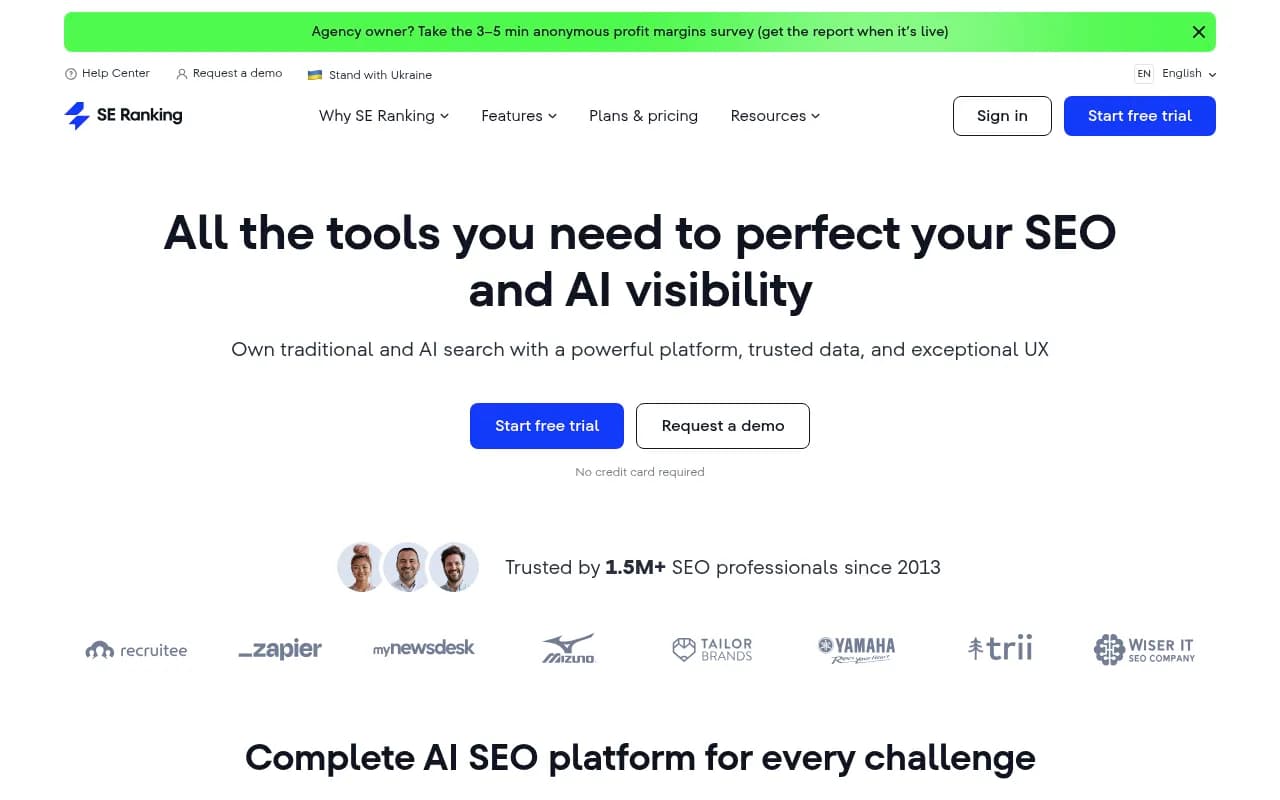
6. SE Ranking -- best for teams that want AI visibility inside a full SEO suite
SE Ranking has been a solid traditional SEO platform for years, and in 2026 it's added meaningful AI search tracking capabilities. If your team already lives in SE Ranking for rank tracking, site audits, and keyword research, the AI visibility module is a natural extension rather than a separate tool to manage.
The AI monitoring isn't as deep as dedicated GEO platforms -- you won't get crawler logs or ChatGPT Shopping tracking here -- but for teams that want one platform to cover both traditional and AI search, it's a reasonable choice. The pricing is also competitive.
7. Writesonic -- best for AI content generation with AEO guidance
Writesonic takes the opposite approach from most tools on this list. It starts with content generation and layers in AEO (Answer Engine Optimization) guidance, rather than starting with monitoring and adding content as an afterthought.
If your primary bottleneck is producing enough content to compete in AI search -- not tracking visibility -- Writesonic is worth a look. It generates blog posts, listicles, and FAQs with AEO best practices baked in. The monitoring side is lighter than dedicated GEO platforms, but the content output is fast and the quality is solid.
Best for content-heavy teams that need volume and want AI search optimization built into the writing workflow.

How these platforms compare
| Platform | AI visibility monitoring | Content generation | Crawler logs | Traffic attribution | Best for |
|---|---|---|---|---|---|
| Promptwatch | 10 models | Yes (citation-grounded) | Yes | Yes | Full optimization loop |
| AthenaHQ | Multi-model | No | No | No | Brand sentiment & monitoring |
| Otterly.AI | ChatGPT, Perplexity, AI Overviews | No | No | No | Lightweight GEO tracking |
| Scrunch AI | Multi-model | No | No | No | Enterprise + partnership intel |
| Profound | 9+ models | No | No | No | Predictive analytics at scale |
| SE Ranking | AI Overviews + others | Limited | No | No | SEO teams wanting one platform |
| Writesonic | Basic | Yes (AEO-guided) | No | No | Content-first teams |
What to look for when choosing
The right tool depends on where your team's bottleneck actually is.
If you're stuck at the monitoring stage -- you have data but no idea what to do with it -- you need a platform with content generation built in. Promptwatch and Writesonic are the two clearest options here, though they approach it from opposite directions (Promptwatch starts with gap analysis, Writesonic starts with writing).
If monitoring depth is the issue -- you're not getting reliable data across enough AI models, or you're missing competitor context -- AthenaHQ, Profound, and Scrunch AI all go deeper than Peec AI in different ways.
If budget is the constraint, Otterly.AI and SE Ranking offer the best value for teams that need solid tracking without enterprise pricing.
One thing worth being direct about: no tool on this list (or any list) will automatically fix your AI visibility. The platforms that come closest are the ones that close the loop between finding gaps and creating content that addresses them. That's what separates an optimization platform from a monitoring dashboard.
The monitoring-only trap
A pattern worth naming: most AI visibility tools are monitoring dashboards that generate impressive-looking reports. You can see your share of voice, your citation rate, your prompt rankings. The data is real and useful.
But the report isn't the outcome. The outcome is appearing in ChatGPT's answer when someone asks a question your product should be answering. Getting there requires content -- specifically, content that AI models find credible, well-structured, and relevant to the prompts your customers are using.
That's why the most important question to ask any GEO tool isn't "what does it track?" It's "what does it help me do about what it finds?"
Peec AI, for all its strengths as a monitoring tool, doesn't have a good answer to that second question. The alternatives in this guide do -- each in their own way, at different price points and with different strengths.
Pick the one that matches where your team is actually stuck.