Key takeaways
- GA4 and Looker Studio serve different purposes: GA4 collects and analyzes web behavior data, while Looker Studio turns that data into shareable dashboards and reports.
- Neither tool was designed for AI visibility reporting — they can show you traffic arriving from AI search engines, but they can't tell you what AI models are saying about your brand or which prompts you're winning.
- The two tools work best together: GA4 as your data source, Looker Studio as your reporting layer for clients and stakeholders.
- For actual AI visibility tracking (citations, prompt monitoring, answer gap analysis), you need a dedicated GEO platform alongside GA4 and Looker Studio.
- The right stack in 2026 combines all three: GA4 for traffic attribution, Looker Studio for reporting, and a purpose-built AI visibility tool for everything else.
There's a question that keeps coming up in marketing teams right now: "Can we just use GA4 and Looker Studio for our AI visibility reporting?"
The short answer is: sort of. The longer answer is what this guide is about.
GA4 and Looker Studio are genuinely useful tools, and they do play a role in understanding how AI search is affecting your traffic. But they were built for a different era of search — one where users clicked links and landed on pages you could track. AI search doesn't always work that way. When ChatGPT recommends your brand in a response, or when Perplexity cites your article, the user might never click through at all. And even when they do, GA4 has no idea the referral came from an AI engine unless you've set things up very carefully.
So let's break down what each tool actually does, where they overlap, where they fall short for AI visibility, and what a sensible reporting stack looks like in 2026.
What GA4 actually is (and isn't)
Google Analytics 4 is a web and app analytics platform. Its job is to collect data about what users do on your site: which pages they visit, how long they stay, what events they trigger, and where they came from. It's event-based, which makes it more flexible than the old Universal Analytics, and it integrates tightly with the rest of Google's ecosystem (Ads, Search Console, BigQuery).
For AI visibility purposes, GA4 is useful in one specific way: traffic attribution. If someone clicks a link in a Perplexity response and lands on your site, GA4 can log that session. With proper UTM tagging or referral source analysis, you can start to see how much traffic is arriving from AI search engines.
But GA4 has real limitations here:
- It only sees users who actually click through to your site. Zero-click AI responses (where the user gets their answer without visiting your page) are invisible to GA4 entirely.
- Referral attribution from AI engines is inconsistent. Perplexity passes referral data reasonably well. ChatGPT often doesn't. Many AI-referred sessions get lumped into "direct" traffic.
- GA4 has no concept of "AI citations" or "prompt visibility." It can't tell you whether ChatGPT mentioned your brand, what it said, or how often it recommends you vs. a competitor.
So GA4 is a useful piece of the puzzle, but it's measuring the downstream effect (traffic) rather than the upstream cause (AI visibility).
What Looker Studio actually is (and isn't)
Looker Studio is a free data visualization and reporting tool from Google. It connects to data sources (GA4, Google Search Console, Google Ads, spreadsheets, and dozens of third-party connectors) and lets you build interactive dashboards and shareable reports.
The key thing to understand is that Looker Studio doesn't collect any data itself. It's purely a presentation layer. Whatever data you have in GA4, you can display more flexibly in Looker Studio. You can build client-facing dashboards, schedule automated PDF email reports, and create custom views that non-technical stakeholders can actually understand.
For reporting purposes, Looker Studio is genuinely better than GA4's native interface. GA4's built-in reports are functional but rigid. Looker Studio gives you control over layout, metrics, date comparisons, and branding. If you're presenting to a client or an executive, Looker Studio is the right tool.
But again, the limitation is the data underneath it. If your GA4 data doesn't capture AI-referred traffic accurately, your Looker Studio dashboard won't either. Garbage in, garbage out.
How they compare head-to-head
| Feature | GA4 | Looker Studio |
|---|---|---|
| Data collection | Yes (web + app events) | No (visualization only) |
| AI traffic attribution | Partial (click-through only) | Inherited from data source |
| Custom dashboards | Limited | Excellent |
| Client-ready reports | No | Yes |
| Scheduled email reports | No | Yes (free) |
| Prompt/citation tracking | No | No |
| AI model monitoring | No | No |
| Competitor AI visibility | No | No |
| Cost | Free (standard) | Free |
| Learning curve | Medium-high | Low-medium |
The conclusion is pretty clear: these are complementary tools, not competing ones. GA4 collects the data; Looker Studio presents it. Using one without the other is leaving value on the table.
Where both tools fall short for AI visibility
Here's the honest problem: neither GA4 nor Looker Studio was designed for the question most marketers are asking in 2026, which is "how visible is my brand in AI search engines?"
That question has several layers:
- Is my brand being mentioned by ChatGPT, Perplexity, Claude, Gemini, and other AI models?
- For which prompts and topics am I being cited?
- How do I compare to competitors across different AI engines?
- What content gaps am I missing that competitors are winning?
- When AI models do send traffic to my site, which pages are they citing?
GA4 can partially answer question 5, and only when users actually click through. Questions 1 through 4 are completely outside its scope.
This is why dedicated AI visibility platforms exist. Tools like Promptwatch are built specifically to answer these questions — monitoring your brand mentions across 10+ AI models, tracking which prompts trigger citations, analyzing competitor visibility, and identifying content gaps.

The difference matters. GA4 tells you that 340 sessions came from Perplexity last month. Promptwatch tells you that Perplexity cited your competitor 47 times for the prompt "best project management software for agencies" and cited you zero times — and here's the content you need to create to change that.
Setting up GA4 for better AI traffic tracking
Before you dismiss GA4 entirely, it's worth getting the most out of it for AI visibility purposes. Here's what actually helps:
Referral source segmentation
Create a custom segment in GA4 that isolates sessions from known AI referrers. The main ones to watch are:
perplexity.aichat.openai.comclaude.aigemini.google.comcopilot.microsoft.com
Some of these will show up in your referral traffic report. Others (especially ChatGPT) often don't pass referrer data reliably, so you'll see them in "direct" traffic or not at all.
UTM parameters for AI traffic
If you're publishing content specifically optimized for AI citations, consider adding UTM parameters to any links you control (like links in your own content, press releases, or partner sites). This won't help with organic AI citations, but it gives you cleaner data for campaigns.
Google Search Console integration
Connect GA4 to Google Search Console. This won't capture ChatGPT or Perplexity traffic, but it will show you Google AI Overviews data — which queries triggered AI Overview appearances and whether users clicked through.
BigQuery export
For serious analysis, export your GA4 data to BigQuery. This removes data sampling issues and lets you run SQL queries to find patterns in AI-referred traffic that the standard GA4 interface would miss.
Building an AI visibility dashboard in Looker Studio
Once your GA4 data is as clean as possible, Looker Studio is the right tool for turning it into something presentable. Here's what a useful AI visibility section of a Looker Studio dashboard should include:
Traffic from AI referrers over time
A time-series chart showing sessions from AI referrers (Perplexity, ChatGPT, Claude, etc.) week over week. This is the most basic signal that your AI visibility efforts are working.
AI-referred traffic by landing page
A table showing which pages on your site are receiving the most AI-referred traffic. This tells you which content AI models are actually citing and sending users to. If you've recently published content optimized for AI citations, this is where you'll see it paying off.
Conversion rate from AI traffic vs. other channels
AI-referred visitors often behave differently from organic search visitors. They may arrive with more specific intent (they asked an AI a question and clicked through for more detail). Tracking conversion rate by channel in Looker Studio can reveal whether AI traffic is high-quality or not.
Blending data from multiple sources
Looker Studio's real power is blending. You can pull in data from GA4, Google Search Console, and even a Google Sheet where you manually log AI visibility metrics from a dedicated tracking tool. This lets you build a single dashboard that shows both traffic data and visibility data side by side.
The complete AI visibility reporting stack in 2026
Here's the honest recommendation: you need all three layers.
| Layer | Tool | What it does |
|---|---|---|
| AI visibility monitoring | Promptwatch (or similar) | Tracks citations, prompts, competitor visibility, content gaps |
| Traffic attribution | GA4 | Measures click-through traffic from AI referrers |
| Reporting & dashboards | Looker Studio | Presents data to clients and stakeholders |
GA4 and Looker Studio handle the traffic side of the story. A dedicated AI visibility platform handles the citation and prompt side. Neither replaces the other.
If you're an agency building client reports, the workflow looks like this: pull AI visibility metrics (citation rates, prompt rankings, competitor share) from your GEO platform, export them to a Google Sheet, connect that sheet to Looker Studio alongside your GA4 data, and build a unified dashboard that tells the complete story.
Other tools worth knowing about
If you're building out this stack, a few other tools are worth mentioning:
For AI visibility monitoring specifically, there are several options at different price points and capability levels:
Otterly.AI


Profound

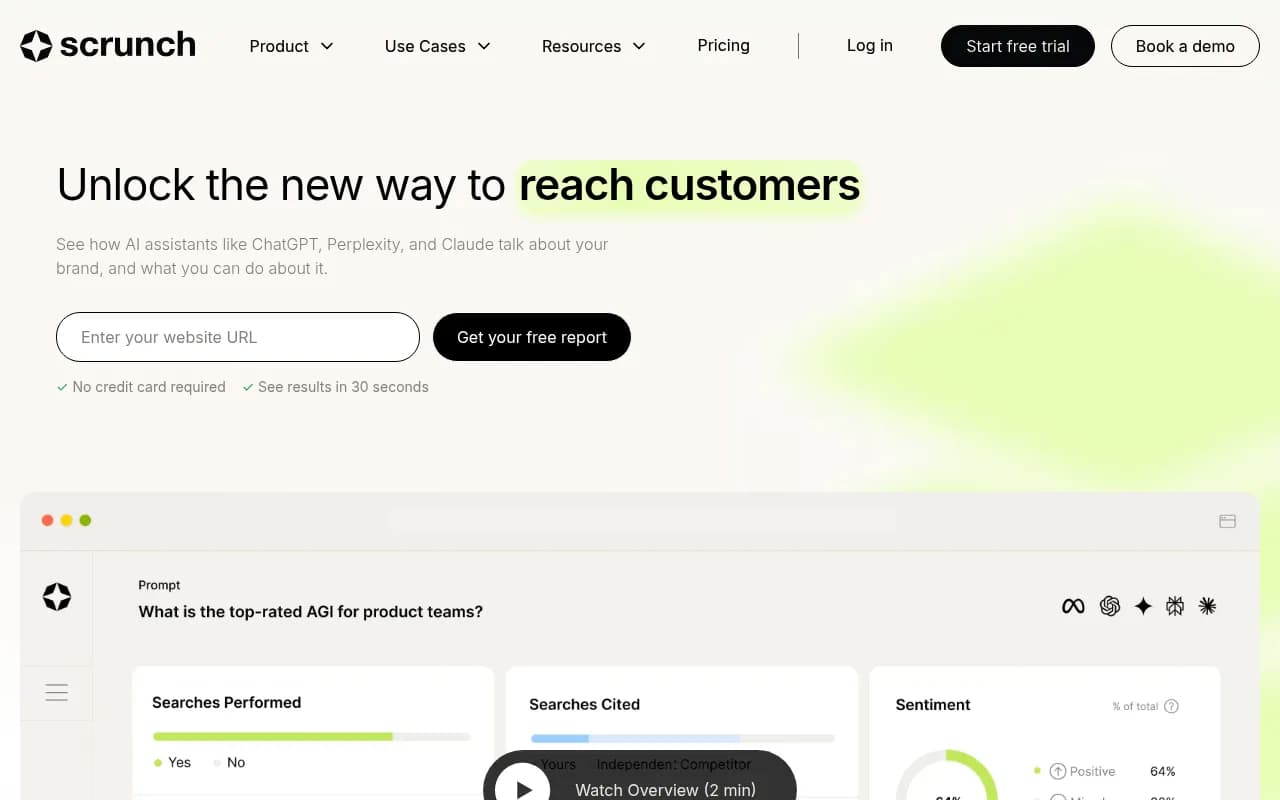
These all offer some form of AI citation tracking, though they vary significantly in depth. Otterly.AI and Peec.ai are solid for basic monitoring. Profound has stronger enterprise features. Promptwatch is the one that goes furthest into the "what do I do about it" territory — content gap analysis, AI writing tools, crawler logs, and traffic attribution all in one place.
For the reporting layer, Looker Studio is the obvious choice given it's free and integrates natively with GA4. If you need more advanced BI capabilities, Tableau is worth considering for enterprise use cases.
Which one should you use?
The framing of "GA4 vs. Looker Studio" is a bit of a false choice — they're not competing for the same job. The real question is: what are you actually trying to measure?
If you want to understand user behavior on your website and track traffic from AI referrers, GA4 is the right tool. Set it up properly, create segments for AI traffic sources, and connect it to Search Console.
If you want to present that data to clients or stakeholders in a clean, branded, shareable format, Looker Studio is the right tool. It's free, flexible, and designed for exactly this use case.
If you want to understand your actual AI visibility — what AI models are saying about your brand, which prompts you're winning or losing, how you compare to competitors, and what content you should create next — you need a dedicated AI visibility platform. GA4 and Looker Studio simply don't have the data for that.
The good news is that these tools aren't expensive to run in parallel. GA4 and Looker Studio are both free. A GEO platform like Promptwatch starts at $99/month. For most marketing teams and agencies, the combination gives you a complete picture of how AI search is affecting your business — and what to do about it.