Key Takeaways
- Conductor positions itself as an "enterprise AEO platform" focused on AI search visibility (ChatGPT, Perplexity, Google AI Overviews), while Botify is a technical SEO powerhouse that recently added AI search monitoring
- Pricing: Conductor typically runs $50k-$100k+ annually, Botify $10k-$50k+/month ($120k-$600k+/year) -- both require annual contracts and custom quotes
- Conductor includes a built-in AI content creation tool (Conductor Creator), Botify relies on agentic workflows and automation but doesn't generate content directly
- Botify excels at deep technical SEO -- log file analysis, crawl budget optimization, site performance monitoring. Conductor's technical SEO is lighter.
- Both platforms now track AI search engines, but Conductor markets this as its core value prop while Botify treats it as one piece of a broader search optimization strategy
- Botify claims 5x ROI within 3 years and 30-day time-to-value. Conductor emphasizes brand authority and citation tracking across LLMs.
Overview
Conductor
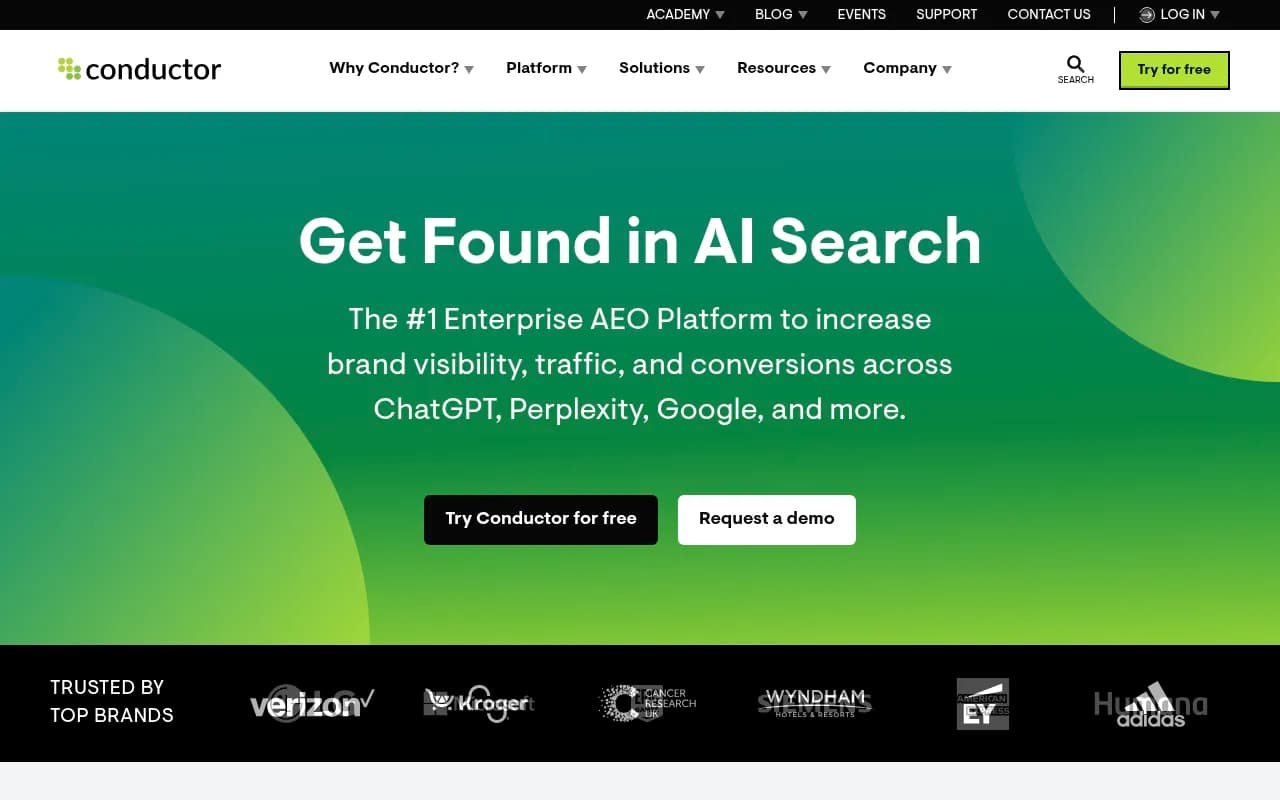
Conductor rebranded itself as "the #1 Enterprise AEO Platform" -- AEO meaning Answer Engine Optimization or AI Engine Optimization, depending on who you ask. The pitch: get found in ChatGPT, Perplexity, Google AI Overviews, and traditional search. The platform combines AI search monitoring (tracking brand mentions and citations in LLMs), SEO intelligence, AI content generation via Conductor Creator, and 24/7 website monitoring. Conductor targets enterprise marketing teams at brands like Verizon, Adidas, Microsoft, and American Express. The platform is built around four modules: Intelligence (keyword research, competitor analysis, AI search tracking), Creator (AI-powered content generation), Monitoring (site health alerts), and Data (API access for custom workflows).
Botify
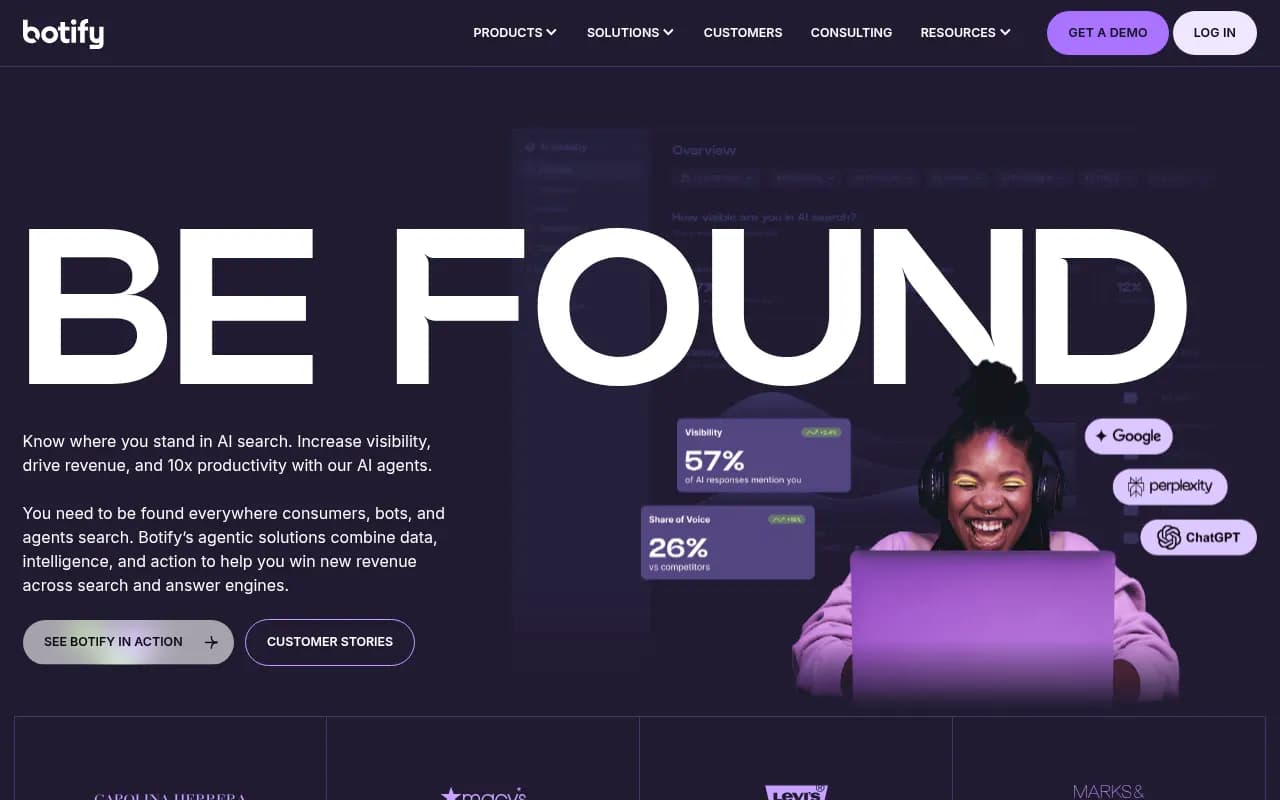
Botify is an enterprise AI search optimization platform that started as a technical SEO tool and expanded into AI search visibility. The core strength: deep technical SEO analytics powered by log file analysis, which shows exactly how search engine bots and AI crawlers interact with your site. Botify now tracks visibility across traditional search engines and AI answer engines (ChatGPT, Perplexity, Google AI Overviews), but the technical foundation remains central. The platform uses "agentic workflows" -- AI agents that automate SEO tasks like identifying crawl issues, prioritizing fixes, and optimizing site architecture. Botify customers include enterprise brands like Ralph Lauren, Carolina Herrera, and major e-commerce sites. Named a Strong Performer in The Forrester Wave 2025 for Enterprise SEO Platforms.
Side-by-Side Comparison
| Feature | Conductor | Botify |
|---|---|---|
| Primary focus | AI search visibility (AEO) + SEO | Technical SEO + AI search optimization |
| AI search tracking | ChatGPT, Perplexity, Google AI Overviews | ChatGPT, Perplexity, Google AI Overviews, AI agents |
| Content creation | Yes (Conductor Creator with AI) | No (automation only) |
| Technical SEO depth | Moderate (site monitoring, basic crawl) | Deep (log file analysis, crawl budget, site architecture) |
| Log file analysis | No | Yes (core feature) |
| AI agents/automation | Limited | Yes (agentic workflows for task automation) |
| Keyword research | Yes (Conductor Intelligence) | Yes |
| Competitor analysis | Yes | Yes |
| Site monitoring | Yes (24/7 alerts) | Yes (performance + bot activity) |
| API access | Yes (Conductor Data) | Yes |
| Pricing | $50k-$100k+/year | $10k-$50k+/month ($120k-$600k+/year) |
| Contract | Annual | Annual |
| Free trial | Yes | Demo-based (30-day time-to-value claim) |
| Target audience | Enterprise marketing teams | Enterprise SEO/technical teams |
| G2 Score | Higher overall satisfaction | Lower than Conductor on G2 |
AI search visibility and AEO capabilities
Conductor built its 2026 positioning around AI search. The platform tracks brand mentions, authority scores, and citations across ChatGPT, Perplexity, and Google AI Overviews. You see where your brand appears in AI-generated answers, how often you're cited, and which competitors are winning for specific queries. The Intelligence module shows keyword opportunities in both traditional search and AI engines. Conductor frames this as "getting found in AI search" -- the idea that AI models need to discover and cite your content to recommend your brand.
Botify added AI search tracking more recently but approaches it differently. The platform monitors visibility across AI answer engines and ties it back to technical performance -- can AI crawlers actually access your pages? Are they hitting rate limits? Which pages are they reading? Botify's log file analysis shows real-time bot activity from ChatGPT, Perplexity, and other AI crawlers, so you can see indexing issues before they hurt visibility. The "agentic workflows" automate fixes: if an AI bot can't reach key pages, Botify's agents flag the issue and suggest solutions.
Verdict: Conductor treats AI search as the main event. Botify treats it as one piece of a technical SEO strategy. If your primary goal is tracking brand mentions in ChatGPT and Perplexity, Conductor's interface is more focused. If you want to understand why AI models aren't citing you (crawl issues, site architecture, indexing problems), Botify gives you the technical depth.
Worth noting: tools like Promptwatch specialize in AI search visibility with features both platforms lack -- Reddit/YouTube citation tracking, prompt volume estimates, content gap analysis, and AI-generated articles grounded in citation data. If AI search is your top priority, comparing all three makes sense.

Content creation and optimization
Conductor Creator is a built-in AI content generation tool. You input a topic or keyword, and the platform generates articles, listicles, or product descriptions optimized for both traditional search and AI engines. The AI pulls from Conductor's keyword data and competitor analysis to create content that targets specific queries. You can edit drafts in-platform, then publish directly to your CMS or export. The pitch: create content that ranks in Google and gets cited by ChatGPT without hiring a full content team.
Botify doesn't generate content. The platform identifies content gaps and optimization opportunities (which pages need more internal links, which topics you're missing), but you're responsible for creating or updating the content yourself. Botify's agentic workflows can automate some optimization tasks -- like suggesting meta descriptions or flagging thin content -- but it's not a content creation tool.
Verdict: If you need help producing content at scale, Conductor Creator is a clear advantage. If you have a content team and just need technical guidance on what to optimize, Botify's gap analysis is enough.
Technical SEO and site performance
Botify dominates here. The platform's log file analysis is the gold standard for understanding how search engines and AI crawlers interact with your site. You see every bot request -- which pages they crawl, how often, which URLs return errors, where they hit rate limits. This data is critical for large sites (e-commerce, publishers, enterprise) where crawl budget matters. Botify also analyzes site architecture, identifies orphaned pages, suggests internal linking improvements, and monitors page speed at scale.
Conductor Monitoring offers 24/7 site health alerts -- broken links, server errors, indexing issues -- but it's not as deep. You get notifications when something breaks, but you don't get the granular bot-level data Botify provides. Conductor's technical SEO is adequate for most enterprise marketing teams who aren't managing massive, complex sites.
| Technical SEO Feature | Conductor | Botify |
|---|---|---|
| Log file analysis | No | Yes |
| Crawl budget optimization | Basic | Advanced |
| Site architecture analysis | Moderate | Deep |
| Broken link detection | Yes | Yes |
| Page speed monitoring | Yes | Yes |
| Orphaned page detection | Limited | Yes |
| Internal linking suggestions | Basic | Advanced |
| Bot activity tracking | Limited | Real-time, granular |
Verdict: If technical SEO is a priority -- especially for large, complex sites -- Botify is the better choice. If you just need basic site monitoring and alerts, Conductor is enough.
Keyword research and competitor analysis
Both platforms offer robust keyword research and competitor tracking. Conductor Intelligence shows keyword volumes, difficulty scores, SERP features, and which competitors rank for each term. You can track competitor content performance, see which keywords they're winning, and identify gaps in your own strategy. The AI search layer adds visibility into which brands are cited in ChatGPT or Perplexity for specific queries.
Botify's keyword research is similarly comprehensive, with a focus on tying keywords back to technical performance. The platform shows which keywords drive traffic to which pages, then flags technical issues that might be limiting rankings (slow load times, crawl errors, poor internal linking). Botify's competitor analysis is more technical -- you see how competitors' site architectures differ from yours, not just which keywords they rank for.
Verdict: Conductor's keyword research feels more marketing-friendly. Botify's is more technical. Both are strong; pick based on your team's skill set.
Automation and AI agents
Botify's "agentic workflows" are AI agents that automate repetitive SEO tasks. Examples: automatically flagging pages with thin content, suggesting meta description updates, identifying crawl issues and prioritizing fixes, recommending internal links. The agents run continuously and surface insights without manual analysis. Botify claims this "10x productivity" by reducing the time SEO teams spend on audits and reporting.
Conductor's automation is lighter. The platform sends alerts when site issues arise and can auto-generate content drafts via Conductor Creator, but it doesn't have the same level of task automation. You're still doing most of the analysis and decision-making manually.
Verdict: If you want to offload routine SEO tasks to AI, Botify's agents are more advanced. Conductor is more hands-on.
Pricing comparison
Both platforms require custom quotes and annual contracts, so exact pricing varies by site size, traffic, and feature set. Based on available data:
| Plan Type | Conductor | Botify |
|---|---|---|
| Typical annual cost | $50k-$100k+ | $120k-$600k+ ($10k-$50k+/month) |
| Contract length | Annual | Annual |
| Free trial | Yes | Demo-based |
| ROI claim | Not specified | 5x ROI within 3 years |
| Time to value | Not specified | 30 days |
Conductor is generally cheaper, especially at the lower end. Botify's pricing scales with site complexity -- larger sites with more pages and higher traffic pay more. Botify's ROI claim (5x return within 3 years) suggests the platform expects to drive significant revenue increases, which justifies the higher cost for large enterprises.
Verdict: Conductor is more accessible for mid-sized enterprises or brands with smaller budgets. Botify is priced for large enterprises with complex sites where technical SEO directly impacts revenue.
User experience and learning curve
G2 reviews consistently rate Conductor higher for overall user satisfaction. Users describe the interface as intuitive and marketing-friendly -- you don't need deep technical SEO knowledge to navigate the platform. The AI search tracking dashboards are visual and easy to interpret. Conductor Creator's content generation workflow is straightforward.
Botify has a steeper learning curve. The platform is built for technical SEO specialists who understand log files, crawl budgets, and site architecture. The depth of data is impressive but can overwhelm non-technical users. Botify's interface is more utilitarian -- less polished than Conductor's but more powerful for users who know what they're doing.
Verdict: Conductor is easier to onboard and use, especially for marketing teams without dedicated SEO engineers. Botify requires technical expertise but rewards it with deeper insights.
Integrations and data access
Both platforms offer API access for custom integrations and reporting. Conductor Data lets you pull keyword data, competitor insights, and AI search metrics into your own dashboards or BI tools. Botify's API exposes log file data, crawl metrics, and site performance data.
Neither platform lists extensive third-party integrations publicly. Both expect enterprise customers to build custom workflows via API rather than relying on pre-built connectors.
Verdict: Tie. Both platforms are API-first and designed for enterprises with engineering resources.
Support and onboarding
Both platforms offer white-glove support for enterprise customers -- dedicated account managers, onboarding assistance, and ongoing consulting. Conductor emphasizes ease of use and faster time-to-value. Botify's 30-day time-to-value claim suggests a structured onboarding process, but the technical complexity means you'll likely need more hand-holding initially.
Verdict: Conductor's support is geared toward marketing teams. Botify's support assumes technical SEO expertise.
Pros and cons
Conductor pros
- Strong focus on AI search visibility (AEO) with clear dashboards
- Built-in AI content generation (Conductor Creator)
- More affordable than Botify for most enterprises
- Higher G2 user satisfaction scores
- Easier learning curve for non-technical users
- Free trial available
Conductor cons
- Technical SEO capabilities are limited compared to Botify
- No log file analysis
- Automation is basic -- mostly alerts, not task automation
- AI search tracking is newer and less proven than core SEO features
Botify pros
- Best-in-class technical SEO with log file analysis
- Deep crawl budget optimization and site architecture insights
- Agentic workflows automate repetitive SEO tasks
- Real-time bot activity tracking (search engines + AI crawlers)
- Strong ROI claim (5x within 3 years)
- Named a Strong Performer in Forrester Wave 2025
Botify cons
- Significantly more expensive than Conductor
- Steep learning curve -- requires technical SEO expertise
- No built-in content creation tool
- Lower G2 user satisfaction scores
- AI search features feel like an add-on, not the core product
Who should choose which tool
Choose Conductor if:
- Your primary goal is tracking and improving AI search visibility (brand mentions in ChatGPT, Perplexity, Google AI Overviews)
- You need help creating content at scale with AI
- Your team is marketing-focused without deep technical SEO expertise
- You want a platform that's easier to learn and use
- Your budget is $50k-$100k/year
- You're a mid-sized to large enterprise prioritizing brand authority in AI engines
Choose Botify if:
- You manage a large, complex site (e-commerce, publisher, enterprise) where technical SEO directly impacts revenue
- You need deep log file analysis and crawl budget optimization
- You have a technical SEO team that can leverage advanced features
- You want AI agents to automate routine SEO tasks
- You can justify $120k-$600k+/year based on ROI
- Technical performance (site speed, indexing, architecture) is a bigger concern than content creation
Consider both if:
- You're a large enterprise that needs both AI search visibility and deep technical SEO
- You have the budget to run both platforms (some enterprises do this)
- You want to compare which platform delivers better ROI for your specific use case
Final verdict
Conductor and Botify solve different problems. Conductor is an AI search visibility platform with SEO features. Botify is a technical SEO platform with AI search features. If your main concern is "How do we get cited in ChatGPT and Perplexity?", Conductor's AEO focus and content creation tools are a better fit. If your main concern is "Why isn't Google (or ChatGPT) crawling our most important pages?", Botify's log file analysis and technical depth are unmatched.
For most enterprises, the decision comes down to team composition and priorities. Marketing-led organizations with content needs will prefer Conductor's ease of use and AI content generation. Technical SEO teams managing large sites will prefer Botify's depth and automation. Both platforms are expensive and require annual commitments, so request demos, run pilots if possible, and make sure the platform aligns with your team's skill set and strategic goals.