Summary
- The GEO tool market exploded from 3 platforms in 2023 to 50+ in 2026, but no authoritative comparison directory emerged to help buyers navigate the chaos
- Fragmentation happened because GEO sits at the intersection of SEO, analytics, content ops, and AI -- no single industry owns it
- Most "comparison" content is vendor-funded listicles or affiliate spam, not genuine buyer guides
- Agencies solve this by building internal scorecards that prioritize action (content generation, gap analysis) over passive monitoring
- The best platforms combine tracking with optimization tools -- monitoring alone leaves you stuck
The problem no one talks about
You're a marketing director. Your CEO just asked why competitors rank in ChatGPT and you don't. You Google "GEO tools" and find 50 platforms, zero useful comparisons, and a wall of affiliate blog spam. Every vendor claims to be "the leading AI visibility platform." You spend three weeks building a spreadsheet, demoing tools, and cross-referencing feature lists. By the time you pick something, a new competitor launched.
This is the missing resource problem. The GEO tool market grew faster than the infrastructure to evaluate it.
Why no directory exists
Three reasons explain the gap.
GEO doesn't belong to one industry
Traditional SEO has Moz, Ahrefs, and Semrush as anchors. Marketing automation has HubSpot and Marketo. GEO sits awkwardly between SEO, content ops, brand monitoring, and AI analytics. SEO teams want keyword tracking. Content teams want writing tools. Brand teams want reputation management. No single buyer persona owns the budget, so no single directory emerged to serve them.
G2 and Capterra list GEO tools under "SEO Software" or "Brand Monitoring," but the categories don't fit. A platform like Promptwatch combines rank tracking, content gap analysis, AI writing agents, and crawler log monitoring -- it's not purely SEO or purely analytics. The existing taxonomies break.

Vendor funding corrupts comparison content
Most "Top 10 GEO Tools" articles are affiliate plays or vendor-sponsored listicles. The author gets paid when you click a link or sign up. This creates perverse incentives: tools with affiliate programs get ranked higher than tools that don't offer commissions. Platforms like Profound or Evertune -- which don't run affiliate programs -- get buried, even if they're objectively better for certain use cases.
The result: comparison content optimizes for revenue, not accuracy. Readers can't trust it.
The market moves too fast for static directories
New GEO platforms launch monthly. Features change weekly. A directory published in January is outdated by March. Maintaining a comprehensive, accurate comparison resource requires full-time staff and a business model that doesn't rely on vendor sponsorship. No one has built that yet.
Some platforms tried. Rankshift launched a comparison page in 2025, but it only compared tools Rankshift considered competitors (and unsurprisingly ranked itself first). Otterly.AI published a "GEO landscape" report, but it was a lead magnet, not a neutral resource.
How agencies actually evaluate GEO tools
Agencies can't wait for a perfect directory. They built their own frameworks. Here's what works.
The action loop scorecard
The best agencies evaluate tools on one question: does this platform help me fix problems, or just show me problems?
Monitoring-only tools (Otterly.AI, Peec.ai, AthenaHQ) tell you where you're invisible. They don't help you become visible. You see a dashboard that says "Competitor X appears in 80% of ChatGPT responses for 'project management software' and you appear in 12%." Great. Now what?
Action-oriented platforms (Promptwatch, Searchable, Relixir) show you the gap, then help you close it. They surface the specific content your site is missing, generate drafts grounded in citation data, and track whether the new content gets picked up by AI models. The loop closes.
| Tool Type | What it shows | What it does | Best for |
|---|---|---|---|
| Monitoring-only | Visibility scores, competitor heatmaps, citation counts | Nothing -- you export CSVs and figure it out | Reporting to executives |
| Action-oriented | Same visibility data + content gap analysis + AI writing agent | Generates missing content, tracks results, closes the loop | Teams that need to improve rankings |
Agencies prioritize the second category. Clients don't pay for dashboards. They pay for results.
The feature matrix (what actually matters)
Agencies use a weighted scorecard. Not all features matter equally.
Tier 1 (must-have):
- Multi-model tracking (ChatGPT, Perplexity, Claude, Gemini minimum)
- Prompt volume estimates (which queries are high-value?)
- Competitor benchmarking (who's winning and why?)
- Citation/source analysis (which pages get cited?)
Tier 2 (high-value differentiators):
- Content gap analysis (what's missing from your site?)
- AI writing agent (can it generate the missing content?)
- Crawler log monitoring (are AI bots even reading your site?)
- Reddit/YouTube tracking (where do AI models pull data from?)
Tier 3 (nice-to-have):
- ChatGPT Shopping tracking
- Multi-language support
- API access
- White-label reporting
Most platforms nail Tier 1. The winners differentiate on Tier 2. Promptwatch is the only platform that offers all Tier 2 features in one place -- most competitors force you to stitch together 3-4 tools.
The integration test
Agencies ask: does this tool fit our existing workflow, or does it create a new silo?
Platforms that integrate with Google Search Console, Looker Studio, or marketing automation tools (HubSpot, Marketo) win. Standalone dashboards that require manual CSV exports lose. The best agencies run GEO tracking inside their existing reporting stack, not as a separate login.
Promptwatch offers Looker Studio connectors and a full API. Otterly.AI and Peec.ai don't. That's a dealbreaker for agencies managing 20+ clients.
The tools that actually matter in 2026
Here's the shortlist agencies use when they don't have time to evaluate 50 platforms.
For teams that need the full action loop
Promptwatch is the only platform rated as a "Leader" across all categories in a 2026 comparison of 12 GEO tools. It combines monitoring (10 AI models, 880M+ citations analyzed), optimization (content gap analysis, AI writing agent, prompt intelligence), and attribution (traffic tracking via code snippet or GSC integration). Pricing starts at $99/mo for small teams, scales to custom enterprise plans.
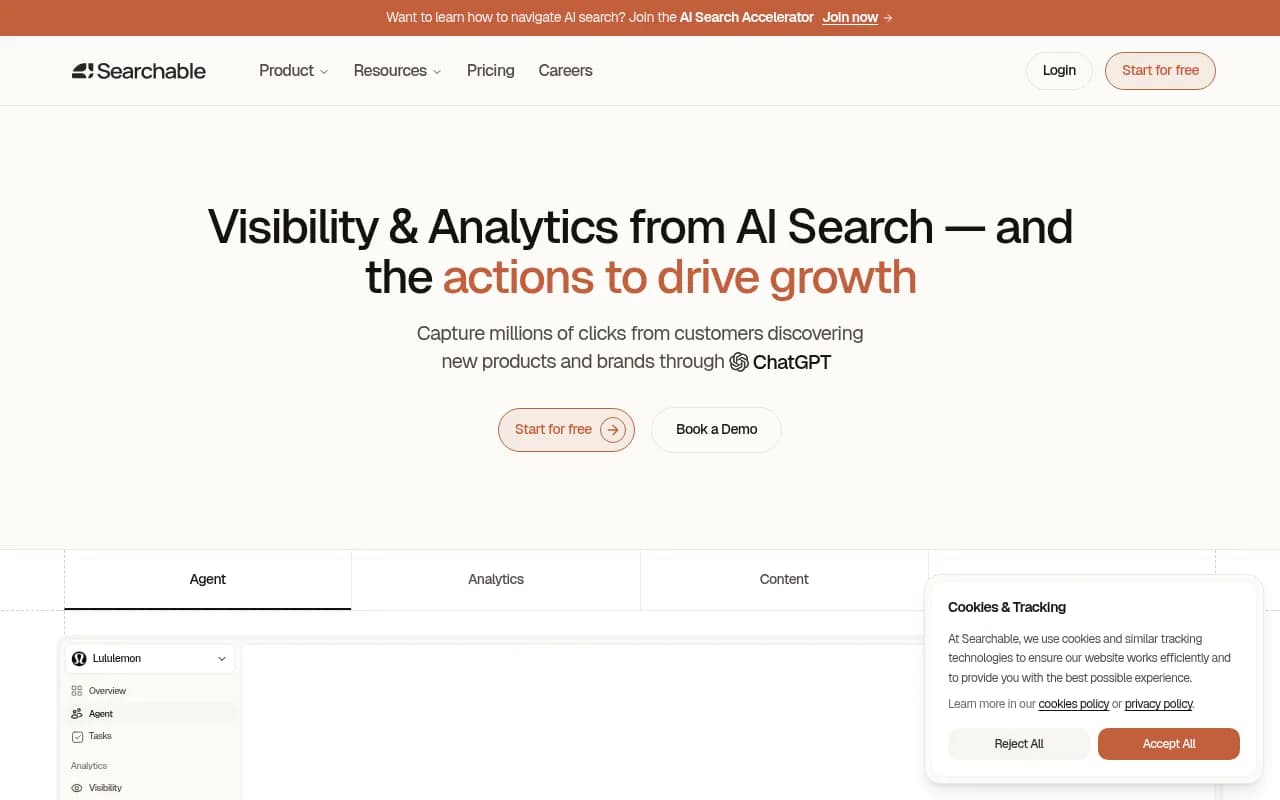
Searchable offers similar capabilities but focuses more on content generation workflows. It's a strong alternative if your team already has a content ops process and just needs AI visibility data plugged in.
For enterprise teams with big budgets
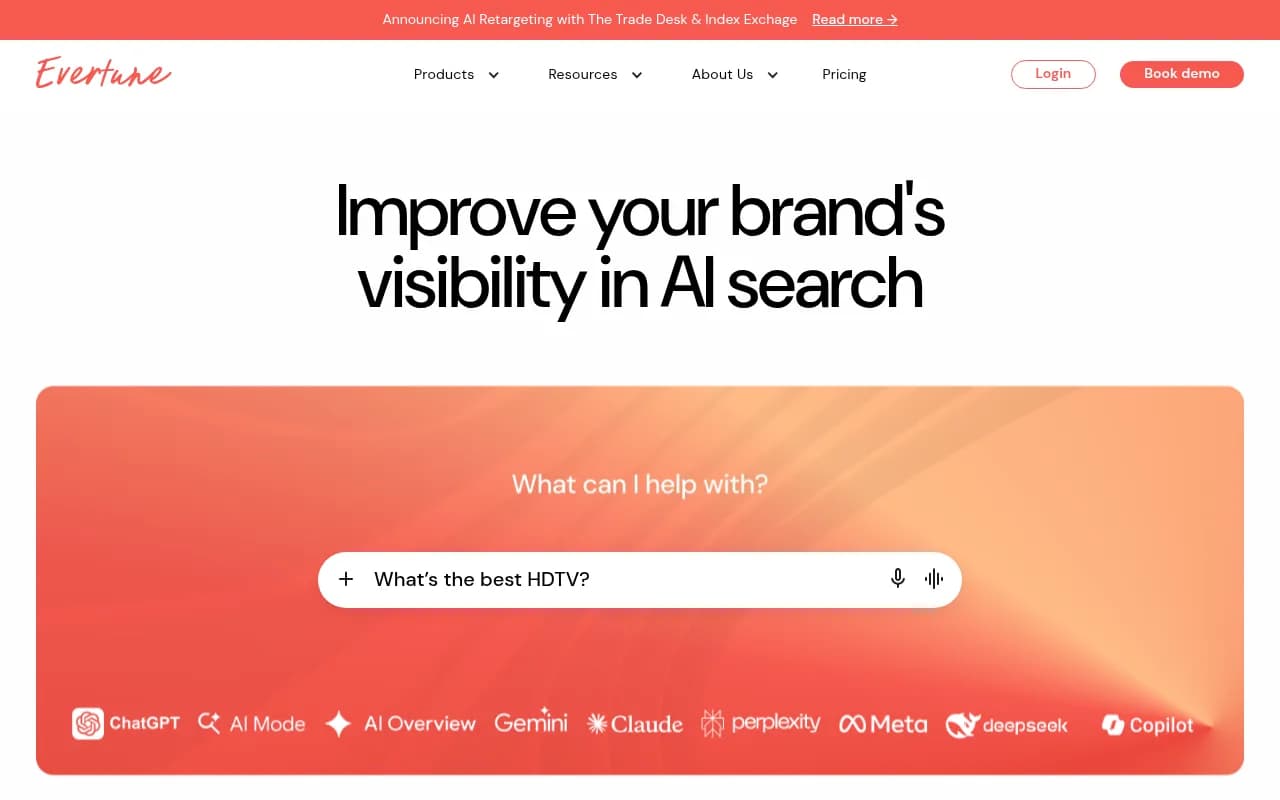
Profound and Evertune target Fortune 500 brands. They offer white-glove onboarding, custom reporting, and dedicated account managers. Pricing starts at $2K+/mo. Feature sets are strong, but you're paying for service, not just software.
Profound

For agencies managing multiple clients
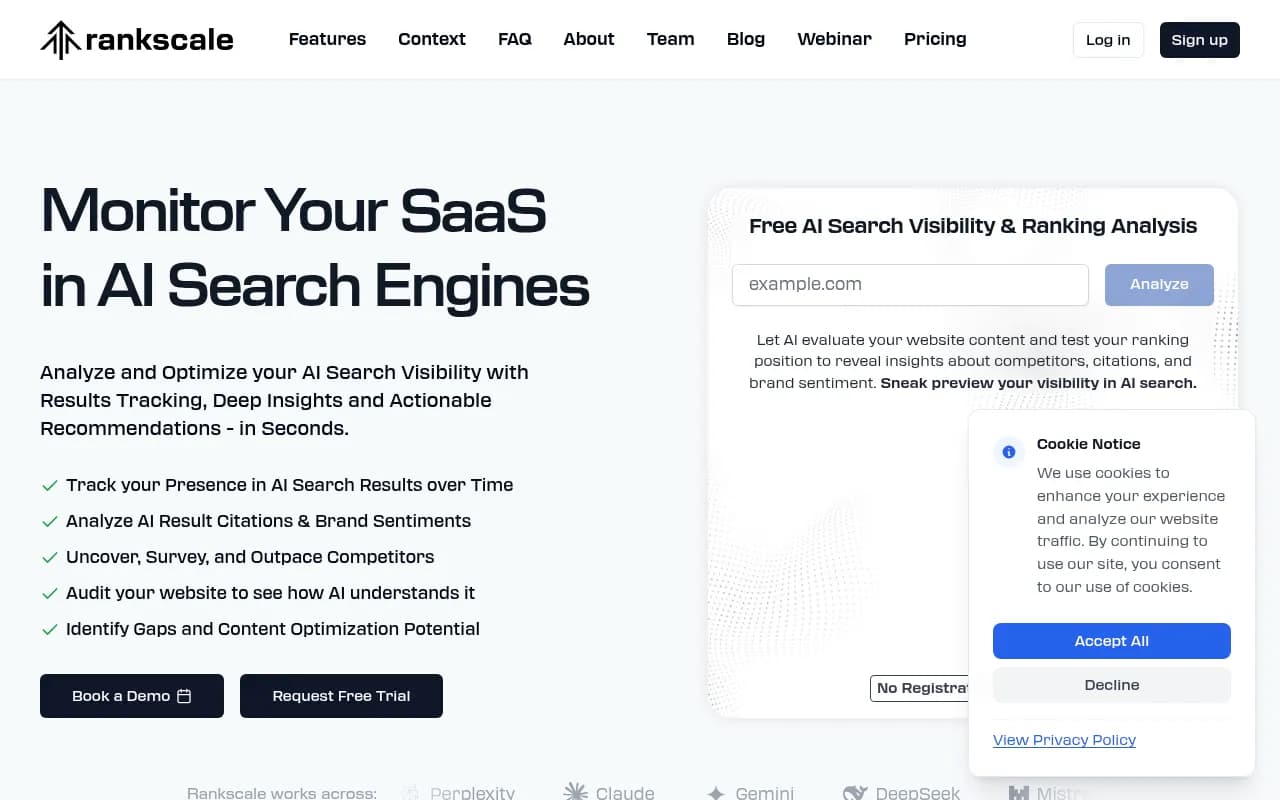
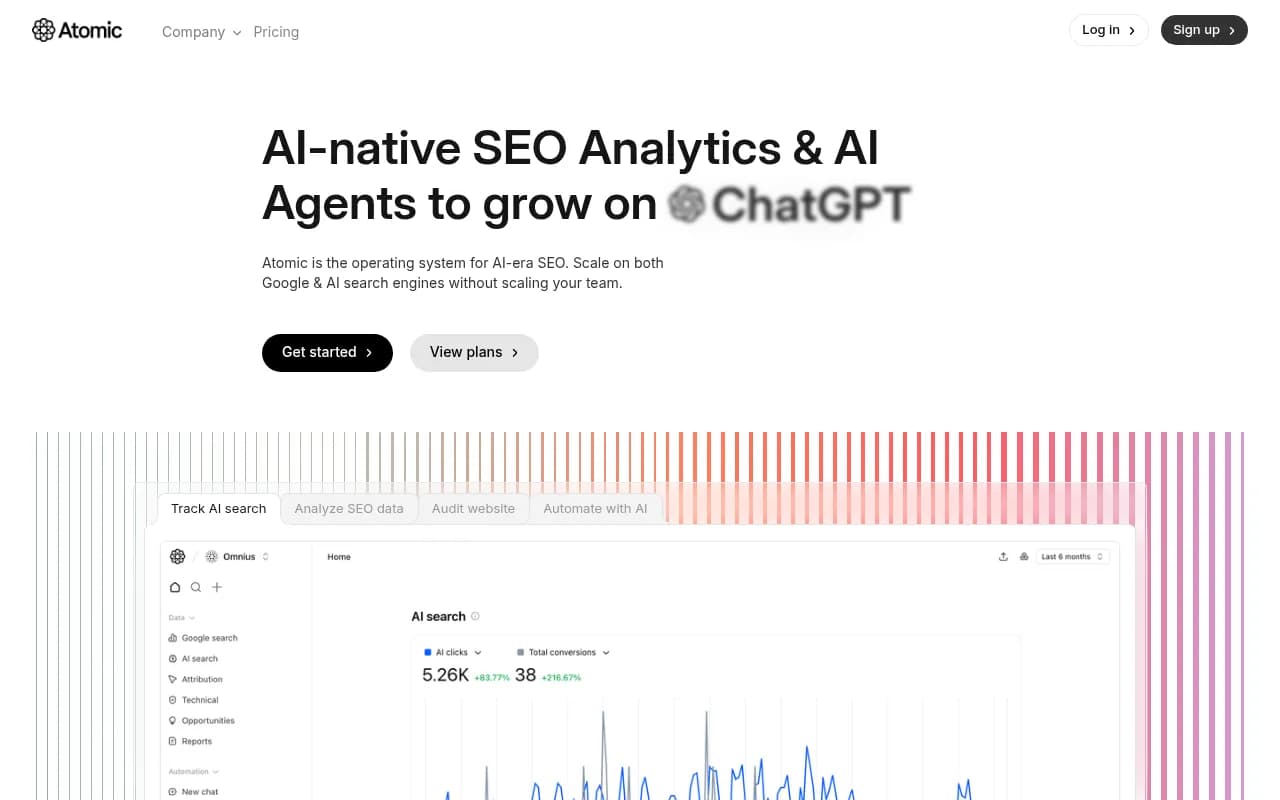
Rankscale and Atomic AGI are built for agencies. Multi-client dashboards, white-label reporting, and tiered pricing that scales with client count. Both offer strong Tier 1 features but lack the content generation tools that Promptwatch includes.
For teams on a budget
Otterly.AI and Peec.ai are monitoring-only platforms that start around $50-100/mo. They're fine if you just need visibility scores and competitor benchmarks. But you'll hit a wall when you try to act on the data -- no content gap analysis, no writing agent, no crawler logs.
Otterly.AI


The comparison table agencies actually use
Here's the internal scorecard from a 40-person agency that evaluated 15 GEO platforms in Q1 2026.
| Platform | Models tracked | Content gaps | AI writer | Crawler logs | Reddit/YouTube | Starting price | Best for |
|---|---|---|---|---|---|---|---|
| Promptwatch | 10 | Yes | Yes | Yes | Yes | $99/mo | Teams that need the full loop |
| Searchable | 8 | Yes | Yes | No | No | $149/mo | Content-first teams |
| Profound | 11 | No | No | No | No | $2K+/mo | Enterprise reporting |
| Evertune | 9 | No | No | Yes | No | $2K+/mo | Fortune 500 brands |
| Rankscale | 7 | No | No | No | No | $199/mo | Agencies (multi-client) |
| Atomic AGI | 8 | Yes | No | Yes | No | $299/mo | Agencies (workflow automation) |
| Otterly.AI | 6 | No | No | No | No | $79/mo | Budget monitoring |
| Peec.ai | 5 | No | No | No | No | $99/mo | Budget monitoring |
The agency picked Promptwatch for 90% of clients. Profound for two enterprise accounts that demanded white-glove service. Otterly.AI for one client who only wanted quarterly reports.
Why this matters for your team
If you're evaluating GEO tools in 2026, you're navigating a market with no map. Vendor comparisons are biased. Affiliate content is corrupt. G2 reviews are gamed.
The shortcut: prioritize platforms that close the action loop. Monitoring tells you where you're losing. Optimization helps you win. Most tools only do the first part.
Agencies learned this the hard way. They spent 2024-2025 buying monitoring tools, realized dashboards don't move the needle, and rebuilt their stacks around platforms that generate content and track results.
You can skip that mistake. Start with the action loop. Pick tools that help you fix problems, not just see them.
What agencies wish existed
Here's what the market still needs:
A neutral comparison directory funded by subscriptions, not vendor sponsorships. Think Wirecutter for GEO tools -- ruthlessly honest, regularly updated, no affiliate links.
Standardized benchmarks so buyers can compare apples to apples. Right now, every vendor reports metrics differently. "Visibility score" means something different at Promptwatch vs Otterly.AI vs Profound. The industry needs a shared framework.
Open-source evaluation frameworks so teams can test tools against their own data before buying. A few platforms (Promptwatch, Searchable) offer free trials, but most require a sales call and a contract.
Until those exist, agencies will keep building internal scorecards and sharing them in private Slack channels. The missing resource problem won't solve itself. Someone needs to build the infrastructure.
How to evaluate tools yourself
If you're starting from scratch, here's the process agencies use:
-
Define your goal. Are you trying to monitor competitors, improve your own rankings, or both? Monitoring-only tools are cheaper but less useful. Optimization platforms cost more but deliver ROI.
-
List your must-haves. Which AI models matter to your audience? Do you need multi-language support? White-label reporting? API access? Rank features by importance.
-
Test the action loop. Sign up for trials. Run a competitor analysis. See if the platform surfaces content gaps. Try the AI writing agent (if it has one). Check if the output is usable or generic.
-
Check integrations. Does it plug into your existing stack (GSC, Looker, HubSpot)? Or does it create a new silo?
-
Calculate ROI. If the tool helps you rank for one high-value prompt that drives 50 leads/month, what's that worth? Compare that to the subscription cost.
Most teams skip step 3. They buy based on feature lists, not hands-on testing. That's why they end up with monitoring tools that don't move the needle.
The bottom line
The GEO tool market is a mess. No directory exists because the category is too new, too fragmented, and too fast-moving. Vendor comparisons are biased. Affiliate content is corrupt.
Agencies solved this by building internal scorecards that prioritize action over monitoring. They ask: does this tool help me fix problems, or just show me problems?
The winners -- Promptwatch, Searchable, Relixir -- combine tracking with optimization. They show you where you're invisible, then help you become visible. The losers -- Otterly.AI, Peec.ai, AthenaHQ -- stop at monitoring.
If you're evaluating tools, start with the action loop. Pick platforms that close it. Everything else is noise.