Key Takeaways
- AI search is mainstream: 67% of organizations use LLMs, and 63% of marketers prioritize GEO—yet most brands remain invisible in ChatGPT, Claude, Perplexity, and other AI engines
- Traditional SEO isn't enough: E-commerce sites lost 22% of search traffic in 2025 as AI-generated answers replaced click-throughs. Brands optimizing for AI saw 150%+ growth in citations
- Monitoring alone won't save you: Most AI visibility tools only show you data. The winners are using platforms that identify content gaps, generate optimized content, and track results in a closed loop
- Multi-engine tracking is critical: Each AI model (ChatGPT, Claude, Gemini, Perplexity) returns different answers and cites different sources. You can't optimize what you don't measure
- Content quality beats keyword stuffing: AI models reward depth, structure, and credibility—not SEO tricks from 2018. Shallow content gets ignored; comprehensive guides get cited
AI search is no longer experimental. It's how your customers find solutions, compare vendors, and make decisions. In 2025, the shift became undeniable: 67% of organizations adopted large language models, the global LLM market hit a trajectory toward $82.1 billion by 2033, and e-commerce sites watched 22% of their search traffic vanish as AI-generated answers replaced traditional clicks.
Yet most brands are still invisible. They're not showing up in ChatGPT recommendations. They're absent from Perplexity's cited sources. Claude doesn't mention them. Gemini suggests competitors instead.
The gap between winners and losers in AI search comes down to ten critical mistakes. Some are rooted in outdated SEO habits. Others stem from misunderstanding how AI models discover, evaluate, and cite content. A few are operational—brands that treat AI search as optional, or trust monitoring-only tools that show problems but offer no solutions.
This guide breaks down the mistakes killing your AI visibility in 2026, why they matter, and how to fix them before your competitors do.
Mistake 1: Treating AI Search as Optional
The Problem: Many brands still view generative engine optimization (GEO) as a nice-to-have experiment. They're waiting for "proof" that AI search matters before investing resources.
Why It's Killing You: Your prospects aren't waiting. They're already using ChatGPT to research vendors, asking Claude for product comparisons, and trusting Perplexity's cited sources. If you're not visible in those responses, you don't exist in their consideration set.
The data is clear: 63% of marketers prioritized GEO in their 2024-25 strategies. Brands that implemented GEO saw citation increases of 150%+ while competitors lost traffic. This isn't a future trend—it's the current reality.
The Fix: Treat GEO as a core discovery channel, not a side project. Assign ownership, set KPIs (citation rates, visibility scores, AI-driven traffic), and integrate AI search monitoring into your regular reporting. If you're tracking Google rankings, you should be tracking ChatGPT citations.
Mistake 2: Monitoring Only One AI Model
The Problem: Brands check ChatGPT, see their name mentioned once, and assume they're covered. They ignore Claude, Gemini, Perplexity, and other engines.
Why It's Killing You: Each AI model has different training data, update cycles, and ranking logic. A brand that ranks first in ChatGPT might be invisible in Claude. Perplexity cites different sources than Gemini. Your customers use multiple AI tools—if you're only visible in one, you're missing most of the market.
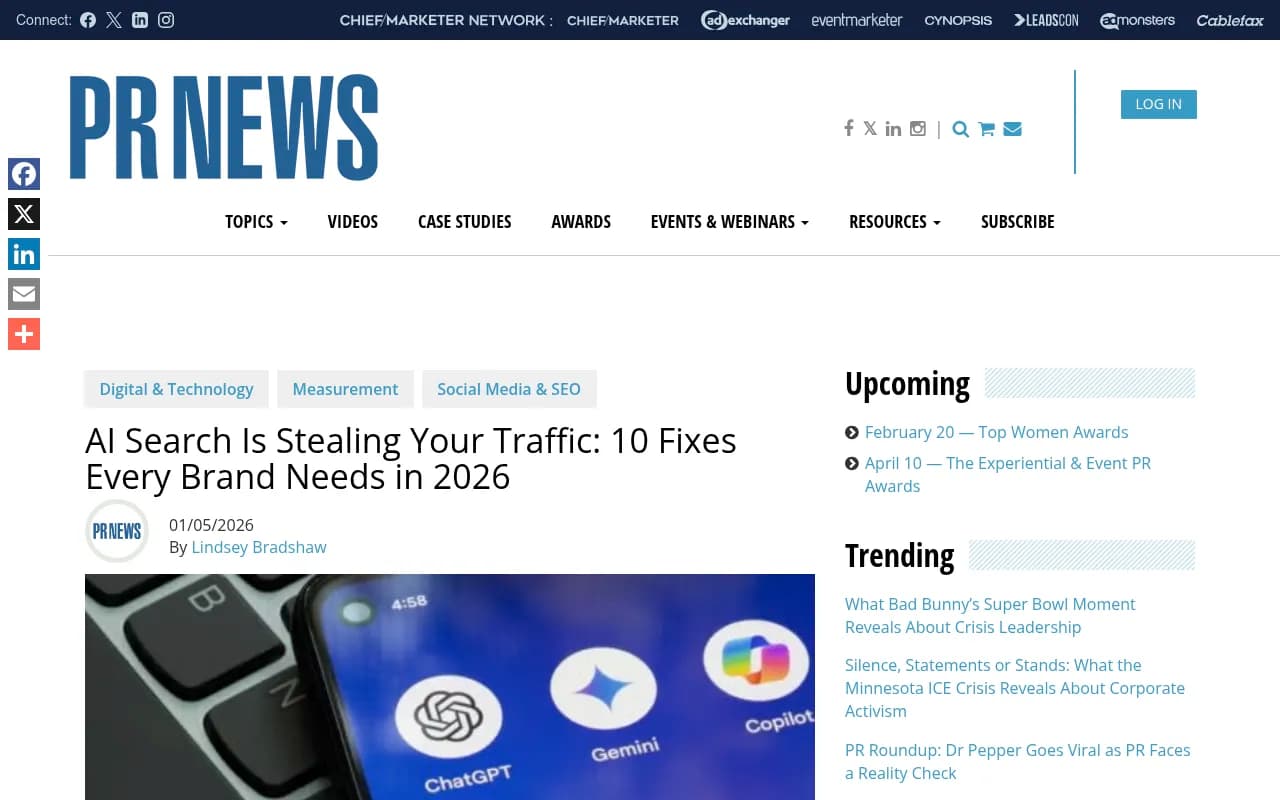
The Fix: Track your brand across all major AI engines: ChatGPT, Claude, Gemini, Perplexity, Meta AI, Grok, DeepSeek, Copilot, and Google AI Overviews. Tools like Promptwatch monitor 10+ models simultaneously, showing you where you're visible, where you're missing, and which competitors are winning in each engine.

Mistake 3: Relying on Monitoring-Only Tools
The Problem: Most AI visibility platforms are dashboards. They show you charts, citation counts, and competitor mentions—then leave you stuck. You know you're invisible, but you don't know why or how to fix it.
Why It's Killing You: Data without action is just noise. Monitoring tools tell you what's broken but don't help you fix it. You're paying for reports that highlight problems your team can't solve.
The gap between monitoring and optimization is where most brands fail. They see low visibility scores, shrug, and move on. Meanwhile, competitors using optimization platforms are identifying content gaps, generating AI-optimized articles, and climbing the rankings.
The Fix: Use a platform built around the action loop: find gaps, create content, track results. Promptwatch's Answer Gap Analysis shows exactly which prompts competitors rank for but you don't—then its AI writing agent generates content grounded in 880M+ citations, prompt volumes, and competitor analysis. You're not just monitoring; you're fixing.
Mistake 4: Ignoring Content Gaps
The Problem: Brands assume their existing content is "good enough." They've got blog posts, product pages, and case studies—surely AI models will find something to cite.
Why It's Killing You: AI models don't cite content that doesn't exist. If your competitors have comprehensive guides on "best [category] tools for [use case]" and you don't, they get the citations. If they've published comparison articles and you haven't, they win the recommendations.
Content gaps are the single biggest reason brands stay invisible. You're not competing against your website's current content—you're competing against every piece of content AI models can access.
The Fix: Run a content gap analysis. Identify prompts where competitors appear but you don't. Look for patterns: Are they writing listicles? Comparisons? How-to guides? What topics are they covering that you're missing?
Then fill the gaps. Promptwatch's AI writing agent generates articles, listicles, and comparisons engineered to get cited—not generic SEO filler, but content grounded in real citation data and prompt intelligence.
Mistake 5: Publishing Shallow, Keyword-Stuffed Content
The Problem: Brands are still writing for 2018 Google. They're optimizing for keyword density, stuffing H2s with exact-match phrases, and publishing 500-word articles that say nothing.
Why It's Killing You: AI models reward depth, structure, and credibility—not keyword tricks. Shallow content gets ignored. Articles that don't answer the user's question get skipped. Keyword-stuffed fluff gets filtered out.
ChatGPT, Claude, and Perplexity are trained to prioritize comprehensive, well-structured content from authoritative sources. If your content looks like SEO spam, it won't get cited.
The Fix: Write for humans and AI models, not search engines. Focus on:
- Depth: Cover topics comprehensively. Answer follow-up questions. Provide context.
- Structure: Use clear headings, bullet points, and logical flow. AI models parse structure to understand content.
- Credibility: Cite sources, include data, and demonstrate expertise. AI models favor authoritative content.
- Freshness: Update regularly. AI models prioritize recent content over outdated articles.
If you're generating content at scale, use tools that understand AI search requirements—not generic AI writers that produce shallow filler.
Mistake 6: Neglecting Structured Data and Technical SEO
The Problem: Brands ignore schema markup, XML sitemaps, and technical optimization. They assume AI models will "figure it out."
Why It's Killing You: AI crawlers (ChatGPT, Claude, Perplexity) behave differently than Googlebot. They have different indexing priorities, error tolerances, and content preferences. If your site has broken links, slow load times, or missing schema, AI crawlers may skip your content entirely.
Structured data helps AI models understand your content's context, entities, and relationships. Without it, you're making AI models guess—and they'll cite competitors who made it easy instead.
The Fix: Implement schema markup (Organization, Article, Product, FAQ, HowTo) to help AI models parse your content. Monitor AI crawler logs to see which pages they're accessing, how often, and what errors they encounter. Fix indexing issues before they cost you citations.
Promptwatch's AI Crawler Logs show real-time data on ChatGPT, Claude, and Perplexity crawlers hitting your site—which pages they read, errors they hit, and how often they return. Most competitors lack this entirely.
Mistake 7: Ignoring Reddit, YouTube, and Third-Party Citations
The Problem: Brands focus exclusively on their own website. They ignore Reddit threads, YouTube videos, and third-party articles that AI models cite.
Why It's Killing You: AI models don't just cite brand websites. They cite Reddit discussions, YouTube tutorials, industry blogs, and comparison sites. If your competitors are active on Reddit answering questions, creating YouTube content, and getting mentioned in third-party articles, they're building citation sources you're missing.
Perplexity, in particular, heavily weights Reddit and YouTube in its responses. If you're not monitoring these channels, you're blind to a major source of AI visibility.
The Fix: Track Reddit threads and YouTube videos that mention your brand or category. Identify high-value discussions where your expertise could add value. Engage authentically—don't spam, but contribute helpful answers that establish credibility.
Promptwatch surfaces Reddit discussions and YouTube videos that directly influence AI recommendations—a channel most competitors ignore entirely.
Mistake 8: Failing to Track AI-Driven Traffic
The Problem: Brands monitor AI citations but don't connect them to actual traffic or revenue. They can't prove ROI, so leadership deprioritizes GEO.
Why It's Killing You: If you can't measure results, you can't justify investment. AI search is driving traffic to your site—but if you're not tracking it separately from organic search, you're missing the full picture.
Without attribution, you can't answer basic questions: Which AI models send the most traffic? Which pages are converting AI-driven visitors? What's the revenue impact of improved AI visibility?
The Fix: Implement AI traffic attribution. Use a tracking snippet, integrate Google Search Console data, or analyze server logs to identify visitors coming from ChatGPT, Claude, Perplexity, and other AI engines.
Promptwatch offers traffic attribution (code snippet, GSC integration, or server log analysis) to connect visibility to actual revenue. Close the loop: find gaps, generate content, track citations, measure traffic.
Mistake 9: Using Generic AI Writing Tools
The Problem: Brands use general-purpose AI writers (ChatGPT, Jasper, Copy.ai) to generate content for AI search. The output is generic, shallow, and optimized for nothing.
Why It's Killing You: Generic AI writers don't understand GEO. They don't know which prompts have high volume, which competitors are winning, or what content gaps exist. They produce filler that sounds good but doesn't get cited.
AI search optimization requires content grounded in citation data, prompt intelligence, and competitor analysis. Generic tools can't provide that.
The Fix: Use AI writing tools built for GEO. Promptwatch's AI writing agent generates articles, listicles, and comparisons grounded in 880M+ citations analyzed, prompt volumes, persona targeting, and competitor analysis. This isn't generic SEO filler—it's content engineered to get cited by ChatGPT, Claude, Perplexity, and other AI models.
Mistake 10: Treating GEO as a One-Time Project
The Problem: Brands run a GEO audit, publish a few articles, and move on. They treat AI search optimization as a checkbox, not an ongoing process.
Why It's Killing You: AI models update constantly. Training data changes. Competitors publish new content. Prompts evolve. If you optimize once and stop, you'll lose ground.
GEO is a continuous cycle: monitor visibility, identify gaps, create content, track results, repeat. Brands that treat it as ongoing win. Brands that treat it as a project lose.
The Fix: Build GEO into your regular workflow. Set up monthly visibility reports. Track citation trends over time. Monitor new prompts and emerging competitors. Update existing content to stay fresh.
Promptwatch's page-level tracking shows exactly which pages are being cited, how often, and by which models. You see your visibility scores improve as AI models start citing your new content—then you double down on what's working.
The Path Forward: From Invisible to Indispensable
AI search isn't replacing traditional SEO—it's adding a new layer of complexity. The brands winning in 2026 are those that treat GEO as a core competency, not a side experiment.
They're monitoring visibility across all major AI engines. They're identifying content gaps and filling them with optimized, comprehensive content. They're tracking AI crawler behavior and fixing technical issues. They're measuring AI-driven traffic and tying it to revenue.
Most importantly, they're using platforms that close the action loop: find gaps, generate content, track results. Monitoring alone won't save you. You need optimization.
If you're making any of the ten mistakes above, you're leaving citations—and revenue—on the table. Your competitors aren't waiting. Neither should you.
Take Action Today
Start by auditing your current AI visibility. Search for your brand and category in ChatGPT, Claude, Gemini, and Perplexity. Where do you appear? Where are you missing? Which competitors are winning?
Then identify your biggest content gaps. What prompts are your competitors visible for that you're not? What topics are they covering that you're missing?
Finally, build a plan to close the gaps. Whether you're using Promptwatch or another platform, the key is moving from monitoring to action. Find the gaps. Create the content. Track the results. Repeat.
AI search is here. The question isn't whether to optimize—it's whether you'll do it before your competitors do.