Key Takeaways
- AI models systematically skip thin, outdated, or poorly structured content—fixing these issues can boost citations by 150%+
- Direct answers in the first 40-60 words, semantic HTML, and complete code examples are table stakes for AI visibility
- Most content fails because it optimizes for output speed instead of citation-worthy depth and structure
- Tools like Promptwatch help identify content gaps and generate articles engineered to rank in AI search engines
- The shift from traditional SEO to AI search optimization (GEO/AEO) requires new metrics: share of voice, citation frequency, and visibility scores
The Invisible Content Crisis
You're publishing content. AI models are reading it. But they're not citing it.
In 2026, this isn't a theory—it's measurable. Brands tracking their AI search visibility are discovering that entire categories of their content library are functionally invisible to ChatGPT, Perplexity, Claude, and Google AI Overviews. Not because the content is bad, but because it's structured in ways AI models have learned to skip.
The data is stark: Google AI Overviews alone drove a 61% drop in organic click-through rates. But some brands are thriving in this new landscape—seeing 150%+ increases in AI citations by fixing specific content format issues that make their pages citation-worthy.
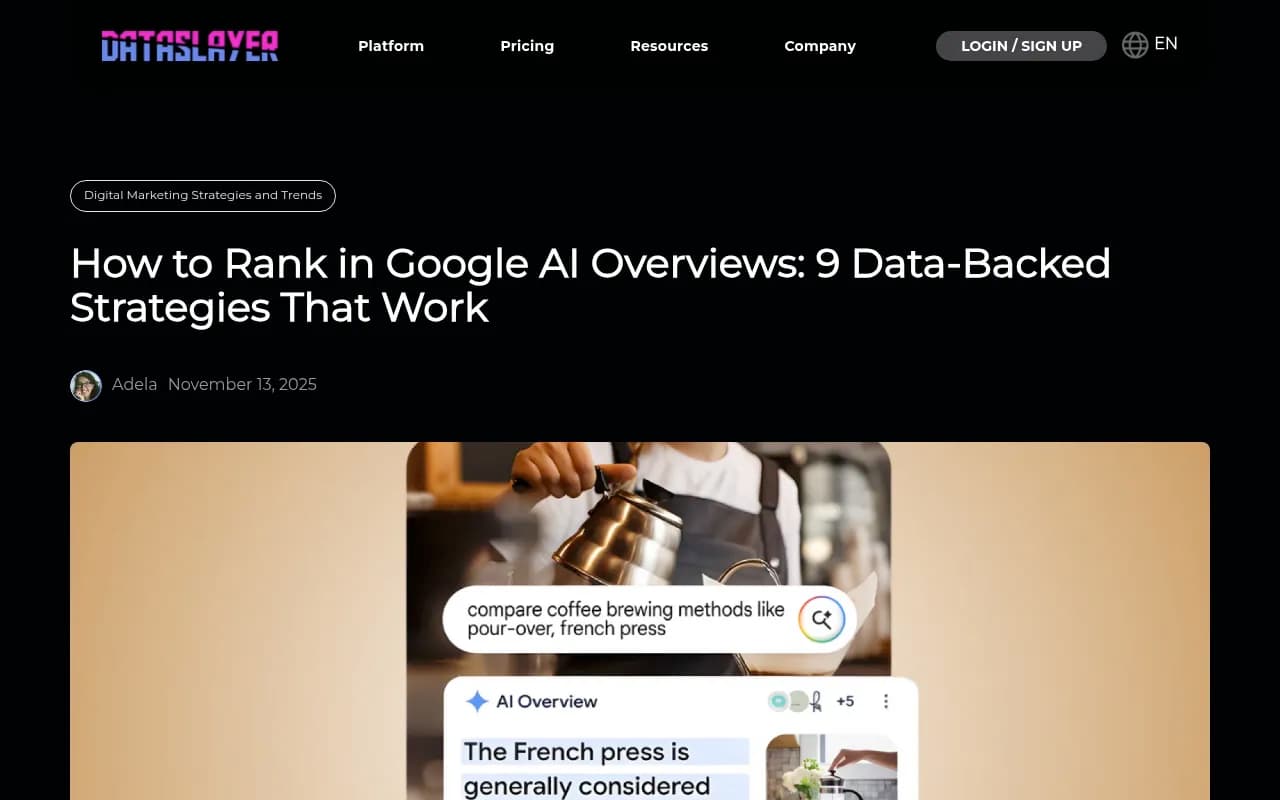
This guide breaks down the 10 content formats AI models systematically refuse to cite in 2026—and the exact fixes that get you visible.
1. Shallow "SEO Filler" Content
Why AI skips it: AI models are trained to prioritize depth and thoroughness. Short articles that hit a keyword count but provide no real insight get filtered out during the retrieval phase. These models have access to millions of sources—they default to comprehensive explanations, not surface-level summaries.
The fix:
- Aim for 1,500-3,000 words minimum for pillar content
- Cover subtopics exhaustively—answer follow-up questions before they're asked
- Include data, examples, and scenarios that demonstrate real-world application
- Use the CSQAF framework: Context, Specificity, Quantification, Attribution, Freshness
What this looks like: Instead of "5 Tips for Better Email Marketing," write "Complete Email Deliverability Guide: 23 Technical Factors That Determine Inbox Placement (With Code Examples)." The second version gets cited because it's the definitive answer.
2. Content Without Direct Answers
Why AI skips it: AI models scan for immediate, quotable answers. If your article buries the answer in paragraph seven, the model moves on. It's optimizing for user experience—users don't want to read 800 words to find a simple answer.
The fix:
- Lead every article with a 40-60 word citation block that directly answers the core question
- Place this answer in the first paragraph, before any context or setup
- Use clear, declarative sentences that can stand alone as citations
- Structure the rest of the article as supporting evidence and elaboration
Example citation block: "AI models refuse to cite content that lacks semantic HTML structure, direct answers in the opening paragraph, or regular freshness updates. The most commonly skipped formats include thin listicles, outdated tutorials, paywalled resources, and pages without proper heading hierarchy."
This pattern—answer first, explanation second—is what gets cited.
3. Content With Broken Semantic Structure
Why AI skips it: AI models rely heavily on HTML structure to understand content hierarchy. Pages with missing H1 tags, skipped heading levels (H2 → H4), or headings used purely for styling confuse the parsing algorithms. The model can't confidently extract information when the structure signals are inconsistent.
The fix:
- Use exactly one H1 per page (your main title)
- Follow strict heading hierarchy: H1 → H2 → H3 (never skip levels)
- Make headings descriptive and keyword-rich—they're navigation signals for AI
- Avoid using headings for visual styling (use CSS instead)
- Add proper semantic HTML:
<article>,<section>,<aside>,<nav>
Technical implementation:
<article>
  <h1>Main Topic Title</h1>
  <section>
    <h2>First Major Section</h2>
    <p>Content here...</p>
    <h3>Subsection Detail</h3>
    <p>More specific content...</p>
  </section>
  <section>
    <h2>Second Major Section</h2>
    <p>Content here...</p>
  </section>
</article>
This structure tells AI models exactly how your content is organized and where to find specific information.
4. Outdated Content Without Freshness Signals
Why AI skips it: AI models prioritize recent information, especially for topics that evolve quickly (technology, marketing, regulations). Content published in 2022 and never updated gets deprioritized—even if it's still accurate. The models assume newer sources have better information.
The fix:
- Update core content quarterly with new data, examples, and sections
- Change the publication date when you make substantial updates (not minor typos)
- Add "Last updated: [date]" timestamps prominently at the top
- Reference current year in titles and content ("Best Tools in 2026")
- Include recent statistics, case studies, and developments
- Implement
dateModifiedin your JSON-LD schema
Schema markup example:
{
  "@context": "https://schema.org",
  "@type": "Article",
  "datePublished": "2025-01-15",
  "dateModified": "2026-02-13",
  "headline": "Your Article Title"
}
Freshness isn't just about dates—it's about demonstrating that your content reflects the current state of the topic.
5. Generic Listicles Without Depth
Why AI skips it: "10 Best X" articles are everywhere. AI models have thousands of similar lists to choose from. Unless your listicle provides unique insights, specific criteria, or original research, it gets filtered out as redundant. The models default to the most comprehensive or authoritative version.
The fix:
- Add unique evaluation criteria and methodology sections
- Include hands-on testing notes, not just feature lists
- Provide specific use cases and buyer personas for each item
- Add comparison tables with quantitative data
- Include pricing, limitations, and alternatives for each recommendation
- Back up claims with screenshots, data, or expert quotes
Structure that works:
- Methodology: How you evaluated these tools
- Comparison table: Key metrics at a glance
- Detailed reviews: 300-500 words per item with pros, cons, pricing, use cases
- Decision framework: How to choose based on your specific needs
This transforms a generic list into a research-backed resource worth citing.
6. Content Behind Interaction Walls
Why AI skips it: If your content requires email signup, account creation, or paywall bypass to read, AI crawlers can't access it. Even "soft gates" that show partial content before requiring signup create problems—the model sees incomplete information and moves on.
The fix:
- Make your best content freely accessible without gates
- Use "content upgrades" (downloadable templates, tools) as lead magnets instead of gating the article itself
- If you must gate content, ensure the ungated portion is substantial and citation-worthy
- Check your robots.txt—make sure you're not accidentally blocking AI crawlers
- For paywalled sites: provide clear, comprehensive abstracts and key findings before the paywall
Crawler configuration: Allow AI crawlers in your robots.txt:
User-agent: GPTBot
Allow: /

User-agent: ChatGPT-User
Allow: /

User-agent: CCBot
Allow: /

User-agent: anthropic-ai
Allow: /

User-agent: Claude-Web
Allow: /
Make sure your most valuable content is accessible to the systems that will cite it.
7. Code Examples That Are Incomplete or Broken
Why AI skips it: For technical content, AI models prioritize complete, runnable code examples. Partial snippets, pseudocode, or examples with missing imports/dependencies create uncertainty. The model can't confidently recommend code it hasn't verified as complete.
The fix:
- Provide full, copy-paste-ready code examples
- Include all necessary imports, dependencies, and configuration
- Show complete request/response pairs for API examples
- Add language tags to all code blocks for proper syntax highlighting
- Include error handling and edge cases
- Test every code example before publishing
- Add "copy" buttons to improve user experience
Complete example structure:
# Complete working example with all imports
import requests
import json
from typing import Dict, List

def fetch_api_data(endpoint: str, api_key: str) -> Dict:
    """
    Fetch data from API endpoint with error handling.

    Args:
        endpoint: API endpoint URL
        api_key: Authentication key

    Returns:
        JSON response as dictionary
    """
    headers = {
        "Authorization": f"Bearer {api_key}",
        "Content-Type": "application/json"
    }

    try:
        response = requests.get(endpoint, headers=headers)
        response.raise_for_status()
        return response.json()
    except requests.exceptions.RequestException as e:
        print(f"Error fetching data: {e}")
        return {}

# Usage example
result = fetch_api_data(
    "https://api.example.com/v1/data",
    "your_api_key_here"
)
print(json.dumps(result, indent=2))
Complete examples get cited. Partial snippets get skipped.
8. Content Without Attribution or Sources
Why AI skips it: AI models are trained to value authoritative, well-sourced content. Claims without attribution, statistics without sources, or advice without expert backing get deprioritized. The models can't verify the information, so they default to sources that cite their work.
The fix:
- Cite every statistic with source and date
- Link to original research, not secondary summaries
- Include expert quotes with full name, title, and organization
- Add "According to [source]" or "Research from [organization] shows" before key claims
- Use inline citations, not just a reference list at the end
- Include publication dates for all cited sources
Citation format that works: "According to a 2026 study by Geostar, brands implementing GEO strategies saw brand citations in AI search increase by over 150%. The research analyzed 2,400 brands across 12 industries over 18 months."
This pattern—specific source, specific finding, specific methodology—builds the credibility AI models look for.
9. Comparison Content Without Clear Winners
Why AI skips it: "X vs Y" content that refuses to recommend one option over another frustrates AI models (and users). The model is trying to help users make decisions—content that presents options but provides no guidance gets skipped in favor of sources with clear recommendations.
The fix:
- Take a position—recommend the best option for specific use cases
- Create a decision matrix: "Choose X if [criteria], choose Y if [criteria]"
- Include a clear "winner" section or "our recommendation" callout
- Provide specific scenarios where each option excels
- Back up recommendations with data, testing results, or expert consensus
Recommendation structure: "For enterprise teams tracking AI visibility across 10+ models, Promptwatch is the clear leader. Its Answer Gap Analysis shows exactly which prompts competitors rank for but you don't, then helps you create content to fill those gaps. For basic monitoring without optimization features, Otterly.AI or Peec.ai work at lower price points."
Clear recommendations get cited. Fence-sitting gets ignored.
10. Content Optimized for Output, Not Outcomes
Why AI skips it: This is the meta-problem underlying most AI citation failures in 2026. Teams optimized their content workflow for speed—using AI to generate articles faster—but forgot to optimize for the outcome: getting cited by AI models. The result is content that's technically correct but lacks the depth, structure, and authority that AI models prioritize.

The fix:
- Treat AI as a system, not a copy machine
- Build feedback loops: track which content gets cited, analyze why, iterate
- Focus on citation-worthy depth, not keyword density
- Create content that answers questions AI models can't find elsewhere
- Use AI tools that understand citation patterns and optimize accordingly
Platforms like Promptwatch help close this loop—they show you which prompts competitors are visible for but you're not, then generate content specifically engineered to get cited by AI models. This isn't generic SEO content; it's built on analysis of 880M+ citations to understand what actually works.

The system approach:
- Find the gaps: Use Answer Gap Analysis to see which prompts your competitors rank for but you don't
- Create citation-worthy content: Generate articles grounded in real citation data, prompt volumes, and competitor analysis
- Track results: Monitor visibility scores across ChatGPT, Perplexity, Claude, Gemini, and other AI models
- Close the loop: Connect visibility to traffic and revenue with attribution tracking
This cycle—find gaps, create content, track results, optimize—is what separates brands that get cited from those that get ignored.
The New Metrics That Matter
Traditional SEO metrics (rankings, CTR, impressions) don't capture AI search performance. In 2026, you need to track:
Share of Voice in AI Search: What percentage of AI responses in your category mention your brand vs competitors?
Citation Frequency: How often do AI models cite your content when answering relevant prompts?
Visibility Score: Are you appearing in AI responses for high-value, high-volume prompts?
Page-Level Performance: Which specific pages are getting cited, and by which models?
Traffic Attribution: How much actual traffic and revenue comes from AI search visibility?
Tools like Promptwatch, Profound, and Otterly.AI help track these metrics across multiple AI models. But tracking alone isn't enough—you need the optimization layer that shows you what to fix and helps you fix it.
Practical Implementation Checklist
Here's your action plan for making existing content citation-worthy:
High-Priority Fixes (Do First):
- Add 40-60 word direct answer blocks to the top of every article
- Audit and fix heading hierarchy (H1 → H2 → H3, no skips)
- Update publication dates and add "Last updated" timestamps
- Complete all code examples with imports, dependencies, error handling
- Add sources and attribution to every statistic and claim
- Remove or reduce content gates that block AI crawlers
- Add JSON-LD schema with dateModified to all pages
Medium-Priority Improvements:
- Expand thin content to 1,500+ words with comprehensive coverage
- Add comparison tables and decision frameworks to listicles
- Include clear recommendations in comparison content
- Implement semantic HTML (
<article>,<section>, etc.) - Add language tags to all code blocks
- Create RSS/Atom feeds with full content
- Configure robots.txt to allow AI crawlers
Advanced Optimization:
- Set up AI crawler log monitoring to see which pages AI models are reading
- Track citation frequency and visibility scores across AI models
- Use Answer Gap Analysis to identify content opportunities
- Build feedback loops: analyze what gets cited, create more of it
- Implement IndexNow for immediate content freshness signals
The Bottom Line
AI models aren't refusing to cite your content out of spite. They're following patterns learned from billions of training examples: prioritize depth over brevity, structure over chaos, freshness over staleness, attribution over claims, and clarity over ambiguity.
The brands winning in AI search in 2026 aren't just creating more content—they're creating content specifically engineered to meet the citation criteria AI models use. They're tracking their visibility across ChatGPT, Perplexity, Claude, Gemini, and Google AI Overviews. They're identifying gaps in their content coverage and filling them strategically.
Most importantly, they're treating AI search optimization as a system, not a one-time fix. They're building feedback loops that show them what works, then scaling those patterns across their entire content library.
The 10 content formats covered in this guide represent the most common citation failures in 2026. Fix these issues, and you'll see your AI search visibility improve measurably. Ignore them, and you'll watch competitors capture the traffic, leads, and revenue that AI search is redirecting away from traditional organic results.
The choice is yours. The tools exist. The playbook is clear. Now it's about execution.