Key Takeaways
- $750 billion in U.S. revenue will flow through AI search by 2028, with 20-50% of traditional search traffic at risk as decisions move upstream into AI-generated answers
- The AI search landscape will consolidate dramatically — expect 3-4 dominant players by 2028, down from 10+ today, as infrastructure costs and data partnerships determine winners
- ChatGPT, Perplexity, and Google AI Overviews are positioned to survive, while niche players like Grok, Mistral, and DeepSeek face uncertain futures without clear differentiation
- The "SaaS-pocalypse" parallel: Just as AI threatens to consolidate the SaaS market, AI search platforms face similar pressures — only those with sustainable business models and unique value propositions will endure
- Brands must prepare for a bifurcated search world where AI search owns influence and traditional search owns intent, requiring fundamentally different optimization strategies
The Great AI Search Shakeout Is Coming
The AI search market in 2026 looks crowded. ChatGPT, Perplexity, Google AI Overviews, Claude, Gemini, Grok, DeepSeek, Mistral, Meta AI, Copilot — every major tech company has launched or acquired an AI search product. But this abundance won't last.
By 2028, the AI search landscape will look radically different. Most of these platforms will either shut down, merge, or pivot away from consumer search. The survivors will capture the vast majority of the $750 billion in revenue flowing through AI-powered search, according to McKinsey's research.
The question isn't whether consolidation will happen — it's which platforms will survive and why. Understanding this now is critical for brands building their AI visibility strategies. Optimizing for a platform that won't exist in two years is wasted effort.
Why Most AI Search Platforms Will Fail
The AI search market faces three brutal realities that will force consolidation:
1. Infrastructure Costs Are Unsustainable
Running an AI search engine is extraordinarily expensive. Each query requires:
- Real-time web crawling and indexing across billions of pages
- LLM inference costs to generate answers (often multiple model calls per query)
- Citation verification and fact-checking to maintain accuracy
- Continuous model training on fresh data to stay current
Perplexity reportedly spends $50-100 million annually on infrastructure alone. Smaller players like Mistral and DeepSeek lack the capital to sustain these costs at scale without a clear path to profitability.
2. Data Partnerships Determine Winners
AI search engines don't operate in isolation — they depend on partnerships with:
- Traditional search providers (Google, Bing) for web index access
- News publishers for real-time content licensing
- Social platforms (Reddit, YouTube) for discussion data
- E-commerce platforms for product information
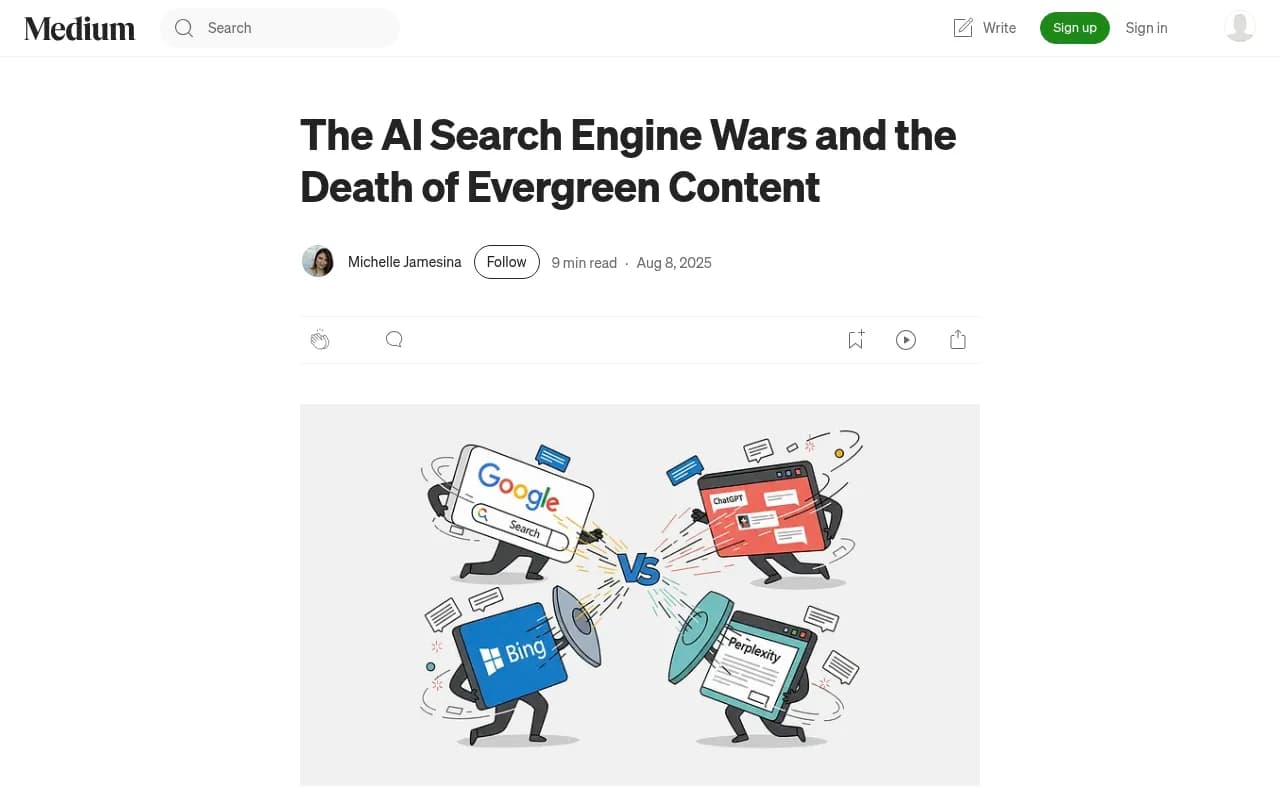
The platforms with the strongest partnerships will deliver better answers. Those without will fall behind. As Michelle Jamesina notes in her analysis of AI search infrastructure, "The advice to optimize for Bing because 'that's what ChatGPT uses' is already outdated." These partnerships shift constantly, and platforms without leverage will lose access to critical data sources.
3. User Acquisition Is Winner-Take-Most
AI search exhibits strong network effects:
- More users = more queries = better training data = better answers
- Better answers = more users = more revenue = better partnerships
- Platforms that fall behind struggle to catch up
Google's dominance in traditional search demonstrates this dynamic. The same pattern will repeat in AI search, but the window for establishing market position is much shorter.
The Survivors: Platforms Positioned to Win by 2028
ChatGPT / OpenAI Search
Survival Probability: 95%
ChatGPT is the clear frontrunner. With 300+ million weekly active users and Microsoft's backing, OpenAI has:
- Massive scale to absorb infrastructure costs
- Strong data partnerships (Microsoft Bing, Reddit, news publishers)
- Multiple revenue streams (ChatGPT Plus subscriptions, API access, enterprise deals)
- Brand recognition as the category leader
OpenAI's recent launch of ChatGPT Search — a dedicated search interface with real-time web access — signals their commitment to owning this space. They're not just adding search features; they're building a search product designed to compete directly with Google.
What could kill it: Regulatory intervention, catastrophic model failures, or loss of Microsoft partnership.
Perplexity
Survival Probability: 75%
Perplexity is the pure-play AI search company. Unlike ChatGPT (which started as a chatbot) or Google (which added AI to existing search), Perplexity was built from day one as an AI answer engine.
Strengths:
- Search-first product design optimized for research and discovery
- Citation transparency that builds user trust
- Strong partnerships with publishers and data providers
- Growing user base (10+ million monthly active users)
Weaknesses:
- Smaller scale than ChatGPT or Google
- Unclear path to profitability at current pricing
- Vulnerable to being acquired by a larger player
Perplexity will likely survive either independently (if they can reach sustainable unit economics) or through acquisition by a major tech company that wants a foothold in AI search.
What could kill it: Inability to raise additional funding, loss of key data partnerships, or user growth stalling.
Google AI Overviews / Gemini
Survival Probability: 90%
Google has the most to lose from AI search disruption — and the most resources to fight back. Their AI Overviews (formerly SGE) now appear on billions of searches, and Gemini integration is deepening across Google products.
Strengths:
- Existing search dominance with 90%+ market share
- Unmatched web index and crawling infrastructure
- Deep pockets to sustain losses during transition
- Integrated ecosystem (Android, Chrome, Gmail, YouTube)
Weaknesses:
- Cannibalization concerns — AI Overviews reduce clicks to websites, threatening ad revenue
- Slower to innovate due to organizational complexity
- Regulatory scrutiny around antitrust and AI practices
Google won't disappear, but they face the classic innovator's dilemma: their AI search products must cannibalize their traditional search business to compete. Expect a gradual transition rather than a revolutionary shift.
What could kill it: Antitrust breakup, catastrophic loss of user trust, or failure to monetize AI search effectively.
The Uncertain Middle: Platforms That Might Survive
Claude / Anthropic
Survival Probability: 60%
Claude is a strong conversational AI but hasn't committed to being a search product. Anthropic's focus on AI safety and enterprise applications may pull them away from consumer search entirely.
Likely outcome: Claude remains a premium conversational AI for enterprise use cases, not a consumer search engine. Anthropic may partner with or power search for other platforms rather than compete directly.
Microsoft Copilot
Survival Probability: 65%
Microsoft's Copilot integrates AI across Windows, Office, Edge, and Bing. But it's unclear whether Copilot is a search product or a productivity assistant.
Likely outcome: Copilot evolves into an enterprise productivity tool, with search functionality powered by ChatGPT (via OpenAI partnership) or Bing. Microsoft may consolidate Copilot and Bing into a single AI-powered search experience.
Gemini (Standalone)
Survival Probability: 50%
Gemini as a standalone chatbot faces an identity crisis. It competes with ChatGPT for conversational AI and with Google Search for information retrieval — but doesn't clearly beat either.
Likely outcome: Gemini gets absorbed into Google AI Overviews and disappears as a separate product. Google will position AI Overviews as their unified AI search experience.
The Doomed: Platforms Unlikely to Survive
Grok (xAI)
Survival Probability: 20%
Grok is Elon Musk's AI chatbot, integrated into X (formerly Twitter). It has real-time access to X's data — a unique advantage — but lacks:
- Broad web search capabilities beyond X
- Clear business model (X Premium subscriptions are declining)
- User adoption outside the X platform
Likely outcome: Grok remains a niche feature for X Premium subscribers but never becomes a mainstream search product. If X's financial situation worsens, Grok could be shut down entirely.
DeepSeek
Survival Probability: 15%
DeepSeek is a Chinese AI search engine with impressive technical capabilities but limited international reach. Challenges include:
- Geopolitical barriers to Western market expansion
- Limited data partnerships outside China
- Unclear monetization strategy
Likely outcome: DeepSeek remains a regional player in China or gets acquired by a larger Chinese tech company (Baidu, Alibaba, Tencent).
Mistral AI
Survival Probability: 25%
Mistral is a French AI company building open-source models. Their search product is more of a research project than a commercial offering.
Likely outcome: Mistral pivots to enterprise AI infrastructure and API services, abandoning consumer search. Their models may power other platforms' search products.
Meta AI
Survival Probability: 40%
Meta's AI assistant is integrated into Facebook, Instagram, and WhatsApp — giving it massive distribution. But Meta has repeatedly failed to build successful standalone products outside their core social apps.
Likely outcome: Meta AI remains a feature within Meta's apps, not a destination search product. Users won't go to Meta AI for research; they'll use it for quick answers within Instagram or WhatsApp.
The SaaS-pocalypse Parallel: What AI Search Can Learn
The consolidation coming to AI search mirrors the "SaaS-pocalypse" currently reshaping the software industry. As Forrester's analysis shows, the SaaS market is facing brutal consolidation driven by:
- AI agents replacing point solutions — why pay for 10 SaaS tools when one AI agent can handle all those workflows?
- Vibe coding enabling rapid replication — startups can now replicate complex SaaS features in weeks, not years
- Per-seat pricing models collapsing — AI reduces the need for human seats
- Enterprise buyers demanding consolidation — companies are drowning in SaaS sprawl
The same forces apply to AI search:
- Users don't need 10 AI search engines — they'll consolidate around 2-3 they trust
- Differentiation is hard — most AI search products deliver similar answers
- Switching costs are low — users can easily try alternatives
- Network effects favor incumbents — platforms with more users get better faster
Forrester predicts that horizontal point-solution SaaS vendors will struggle, while vertical-specific and deeply embedded platforms will survive. The same logic applies to AI search: generalist platforms with weak differentiation will die, while those with unique data access, superior user experience, or strong ecosystem integration will thrive.
What Consolidation Means for Brands
If you're building an AI visibility strategy, here's what to prioritize:
1. Focus on the Big Three
By 2028, three platforms will likely capture 80%+ of AI search traffic:
- ChatGPT (conversational search and research)
- Perplexity (deep research and citations)
- Google AI Overviews (quick answers and local search)
Optimize for these first. Track your visibility across all three, but allocate resources proportionally to their market share.
Tools like Promptwatch can help you monitor brand mentions across these platforms and identify content gaps where competitors appear but you don't.

2. Don't Over-Invest in Niche Platforms
Tracking your brand across 10+ AI engines might seem comprehensive, but it's likely wasted effort. Platforms like Grok, DeepSeek, and Mistral won't drive meaningful traffic by 2028.
Focus your optimization efforts where the users are — and will be.
3. Prepare for a Bifurcated Search World
Traditional SEO and AI search optimization (GEO) require fundamentally different strategies:
Traditional SEO (Google Search):
- Optimizes for intent — users know what they want
- Focuses on keywords and rankings
- Drives direct traffic to your website
AI Search Optimization (GEO):
- Optimizes for influence — users are exploring and deciding
- Focuses on citations and recommendations
- Drives brand awareness and consideration
The businesses that survive will master both. As one industry analyst put it: "The difference between getting found in traditional search and getting cited in AI is the difference between being discovered and being recommended."
4. Build for Retrievability, Not Just Discoverability
AI search engines don't just crawl your website — they extract, synthesize, and cite your content. This requires:
- Structured data that LLMs can parse easily
- Clear, authoritative statements that can be quoted
- Entity-based content that establishes expertise
- Citation-worthy facts and statistics
The "evergreen content" strategy that worked for traditional SEO is dying. AI search rewards fresh, specific, well-sourced content that answers real questions.
5. Track AI Crawler Behavior
Understand which AI engines are actually crawling your site and how often. Most brands have no visibility into:
- Which pages AI crawlers access
- How frequently they return
- What errors they encounter
- Which content they prioritize
This data is critical for optimization. If ChatGPT's crawler isn't indexing your key pages, you won't appear in ChatGPT search results — no matter how good your content is.
The 2028 AI Search Landscape: A Prediction
Here's what the AI search market will likely look like by the end of 2028:
Tier 1: Dominant Players (70% market share)
- ChatGPT Search — 40% market share, the default for conversational search and research
- Google AI Overviews — 25% market share, integrated into traditional Google Search
- Perplexity — 5% market share, the premium research tool for power users
Tier 2: Niche Survivors (20% market share)
- Microsoft Copilot — enterprise productivity assistant with search capabilities
- Claude — premium conversational AI for enterprise, not consumer search
- Meta AI — feature within Facebook/Instagram/WhatsApp, not a destination
Tier 3: Regional/Specialized (10% market share)
- Baidu AI — dominant in China
- Yandex AI — dominant in Russia
- Vertical-specific AI search — specialized engines for legal, medical, academic research
Dead or Irrelevant:
- Grok (shut down or absorbed into X)
- DeepSeek (regional player only)
- Mistral (pivoted to infrastructure)
- Gemini standalone (merged into Google AI Overviews)
How to Prepare Your Brand for Consolidation
The AI search shakeout is already underway. Here's your action plan:
Immediate Actions (Next 30 Days)
- Audit your current AI visibility across ChatGPT, Perplexity, and Google AI Overviews
- Identify content gaps where competitors appear but you don't
- Set up AI crawler monitoring to understand which platforms are indexing your site
- Establish baseline metrics for brand mentions, citations, and recommendation frequency
Short-Term Strategy (Next 6 Months)
- Create citation-worthy content optimized for AI extraction and synthesis
- Build structured data that makes your content easily parseable by LLMs
- Develop entity-based content that establishes topical authority
- Test and iterate based on which content gets cited most frequently
Long-Term Strategy (2026-2028)
- Monitor platform consolidation and shift resources accordingly
- Invest in the winners — double down on platforms gaining market share
- Abandon the losers — stop optimizing for platforms losing users
- Build for the bifurcated search world — master both traditional SEO and AI search optimization
The Bottom Line
The AI search market will consolidate dramatically by 2028. Most platforms won't survive. The winners will be those with:
- Sustainable economics (infrastructure costs covered by revenue)
- Strong data partnerships (access to fresh, high-quality content)
- Large user bases (network effects that improve answers over time)
- Clear differentiation (unique value proposition beyond "we have AI search too")
For brands, the message is clear: focus your optimization efforts on the platforms that will dominate in 2028, not the crowded field of 2026. Track your visibility across ChatGPT, Perplexity, and Google AI Overviews. Build content that gets cited, not just discovered. And prepare for a world where AI search owns influence and traditional search owns intent.
The businesses that adapt now will own the narrative in AI search. Those that wait will find themselves invisible in the tools their customers actually use.
$750 billion in revenue is up for grabs. The question is: will your brand be visible when the dust settles?