Summary
- Real-time prompt alerts are the new keyword alerts -- they notify you when new questions about your category start trending in AI search engines before competitors see them
- Most AI visibility tools track historical data, but only a handful offer real-time monitoring with actionable alerts
- The best platforms combine prompt tracking with crawler logs, citation analysis, and content gap identification so you can act on alerts immediately
- Promptwatch leads the category by connecting alerts to content generation -- it shows you what's missing, then helps you create it
- Pricing ranges from $99/month for basic tracking to $500+ for enterprise platforms with custom alert rules
AI search engines like ChatGPT, Perplexity, and Google AI Overviews have fundamentally changed how people find information. Instead of typing keywords into a search box, users ask conversational questions and get synthesized answers. Your brand's visibility now depends on whether AI models cite you in their responses -- and that depends on understanding which prompts are trending before your competitors do.
Traditional SEO tools tell you what happened last week. Real-time prompt alerts tell you what's happening right now. When a new question about your product category starts getting asked, you want to know immediately so you can optimize your content, publish new material, or adjust your strategy while the opportunity is fresh.
This guide covers the tools that actually deliver on this promise. I've tested platforms that claim real-time monitoring and separated the ones with genuine alert systems from those that just refresh dashboards daily.
What real-time prompt alerts actually mean
A real-time alert system monitors AI search engines continuously and notifies you when:
- A new prompt pattern emerges in your tracked categories
- An existing prompt's volume spikes suddenly
- Your brand gets mentioned (or stops getting mentioned) in responses to specific queries
- A competitor starts appearing in answers where you previously ranked
- Sentiment shifts in how AI models describe your brand or category
The key word is "notifies." Logging into a dashboard to check for changes isn't real-time monitoring. You need push notifications, email alerts, or Slack integrations that bring the information to you.
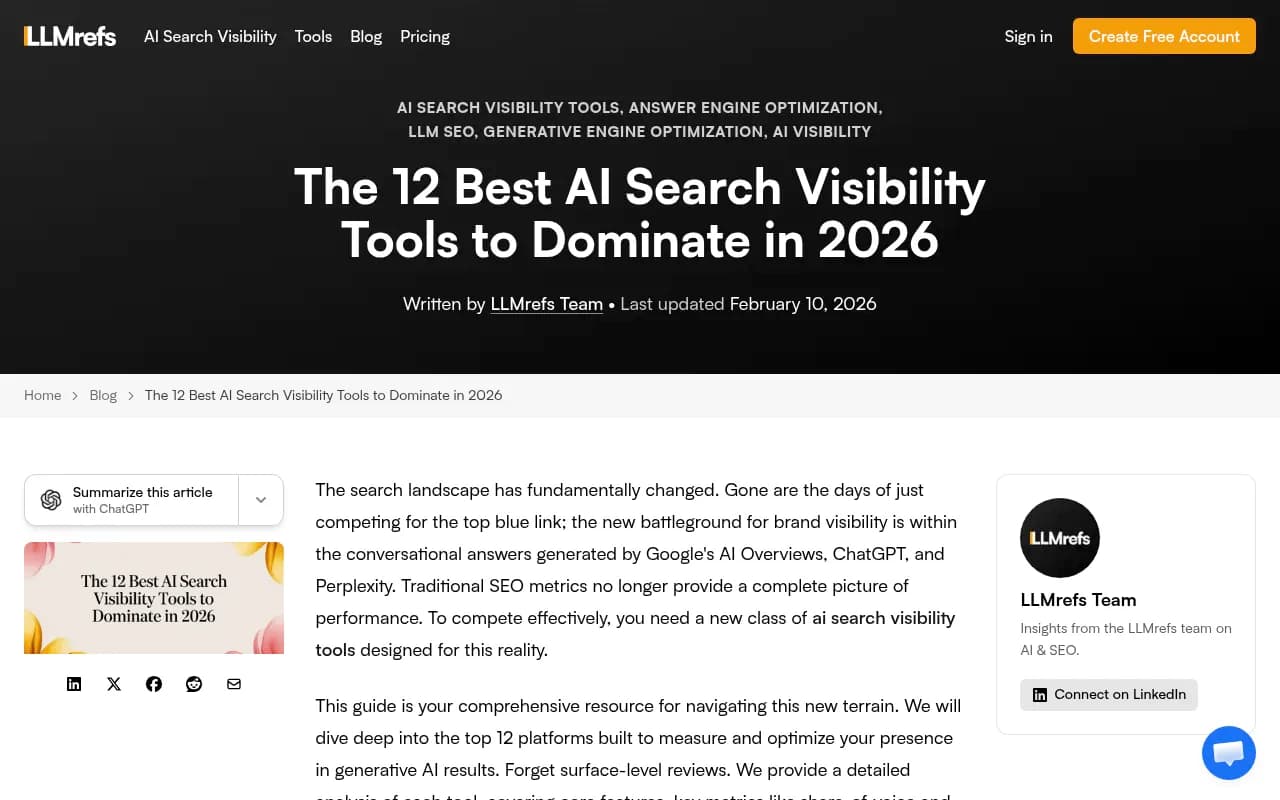
Most platforms update their data once per day or even once per week. That's fine for tracking long-term trends, but it's useless for catching emerging opportunities. By the time you see a new prompt in a weekly report, your competitors may have already published content targeting it.
Why prompt alerts matter more than keyword alerts
Keyword alerts made sense when Google was the only game in town. You'd set up alerts for branded terms, competitor names, or industry keywords, and get notified when new content appeared in search results.
Prompt alerts work differently because AI search is fundamentally different:
-
Prompts are conversational, not keyword-based. People don't ask ChatGPT "best project management software" -- they ask "what's a good alternative to Asana for a remote team of 15 people who hate Slack integrations?"
-
Prompt patterns emerge and fade quickly. A question that gets asked 500 times this week might disappear next week. You need to catch these trends while they're active.
-
AI models synthesize answers from multiple sources. Getting cited once isn't enough -- you need to track whether you're consistently appearing in responses as prompts evolve.
-
Visibility is binary. In Google, you might rank #8 and still get some traffic. In AI search, you're either cited or you're invisible. Alerts help you know immediately when you drop out.
The tools that understand this distinction are the ones worth using.
The platforms with genuine real-time alert capabilities
Promptwatch: alerts connected to action
Promptwatch is the only platform I've tested that treats alerts as the starting point of a workflow, not the end. When a new prompt pattern emerges or your visibility drops, you don't just get a notification -- you get a content gap analysis showing exactly what's missing from your site, plus an AI writing agent that can generate the content you need.

The alert system monitors 10 AI engines (ChatGPT, Perplexity, Google AI Overviews, Claude, Gemini, Meta AI, DeepSeek, Grok, Mistral, Copilot) and tracks:
- New prompts entering your tracked categories
- Volume spikes on existing prompts (based on query fan-out analysis)
- Citation drops (when you stop appearing in responses)
- Competitor gains (when a rival starts getting cited more frequently)
- Crawler activity (when AI bots hit your site more or less often)
What makes Promptwatch different is the Answer Gap Analysis feature. When you get an alert about a new prompt, you can immediately see which competitors are being cited and what content angles they're covering that you're not. Then the built-in AI writer generates articles grounded in real citation data (880M+ citations analyzed) and prompt intelligence.
This is the action loop most competitors lack: find the gap, create content that fills it, track the results. Other tools stop at step one.
Pricing: Essential $99/mo (1 site, 50 prompts), Professional $249/mo (2 sites, 150 prompts, crawler logs), Business $579/mo (5 sites, 350 prompts). Annual discounts available.
Profound: enterprise-grade alert customization
Profound

Profound offers the most sophisticated alert configuration I've seen, but it comes at an enterprise price point. You can set custom rules based on:
- Specific AI engines (e.g., only alert me about ChatGPT changes)
- Sentiment thresholds (alert when negative sentiment exceeds 20%)
- Citation count changes (alert when you drop below 3 citations per prompt)
- Competitive positioning (alert when a specific competitor overtakes you)
The platform tracks 9+ AI search engines and provides detailed reports on why your visibility changed. The downside: no built-in content creation tools, so you're on your own once you get the alert. Pricing is custom but expect $500+/month for meaningful usage.
Peec AI: smart suggestions with proactive alerts
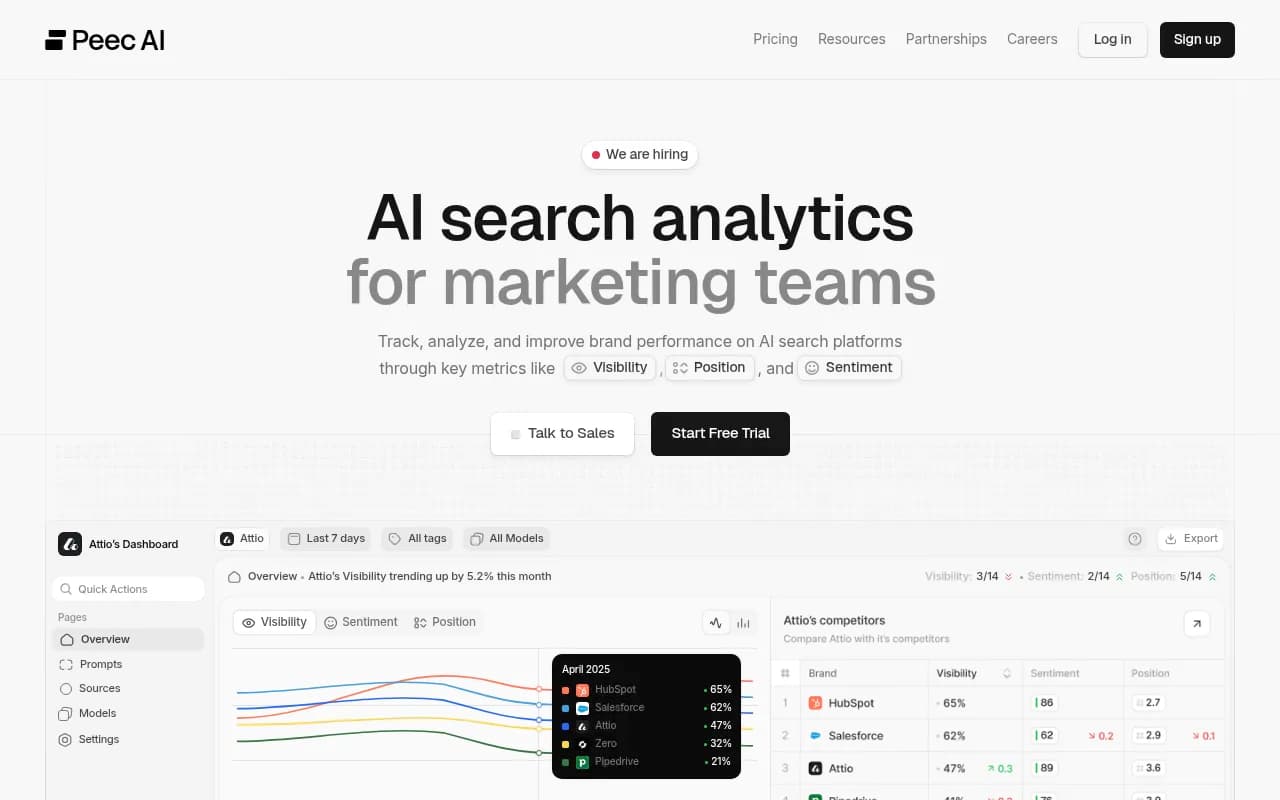
Peec takes a different approach -- instead of just alerting you to changes, it suggests specific actions based on what it detects. When a new prompt emerges, Peec analyzes the current top-cited sources and recommends content angles, keywords to include, and even specific pages on your site that could be optimized to rank for that prompt.
The alert system covers ChatGPT, Perplexity, and Claude. It's not as comprehensive as Promptwatch or Profound, but the actionable suggestions make up for the narrower coverage. Pricing starts around $200/month.
Otterly.AI: affordable basic alerts
Otterly.AI

Otterly.AI comes highly recommended in SEO circles as one of the most affordable entry points for AI visibility tracking. The alert system is basic -- you get email notifications when your brand mention count changes significantly or when you start appearing in responses to new prompts.
What it lacks in sophistication, it makes up for in price. Plans start under $100/month, making it accessible for small teams or agencies just getting started with AI search monitoring. The platform tracks ChatGPT, Perplexity, and Google AI Overviews.
The limitation: alerts are daily summaries, not true real-time notifications. If a prompt spikes at 2pm, you won't know until the next morning's digest email.
ZipTie: deep analysis with delayed alerts
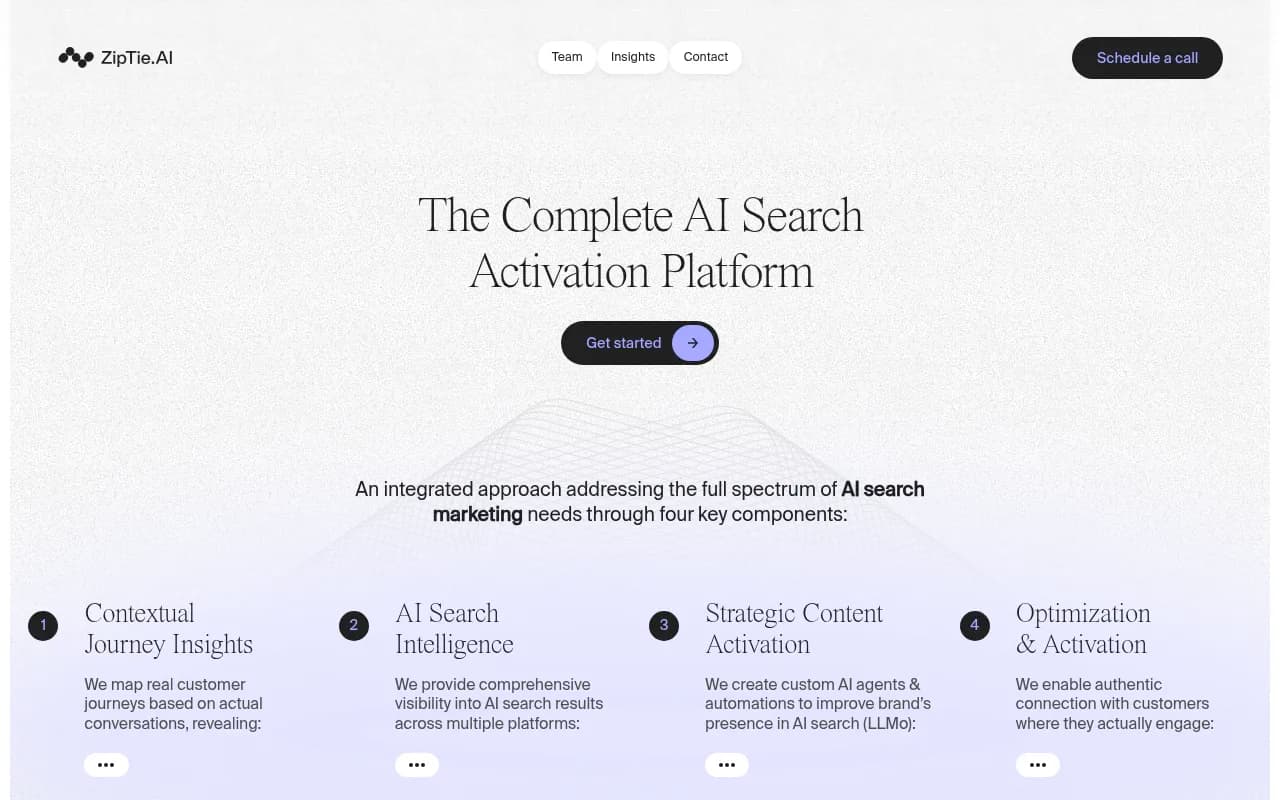
ZipTie excels at deep analysis and reporting, but its alert system is more of a monitoring dashboard than a real-time notification engine. You can set up custom views that highlight changes, but you need to check the dashboard regularly -- push notifications are limited.
That said, the analysis depth is impressive. When you do spot a change, ZipTie provides detailed breakdowns of which specific phrases in AI responses changed, which sources got added or dropped, and how your competitors' content differs from yours. It's a research tool disguised as a monitoring platform.
Pricing is custom, typically $300+/month.
Comparison: alert features across platforms
| Platform | Real-time alerts | Push notifications | Alert types | AI engines tracked | Content suggestions | Starting price |
|---|---|---|---|---|---|---|
| Promptwatch | Yes | Email, Slack | New prompts, volume spikes, citation drops, crawler activity | 10 | Yes, with AI writer | $99/mo |
| Profound | Yes | Email, webhook | Custom rules, sentiment, competitive | 9+ | No | $500+/mo |
| Peec AI | Partial | New prompts, optimization suggestions | 3 | Yes | $200/mo | |
| Otterly.AI | Daily digest | Mention changes, new prompts | 3 | No | <$100/mo | |
| ZipTie | Dashboard only | Limited | Custom views | Multiple | No | $300+/mo |
What to look for in a prompt alert system
Not all alert systems are created equal. Here's what separates useful notifications from noise:
1. Granular control over alert triggers
You should be able to set thresholds for what constitutes a meaningful change. A 5% drop in citations might not matter, but a 50% drop definitely does. Good platforms let you define these thresholds yourself.
2. Context in the alert itself
An alert that says "Your visibility changed" is useless. You want to know: which prompt, which AI engine, what changed, and ideally why. The best alerts include a summary of the change and a link directly to the detailed analysis.
3. Integration with your workflow
Email alerts are fine, but Slack or Teams integrations are better. If your team lives in a specific tool, the alerts should meet you there. Webhooks let you build custom integrations with your own systems.
4. Historical context
A spike in prompt volume means nothing without context. Is this the first time this prompt has trended, or does it spike every quarter? Good alert systems show you the historical pattern alongside the current change.
5. Actionable next steps
The best alerts don't just tell you what changed -- they tell you what to do about it. Promptwatch's Answer Gap Analysis is the gold standard here: it shows you exactly what content you need to create to improve visibility for that prompt.
How to set up effective prompt alerts
Once you've chosen a platform, don't just turn on every alert and hope for the best. Here's a practical setup process:
Step 1: Define your core prompt categories
Start with 3-5 broad categories that matter to your business. For a project management tool, that might be:
- Alternative searches ("alternatives to [competitor]")
- Use case queries ("best tool for remote teams")
- Feature comparisons ("Gantt charts vs Kanban boards")
- Problem-solution prompts ("how to track project dependencies")
Step 2: Set baseline thresholds
Run the tool for a week without alerts to understand your baseline visibility. Then set alert thresholds at 20-30% above or below that baseline. This filters out noise while catching meaningful changes.
Step 3: Create category-specific alert rules
Not all categories deserve the same urgency. Competitive alternative searches might warrant immediate Slack alerts, while general educational prompts can go to a daily email digest.
Step 4: Connect alerts to workflows
Decide in advance what you'll do when each type of alert fires. New prompt detected? Assign it to your content team. Citation drop? Audit the affected page. Competitor gain? Analyze their content and identify gaps.
Promptwatch makes this easier by building the workflow into the platform -- Answer Gap Analysis automatically shows you what's missing when you get an alert about a new prompt.
Step 5: Review and refine weekly
Your first alert configuration will be wrong. That's fine. Review your alerts weekly for the first month and adjust thresholds, categories, and notification channels based on what's actually useful vs what's just noise.
Common mistakes with prompt alert systems
Setting alerts too broadly
Tracking every possible prompt in your industry generates hundreds of alerts per week, most of which don't matter. Start narrow and expand gradually.
Ignoring the "why" behind changes
An alert tells you visibility changed. It doesn't tell you why. Always dig into the details -- did the AI model change its algorithm, did a competitor publish new content, or did your own site have a technical issue?
Treating alerts as FYI notifications
Alerts are only valuable if they trigger action. If you're just collecting notifications without responding, you're wasting time and money. Either act on alerts or turn them off.
Not connecting alerts to content creation
This is the biggest gap in most platforms. You get an alert about a new prompt, then you're on your own to figure out what content to create. Promptwatch solves this by integrating content generation directly into the alert workflow, but if you're using another tool, you need a manual process for turning alerts into content briefs.
Forgetting about crawler logs
Prompt alerts tell you what users are asking. Crawler logs tell you whether AI engines are actually reading your content. Promptwatch's crawler log monitoring is unique in the market -- it shows you when ChatGPT, Claude, or Perplexity bots hit your site, which pages they read, and whether they encountered errors. If you're getting alerts about low visibility but your crawler logs show AI bots aren't visiting your site, that's your real problem.
The future of real-time AI search monitoring
Prompt alert systems are still early. Most platforms bolt alerts onto existing dashboards as an afterthought. The next generation will:
Predict prompt trends before they spike
Instead of alerting you when a prompt is already trending, AI models will analyze early signals and predict which prompts are about to become popular. You'll get a 24-48 hour head start to create content.
Automatically generate content briefs
When a new prompt is detected, the system will analyze top-cited sources, extract key themes, and generate a content brief with recommended structure, keywords, and sources to cite. Promptwatch's AI writer is moving in this direction.
Integrate with content management systems
Alerts will trigger workflows in your CMS -- creating draft posts, assigning them to writers, and even suggesting which existing pages to update instead of creating new content.
Provide competitive intelligence in real-time
You'll get alerts not just when your visibility changes, but when competitors make moves -- publishing new content, getting cited in new prompts, or changing their positioning.
For now, the platforms listed above are the best available options. Promptwatch is the clear leader for teams that want alerts connected to action, while Profound suits enterprises with complex requirements. Otterly.AI and Peec AI offer solid mid-tier options at more accessible price points.
Getting started with prompt alerts today
If you're not monitoring AI search visibility yet, start with a free trial of Promptwatch or Otterly.AI. Set up alerts for your brand name and your top 3 competitors. Track 10-20 core prompts related to your product category. Run it for two weeks and see what you learn.
You'll quickly discover which prompts matter, which AI engines your audience uses most, and where your content gaps are. Then you can decide whether to invest in a more sophisticated platform or stick with the basics.
The brands winning in AI search aren't the ones with the biggest budgets -- they're the ones who see opportunities first and act on them fastest. Real-time prompt alerts are how you get that edge.