Key Takeaways
- Page-level citation tracking shows exactly which URLs AI engines reference — not just your domain's overall visibility, but which specific articles, guides, and landing pages are being cited in ChatGPT, Perplexity, Claude, and Google AI Overviews.
- Your best-performing content is your competitive moat — the pages already earning citations are proven winners. Doubling down on them (updating, expanding, interlinking) compounds your AI visibility faster than creating net-new content from scratch.
- Citation volume correlates with traffic and revenue — pages that AI engines cite frequently drive more organic sessions, longer engagement, and higher conversion rates because they're positioned as authoritative sources.
- Most brands waste resources on underperformers — without page-level data, teams spread effort evenly across all content. Citation tracking lets you identify the 20% of pages driving 80% of AI visibility and focus there.
- Tools like Promptwatch close the optimization loop — they show you which pages are cited, help you find content gaps, generate AI-optimized updates, and track the results in real time.
Why Page-Level Citation Tracking Matters in 2026
In 2026, visibility isn't just about ranking on Google's blue links. It's about being cited inside AI-generated answers — the responses users see in ChatGPT, Perplexity, Claude, Gemini, and Google AI Overviews. These AI engines don't send users to a list of ten results. They synthesize information from multiple sources and present a single, conversational answer. If your content isn't cited, you're invisible.
But here's the problem: most brands track AI visibility at the domain level. They know their overall "share of voice" across AI engines, but they don't know which specific pages are driving that visibility. Without page-level data, you can't answer the most important strategic question: Which content should we invest in?
Page-level citation tracking solves this. It shows you:
- Which URLs are being cited in AI responses
- How often each page is referenced
- Which AI models prefer which pages
- Which prompts trigger citations to specific content
This granular data lets you identify your best-performing content — the pages that AI engines already trust and cite frequently. Once you know what's working, you can double down: update it, expand it, interlink it, and promote it. This strategy compounds your AI visibility faster than creating new content from scratch.
What Page-Level Citation Tracking Reveals
Page-level citation tracking gives you a forensic view of how AI engines interact with your content. Here's what you can learn:
1. Which Pages AI Engines Trust Most
Some pages earn citations consistently across multiple AI models. These are your authority pages — the content AI engines view as definitive sources. For example, a SaaS company might discover that their "How to Set Up SSO" guide is cited 10x more often than their product comparison pages. That's a signal: the SSO guide is a proven winner.
2. Which Topics Drive the Most Citations
By analyzing citation patterns, you can identify high-value topics. If five different pages about "API rate limiting" collectively earn 200 citations per month, that's a topic cluster worth expanding. You can create more content around it, interlink the pages, and build topical authority.
3. Which AI Models Prefer Which Content
Different AI engines have different citation preferences. ChatGPT might favor long-form tutorials, while Perplexity prefers concise, data-driven answers. Page-level tracking shows you which pages perform best on which platforms, so you can tailor your optimization strategy.
4. Which Prompts Trigger Citations
You can see the exact prompts that lead to citations. For example, if your "Best CRM for Small Businesses" page is cited for prompts like "affordable CRM tools" and "CRM with free trial," you know which angles resonate. You can then optimize the page to capture more variations of those prompts.
5. Which Pages Are Underperforming
Page-level data also reveals content gaps. If a page ranks well on Google but earns zero AI citations, it's a sign the content isn't structured for AI consumption. You can fix it by adding clear headings, concise answers, and structured data.
How to Set Up Page-Level Citation Tracking
Setting up page-level citation tracking requires a platform that monitors AI engines and attributes citations to specific URLs. Here's how to do it:
Step 1: Choose a Citation Tracking Platform
You need a tool that tracks AI search visibility at the page level. Promptwatch is the only platform rated as a "Leader" across all categories in 2026 comparisons. It monitors 10 AI models (ChatGPT, Perplexity, Claude, Gemini, Google AI Overviews, Meta AI, DeepSeek, Grok, Mistral, Copilot) and shows exactly which pages are cited, how often, and for which prompts.

Other tools like Otterly.AI, Peec.ai, and AthenaHQ offer basic monitoring but lack the content optimization and generation features needed to act on the data.
Step 2: Define Your Prompt Set
Identify the prompts your target audience uses. These should cover:
- Branded queries (e.g., "What is [Your Product]?")
- Competitor comparisons (e.g., "[Your Product] vs [Competitor]")
- Problem-solution queries (e.g., "How to fix [pain point]")
- Buying intent queries (e.g., "Best [category] for [use case]")
Start with 50-150 prompts and expand over time. Tools like Promptwatch provide prompt volume estimates and difficulty scores to help you prioritize.
Step 3: Monitor Citations Over Time
Track citations weekly or monthly. Look for:
- Rising stars: Pages that are gaining citations rapidly
- Consistent performers: Pages that earn citations steadily over time
- Declining pages: Pages that used to earn citations but no longer do
This longitudinal data helps you spot trends and react quickly.
Step 4: Analyze Citation Sources
Dig into where citations come from. Are they from your blog, documentation, landing pages, or third-party sites (Reddit, YouTube, industry publications)? If third-party sites are being cited more than your own content, that's a signal to improve your on-site resources.
Step 5: Connect Citations to Traffic and Revenue
The ultimate goal is to tie AI visibility to business outcomes. Use:
- Google Search Console integration to see which pages drive organic traffic
- Server log analysis to track AI crawler activity
- UTM parameters or code snippets to attribute conversions to AI-driven sessions
This closes the loop: you can see which cited pages drive actual revenue, not just visibility.
How to Double Down on Your Best-Performing Content
Once you've identified your top-cited pages, it's time to amplify them. Here's how:
1. Update and Expand High-Citation Pages
Your best-performing pages are already working. Make them even better:
- Add new sections that answer related questions
- Update statistics and examples to keep content fresh
- Embed screenshots, diagrams, and videos to increase engagement
- Add structured data (FAQ schema, HowTo schema) to make content more machine-readable
For example, if your "How to Set Up Two-Factor Authentication" guide is heavily cited, expand it with sections on "Common 2FA Mistakes" and "2FA for Enterprise Teams." This makes the page more comprehensive and increases the likelihood of citations for related prompts.
2. Build Internal Link Clusters Around Top Pages
Internal linking signals topical authority to AI engines. Create a hub-and-spoke model:
- Hub: Your top-cited page (e.g., "Ultimate Guide to API Security")
- Spokes: Related articles that link back to the hub (e.g., "OAuth vs API Keys," "Rate Limiting Best Practices," "API Security Checklist")
This structure tells AI engines that your hub page is the definitive resource on the topic.
3. Promote Top Pages Externally
Get more backlinks and social signals to your best-performing pages:
- Guest post on industry blogs and link back to your top pages
- Share on LinkedIn, Twitter, and Reddit with context that encourages engagement
- Pitch to journalists who cover your industry — offer your top pages as expert resources
External signals reinforce authority and increase the likelihood of citations.
4. Repurpose Top Content Into New Formats
Turn your best-performing pages into:
- YouTube videos (AI engines like Perplexity cite YouTube frequently)
- LinkedIn carousels or threads
- Podcast episodes
- Infographics
This multiplies your citation opportunities across different platforms.
5. Monitor Competitor Citations and Close Gaps
Use Answer Gap Analysis to see which prompts competitors are cited for but you're not. If a competitor's page on "API Rate Limiting" is cited for prompts you're missing, create or update your own page to capture those citations.
Promptwatch's built-in AI writing agent can generate content grounded in real citation data, so you're not guessing — you're creating content engineered to get cited.
6. Track the Impact of Your Optimizations
After updating a page, monitor:
- Citation volume changes (did the page earn more citations?)
- Prompt coverage (is the page now cited for new prompts?)
- Traffic and conversion lift (did the update drive more sessions and revenue?)
This feedback loop lets you iterate and improve continuously.
Real-World Example: Doubling Down on a Top-Cited Guide
Let's say you run a B2B SaaS company selling project management software. You use page-level citation tracking and discover that your "How to Run Effective Sprint Retrospectives" guide is cited 150 times per month across ChatGPT, Perplexity, and Claude. No other page comes close.
Here's how you double down:
- Expand the guide: Add sections on "Remote Retrospective Tools," "Retrospective Templates," and "Common Retrospective Mistakes."
- Create a content cluster: Write related articles like "Sprint Planning vs Retrospectives," "Best Retrospective Formats," and "How to Run Async Retrospectives." Link them all back to the main guide.
- Promote externally: Pitch the guide to Agile blogs and podcasts. Share it on LinkedIn with a post about "the retrospective framework we use at [Your Company]."
- Repurpose into video: Record a 10-minute YouTube tutorial walking through the retrospective process. Embed the video in the guide.
- Track results: Over the next 60 days, citation volume increases to 220/month. Organic traffic to the guide grows 40%. Three enterprise leads mention finding the guide via ChatGPT.
By focusing on one proven winner, you compounded your AI visibility and drove measurable business outcomes.
Common Mistakes to Avoid
Mistake 1: Spreading Resources Too Thin
Many teams try to optimize every page equally. This dilutes effort. Instead, focus on the top 10-20% of pages that drive 80% of citations. Let underperformers sit until you've maxed out your winners.
Mistake 2: Ignoring AI Crawler Logs
AI engines crawl your site to discover content. If they can't access a page (due to robots.txt blocks, slow load times, or broken links), it won't be cited. Use AI crawler logs (available in Promptwatch) to see which pages AI engines are reading and fix any indexing issues.
Mistake 3: Optimizing for Google, Not AI
Traditional SEO tactics (keyword density, meta descriptions) don't always translate to AI citations. AI engines prefer clear, concise answers with structured headings and authoritative tone. Optimize for readability and comprehensiveness, not keyword stuffing.
Mistake 4: Forgetting to Track Conversions
Citations are vanity metrics if they don't drive revenue. Always connect AI visibility to traffic attribution and conversion tracking. Use tools like Google Analytics, Mixpanel, or your CRM to see which cited pages generate leads and sales.
Mistake 5: Not Updating Content Regularly
AI engines favor fresh content. If your top-cited page hasn't been updated in 18 months, it's at risk of losing citations to competitors with newer content. Set a quarterly review schedule for your best-performing pages.
How Page-Level Tracking Fits Into Your 2026 Content Strategy
In 2026, content strategy is shifting from volume to precision. Instead of publishing 50 mediocre blog posts, winning brands publish 10 exceptional pieces and double down on the ones that work.
Page-level citation tracking is the engine that powers this shift. It tells you:
- What to create: Topics and angles that AI engines already cite
- What to update: Pages that are cited but could be better
- What to kill: Pages that earn zero citations and drain resources
This data-driven approach eliminates guesswork. You're not betting on what might work — you're investing in what already works.
Tools That Support Page-Level Citation Tracking
Here are the platforms that offer page-level citation tracking in 2026:
Promptwatch (Recommended)
Promptwatch is the only platform rated as a "Leader" across all categories. It tracks 10 AI models, shows page-level citations, provides AI crawler logs, and includes an AI writing agent that generates content grounded in citation data. Pricing starts at $99/month.
Otterly.AI
Otterly.AI offers basic citation tracking but lacks content optimization features. It's monitoring-only — you see the data but can't act on it.
Otterly.AI

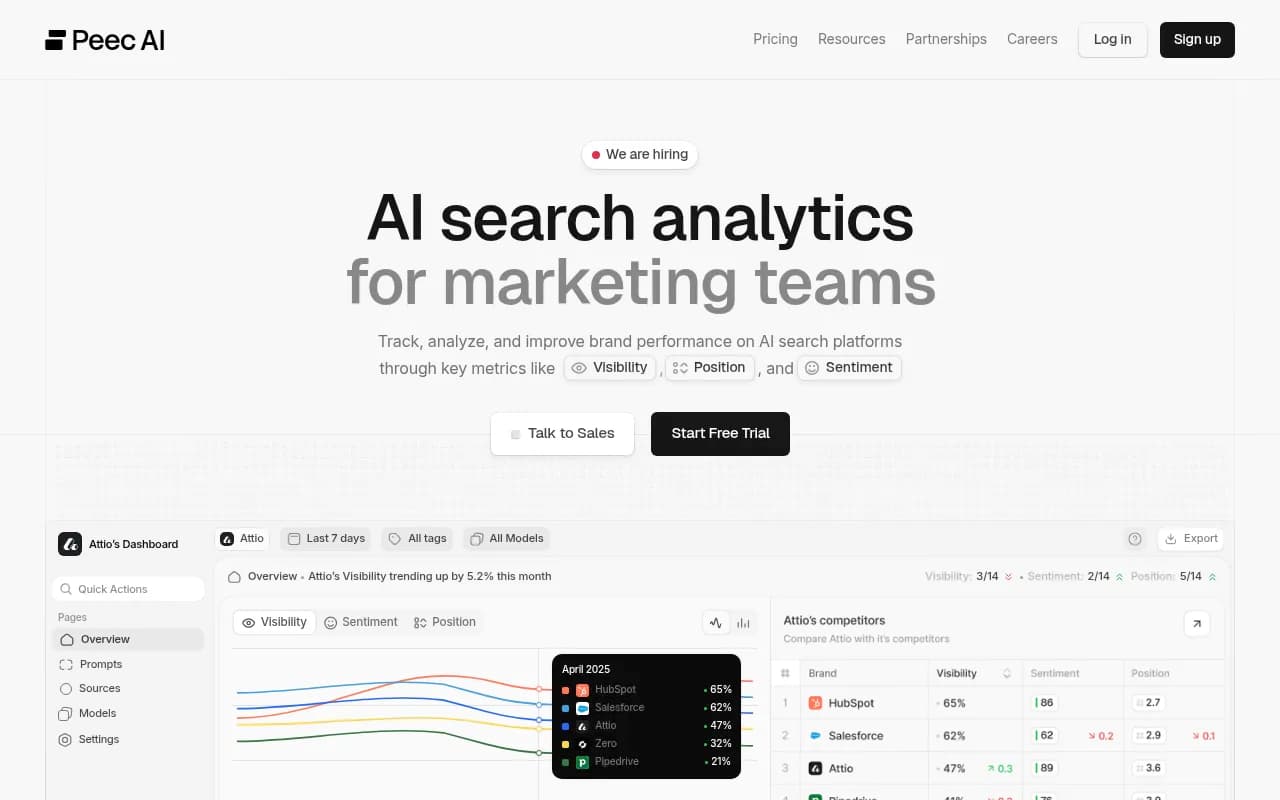
Peec.ai
Peec.ai tracks citations across ChatGPT and Perplexity but doesn't support Google AI Overviews or Claude. No content generation tools.
AthenaHQ
AthenaHQ provides citation tracking with a clean interface but lacks prompt volume data and content gap analysis.

Profound
Profound tracks 9+ AI engines and offers strong analytics but comes at a higher price point and lacks Reddit/YouTube tracking.
Profound

Action Plan: Get Started This Week
Here's a 7-day plan to start using page-level citation tracking:
Day 1: Sign up for a citation tracking platform (Promptwatch offers a free trial).
Day 2: Define your initial prompt set (50-100 prompts covering branded, competitor, and problem-solution queries).
Day 3: Run your first citation audit. Identify your top 10 most-cited pages.
Day 4: Analyze why those pages are cited. Look for common patterns (structure, tone, depth, examples).
Day 5: Pick your #1 cited page and create an optimization plan (expand sections, add visuals, build internal links).
Day 6: Implement the updates and publish.
Day 7: Set up weekly citation tracking and traffic attribution to monitor results.
Repeat this cycle every month. Focus on one top page at a time. Over six months, you'll have a portfolio of high-citation content that drives compounding AI visibility and revenue.
Conclusion: Amplify What's Already Working
In 2026, the brands that win in AI search aren't the ones publishing the most content. They're the ones amplifying their best content. Page-level citation tracking gives you the data to identify your winners and double down on them.
By focusing on the 20% of pages that drive 80% of AI visibility, you can:
- Increase citation volume by 2-3x in 90 days
- Drive more organic traffic from AI-driven sessions
- Improve conversion rates by positioning your brand as the authoritative source
The tools exist. The data is available. The only question is: will you use it?
Start tracking your page-level citations today. Find your best-performing content. Update it, expand it, promote it. Then watch your AI visibility — and revenue — compound.