Key takeaways
- Profound is the most feature-complete enterprise option with HIPAA compliance, 30+ language support, and workflow automation — but it's priced accordingly and built for large organizations.
- Scrunch has strong monitoring and a genuinely useful Agent Experience Platform, but falls short on content optimization and prompt-level intelligence.
- Evertune targets Fortune 500 brands with a GEO-focused approach, though its feature set is less transparent than competitors.
- Bluefish is the most opaque of the four — limited public information makes it hard to evaluate without a direct sales conversation.
- All four are primarily monitoring-oriented. If you need to close the loop from visibility data to content creation to traffic attribution, you'll want to look beyond this group.
The AI visibility tool market has gotten crowded fast. In 2024, there were maybe a dozen serious players. By mid-2026, there are well over a hundred, and the enterprise segment has its own cluster of tools charging $500–$2,000+/month and promising to tell you exactly how ChatGPT, Perplexity, and Gemini think about your brand.
Four names come up repeatedly in enterprise conversations: Profound, Scrunch, Evertune, and Bluefish. They're all positioned at the higher end of the market. They all claim to go beyond basic monitoring. But they're quite different in practice — and the price differences are significant enough that picking the wrong one is an expensive mistake.
This guide breaks down what each platform actually does, where each one falls short, and how to think about the decision.
What "enterprise AI visibility" actually means
Before getting into the tools, it's worth being precise about what enterprise buyers actually need — because vendors use "enterprise" to mean very different things.
A genuine enterprise AI visibility platform should handle:
- Monitoring brand mentions across multiple AI models (ChatGPT, Perplexity, Gemini, Claude, etc.)
- Tracking at scale — hundreds or thousands of prompts, multiple brands or product lines
- Competitive benchmarking across those same models
- Security and compliance requirements (SSO, HIPAA, SOC 2, data residency)
- Workflow integration — connecting visibility data to content teams, SEO teams, or broader marketing ops
- Attribution — tying AI visibility to actual traffic and revenue
Most tools nail the first two. The rest is where the gaps appear.
Profound
Profound has positioned itself as the enterprise standard for AI visibility since its 2024 launch, and it has the credentials to back that up. It was named a G2 Winter 2026 AEO Leader, achieved HIPAA compliance (making it one of the few options for healthcare brands), and supports 30+ languages — which matters a lot for global enterprise deployments.
Profound

What it does well
The platform tracks ChatGPT, Google AI Overviews, Perplexity, and several other models. It recently added GPT-5.2 tracking, which shows they're keeping pace with model releases. The Shopping Analysis feature is genuinely useful for brands that sell products — it shows how your products appear in conversational commerce contexts.
Profound Workflows (currently in public beta) is the most interesting recent development. It's an attempt to automate content operations based on visibility data — essentially connecting the "what's missing" insight to the "fix it" action. That's the right direction, and it puts Profound ahead of most competitors who stop at the dashboard.
The GCP and WordPress integrations for Agent Analytics are practical additions for enterprise tech stacks. If your team is already in Google Cloud or running WordPress at scale, these reduce friction considerably.
Where it falls short
The pricing is enterprise-tier, which means it's not publicly listed and requires a sales conversation. That's fine if you're a large brand with a real budget, but it makes evaluation harder. You're committing to a demo process before you know if the numbers work.
The Workflows feature is still in beta, so the content automation story isn't fully baked yet. And while Profound tracks a solid range of AI models, the depth of prompt intelligence — volume estimates, difficulty scoring, query fan-outs — isn't as developed as some alternatives.
One honest observation from the research: a comparison published on nicklafferty.com is authored by someone who explicitly notes it reflects their personal views but works at Profound. The competitive framing there should be read with that context in mind.
Best for
Large enterprise brands, healthcare organizations needing HIPAA compliance, and global companies needing multi-language support. Also a reasonable fit for teams that want workflow automation baked into the platform rather than bolted on.
Scrunch
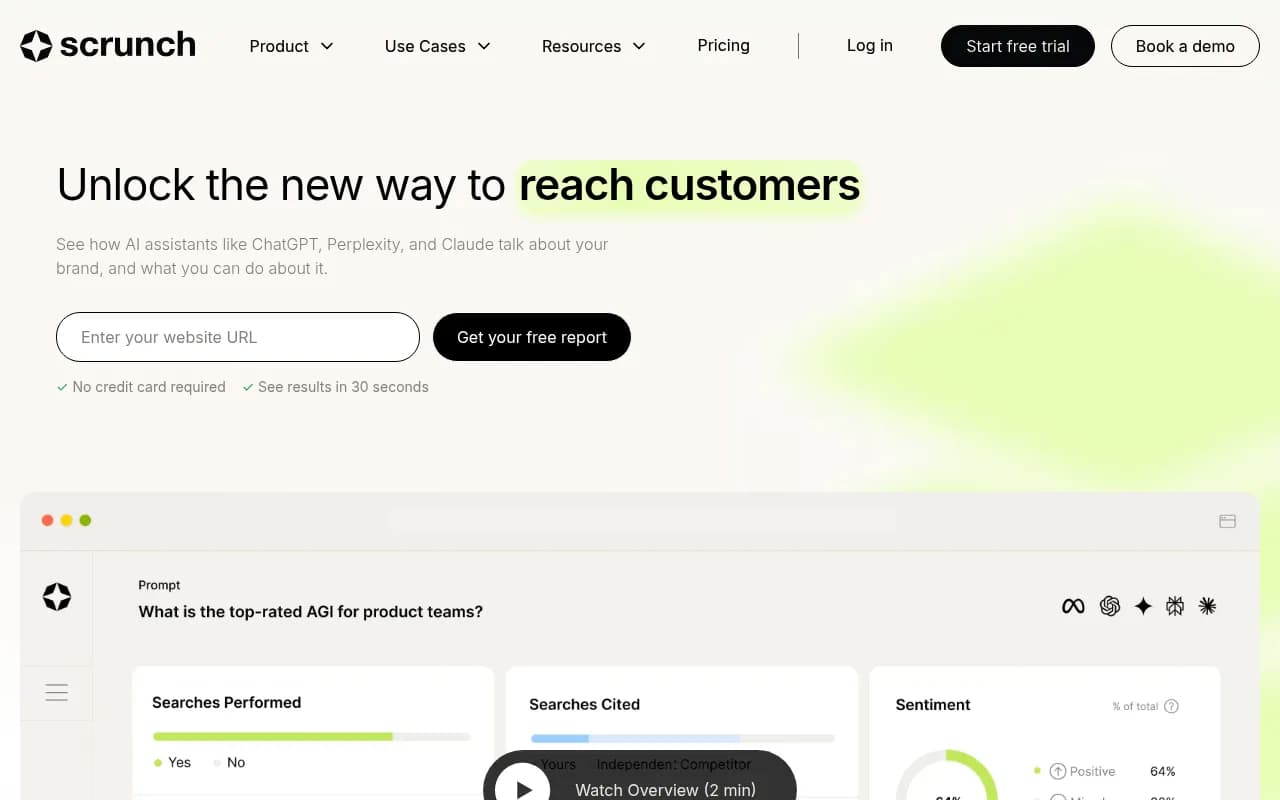
Scrunch has been around long enough to have a real product perspective, and it shows. The platform is more opinionated than most — it has a clear point of view on what AI visibility optimization should look like, and it's built features that reflect that thinking.
What it does well
The Agent Experience Platform (AXP) is Scrunch's most differentiated feature. While most tools focus on monitoring what AI models say about you, Scrunch's AXP is designed to optimize how AI agents actually interact with your website — think of it as technical GEO infrastructure rather than just a reporting dashboard. The Agent Traffic and Site Maps features sit in this same category.
The Shopping feature tracks AI search performance at the product level, which is useful for e-commerce brands. The AI Search Trends module surfaces emerging patterns in how people are prompting AI models — that's genuinely useful for content strategy.
Scrunch also publishes a reasonably honest comparison of GEO tools on their blog (they list competitors alphabetically after themselves, and they're upfront about that). That kind of transparency is a good signal about how the company operates.
Where it falls short
According to the research, Scrunch "provides insights but lacks the necessary tools to turn that data into a plan." That's a fair critique. The monitoring and agent experience features are strong, but the content optimization and gap analysis capabilities are less developed. You can see what's happening; acting on it requires more manual work.
The platform is also more self-serve in orientation than Profound. That's not inherently bad, but enterprise teams that want dedicated support and strategic guidance may find it less hands-on than they'd like.
Best for
Technical teams that want to optimize how AI crawlers interact with their site, e-commerce brands tracking product-level AI visibility, and organizations that value a transparent vendor with a clear product philosophy.
Evertune
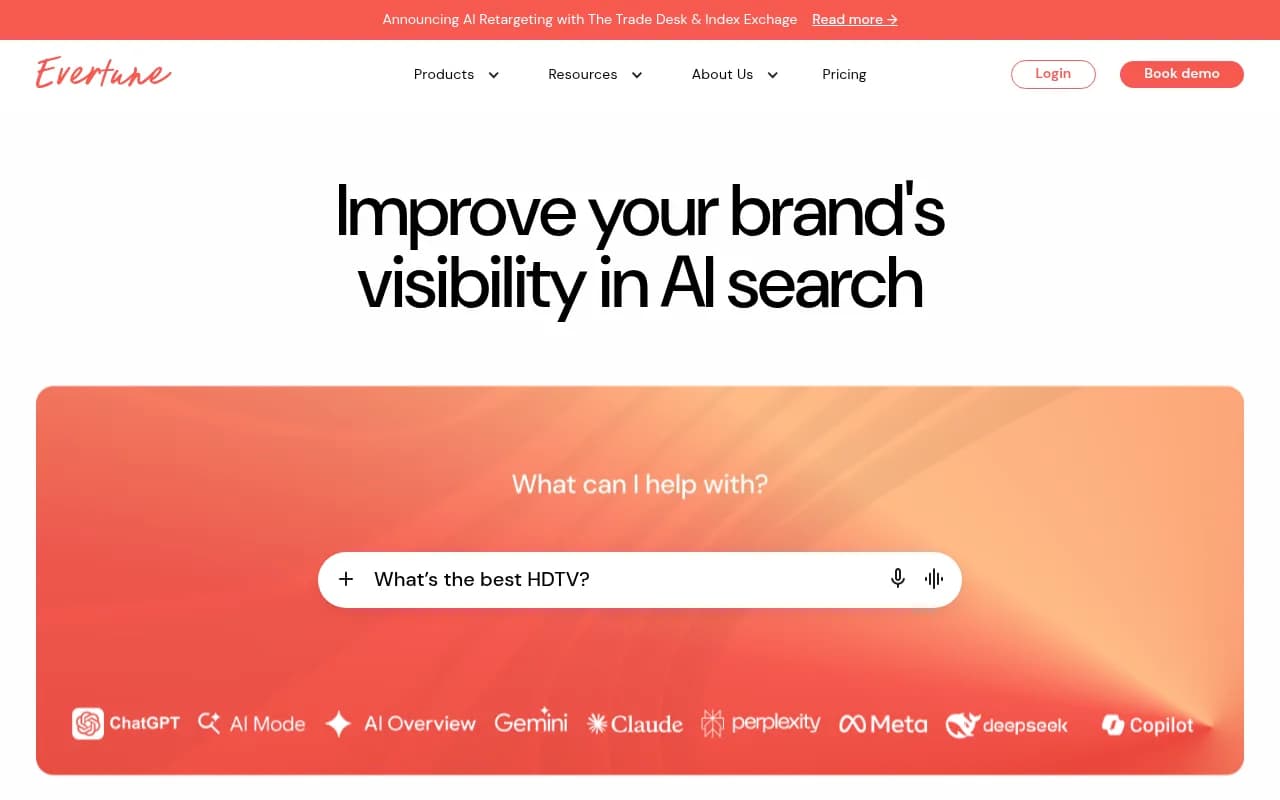
Evertune targets Fortune 500 brands and positions itself as a GEO insights leader. The platform has been active in publishing educational content about AI visibility, which has given it some brand recognition in the space.
What it does well
Evertune's focus on brand monitoring within AI-generated responses is solid, and the platform appears to cover the major AI models. The GEO insights angle — understanding not just whether you're mentioned but how you're portrayed — is a meaningful differentiator from pure mention-counting tools.
The platform has an AI Success Manager model (based on their published content), suggesting they offer some level of strategic support alongside the software. For enterprise buyers who want a vendor relationship rather than just a SaaS subscription, that matters.
Where it falls short
Evertune is the least transparent of the four platforms reviewed here. Pricing isn't public, detailed feature documentation is limited, and most of the available information comes from their own marketing content. That makes independent evaluation difficult.
The "10 Best AI Visibility Tools for 2026" article published on their own site — which predictably lists Evertune favorably — is a common tactic in this space, but it doesn't substitute for third-party validation. There's less G2 data, less independent review coverage, and less community discussion about Evertune compared to Profound or Scrunch.
Best for
Large enterprise brands that are comfortable with a high-touch sales process and want a platform with a GEO-specific focus. Worth evaluating if you're already in conversations with their team, but harder to assess independently than the other options here.
Bluefish
Bluefish (Bluefish AI) is positioned as an enterprise AI marketing platform for Fortune 500 brand visibility. It's the most opaque of the four platforms in this comparison.
What it does well
The platform targets large enterprise brands and appears to focus on AI visibility within a broader marketing context. The "enterprise AI marketing platform" framing suggests it may integrate visibility data with broader marketing workflows more tightly than pure-play monitoring tools.
Where it falls short
There's genuinely limited public information about Bluefish's specific feature set, pricing, or customer base. In a market where Profound publishes detailed feature announcements, Scrunch publishes transparent competitive comparisons, and Promptwatch publishes detailed pricing, Bluefish's opacity is notable.
Without third-party reviews, detailed documentation, or community discussion to draw from, it's difficult to make a strong recommendation either way. That's not a verdict against the product — it's a practical observation about the evaluation process.
Best for
If you're already in a sales conversation with Bluefish and have seen a live demo, you're better positioned to evaluate it than this guide can help with. For buyers starting from scratch, the other three platforms offer more information to work with upfront.
Side-by-side comparison
| Feature | Profound | Scrunch | Evertune | Bluefish |
|---|---|---|---|---|
| AI models tracked | 9+ (ChatGPT, Google AIO, Perplexity, etc.) | Multiple (incl. Shopping) | Major models | Not publicly specified |
| Content optimization | Workflows (beta) | Limited | Limited | Unknown |
| Agent/crawler features | Agent Analytics | AXP, Agent Traffic, Site Maps | Not specified | Unknown |
| Shopping tracking | Yes | Yes | Not specified | Unknown |
| HIPAA compliance | Yes | Not confirmed | Not confirmed | Not confirmed |
| Multi-language | 30+ languages | Not confirmed | Not specified | Unknown |
| Pricing | Custom/enterprise | Tiered (free trial available) | Custom/enterprise | Custom/enterprise |
| G2 recognition | Winter 2026 AEO Leader | Not confirmed | Not confirmed | Not confirmed |
| Transparency | High | High | Medium | Low |
| Best for | Large enterprise, healthcare, global | Technical teams, e-commerce | Fortune 500 brands | Unknown |
The gap all four share
Here's the honest assessment: all four platforms are primarily monitoring tools. They're good at telling you what's happening in AI search. Where they vary is in how much they help you do something about it.
Profound's Workflows beta is the most serious attempt in this group to bridge monitoring and action. Scrunch's AXP addresses the technical side of AI crawlability. But none of them have a complete loop from "here are the prompts your competitors are winning that you're not" to "here's the content you need to create" to "here's the traffic that resulted."
That gap matters more than it might seem. Visibility data without an action path is just expensive reporting.
If closing that loop is a priority, it's worth looking at platforms built around the full optimization cycle — tools like Promptwatch, which combines answer gap analysis, AI-native content generation grounded in citation data, and traffic attribution in one platform.

The distinction is meaningful: most enterprise tools in this space show you where you're invisible. Fewer help you fix it.
How to choose
A few practical questions to guide the decision:
Do you need HIPAA compliance? Profound is currently the only option in this group with confirmed HIPAA compliance. That narrows the field immediately for healthcare brands.
Do you need multi-language support at scale? Profound's 30+ language support is the most documented in this group. For global enterprise deployments, that matters.
Is technical AI crawlability a priority? Scrunch's AXP and Site Maps features are the most developed in this area. If you want to understand and optimize how AI agents consume your site, Scrunch has the most to offer here.
How important is pricing transparency? Scrunch offers a free trial and tiered pricing. Profound, Evertune, and Bluefish all require sales conversations. If you want to evaluate before committing to a demo process, Scrunch is the most accessible.
Do you need content generation built in? None of these four platforms have a fully developed content generation capability. If that's a core requirement, you'll need to either supplement with a separate tool or look at platforms that have built this into the core product.
How much do you value vendor transparency? Scrunch and Profound both publish detailed feature information, competitive comparisons, and product updates. Evertune and Bluefish are harder to evaluate independently.
Bottom line
Profound is the strongest all-around enterprise option in this group — the compliance credentials, language support, and workflow automation put it ahead for large organizations with complex requirements. The sales-only pricing is a friction point, but it's the most validated platform of the four.
Scrunch is the best choice for teams that want a transparent vendor, a free trial to evaluate before buying, and strong technical features for AI crawlability. It's less complete on the content optimization side, but the product philosophy is sound.
Evertune and Bluefish are harder to recommend without more information. Both may be excellent products — but the opacity makes independent evaluation difficult, and in a market this crowded, that's a competitive disadvantage.
For teams that want to go beyond monitoring entirely and build a system that finds content gaps, creates AI-optimized content, and tracks the results back to revenue, the enterprise tools in this comparison are a starting point — not the complete answer.