Key Takeaways
- AI search is reshaping discovery: ChatGPT, Perplexity, Claude, and other generative AI engines now drive significant referral traffic, with some sites reporting 2200% year-over-year growth from these sources
- GEO differs from traditional SEO: Generative Engine Optimization focuses on conversational queries, citation-worthy content, and structured data that AI models can extract and synthesize
- Content quality matters more than ever: AI engines prioritize authoritative, well-structured content with clear answers, proper formatting, and semantic richness
- Tracking and optimization go hand-in-hand: Understanding where you appear (or don't appear) in AI responses is the first step—platforms like Promptwatch help you find gaps, create optimized content, and measure results
- The landscape is evolving rapidly: Stay current by following industry research, case studies, and expert analysis as AI search continues to mature
Understanding Generative Engine Optimization in 2026
Generative Engine Optimization (GEO) represents a fundamental shift in how content gets discovered online. Unlike traditional search engines that return lists of links, AI-powered platforms like ChatGPT, Perplexity, Claude, Gemini, and Google AI Overviews synthesize information from multiple sources and present direct answers to user queries.
The numbers tell a compelling story. According to data from Plausible Analytics, websites experienced a 2200% increase in referral traffic from AI search engines in 2024 compared to the previous year. This trend has only accelerated in 2026, making GEO an essential component of any comprehensive digital marketing strategy.
What Makes GEO Different from Traditional SEO
Traditional SEO optimizes for keyword rankings and click-through rates from search engine results pages. GEO, by contrast, optimizes for citation and recommendation within AI-generated responses. The goal isn't just to rank—it's to become the authoritative source that AI models reference when answering user questions.
Key differences include:
- Query format: Users interact with AI engines conversationally, asking complete questions rather than typing keyword phrases
- Content extraction: AI models parse and synthesize information from multiple sources, requiring content that's easily extractable and verifiable
- Attribution patterns: Citations in AI responses don't follow traditional ranking algorithms—they prioritize relevance, authority, and content structure
- User behavior: Many users never click through to source websites, making brand visibility within the AI response itself critically important
Essential AI Search Trends Shaping 2026
The Rise of Multi-Engine Search Behavior
Users no longer rely on a single search platform. Research shows that consumers routinely cross-reference answers across ChatGPT, Perplexity, Google AI Overviews, and traditional search engines. This multi-engine behavior means brands must optimize for visibility across multiple AI platforms simultaneously.
Each platform has distinct characteristics:
- ChatGPT: Conversational depth, shopping recommendations, plugin ecosystem
- Perplexity: Real-time web search integration, source transparency, follow-up questions
- Claude: Long-form analysis, document processing, nuanced reasoning
- Google AI Overviews: Integration with traditional search results, local business information
- Gemini: Multimodal capabilities, YouTube integration, Google ecosystem connections
AI Crawler Behavior and Content Discovery
AI engines discover content through specialized crawlers that behave differently from traditional search bots. Understanding these crawlers—when they visit, which pages they prioritize, and how they handle different content types—has become essential for GEO success.
Real-time crawler logs reveal patterns that inform optimization strategies. For example, AI crawlers often revisit pages with frequently updated content, prioritize pages with strong semantic structure, and may struggle with JavaScript-heavy implementations that traditional search engines handle well.
The Importance of Prompt Intelligence
Not all prompts are created equal. Some queries generate millions of responses daily, while others represent niche but high-intent searches. Understanding prompt volume, difficulty, and query fan-outs (how one prompt branches into related sub-queries) helps prioritize optimization efforts.
Prompt research differs from keyword research in several ways:
- Prompts are conversational and context-dependent
- Users often engage in multi-turn dialogues rather than single queries
- Intent signals are more explicit in natural language prompts
- Competitive analysis requires understanding which brands appear for specific prompt patterns
Must-Read Guides and Articles for GEO Mastery
Foundational GEO Resources
"How to Optimize for AI Search Engines - 2026 Guide" by ROI Revolution
This comprehensive guide covers the fundamentals of AI search optimization, including citation share strategies, extractable formatting techniques, and schema implementation. The article breaks down how different AI engines evaluate and select content for citations, with practical examples of before-and-after optimizations.
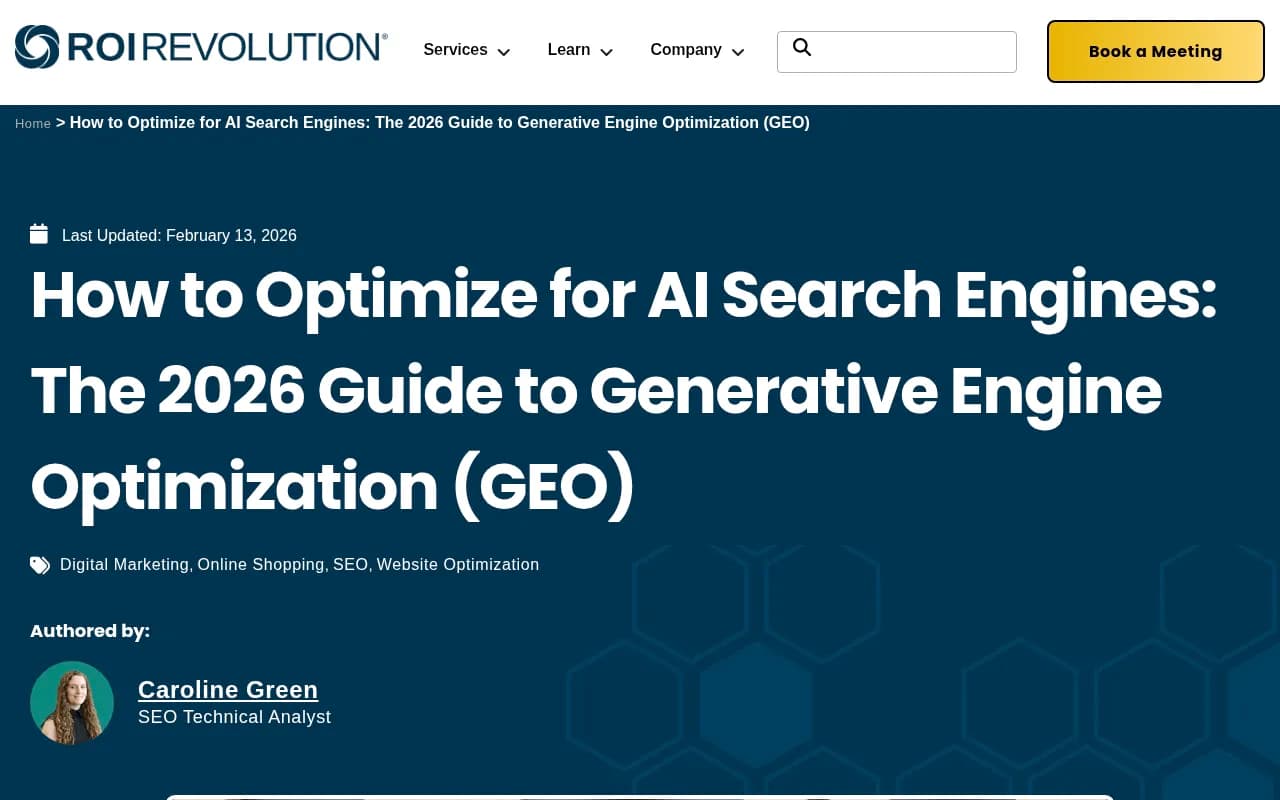
Key insights include the importance of structured data, the role of E-E-A-T (Experience, Expertise, Authoritativeness, Trustworthiness) in AI citations, and specific formatting patterns that increase extraction likelihood.
"Generative Engine Optimisation Guide for AI Search Assistants" by Taksu Digital
Taksu Digital's guide explores the strategic importance of GEO for businesses, explaining why brands can no longer afford to ignore AI search visibility. The article provides a clear framework for understanding how AI assistants like ChatGPT and Google Gemini transform user behavior and purchase decisions.
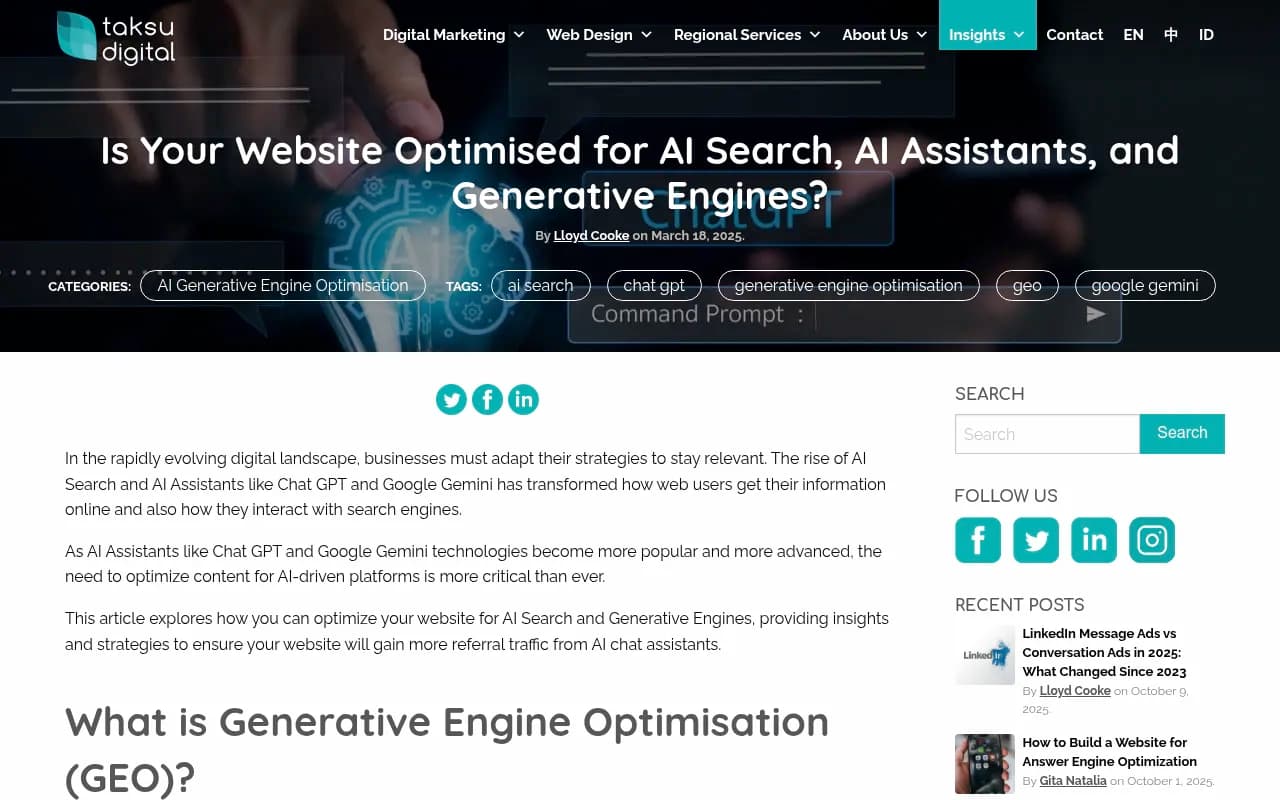
The guide emphasizes the shift from click-based metrics to visibility-based metrics, arguing that appearing in AI-generated responses—even without clicks—builds brand awareness and authority.
"The Complete Guide to Optimizing Your Content for AI Search" by Convert
Convert's guide combines original research with insights from leading marketers to present a holistic view of AI search optimization. The article includes detailed analysis of how different AI platforms work, what makes content citation-worthy, and how to measure success in this new paradigm.
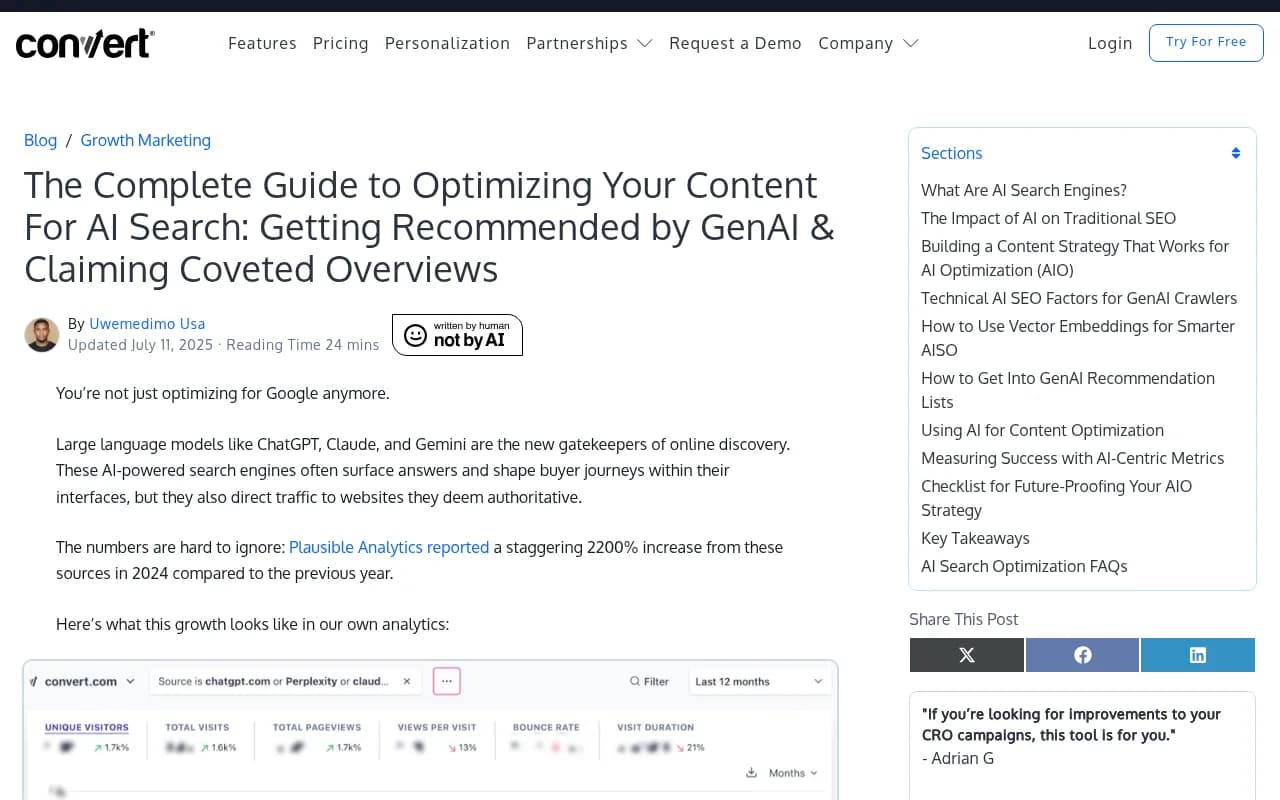
Particularly valuable is the guide's breakdown of AI search engine mechanics—how these platforms differ from traditional search in their content discovery, evaluation, and presentation processes.
Advanced GEO Strategy and Implementation
"From Search to Synthesis: The Emergence of GEO in the Age of AI" on Medium
This thought leadership piece by Claus Nissmueller examines the theoretical foundations of GEO, exploring how generative AI fundamentally changes the relationship between content creators and information seekers. The article draws parallels to previous search paradigm shifts while highlighting what makes the AI revolution unique.
Key concepts include the move from retrieval to synthesis, the importance of semantic understanding over keyword matching, and the role of context in AI-generated responses.
"How to Do Prompt Research for Generative Engine Optimisation" by Radix
Radix's guide tackles one of GEO's most challenging aspects: understanding what prompts your target audience actually uses. The article provides a step-by-step methodology for discovering, analyzing, and prioritizing conversational queries that drive AI search visibility.
The guide covers:
- Identifying prompt patterns through user research and analytics
- Analyzing competitor visibility across different prompt types
- Mapping prompts to content gaps and opportunities
- Prioritizing optimization efforts based on prompt volume and difficulty
Industry Research and Data-Driven Insights
"Top 18 Generative Engine Optimization Tools To Try in 2025" by Qwairy
Qwairy's comprehensive tool comparison helps marketers navigate the rapidly expanding GEO technology landscape. The article evaluates platforms across multiple dimensions: monitoring capabilities, content optimization features, crawler log analysis, and integration options.
This resource is particularly valuable for teams building their GEO tech stack, providing honest assessments of each platform's strengths and limitations.
"Generative Search Engine Optimization Companies Guide" on Barchart
This guide surveys the agency and service provider landscape, profiling companies that specialize in GEO implementation. It's essential reading for brands considering outsourcing their AI search optimization efforts or seeking specialized expertise.
The article covers different service models—from full-service agencies to specialized consultants—and provides guidance on evaluating providers based on your specific needs and goals.
Practical GEO Implementation Strategies
Content Optimization for AI Citations
Creating content that AI engines want to cite requires a different approach than traditional SEO writing. Based on analysis of over 880 million citations, several patterns emerge:
Structure and Formatting
- Use clear, descriptive headings that answer specific questions
- Break complex topics into digestible sections with logical flow
- Include bulleted lists and numbered steps for procedural content
- Provide concise definitions and explanations before diving into details
- Use tables and structured data for comparative information
Content Depth and Authority
- Demonstrate expertise through specific examples and case studies
- Cite credible sources and link to authoritative references
- Update content regularly to maintain relevance and accuracy
- Address multiple angles and perspectives on complex topics
- Include data, statistics, and research findings where appropriate
Semantic Richness
- Use natural language that matches how users ask questions
- Include related concepts and terminology variations
- Provide context and background information
- Answer follow-up questions users might have
- Connect ideas across different sections of your content
Technical Implementation
Schema Markup and Structured Data
AI engines rely heavily on structured data to understand and extract information. Implementing appropriate schema markup significantly increases citation likelihood:
- Article schema for blog posts and guides
- FAQ schema for question-and-answer content
- HowTo schema for instructional content
- Product schema for e-commerce pages
- Organization and LocalBusiness schema for brand information
Site Architecture and Crawlability
Ensure AI crawlers can efficiently discover and process your content:
- Create XML sitemaps that include all important pages
- Implement clean URL structures that reflect content hierarchy
- Optimize page load speed and mobile responsiveness
- Fix broken links and redirect chains
- Monitor crawler logs to identify and resolve access issues
The Action Loop: Find, Create, Track
Successful GEO implementation follows a continuous optimization cycle:
1. Find the Gaps
Identify where competitors appear in AI responses but your brand doesn't. Answer gap analysis reveals specific content opportunities—the topics, angles, and questions AI models want answers to but can't find on your site.
Tools like Promptwatch provide this intelligence by tracking competitor visibility across multiple AI engines and highlighting the exact prompts where you're missing.
2. Create Optimized Content
Develop content specifically engineered for AI citation. This isn't generic SEO filler—it's strategically crafted material grounded in real citation data, prompt volumes, persona targeting, and competitive analysis.
The most effective approach combines human expertise with AI-assisted writing that understands what makes content citation-worthy. Some platforms include built-in content generation capabilities that create articles, listicles, and comparisons based on actual AI search patterns.
3. Track Results and Iterate
Monitor your visibility scores across AI engines and measure the impact of your optimization efforts. Page-level tracking shows exactly which content gets cited, how often, and by which models.
Close the loop by connecting AI visibility to actual business outcomes. Track referral traffic from AI sources, measure engagement metrics, and attribute revenue where possible. Use these insights to refine your strategy and prioritize future optimization work.
Emerging Trends and Future Considerations
Multimodal AI Search
AI engines increasingly process and generate responses that include images, videos, and other media formats. Optimizing visual content for AI discovery—through descriptive filenames, alt text, captions, and surrounding context—will become increasingly important.
Personalization and Context
AI search results vary based on user context, conversation history, and personalization signals. Understanding how your content performs across different personas and use cases helps refine targeting and messaging.
AI Shopping and Commerce
ChatGPT's shopping features and similar capabilities from other platforms represent a new frontier for e-commerce visibility. Product information optimization, review management, and pricing transparency all factor into AI shopping recommendations.
Reddit and Community Content
AI engines frequently cite Reddit discussions, YouTube videos, and other community-generated content. Understanding and potentially participating in these conversations can influence AI recommendations, though this requires authentic engagement rather than promotional tactics.
Building Your GEO Knowledge Base
Staying current with GEO best practices requires ongoing learning. Beyond the foundational guides mentioned above, consider these approaches:
Follow Industry Leaders
Key voices in the GEO space regularly publish insights on LinkedIn, Twitter, and industry blogs. Track thought leaders who combine practical experience with data-driven analysis.
Participate in Communities
Join marketing communities where practitioners share real-world GEO experiences, challenges, and solutions. The collective knowledge in these groups often surfaces tactics and insights before they appear in formal guides.
Experiment and Document
Run your own GEO experiments. Test different content formats, optimization techniques, and tracking approaches. Document what works (and what doesn't) for your specific industry and audience.
Monitor Competitive Intelligence
Regularly audit how competitors appear in AI search results. Analyze their content strategies, identify patterns in what gets cited, and adapt successful approaches to your own context.
Measuring GEO Success
Defining and tracking the right metrics is essential for demonstrating GEO value:
Visibility Metrics
- Citation share: percentage of relevant prompts where your brand appears
- Position in AI responses: first mention, supporting citation, or not mentioned
- Consistency across engines: how visibility varies between ChatGPT, Perplexity, Claude, etc.
- Prompt coverage: number of unique prompts where you achieve visibility
Traffic and Engagement Metrics
- Referral traffic from AI sources
- Engagement rates for AI-referred visitors
- Conversion rates and revenue attribution
- Brand search volume changes (indicating awareness lift)
Content Performance Metrics
- Pages with AI citations vs. total pages
- Citation frequency per page
- Content freshness and update cycles
- Crawler visit patterns and frequency
Conclusion: The Path Forward
Generative Engine Optimization represents more than just another marketing channel—it's a fundamental shift in how information gets discovered and consumed online. The brands that succeed in 2026 and beyond will be those that embrace this change early, invest in understanding AI search patterns, and systematically optimize their content for citation and recommendation.
The resources and strategies outlined in this guide provide a solid foundation, but GEO remains a rapidly evolving discipline. Continuous learning, experimentation, and adaptation are essential. Start with the foundational guides, implement core optimization techniques, and build your expertise through hands-on experience.
Most importantly, remember that GEO success isn't just about visibility—it's about providing genuine value. AI engines cite content that truly answers user questions, solves real problems, and demonstrates authentic expertise. Focus on creating that kind of content, optimize it for AI discovery, and track your results to continuously improve.
The future of search is conversational, synthesized, and AI-powered. The question isn't whether to optimize for this new reality—it's how quickly you can adapt and how effectively you can compete in this transformed landscape.