Key Takeaways
- AI search has fundamentally changed discovery: Over 800 million people now use ChatGPT weekly, and 80% of consumers rely on AI-generated results for at least 40% of their searches. If your brand isn't visible in these answers, you're invisible to a massive audience.
- Traditional SEO alone won't cut it: AI models don't rank pages—they synthesize answers from multiple sources and cite the most authoritative, structured, and relevant content. You need to optimize for how AI engines discover, evaluate, and reference information.
- Content structure and freshness matter more than ever: AI models prioritize recent, well-structured content with clear headings, lists, and schema markup. Generic blog posts won't get cited—you need content engineered for AI visibility.
- Citations are the new backlinks: Getting mentioned in AI responses requires building authority through trusted sources, Reddit discussions, YouTube content, and structured data that AI models can easily parse and cite.
- Track what matters and close the loop: Monitor your visibility across ChatGPT, Perplexity, Claude, Gemini, and Google AI Overviews. Use platforms like Promptwatch to identify content gaps, generate optimized content, and measure real results.

Understanding the AI Search Revolution
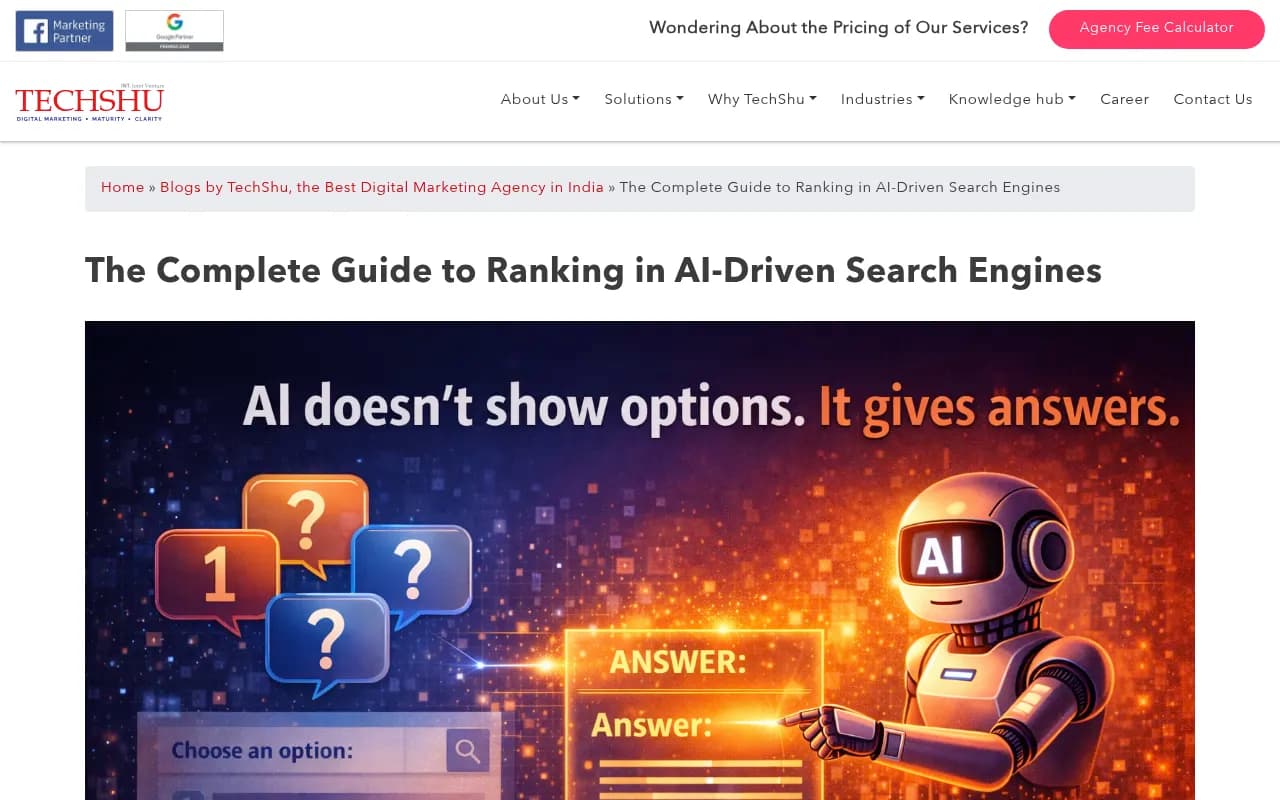
The mental model of "ranking on page one" is dead. Today's search landscape is fundamentally different: people ask ChatGPT, Perplexity, or Google's AI Overview a question, read a synthesized answer, and move on—often without clicking a single website.
This shift represents more than a change in user behavior. It's a complete transformation in how information is discovered, evaluated, and trusted online. McKinsey projects that $750 billion in US revenue will be influenced by AI-powered search engines by 2026. Bain & Company reports that 80% of consumers now use AI-generated results for at least 40% of their searches.
If your brand isn't part of the source pool these AI models pull from, you're invisible—no matter how well your pages rank in traditional search.
How AI Search Engines Work Differently
Traditional search engines like Google rank pages and let users decide which to click. AI search engines work fundamentally differently:
- Understand the question: AI models parse natural language queries and identify the user's true intent, including context, nuance, and implied follow-up questions.
- Synthesize information from multiple sources: Instead of returning a list of links, AI engines read dozens of pages, Reddit threads, YouTube transcripts, and structured data sources to build a comprehensive answer.
- Present a single, authoritative response: The answer includes brand mentions, comparisons, recommendations, definitions, and citations—all without requiring the user to click through.
This is the core shift that Generative Engine Optimization (GEO) addresses. Traditional SEO optimizes for keywords and backlinks. GEO optimizes for how AI models filter information, understand trust, and synthesize answers.
The Three Pillars of Modern Search Visibility
To succeed in 2026, you need to master three interconnected disciplines:
1. Search Engine Optimization (SEO)
SEO remains the foundation. It focuses on traditional ranking factors: keywords, backlinks, technical performance, domain authority, and Core Web Vitals. SEO helps you appear in conventional search results where users browse multiple options before making decisions.
Google's ranking systems still prioritize relevance, quality, and usability—principles that continue to matter even as AI search grows.
2. Answer Engine Optimization (AEO)
AEO targets platforms that provide direct answers without requiring users to click through multiple websites. This includes Google's Featured Snippets, Knowledge Panels, and voice assistants like Alexa and Siri.
AEO focuses on structured content that can be easily extracted and presented: concise definitions, step-by-step instructions, bulleted lists, and FAQ sections. The goal is to become the source of truth for specific questions.
3. Generative Engine Optimization (GEO)
GEO is the newest and most critical discipline. It optimizes for how AI models like ChatGPT, Claude, Perplexity, and Gemini discover, evaluate, and cite content. GEO combines elements of SEO and AEO but adds new dimensions:
- Conversational query optimization: AI users ask full questions, not keyword fragments. Your content must answer these naturally.
- Multi-source authority: AI models cross-reference information from websites, Reddit, YouTube, research papers, and social media. You need presence across channels.
- Citation engineering: Getting mentioned in AI responses requires building trust signals that AI models recognize and value.
- Freshness and recency: AI models prioritize recent content, especially for time-sensitive topics. Stale content gets ignored.
The 10 Core Strategies for Ranking in AI Search Engines
1. Optimize for Questions, Not Just Keywords
AI users don't type "project management software"—they ask "What's the best project management tool for a remote team of 15 people with a limited budget?" Your content must answer these specific, conversational queries.
How to implement this:
- Use tools like AlsoAsked, AnswerThePublic, and KeywordsPeopleUse to discover real questions people ask
- Structure content around question-based headings (H2s and H3s)
- Write in a natural, conversational tone that directly addresses the query
- Include multiple related questions in a single piece to capture query fan-outs
2. Build Content That AI Models Can Easily Parse
AI engines favor content with clear structure, logical hierarchy, and semantic markup. Generic paragraphs of text won't get cited—you need content engineered for machine readability.
Key formatting principles:
- Use descriptive H2 and H3 headings that summarize each section
- Break information into bulleted or numbered lists
- Include tables for comparisons and data
- Add definition lists for terminology
- Use short paragraphs (2-3 sentences max)
- Bold key terms and concepts
3. Implement Comprehensive Schema Markup
Structured data helps AI models understand your content's context, relationships, and authority. Schema markup acts as metadata that AI engines can read and trust.
Priority schema types for AI visibility:
- Article schema: Title, author, publish date, modified date, description
- FAQPage schema: Questions and answers that AI models can extract directly
- HowTo schema: Step-by-step instructions with clear actions
- Product schema: Detailed product information with reviews and ratings
- Organization schema: Brand identity, logo, social profiles, contact info
- BreadcrumbList schema: Site hierarchy and navigation structure
4. Prioritize Freshness and Content Updates
AI models heavily weight recency, especially for topics where information changes frequently. A 2024 article will outrank a 2022 article with identical content quality.
Freshness strategies:
- Update existing content quarterly with new data, examples, and insights
- Add "Last Updated" timestamps prominently
- Reference current events, trends, and statistics
- Use year-specific language ("Best X in 2026")
- Monitor when AI crawlers visit your site and update content before their next visit
5. Build Multi-Channel Authority
AI models don't just read your website—they synthesize information from Reddit discussions, YouTube videos, podcasts, research papers, and social media. You need presence across these channels.
Cross-platform authority building:
- Reddit: Participate authentically in relevant subreddits, answer questions, share insights (not promotional links)
- YouTube: Create video content that explains concepts, demonstrates products, or shares case studies
- Podcasts: Guest appearances and interviews that establish thought leadership
- LinkedIn: Publish articles and engage in industry discussions
- Quora: Answer questions in your domain with detailed, helpful responses
6. Engineer Citations Through Source Quality
AI models prioritize sources they trust. Getting cited requires building the signals that AI engines use to evaluate authority.
Trust signals that matter:
- Domain authority: Backlinks from high-authority sites in your industry
- E-E-A-T signals: Expertise, Experience, Authoritativeness, Trustworthiness demonstrated through author bios, credentials, and cited sources
- Consistent NAP: Name, Address, Phone across all listings and directories
- Social proof: Reviews, testimonials, case studies, and user-generated content
- Media mentions: Coverage in reputable publications and industry blogs
7. Optimize for AI Crawler Discovery
AI models use specialized crawlers (like OpenAI's GPTBot, Anthropic's ClaudeBot, and Perplexity's PerplexityBot) to discover and index content. If these crawlers can't access your site, you won't get cited.
Technical optimization for AI crawlers:
- Check your robots.txt file—don't block AI crawlers
- Ensure JavaScript-rendered content is accessible (use server-side rendering or prerendering)
- Optimize page speed and Core Web Vitals
- Fix broken links and redirect chains
- Use XML sitemaps to help crawlers discover new content
- Monitor crawler logs to see which pages AI bots are reading
8. Create Content That Answers Follow-Up Questions
AI conversations are iterative. Users ask a question, get an answer, then ask follow-ups. Content that anticipates and answers these follow-up questions gets cited more often.
How to structure for follow-ups:
- Include a comprehensive FAQ section
- Address common objections and concerns
- Provide examples and use cases
- Link to related topics and deeper dives
- Use "People Also Ask" data to identify common follow-ups
9. Leverage Comparison and Alternative Content
AI models frequently cite comparison pages and alternative lists when users ask "What's better than X?" or "What are alternatives to Y?" This content type is critical for brand visibility.
Comparison content best practices:
- Create detailed comparison pages for your product vs. competitors
- Build "Best X Alternatives" pages for major competitors
- Use comparison tables with clear criteria
- Be honest and specific—don't just promote yourself
- Update regularly with new alternatives and features
10. Track, Measure, and Optimize Continuously
You can't improve what you don't measure. Tracking your visibility across AI search engines is essential for understanding what's working and where you're losing ground.
What to track:
- Brand mention frequency: How often AI models cite your brand in responses
- Prompt coverage: Which queries trigger mentions of your brand
- Competitor visibility: Where competitors are cited but you're not
- Citation context: What AI models say about you (positive, neutral, negative)
- Page-level performance: Which pages get cited most often
- Traffic attribution: How AI visibility translates to actual website visits
Platforms like Promptwatch help you close this loop by identifying content gaps, generating optimized content, and tracking results across ChatGPT, Perplexity, Claude, Gemini, and Google AI Overviews.
The AI Search Engines You Need to Optimize For
ChatGPT (OpenAI)
With over 800 million weekly active users, ChatGPT is the largest AI search engine. It uses GPT-4 and web search to answer queries, citing sources it deems authoritative.
Optimization priorities:
- Freshness (content updated within the last 6 months)
- Clear structure with headings and lists
- Conversational tone that matches how users ask questions
- Cross-references from Reddit, YouTube, and trusted publications
Perplexity AI
Perplexity processes billions of queries monthly and is known for its citation-heavy responses. It explicitly shows sources and links, making it critical for driving traffic.
Optimization priorities:
- High-quality backlinks from authoritative domains
- Detailed, comprehensive content that covers topics thoroughly
- Schema markup for articles, FAQs, and products
- Fast page speed and mobile optimization
Google AI Overviews (formerly SGE)
Google's AI-generated summaries now appear on over 50% of search results pages. They pull from Google's index and prioritize sites with strong traditional SEO.
Optimization priorities:
- Traditional SEO fundamentals (keywords, backlinks, technical optimization)
- Featured Snippet optimization
- Schema markup for rich results
- E-E-A-T signals (expertise, authoritativeness, trustworthiness)
Claude (Anthropic)
Claude is known for nuanced, context-aware responses and is increasingly used for research and professional tasks.
Optimization priorities:
- Long-form, in-depth content
- Academic and research-style citations
- Clear methodology and data sources
- Professional tone and formatting
Gemini (Google)
Gemini integrates with Google's ecosystem and prioritizes content from Google's index, YouTube, and Google Scholar.
Optimization priorities:
- YouTube video content
- Google Scholar citations for research topics
- Integration with Google Business Profile for local queries
- Structured data for rich results
Common Mistakes That Kill AI Visibility
1. Blocking AI Crawlers in Robots.txt
Many sites accidentally block AI crawlers (GPTBot, ClaudeBot, PerplexityBot) in their robots.txt file. If AI models can't read your content, they can't cite it.
2. Relying on JavaScript-Only Rendering
If your content is only accessible after JavaScript executes, many AI crawlers won't see it. Use server-side rendering or prerendering services to ensure content is accessible.
3. Ignoring Content Freshness
Stale content gets ignored. AI models prioritize recent information, especially for time-sensitive topics. Update existing content regularly and add "Last Updated" timestamps.
4. Writing for Keywords Instead of Questions
Keyword-stuffed content doesn't answer the conversational questions AI users ask. Write naturally and address specific queries.
5. Neglecting Multi-Channel Presence
AI models synthesize information from multiple sources. If you're only on your website, you're missing Reddit discussions, YouTube content, and social media signals that build authority.
6. Skipping Schema Markup
Structured data helps AI models understand your content's context and relationships. Without schema markup, you're making it harder for AI engines to cite you accurately.
7. Not Tracking AI Visibility
You can't optimize what you don't measure. Without tracking your visibility across AI search engines, you're flying blind.
Tools and Platforms for AI Search Optimization
The AI search optimization landscape is rapidly evolving. Here are the key categories of tools you'll need:
AI Visibility Tracking
Platforms that monitor how often your brand is mentioned across AI search engines and identify content gaps.
- Promptwatch: End-to-end platform combining tracking, content gap analysis, and AI content generation
- Profound: Enterprise tracking across 10+ AI engines
- Otterly.AI: Basic monitoring for ChatGPT, Perplexity, and Google AI Overviews
Content Optimization
Tools that help you create and optimize content for AI visibility.
- Surfer SEO: AI-driven content optimization with SERP analysis
- Clearscope: Content optimization platform for SEO teams
- MarketMuse: AI content intelligence and strategy platform
Schema Markup
Tools for implementing and validating structured data.
- Google's Structured Data Markup Helper: Free tool for generating schema
- Schema.org: Official schema markup documentation
- Merkle's Schema Markup Generator: Free tool for common schema types
Technical SEO and Crawling
Platforms for monitoring AI crawler activity and fixing technical issues.
- Screaming Frog: Website crawler for technical SEO audits
- Lumar: Enterprise website optimization platform
- JetOctopus: SEO crawler and log analyzer for large sites
The Future of AI Search: What's Coming in 2026 and Beyond
AI search is evolving rapidly. Here's what to watch for:
1. Multi-Modal Search
AI engines are increasingly incorporating images, videos, and audio into their responses. Visual content optimization will become as important as text optimization.
2. Personalized AI Responses
AI models will tailor responses based on user history, preferences, and context. Brand visibility will depend on understanding different user personas and optimizing for each.
3. AI Shopping and Commerce
ChatGPT's shopping features and product recommendations are expanding. E-commerce brands need to optimize product data, reviews, and comparisons for AI visibility.
4. Real-Time Information Synthesis
AI models are getting better at accessing and synthesizing real-time information from news, social media, and live data sources. Freshness and timeliness will matter even more.
5. Agentic AI and Task Automation
AI agents that can complete tasks (book appointments, make purchases, research products) will change how brands need to structure information and CTAs.
Getting Started: Your 30-Day AI Search Optimization Plan
Week 1: Audit and Baseline
- Check if AI crawlers can access your site (robots.txt, JavaScript rendering)
- Set up tracking across ChatGPT, Perplexity, and Google AI Overviews
- Identify your top 10 most important queries and check current visibility
- Audit existing content for structure, freshness, and schema markup
Week 2: Technical Optimization
- Implement schema markup on key pages (Article, FAQ, Product, Organization)
- Fix technical issues blocking AI crawlers
- Optimize page speed and Core Web Vitals
- Set up XML sitemaps and ensure they're up to date
Week 3: Content Optimization
- Update your top 10 pages with fresh data and improved structure
- Add question-based headings and FAQ sections
- Create comparison and alternative content for key competitors
- Optimize for conversational queries, not just keywords
Week 4: Multi-Channel Expansion
- Publish helpful answers on Reddit in relevant subreddits
- Create YouTube content explaining key concepts or demonstrating products
- Build backlinks from high-authority sites in your industry
- Engage in LinkedIn and Quora discussions
Conclusion: The Shift from Rankings to Recommendations
The era of "ranking on page one" is over. The new game is being recommended by AI—getting cited, mentioned, and trusted by the AI models that hundreds of millions of people use every day.
This shift requires a fundamental change in how you think about content, authority, and visibility. It's not about gaming algorithms or stuffing keywords. It's about creating genuinely helpful, well-structured, authoritative content that AI models can discover, understand, and confidently cite.
The brands that win in AI search will be those that adapt fastest—tracking their visibility, identifying content gaps, and continuously optimizing for how AI engines discover and synthesize information. The tools and strategies exist today. The question is whether you'll implement them before your competitors do.
Start tracking your AI visibility, identify where you're invisible, and begin building the content and authority signals that AI models trust. The future of search is here—and it's time to optimize for it.