Key Takeaways
- Airtop and Airefs solve completely different problems: Airtop automates web tasks (scraping, data entry, monitoring), while Airefs tracks brand visibility in AI search results like ChatGPT and Perplexity
- Airtop has transparent pricing starting at $26/mo; Airefs requires contacting sales for pricing after a 7-day trial
- If you need to automate repetitive browser tasks or build workflows without code, pick Airtop. If you need to monitor how often your brand appears in AI-generated answers, pick Airefs
- Neither tool replaces the other -- they can work together in a content strategy where Airefs identifies visibility gaps and Airtop automates research or data collection
- Airtop integrates with Zapier, Make, n8n, Slack, Google Sheets, and CRMs. Airefs focuses on AI search engines (ChatGPT, Perplexity, Google AI Overviews) but doesn't list third-party integrations
- For comprehensive AI search visibility tracking with content gap analysis and optimization tools, consider Promptwatch as an alternative to Airefs
Overview
Airtop: Web automation without code
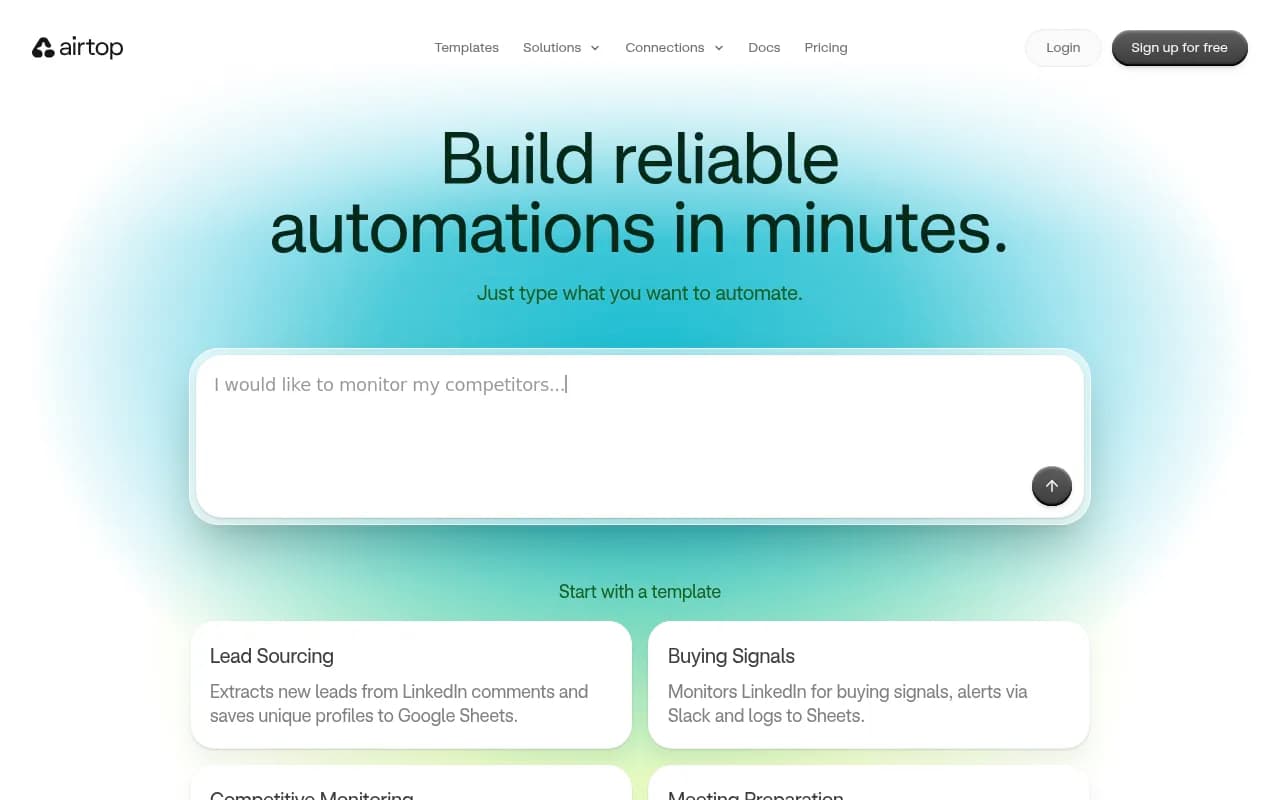
Airtop is a browser automation platform that lets you build workflows by typing instructions in plain English. You describe what you want to automate -- "monitor competitor LinkedIn posts weekly and report engagement to Slack" or "extract leads from LinkedIn comments and save to Google Sheets" -- and Airtop generates the automation.
It runs in the cloud, works on any website (even behind logins or without APIs), and integrates with tools like Slack, Gmail, Google Sheets, Airtable, HubSpot, Zapier, Make, and n8n. The target audience is operations teams, marketers, and anyone doing repetitive browser work who doesn't want to write code.
Pricing starts at $26/mo for the Starter plan, $80/mo for Professional, with custom Enterprise pricing available.
Airefs: AI search visibility tracking
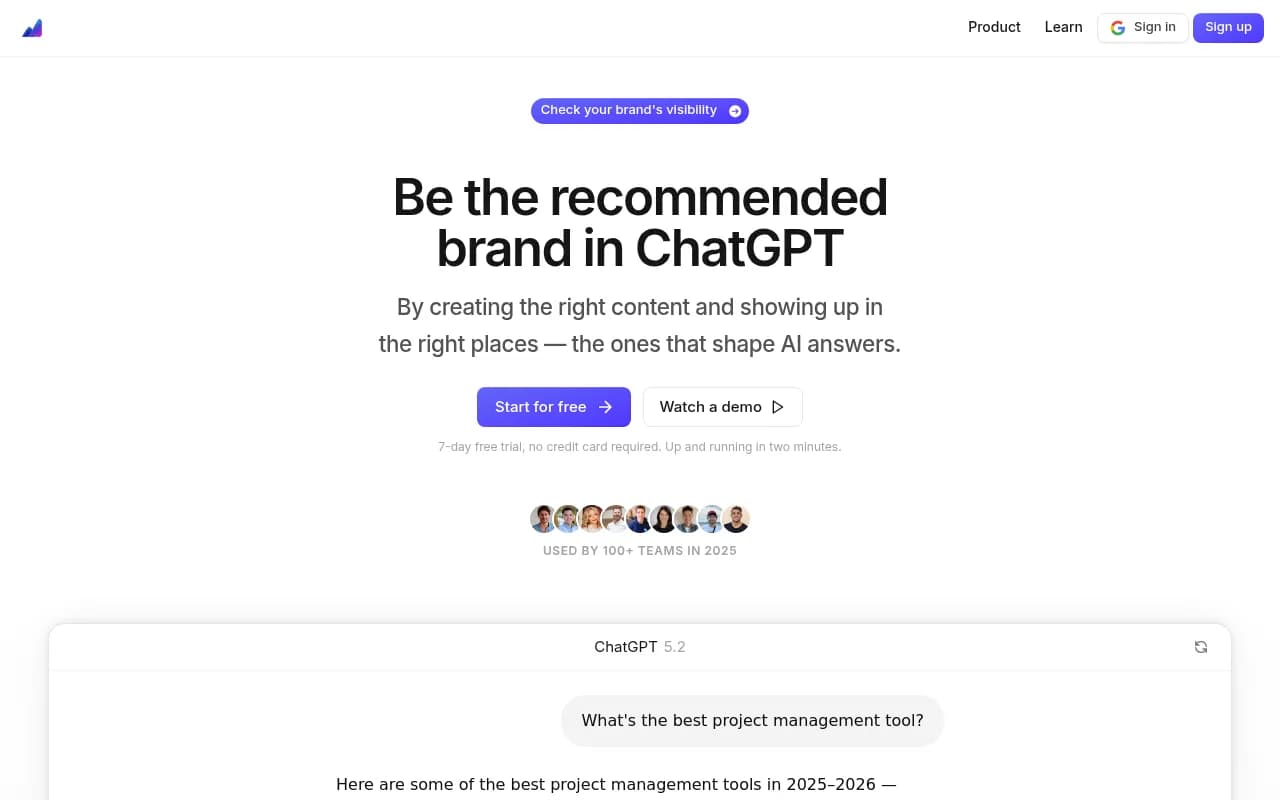
Airefs monitors how often your brand appears in AI-generated search results -- specifically ChatGPT, Perplexity, and Google AI Overviews. You set up tracking queries ("best CRMs for startups", "top email marketing tools"), and Airefs shows you whether your brand gets mentioned or cited, how that changes over time, and how you compare to competitors.
The pitch: people aren't clicking search results anymore, they're asking AI engines for answers. If your brand isn't part of the content those engines cite (LinkedIn posts, Reddit threads, G2 reviews, YouTube videos), you're invisible. Airefs helps you understand where you're missing and what content influences AI recommendations.
Target audience is marketing teams and agencies. Pricing isn't publicly listed -- you get a 7-day free trial, then contact sales.
Side-by-side comparison
| Feature | Airtop | Airefs |
|---|---|---|
| Primary use case | Web automation, browser workflows | AI search visibility tracking |
| No-code interface | Yes (plain English instructions) | Yes (dashboard-based) |
| Pricing transparency | Public ($26-$80/mo + Enterprise) | Not listed (trial + contact sales) |
| Free trial | Not mentioned | 7 days |
| AI search tracking | No | Yes (ChatGPT, Perplexity, Google AI) |
| Web scraping/automation | Yes (any website, behind logins) | No |
| Competitor monitoring | Yes (via custom automations) | Yes (AI mention tracking) |
| Integrations | Zapier, Make, n8n, Slack, Sheets, CRMs | Not listed |
| Content creation | No | Mentions content strategy, unclear if built-in |
| API access | Likely (for developers) | Unknown |
| Target users | Ops teams, marketers, non-coders | Marketing teams, agencies |
| Setup time | Minutes | 2 minutes (claimed) |
Head-to-head feature breakdown
Core functionality
Airtop is a workflow automation engine. You tell it "scrape this data", "fill out this form", "monitor this page", and it builds a browser-based automation that runs in the cloud. It handles login flows, CAPTCHAs, dynamic content -- anything a human can do in a browser.
Airefs is a monitoring dashboard. You give it search queries, and it tracks whether your brand appears in AI-generated answers. It shows mention rates, citation rates, competitor comparisons, and which external content (Reddit threads, reviews, videos) influences those answers.
These are fundamentally different tools. Airtop doesn't track AI search visibility. Airefs doesn't automate browser tasks.
Verdict: Pick based on your problem. Need automation? Airtop. Need AI visibility tracking? Airefs.
Ease of use
Airtop's natural language builder is genuinely simple. You type "I would like to monitor my competitors' LinkedIn posts", and it generates the workflow. You can start with templates (Lead Sourcing, Buying Signals, Competitive Monitoring, Meeting Preparation) or build from scratch. The interface shows you what the automation is doing step-by-step, and you can test in a playground before running it live.
Airefs requires setting up tracking queries and interpreting dashboard metrics (mention rate, citation rate, trend changes). The website claims "up and running in 2 minutes", but you still need to know which queries matter for your business and how to act on the data.
Both are no-code, but Airtop's plain-English approach is more intuitive for non-technical users. Airefs requires more strategic thinking upfront.
Verdict: Airtop is easier to start using. Airefs requires more domain knowledge.
Pricing
| Plan | Airtop | Airefs |
|---|---|---|
| Free tier | Not mentioned | 7-day trial |
| Starter | $26/mo | Not listed |
| Professional | $80/mo | Not listed |
| Enterprise | Custom | Not listed |
Airtop has transparent pricing. You know what you're paying before you sign up.
Airefs hides pricing behind a sales call. The 7-day trial is nice, but not knowing the cost upfront is a red flag for smaller teams or solo users who need to budget.
Verdict: Airtop wins on transparency. Airefs needs to publish pricing.
Integrations
Airtop integrates with Zapier, Make, n8n (workflow automation platforms), plus direct connections to Slack, Gmail, Google Sheets, Airtable, HubSpot, and other CRMs. You can push data from your automations into these tools or trigger automations from them.
Airefs doesn't list integrations on its website. It tracks AI search engines (ChatGPT, Perplexity, Google AI Overviews) but doesn't mention connecting to Slack, Sheets, or marketing tools.
Verdict: Airtop has a real integration ecosystem. Airefs appears to be a standalone dashboard.
Competitor monitoring
Airtop can monitor competitors by scraping their websites, tracking LinkedIn posts, or extracting data from any public page. You build a custom automation for whatever you want to track. Example from the website: "Tracks competitors' top LinkedIn posts weekly and reports engagement metrics to Slack."
Airefs monitors competitor mentions in AI search results. You see how often competitors appear in ChatGPT answers for your target queries, which sources cite them, and how your visibility compares. This is useful for understanding who owns mindshare in AI-driven recommendations.
Different angles. Airtop gives you raw data from competitor activity. Airefs shows you who's winning in AI search.
Verdict: Depends on what you're monitoring. Airtop for activity tracking, Airefs for AI visibility.
Content strategy support
Airtop doesn't help with content strategy. It automates tasks, but it won't tell you what content to create or where to publish.
Airefs positions itself as a content strategy tool -- it shows you which external content (LinkedIn posts, Reddit threads, G2 reviews) influences AI answers, so you know where to focus your efforts. The website mentions "creating the right content in the right places" but doesn't clarify if Airefs generates content or just identifies opportunities.
For a tool that actually closes the loop -- tracking AI visibility, identifying content gaps, and generating optimized content -- Promptwatch is worth looking at. It combines visibility tracking with AI-powered content generation and gap analysis.

Verdict: Airefs points you toward content opportunities. Airtop doesn't play in this space at all.
Reliability and trust
Airtop emphasizes "deterministic code" -- the automations run the same way every time, not like unpredictable AI agents that might hallucinate or fail randomly. Customer testimonial from Silvia Pfeiffer (Cared.io): "Our automated invoice reconciliation is now rock solid, saving me hours each week. Airtop made it possible to automate manual browser interactions where APIs failed."
Airefs doesn't provide case studies or reliability claims on its website. It shows logos of brands using it (Resend, Tally, Vercel, DataFast) with vague stats like "#3 Biggest Traffic Source" and "25% of all signups", but no detail on methodology or accuracy.
Verdict: Airtop has stronger credibility signals. Airefs needs more transparency.
Developer experience
Airtop is built for non-coders but likely has an API for developers who want programmatic control. It integrates with n8n and Make, which suggests API access.
Airefs doesn't mention an API or developer tools.
Verdict: Airtop is more developer-friendly.
Pricing comparison
| Plan | Airtop | Airefs |
|---|---|---|
| Free trial | Not mentioned | 7 days |
| Starter | $26/mo | Not listed |
| Professional | $80/mo | Not listed |
| Enterprise | Custom | Not listed |
Airtop's pricing is straightforward. Airefs forces you into a sales conversation, which is frustrating for buyers who want to evaluate options quickly.
Pros and cons
Airtop
Pros:
- Plain English interface -- no coding required
- Works on any website, even behind logins
- Strong integrations (Zapier, Make, Slack, Sheets, CRMs)
- Transparent pricing starting at $26/mo
- Deterministic execution (reliable, repeatable automations)
- Templates for common use cases (lead sourcing, competitive monitoring)
Cons:
- Doesn't track AI search visibility
- No content strategy features
- Pricing for high-volume usage unclear (Enterprise tier)
- Requires some setup even with templates
Airefs
Pros:
- Tracks brand visibility in ChatGPT, Perplexity, Google AI Overviews
- Competitor comparison built-in
- Identifies which external content influences AI answers
- 7-day free trial
- Used by recognizable brands (Resend, Tally, Vercel)
Cons:
- No public pricing (forces sales call)
- No listed integrations with other tools
- Unclear if it generates content or just identifies opportunities
- Limited transparency on methodology or accuracy
- Doesn't automate anything -- purely a monitoring tool
Who should pick which tool
Pick Airtop if you:
- Need to automate repetitive browser tasks (data entry, scraping, form filling)
- Want to monitor competitor activity on LinkedIn, websites, or other platforms
- Need to integrate automations with Slack, Sheets, CRMs, or workflow tools
- Want transparent pricing and a no-code interface
- Are an ops team, marketer, or agency doing manual browser work
Pick Airefs if you:
- Need to track how often your brand appears in AI search results
- Want to compare your AI visibility vs competitors
- Are building a content strategy around AI search optimization
- Have budget for a sales-driven tool (pricing unknown)
- Are a marketing team or agency focused on AI-driven discovery
Pick neither if you:
- Need a comprehensive AI visibility platform with content gap analysis, optimization tools, and traffic attribution -- in that case, look at Promptwatch, which tracks 10 AI models, provides crawler logs, generates optimized content, and connects visibility to revenue
Final verdict
Airtop and Airefs aren't competitors. They solve different problems for different users.
Airtop is a web automation platform. It's well-suited for teams that need to automate browser-based workflows without writing code. The pricing is transparent, the integrations are strong, and the plain-English interface makes it accessible. If you're spending hours manually scraping data, filling forms, or monitoring websites, Airtop will save you time.
Airefs is an AI search visibility tracker. It's useful if you're trying to understand how your brand shows up in ChatGPT and Perplexity answers, and how that compares to competitors. The lack of public pricing and limited transparency are downsides, but if AI search visibility is a strategic priority, it's worth a trial.
The tools can complement each other: use Airefs to identify where your brand is missing in AI search, then use Airtop to automate the research or data gathering that feeds your content strategy. But you're not choosing between them -- you're choosing based on whether you need automation or visibility tracking.