Key takeaways
- Google says the same SEO fundamentals apply to AI Overviews as to regular search. There is no separate AI-only trick, so a page that is crawlable, indexable and snippet-eligible is the entry ticket.
- Low authority is less of a wall than it looks. Promptwatch Data shows mid-authority sites (DR 46-75) earned almost half of ChatGPT citations in August 2026, while DR 91-100 sites fell to about 3%. That's ChatGPT, not AI Overviews, but the direction is useful.
- Third-party sources claim AI Overview citations often come from positions 4-20, not just #1. Treat that as a directional claim, not a proven rule.
- Format matters. In July 2026, listicles, product pages and how-tos together made up roughly half of AI Overview citations, and video and social posts are growing.
- Small sites win by being specific: original data, narrow topics, answer-first sections, and presence on the platforms Google leans on (YouTube, Reddit).
Why low authority isn't the dead end people think
The fear is simple. Big publishers have the links, the brand, the domain rating. Why would Google quote your 18-month-old blog over Forbes?
Partly because AI Overviews don't work like a ranked list of ten blue links. The answer is assembled from passages, and Google's systems pick the passages that best answer a specific, often long and oddly worded question. A tiny site with the clearest answer to a narrow question can beat a giant with a vague, generic page.
I'd be careful not to oversell this. Authority still helps, and nobody outside Google can tell you exactly how much. But there are two pieces of evidence that suggest the gap is narrower than the SEO folklore says.
First, Promptwatch's ChatGPT citation share by domain rank report found that sites with domain rank 46-75 earned almost half of citations in August 2026, and the very top bucket (DR 91-100) dropped to about 3%. It's ChatGPT data, so don't copy-paste it onto Google. Still, it says AI answer engines aren't just handing everything to the biggest names.
Second, SEOcrawl AI claims that Google's retrieval pipeline frequently pulls cited sources from positions 4-20 rather than only the top spot. I haven't verified that independently, so hold it loosely. But if it's even roughly true, you don't need to beat the #1 result. You need to be a good, indexable, relevant result that has the best passage.
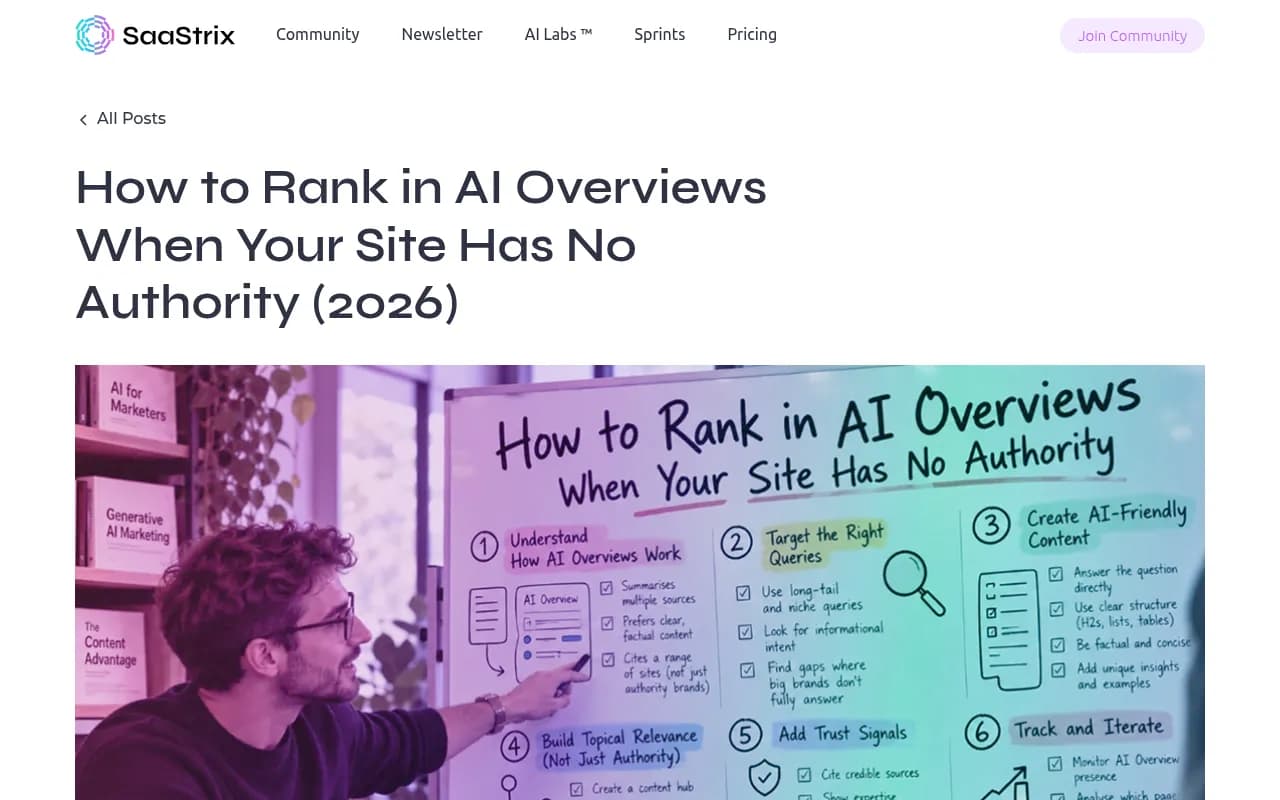
Start with what Google actually says
Before chasing tricks, read Google's own post, Top ways to ensure your content performs well in Google's AI experiences (Search Central, May 2025). The message is boring on purpose: the same SEO fundamentals apply to AI Overviews and AI Mode, and there is no separate optimization layer.
The points that matter for a small site:
- Make unique, non-commodity content that helps people. Users are asking longer, more specific questions plus follow-ups, which is where a niche site has room.
- Pages must be crawlable and indexable. Googlebot isn't blocked, the page returns HTTP 200, and there's indexable text.
- Give a good page experience. Fast, works on every device, and the main content is easy to tell apart from everything else on the page.
- Check your snippet controls.
nosnippet,data-nosnippet,max-snippetandnoindexcan keep a page out of AI features if they're too restrictive. - Keep structured data consistent with what's visible on the page.
If that sounds like a checklist you could run in an afternoon, good. A surprising number of small sites fail on the first or fourth bullet without knowing it.
Step 1: Fix eligibility before anything else
There's no point polishing content that Google can't show. Run through this:
- Confirm the page is indexed. Use Google Search Console URL inspection.
- Check that nothing blocks Googlebot in robots.txt, and that the page returns a 200.
- Search your templates for stray
nosnippet,noindexor an aggressivemax-snippetvalue, especially on pages built with SEO plugins or page builders. - Crawl the site for broken links, orphaned pages and duplicate titles. Tools like Screaming Frog or Sitebulb do this well.
- Check speed and Core Web Vitals with Google PageSpeed Insights.
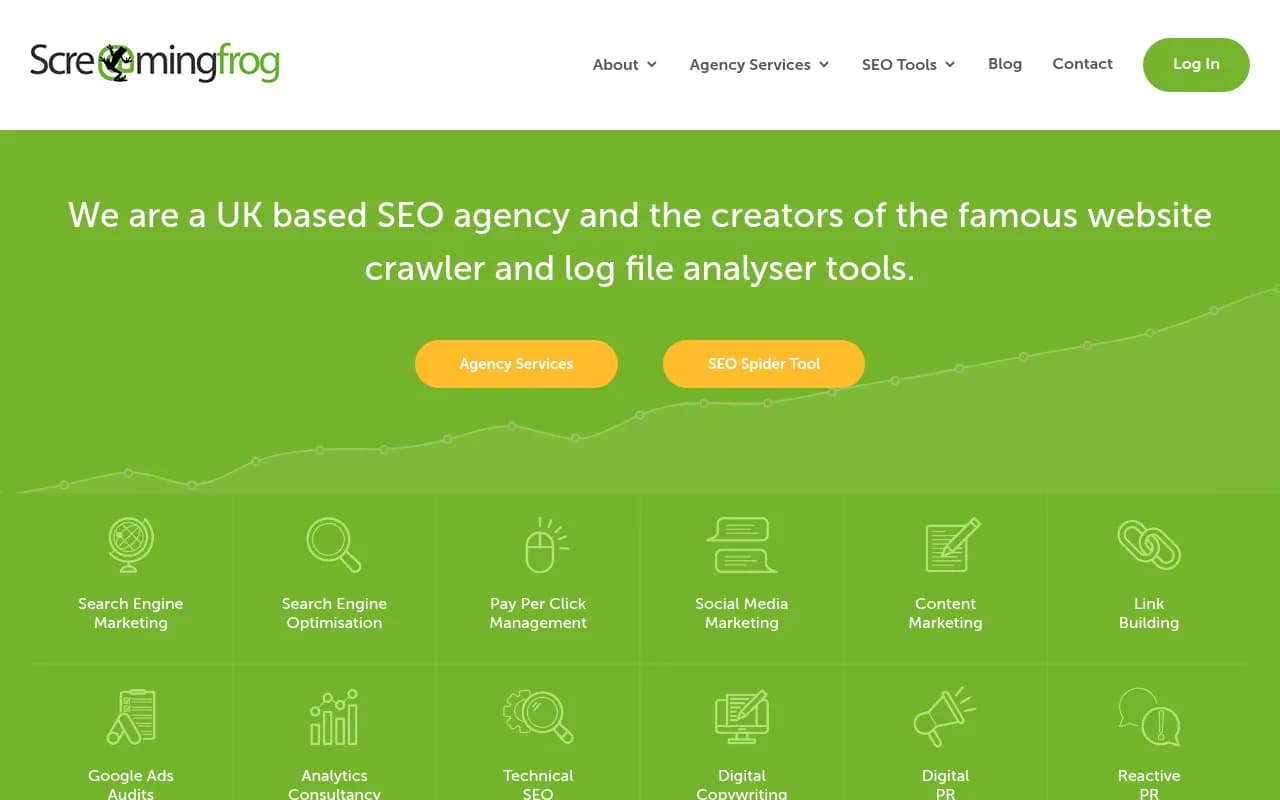
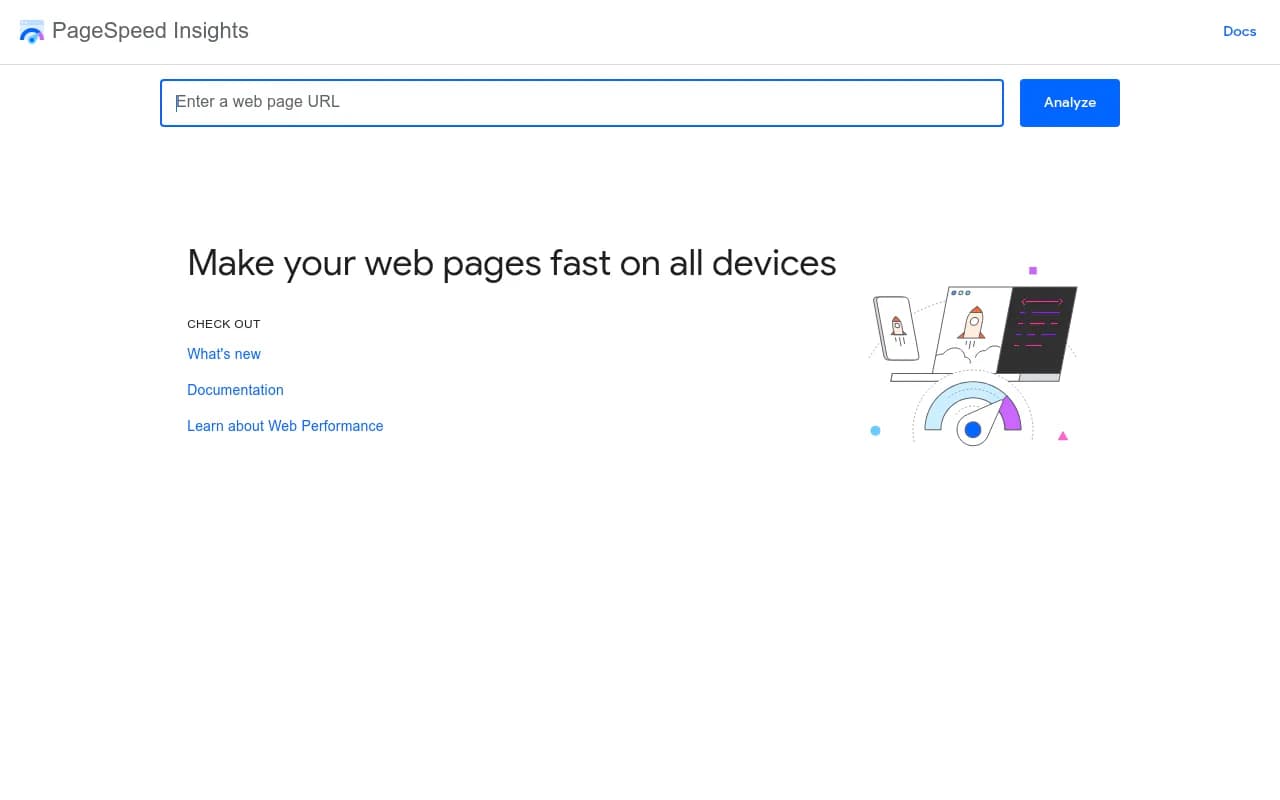
This is dull work. It is also where a lot of the easy wins live.
Step 2: Write answer-first sections
AI Overviews quote passages, so structure each page around questions someone would really ask. Put a direct two-to-four sentence answer right under the heading, then expand with detail, examples and caveats.
A workable pattern for each section:
- A heading phrased like the question, or close to it.
- A plain answer in the first paragraph. No warm-up.
- Supporting detail: numbers, steps, a comparison, an example from your own experience.
- A short list or table where the content really is a list or comparison.
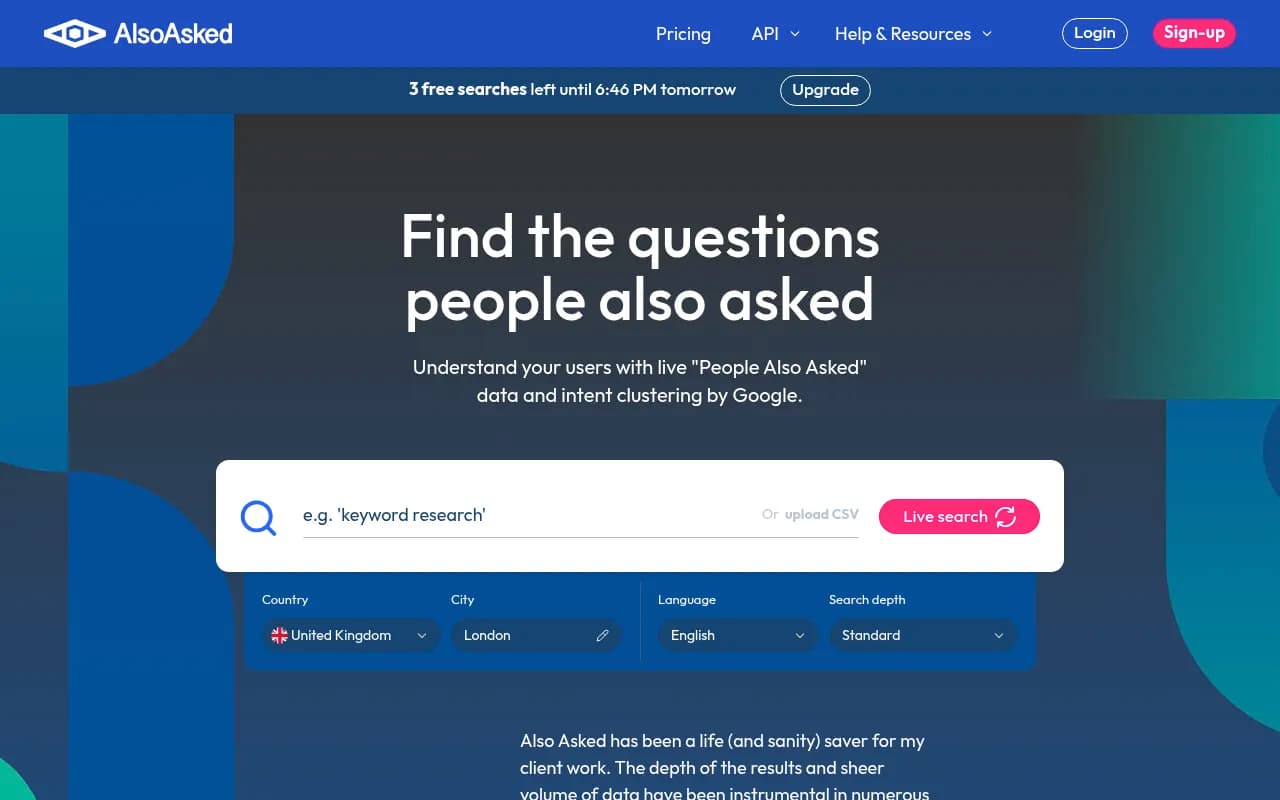
For finding the questions, AlsoAsked, AnswerThePublic and KeywordsPeopleUse surface real People Also Ask and forum-style questions. Long, specific, slightly awkward questions are the ones a small site can realistically own.
Step 3: Be non-commodity
This is the part most guides wave at and then skip. Google specifically asks for "unique, non-commodity content." If your page says what the top ten pages say, with different adjectives, there's no reason to pull a passage from you.
Ways a small site can be non-commodity without a big budget:
- Publish original data, even small. A survey of 80 customers, a pricing teardown, your own test results.
- Share first-hand experience. "We tried X on 12 client sites and here's what broke" beats a summary of other people's advice.
- Pick a narrow audience. "Accounting software for UK freelancers who invoice in euros" beats "best accounting software."
- Add comparisons and use cases. A Reddit thread on how someone got their site into AI Overviews recommends topic depth over keyword density, with contextual data, comparisons, use cases and entity mentions. It's anecdotal, but it matches the logic.
Topic depth is where low-authority sites can close the gap. Ten tightly connected pages on one narrow subject say more to a retrieval system than ten scattered posts across ten topics.
Step 4: Match the formats Google actually cites
Promptwatch's AI Overviews citation types report for July 2026 breaks down what Google cited that month:
| Content type | Average share of AI Overview citations (July 2026) |
|---|---|
| Listicle | ~18.0% |
| Product page | ~16.3% |
| How-to | 15.1% |
| News article | 13.5% |
| Video | 5.9% |
| Social post | 5.1% |
| Landing page | 4.7% |
| Comparison | 3.6% |
Two things stand out. From July 28, product pages were the most cited format every day and ended the month at 17.9% against 16.2% for listicles. That was the first time listicles lost the top spot. Listicles averaged around 26% in Q1 2026, so the slide is real. Meanwhile product pages roughly doubled since January (about 9%), and video went from around 2.7% to over 6%.
What that means in practice:
- Product and service pages deserve real work: structured specs, clear pricing, fresh availability. Don't leave them as thin brochure copy.
- Keep list content, but don't build your whole strategy on it.
- How-tos hold steady near 15%, and they're cheap for a small site to do well.
- Video is worth the effort. Add searchable titles, chapters and detailed descriptions.
Step 5: Show up where Google already looks
A low-authority domain can borrow authority by placing content on high-authority platforms. Promptwatch's Google AI Overviews top cited domains data (a 30-day view dated September 2025, so treat exact figures as dated) showed YouTube at about 4.1% of citations and Reddit about 2.7%, with LinkedIn, Medium and Quora far smaller. More recently, Promptwatch's October 2026 social citations report found AI Overviews gets 12.2% of its citations from social platforms, compared with 0.46% for ChatGPT.
So for Google specifically, social and community platforms are real citation sources. Practical moves:
- Put your best how-to content on YouTube with chapters and a full description.
- Take part in relevant subreddits with useful answers, not link drops. Note that Reddit's share of ChatGPT citations collapsed in August 2026, with Google surfaces declining more gradually, so don't make Reddit your only bet.
- Repurpose key articles to Medium or Quora if you have the time. Low effort, small return.
- For B2B software, keep a complete G2 profile.
Step 6: Build topical depth and entity clarity
Google needs to understand who you are and what you're about. Small sites often confuse that picture with vague about pages, inconsistent naming and scattered topics.
- Use a consistent brand name, author names and bios across the site and your profiles.
- Cluster content around one core topic, with internal links connecting the pieces.
- Use structured data that matches the visible page. WordLift helps with entity-based markup, and WordPress plugins like Rank Math or Yoast SEO handle the basics.
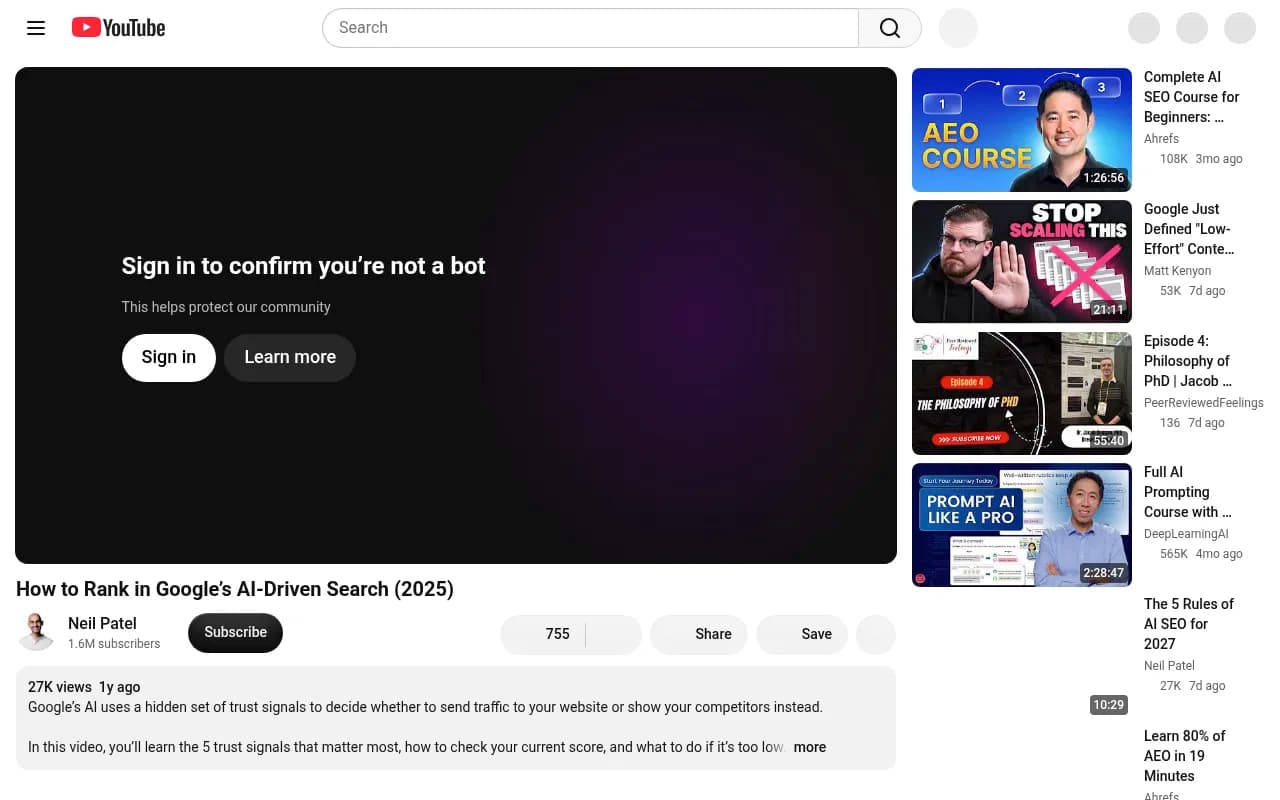
- Earn mentions. Neil Patel's team describes a hidden AI trust score built on brand signals and citations. Google hasn't confirmed anything like that, so treat it as a framing rather than a mechanism. Still, being mentioned consistently by credible sources helps in any model of how this works.
Step 7: Measure what's happening
You can't improve what you can't see, and AI Overview visibility doesn't show up cleanly in standard rank trackers. A practical measurement setup has three layers:
- Search Console, for impressions, clicks and which queries your pages rank for. Pages sitting at positions 4-20 for question-style queries are your best AI Overview candidates.
- Manual spot checks of your target queries, logged in a spreadsheet by date.
- An AI visibility tracker that monitors which pages and sources get cited.
For the third layer, Promptwatch is one option that tracks Google AI Overviews and AI Mode alongside ChatGPT and others, and shows which of your pages get cited and which gaps to fill.

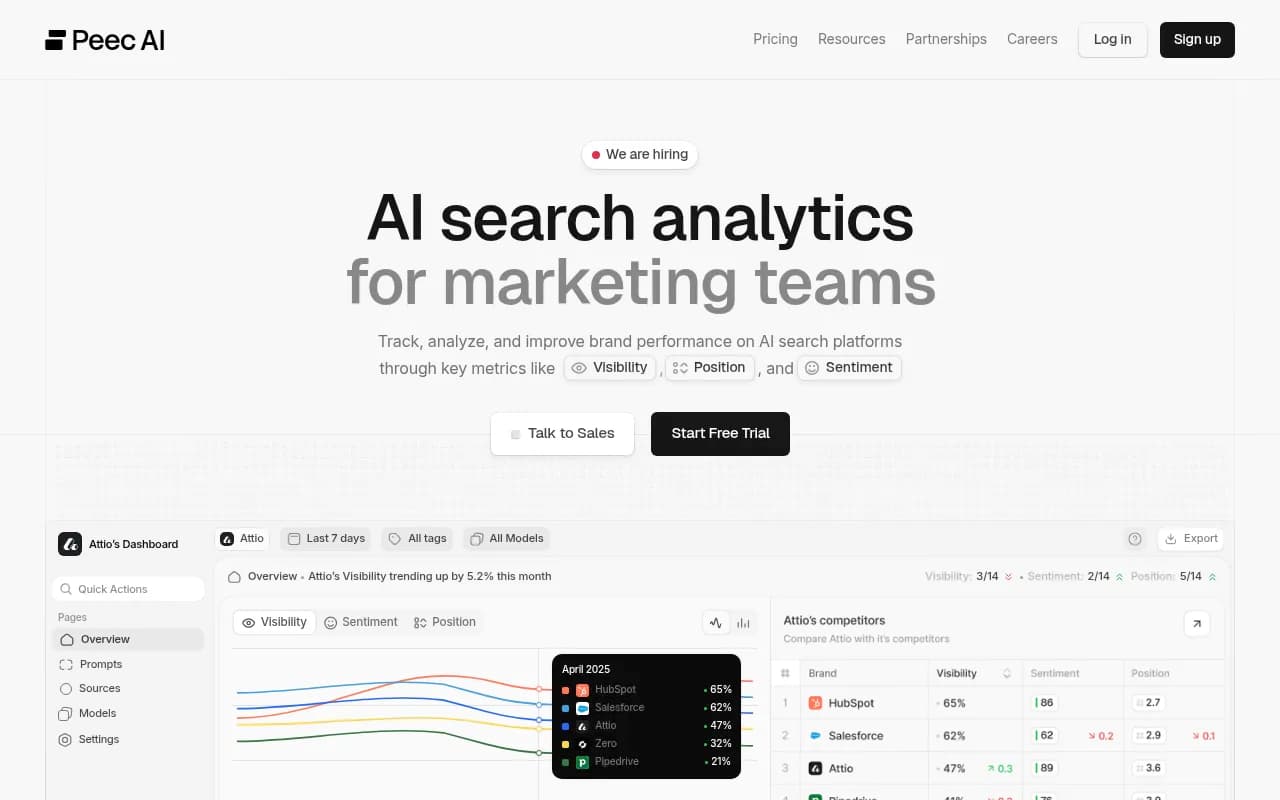
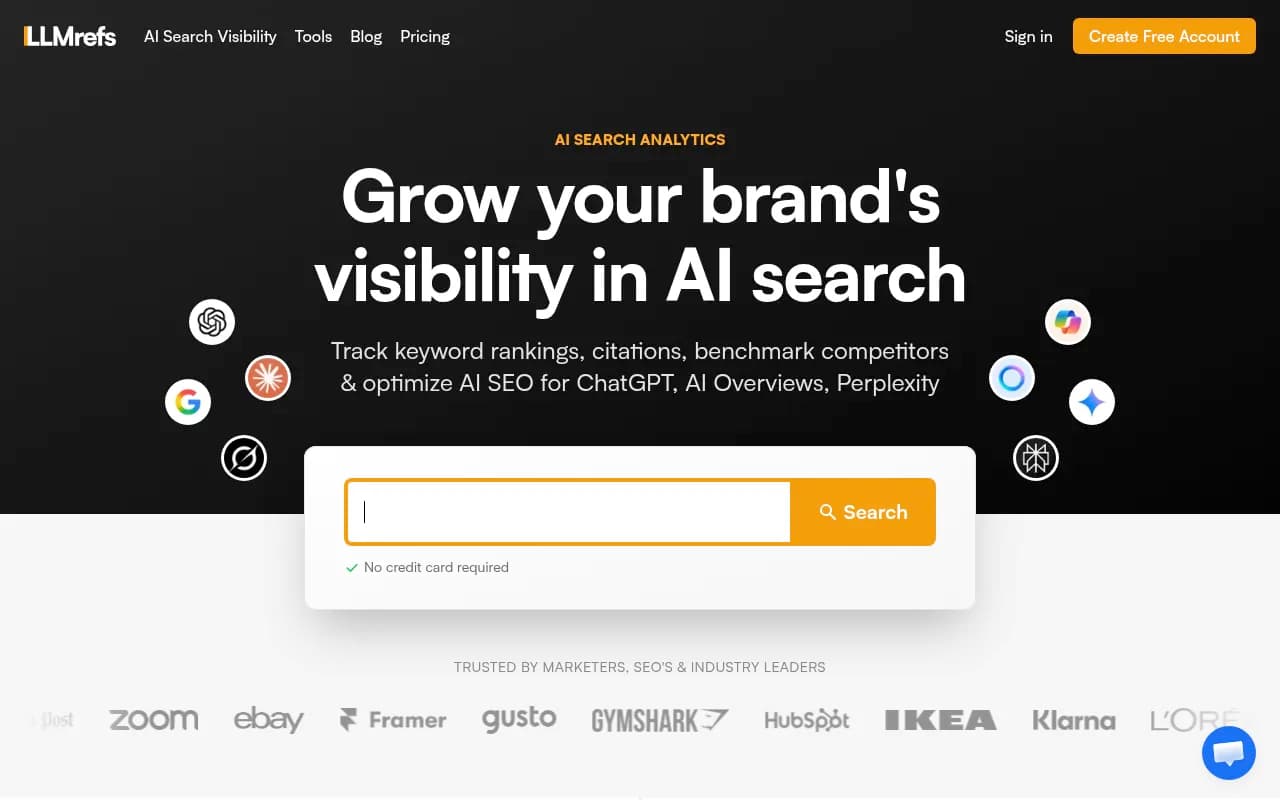
If you're comparing options, the GEO software directory at bestgeosoftware.com lists the wider field. Lighter-weight trackers in our catalog include Otterly.AI, Peec AI and LLMrefs.
Otterly.AI

LLMrefs
| Need | Option | Notes |
|---|---|---|
| Free query and page data | Google Search Console | Start here, no cost |
| Technical crawl checks | Screaming Frog, Sitebulb | Find blockers and orphan pages |
| Question research | AlsoAsked, AnswerThePublic | Surface long-tail questions |
| AI citation tracking and content gaps | Promptwatch | Covers AI Overviews, AI Mode, ChatGPT |
| Basic AI mention monitoring | Otterly.AI, Peec AI, LLMrefs | Monitoring-focused |
A 30-day plan for a small site
Week 1: Eligibility
Audit indexation, snippet directives, robots rules, speed and broken pages. Fix blockers. Pick 10 pages that already rank in positions 4-20 for question-style queries.
Week 2: Rewrite for answers
Rework those 10 pages. Add a direct answer under each heading, a table or list where it fits, and one original element: data, a screenshot, an example from your own work.
Week 3: Fill gaps and formats
Publish two or three new pages on narrow questions your audience asks. Upgrade your key product or service page with specs, pricing and clear details. Record one video for your best how-to, with chapters.
Week 4: Distribute and measure
Share the video and answer relevant Reddit and community questions honestly. Log your target queries, check Search Console for movement, and decide which pages to double down on.
Common mistakes
- Chasing a separate "AI SEO" checklist while ignoring indexability.
- Writing broad pages with no unique angle and expecting to be cited.
- Relying on a single format, especially listicles, given the July 2026 shift.
- Over-restricting snippets with
max-snippetornosnippet. - Treating unverified claims (trust scores, exact position ranges) as facts.
- Expecting results in a week. Citation changes show up over weeks, not days.
Do you need an agency for this?
Usually not at the start. Most of the work above is doable in-house. If you want help with technical audits, content production and AI visibility at scale, an agency like 1001 SEO Media covers technical SEO, content and GEO under one roof, but get the basics right first.
The short version
Low authority limits you, but it doesn't lock you out. Get indexed and snippet-eligible, answer specific questions directly, publish something others don't have, match the formats Google cites in 2026, and show up on YouTube and Reddit. Then measure, and double down on the pages that start getting cited.