Screaming Frog SEO Spider Review 2026
Website crawler that analyzes technical SEO issues, broken links, redirects, and site architecture. Produces detailed reports for large-scale site audits.
Summary: Key Takeaways
• Industry standard tool: Screaming Frog SEO Spider is the most widely used desktop crawler in the SEO industry, trusted by agencies and in-house teams at companies like Moo.com and DogBuddy for technical audits • Comprehensive technical analysis: Crawls websites to identify broken links, redirect chains, duplicate content, missing meta tags, page speed issues, and hundreds of other technical SEO problems • Powerful for large sites: Paid license removes the 500 URL limit and adds advanced features like JavaScript rendering, custom extraction, API integrations, and scheduled crawls • Steep learning curve: Not beginner-friendly -- the interface is dense and requires SEO knowledge to interpret results effectively • Best for: Technical SEOs, agencies managing multiple clients, and enterprise teams running regular site audits on large websites (10,000+ pages)
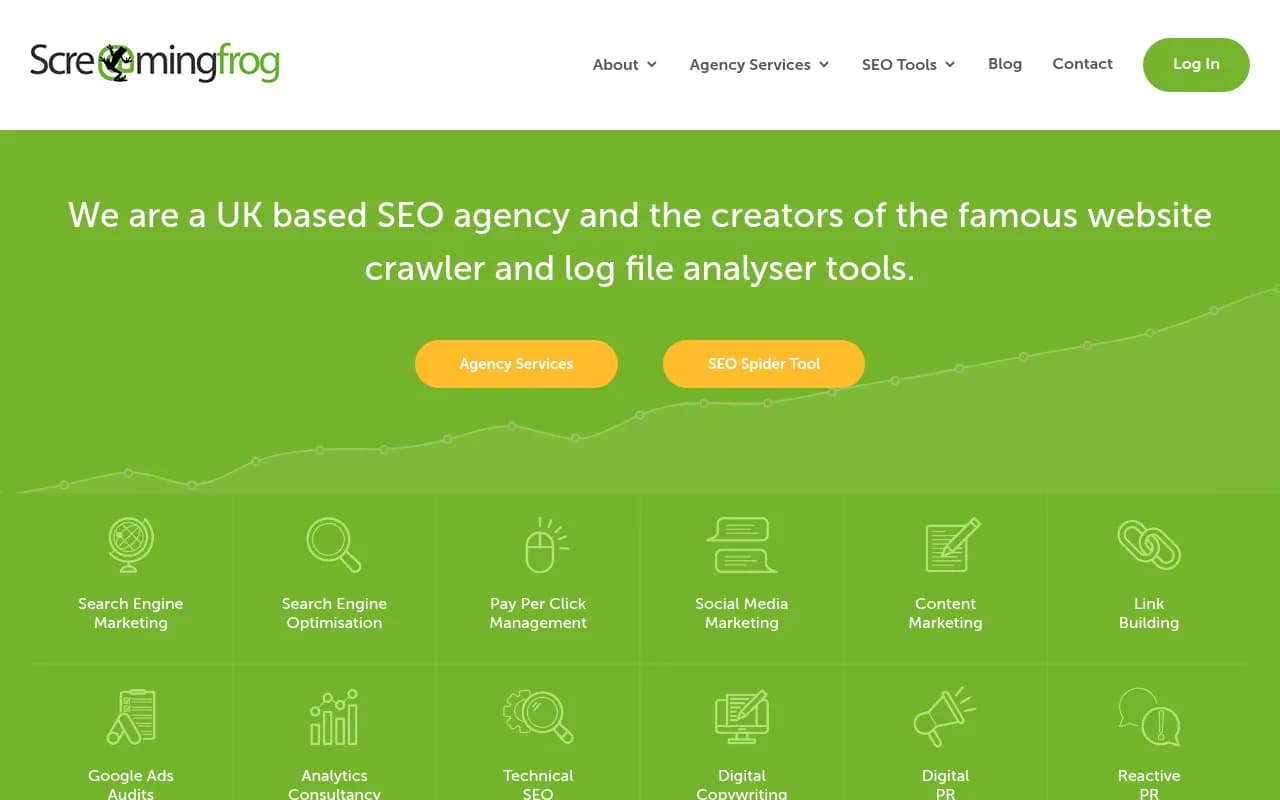
Screaming Frog SEO Spider has been the go-to technical SEO crawler since its launch in 2010 by the UK-based Screaming Frog agency. What started as an internal tool for their own client work became the industry standard -- today it's used by thousands of SEO professionals, from solo consultants to enterprise teams at major brands. The tool solves a fundamental problem: manually checking a website for technical issues doesn't scale beyond a handful of pages. Screaming Frog automates this by crawling your entire site (or a competitor's) and surfacing every technical SEO issue in a single desktop application.
The target audience is technical SEOs and agencies who need to audit websites regularly. If you're running technical audits for clients, migrating a site, diagnosing traffic drops, or managing a large ecommerce catalog, this tool is essential. It's not built for beginners -- the interface assumes you understand concepts like canonical tags, hreflang, schema markup, and crawl depth. Freelance SEO consultants use it to deliver audit reports. In-house teams at ecommerce companies use it to monitor product page health. Agencies use it to QA client sites before and after migrations.
Core Crawling & Analysis The Spider crawls websites like a search engine bot, following links and analyzing every page it finds. You enter a URL, hit start, and it discovers pages by following internal links, sitemaps, or custom URL lists. The free version crawls up to 500 URLs -- enough for small sites or spot checks. The paid license removes this limit entirely, letting you crawl sites with millions of pages. Crawl speed is configurable (1-10 threads) to avoid overloading servers, and you can set custom user agents, respect robots.txt, or ignore it for internal audits.
Once the crawl finishes, you get a spreadsheet-like interface with tabs for different data types: Internal pages, External links, Images, Scripts, Stylesheets, and more. Each tab shows URLs with columns for status codes, redirects, meta data, word count, response times, and dozens of other metrics. You can filter, sort, and export any view to CSV or Excel for further analysis or client reporting.
Technical Issue Detection This is where the tool shines. Screaming Frog automatically flags common technical SEO problems across multiple categories:
• Broken links and errors: Identifies 404s, 500 errors, and broken internal/external links. Shows which pages link to broken URLs so you can fix or remove them. • Redirect chains and loops: Maps out redirect paths and highlights chains (A → B → C) that waste crawl budget and slow page speed. Detects redirect loops that break user experience. • Duplicate content: Finds pages with duplicate titles, meta descriptions, H1s, or body content. Flags missing or multiple H1 tags, thin content (low word count), and pages without unique descriptions. • Indexability issues: Surfaces pages blocked by robots.txt, noindex tags, or canonical tags pointing elsewhere. Shows orphaned pages (not linked from anywhere) that search engines can't discover. • Page speed and performance: Reports page load times, large images, render-blocking resources, and missing compression. Integrates with Google PageSpeed Insights API for Lighthouse scores. • Mobile usability: Checks viewport meta tags, font sizes, and tap target spacing. Validates AMP pages and flags mobile-specific errors. • Structured data: Extracts and validates schema markup (JSON-LD, Microdata, RDFa). Integrates with Google's Structured Data Testing Tool API to flag errors.
Each issue type has a dedicated report view with filters to isolate problems. For example, the "Response Codes" tab lets you filter to only 404s, then see which pages link to them. The "Directives" tab shows all noindex, nofollow, and canonical tags in one place.
JavaScript Rendering Many modern websites rely on JavaScript frameworks (React, Vue, Angular) that render content client-side. The paid version includes a JavaScript rendering mode that uses a headless Chromium browser to crawl sites as Google does. This is critical for auditing SPAs (single-page applications) or sites with lazy-loaded content. You can compare rendered vs non-rendered crawls side-by-side to see what search engines actually index.
Custom Extraction & XPath One of the most powerful features for advanced users: custom extraction using XPath, CSS selectors, or regex. You can extract any element from a page -- pricing data, product SKUs, author names, publication dates, custom meta tags -- and add it as a column in your crawl data. This turns the Spider into a web scraping tool for competitive analysis or content audits. For example, extract all H2 headings from blog posts to analyze content structure, or pull product prices from an ecommerce site to check for inconsistencies.
Integrations & Data Enrichment The paid version integrates with major SEO platforms and APIs to enrich crawl data:
• Google Analytics: Import metrics (sessions, bounce rate, conversions) for each URL to prioritize fixes based on traffic impact. See which high-traffic pages have technical issues. • Google Search Console: Pull impressions, clicks, CTR, and average position for each page. Identify pages with high impressions but low clicks (bad titles/descriptions) or pages losing rankings. • Google PageSpeed Insights: Fetch Lighthouse scores (performance, accessibility, SEO) for every page. Bulk-check Core Web Vitals across your site. • Ahrefs, Majestic, Moz: Import backlink metrics (Domain Rating, Trust Flow, Domain Authority) to see which pages have link equity and should be prioritized for fixes. • Zapier: Trigger automated workflows when crawls finish -- send reports to Slack, create Trello cards for issues, or log data to Google Sheets.
These integrations turn raw crawl data into actionable insights. Instead of just knowing a page has a missing meta description, you can see it gets 10,000 monthly visits and should be fixed immediately.
Sitemaps & Log File Analysis The Spider can crawl XML sitemaps to validate them against your actual site structure. It flags URLs in the sitemap that return errors, are blocked by robots.txt, or have noindex tags -- common issues that waste crawl budget. You can also compare your sitemap to your crawl to find pages missing from the sitemap.
For log file analysis, Screaming Frog offers a separate tool (Log File Analyser) that parses server logs to see how search engines actually crawl your site. It shows which pages Googlebot visits, how often, and which URLs it ignores. Combined with the Spider, this gives a complete picture of crawlability.
Bulk Exports & Reporting Every view in the Spider can be exported to CSV, Excel, or Google Sheets. You can also generate visual reports with charts and graphs for clients or stakeholders. The "Crawl Overview" report summarizes key metrics (total pages, errors, redirects, etc.) in a single PDF. For agencies, this is essential for delivering audit reports without manually compiling data.
Scheduling & Automation The paid version includes command-line functionality to schedule crawls via cron jobs or Windows Task Scheduler. You can automate daily or weekly crawls, export results to a folder, and monitor sites for new issues without opening the app. This is critical for large sites where manual audits aren't feasible.
Who Should Use Screaming Frog This tool is built for technical SEOs who understand how search engines work and need to audit sites regularly. Specific use cases:
• SEO agencies: Audit client sites before onboarding, after migrations, or as part of ongoing retainers. The Spider is faster and more thorough than manual checks. Agencies managing 10-50 clients often buy multiple licenses for their team. • Enterprise in-house teams: Monitor large ecommerce sites (50,000+ product pages) for technical issues. Catch problems like broken canonicals, missing hreflang tags, or orphaned pages before they impact rankings. • Freelance SEO consultants: Deliver professional audit reports to clients. The Spider's data exports and visualizations make it easy to present findings. • Web developers: QA sites before launch to catch broken links, missing alt text, or redirect issues. Developers at agencies use it alongside tools like Lighthouse for pre-launch checks. • Content teams: Audit blog archives for thin content, duplicate titles, or missing meta descriptions. Extract H1s and H2s to analyze content structure across hundreds of posts.
Who Should NOT Use This If you're new to SEO and don't understand technical concepts like canonical tags, hreflang, or schema markup, the Spider will overwhelm you. The interface doesn't explain what issues mean or how to fix them -- it assumes you already know. Beginners are better off starting with simpler tools like Ahrefs Site Audit or Semrush Site Audit, which provide more guidance.
Small business owners managing a 10-page website don't need this level of detail. The free version's 500 URL limit works for small sites, but you'd be paying £199/year for features you won't use. Tools like Screaming Frog's own free tier or Google Search Console are sufficient for small sites.
Integrations & Ecosystem Beyond the API integrations mentioned earlier, the Spider works with:
• Google Sheets: Export crawl data directly to Sheets for collaboration or custom analysis • BigQuery: Export large crawls to Google BigQuery for SQL-based analysis • Looker Studio (formerly Data Studio): Connect crawl exports to build custom dashboards • Sitebulb: Some users combine Screaming Frog's raw data with Sitebulb's visual reporting for client presentations
The tool runs on Windows, macOS (Intel and Apple Silicon), and Linux (Ubuntu, Fedora). No browser extensions or mobile apps -- it's desktop-only.
Pricing & Value The free version crawls up to 500 URLs with basic features. This is enough for small sites or quick spot checks, but serious users need the paid license.
Paid license: £199 per year (about $250 USD), per user. This removes the URL limit and unlocks: • JavaScript rendering • Google Analytics, Search Console, PageSpeed Insights integrations • Custom extraction (XPath, CSS, regex) • Scheduled crawls via command line • Save and reload crawls • Advanced exports and reporting
Volume discounts: 5+ licenses get a discount (exact pricing not public, contact sales).
Compared to competitors: Sitebulb is £35/month (~£420/year) with better visualizations but slower crawls. Ahrefs Site Audit is included in Ahrefs subscriptions ($129-$999/month) but less customizable. Screaming Frog is the best value for pure crawling power and flexibility.
Strengths • Fastest desktop crawler: Handles millions of URLs without crashing. Crawls large sites faster than cloud-based tools. • Unmatched customization: XPath extraction, custom filters, and API integrations let you tailor audits to any use case. • Industry standard: Every SEO agency and consultant uses it. Clients expect Screaming Frog data in audit reports. • One-time annual fee: No monthly subscription. £199/year is cheaper than most SaaS SEO tools. • Active development: Regular updates (version 23.0 released October 2025) with new features and integrations.
Limitations • Steep learning curve: The interface is intimidating for beginners. No in-app tutorials or explanations of what issues mean. • Desktop-only: Requires installation and local resources (RAM, CPU). Can't crawl from the cloud or share live results with a team. • No built-in recommendations: Shows you problems but doesn't tell you how to fix them. You need SEO knowledge to interpret results. • Reporting could be better: Exports are functional but not visually impressive. Tools like Sitebulb have prettier reports for client presentations. • No historical tracking: Each crawl is a snapshot. To track changes over time, you need to manually compare exports or use external tools.
Bottom Line Screaming Frog SEO Spider is the industry-standard technical SEO crawler for a reason: it's fast, powerful, and endlessly customizable. If you're a technical SEO, agency, or enterprise team running regular site audits, this tool is essential. The £199/year paid license is a bargain compared to monthly SaaS tools, and the ability to crawl unlimited URLs makes it indispensable for large sites. The learning curve is real, but once you master it, no other crawler comes close for raw data and flexibility. Best use case in one sentence: technical SEOs auditing large websites (10,000+ pages) who need granular control over crawl settings and data extraction.
Similar and alternative tools to Screaming Frog SEO Spider