WordLift Review 2026
AI-powered SEO platform specializing in semantic SEO, structured data automation, and knowledge graph optimization for better search visibility.
Summary: Key Takeaways
- Best for: E-commerce brands, media publishers, travel companies, and SEO agencies managing multiple client sites who need to optimize for AI-powered search engines and semantic SEO
- Standout strength: Automated knowledge graph creation and structured data implementation that makes content machine-readable for AI search engines -- not just traditional Google
- Proven results: Clients report 80% traffic increases, 92% organic search growth, and 30% sales boosts through semantic optimization
- Limitations: Premium pricing may be steep for small businesses; requires technical understanding of structured data concepts; primarily WordPress-focused for plugin users
- Bottom line: If you're serious about being discovered by ChatGPT, Claude, and next-gen AI search engines in 2026, WordLift provides the infrastructure to make your content semantically rich and AI-readable
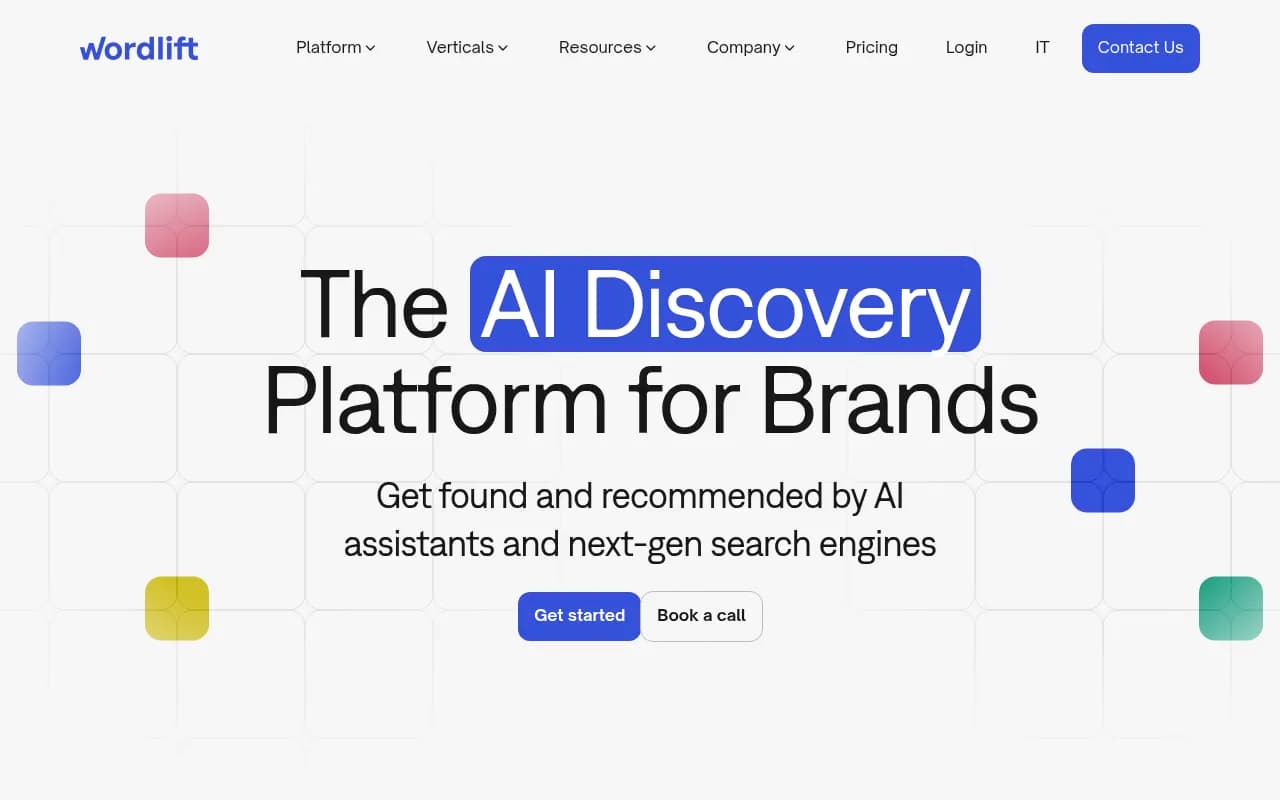
WordLift is an AI-powered SEO platform that specializes in semantic search optimization, structured data automation, and knowledge graph creation. Founded over a decade ago by Andrea Volpini, the company has evolved from a WordPress plugin into a comprehensive AI discovery platform used by major brands including Airbnb, Ray-Ban, Ferrari, Coca-Cola HBC, and EssilorLuxottica. The platform addresses a critical challenge in 2026: as AI-powered search engines like ChatGPT, Perplexity, Claude, and Google's AI Overviews reshape how users discover information, brands need their content structured in ways these AI systems can understand and recommend.
WordLift transforms unstructured website content into machine-readable knowledge graphs using Schema.org markup and entity recognition. This semantic layer helps AI search engines comprehend what your content is actually about -- not just matching keywords, but understanding the relationships between concepts, products, people, and places on your site. The platform is particularly strong in e-commerce, travel, and media publishing verticals where rich product catalogs and content libraries need to be discoverable across multiple AI interfaces.
The company has backing from major tech players through the Microsoft ISV Program, Google Cloud for Startups, and NVIDIA Inception Program, giving it access to cutting-edge AI infrastructure and validation from industry leaders. WordLift is also a GS1 Italy Digital Link solution partner, enabling product data optimization for global standards compliance.
Knowledge Graph Builder: WordLift's core feature automatically analyzes your website content and creates a private knowledge graph -- essentially a database of entities (people, places, products, concepts) and their relationships. The system uses natural language processing to identify entities in your content, then links them to authoritative sources like Wikidata, DBpedia, and GeoNames. This creates a semantic layer that search engines and AI assistants can parse. For an e-commerce site selling luxury eyewear, WordLift would identify brand names, frame materials, lens types, and style categories, then structure these as interconnected entities. The knowledge graph updates automatically as you publish new content, maintaining a living map of your site's semantic structure.
Structured Data Automation: Instead of manually coding Schema.org markup for every page, WordLift automatically generates and injects JSON-LD structured data based on your content type. It supports dozens of Schema types including Product, Article, Event, Recipe, FAQ, HowTo, Organization, and LocalBusiness. The platform intelligently selects the appropriate schema based on page content and your site's vertical. For product pages, it automatically populates fields like price, availability, brand, reviews, and specifications. For articles, it marks up authors, publish dates, and article bodies. This automation is critical for large sites with thousands of pages where manual schema implementation would be impractical. The structured data makes your content eligible for rich results in traditional search and provides the semantic context AI search engines need to understand and cite your pages.
AI Content Optimization: WordLift includes an AI-powered content editor that suggests semantic improvements as you write. It recommends related entities to mention, internal linking opportunities to strengthen your knowledge graph, and schema markup to add. The editor analyzes content against your existing knowledge graph and suggests ways to create semantic connections between pages. For a travel site writing about Salzburg, it might suggest linking to related entities like Mozart, Austrian cuisine, or nearby ski resorts that already exist in your knowledge graph. This creates a tightly interconnected content ecosystem that AI systems can navigate and understand. The tool also provides readability scores and SEO recommendations, though its primary value is semantic optimization rather than traditional keyword targeting.
AI Audit Tool: Launched in August 2025, this free tool analyzes how visible your brand is in AI search engines like ChatGPT, Perplexity, and Google's AI Overviews. You enter your domain and target keywords, and WordLift shows whether AI systems are mentioning your brand in responses, which competitors appear instead, and specific recommendations to improve AI visibility. This addresses a critical gap -- most SEO tools still focus on traditional search rankings, but WordLift recognizes that AI-powered search is fundamentally different. The audit identifies content gaps, suggests structured data improvements, and shows which pages AI systems are actually reading and citing. This is particularly valuable for brands realizing their traditional SEO strategy isn't translating to AI search visibility.
Product Knowledge Graph for E-commerce: For online stores, WordLift creates detailed product knowledge graphs that structure catalog data for AI discovery. It integrates with e-commerce platforms like WooCommerce, Shopify, and Magento to automatically pull product attributes, then enriches them with semantic relationships. A fashion retailer's product graph might connect specific items to style trends, seasonal collections, complementary products, and brand heritage stories. This structured product data makes items discoverable when users ask AI assistants questions like "What are the best sustainable sneakers under $150?" or "Show me Italian leather bags for travel." WordLift also supports GS1 Digital Link implementation, enabling QR codes on physical products that link to rich digital product pages optimized for AI discovery.
Sara Voice Shopping Assistant: WordLift developed Sara, an AI-powered voice shopping assistant that brands can deploy on their e-commerce sites. Built on Google Cloud infrastructure, Sara uses your product knowledge graph to answer customer questions conversationally, recommend products, and guide purchases through voice or chat interfaces. Unlike generic chatbots, Sara understands your specific product catalog semantically and can handle complex queries like "I need a gift for my sister who loves vintage fashion and sustainable brands, budget around $200." This positions WordLift not just as an SEO tool but as an AI commerce enabler, helping brands provide the conversational shopping experiences consumers increasingly expect.
Content Generation & Optimization: The platform includes AI content generation tools that create SEO-optimized articles, product descriptions, and category pages based on your knowledge graph. You provide a topic or keyword, and WordLift generates content that's semantically rich, properly structured with schema markup, and interconnected with your existing content ecosystem. For media publishers producing high volumes of content, this accelerates production while maintaining semantic consistency. The generated content isn't just keyword-stuffed filler -- it's designed to be genuinely useful and structured for AI comprehension. WordLift also offers content optimization recommendations for existing pages, suggesting entity additions, internal links, and schema enhancements to improve AI discoverability.
Multi-Language & Multi-Region Support: WordLift's knowledge graphs support multiple languages and regional variations, critical for international brands. The system can maintain separate entity relationships for different markets while preserving core brand identity. A hotel chain operating across Europe can structure location-specific content for each property while maintaining semantic connections to the parent brand. This ensures AI search engines in different regions understand local context while recognizing the broader brand authority.
Analytics & Reporting: WordLift provides dashboards showing how your knowledge graph is performing -- which entities are most connected, how structured data is being utilized by search engines, and which pages are getting rich results. The analytics integrate with Google Search Console to show the impact of structured data on click-through rates and impressions. For agencies managing multiple clients, the reporting demonstrates the tangible value of semantic SEO investments. The platform also tracks AI search visibility over time, showing whether your brand mentions in ChatGPT and Perplexity are increasing as you implement WordLift's recommendations.
Who Is It For
WordLift is best suited for mid-to-large e-commerce brands with catalogs of 500+ products who need those products discoverable in AI-powered shopping experiences. Fashion retailers, electronics stores, and specialty goods merchants see particularly strong results because their products benefit from rich semantic descriptions and relationships. The platform is also excellent for media publishers and content-heavy sites producing 50+ articles monthly -- outlets like WindowsReport.com grew from zero to 2 million monthly visitors using WordLift's semantic optimization. Travel and tourism companies with complex destination content (hotels, attractions, events, local businesses) benefit from WordLift's ability to structure interconnected location-based information.
SEO agencies managing 10+ client sites find value in WordLift's ability to automate structured data implementation at scale, though the per-site pricing requires careful client selection. Enterprise marketing teams at companies like Coca-Cola HBC and Ferrari use WordLift to maintain brand authority and ensure their content is properly structured for AI discovery across global markets.
WordLift is less suitable for small local businesses with simple websites (under 50 pages), personal blogs, or startups with limited content. The platform's power comes from structuring large content ecosystems and product catalogs -- if you don't have substantial content to semantically organize, simpler schema markup tools may suffice. It's also not ideal for businesses solely focused on traditional SEO metrics without interest in AI search visibility, though that's increasingly shortsighted as AI-powered search grows.
Integrations & Ecosystem
WordLift integrates deeply with WordPress through its plugin, which is the primary implementation method for many users. The plugin connects to the WordLift cloud service to generate and manage knowledge graphs while injecting structured data into your WordPress site. For e-commerce, WordLift integrates with WooCommerce, Shopify, and Magento to automatically pull product data and create product knowledge graphs. It also connects with Google Search Console to track structured data performance and rich result appearances.
The platform provides a GraphQL API for custom integrations, allowing developers to query the knowledge graph and build custom applications on top of WordLift's semantic infrastructure. This is particularly valuable for enterprises with complex tech stacks who need to integrate semantic data across multiple systems. WordLift also offers webhook support for real-time updates when entities or relationships change in your knowledge graph.
As a Microsoft ISV Program partner, WordLift is available through the Azure Marketplace, and its infrastructure runs on Microsoft and Google Cloud platforms for enterprise-grade reliability and security. The company's partnership with GS1 Italy enables Digital Link implementations that connect physical product barcodes to rich digital content.
Pricing & Value
WordLift operates on a subscription SaaS model with custom pricing based on site size, traffic, and feature requirements. All plans include a 14-day free trial and support for 2 websites, with 20% discounts on annual subscriptions. While specific tier pricing isn't publicly listed, the platform positions itself as a premium solution for established businesses rather than a budget tool for startups.
Based on the target customer profile (e-commerce brands, media publishers, agencies), pricing likely starts in the range of several hundred dollars monthly for smaller implementations and scales to enterprise pricing for large catalogs and high-traffic sites. The value proposition centers on measurable traffic and revenue increases -- clients like Eye-oo report 80% traffic surges and 30% sales boosts, while SalzburgerLand Tourismus achieved 92.65% organic search increases. For an e-commerce brand generating $1M+ annually from organic search, even a 20-30% traffic increase from semantic optimization would justify premium pricing.
Compared to competitors like Schema App (which focuses purely on schema markup) or traditional SEO platforms like Semrush and Ahrefs (which don't emphasize semantic SEO or AI search), WordLift occupies a unique position. It's more expensive than simple schema generators but provides comprehensive knowledge graph infrastructure that goes far beyond basic markup. For brands serious about AI search visibility in 2026, the investment is increasingly necessary rather than optional.
Strengths & Limitations
WordLift excels at automated knowledge graph creation and structured data implementation at scale -- tasks that would require significant developer resources to build in-house. Its focus on AI search visibility positions it ahead of traditional SEO tools that haven't adapted to the ChatGPT era. The platform's backing from Microsoft, Google, and NVIDIA provides credibility and access to cutting-edge AI infrastructure. Real-world case studies from major brands demonstrate proven results rather than theoretical benefits. The GS1 Digital Link partnership gives it unique capabilities for product data optimization that competitors lack.
However, WordLift's premium pricing puts it out of reach for small businesses and startups with limited budgets. The platform requires some technical understanding of semantic SEO concepts -- while it automates implementation, users benefit from understanding how knowledge graphs and structured data actually work. The WordPress plugin focus means non-WordPress users face more complex implementations through APIs and custom development. WordLift also doesn't provide traditional SEO features like keyword research, backlink analysis, or rank tracking -- it's a semantic SEO specialist, not an all-in-one SEO suite, so users typically need complementary tools.
The platform's emphasis on AI search visibility is forward-thinking but also means some features are optimizing for search behaviors that are still emerging. Brands heavily invested in traditional SEO may question the ROI of semantic optimization if their current strategy is working, though this becomes riskier as AI search adoption accelerates.
Bottom Line
WordLift is the right choice for established e-commerce brands, media publishers, and agencies who recognize that AI-powered search is reshaping discovery and want to ensure their content is structured for this new reality. If you're managing substantial product catalogs or content libraries and need them discoverable in ChatGPT, Perplexity, and Google's AI Overviews -- not just traditional search -- WordLift provides the semantic infrastructure to make that happen. The platform is particularly valuable for businesses in competitive verticals where semantic differentiation and rich structured data create meaningful advantages in AI search results.
Best use case in one sentence: E-commerce brands with 500+ products who need those products recommended by AI shopping assistants and discovered through conversational search queries should implement WordLift's product knowledge graph and structured data automation. For brands serious about AI discovery in 2026, tools like Promptwatch can complement WordLift by tracking exactly when and how AI search engines are mentioning your brand, providing visibility into whether your semantic optimization efforts are translating to actual AI citations and recommendations.
Tags:
Similar and alternative tools to WordLift