Key Takeaways
- Bluefish AI is analytics-heavy with custom audiences and deep performance tools, but lacks content generation, crawler logs, and transparent pricing (estimated $4,000+/month)
- Brandlight.ai offers a free tier, starts at $199/mo for paid plans, and includes governance-first controls for multi-brand enterprises
- Neither platform provides content gap analysis, AI writing agents, or crawler log monitoring -- capabilities you'd find in optimization-focused platforms like Promptwatch
- Bluefish wins on depth of analytics and custom segmentation for single-brand enterprise teams with big budgets
- Brandlight wins on pricing transparency, multi-brand management, and lower barrier to entry for mid-market teams
- Both are monitoring platforms first -- they show you data but don't help you create content that ranks in AI search
Overview
Bluefish AI
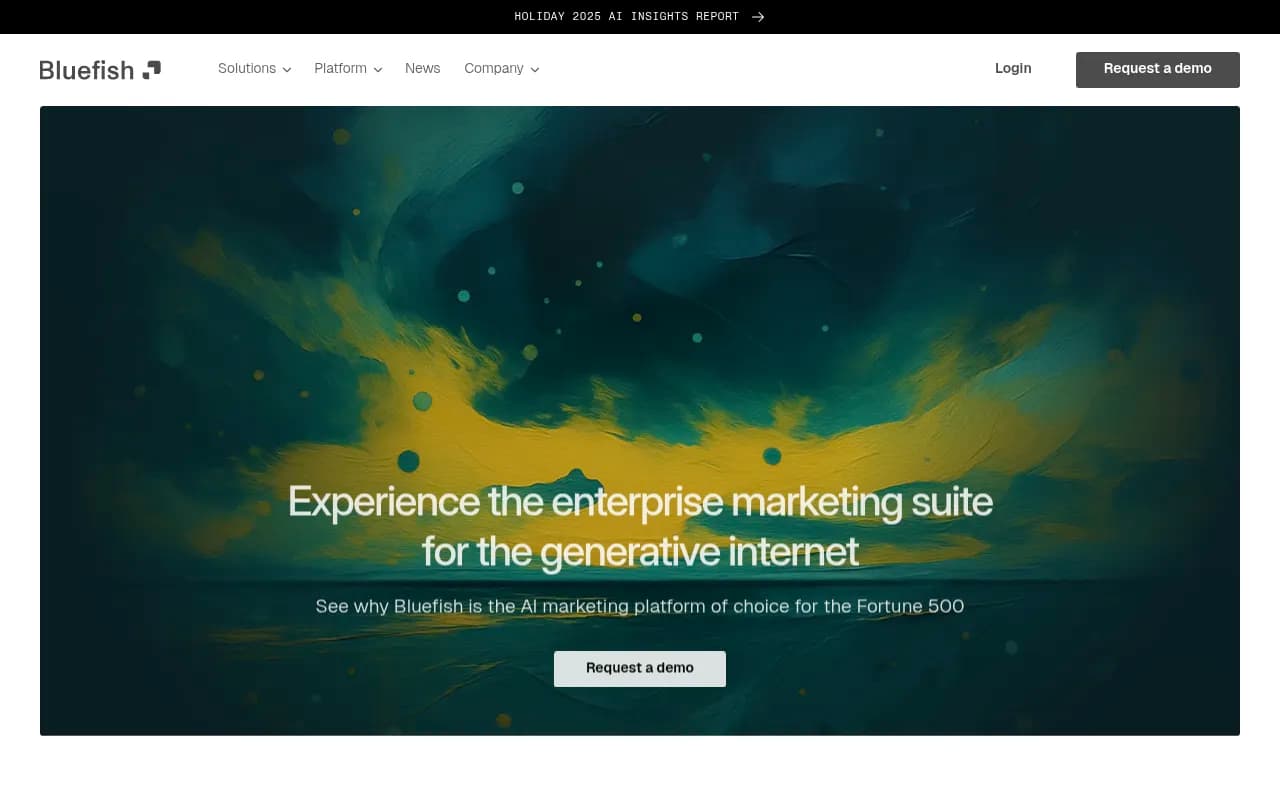
Bluefish AI positions itself as "the AI marketing platform of choice for the Fortune 500." It's built for large enterprise marketing teams that need custom audiences, tailored prompts, and deep performance analytics across AI search engines and agentic commerce channels. The platform emphasizes control and differentiation -- you're not stuck with generic datasets, and data teams get extensive customization options.
The catch: no transparent pricing (expect $4,000+/month based on enterprise positioning), no self-service signup, and missing features like content generation and crawler logs that competitors offer.
Brandlight.ai
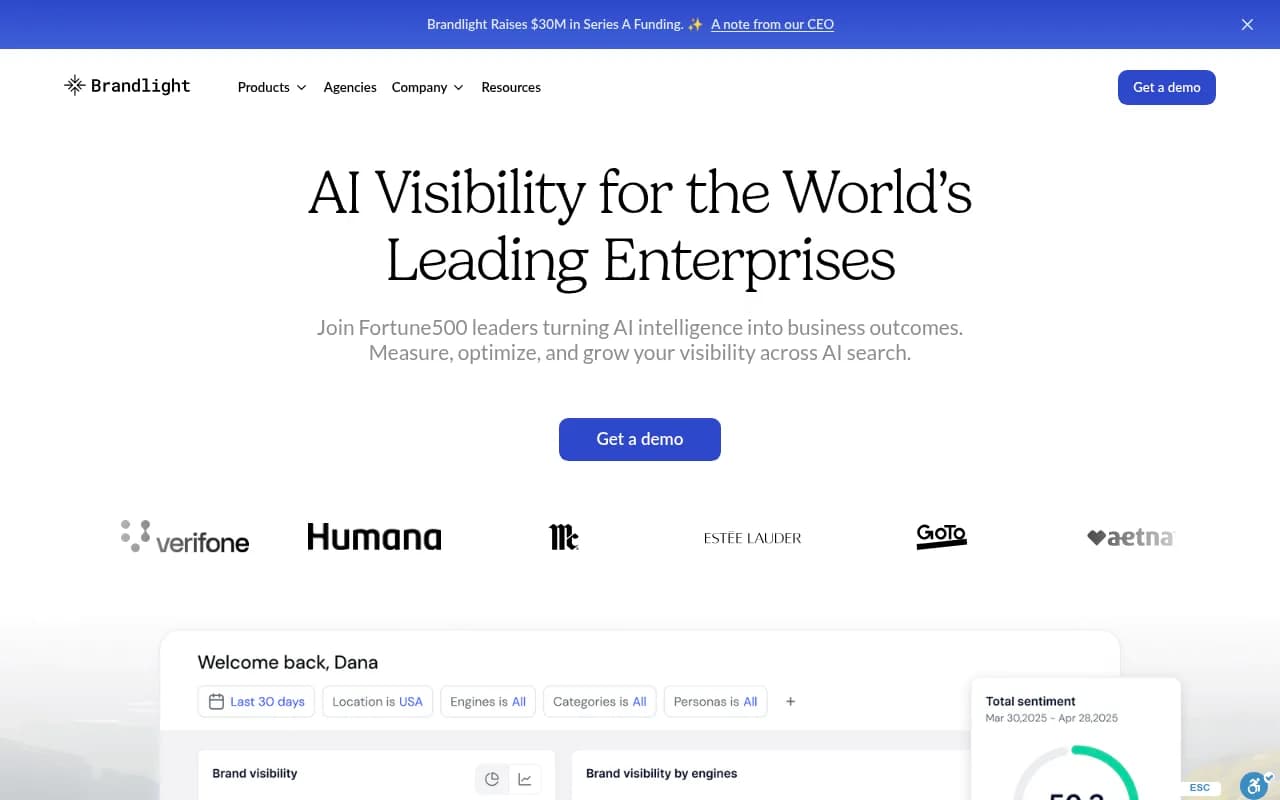
Brandlight.ai takes a governance-first approach to AI visibility. It monitors ChatGPT, Perplexity, Claude, Gemini, and other AI engines with a focus on brand mentions, sentiment, citations, and competitive positioning. The platform is designed for Fortune 500 marketing teams managing multiple brands across regions.
Brandlight's advantage: transparent pricing starting at $199/mo, a free tier for basic monitoring, and a lighter learning curve. The trade-off is less depth in custom analytics compared to Bluefish.
Side-by-Side Comparison
| Feature | Bluefish AI | Brandlight.ai |
|---|---|---|
| Starting price | Custom quote (~$4,000+/mo) | Free tier available, $199/mo paid |
| Free tier | No | Yes |
| Transparent pricing | No | Yes |
| AI engines monitored | ChatGPT, Perplexity, Claude, Gemini, others | ChatGPT, Perplexity, Claude, Gemini, others |
| Custom audiences | ✓ (core strength) | Limited |
| Multi-brand management | Single-brand focus | ✓ (core strength) |
| Governance controls | Basic | ✓ (governance-first design) |
| Content generation | ✗ | ✗ |
| Crawler logs | ✗ | ✗ |
| Content gap analysis | ✗ | ✗ |
| AI commerce tracking | ✓ | Limited |
| Analytics depth | Very deep, custom segmentation | Standard monitoring dashboards |
| Self-service signup | No (demo required) | Yes (free tier) |
| Target customer | Fortune 500, single-brand teams | Fortune 500, multi-brand enterprises |
Head-to-head feature breakdown
Pricing and accessibility
Bluefish AI doesn't publish pricing. Based on its enterprise positioning and "consistently passes infosec reviews" messaging, you're looking at custom quotes starting around $4,000/month or higher. No self-service option -- you have to request a demo and go through a sales process.
Brandlight.ai is transparent: free tier for basic monitoring, $199/mo for standard plans, $750/mo for activation plans, and custom enterprise pricing for multi-brand deployments. You can start with the free tier and upgrade as needed.
Verdict: Brandlight wins on accessibility and pricing transparency. Bluefish's opaque pricing signals it's only for teams with serious budgets.
Monitoring and analytics
Both platforms monitor the major AI engines (ChatGPT, Perplexity, Claude, Gemini). Bluefish emphasizes "deep performance analytics" and custom audiences -- you can segment data by region, persona, or custom dimensions. The platform is built for data teams that want to slice and dice AI visibility metrics in ways generic dashboards can't.
Brandlight focuses on governance and multi-brand control. You get brand mentions, sentiment tracking, citation analysis, and competitive positioning. The analytics are solid but not as customizable as Bluefish.
Verdict: Bluefish wins on analytics depth and customization. Brandlight wins on governance and multi-brand visibility.
Content optimization capabilities
Neither platform helps you create content that ranks in AI search. No content gap analysis, no AI writing agents, no crawler logs showing how AI engines discover your pages. Both are monitoring-only platforms.
If you need to actually fix visibility gaps -- not just see them -- you'd need a platform like Promptwatch that combines monitoring with content generation and optimization tools.

Verdict: Tie. Both platforms stop at monitoring and don't help you take action.
AI commerce and agentic channels
Bluefish explicitly mentions "agentic commerce" tracking and has a dedicated AI Commerce module. This is relevant if you're tracking product recommendations in ChatGPT Shopping or similar channels.
Brandlight's focus is broader brand visibility and sentiment -- less emphasis on commerce-specific tracking.
Verdict: Bluefish wins if AI commerce is a priority. Brandlight is better for general brand monitoring.
Multi-brand and governance
Brandlight is designed for enterprises managing multiple brands across regions. The governance-first framework anchors outputs to approved sources and provides cross-engine consistency.
Bluefish is built for single-brand depth. You get more customization for one brand, but managing multiple brands would require separate deployments or custom enterprise arrangements.
Verdict: Brandlight wins for multi-brand enterprises. Bluefish wins for single-brand teams that need deep customization.
Learning curve and onboarding
Brandlight has a lighter learning curve. The free tier lets you explore the platform before committing, and the interface is designed for quick onboarding.
Bluefish is more complex -- the depth of analytics and custom segmentation means a steeper learning curve. You'll need data team involvement to get full value.
Verdict: Brandlight is easier to get started with. Bluefish requires more technical expertise.
Support and enterprise readiness
Bluefish emphasizes that it "consistently passes infosec reviews with ease" and is "built for enterprise." The platform is designed for large organizations with strict security requirements.
Brandlight also targets Fortune 500 customers and recently raised $30M in Series A funding, signaling enterprise readiness.
Verdict: Both are enterprise-ready. Bluefish makes security a bigger part of its pitch.
Pricing comparison
| Plan | Bluefish AI | Brandlight.ai |
|---|---|---|
| Free tier | Not available | Basic monitoring included |
| Starter/Basic | Not available | $199/mo |
| Mid-tier | Not available | $750/mo (activation plan) |
| Enterprise | Custom quote (~$4,000+/mo) | Custom pricing for multi-brand |
| Self-service | No | Yes |
| Transparent pricing | No | Yes |
Pros and cons
Bluefish AI pros
- Deep, customizable analytics for data-driven teams
- Custom audiences and tailored prompts
- Strong focus on AI commerce and agentic channels
- Built for enterprise security and compliance
- Advanced segmentation and performance tools
Bluefish AI cons
- No transparent pricing (estimated $4,000+/month)
- No self-service signup or free tier
- No content generation or optimization tools
- No crawler logs or content gap analysis
- Single-brand focus makes multi-brand management harder
- Steeper learning curve
Brandlight.ai pros
- Free tier available for basic monitoring
- Transparent pricing starting at $199/mo
- Governance-first design for multi-brand enterprises
- Lighter learning curve and easier onboarding
- Self-service signup option
- Multi-brand management built in
Brandlight.ai cons
- Less depth in custom analytics vs Bluefish
- No content generation or optimization tools
- No crawler logs or content gap analysis
- Limited AI commerce tracking
- Custom audiences less robust than Bluefish
Who should pick which tool
Pick Bluefish AI if:
- You're a Fortune 500 single-brand team with a budget over $4,000/month
- You need deep, customizable analytics and custom audience segmentation
- AI commerce and agentic channel tracking are priorities
- You have data teams that can leverage advanced performance tools
- Security and infosec compliance are critical requirements
Pick Brandlight.ai if:
- You're managing multiple brands across regions
- You want transparent pricing and a free tier to test before committing
- Governance and cross-engine consistency matter more than analytics depth
- You need faster onboarding with a lighter learning curve
- Your budget is under $1,000/month or you want self-service access
Pick neither if:
- You need content gap analysis and AI writing tools to actually fix visibility issues, not just monitor them
- You want crawler logs showing how AI engines discover your pages
- You need prompt volume data and difficulty scoring to prioritize optimization efforts
- You're looking for an optimization platform, not just a monitoring dashboard
For teams that need the full action loop -- find gaps, generate content, track results -- a platform like Promptwatch combines monitoring with content generation, crawler logs, and optimization tools that both Bluefish and Brandlight lack.
Final verdict
Bluefish AI and Brandlight.ai are both enterprise monitoring platforms, but they serve different needs. Bluefish is the choice for single-brand teams with big budgets that need deep analytics and custom segmentation. Brandlight is better for multi-brand enterprises that want transparent pricing, governance controls, and easier onboarding.
Neither platform helps you create content that ranks in AI search -- they show you the data but leave you stuck when it comes to taking action. If you need to actually optimize your AI visibility, not just track it, you'll want a platform that combines monitoring with content gap analysis and generation tools.
The one-liner: Bluefish wins on analytics depth for single brands with enterprise budgets; Brandlight wins on pricing transparency and multi-brand governance for teams that want to start small and scale up.