Key Takeaways
- Brandlight.ai is enterprise-first with Fortune 500 clients and starts at $199/mo, while AthenaHQ targets mid-market at $295/mo ($95 first month) with a credit-based model
- Both are monitoring-focused platforms -- they show you where you appear in AI search but don't generate content or help you fix gaps (unlike action-oriented platforms)
- Brandlight has a free tier for basic monitoring; AthenaHQ requires paid plans with no free option
- AthenaHQ covers 8+ LLMs explicitly; Brandlight monitors ChatGPT, Perplexity, Claude, Gemini but specific model count isn't clear from their site
- Brandlight raised $30M Series A (well-funded, enterprise roadmap); AthenaHQ is Y Combinator-backed (startup velocity, faster iteration)
- Neither platform offers content generation, crawler log analysis, or Reddit/YouTube tracking -- if you need those, look at platforms like Promptwatch that close the loop from monitoring to optimization
Overview
Brandlight.ai
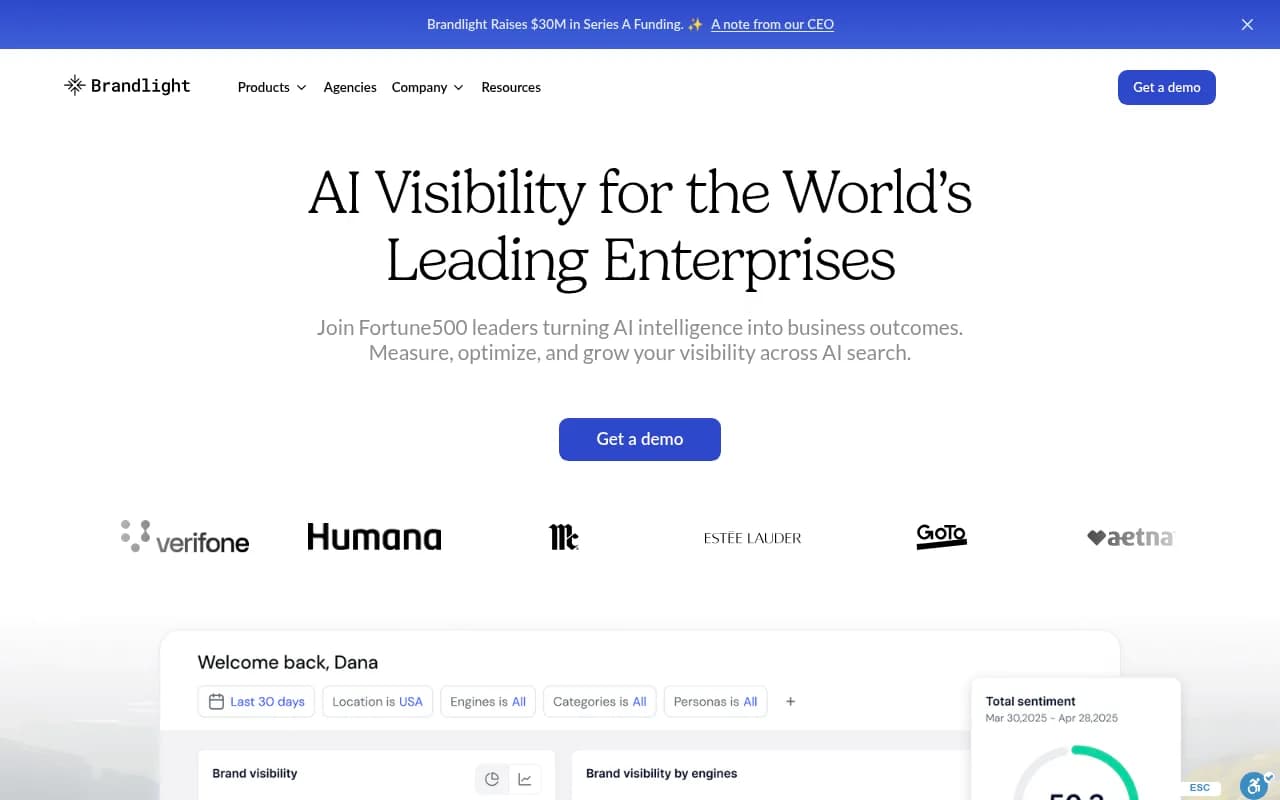
Brandlight positions itself as the enterprise AI visibility platform. Their pitch: Fortune 500 marketing teams use it to monitor, measure, and optimize brand presence across ChatGPT, Perplexity, Claude, Gemini, and other AI engines. The recent $30M Series A signals they're building for scale and long-term enterprise contracts. The platform tracks brand mentions, sentiment, citations, and competitive positioning -- classic monitoring dashboard territory.
What stands out: they have a free tier (rare in this space) and pricing that starts lower than most competitors at $199/mo. The enterprise focus means multi-brand deployments and custom pricing for large organizations.
AthenaHQ

AthenaHQ came out of Y Combinator and calls itself an "end-to-end AEO & GEO platform." They monitor AI search visibility across 8+ LLMs and position themselves as the command center for AI Engine Optimization specialists. Clients include Coinbase, ZoomInfo, SoFi -- recognizable names but not quite Fortune 500 scale.
Their model is credit-based: 1 credit = 1 AI query. Self-serve starts at $295/mo (discounted to $95 for the first month). They emphasize ROI tracking, citation source analysis, and automated content optimization recommendations. The "end-to-end" claim is a stretch -- they recommend optimizations but don't generate content or provide crawler logs.
Side-by-side comparison
| Feature | Brandlight.ai | AthenaHQ |
|---|---|---|
| Starting price | $199/mo | $295/mo ($95 first month) |
| Free tier | Yes | No |
| Pricing model | Tiered plans | Credit-based (1 credit = 1 query) |
| AI engines monitored | ChatGPT, Perplexity, Claude, Gemini, others | 8+ LLMs (ChatGPT, Perplexity, Google AI Overviews, Claude, more) |
| Target customer | Fortune 500, enterprise | Mid-market, growth companies |
| Content generation | No | No |
| Crawler log analysis | No | No |
| Citation tracking | Yes | Yes |
| Sentiment analysis | Yes | Not mentioned |
| Competitor tracking | Yes | Yes |
| ROI tracking | Not mentioned | Yes |
| Annual discount | Not specified | 17% |
| Funding | $30M Series A | Y Combinator-backed |
Pricing breakdown
| Plan | Brandlight.ai | AthenaHQ |
|---|---|---|
| Free | Basic monitoring | Not available |
| Entry tier | $199/mo (basic monitoring) | $295/mo ($95 first month, credit-based) |
| Mid tier | Not specified | Not specified |
| Top tier | $750/mo (activation plan) | Enterprise custom |
| Enterprise | Custom (multi-brand) | Custom |
| Annual discount | Not specified | 17% off |
Brandlight's pricing is more transparent upfront. AthenaHQ's credit model means your actual cost depends on query volume -- could be cheaper or more expensive depending on how many prompts you track.
Platform capabilities
AI engine coverage
Brandlight explicitly lists ChatGPT, Perplexity, Claude, and Gemini. Their site mentions "other AI search engines" but doesn't specify which or how many total.
AthenaHQ claims 8+ LLMs including ChatGPT, Perplexity, Google AI Overviews, and Claude. They're more explicit about cross-platform coverage, which matters if you want comprehensive monitoring.
Verdict: AthenaHQ has clearer multi-engine coverage. Brandlight likely monitors similar engines but doesn't communicate it as well.
Monitoring and tracking
Both platforms do the core job: track where your brand appears in AI responses, monitor citations, watch competitor mentions. Brandlight adds sentiment analysis (tracking whether mentions are positive, negative, neutral). AthenaHQ emphasizes ROI tracking -- connecting visibility metrics to business outcomes.
Neither platform provides real-time AI crawler logs (which pages AI bots are actually reading on your site) or visitor analytics (how many people are clicking through from AI search results). Those are table stakes for optimization platforms but missing here.
Verdict: Tie on basic monitoring. Brandlight wins on sentiment, AthenaHQ wins on ROI tracking.
Content optimization
This is where both platforms fall short. AthenaHQ claims "automated content optimization recommendations" but from their site, it looks like suggestions, not actual content generation. Brandlight doesn't mention content tools at all.
If you want to actually create content that ranks in AI search -- not just get told "you should write about X" -- you need a platform that generates articles based on citation data and prompt analysis. Neither Brandlight nor AthenaHQ does this. Tools like Promptwatch fill that gap with AI writing agents that produce content engineered for AI search visibility.

Verdict: Both are monitoring-only. If optimization matters, look elsewhere.
User interface and workflow
Brandlight's site shows a polished, enterprise-grade interface. Clean dashboards, multi-brand views, sentiment breakdowns. It feels like a tool built for CMOs and brand teams who want executive summaries.
AthenaHQ positions itself as the "command center" for GEO specialists. Their UI emphasizes workflow management, citation source analysis, and cross-platform tracking. More tactical, less executive.
Verdict: Brandlight for executive reporting, AthenaHQ for hands-on optimization teams.
Integration and API
Neither platform provides detailed API documentation or integration lists on their public sites. Enterprise customers likely get API access, but it's not a selling point for either.
Verdict: Unclear. Assume limited integrations unless you're on enterprise plans.
Target audience fit
Who should pick Brandlight.ai
- Enterprise marketing teams managing multiple brands across divisions
- CMOs and VPs who need executive dashboards and sentiment tracking
- Teams with smaller budgets who want a free tier to start or entry pricing at $199/mo
- Organizations that value funding and stability -- the $30M raise signals long-term commitment
- Brands focused on reputation management -- sentiment analysis is a differentiator
Who should pick AthenaHQ
- Mid-market companies (Coinbase, ZoomInfo scale) with dedicated GEO/AEO specialists
- Teams that want ROI tracking tied to AI visibility metrics
- Organizations comfortable with credit-based pricing where usage scales with query volume
- Startups and growth companies that value Y Combinator pedigree and fast iteration
- Teams that need explicit multi-engine coverage (8+ LLMs clearly listed)
What both platforms miss
Here's the uncomfortable truth: monitoring is only step one. You see where you're invisible, then what? Both Brandlight and AthenaHQ stop there. They don't:
- Show you which specific content gaps are costing you visibility
- Generate articles, listicles, or comparisons that AI engines will cite
- Track AI crawler behavior on your site (which pages they read, errors they hit)
- Provide Reddit or YouTube insights (major citation sources for AI responses)
- Offer visitor analytics to connect AI visibility to actual traffic and revenue
If you want to close the loop from "we're invisible for X prompts" to "we created content and now we rank," you need a platform that does more than monitor. That's the core difference between tracking tools and optimization platforms.
Pros and cons
Brandlight.ai pros
- Free tier available for basic monitoring
- Lower entry price ($199/mo vs $295/mo)
- Sentiment analysis included
- Enterprise-grade with Fortune 500 clients
- Well-funded ($30M Series A)
Brandlight.ai cons
- Monitoring-only, no content generation
- No crawler log analysis
- Unclear how many AI engines are covered
- No Reddit/YouTube tracking
- Limited public information on integrations
AthenaHQ pros
- Explicit 8+ LLM coverage
- ROI tracking built in
- Y Combinator pedigree (fast iteration)
- First month discount ($95)
- Workflow management for GEO specialists
AthenaHQ cons
- No free tier
- Credit-based pricing can get expensive
- Monitoring-focused, limited optimization tools
- No content generation or crawler logs
- Higher starting price than Brandlight
Final verdict
Pick Brandlight.ai if you're an enterprise team that needs sentiment tracking, executive dashboards, and a free tier to test before committing. The $199/mo entry point and Fortune 500 client base make it the safer bet for large organizations.
Pick AthenaHQ if you're a mid-market company with a dedicated GEO specialist who wants ROI tracking and explicit multi-engine coverage. The credit model works if your query volume is predictable.
But here's the real question: do you just want to know where you're invisible, or do you want to fix it? Both platforms are monitoring dashboards. If you need to actually optimize -- generate content, track crawler behavior, close visibility gaps -- you're looking at the wrong category. Monitoring tells you the problem. Optimization solves it.