Key Takeaways
- Price gap is massive: Briljant costs €49/month (€399/year) with a 7-day free trial. Bluefish AI starts around $4,000+/month with custom enterprise pricing only -- roughly 80x more expensive.
- Target audience couldn't be more different: Briljant is built for Dutch SMBs, agencies, and in-house marketing teams. Bluefish AI targets Fortune 500 brands with dedicated data teams and enterprise budgets.
- Bluefish lacks content optimization: Despite the premium price, Bluefish AI doesn't offer content generation, crawler logs, or technical optimization tools. It's monitoring-focused with deep analytics.
- Briljant offers localized support: GDPR compliance, Dutch-language interface, and support tailored to European markets. Bluefish is US-enterprise oriented.
- Prompt volume: Briljant tests 3,000 prompts monthly on its Pro plan. Bluefish offers custom prompt sets but doesn't publish volume limits.
- Neither platform is a full optimization suite: Both lack the action loop found in platforms like Promptwatch -- content gap analysis, AI writing agents, and crawler log monitoring that help you fix visibility issues instead of just tracking them.

Overview: Two platforms, two worlds
Briljant
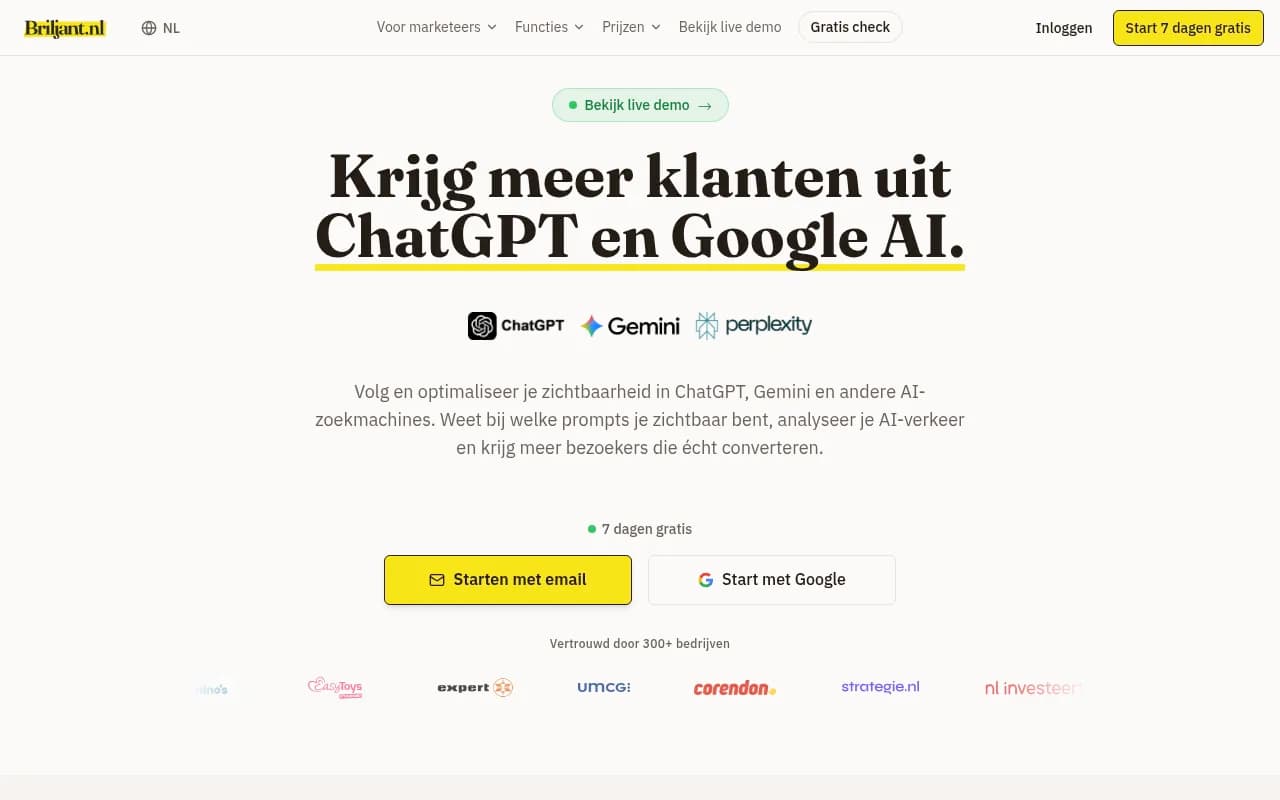
Briljant is a Netherlands-based GEO platform designed for Dutch businesses that want to track how they show up in ChatGPT, Google AI, and Perplexity. It's straightforward: you get 3,000 prompts tested monthly, technical audits, competitor comparisons, and AI analytics. The interface is in Dutch, pricing is transparent (€49/month or €399/year), and there's a 7-day free trial. It's built for marketing teams and agencies that need visibility data without enterprise complexity.
The platform monitors ChatGPT, Google AI, and Perplexity. You can track competitor mentions, see where you're losing to rivals, and get basic optimization recommendations. It's not trying to be everything -- just a solid monitoring tool for the Dutch market.
Bluefish AI
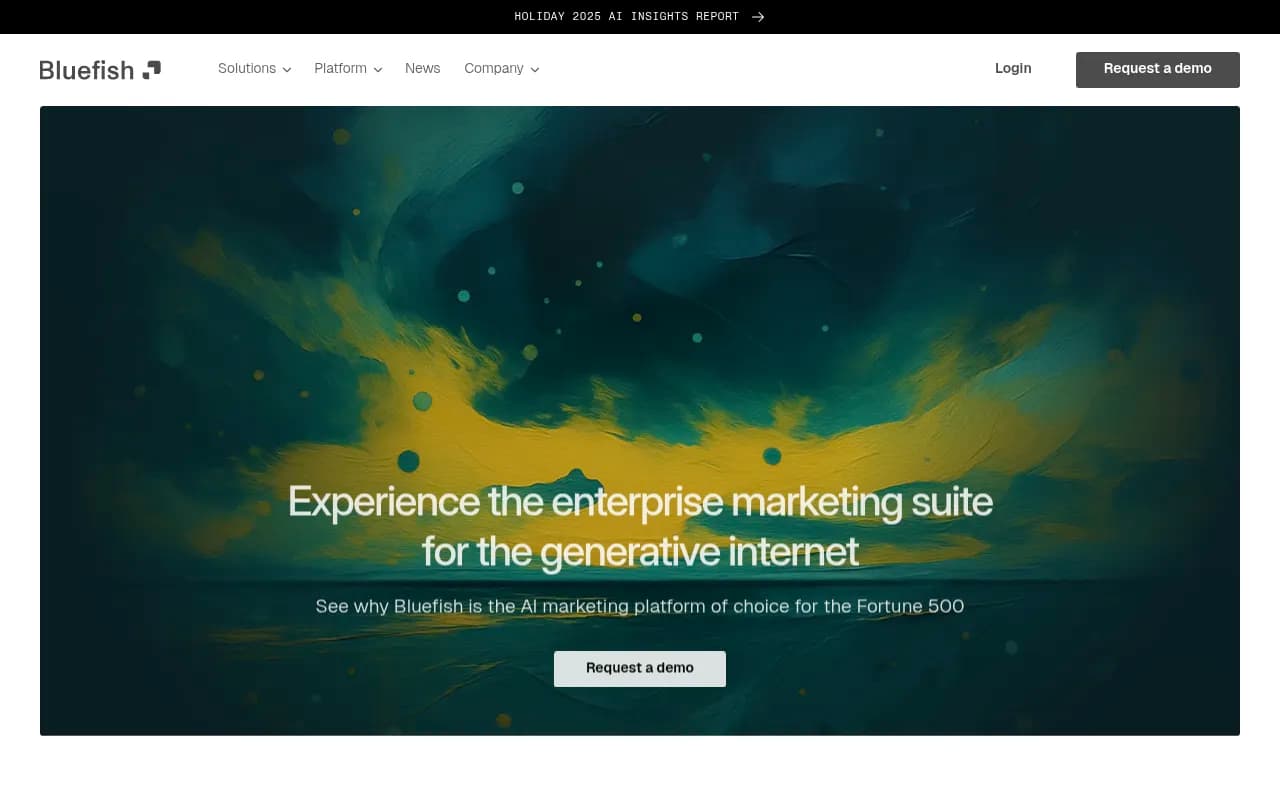
Bluefish AI positions itself as "the AI marketing platform of choice for the Fortune 500." It's enterprise-only, with custom pricing that starts around $4,000/month and goes up from there. The pitch is depth and control: custom audiences, tailored prompts, advanced performance analytics, and the ability to "understand how AI thinks."
Bluefish covers AI search monitoring, GEO measurement, and AI commerce tracking (agentic commerce channels like ChatGPT Shopping). It's built for large marketing teams that need segmentation, custom datasets, and integration with existing enterprise workflows. The trade-off: no self-service, no transparent pricing, and a sales process that involves infosec reviews and custom contracts.
Side-by-Side Comparison
| Feature | Briljant | Bluefish AI |
|---|---|---|
| Pricing | €49/mo (€399/yr) | Custom quote (~$4,000+/mo) |
| Free trial | 7 days | Demo only |
| Target market | Dutch SMBs, agencies | Fortune 500 enterprises |
| Prompt volume | 3,000/month | Custom (undisclosed) |
| AI models tracked | ChatGPT, Google AI, Perplexity | ChatGPT, Perplexity, Google AI, others |
| Content generation | ✗ | ✗ |
| Crawler logs | ✗ | ✗ |
| Competitor tracking | ✓ | ✓ |
| Custom audiences | ✗ | ✓ |
| AI commerce tracking | ✗ | ✓ (agentic commerce) |
| GDPR compliance | ✓ (EU-based) | ✓ (enterprise contracts) |
| Language support | Dutch | English |
| Self-service signup | ✓ | ✗ (sales only) |
Pricing: €49 vs $4,000+
This is where the comparison gets absurd.
Briljant has one plan: Pro at €49/month or €399/year (17% discount). You get everything: 3,000 prompts, ChatGPT/Google AI/Perplexity tracking, competitor analysis, technical audits, and AI analytics. There's a 7-day free trial. You can sign up with email or Google and start immediately.
Bluefish AI doesn't publish pricing. Based on their enterprise positioning and competitor analysis, expect to pay $4,000-$10,000+ per month depending on prompt volume, custom audiences, and data requirements. There's no free trial -- just a demo request that kicks off a sales cycle. You'll need to pass infosec reviews, negotiate contracts, and likely commit to annual terms.
Pricing table
| Plan | Briljant | Bluefish AI |
|---|---|---|
| Entry tier | €49/mo (€399/yr) | ~$4,000+/mo (estimated) |
| Free trial | 7 days | None (demo only) |
| Billing | Monthly or annual | Custom contract |
| Setup | Self-service | Sales-assisted |
For a Dutch agency managing 10 clients, Briljant costs €399/year total. Bluefish AI would run $48,000+/year for a single enterprise account. The price difference reflects completely different markets.
Feature deep-dive
AI model coverage
Briljant monitors three models: ChatGPT, Google AI, and Perplexity. That's the core set most businesses care about in 2026. The platform runs 3,000 prompts monthly across these models and shows you where your brand appears, where competitors beat you, and which prompts drive visibility.
Bluefish AI covers the same core models but adds "agentic commerce" tracking -- monitoring how brands show up in AI shopping recommendations and product discovery flows. This matters for e-commerce brands and consumer goods companies where AI assistants are starting to influence purchase decisions. Bluefish also offers custom prompt sets tailored to specific industries or customer segments.
Verdict: Bluefish has broader coverage if you need commerce tracking. For most businesses, Briljant's three-model focus is enough.
Competitor analysis
Both platforms let you track competitors. Briljant shows side-by-side comparisons: which prompts mention your competitors but not you, where you're winning, and overall share-of-voice across the 3,000 monthly prompts.
Bluefish takes this further with custom competitive sets and deeper segmentation. You can define multiple competitor groups, track performance by audience segment, and analyze how different AI models favor different brands. The analytics are more granular -- useful if you're a CPG brand competing in multiple categories.
Verdict: Bluefish wins on depth. Briljant covers the basics well enough for most use cases.
Content optimization and generation
Neither platform offers content generation or optimization tools. Briljant provides technical audits and recommendations -- it'll tell you what's wrong with your site from an AI discoverability perspective. But it won't write content for you or show you specific content gaps.
Bluefish AI focuses entirely on measurement and analytics. You get deep performance data, but no tools to act on it. Both platforms leave you to figure out the "what do I do about this?" part on your own.
This is where platforms like Promptwatch differentiate themselves -- they close the loop with content gap analysis and AI writing agents that generate articles grounded in citation data. If you want monitoring plus optimization, neither Briljant nor Bluefish delivers the full package.
Verdict: Tie. Both are monitoring-only platforms.
Crawler logs and technical monitoring
Briljant doesn't offer crawler logs. You can't see when ChatGPT or Perplexity crawlers hit your site, which pages they read, or errors they encounter.
Bluefish AI also lacks this feature. Despite the enterprise positioning, there's no real-time crawler monitoring or indexing diagnostics.
For technical SEO teams that want to understand how AI models discover and index content, this is a gap in both platforms. Tools like Promptwatch include crawler logs as a core feature -- you see exactly when AI crawlers visit, what they access, and where they fail.
Verdict: Neither platform offers this. Both lose points here.
Custom audiences and segmentation
Briljant doesn't do custom audiences. You get the standard 3,000 prompts tested monthly, and that's it. The prompts are presumably generic or industry-focused, but you can't define your own audience segments or tailor prompts to specific customer personas.
Bluefish AI makes this a selling point. Enterprise clients can define custom audiences, create tailored prompt sets that match how their actual customers search, and segment performance data by demographic, geography, or intent. This matters for brands with diverse customer bases or multiple product lines.
Verdict: Bluefish wins decisively. Custom audiences justify part of the price premium for enterprise brands.
Ease of use and setup
Briljant is self-service. Sign up with email or Google, connect your website, and you're tracking within minutes. The interface is in Dutch, which is perfect if you're a Dutch business but a barrier if you're not. The learning curve is minimal -- it's a dashboard with visibility scores, competitor comparisons, and prompt lists.
Bluefish AI requires a sales process. You request a demo, talk to their team, go through infosec reviews (they mention "consistently passing infosec reviews with ease"), negotiate pricing, and sign a contract. Setup involves custom configuration, audience definition, and integration with your existing marketing stack. This takes weeks, not minutes.
Verdict: Briljant for speed and simplicity. Bluefish for enterprise control and customization.
Reporting and analytics
Briljant provides standard reports: visibility scores over time, competitor share-of-voice, prompt-level breakdowns, and technical audit findings. You can export data and share reports with clients or stakeholders. It's functional but not fancy.
Bluefish AI offers "deep performance analytics" and "advanced performance tools." The platform is built for data teams -- you get custom segmentation, automated optimization workflows, and integration options for pulling data into your own BI tools. The depth is real, but you need someone who knows how to use it.
Verdict: Bluefish for enterprise analytics needs. Briljant for straightforward reporting.
Support and localization
Briljant is Dutch-first. The interface is in Dutch, support is in Dutch, and the platform is GDPR-compliant by default (Netherlands-based company). If you're a Dutch business or agency, this is a huge advantage -- you're not dealing with US-based support or English-only documentation.
Bluefish AI is US-enterprise oriented. Support is in English, the platform is built for global Fortune 500 brands, and you get dedicated account management as part of the enterprise package. GDPR compliance is handled through custom contracts.
Verdict: Depends entirely on your market. Dutch businesses should pick Briljant. Global enterprises pick Bluefish.
Pros and cons
Briljant pros
- Transparent, affordable pricing (€49/month)
- 7-day free trial with self-service signup
- GDPR-compliant, EU-based
- Dutch-language interface and support
- 3,000 prompts monthly is solid for SMBs
- Competitor tracking included
Briljant cons
- Dutch-only interface (barrier for non-Dutch speakers)
- No content generation or optimization tools
- No crawler logs or technical monitoring
- Limited to three AI models
- No custom audiences or segmentation
- Simpler analytics compared to enterprise platforms
Bluefish AI pros
- Deep analytics and custom segmentation
- Custom audiences and tailored prompts
- AI commerce tracking (agentic commerce)
- Built for enterprise scale and complexity
- Dedicated account management
- Passes infosec reviews easily
Bluefish AI cons
- Extremely expensive ($4,000+/month estimated)
- No transparent pricing or self-service option
- No content generation or optimization tools
- No crawler logs despite enterprise positioning
- Requires sales process and custom contracts
- Monitoring-only -- doesn't help you fix visibility issues
Who should pick which tool
Pick Briljant if you are:
- A Dutch SMB, agency, or in-house marketing team
- Working with a limited budget (under €500/year)
- Looking for straightforward AI visibility tracking
- Comfortable with Dutch-language tools
- Managing 1-10 clients or brands
- Need GDPR compliance without enterprise contracts
Pick Bluefish AI if you are:
- A Fortune 500 brand with enterprise budgets
- Managing multiple product lines or customer segments
- Need custom audiences and deep segmentation
- Tracking AI commerce and shopping recommendations
- Have a data team that can leverage advanced analytics
- Willing to go through a sales process and contract negotiation
Pick neither if you need:
- Content generation and optimization tools
- Crawler log monitoring and technical diagnostics
- A platform that helps you fix visibility issues, not just track them
- More than basic monitoring and reporting
For businesses that want the full optimization loop -- monitoring, content gap analysis, AI writing, and technical fixes -- platforms like Promptwatch offer a more complete solution. Both Briljant and Bluefish are monitoring-focused tools that leave the "what do I do about this?" question unanswered.
Final verdict
These platforms don't compete. They serve completely different markets at completely different price points.
Briljant is the obvious choice for Dutch businesses and agencies that want affordable, straightforward AI visibility tracking. At €49/month with a free trial, it's accessible and practical. The Dutch-language interface and GDPR compliance are bonuses for European markets.
Bluefish AI is built for Fortune 500 enterprises that need custom audiences, deep analytics, and AI commerce tracking. At $4,000+/month, it's only viable if you have the budget and the data team to extract value from advanced segmentation and reporting.
Neither platform offers content optimization or generation. Both are monitoring-only tools. If you want to actually improve your AI visibility instead of just tracking it, you'll need to supplement with content creation tools or look at more comprehensive platforms that close the optimization loop.
For most businesses reading this comparison: if you're Dutch and budget-conscious, pick Briljant. If you're a global enterprise with deep pockets, Bluefish might justify the cost. If you're neither, explore alternatives that offer more than just monitoring.