Key Takeaways
- Gauge offers broader AI engine coverage (7 platforms including Copilot and AI Overviews) vs Airefs' focus on ChatGPT and Perplexity
- Airefs starts at a lower price point with a 7-day free trial, while Gauge begins at $95/mo with annual billing
- Gauge provides more structured content gap analysis and onsite/offsite recommendations, while Airefs emphasizes social source tracking (Reddit, YouTube, LinkedIn)
- Both platforms track competitor mentions and citation patterns, but Gauge includes more detailed content audit capabilities
- Airefs has a simpler interface focused on quick visibility checks, while Gauge offers a more comprehensive toolkit for ongoing optimization
- For teams that need deep content strategy and multi-platform coverage, Gauge wins. For teams that want fast competitor tracking and social signal monitoring, Airefs is the leaner option.
Overview
Gauge
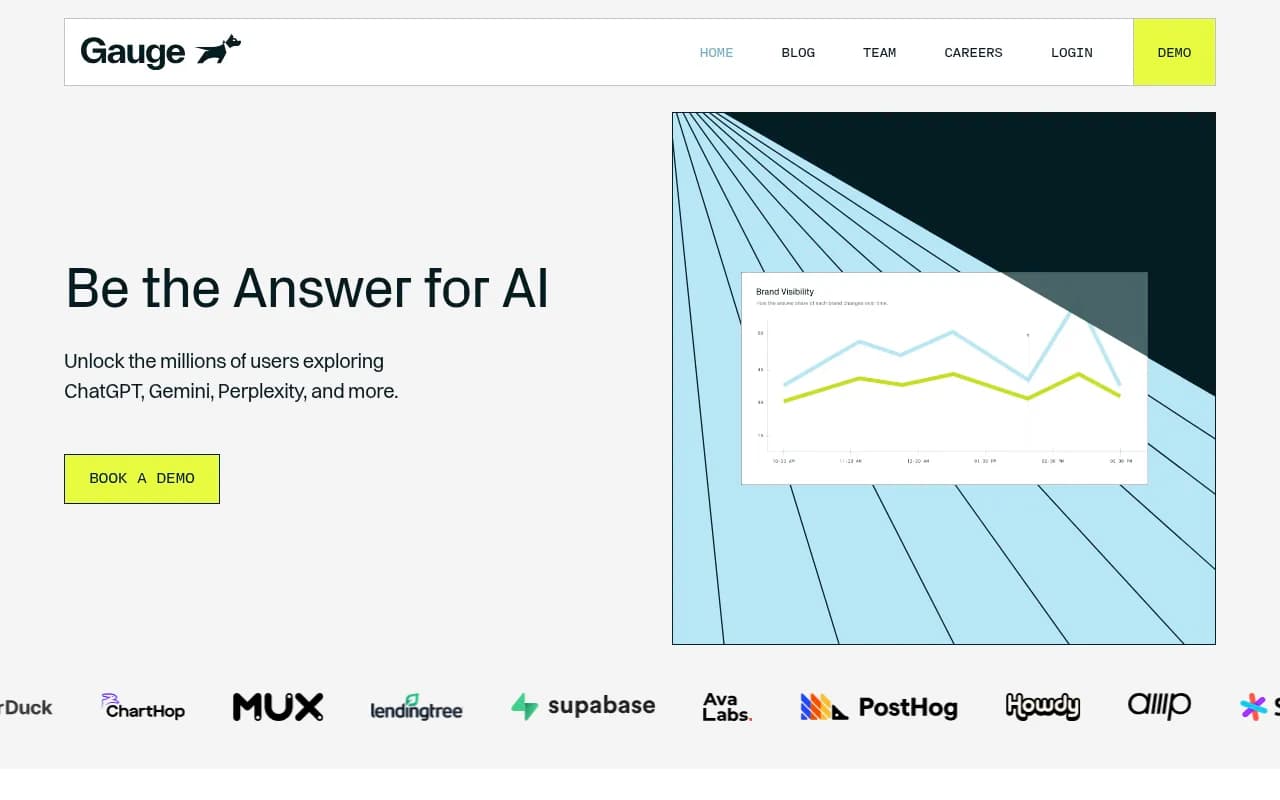
Gauge is an AI visibility platform that monitors brand mentions across ChatGPT, Claude, Gemini, Perplexity, Copilot, AI Mode, and AI Overviews. It tracks citation patterns, identifies content gaps, and provides actionable recommendations for improving AI search presence. The platform is designed for marketing teams and agencies that need to understand and optimize how their brand appears in generative AI search results. Gauge positions itself as a complete toolkit -- not just monitoring, but analysis and action.
Airefs
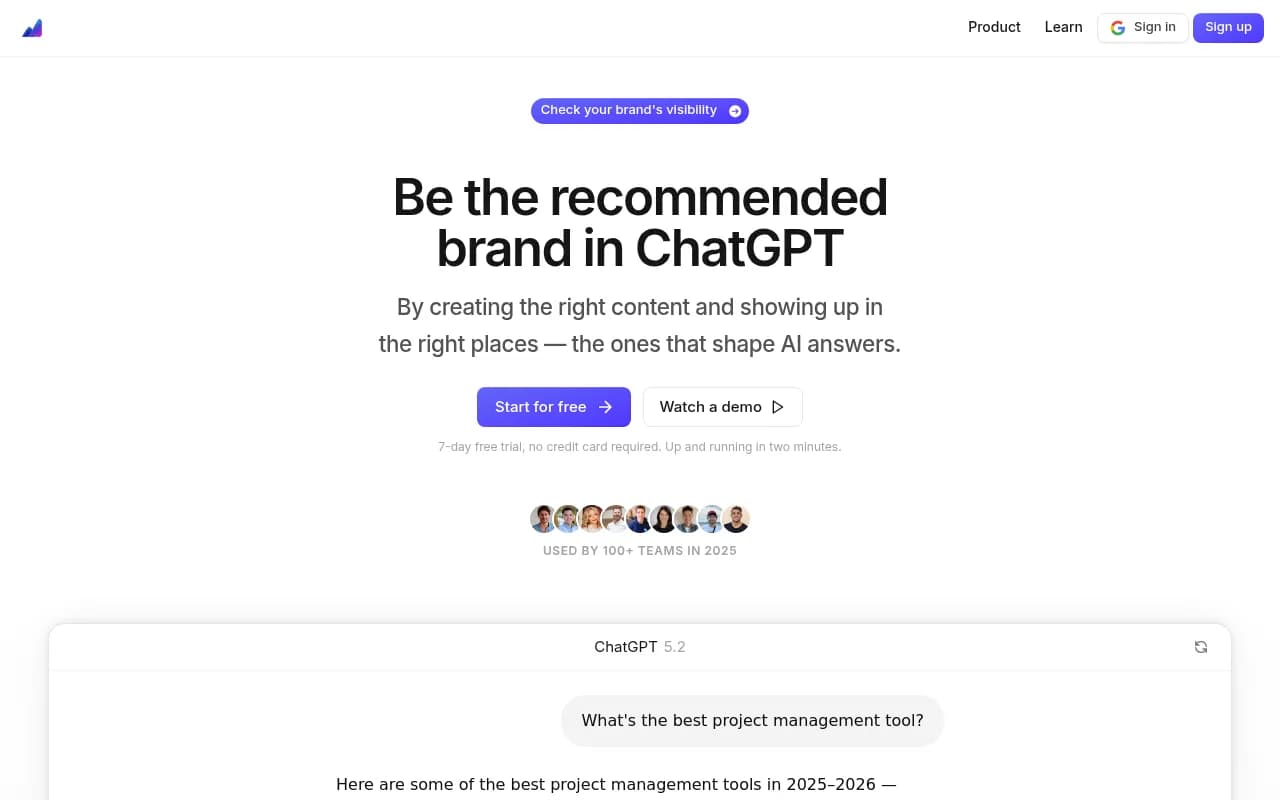
Airefs helps brands track how often they appear in ChatGPT and Perplexity answers. The platform focuses on competitor benchmarking, identifying which content sources (Reddit threads, LinkedIn posts, G2 reviews, YouTube videos) influence AI recommendations, and helping teams create strategic content to become the default answer in their category. Airefs emphasizes speed and simplicity -- get up and running in two minutes, see your visibility versus competitors, and understand where to publish content that AI engines will cite.
Side-by-side comparison
| Feature | Gauge | Airefs |
|---|---|---|
| AI engines monitored | ChatGPT, Claude, Gemini, Perplexity, Copilot, AI Mode, AI Overviews (7 total) | ChatGPT, Perplexity (2 total) |
| Starting price | $95/mo (annual billing) | Free 7-day trial, paid plans (pricing not public) |
| Free trial | Not mentioned | 7 days |
| Competitor tracking | Yes, with detailed comparison | Yes, with visibility percentages |
| Citation analysis | Yes, tracks what content is cited | Yes, shows which sources influence answers |
| Content gap analysis | Yes, identifies what's missing | Implied through visibility tracking |
| Content recommendations | Onsite and offsite recommendations | Strategic content placement guidance |
| Social source tracking | Not emphasized | Reddit, LinkedIn, YouTube, Quora, G2 |
| Content audit | Yes, audit existing pages | Not mentioned |
| Setup time | Not specified | 2 minutes |
| Target audience | Marketing teams, agencies | Marketing teams, agencies |
| Enterprise pricing | Custom | Not mentioned |
AI engine coverage
Gauge monitors seven AI platforms: ChatGPT, Claude, Gemini, Perplexity, Copilot, AI Mode, and AI Overviews. This is comprehensive coverage of the major AI search engines people actually use in 2026. If your audience is asking questions across multiple platforms, Gauge gives you visibility into all of them.
Airefs focuses on ChatGPT and Perplexity. That's it. For many brands, this is enough -- ChatGPT dominates AI search usage, and Perplexity is the go-to for research-heavy queries. But if you need to track Claude (popular with technical audiences), Gemini (Google's AI), or AI Overviews (which appear in regular Google search), Airefs won't show you that data.
Verdict: Gauge wins on breadth. Airefs wins if you only care about the two biggest players and want a simpler dashboard.
Pricing
Gauge starts at $95/mo with annual billing. The Growth plan is $399/mo. Enterprise pricing is custom. This is transparent and predictable.
Airefs offers a 7-day free trial but doesn't list pricing publicly. You have to sign up to see what you'll pay. Based on their positioning ("up and running in two minutes"), they're likely targeting a lower entry point than Gauge, but without public pricing it's hard to compare directly.
Verdict: Gauge is more transparent. Airefs might be cheaper, but the lack of public pricing is a friction point.
Citation and source analysis
Both platforms track which content sources AI engines cite when they mention (or don't mention) your brand.
Gauge analyzes citation patterns and identifies what content is being left out. The platform tells you what's missing from your content strategy and gives clear recommendations for filling those gaps. This is structured -- you get a report, you see the holes, you know what to fix.
Airefs shows you the specific sources that influence AI answers: Reddit threads, LinkedIn posts, G2 reviews, YouTube videos, Quora answers. The emphasis is on understanding where AI engines are pulling information from, so you can create content in those places. Airefs surfaces the social signals that shape recommendations.
Verdict: Gauge is better for content gap analysis and structured recommendations. Airefs is better for understanding social and third-party sources.
Competitor tracking
Gauge tracks how your brand stacks up against competitors. You can see who's getting mentioned instead of you and analyze why. The platform provides detailed comparison data.
Airefs also tracks competitors and shows visibility percentages -- how often each brand appears in AI answers for important user questions. The interface emphasizes quick comparisons: "Track competitors and understand which ones get recommended instead of you -- and why."
Both platforms do this well. The difference is presentation: Gauge gives you more depth, Airefs gives you faster insights.
Verdict: Tie. Both handle competitor tracking effectively.
Content recommendations and action
Gauge positions itself around a three-step loop: Track, Understand, Act. The "Act" step gives you clear onsite and offsite recommendations to improve your brand presence. Gauge also includes content audit capabilities -- you can review existing pages and see what needs to change.
Airefs focuses on strategic content placement. The platform tells you where to publish (Reddit, LinkedIn, YouTube, etc.) to influence AI answers. It's less about auditing your existing content and more about creating new content in the right places.
Verdict: Gauge is better for teams that want to optimize existing content and get structured recommendations. Airefs is better for teams that want to focus on new content in third-party channels.
Setup and ease of use
Airefs emphasizes speed: "Up and running in two minutes." The interface is designed for quick visibility checks and fast competitor comparisons. This is a tool you can start using immediately.
Gauge doesn't specify setup time, but the platform is described as a "complete toolkit" with content audits, gap analysis, and detailed recommendations. This suggests a more involved setup and a steeper learning curve.
Verdict: Airefs wins on speed and simplicity. Gauge is more powerful but requires more time to learn.
Who should pick which tool
Pick Gauge if:
- You need to monitor more than just ChatGPT and Perplexity (Claude, Gemini, Copilot, AI Overviews matter to you)
- You want structured content gap analysis and clear recommendations for what to fix
- You're managing an ongoing AI visibility strategy and need a comprehensive toolkit
- You have existing content that needs auditing and optimization
- You prefer transparent pricing and predictable costs
Pick Airefs if:
- ChatGPT and Perplexity are the only AI engines you care about
- You want to focus on social sources (Reddit, LinkedIn, YouTube) that influence AI answers
- You need fast setup and a simple interface for quick competitor checks
- You're comfortable with non-public pricing and want to try the 7-day free trial first
- You're prioritizing new content creation over auditing existing pages
If you're also looking to track how your brand shows up in AI search results and need tools that go beyond monitoring to actually help you optimize, Promptwatch is worth checking out. It combines visibility tracking with content gap analysis and an AI writing agent that generates articles grounded in real citation data.

Pricing comparison
| Plan | Gauge | Airefs |
|---|---|---|
| Free trial | Not mentioned | 7 days |
| Entry plan | $95/mo (annual billing) | Not publicly listed |
| Mid-tier plan | Growth: $399/mo | Not publicly listed |
| Enterprise | Custom pricing | Not mentioned |
Pros and cons
Gauge pros:
- Monitors 7 AI engines including Copilot and AI Overviews
- Structured content gap analysis and recommendations
- Content audit capabilities for existing pages
- Transparent pricing
- Comprehensive toolkit for ongoing optimization
Gauge cons:
- Higher starting price ($95/mo)
- No free trial mentioned
- Likely more complex to learn and use
- Less emphasis on social source tracking
Airefs pros:
- 7-day free trial
- Fast setup (2 minutes)
- Strong focus on social sources (Reddit, LinkedIn, YouTube)
- Simple interface for quick visibility checks
- Lower barrier to entry
Airefs cons:
- Only monitors ChatGPT and Perplexity
- Pricing not publicly listed
- Less structured content gap analysis
- No content audit capabilities mentioned
- Fewer features for ongoing optimization
Final verdict
Gauge is the better choice for teams that need comprehensive AI visibility across multiple platforms and want a structured approach to content optimization. The broader engine coverage, content audit tools, and clear recommendations make it a more complete solution for ongoing AI search strategy.
Airefs is the better choice for teams that want fast competitor tracking, care primarily about ChatGPT and Perplexity, and want to focus on social sources that influence AI answers. The simpler interface and quick setup make it easier to get started, but you're trading features for speed.
If you're serious about AI visibility and have the budget, Gauge gives you more to work with. If you want to dip your toes in and see results quickly, Airefs is the faster path. Both platforms do what they promise -- the question is whether you need a toolkit or a dashboard.