Key Takeaways
- LLMrefs is cheaper ($79/mo vs €99/mo) and includes unlimited projects, domains, and team seats -- LLM Pulse charges per seat and limits projects by tier
- LLM Pulse tracks prompts you define manually; LLMrefs auto-generates prompts from keywords, making setup faster for SEO teams managing hundreds of terms
- LLM Pulse offers deeper sentiment analysis and competitor benchmarking with share-of-voice metrics; LLMrefs focuses on keyword rankings and citation tracking
- LLMrefs covers 11 AI engines on all plans; LLM Pulse restricts some models (Claude, Copilot, Meta AI, DeepSeek, Grok) to Enterprise tier
- LLM Pulse provides AI-powered content recommendations to improve visibility; LLMrefs sticks to analytics and reporting without optimization suggestions
- For agencies managing multiple clients: LLMrefs wins on pricing structure. For brands wanting actionable insights and sentiment tracking: LLM Pulse delivers more depth.
Overview
Both LLM Pulse and LLMrefs solve the same core problem: tracking how your brand appears in AI search results across ChatGPT, Perplexity, Gemini, and other generative engines. But they take different approaches to get there.
LLM Pulse
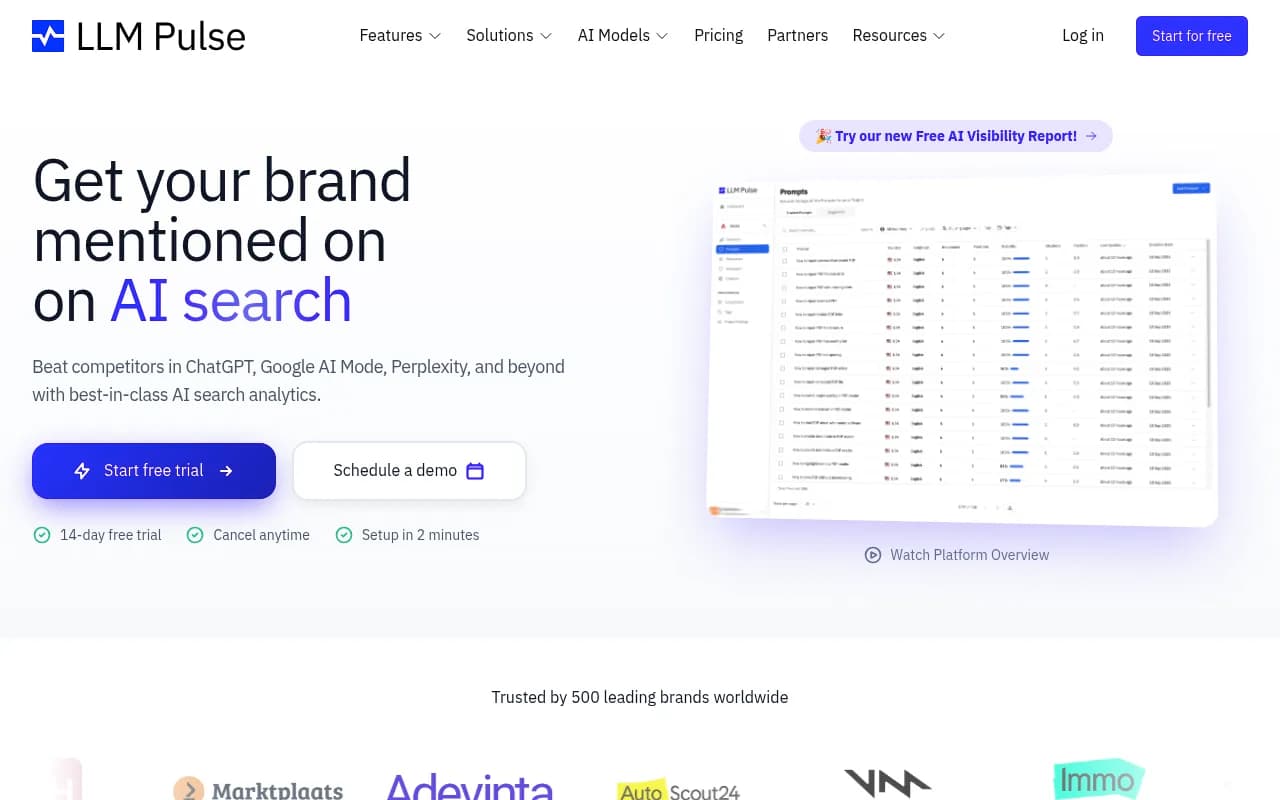
LLM Pulse positions itself as a comprehensive AI search visibility tracker with a focus on sentiment, competitor benchmarking, and content optimization. Used by 500+ brands including Swiss Marketplace Group and Voicemod, it tracks prompts weekly and analyzes how AI models describe your brand. The platform captures full AI responses, measures sentiment, and provides recommendations to improve your visibility. Pricing starts at €49/mo for the Starter plan.
LLMrefs
LLMrefs
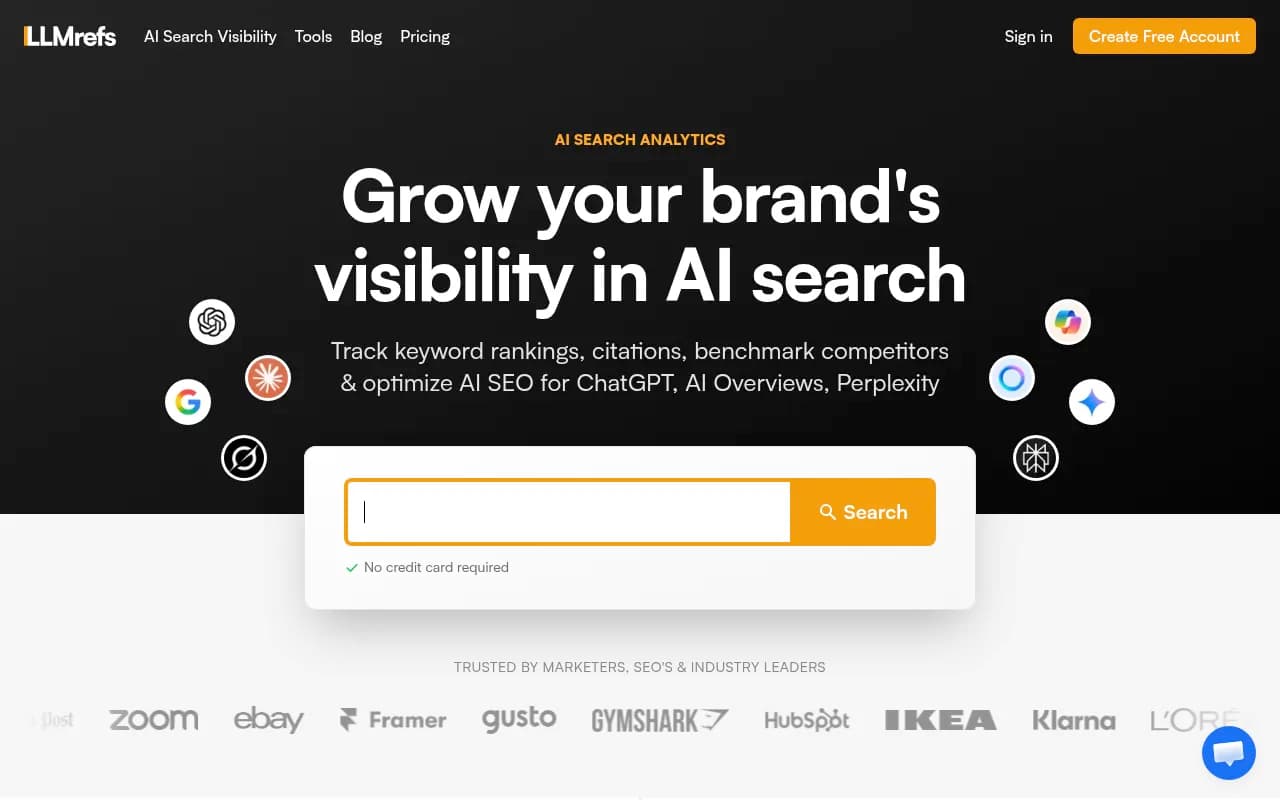
LLMrefs takes a keyword-first approach designed for SEO teams. Instead of manually defining prompts, you input keywords and the platform auto-generates relevant prompts to track across 11 AI engines. It simplifies GEO (Generative Engine Optimization) by treating AI search like traditional SEO -- track keywords, monitor rankings, analyze citations. Pricing is flat at $79/mo for 500 prompts with unlimited projects, domains, and team seats. No credit card required for the 7-day trial.
Side-by-Side Comparison
| Feature | LLM Pulse | LLMrefs |
|---|---|---|
| Starting price | €49/mo (Starter) | $79/mo (flat rate) |
| Prompts included | 50 (Starter), 150 (Growth), 500 (Scale) | 500 |
| Projects/domains | 1 (Starter), 3 (Growth), 10 (Scale) | Unlimited |
| Team seats | 1 (Starter), 3 (Growth), 10 (Scale) | Unlimited |
| AI engines tracked | 5 (basic plans), 10+ (Enterprise) | 11 (all plans) |
| Prompt setup | Manual prompt definition | Auto-generated from keywords |
| Sentiment analysis | Yes, detailed | Basic |
| Competitor benchmarking | Yes, share-of-voice metrics | Yes, citation comparison |
| Content recommendations | Yes, AI-powered | No |
| Citation analysis | Yes | Yes |
| Countries supported | Multiple (unspecified) | 50+ |
| Free trial | 14 days | 7 days |
| Annual discount | 17% | Not specified |
Pricing comparison
| Plan | LLM Pulse | LLMrefs |
|---|---|---|
| Entry tier | €49/mo: 50 prompts, 1 project, 1 seat | $79/mo: 500 prompts, unlimited projects/seats |
| Mid tier | €99/mo: 150 prompts, 3 projects, 3 seats | Same flat rate |
| High tier | €299/mo: 500 prompts, 10 projects, 10 seats | Same flat rate |
| Enterprise | Custom pricing: 10+ AI engines, advanced features | Not offered |
LLMrefs wins on pricing simplicity and value for agencies. One flat rate gets you 500 prompts and unlimited projects -- no per-seat fees, no project limits. LLM Pulse's tiered structure makes sense if you're a single brand tracking fewer prompts, but costs scale quickly for agencies managing multiple clients.
Prompt tracking approach
This is where the two platforms diverge most.
LLM Pulse requires you to define each prompt manually. You decide which questions matter ("best CRM for small business", "top project management tools 2026"), add them to your tracking list, and the platform monitors those exact prompts weekly. This gives you control but demands upfront work. You need to know which prompts to track, and you're responsible for keeping the list current as search behavior shifts.
LLMrefs flips the model. You input keywords ("CRM software", "project management"), and the platform auto-generates relevant prompts to track. It treats AI search like traditional SEO -- you target keywords, not individual queries. The system handles prompt variation and expansion automatically. For SEO teams already thinking in keywords, this is faster to set up and easier to scale.
Verdict: LLMrefs is better for teams managing large keyword portfolios. LLM Pulse works if you want precise control over specific high-value prompts.
AI engine coverage
LLMrefs tracks 11 AI engines on all plans: ChatGPT, Google AI Overviews, Google AI Mode, Perplexity, Claude, Gemini, Copilot, Meta AI, Grok, and two others. Every customer gets the full set regardless of plan.
LLM Pulse tracks 5 engines on Starter/Growth/Scale plans (ChatGPT, Perplexity, Gemini, Google AI Mode, AI Overviews). Claude, Copilot, Meta AI, DeepSeek, and Grok are Enterprise-only. If you need comprehensive cross-engine tracking, you're forced into custom Enterprise pricing.
Verdict: LLMrefs gives you more engines for less money. LLM Pulse's engine restrictions on lower tiers are a significant limitation.
Sentiment and competitor analysis
LLM Pulse excels here. The platform analyzes sentiment in AI responses (positive, neutral, negative), tracks share-of-voice vs competitors, and shows how your positioning changes over time. You see not just whether you're mentioned, but how you're described and how that compares to rivals. The competitor benchmarking is detailed -- you can track up to 10 competitors and see their visibility scores, citation rates, and sentiment trends alongside yours.
LLMrefs offers basic competitor comparison focused on citation counts and keyword rankings. You can see which competitors get cited for the same keywords, but there's no sentiment scoring or share-of-voice metrics. It's functional but less nuanced.
Verdict: LLM Pulse wins for brands that care about how they're positioned, not just whether they're mentioned.
Content optimization and recommendations
LLM Pulse includes an "Optimize" step in its workflow. After tracking and analyzing, the platform provides AI-powered content recommendations to improve your visibility. It suggests topics to cover, angles to take, and content gaps to fill based on what's getting cited in AI responses. This closes the loop from monitoring to action.
LLMrefs doesn't offer optimization features. It's a pure analytics platform -- you get data on rankings and citations, but no guidance on what to do about it. You're on your own for turning insights into content strategy.
Verdict: LLM Pulse is the better choice if you want actionable recommendations. LLMrefs assumes you'll figure out optimization yourself.
Worth noting: if you're looking to go deeper on the optimization side -- tracking AI crawler behavior, generating content specifically engineered for AI citations, and closing the full loop from gap analysis to content creation to traffic attribution -- Promptwatch covers that angle with features like Answer Gap Analysis, an AI writing agent trained on 880M+ citations, and real-time AI crawler logs. It's a complement to either LLM Pulse or LLMrefs if you're serious about not just monitoring but actively improving your AI search presence.

Citation and source analysis
Both platforms track which sources AI engines cite when mentioning your brand or competitors. You see the URLs, domains, and content types (articles, Reddit threads, YouTube videos) that influence AI responses.
LLM Pulse presents citation data within the context of full AI responses. You see the exact answer the AI gave, which sources it cited, and how your brand was framed. The emphasis is on understanding the narrative.
LLMrefs focuses on citation frequency and ranking. It shows which domains get cited most often for each keyword, helping you identify authoritative sources in your space. The interface is more data-table oriented -- good for spotting patterns across hundreds of keywords.
Verdict: Tie. LLM Pulse is better for qualitative analysis; LLMrefs is better for quantitative citation tracking at scale.
User interface and workflow
LLM Pulse uses a three-step workflow (Track → Analyze → Optimize) that guides you through the process. The dashboard emphasizes visual charts for visibility scores, sentiment trends, and competitor comparisons. It's designed for marketers who want a narrative view of their AI presence.
LLMrefs feels more like a traditional SEO tool. You manage keywords in projects, view ranking tables, and drill into citation data. The interface is cleaner and more data-dense -- less hand-holding, more direct access to metrics. SEO teams will feel at home immediately.
Verdict: Depends on your background. LLM Pulse is friendlier for non-technical marketers; LLMrefs is faster for SEO pros.
Geographic and language coverage
LLMrefs explicitly supports 50+ countries, making it easier to track AI visibility across different markets. You can monitor how ChatGPT in the US describes your brand vs ChatGPT in Germany or Japan.
LLM Pulse mentions multi-language and multi-region support but doesn't specify the number of countries. Based on the website, it's less clear how granular the geographic targeting gets.
Verdict: LLMrefs has the edge for international brands tracking multiple markets.
Reporting and integrations
Neither platform advertises extensive integrations. Both focus on being standalone analytics tools.
LLM Pulse provides weekly tracking updates and in-platform reporting. No mention of API access or data export options on lower tiers.
LLMrefs offers weekly trend reporting and appears to have straightforward data export (common for SEO-focused tools), but doesn't advertise API access either.
Verdict: Roughly equal. Both are self-contained platforms without deep integration ecosystems.
Team collaboration and agency use
LLMrefs is the clear winner for agencies. Unlimited projects, domains, and team seats at $79/mo means you can manage dozens of clients without per-seat fees. One subscription covers your entire team.
LLM Pulse charges per seat and limits projects by tier. Managing 10 clients requires the €299/mo Scale plan (10 projects, 10 seats). Managing more than that pushes you into Enterprise pricing. The cost structure doesn't favor agencies.
Verdict: LLMrefs is built for agencies; LLM Pulse is priced for individual brands.
Setup time and learning curve
LLMrefs is faster to set up. Input your keywords, let the platform generate prompts, and you're tracking within minutes. The keyword-first model matches how SEO teams already work.
LLM Pulse requires more upfront thought. You need to define your prompt list, which means researching the questions your audience asks and deciding which ones matter most. It's not hard, but it takes longer.
Verdict: LLMrefs gets you running faster. LLM Pulse demands more strategic planning upfront.
Pros and cons
LLM Pulse pros
- Detailed sentiment analysis and share-of-voice metrics
- AI-powered content recommendations to improve visibility
- Strong competitor benchmarking with narrative context
- 14-day free trial (longer than LLMrefs)
- Used by 500+ brands with recognizable names
LLM Pulse cons
- More expensive, especially for agencies managing multiple clients
- Restricts advanced AI engines (Claude, Copilot, etc.) to Enterprise tier
- Per-seat and per-project pricing scales poorly
- Manual prompt definition requires more setup work
- Less transparent about geographic coverage
LLMrefs pros
- Flat $79/mo pricing with unlimited projects, domains, and seats
- Auto-generates prompts from keywords -- faster setup
- Tracks 11 AI engines on all plans
- Built for SEO teams with familiar keyword-based workflow
- Explicit support for 50+ countries
- No credit card required for trial
LLMrefs cons
- No content optimization or recommendations
- Basic sentiment analysis compared to LLM Pulse
- Less emphasis on narrative and qualitative insights
- Shorter 7-day trial
- Less established brand presence (fewer public case studies)
Who should pick which tool
Choose LLM Pulse if:
- You're a single brand (not an agency) tracking your own AI visibility
- Sentiment analysis and competitor positioning matter as much as raw citation counts
- You want actionable content recommendations, not just data
- You're willing to pay more for deeper qualitative insights
- You need a platform that guides you through the optimization process
Choose LLMrefs if:
- You're an agency managing multiple clients and need unlimited projects/seats
- You already think in keywords and want a familiar SEO-style workflow
- You need comprehensive AI engine coverage (11 models) without paying for Enterprise
- You want the fastest setup time with auto-generated prompts
- You're tracking AI visibility across multiple countries
- Budget is a primary concern and you want predictable flat-rate pricing
Choose both if:
- You're a large brand or agency that wants LLMrefs for broad keyword tracking and LLM Pulse for deep-dive analysis on priority prompts. The two platforms complement each other -- use LLMrefs to identify which keywords matter, then use LLM Pulse to track sentiment and optimize content for those high-value terms.
Final verdict
LLMrefs wins on value and scalability. $79/mo for 500 prompts, unlimited projects, and full AI engine coverage is hard to beat. The keyword-first approach makes it the natural choice for SEO teams and agencies already managing large portfolios. Setup is fast, the workflow is familiar, and the pricing doesn't punish you for growth.
LLM Pulse wins on depth and actionability. If you're a brand that cares about how you're positioned in AI responses -- not just whether you're mentioned -- the sentiment analysis and competitor benchmarking justify the higher price. The content recommendations close the loop from insight to action, which LLMrefs doesn't attempt.
For most teams, especially agencies, LLMrefs is the smarter starting point. For brands with budget and a focus on brand positioning, LLM Pulse delivers insights you can't get elsewhere. Neither is a bad choice -- they're solving slightly different problems for different buyers.