Key Takeaways
- Nightwatch is 3x cheaper to start: $24/mo (Starter) vs €75/mo (Meteoria Basic), making it more accessible for small teams and solo marketers
- Meteoria focuses purely on AI visibility (ChatGPT, Perplexity, Google AI Overview, Gemini, Grok) while Nightwatch combines traditional SEO rank tracking with AI monitoring -- choose based on whether you need both or just AI
- Nightwatch offers unlimited seats on all plans; Meteoria also includes unlimited seats and projects, so both are team-friendly
- Meteoria is French-built with strong European focus and includes sentiment analysis; Nightwatch is more globally oriented with 107,000+ location tracking
- For pure GEO work, Meteoria is purpose-built; for teams managing both SEO and AI visibility, Nightwatch's unified dashboard is more efficient
- Nightwatch has an AI SEO Agent for workflow automation; Meteoria focuses on measurement and comparison without content generation
Overview
Meteoria
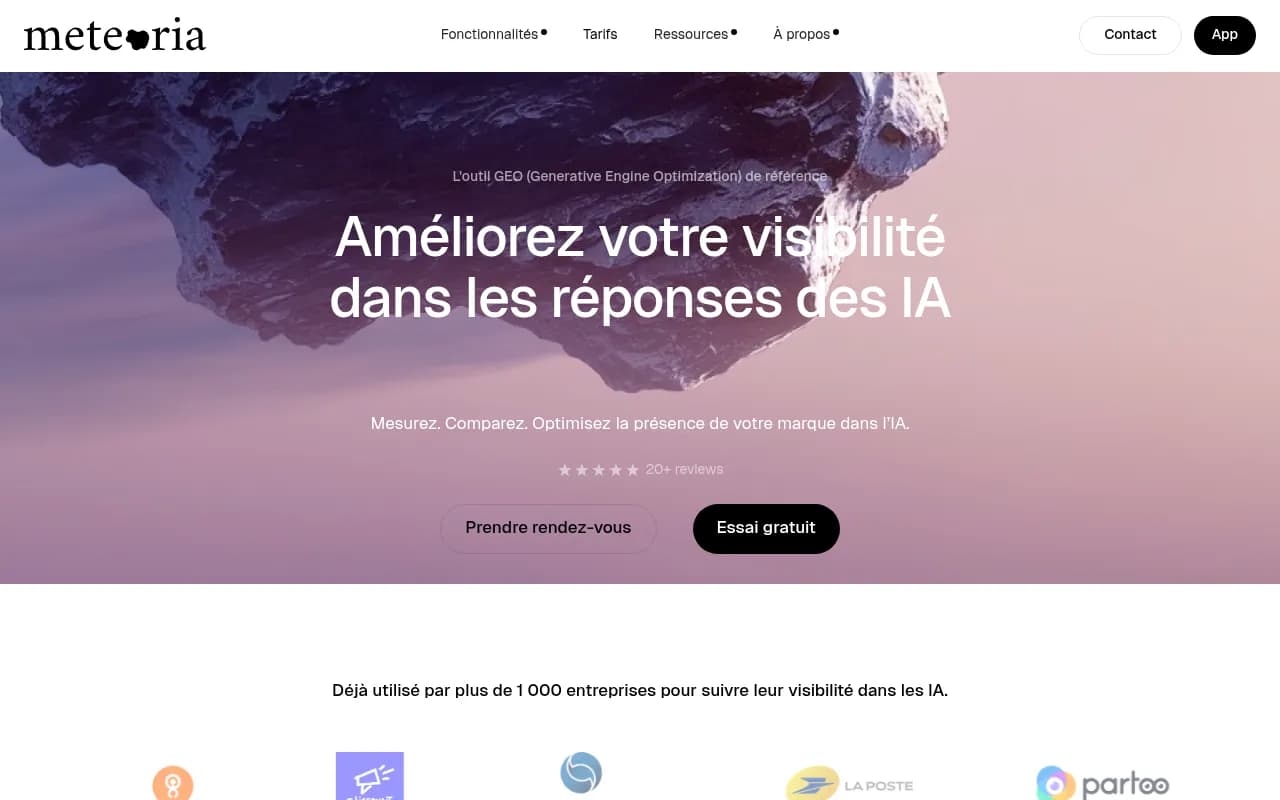
Meteoria is a French GEO (Generative Engine Optimization) platform launched to help brands track how AI models mention them. It monitors ChatGPT, Perplexity, Google AI Overview, Gemini, and Grok across custom prompts. The platform emphasizes measurement, competitor comparison, and sentiment analysis. Pricing starts at €75/month for 25 prompts with unlimited seats and projects. Meteoria positions itself as "l'outil GEO de référence" (the reference GEO tool) and is used by over 1,000 companies including Cdiscount, Pierre Fabre, and La Poste.
Nightwatch
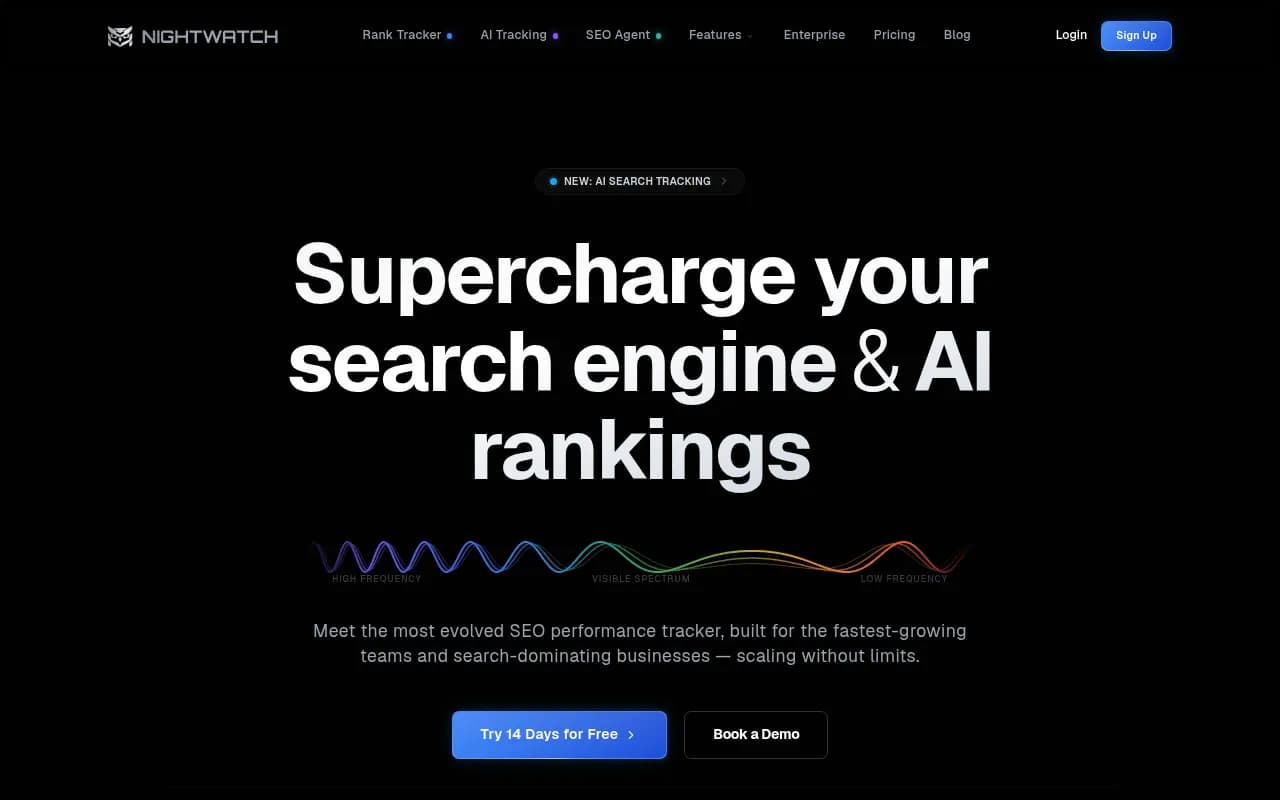
Nightwatch is an SEO performance tracker that evolved to include AI search monitoring. It combines traditional rank tracking (Google, Bing, Yahoo, DuckDuckGo) with AI visibility tracking (ChatGPT, Gemini, Claude, Perplexity). The platform offers real-time ranking updates, 107,000+ location tracking, site audits, keyword research, and an AI SEO Agent for workflow automation. Pricing starts at $24/month (Starter plan) with a 14-day free trial. Nightwatch markets itself as "the most evolved SEO performance tracker" for fast-growing teams.
Side-by-Side Comparison
| Feature | Meteoria | Nightwatch |
|---|---|---|
| Starting Price | €75/mo (25 prompts) | $24/mo (Starter) |
| Free Trial | 7 days | 14 days |
| AI Models Tracked | ChatGPT, Perplexity, Google AI Overview, Gemini, Grok (5 models) | ChatGPT, Gemini, Claude, Perplexity, Google AI Overview (5 models) |
| Traditional SEO Tracking | ❌ No | ✅ Yes (Google, Bing, Yahoo, DuckDuckGo) |
| Sentiment Analysis | ✅ Yes (implicit & explicit) | ❌ Not mentioned |
| Competitor Comparison | ✅ Yes (visibility & positioning) | ✅ Yes |
| Location Tracking | Custom geographic zones | 107,000+ locations (zip code level) |
| Unlimited Seats | ✅ Yes | ✅ Yes |
| Site Audit | ❌ No | ✅ Yes |
| Keyword Research | ❌ No | ✅ Yes |
| AI SEO Agent | ❌ No | ✅ Yes (workflow automation) |
| Reporting | Custom dashboards | Custom dashboards + Looker Studio integration |
| Primary Focus | Pure GEO/AI visibility | SEO + AI unified tracking |
| Company Origin | France | Global |
Pricing Comparison
| Plan | Meteoria | Nightwatch |
|---|---|---|
| Free Trial | 7 days | 14 days |
| Entry Plan | €75/mo (Basic: 25 prompts) | $24/mo (Starter) |
| Mid Tier | €175/mo (Pro: 100 prompts) | $59/mo (Optimize) |
| High Volume | €300/mo+ (Enterprise: 200+ prompts) | Custom (Enterprise) |
| Seats Included | Unlimited on all plans | Unlimited on all plans |
| Projects | Unlimited | Multiple websites supported |
Nightwatch's entry point is roughly $26/month at current exchange rates, making it about 65% cheaper than Meteoria's €75/month starting plan. However, the prompt/keyword volumes differ -- Meteoria's Basic plan includes 25 prompts while Nightwatch's Starter plan details aren't fully specified in the data but typically includes keyword tracking limits.
Feature Deep-Dive
AI model coverage
Both platforms track the major AI search engines, but with slight differences. Meteoria monitors ChatGPT, Perplexity, Google AI Overview, Gemini, and Grok. Nightwatch covers ChatGPT, Gemini, Claude, Perplexity, and Google AI Overview. The key difference: Meteoria includes Grok (X's AI), while Nightwatch includes Claude (Anthropic's model).
Neither is objectively better -- it depends on your audience. If your users are active on X/Twitter, Grok visibility matters. If you're targeting technical or research-oriented users, Claude is more relevant.
Verdict: Tie. Both cover the essential models; choose based on which specific model matters to your audience.
Traditional SEO integration
This is where the platforms diverge sharply. Nightwatch is a full SEO platform that added AI tracking. You get daily rank tracking across Google, Bing, Yahoo, and DuckDuckGo, plus site audits, keyword research, and backlink analysis. Meteoria is AI-only -- no traditional search engine tracking at all.
If you're managing both SEO and AI visibility (which most marketing teams are), Nightwatch eliminates the need for a separate rank tracker. You're not paying for Semrush or Ahrefs on top of an AI monitoring tool. Meteoria assumes you already have SEO covered elsewhere.
Verdict: Nightwatch wins for teams managing both channels. Meteoria is cleaner if you only care about AI.
Prompt and keyword tracking
Meteoria structures everything around "prompts" -- the questions users ask AI models. You define prompts that match your business (e.g. "best CRM for small business", "top project management tools"), then Meteoria queries each AI model with those prompts and tracks whether your brand appears, your position, and the sources cited.
Nightwatch does the same for AI models but also tracks traditional keyword rankings. The "Prompt Research" feature helps you discover what people are asking AI engines, similar to keyword research but for conversational queries.
Meteoria's pricing is explicitly prompt-based (25, 100, 200+ prompts per plan). Nightwatch's pricing isn't as clearly tied to prompt volume in the available data, but traditional rank trackers typically charge by keyword count.
Verdict: Meteoria is more transparent about prompt limits. Nightwatch's hybrid model may have different limits for traditional keywords vs AI prompts.
Competitor analysis
Both platforms let you benchmark against competitors. Meteoria shows your visibility score vs competitors across each AI model, your relative position, and which sources the AI models cite when mentioning competitors instead of you. The interface emphasizes head-to-head comparison -- you can see exactly where a competitor is winning and why.
Nightwatch also tracks competitor rankings (both traditional and AI), but the emphasis is more on your own performance trends over time. You can add competitor domains and compare, but Meteoria's UI seems more explicitly built around the "us vs them" view.
Verdict: Meteoria edges ahead for competitive intelligence. Nightwatch has the data but isn't as competitor-focused in its presentation.
Sentiment analysis
Meteoria includes sentiment tracking -- both explicit (does the AI say "highly recommended" or "not ideal") and implicit (tone, context). This matters for brand reputation. If ChatGPT is mentioning your brand but with negative framing, you need to know.
Nightwatch doesn't mention sentiment analysis in the available data. It tracks whether you appear and your position, but not the qualitative tone.
Verdict: Meteoria wins. Sentiment is a critical dimension for brand teams.
Reporting and integrations
Nightwatch integrates with Looker Studio (formerly Google Data Studio), which is huge for agencies and teams that build custom client dashboards. You can pull Nightwatch data into your existing reporting stack. It also has a "Search Simulator" for previewing how your site appears in search results.
Meteoria offers custom dashboards and data exports but doesn't explicitly mention third-party integrations like Looker Studio. The platform is more self-contained.
Verdict: Nightwatch wins for teams that need flexible reporting and integrations.
Workflow automation
Nightwatch includes an "AI SEO Agent" that automates parts of your SEO workflow -- likely things like automated reporting, alerting, or optimization suggestions based on ranking changes. The details aren't fully specified, but it's positioned as a time-saver for repetitive tasks.
Meteoria doesn't mention workflow automation. It's a measurement and analysis tool, not an execution tool.
Verdict: Nightwatch wins if you want automation. Meteoria is purely analytics.
Location and language targeting
Nightwatch supports 107,000+ locations down to the zip code level, which is absurdly granular. If you're tracking local SEO or regional AI visibility, this is powerful.
Meteoria allows custom geographic zones and supports prompts in multiple languages (it's a French company, so multilingual is baked in). The granularity isn't specified, but the emphasis is on matching your target personas and regions.
Verdict: Nightwatch wins for hyper-local tracking. Meteoria is strong for international/multilingual but less granular.
Who should pick Meteoria
- Pure GEO focus: You only care about AI visibility, not traditional SEO. You already have Semrush/Ahrefs/etc. for rank tracking.
- Brand reputation teams: Sentiment analysis is critical for you. You need to know not just if you're mentioned, but how.
- European/French businesses: Meteoria is French-built, likely has better support for European languages and use cases, and pricing is in euros.
- Competitor-obsessed marketers: You want a tool that makes competitive benchmarking the default view, not an afterthought.
- Smaller prompt volumes: If 25-100 prompts cover your needs, Meteoria's pricing is reasonable and the UI is focused.
Who should pick Nightwatch
- SEO + AI teams: You're managing both traditional search rankings and AI visibility. One platform is simpler and cheaper than two.
- Budget-conscious startups: $24/mo is a much easier sell than €75/mo, especially if you're just getting started.
- Agencies and reporting-heavy teams: Looker Studio integration and custom dashboards are essential for client reporting.
- Hyper-local businesses: You need zip-code-level tracking for local SEO and AI visibility.
- Automation seekers: The AI SEO Agent and workflow features save time on repetitive tasks.
- Global teams: Nightwatch's 107,000+ location support and global orientation fit better than a France-first tool.
If you're also looking to go beyond monitoring and actually optimize your content for AI visibility -- understanding which topics you're missing, generating content that gets cited, and tracking the impact -- tools like Promptwatch take the next step by closing the loop between visibility data and content creation.

Pros and Cons
Meteoria Pros
- Sentiment analysis (implicit and explicit tone tracking)
- Unlimited seats and projects on all plans
- Strong competitor comparison UI
- Purpose-built for GEO, not a bolt-on feature
- French company with European focus and multilingual support
- Tracks Grok (X's AI model)
Meteoria Cons
- No traditional SEO tracking (you need a separate tool)
- Higher starting price (€75/mo vs $24/mo)
- No workflow automation or AI agent
- No Looker Studio or third-party integrations mentioned
- Smaller prompt limits on entry plan (25 prompts)
Nightwatch Pros
- 3x cheaper entry point ($24/mo)
- Unified SEO + AI tracking (one platform for everything)
- Looker Studio integration for custom reporting
- AI SEO Agent for workflow automation
- 107,000+ location tracking (hyper-local)
- Site audit, keyword research, backlink analysis included
- Tracks Claude (Anthropic's model)
- Longer free trial (14 days vs 7)
Nightwatch Cons
- AI tracking is a newer addition to an SEO platform (not the core focus)
- No sentiment analysis mentioned
- Competitor comparison exists but isn't the primary UI focus
- Prompt/keyword limits less transparent in pricing
Final Verdict
Pick Nightwatch if you're managing both SEO and AI visibility, need tight budget control, or want workflow automation and integrations. It's the practical choice for most marketing teams because it consolidates tools and costs less.
Pick Meteoria if you're laser-focused on AI visibility, need sentiment tracking for brand reputation, or want a tool that's built from the ground up for GEO rather than retrofitted from an SEO tracker.
The real question: are you tracking AI as part of a broader search strategy (Nightwatch), or is AI visibility your primary concern (Meteoria)? Answer that and the choice is obvious.