Key Takeaways
- Promptwatch is an optimization platform, LLMrefs is a tracking dashboard -- Promptwatch includes content gap analysis, an AI writing agent, and crawler logs to help you fix visibility issues. LLMrefs focuses on monitoring keyword rankings across AI engines.
- Different tracking philosophies -- LLMrefs uses keyword-based tracking (like traditional SEO), while Promptwatch tracks individual prompts with volume estimates and difficulty scores. LLMrefs auto-generates prompts from keywords; Promptwatch lets you track specific user queries.
- Promptwatch costs more but includes action tools -- Promptwatch starts at $99/mo (50 prompts, 5 AI-generated articles, crawler logs). LLMrefs is $79/mo for 500 prompts but no content generation or optimization features.
- LLMrefs covers more AI engines out of the box -- 11 engines vs Promptwatch's 10, though both cover the major players (ChatGPT, Perplexity, Claude, Gemini, AI Overviews).
- Promptwatch has deeper citation intelligence -- 880M+ citations analyzed, Reddit/YouTube tracking, ChatGPT Shopping monitoring, and query fan-outs. LLMrefs shows basic citation sources but less context.
- For agencies and teams managing multiple clients, LLMrefs has simpler scaling -- unlimited projects and domains on the base plan. Promptwatch charges per site (1 site on Essential, 2 on Professional, 5 on Business).
Overview
Promptwatch

Promptwatch is an end-to-end AI Search Visibility platform used by 7,000+ brands including Booking.com, Center Parcs, and eBay. It's built around an action loop: find content gaps (which prompts competitors rank for but you don't), generate optimized content with the built-in AI writer, and track results with page-level visibility scores and traffic attribution. Promptwatch monitors 10 AI engines -- ChatGPT, Perplexity, Claude, Gemini, Google AI Overviews, Google AI Mode, Meta AI, DeepSeek, Grok, Mistral, and Copilot. The platform includes AI crawler logs (see when ChatGPT's bot hits your site), prompt intelligence (volume estimates and difficulty scores), Reddit/YouTube citation tracking, and ChatGPT Shopping monitoring. Pricing starts at $99/mo for 1 site, 50 prompts, and 5 AI-generated articles.
LLMrefs
LLMrefs
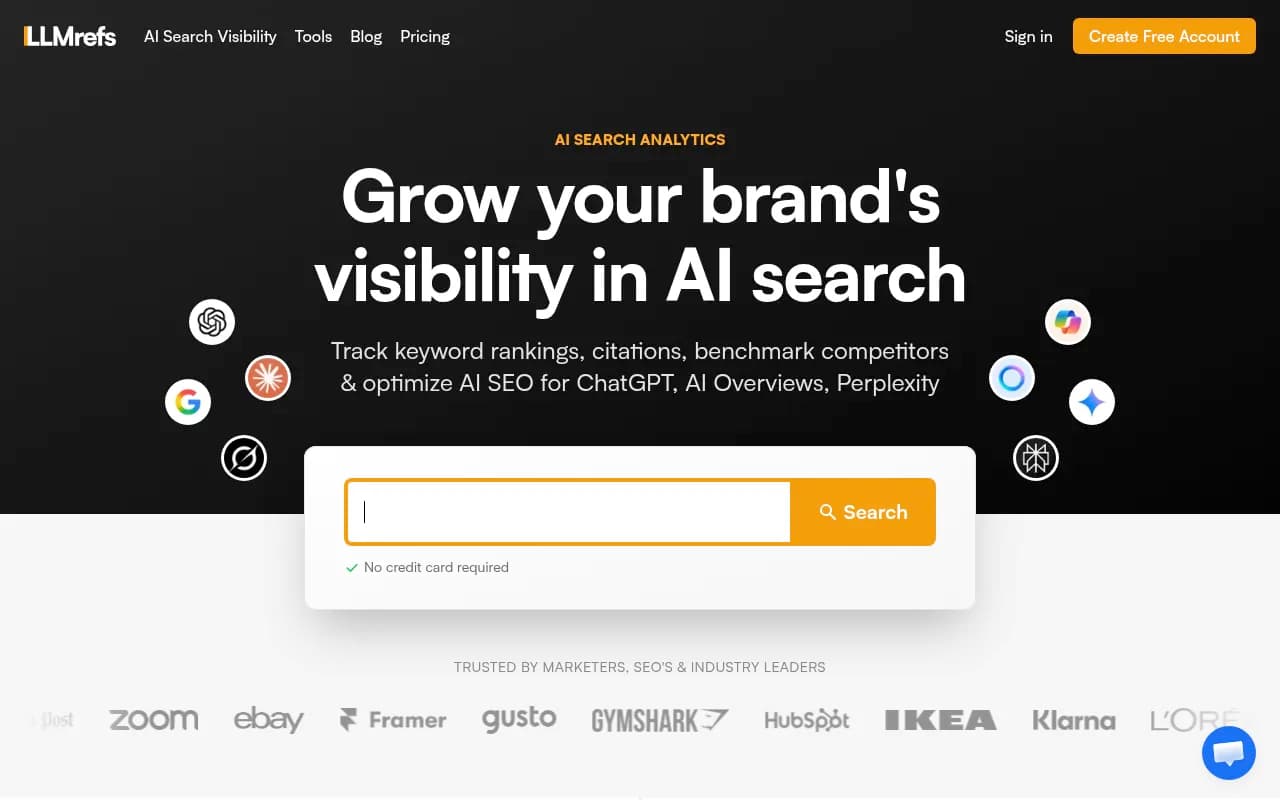
LLMrefs is an AI search analytics platform that tracks keyword rankings and citations across 11 generative AI engines. It's designed for SEO teams who want to apply traditional keyword tracking concepts to AI search. You enter keywords (like "best CRM for startups"), and LLMrefs auto-generates related prompts to track across ChatGPT, Perplexity, Claude, Gemini, AI Overviews, Grok, Copilot, Meta AI, and others. The platform shows where your brand ranks in AI responses, which sources get cited, and how you compare to competitors. LLMrefs offers unlimited projects, domains, and team seats on a single plan ($79/mo for 500 prompts), making it straightforward for agencies managing multiple clients. There's no content generation or optimization tooling -- it's purely a monitoring and benchmarking dashboard.
Side-by-side comparison
| Feature | Promptwatch | LLMrefs |
|---|---|---|
| Pricing | $99/mo (50 prompts, 1 site) | $79/mo (500 prompts, unlimited sites) |
| AI engines tracked | 10 (ChatGPT, Perplexity, Claude, Gemini, AI Overviews, AI Mode, Meta, DeepSeek, Grok, Mistral, Copilot) | 11 (adds one more, exact list varies) |
| Tracking approach | Prompt-based (track specific user queries) | Keyword-based (auto-generate prompts from keywords) |
| Content generation | ✓ Built-in AI writer (5-30 articles/mo depending on plan) | ✗ No content tools |
| Content gap analysis | ✓ Shows which prompts competitors rank for but you don't | ✗ Basic competitor comparison only |
| AI crawler logs | ✓ Real-time logs of ChatGPT/Claude bots crawling your site | ✗ Not available |
| Prompt intelligence | ✓ Volume estimates, difficulty scores, query fan-outs | ✗ No volume or difficulty data |
| Reddit/YouTube tracking | ✓ Surface discussions influencing AI responses | ✗ Not available |
| ChatGPT Shopping | ✓ Track product recommendations in ChatGPT | ✗ Not available |
| Traffic attribution | ✓ Code snippet, GSC integration, server logs | ✗ No traffic tracking |
| Multi-site management | 1-5 sites depending on plan | Unlimited sites on base plan |
| Team seats | Varies by plan | Unlimited on base plan |
| Free trial | 7 days | 7 days, no credit card |
Tracking philosophy: keywords vs prompts
This is the biggest conceptual difference between the two platforms.
LLMrefs uses keyword-based tracking. You enter a keyword like "project management software" and LLMrefs auto-generates a set of related prompts ("What's the best project management software?", "Top project management tools for remote teams", etc.). It then tracks those prompts across all AI engines. This feels familiar if you're coming from traditional SEO -- you're essentially tracking keyword rankings, but in AI responses instead of Google SERPs.
The upside: fast setup, easy to scale, and you can track hundreds of keywords without manually writing prompts. The downside: you're not tracking the exact prompts real users type. The auto-generated prompts are educated guesses.
Promptwatch uses prompt-based tracking. You enter the specific prompts you want to monitor -- either prompts you've seen in your analytics, prompts competitors rank for (via Answer Gap Analysis), or prompts you think matter for your business. Promptwatch then tracks those exact queries across AI engines and shows you volume estimates, difficulty scores, and how the prompt branches into related sub-queries (query fan-outs).
The upside: you're tracking real user behavior, and you get intelligence (volume, difficulty) to prioritize which prompts to optimize for. The downside: more manual work upfront to build your prompt list, though Answer Gap Analysis automates discovery of high-value prompts.
Verdict: If you want a quick, scalable way to monitor broad keyword visibility, LLMrefs is faster. If you want to optimize for specific high-value prompts with volume and difficulty data, Promptwatch gives you more control and intelligence.
Content optimization and generation
This is where the platforms diverge sharply.
Promptwatch includes a built-in AI writing agent that generates articles, listicles, and comparison pages grounded in citation data, prompt volumes, and competitor analysis. The content is engineered to get cited by ChatGPT, Claude, and Perplexity -- not generic SEO filler. You get 5 articles/month on the Essential plan, 15 on Professional, 30 on Business.
The workflow: Answer Gap Analysis shows you which prompts competitors rank for but you don't. You pick a prompt, and the AI writer generates an article targeting that prompt. You publish it, and Promptwatch tracks whether your visibility improves. This closes the loop from insight to action to measurement.
LLMrefs has no content tools. It shows you where you rank and which sources get cited, but you're on your own for creating content. You'd need to export the data and use a separate tool (or write manually) to optimize.
Verdict: If you want an all-in-one platform that helps you fix visibility gaps, Promptwatch is the clear winner. If you already have a content team and just need monitoring, LLMrefs keeps it simple.
Citation and source analysis
Both platforms show which sources AI engines cite in their responses, but the depth differs.
Promptwatch has analyzed 880M+ citations and shows:
- Which pages, Reddit threads, YouTube videos, and domains get cited for each prompt
- Source type breakdown (corporate, organic, news, social)
- Traffic estimates for cited sources
- Position tracking over time
- Reddit and YouTube insights as separate modules
You can see that a specific Reddit thread is influencing ChatGPT's answer, or that a competitor's blog post is getting cited consistently. This helps you understand not just who's winning, but why.
LLMrefs shows basic citation sources -- which URLs appear in AI responses and how often. You can see competitor citations and benchmark your share of voice. But there's less context around why those sources are being cited or how to replicate their success.
Verdict: Promptwatch gives you more actionable citation intelligence. LLMrefs covers the basics.
AI crawler logs and indexing
This is a Promptwatch-exclusive feature.
Promptwatch includes real-time AI crawler logs that show when ChatGPT's bot, Claude's crawler, Perplexity's indexer, and others hit your website. You see:
- Which pages they crawl
- How often they return
- Errors they encounter (404s, timeouts, access issues)
- Crawl frequency trends
This is critical for diagnosing indexing problems. If ChatGPT never mentions your brand, the logs might reveal that its bot can't access your site due to a robots.txt block or server error.
LLMrefs does not track crawler activity. You're flying blind on whether AI engines are even discovering your content.
Verdict: If you're serious about AI SEO, crawler logs are table stakes. Promptwatch has them, LLMrefs doesn't.
Pricing comparison
| Plan | Promptwatch | LLMrefs |
|---|---|---|
| Entry tier | $99/mo: 1 site, 50 prompts, 5 articles, basic tracking | $79/mo: 500 prompts, unlimited sites/projects, basic tracking |
| Mid tier | $249/mo: 2 sites, 150 prompts, 15 articles, crawler logs, state/city tracking | Same $79/mo plan (no tiers) |
| High tier | $579/mo: 5 sites, 350 prompts, 30 articles, full features | Same $79/mo plan |
| Enterprise | Custom pricing for agencies/large teams | Custom pricing available |
| Free trial | 7 days | 7 days, no credit card required |
LLMrefs is cheaper upfront and includes way more prompts (500 vs 50). But you're paying for monitoring only -- no content generation, no crawler logs, no gap analysis.
Promptwatch costs more but includes optimization tools. If you value the AI writer, crawler logs, and Answer Gap Analysis, the extra cost pays for itself in time saved and visibility gained.
For agencies managing 10+ clients, LLMrefs' unlimited sites on the base plan is attractive. Promptwatch charges per site, so you'd need the Business plan ($579/mo for 5 sites) or Enterprise pricing.
Verdict: LLMrefs wins on price for pure monitoring. Promptwatch wins on value if you need optimization tools.
Competitor benchmarking
Both platforms let you track competitors, but the implementation differs.
Promptwatch uses competitor heatmaps that show your visibility vs competitors across all tracked prompts and LLMs. You can see who's winning for each prompt, how your share of voice compares, and which competitors are gaining or losing ground. Answer Gap Analysis specifically highlights prompts where competitors rank but you don't -- these are your biggest opportunities.
LLMrefs shows competitor mentions and rankings for each keyword. You can see how often competitors get cited and compare your position to theirs. The interface is clean and the data is easy to export.
Both get the job done. Promptwatch's Answer Gap Analysis is more actionable (it tells you exactly what to fix), while LLMrefs gives you a straightforward benchmark dashboard.
Verdict: Tie, with a slight edge to Promptwatch for Answer Gap Analysis.
Ease of use and setup
LLMrefs is faster to set up. You enter keywords, it auto-generates prompts, and you're tracking within minutes. The interface is clean and the learning curve is minimal. Unlimited projects and domains mean you can onboard new clients quickly.
Promptwatch has more features, so there's more to learn. You need to decide which prompts to track (or use Answer Gap Analysis to discover them), configure crawler log monitoring, and set up traffic attribution if you want it. The payoff is a more comprehensive platform, but it takes longer to master.
Both platforms have good documentation and support.
Verdict: LLMrefs is easier for beginners. Promptwatch is more powerful but has a steeper learning curve.
Reporting and integrations
Promptwatch integrates with Looker Studio for custom reporting and has an API for building custom workflows. You can connect Google Search Console for traffic attribution and use a code snippet or server log analysis to track AI-driven visits.
LLMrefs has basic export functionality (CSV, etc.) but no native integrations mentioned. You'd need to manually pull data into your reporting tools.
Verdict: Promptwatch has better integration options for teams with custom reporting needs.
Pros and cons
Promptwatch pros
- All-in-one platform: monitoring + optimization + content generation
- Answer Gap Analysis shows exactly what to fix
- AI crawler logs diagnose indexing issues
- Prompt intelligence (volume, difficulty, fan-outs) helps prioritize
- Reddit/YouTube tracking and ChatGPT Shopping monitoring
- 880M+ citations analyzed for deeper insights
- Traffic attribution connects visibility to revenue
Promptwatch cons
- More expensive than LLMrefs ($99/mo vs $79/mo)
- Charges per site (not ideal for agencies with many clients)
- Steeper learning curve due to more features
- Fewer prompts on entry plan (50 vs 500)
LLMrefs pros
- Cheaper ($79/mo for 500 prompts)
- Unlimited sites, projects, and team seats on base plan
- Keyword-based tracking is fast and familiar
- Clean, simple interface with minimal learning curve
- Covers 11 AI engines
- No credit card required for free trial
LLMrefs cons
- Monitoring only -- no content generation or optimization tools
- No AI crawler logs or indexing diagnostics
- No prompt volume or difficulty data
- No Reddit/YouTube tracking or ChatGPT Shopping
- Auto-generated prompts may not match real user queries
- No traffic attribution
Who should pick which tool
Pick Promptwatch if:
- You want an optimization platform, not just a tracker
- You need content gap analysis and AI-generated articles to fix visibility issues
- You want to see AI crawler logs and diagnose indexing problems
- You care about prompt volume and difficulty data to prioritize efforts
- You track Reddit, YouTube, or ChatGPT Shopping as part of your strategy
- You're managing 1-5 sites and can justify the higher price for the extra features
- You want to connect visibility to actual traffic and revenue
Pick LLMrefs if:
- You just need monitoring and benchmarking, not optimization tools
- You're an agency managing 10+ clients and need unlimited sites
- You prefer keyword-based tracking (like traditional SEO) over prompt-based
- You have a content team and don't need AI-generated articles
- You want the cheapest option with the most prompts per dollar
- You value simplicity and a short learning curve
Consider both if:
- You're a large team or agency that needs monitoring at scale (LLMrefs) plus deep optimization for key clients (Promptwatch)
Final verdict
These platforms serve different needs. LLMrefs is a straightforward, affordable monitoring dashboard that tracks keyword rankings across AI engines. It's great for agencies managing many clients or teams that just want visibility data without optimization tools. Promptwatch is a full optimization platform that not only shows you where you're invisible, but helps you fix it with content gap analysis, AI-generated articles, crawler logs, and traffic attribution. It costs more and has a learning curve, but it's the better choice if you're serious about improving AI search visibility, not just tracking it.
If you're choosing between the two: go with LLMrefs if you need cheap, scalable monitoring. Go with Promptwatch if you want to actually move the needle on AI visibility and have the budget for a more comprehensive platform. For most brands investing in AI SEO, Promptwatch's action-oriented approach will deliver better ROI despite the higher price.