Summary
- AI search APIs automate repetitive marketing tasks like competitive monitoring, keyword research, and content gap analysis—saving teams 20+ hours per week that would otherwise be spent on manual research and data collection
- Real-time visibility tracking across ChatGPT, Perplexity, Google AI Overviews, and other AI engines helps brands understand exactly where they appear (or don't) in AI-generated answers, enabling data-driven optimization
- Automated content intelligence uses AI search APIs to analyze what competitors are ranking for, which prompts drive traffic, and what content gaps exist—then feeds this data directly into content creation workflows
- Integration with existing tools means AI search APIs can enhance your current marketing stack (CMS, analytics, CRM) rather than requiring a complete platform replacement
- Cost efficiency and scale make API-driven approaches accessible even for small teams—you pay only for what you use and can scale monitoring across hundreds or thousands of prompts without hiring additional analysts
Marketing teams in 2026 face a paradox: AI tools promise to save time, but most teams are drowning in dashboards, juggling 106+ SaaS applications, and still working 50-hour weeks. The problem isn't lack of AI—it's using AI the wrong way.
AI search APIs represent a different approach. Instead of adding another monitoring dashboard to check manually, APIs automate the data collection, analysis, and even optimization tasks that eat up your week. The result? Marketing teams are reclaiming 20+ hours per week while improving their visibility across ChatGPT, Perplexity, Google AI Overviews, and other AI search engines.
Here are 10 proven use cases showing exactly how teams are deploying AI search APIs to eliminate busywork and drive results.
1. Automated Competitive Intelligence Across AI Engines
The Manual Way: A marketing analyst spends 4-6 hours weekly manually querying ChatGPT, Perplexity, and Google AI with competitor brand names and product categories, copying responses into spreadsheets, and trying to spot patterns.
The API Way: An AI search API queries all major AI engines automatically on a schedule (daily, weekly, or in real-time), extracts structured data about competitor mentions, citation sources, and positioning, then surfaces actionable insights in your existing tools.
Time Saved: 4-6 hours per week
How It Works:
- API sends your competitor tracking prompts to ChatGPT, Perplexity, Claude, Gemini, and other AI models
- Responses are parsed to identify which competitors appear, in what context, and with what frequency
- Data flows into your analytics dashboard, Slack, or data warehouse for automated reporting
- Alerts trigger when competitors gain visibility or new threats emerge
Real-World Example: A SaaS company tracking 15 competitors across 50 product-related prompts would need to run 750 queries per week manually. With an API, this happens automatically overnight, with anomaly detection flagging significant changes.
Tools like Promptwatch provide APIs specifically designed for this use case, with built-in competitor heatmaps and change tracking.

2. Content Gap Analysis at Scale
The Manual Way: Content strategists research what topics competitors rank for, manually check if those topics appear in AI search results, then create content briefs based on gut feel about what's missing.
The API Way: AI search APIs systematically test thousands of prompts related to your industry, identify which ones return competitor content but not yours, and quantify the exact content gaps preventing your visibility.
Time Saved: 8-10 hours per week
How It Works:
- API tests a comprehensive prompt library (industry questions, comparison queries, how-to searches)
- Results are analyzed to identify prompts where competitors appear but your brand doesn't
- Gap analysis shows exactly which topics, angles, and question formats you're missing
- Data feeds directly into content planning tools or project management systems
Why This Matters: In 2026, 87% of marketing professionals use AI for content creation, but only 25.6% say AI-generated content outperforms human content. The difference? Starting with the right content gaps, not generic topic ideas.
Platforms like Promptwatch combine gap analysis APIs with AI content generation, creating a closed loop: find the gap, generate the content, track the results.
3. Real-Time Prompt Performance Tracking
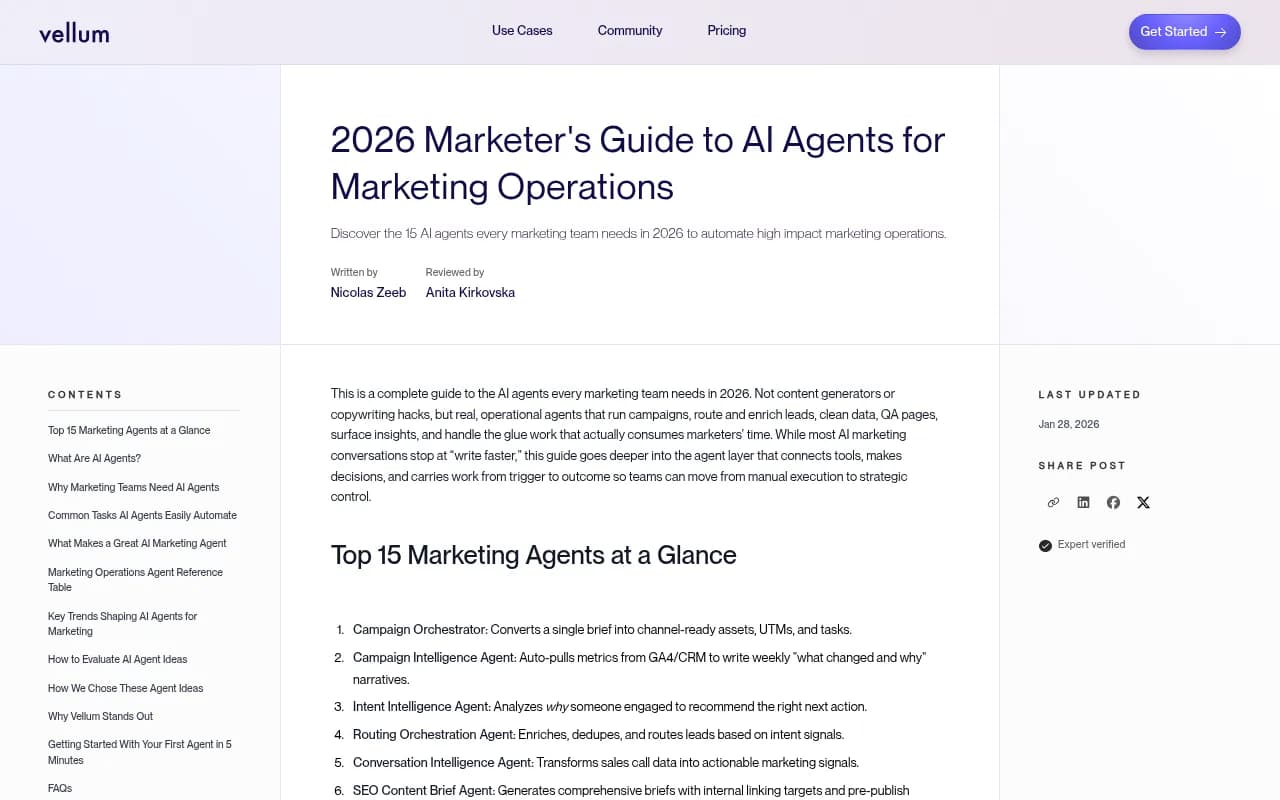
The Manual Way: Marketing teams guess which prompts matter, manually test a handful, and have no idea if their optimization efforts are working until weeks or months later.
The API Way: AI search APIs track specific prompts continuously, measuring your visibility score, citation frequency, and position in AI-generated answers over time.
Time Saved: 3-4 hours per week
How It Works:
- Define high-value prompts based on your business goals (product comparisons, category searches, problem-solution queries)
- API monitors these prompts across multiple AI engines on a schedule
- Visibility metrics (citation count, position, context) are tracked over time
- Dashboards show which optimizations moved the needle and which didn't
Real-World Example: An e-commerce brand tracking 200 product-related prompts can see exactly when new content starts getting cited by ChatGPT, which AI engines prefer which content formats, and how visibility correlates with traffic spikes.
This is where tools like Otterly.AI and Promptwatch differentiate themselves—not just showing you data, but connecting visibility to actual business outcomes.
Otterly.AI

4. Automated Citation Source Analysis
The Manual Way: Manually clicking through AI-generated citations, documenting which websites AI engines prefer, and trying to reverse-engineer why certain sources get cited more often.
The API Way: AI search APIs automatically extract and analyze citation patterns, showing you exactly which domains, content types, and structural elements drive AI visibility.
Time Saved: 5-6 hours per week
How It Works:
- API captures full AI responses including all citations and source links
- Citation data is aggregated across hundreds or thousands of queries
- Analysis reveals patterns: which domains dominate, which content formats get cited, which structural elements (lists, tables, quotes) AI engines prefer
- Insights feed directly into content optimization guidelines
Why This Matters: Understanding citation patterns is the difference between guessing at optimization and engineering content that AI engines want to cite. If Reddit threads consistently get cited for your category, that's actionable intelligence.
Platforms like Profound and Promptwatch include citation analysis in their APIs, with 880M+ citations analyzed to identify what works.
Profound

5. Multi-Language and Multi-Region Monitoring
The Manual Way: If you operate in multiple markets, manually testing prompts in different languages and regions is nearly impossible at scale. Most teams just monitor English and hope for the best.
The API Way: AI search APIs can query AI engines in any language, from any geographic location, with persona-specific contexts—all automated.
Time Saved: 10-12 hours per week (for multi-market teams)
How It Works:
- Configure API to test prompts in multiple languages (Spanish, French, German, Japanese, etc.)
- Set geographic contexts to see how AI responses vary by region
- Define personas (B2B buyer, consumer, technical user) to understand how AI tailors answers
- Aggregate data to identify market-specific opportunities and risks
Real-World Example: A global SaaS company discovers that ChatGPT recommends different competitors in Germany vs. the US for the same product category. Without API-driven monitoring, they'd never know.
This capability is particularly strong in platforms like Promptwatch, which support multi-language, multi-region tracking with customizable personas.
6. AI Crawler Log Analysis and Indexing Optimization
The Manual Way: Most teams have no idea which AI crawlers are visiting their site, what pages they're reading, or if they're encountering errors. Server logs are cryptic and require developer time to analyze.
The API Way: AI search APIs that include crawler log analysis automatically parse server logs, identify AI crawler activity (ChatGPT, Claude, Perplexity bots), and surface indexing issues.
Time Saved: 2-3 hours per week
How It Works:
- API connects to your server logs or uses a lightweight tracking snippet
- AI crawler activity is extracted and categorized (which bots, which pages, how often, errors encountered)
- Insights show which content AI engines are discovering vs. ignoring
- Alerts trigger when crawlers encounter errors or stop visiting important pages
Why This Matters: If AI engines can't crawl your content, you won't appear in their answers—no matter how good your content is. Crawler log analysis is foundational for AI search visibility.
Promptwatch is one of the few platforms offering real-time AI crawler logs as part of their API suite, giving teams visibility into how AI engines discover their content.
7. Automated Content Optimization Recommendations
The Manual Way: Content teams manually review AI search results, guess at what's missing, and create optimization tickets based on intuition rather than data.
The API Way: AI search APIs analyze your content against what's actually getting cited, then generate specific optimization recommendations (add this section, restructure this heading, include this data point).
Time Saved: 6-8 hours per week
How It Works:
- API compares your existing content to competitor content that's getting cited
- Natural language processing identifies structural and topical gaps
- Recommendations are generated automatically: "Add a comparison table", "Include pricing information", "Expand the use cases section"
- Suggestions are prioritized by potential impact
Real-World Example: A B2B software company's product page isn't getting cited by ChatGPT. API analysis reveals that cited competitors all include detailed pricing breakdowns and ROI calculators. Adding these elements results in citations within 2 weeks.
This is where platforms like Promptwatch go beyond monitoring—they tell you what to fix, not just what's broken.
8. Integrated Workflow Automation with Existing Tools
The Manual Way: Data from AI search monitoring lives in one tool, content planning happens in another, analytics in a third. Connecting the dots requires manual exports, spreadsheets, and meetings.
The API Way: AI search APIs integrate directly with your existing marketing stack—CMS, project management, analytics, CRM—creating automated workflows that eliminate context switching.
Time Saved: 4-5 hours per week
How It Works:
- API sends AI visibility data to your analytics platform (Google Analytics, Mixpanel, Amplitude)
- Content gap findings automatically create tasks in project management tools (Asana, Monday, Jira)
- Citation data feeds into your CMS to inform content updates
- Visibility changes trigger alerts in Slack or email
Integration Examples:
- Zapier/Make workflows: When a competitor gains visibility for a key prompt, automatically create a content brief in Notion and assign it to a writer
- Looker Studio dashboards: Combine AI visibility metrics with traditional SEO and traffic data for unified reporting
- CRM enrichment: Tag accounts in HubSpot or Salesforce based on whether they're visible in AI search for relevant prompts
Platforms like Promptwatch offer robust API documentation and pre-built integrations, making it easy to connect AI search data to your existing workflows.
9. Prompt Volume and Difficulty Scoring
The Manual Way: Content teams prioritize topics based on traditional keyword volume, which has little correlation with AI search importance. High-volume keywords might never be asked as AI prompts.
The API Way: AI search APIs estimate prompt volume (how often people ask this question to AI engines) and difficulty scores (how hard it is to get cited), enabling data-driven prioritization.
Time Saved: 3-4 hours per week
How It Works:
- API analyzes prompt patterns across millions of queries to estimate volume
- Difficulty scoring considers factors like domain authority of cited sources, content depth required, and competitive intensity
- Prompts are ranked by opportunity score (high volume, low difficulty = quick wins)
- Prioritization data feeds into content planning workflows
Real-World Example: A fintech company discovers that "best business credit cards for startups" has 10x the AI prompt volume of the traditional keyword they were targeting. Shifting focus results in 3x more AI-driven traffic.
This intelligence is particularly valuable in platforms like Promptwatch, which combine prompt volume data with query fan-outs showing how one prompt branches into sub-queries.
10. Attribution and ROI Measurement
The Manual Way: Marketing teams can see AI visibility improving but can't connect it to actual traffic or revenue. Proving ROI for AI search optimization is nearly impossible without custom engineering.
The API Way: AI search APIs that include traffic attribution can track visitors coming from AI engines, connect them to specific prompts, and measure conversion impact.
Time Saved: 2-3 hours per week (plus proving ROI to leadership)
How It Works:
- Lightweight tracking code or server log analysis identifies visitors from AI search engines
- Referrer data connects visitors to specific AI engines (ChatGPT, Perplexity, Claude)
- Integration with analytics platforms enables conversion tracking
- ROI dashboards show which prompts drive revenue, not just visibility
Why This Matters: In 2026, 61% of marketers experienced buyer's remorse on tech purchases. The difference between tools that stick and tools that get cut? Provable ROI.
Platforms like Promptwatch close this loop with traffic attribution via code snippet, Google Search Console integration, or server log analysis—connecting visibility to revenue.
How to Get Started with AI Search APIs
If you're ready to reclaim 20+ hours per week and actually optimize for AI search (not just monitor it), here's the practical path forward:
1. Start with High-Impact Use Cases
Don't try to implement all 10 use cases at once. Pick the 2-3 that address your biggest pain points:
- If you're blind to competitors: Start with automated competitive intelligence (#1)
- If you're creating content that doesn't rank: Start with content gap analysis (#2) and citation source analysis (#4)
- If you can't prove ROI: Start with attribution and measurement (#10)
2. Choose a Platform Built for Action, Not Just Monitoring
Most AI search monitoring tools stop at showing you data. Look for platforms that:
- Provide robust APIs for automation
- Include content optimization recommendations, not just visibility scores
- Offer AI crawler log analysis to fix indexing issues
- Support traffic attribution to prove ROI
- Integrate with your existing marketing stack
Promptwatch is purpose-built for this action-oriented approach, combining monitoring, gap analysis, AI content generation, and optimization in one platform.
3. Integrate with Your Existing Workflows
The goal isn't to add another tool—it's to make your existing tools smarter:
- Connect AI visibility data to your analytics platform
- Automate content brief creation in your project management system
- Enrich your CRM with AI search visibility data
- Build custom dashboards that combine AI metrics with traditional SEO and traffic data
4. Measure and Iterate
Track time saved, visibility improvements, and traffic/revenue impact. The teams seeing 20+ hours saved per week didn't get there overnight—they started with one use case, proved value, then expanded.
The Bottom Line
Marketing teams in 2026 don't need more AI tools—they need smarter automation. AI search APIs represent a fundamental shift from manual monitoring to automated intelligence, from dashboards you check to systems that work while you sleep.
The 10 use cases above aren't theoretical—they're how leading teams are already working. The question isn't whether AI search APIs can save you 20+ hours per week. It's whether you can afford to keep doing this work manually while your competitors automate.
If you're ready to stop feeding the algorithm and start optimizing for it, explore platforms like Promptwatch that combine monitoring, analysis, content generation, and optimization in one API-driven system.
The future of marketing isn't more tools—it's better automation. Start with one use case, prove the value, and scale from there. Your team (and your calendar) will thank you.