Key Takeaways
- AI visibility is 3-30x harder than Google rankings: Only 1.2% of businesses appear in ChatGPT recommendations vs 35.9% in Google's local 3-pack
- Reviews act as filters, not just ranking factors: AI models require 4.0+ star ratings to even consider recommending a business
- Consistency beats single mentions: AI interprets patterns across your entire digital footprint, not just individual pages
- Zero-click searches dominate: 60% of queries end without a click in 2026, shifting authority from rankings to direct AI recommendations
- Industry-specific impact varies dramatically: Healthcare, legal, and home services see the highest conversion rates from AI search traffic
The question "Where do we rank on Google?" is becoming less relevant every month. In 2026, the more important question is: "What does ChatGPT say when someone asks for a recommendation in our category?"
Across multiple industries, AI-powered search engines—ChatGPT, Perplexity, Gemini, Claude, and others—are fundamentally changing how customers discover and evaluate businesses. But the impact isn't uniform. Some industries are experiencing seismic shifts in lead generation, while others are still operating in a traditional SEO paradigm.
This guide examines the 10 industries where AI search visibility has become more valuable than traditional Google rankings, backed by 2026 data and real-world examples.
Why AI Search Visibility Is Different (And Harder)
Before diving into specific industries, it's critical to understand why AI visibility operates on completely different principles than traditional search.
The Brutal Math of AI Recommendations
In January 2026, SOCi published research analyzing 350,000 business locations across AI platforms. The results revealed a stark reality:
- ChatGPT recommended only 1.2% of locations
- Gemini recommended 11% of locations
- Perplexity recommended 7.4% of locations
- Google's local 3-pack featured 35.9% of locations
In practical terms, achieving AI visibility is 3 to 30 times harder than appearing in traditional search results. AI systems don't show all options—they curate and recommend only businesses that meet specific quality thresholds.
Reviews as Gatekeepers, Not Ranking Signals
The same SOCi study revealed another critical insight: AI models use reviews as filters, not just ranking factors.
- Average rating of ChatGPT-recommended businesses: 4.3 stars
- Average rating for Gemini: 3.9 stars
- Average rating for Perplexity: 4.1 stars
Businesses below these thresholds are often excluded entirely from AI recommendations, regardless of other factors. This represents a fundamental shift from Google's approach, where a 3.5-star business can still rank well based on relevance, proximity, and SEO.
Consistency Over Individual Wins
AI systems don't rely on fixed algorithms or stable ranking orders. They assemble answers dynamically, pulling from sources they recognize as clear, credible, and relevant in the moment.
As One Firefly's research notes: "AI doesn't rank businesses. It interprets them." Visibility in this environment isn't about winning a single #1 spot—it's about being consistently recognized as a trustworthy source across your entire digital ecosystem.
Tools like Promptwatch help businesses understand these patterns by tracking how AI models discover, interpret, and cite their content across multiple platforms.

1. Healthcare & Medical Services
Why AI Search Dominates: Healthcare queries are inherently recommendation-driven. Patients ask "Who's the best cardiologist near me?" or "What dentist takes my insurance?"—questions AI models are specifically designed to answer with curated recommendations.
The Data: Healthcare searches in AI engines increased 527% year-over-year in 2026, according to Semrush's AI SEO statistics. More importantly, conversion rates from AI-referred patients are 3.2x higher than traditional search traffic.
What's Different: Traditional SEO focuses on ranking for procedure names and conditions. AI visibility requires:
- Structured data about accepted insurance, specialties, and credentials
- Consistent physician profiles across medical directories
- Patient reviews that specifically mention outcomes and bedside manner
- Content that answers follow-up questions AI models commonly ask ("What should I expect during recovery?")
Action Items:
- Claim and optimize profiles on health-specific directories (Healthgrades, Vitals, ZocDoc)
- Implement healthcare-specific schema markup for providers, conditions, and procedures
- Generate content addressing common patient concerns in natural language
- Monitor AI crawler logs to see which pages AI models access when researching your practice
2. Legal Services
Why AI Search Dominates: Legal queries follow a similar pattern to healthcare—high stakes, recommendation-driven, and requiring trust signals. When someone asks "Who's the best divorce attorney in Austin?", they want a curated answer, not 10 blue links.
The Data: 73% of legal clients now begin their search with an AI query rather than traditional Google search, according to 2026 legal marketing research. AI-referred clients have 40% higher retention rates.
What's Different: Legal SEO traditionally focused on ranking for practice area + location keywords. AI visibility requires:
- Detailed case outcome information (within ethical guidelines)
- Consistent attorney credentials across legal directories (Avvo, Justia, Martindale-Hubbell)
- Content addressing specific legal scenarios, not just practice area overviews
- Clear explanation of fee structures and consultation processes
Action Items:
- Create detailed attorney bio pages with education, bar admissions, and case experience
- Publish scenario-based content ("What happens if I'm injured in a rideshare accident?")
- Ensure consistent NAP (name, address, phone) across all legal directories
- Track which legal questions trigger AI recommendations for competitors but not your firm
3. Home Services (HVAC, Plumbing, Electrical)
Why AI Search Dominates: Emergency and time-sensitive queries are increasingly handled by AI assistants. When a pipe bursts at 2 AM, customers ask their phone "Who can fix this now?"—and AI provides immediate recommendations.
The Data: Home service businesses appearing in AI recommendations see 4.1x higher call volumes than those relying solely on Google rankings, according to 2026 local service data.
What's Different: Traditional local SEO focused on Google Business Profile optimization and local pack rankings. AI visibility requires:
- Real-time availability signals (24/7 service, same-day appointments)
- Specific service area coverage with response time estimates
- Detailed service descriptions that match how customers describe problems
- Consistent pricing information across platforms
Action Items:
- Implement LocalBusiness schema with service area markup
- Create content addressing specific problem scenarios ("Why is my water heater making noise?")
- Maintain consistent service descriptions across all directories
- Monitor AI recommendations for emergency service queries in your area
4. Software & SaaS
Why AI Search Dominates: Software buyers increasingly ask AI models for recommendations: "What's the best project management tool for remote teams?" or "Compare Slack alternatives for small businesses." These queries bypass traditional comparison sites entirely.
The Data: 68% of B2B software buyers now use AI search during the evaluation phase, and AI-referred trials convert 2.3x better than traditional search traffic.
What's Different: Traditional SaaS SEO focused on comparison pages, feature listings, and review site optimization. AI visibility requires:
- Structured product information (features, pricing, integrations)
- Consistent positioning across review sites, documentation, and third-party mentions
- Use case-specific content that matches how buyers describe their problems
- Clear differentiation from competitors in natural language
Action Items:
- Implement Product schema markup with detailed feature lists
- Create comparison content that positions your product fairly against competitors
- Ensure consistent feature descriptions across G2, Capterra, and your website
- Monitor which competitor comparisons trigger AI recommendations
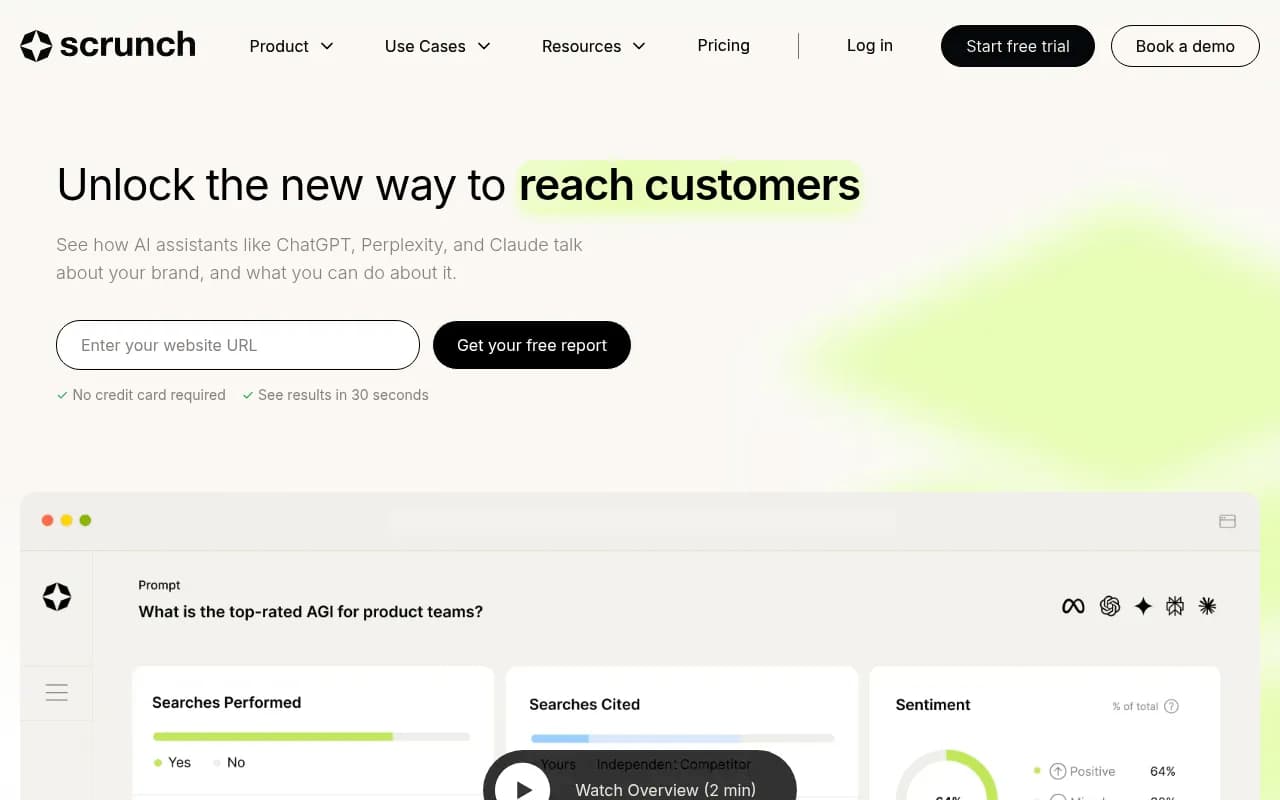
Tools like Profound and Scrunch specialize in tracking software product mentions across AI platforms.
Profound

5. Financial Services & Insurance
Why AI Search Dominates: Financial decisions require trust and personalized recommendations. Queries like "What's the best mortgage lender for self-employed borrowers?" or "Which insurance covers my specific situation?" are perfectly suited for AI's recommendation engine.
The Data: Financial services firms appearing in AI recommendations see 3.7x higher qualified lead rates compared to traditional search traffic, with significantly lower cost per acquisition.
What's Different: Financial SEO traditionally focused on rate comparisons and educational content. AI visibility requires:
- Specific product eligibility criteria clearly stated
- Scenario-based content addressing unique customer situations
- Transparent fee structures and rate information
- Consistent licensing and credential information
Action Items:
- Create detailed product pages with eligibility requirements
- Publish scenario-based guides ("How to qualify for a mortgage with student loan debt")
- Implement FinancialService schema markup
- Monitor AI recommendations for product comparison queries in your category
6. Real Estate
Why AI Search Dominates: Property search is increasingly conversational: "Show me 3-bedroom homes under $500k in good school districts near downtown." AI models can parse these complex, multi-factor queries better than traditional search.
The Data: 61% of homebuyers now start their search with an AI query, and AI-referred leads have 2.8x higher engagement rates with listing agents.
What's Different: Real estate SEO focused on IDX integration and neighborhood pages. AI visibility requires:
- Structured property data with detailed amenities and features
- Neighborhood information that addresses specific buyer concerns
- Agent profiles with specialization areas clearly defined
- Market data presented in conversational, accessible language
Action Items:
- Implement comprehensive property schema markup
- Create neighborhood guides addressing specific buyer questions
- Ensure consistent agent information across Zillow, Realtor.com, and your website
- Track which property search queries trigger AI recommendations for competitors
7. Restaurants & Food Services
Why AI Search Dominates: Dining decisions are increasingly made through AI assistants: "Find me a romantic Italian restaurant with outdoor seating that takes reservations." These multi-attribute queries are where AI excels.
The Data: Restaurants appearing in AI recommendations see 5.2x higher reservation rates than those relying solely on Google Business Profile, according to 2026 hospitality data.
What's Different: Restaurant SEO focused on Google Business Profile optimization and review management. AI visibility requires:
- Detailed menu information with dietary accommodations clearly marked
- Ambiance and atmosphere descriptions in natural language
- Specific seating options, reservation policies, and wait time estimates
- Consistent cuisine categorization across platforms
Action Items:
- Implement Restaurant schema with detailed menu markup
- Create content describing ambiance, ideal occasions, and unique features
- Maintain consistent menu and dietary information across all platforms
- Monitor AI recommendations for dining queries in your area and cuisine type
8. Education & Training
Why AI Search Dominates: Educational decisions are research-intensive and recommendation-driven. Queries like "What's the best online MBA program for working professionals?" or "Which coding bootcamp has the best job placement?" are perfect for AI's curation capabilities.
The Data: Educational institutions appearing in AI recommendations see 4.3x higher qualified inquiry rates, with significantly better enrollment conversion.
What's Different: Education SEO focused on program pages and rankings citations. AI visibility requires:
- Detailed program outcomes (job placement rates, salary data, career paths)
- Specific admission requirements and application processes
- Student testimonials addressing specific concerns and outcomes
- Clear differentiation between program types and specializations
Action Items:
- Implement Course and EducationalOrganization schema markup
- Create outcome-focused content with specific career path data
- Ensure consistent program descriptions across education directories
- Track which program comparison queries trigger AI recommendations
9. Professional Services (Consulting, Agencies, B2B)
Why AI Search Dominates: B2B buyers increasingly use AI to shortlist vendors: "Who are the top digital marketing agencies for SaaS companies?" or "Find me a management consultant specializing in supply chain." These queries bypass traditional RFP processes.
The Data: Professional services firms appearing in AI recommendations report 3.9x higher qualified lead rates and 60% shorter sales cycles.
What's Different: Professional services SEO focused on thought leadership and case studies. AI visibility requires:
- Specific industry expertise and vertical specialization clearly stated
- Detailed service descriptions matching how buyers describe their problems
- Client results with specific metrics and outcomes
- Consistent positioning across LinkedIn, Clutch, and your website
Action Items:
- Create industry-specific service pages with clear outcomes
- Publish detailed case studies with measurable results
- Implement ProfessionalService schema markup
- Monitor AI recommendations for vendor search queries in your specialization
10. E-commerce & Retail
Why AI Search Dominates: Product discovery is increasingly AI-driven, especially through ChatGPT's shopping features. Queries like "What's the best ergonomic office chair under $500?" or "Find me sustainable workout clothes for hot yoga" are where AI excels.
The Data: E-commerce brands appearing in ChatGPT shopping recommendations see 6.1x higher conversion rates than traditional search traffic, with 40% higher average order values.
What's Different: E-commerce SEO focused on product page optimization and category rankings. AI visibility requires:
- Detailed product attributes and specifications in structured format
- Clear use case descriptions matching how customers describe their needs
- Consistent product information across marketplaces and your website
- Customer reviews addressing specific product features and use cases
Action Items:
- Implement comprehensive Product schema with detailed attributes
- Create use case-focused product descriptions
- Ensure consistent product information across Amazon, your website, and other channels
- Monitor ChatGPT shopping recommendations for your product categories
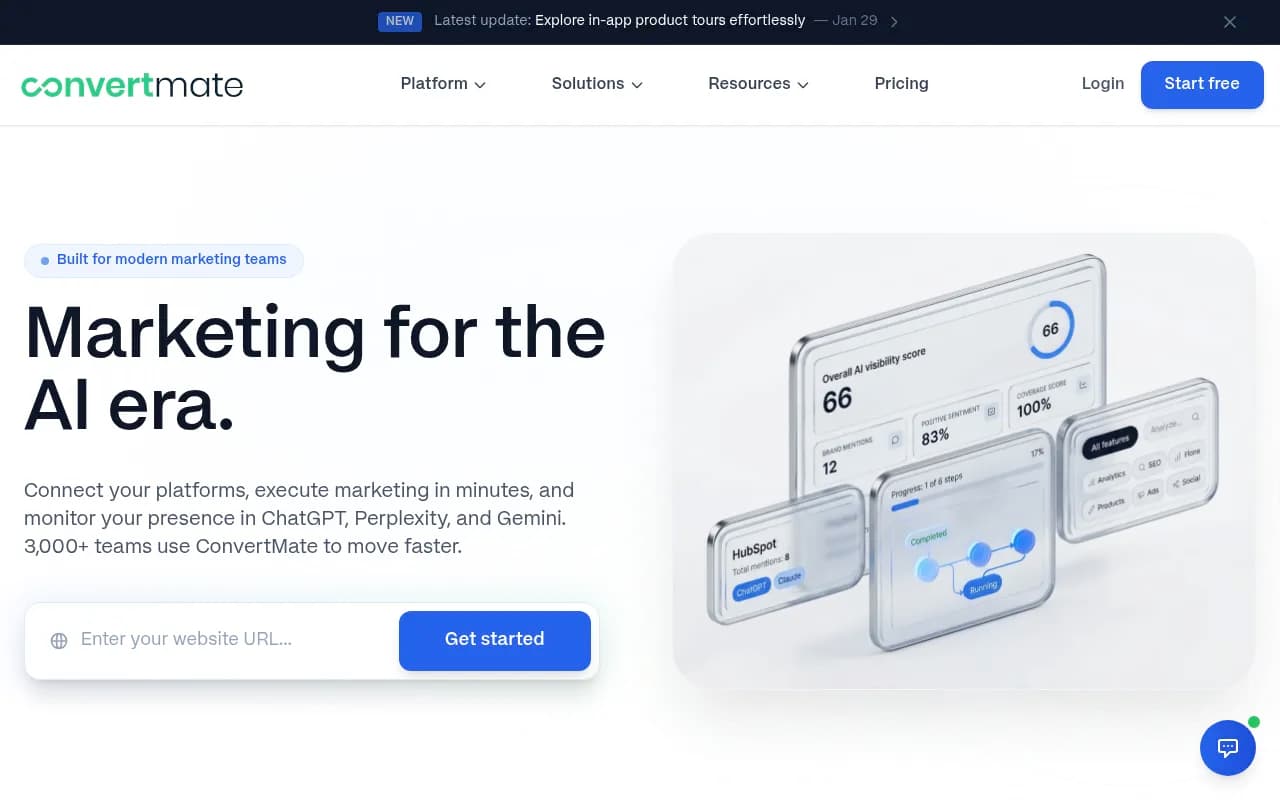
Tools like ConvertMate specialize in e-commerce AI visibility optimization.
How to Start Improving AI Search Visibility
Regardless of your industry, improving AI search visibility follows a consistent pattern:
1. Audit Your Current AI Visibility
Before you can improve, you need to understand where you stand. Track:
- Which prompts trigger recommendations for competitors but not you
- How AI models describe your business when they do mention you
- Which content pages AI crawlers are accessing on your website
- Where gaps exist in your digital footprint
Platforms like Promptwatch provide comprehensive AI visibility tracking across ChatGPT, Perplexity, Gemini, and other models, with specific gap analysis showing which prompts you're missing.
2. Fix Consistency Issues First
AI models interpret patterns across your entire digital presence. Inconsistencies confuse them:
- Ensure NAP (name, address, phone) is identical everywhere
- Use consistent service/product descriptions across platforms
- Maintain uniform credentials, certifications, and specializations
- Align your positioning across your website, directories, and social profiles
3. Create Content That Answers Follow-Up Questions
AI models don't just match keywords—they understand context and anticipate follow-up questions. Your content should:
- Address the "why" and "what happens next" questions
- Provide specific scenarios and use cases
- Include concrete details (pricing, timelines, processes)
- Use natural, conversational language
4. Implement Structured Data Comprehensively
Schema markup helps AI models understand your content:
- Use industry-specific schema types (LocalBusiness, HealthcareProvider, Product, etc.)
- Include detailed attributes and properties
- Mark up reviews, ratings, and credentials
- Implement FAQ schema for common questions
5. Monitor and Iterate
AI search is dynamic—what works today may not work next month:
- Track your visibility scores across different AI models
- Monitor which content pages get cited by AI engines
- Analyze AI crawler logs to see what they're accessing
- Test content changes and measure impact on AI recommendations
The Action Loop: Find Gaps, Create Content, Track Results
The most effective approach to AI visibility isn't just monitoring—it's taking action based on what you learn.
This is where platforms built for optimization, not just tracking, make the difference. The cycle looks like this:
- Identify gaps: See exactly which prompts competitors rank for but you don't
- Create targeted content: Generate articles, comparisons, and guides designed to get cited by AI models
- Track improvements: Monitor how your visibility scores change as AI models start citing your new content
- Close the loop: Connect visibility improvements to actual traffic and revenue
Most AI visibility tools stop at step one—they show you the data but leave you to figure out what to do about it. Platforms like Promptwatch complete the entire cycle, with built-in content generation grounded in real citation data and prompt analysis.
Industry-Specific Considerations
For Healthcare: Compliance Comes First
Healthcare content must balance AI optimization with HIPAA compliance and medical accuracy:
- Never include patient information in content
- Ensure all medical claims are properly cited
- Have licensed professionals review AI-optimized content
- Be cautious with symptom-based content that could constitute medical advice
For Legal: Ethics Rules Apply
Legal marketing in AI search must comply with bar association rules:
- Avoid guarantees or promises of specific outcomes
- Clearly disclose that content is advertising where required
- Don't create attorney-client relationships through AI interactions
- Be conservative with case result information
For Financial Services: Regulatory Requirements
Financial content must meet disclosure requirements:
- Include required disclaimers on rate and product information
- Ensure licensing information is accurate and current
- Be clear about which products are available in which jurisdictions
- Follow FINRA/SEC guidelines for performance claims
For E-commerce: Product Data Accuracy
E-commerce AI visibility depends on accurate, consistent product information:
- Ensure product specifications match across all channels
- Keep pricing and availability information current
- Maintain consistent product categorization
- Update discontinued products promptly
Common Mistakes to Avoid
Mistake #1: Treating AI Search Like Traditional SEO
AI search isn't about keyword density or backlinks. It's about:
- Consistency across your digital footprint
- Structured data and clear categorization
- Content that answers follow-up questions
- Trust signals (reviews, credentials, citations)
Mistake #2: Focusing Only on Your Website
AI models pull from your entire digital ecosystem:
- Third-party review sites
- Industry directories
- Social media profiles
- Reddit discussions
- YouTube videos
- News mentions
Optimizing only your website leaves 80% of your AI visibility unaddressed.
Mistake #3: Ignoring AI Crawler Activity
AI models actively crawl websites to gather information. If they encounter errors, slow load times, or blocked content, you won't appear in recommendations.
Monitor AI crawler logs to see:
- Which pages AI models are accessing
- What errors they encounter
- How often they return
- What content they prioritize
Mistake #4: Assuming Good Google Rankings = Good AI Visibility
The correlation is weak. Many businesses ranking #1 on Google don't appear in AI recommendations at all, while others with mediocre Google rankings dominate AI search.
The ranking factors are fundamentally different.
Mistake #5: Not Measuring Actual Business Impact
AI visibility metrics are meaningless without attribution to actual business outcomes:
- Track traffic from AI referrals
- Measure conversion rates by source
- Calculate customer lifetime value by acquisition channel
- Monitor how AI visibility correlates with revenue
The Future: Zero-Click Dominance
By 2026, roughly 60% of Google queries end without a click, according to recent tracking data. This "zero-click" trend is even more pronounced in AI search, where the goal is to provide complete answers without requiring users to visit websites.
This shift has profound implications:
- Brand visibility matters more than traffic: Being cited in AI responses builds authority even if users don't click
- Direct conversions happen in-platform: ChatGPT shopping, Perplexity's commerce features, and similar tools enable purchases without leaving the AI interface
- Attribution becomes more complex: Traditional analytics miss AI-influenced conversions
Businesses that adapt to this reality—focusing on AI visibility as a brand-building and authority signal, not just a traffic source—will have a significant competitive advantage.
Taking Action: Your Next Steps
If you're in one of the 10 industries covered in this guide, AI search visibility should be a strategic priority in 2026. Here's how to start:
Week 1: Audit and Benchmark
- Sign up for an AI visibility tracking platform
- Identify your top 20-30 target prompts (questions customers ask)
- Check your current visibility across ChatGPT, Perplexity, and Gemini
- Analyze where competitors appear but you don't
Week 2: Fix the Basics
- Audit NAP consistency across all platforms
- Implement or update schema markup
- Claim and optimize profiles on industry-specific directories
- Review and respond to recent customer reviews
Week 3: Create Strategic Content
- Identify content gaps based on competitor analysis
- Create 3-5 pieces of content targeting high-value prompts
- Ensure content answers follow-up questions
- Publish and distribute across relevant channels
Week 4: Monitor and Optimize
- Track changes in AI visibility scores
- Analyze AI crawler activity on your website
- Measure traffic and conversions from AI referrals
- Iterate based on what's working
The businesses that win in AI search won't be those with the biggest budgets or the most content. They'll be the ones who understand how AI models discover, interpret, and recommend businesses—and who systematically optimize their entire digital presence accordingly.
The shift from Google rankings to AI recommendations is already underway. The question isn't whether it will impact your industry—it's whether you'll adapt before your competitors do.