Key takeaways
- Brandlight is enterprise-only: no public pricing, no free trial, and onboarding starts with a paid 3-month pilot. That model makes sense for Volkswagen and LG, not for a seed-stage SaaS.
- You can get legitimate AI visibility tracking for $20–$100/month. Otterly.ai starts at $29, LLM Pulse at €49, AI Peekaboo at $50, Peec AI at ~$95, and Promptwatch has a free tier plus a $95/mo plan.
- Citation share moves fast. Reddit's share of ChatGPT citations dropped roughly 86% in a matter of days in August 2026, per Promptwatch's data. Quarterly enterprise audits miss that entirely; cheap tools with daily monitoring catch it.
- The most common startup mistake is buying an enterprise analytics platform before having anything to optimize. Start with a free report or trial, confirm a gap, then upgrade.
- Measurement, diagnosis, and action are three different jobs. Most budget tools only do the first one, which is fine at the start, but know what you're buying.
Why startups look beyond Brandlight in the first place
Let's be fair to Brandlight before we dump on it. It's a polished platform with a $30M Series A behind it, used by Fortune 500 brands. It tracks mentions across ChatGPT, Gemini, Perplexity, Copilot, and Grok, layers in sentiment and citation analysis, and offers a multi-brand command center for global CMOs. If you run marketing for a company with 40 brands across 12 markets, that's a real product.
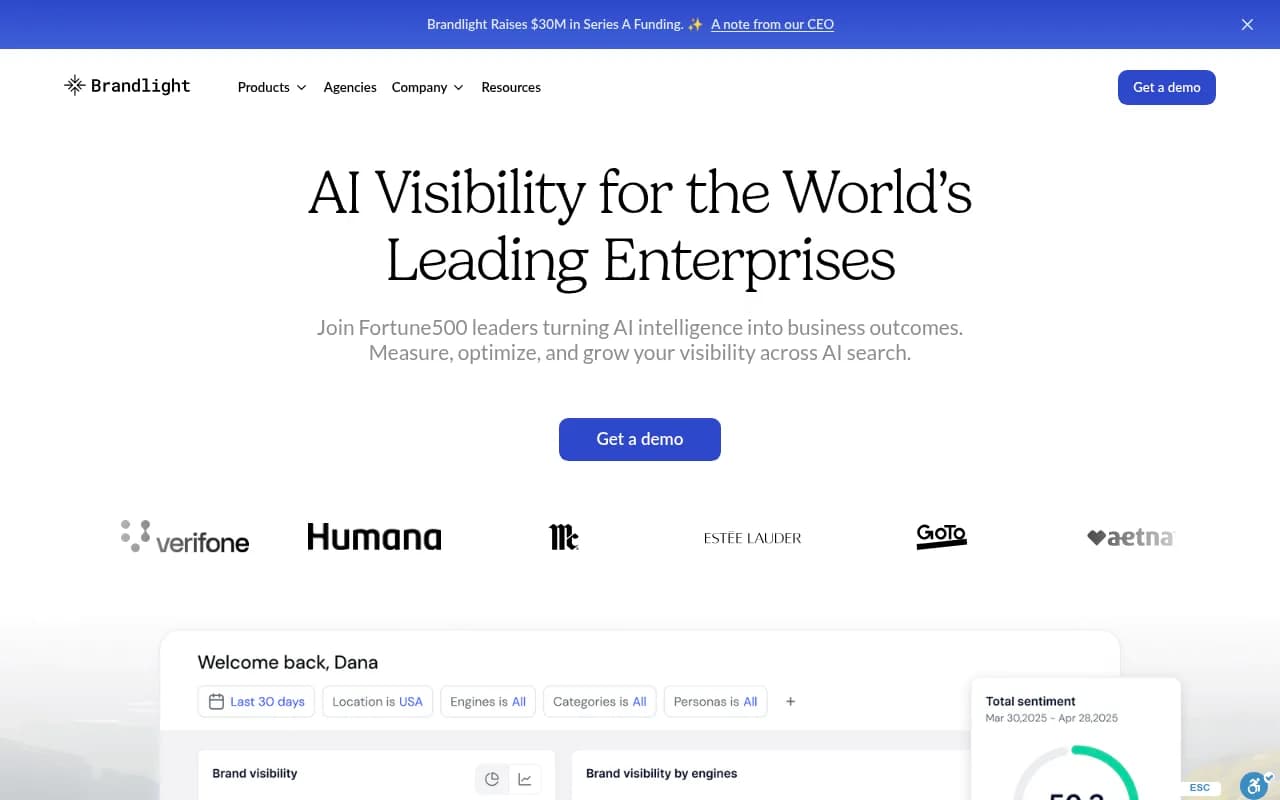
The problem is everything around the product. There's no published pricing, so every conversation starts with a sales call. There's no free trial; instead, prospects are funneled into a paid three-month pilot. Independent coverage pegs entry pricing around $199/month at the absolute floor, with enterprise contracts reportedly running into four or five figures monthly. One comparison piece from LLM Pulse put the range at $4K–$15K/mo for enterprise deals, and while that's a competitor's estimate, the fact that nobody outside a sales call knows the real number is itself the problem.
For a startup, this friction isn't a minor annoyance. It's a disqualifier. You need to know what a tool costs, try it this week, and cancel it next month if it doesn't earn its keep.
There's also a strategic reason startups need a different kind of tool. AI search is volatile in a way Google never was. Promptwatch's data on Reddit citations in ChatGPT shows reddit.com's citation share collapsing from roughly 3.8% to 0.5% within days in August 2026, an 86% relative drop tied to changes in how ChatGPT Search builds its queries. Google's AI Overviews, by contrast, declined only gradually over the same window. What that means practically: a visibility strategy built on one source can break overnight, and a tool that checks your prompts daily for $50/month will tell you about it long before a quarterly enterprise review does.
Quick comparison
| Tool | Starting price | Free option | Public pricing | Best for |
|---|---|---|---|---|
| Otterly.ai | $29/mo | 14-day trial | Yes | Solo founders and tiny teams |
| Promptwatch | Free tier; $95/mo | Free plan (10 prompts) | Yes | Startups that want tracking and content fixes |
| Peec AI | ~$95/mo (€89) | 7-day trial | Yes | Daily prompt tracking with crawlability audits |
| LLM Pulse | €49/mo | No | Yes | Self-serve simplicity, no sales calls |
| AI Peekaboo | $50/mo | Free one-time report | Yes | All five engines on the cheapest plan |
| Brandlight | Custom (contact sales) | Paid 3-month pilot | No | Multi-brand enterprises |
The five alternatives, in detail
1. Otterly.ai — the cheapest credible starting point
At $29/month (or $25 billed annually), Otterly is the tool I'd point a pre-seed founder to first. The Lite plan covers 15 search prompts across ChatGPT, Google AI Overviews, Perplexity, and Microsoft Copilot, with daily tracking and unlimited team members. The unlimited-seats thing matters more than people think; plenty of competitors charge per seat, and startup teams change shape weekly.
The trade-offs are real, though. Claude, Gemini, and AI Mode tracking are paid add-ons, and 15 prompts runs out fast once you start tracking competitor brand terms alongside your own. The Standard plan at $189/month fixes that with 100 prompts plus API access and agent analytics, but at that price you're shopping in a different category.
Best for: validating that AI visibility is worth budgeting for at all, before you've spent anything serious.
Otterly.AI

2. Promptwatch — tracking plus the ability to actually fix things
Here's the distinction that matters once you move past the "do we even show up in ChatGPT?" stage: most affordable tools are prompt trackers. They tell you whether you were mentioned. Promptwatch is built to answer the harder question, which is why you weren't mentioned, and then help you do something about it.
The free Explore plan covers 10 prompts on ChatGPT, which is enough to see the shape of the problem. The $95/month Essential plan adds all-LLM tracking, 50 prompts, 6,000 responses, and API/MCP access. What you get that Otterly and Peec don't offer at comparable prices: AI crawler logs showing when ChatGPTBot or ClaudeBot actually hit your pages and whether they hit errors, citation analytics showing which of your pages (and which Reddit posts and YouTube videos) AI systems are pulling from, visitor analytics tying AI traffic to actual conversions, and content gap analysis with automated content generation that can publish to WordPress, Webflow, or Framer.
For a startup, that last part closes the loop. A tracker tells you there's a gap; Promptwatch's Content Agents and Unified Actions give you a prioritized to-do list and can write the pages that fill it. It's used by 1,840+ brands and agencies and rated 4.7/5 on G2, and it monitors the real user interfaces of ChatGPT, Gemini, AI Overviews, AI Mode, Perplexity, and Claude rather than just API outputs, which matters because user-facing answers and API answers don't always match.
Best for: startups that have confirmed a visibility gap and want one tool to measure it, explain it, and fix it.

3. Peec AI — daily tracking with a technical conscience
Peec AI starts at €89/month (about $95, or $80/mo billed annually) for 50 prompts, three models of your choosing, unlimited users, and daily tracking. It's a clean, fast-setup tool that independent reviews consistently rank as the budget pick for SMBs, and the pricing scales sensibly: €205/mo for 150 prompts, €420/mo for 350 prompts and multi-country tracking.
Two features stand out for startups specifically. First, a crawlability audit covering 40+ AI bots, which catches the unglamorous problem of AI crawlers hitting robots.txt blocks or error pages before you waste months wondering why your content never gets cited. Second, a dedicated AI Shopping module with SKU-level tracking if you're in e-commerce, pulling your catalog from Shopify or Google Merchant Center.
The catch is that Peec is a monitoring tool. It'll show you the gap; it won't write the content that closes it.
Best for: e-commerce and SMB teams that want reliable daily numbers and a technical health check.

4. LLM Pulse — self-serve with zero sales friction
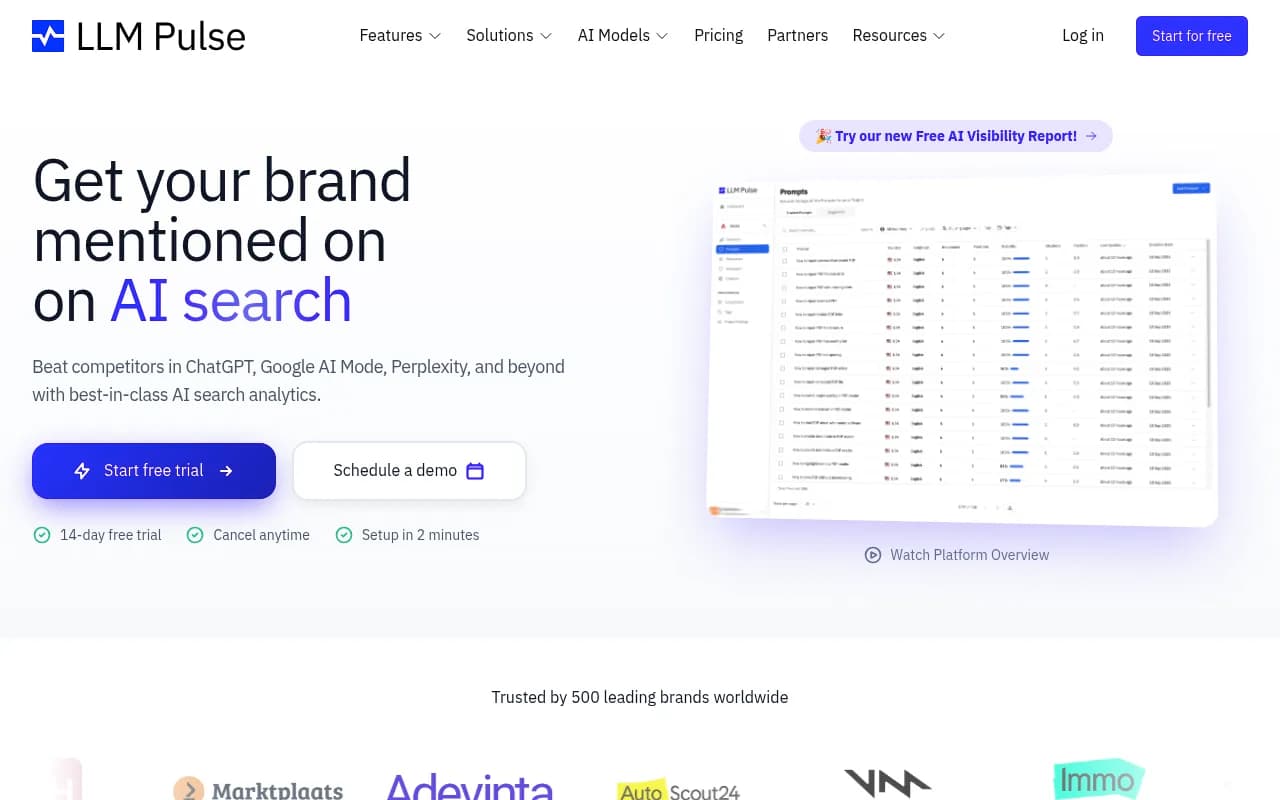
LLM Pulse has positioned itself deliberately as the anti-Brandlight: published prices, no sales call, sign up and go. The Starter plan is €49/month for 50 prompts across five standard models, with unlimited team members, citations, share of voice, exports, and MCP access. Growth (€99/mo, 150 prompts) and Scale (€299/mo, 450 prompts) round out the ladder.
Is it the deepest platform on this list? No. It's a monitoring tool with a clean interface and honest pricing. But that's exactly what a lot of startups need, and the unlimited-team-members policy across all plans is genuinely rare at this price. If your main complaint about Brandlight is the buying process rather than the product, LLM Pulse removes that friction entirely.
Best for: teams that want transparent self-serve pricing and five-model coverage without a single call with a sales rep.
5. AI Peekaboo — five engines on the entry plan, no add-on games
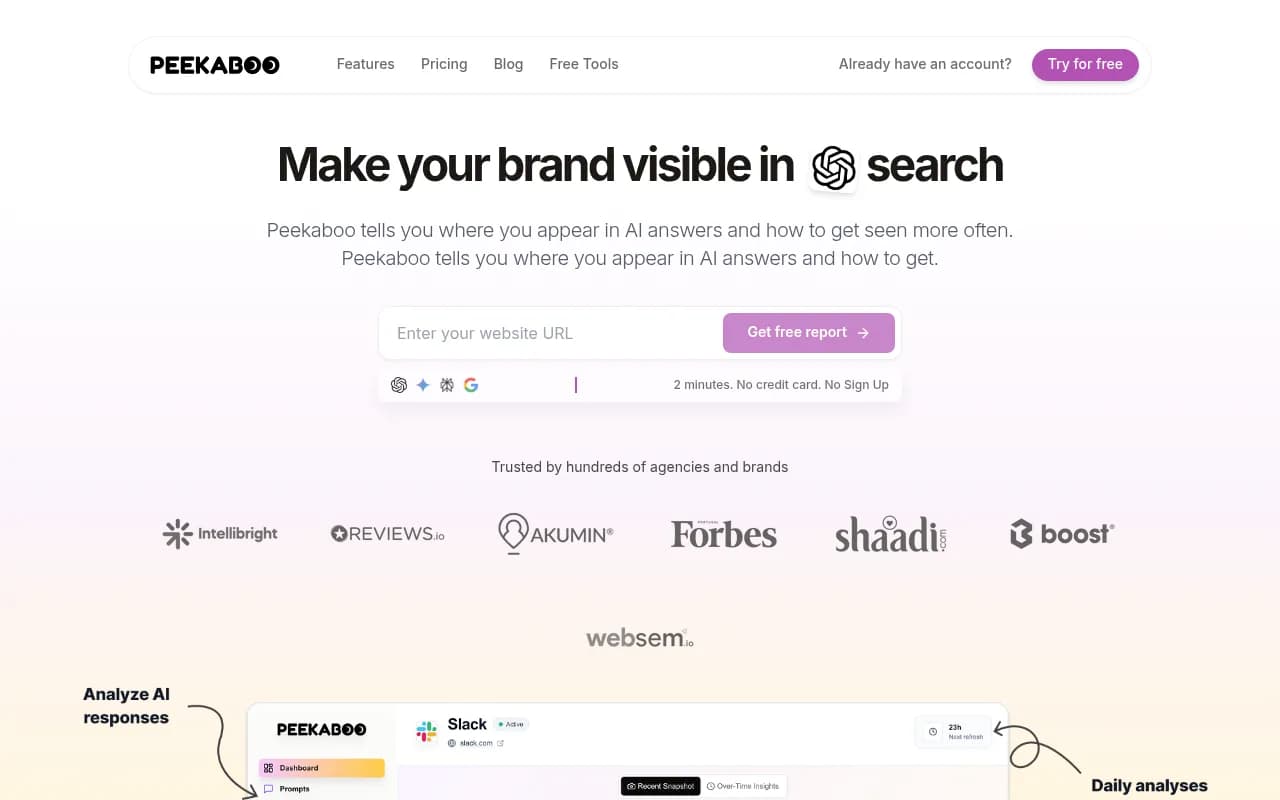
AI Peekaboo's pitch is simple and I respect it: the $50/month Starter plan includes all five engines, including Google AI Mode, with no add-ons required. That's the thing that annoys me most about budget AI visibility tools, the engine tiering where the engines you actually care about are locked behind upsells. Peekaboo doesn't play that game. There's also a free one-time report with no credit card, which makes it easy to sanity-check your visibility before paying anything.
The Grow plan at $200/month adds 100 prompts, daily runs, and a Looker Studio connector. At 40 prompts on the entry tier, you'll feel the cap if you track competitors seriously, but for a single-brand startup it's workable.
Best for: startups that specifically need Google AI Mode coverage without paying enterprise prices for it.
What the citation data says about how to choose
Pricing aside, the research on how AI answers actually get built should shape what you buy. A few findings worth internalizing:
ChatGPT cites roughly 5 sources per web-search-triggered response, per Promptwatch's average sources per response data, while Google AI Overviews and Perplexity sit near 10. Five slots is brutally competitive. "Pretty relevant" content misses the cut, which means tightly-scoped pages that fully answer one query beat broad, shallow content every time. A tool that shows you which specific prompts you're losing on is worth more than one that gives you a vague visibility score.
Content types are shifting fast, too. Promptwatch's July 2026 analysis of ChatGPT citation types found product pages are now the single most-cited format at roughly a third of all citations, nearly double their March share, with comparison pages and how-tos growing but still low-competition. For a startup with a thin content budget, that's a gift: your clean, well-structured product and pricing pages are now citation-worthy assets, and "X vs Y" comparison pages are cheap to produce and under-contested.
And the citation landscape is far less winner-take-all than Google. Promptwatch's ChatGPT citation share data for June 2026 shows no single domain holding more than about 4% of citations, with specialized sites like GitHub and Trustpilot gaining share as Reddit's dominance erodes. A startup domain genuinely can earn citations; it just needs to know which prompts to target, which is precisely the job these tools do.
How to choose without overbuying
A few rules of thumb, drawn from what actually goes wrong when startups buy these tools:
- Start free, then pay. Run a free report first (AI Peekaboo and Promptwatch both offer them; Otterly has a 14-day trial). Confirm you have a visibility gap worth fixing before you commit to anything. Analysis cited by OG Tool found fewer than 10% of sources cited in ChatGPT, Gemini, and Copilot rank in Google's top 10 for the same query, so ranking well on Google proves nothing about your AI presence. You need to check.
- Budget $20–$100/month to start. Independent analysis of the category suggests $79–$149/month is the realistic range once you scale past pure testing. Below that you're testing; above $300/month you'd better have a content team ready to act on the data.
- Don't buy an analytics platform before you have anything to optimize. This is the trap. An enterprise-grade dashboard with nobody producing content against it is an expensive screensaver.
- Match the tool to your stage. Validating? Otterly or a free report. Diagnosing and fixing? Promptwatch, because it's the only one on this list that both measures and executes. E-commerce? Peec AI. Just want numbers without a sales call? LLM Pulse. Need AI Mode specifically? AI Peekaboo.
- Watch for per-domain and per-seat pricing. Wellows, for instance, is $37/domain/month at entry, which multiplies fast if you run multiple sites. Peec, LLM Pulse, and Otterly include unlimited users, which startups should treat as table stakes.
If you want to browse the full category rather than just these five, the GEO software directory at bestgeosoftware.com has a broader catalog, and ai-rank-tools.com covers the rank-tracking side specifically.
FAQ
Is Brandlight a bad product?
No. It's a strong enterprise platform with real engineering behind it. It's just built and priced for a buyer that startups aren't: multi-brand enterprises with dedicated AI strategists and procurement departments. The paid pilot instead of a trial is the clearest signal of who it's for.
Can I just use Semrush or Ahrefs instead of a dedicated tool?
They've bolted on AI visibility features (Ahrefs Brand Radar, Semrush's AI toolkit), and they're fine if you already pay for the suite. But the AI-specific data tends to be shallow, prompt sets are fixed rather than custom, and neither offers AI crawler logs or AI traffic attribution. For AI search specifically, a dedicated tool will show you more for less.
What's the minimum I should track?
Your brand name, your two or three closest competitors' names, and your core category prompts ("best [your category] for [your use case]"). That's 10–20 prompts, which is why the free and entry tiers on this list are more useful than they look.
How often should I check?
Daily, if the tool supports it. The August 2026 Reddit citation collapse happened in under a week. Monthly checks would have caught it a month late; quarterly enterprise reviews would have caught it a quarter late, which in a channel moving this fast is the same as not catching it.