Key Takeaways
- AthenaHQ excels at e-commerce integration and prompt volume analysis with GA4 connectivity, but comes with premium pricing ($295/mo) and a credit system that can feel restrictive
- Conductor bridges traditional SEO with AI visibility tracking, ideal for teams already invested in SEO workflows, though it requires enterprise-level budgets and has a steeper learning curve
- Gauge offers the most complete toolkit combining monitoring, analytics, content recommendations, and audit capabilities, with transparent pricing starting at lower tiers than competitors
- All three platforms track major AI engines (ChatGPT, Perplexity, Claude, Gemini), but differ significantly in analytics depth, content optimization features, and ease of implementation
- For teams seeking an action-oriented alternative that goes beyond monitoring, Promptwatch provides content gap analysis, AI content generation, and crawler logs—capabilities most competitors lack

What Are Enterprise AI Visibility Platforms?
Enterprise AI visibility platforms help marketing and SEO teams track, measure, and optimize how their brand appears in answers generated by large language models like ChatGPT, Claude, Perplexity, and Google AI Overviews. Unlike traditional SEO tools that focus on search rankings, these platforms monitor the quality and frequency of brand mentions in AI-generated responses—the content users actually see when asking questions.
The enterprise segment of this market is defined by three core requirements:
- Scale: Ability to track hundreds or thousands of prompts across multiple brands, products, and regions
- Analytics depth: Granular data on citation sources, sentiment, competitor positioning, and prompt performance
- Integration: Connections to existing marketing stacks (Google Analytics, data warehouses, BI tools) and support for multi-team workflows
In 2026, three platforms have emerged as leaders in the enterprise space: AthenaHQ, Conductor, and Gauge. Each takes a different approach to solving the AI visibility problem.
AthenaHQ: E-Commerce Focus with Prompt Intelligence

AthenaHQ is built specifically for data-heavy teams that prioritize e-commerce integration and prompt volume analysis. The platform is designed to bridge the gap between traditional web analytics and AI search visibility, making it particularly attractive to retail brands and marketplaces.
Core Capabilities
Prompt Volume Analysis: AthenaHQ provides estimates of how often specific prompts are being asked across AI engines. This helps teams prioritize which queries to optimize for based on actual search volume, not guesswork. The platform surfaces high-volume, low-competition prompts—similar to traditional keyword research but adapted for conversational AI.
GA4 Integration: Direct connection to Google Analytics 4 allows teams to correlate AI visibility with website traffic and conversions. You can see which AI-sourced visits lead to purchases, sign-ups, or other goals. This closed-loop attribution is rare in the AI visibility space and makes AthenaHQ particularly valuable for performance marketing teams.
Brand Sentiment Tracking: Beyond simple mention counts, AthenaHQ analyzes the tone and context of how AI models describe your brand. Are you being recommended? Criticized? Positioned as a premium option or a budget alternative? This narrative analysis helps teams understand not just visibility but perception.
Multi-Engine Coverage: Tracks ChatGPT, Perplexity, Claude, Gemini, and Google AI Overviews. Coverage is broad but not the deepest in the market—some competitors track 10+ engines.
Pricing and Positioning
AthenaHQ starts at $295 per month for the Professional plan, which includes GA4 integration, sentiment analysis, and prompt volume data. This is premium pricing compared to monitoring-only tools, but justified by the analytics depth. The platform uses a credit system for prompt tracking, which some users find restrictive—you're allocated a set number of prompt checks per month, and overages cost extra.
Enterprise plans with custom pricing are available for teams managing multiple brands or requiring API access.
Best For
- E-commerce brands that need to tie AI visibility to revenue
- Marketing teams already using GA4 who want seamless integration
- Organizations that prioritize prompt intelligence and volume data over raw monitoring scale
Limitations
- Credit system can feel limiting for teams that want to experiment with many prompts
- Pricing is on the higher end for mid-market teams
- Some users report price increases after initial contracts
- Less focus on content optimization compared to platforms like Promptwatch, which includes AI content generation and gap analysis
Conductor: The SEO-to-AI Bridge
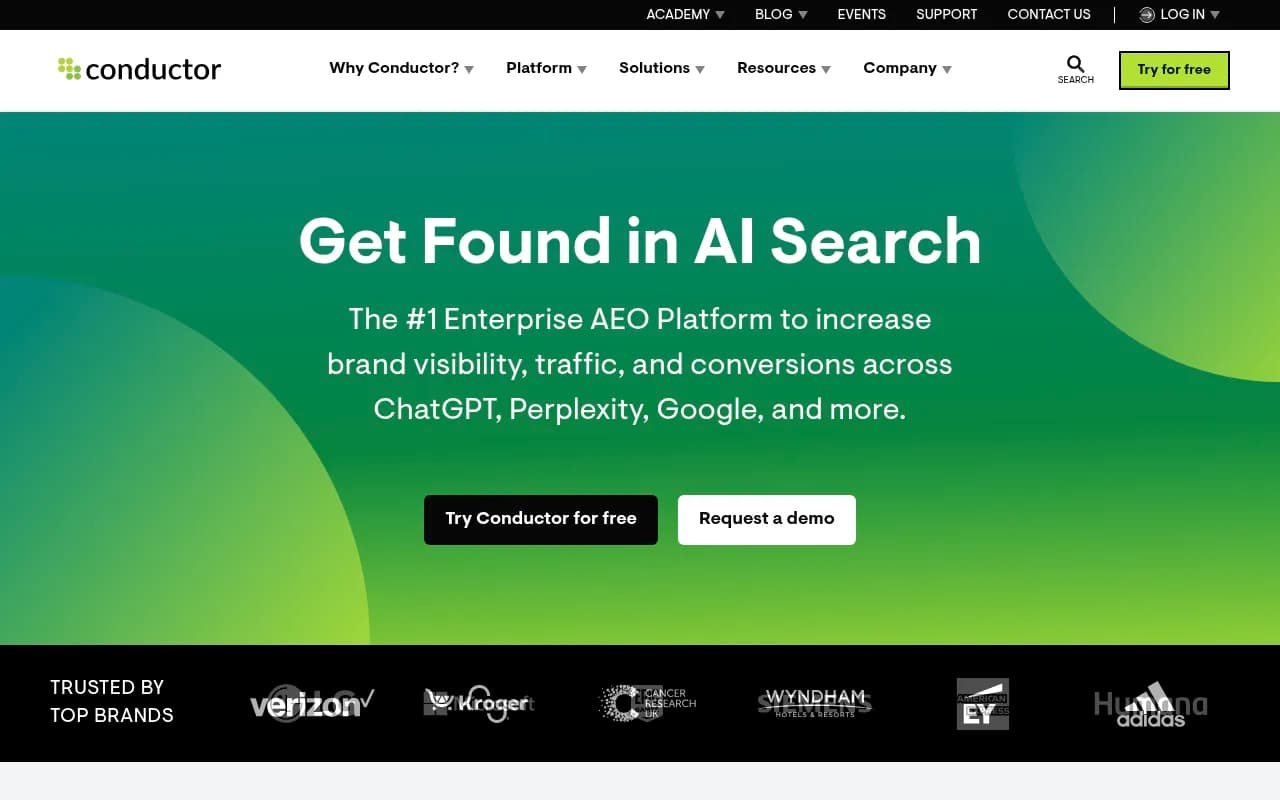
Conductor extends its traditional SEO platform with features for AI visibility in hybrid search environments. If your team is already using Conductor for SEO, adding AI tracking is a natural extension. If you're starting from scratch, the learning curve is steeper.
Core Capabilities
Unified SEO + AI Dashboard: Conductor's main value proposition is consolidation. You can see traditional search rankings, AI mentions, and content performance in a single interface. This is powerful for teams that want to understand how their content performs across both traditional and AI-driven search.
10+ Years of Proprietary Data: Conductor has been in the SEO space since 2010, and that historical data informs its AI recommendations. The platform can identify which types of content have historically ranked well in traditional search and are now being cited by AI models—helping teams understand what works across both channels.
Content Recommendations: Conductor suggests topics, angles, and content types based on what's working for competitors and what AI models are looking for. These recommendations are grounded in real citation data, not generic SEO advice.
Enterprise-Grade Reporting: Custom dashboards, Looker Studio integration, and white-label reporting make Conductor a strong choice for agencies and large marketing teams that need to present data to stakeholders.
Pricing and Positioning
Conductor does not publish pricing publicly. Based on industry reports and user feedback, expect custom enterprise pricing starting in the mid-four-figures per month range. This positions Conductor firmly in the enterprise segment—it's not a tool for startups or small teams.
The platform is sold as an all-in-one solution, which means you're paying for SEO features even if your primary interest is AI visibility. For teams already using Conductor, this is a non-issue. For teams evaluating standalone AI visibility tools, it's a significant cost consideration.
Best For
- Enterprise marketing teams already using Conductor for SEO
- Organizations that want a single platform for traditional and AI search
- Teams with budget for premium, full-service solutions
Limitations
- No transparent pricing—requires sales conversations
- Steep learning curve for teams new to Conductor's ecosystem
- Overkill for teams that only need AI visibility tracking
- Limited focus on actionable optimization compared to platforms like Promptwatch, which provides crawler logs, content gap analysis, and AI-generated articles to close visibility gaps
Gauge: The Complete GEO Toolkit
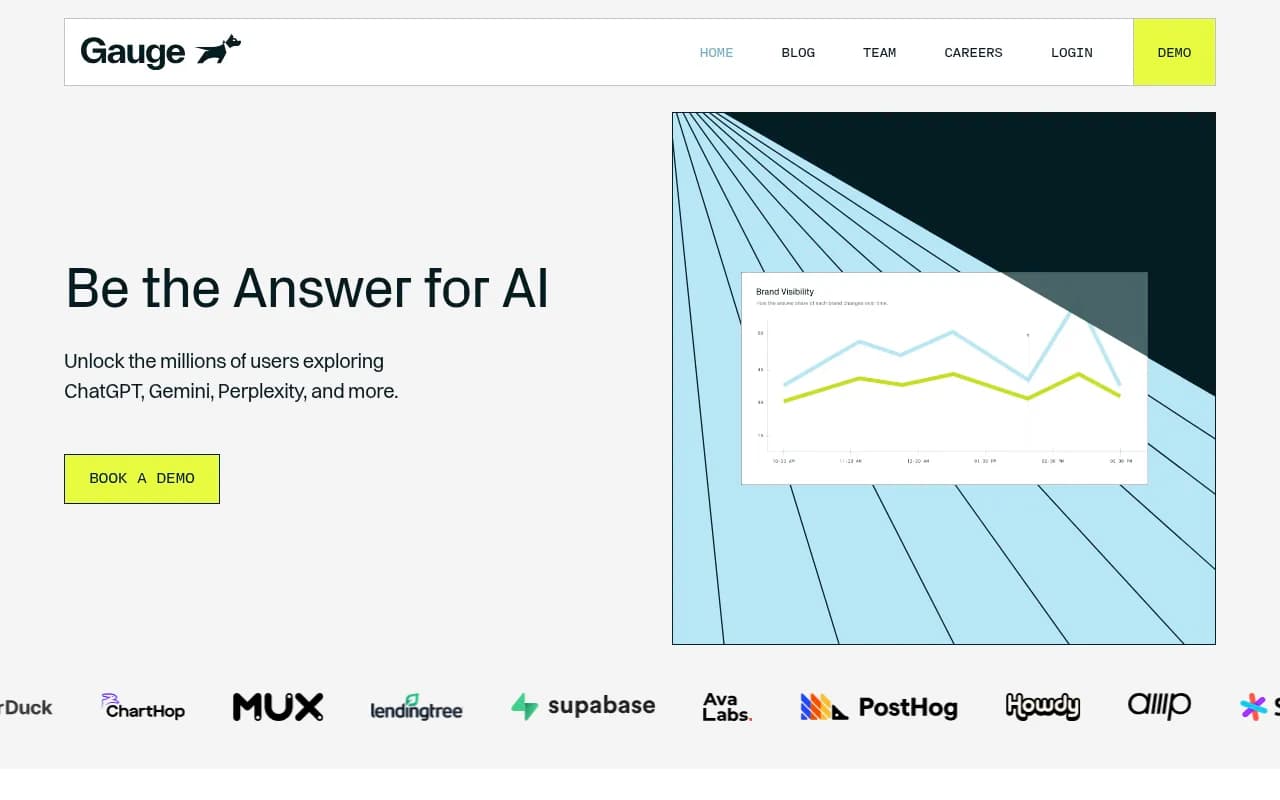
Gauge positions itself as the only complete Generative Engine Optimization (GEO) toolkit that combines monitoring, analytics, content recommendations, and audit capabilities in one platform. The emphasis is on real-world data collection—Gauge pulls actual web experiences that AI models surface to users, not just API responses.
Core Capabilities
Comprehensive Monitoring: Tracks brand mentions across ChatGPT, Claude, Perplexity, Gemini, and Google AI Overviews. Gauge emphasizes data quality over breadth—rather than tracking 15+ engines with shallow coverage, it focuses on the platforms that actually drive user behavior.
Content Audit Tools: Gauge analyzes which pages on your website are being cited by AI models and which are being ignored. This page-level visibility helps teams understand what content is working and what needs improvement. The platform flags missing topics, outdated information, and structural issues that prevent AI models from citing your content.
Competitor Benchmarking: See how your AI visibility compares to competitors across categories, prompts, and engines. Gauge provides share-of-voice metrics similar to traditional SEO tools but adapted for AI search.
Actionable Recommendations: Gauge doesn't just show you data—it tells you what to do about it. The platform suggests content updates, new topics to cover, and optimization tactics based on what's working for competitors and what AI models are looking for.
Pricing and Positioning
Gauge offers transparent pricing with plans starting lower than AthenaHQ and Conductor. While exact tiers aren't published on their website, user reports suggest starter plans in the $99-$199/mo range for small teams, with professional and enterprise tiers scaling based on prompt volume and team size.
This makes Gauge accessible to mid-market teams while still offering the depth enterprise organizations need.
Best For
- Teams that want a complete toolkit, not just monitoring
- Organizations prioritizing data quality over engine breadth
- Marketing teams that need actionable recommendations, not just dashboards
Limitations
- Fewer AI engines tracked compared to some competitors (focuses on quality over quantity)
- Less emphasis on e-commerce-specific features compared to AthenaHQ
- No built-in content generation—teams must create optimized content themselves (unlike Promptwatch, which includes an AI writing agent that generates articles grounded in citation data)
Head-to-Head Comparison
| Feature | AthenaHQ | Conductor | Gauge |
|---|---|---|---|
| Starting Price | $295/mo | Custom (enterprise) | ~$99-$199/mo |
| AI Engines Tracked | 5+ | 10+ | 5+ (quality focus) |
| GA4 Integration | Yes | Yes | Limited |
| Prompt Volume Data | Yes | Yes | Yes |
| Content Audit | Basic | Advanced | Advanced |
| SEO Integration | No | Yes (native) | Basic |
| Credit System | Yes | No | No |
| Best For | E-commerce brands | Enterprise SEO teams | Complete GEO toolkit |
The Action Gap: What These Platforms Miss
All three platforms excel at monitoring and analytics, but they share a common limitation: they show you the problem without fully solving it. You can see where you're invisible, which competitors are winning, and which prompts matter most—but then you're left to figure out what content to create and how to optimize it.
This is where platforms like Promptwatch differentiate themselves. Rather than stopping at monitoring, Promptwatch closes the action loop:
- Answer Gap Analysis shows exactly which prompts competitors are visible for but you're not—the specific content your website is missing
- AI Content Generation creates articles, listicles, and comparisons grounded in real citation data (880M+ citations analyzed), not generic templates
- AI Crawler Logs reveal which pages ChatGPT, Claude, and Perplexity are actually reading on your site, plus errors they encounter
- Page-Level Tracking shows exactly which pages are being cited, how often, and by which models
This cycle—find gaps, generate content, track results—is what makes Promptwatch an optimization platform, not just another tracker. Most competitors (including AthenaHQ, Conductor, and Gauge) stop at step one.
Choosing the Right Platform for Your Team
Choose AthenaHQ if:
- You're an e-commerce brand that needs to tie AI visibility to revenue
- GA4 integration is a must-have
- You prioritize prompt volume data and sentiment analysis
- Budget allows for premium pricing ($295+/mo)
Choose Conductor if:
- You're already using Conductor for SEO
- You want a unified platform for traditional and AI search
- You have enterprise budget and need white-label reporting
- You're willing to invest in a learning curve
Choose Gauge if:
- You want a complete GEO toolkit with monitoring, audits, and recommendations
- You prioritize data quality over engine breadth
- You need transparent pricing and faster implementation
- You're a mid-market or enterprise team
Consider Promptwatch if:
- You want to go beyond monitoring to actually fix visibility gaps
- You need AI content generation grounded in citation data
- You want to see which pages AI crawlers are reading (and which they're ignoring)
- You need prompt intelligence, Reddit/YouTube tracking, and ChatGPT Shopping monitoring
- You want an action-oriented platform, not just a dashboard
Implementation and Getting Started
Regardless of which platform you choose, successful AI visibility tracking requires:
-
Prompt Library Development: Start with 50-100 core prompts that represent how your customers actually search. Use variations ("best X for Y", "X vs Y", "how to choose X") to capture different query types.
-
Baseline Measurement: Run your initial prompt set across all tracked engines to establish a visibility baseline. This takes 1-2 weeks depending on prompt volume.
-
Competitor Selection: Identify 3-5 direct competitors to benchmark against. Focus on brands that are actually winning in AI search, not just traditional SEO leaders.
-
Content Audit: Use the platform's audit tools to identify which pages are being cited and which are being ignored. Prioritize fixing high-value pages first.
-
Optimization Cycle: Most teams see meaningful visibility improvements within 60-90 days of consistent optimization. Track progress weekly but don't expect overnight results—AI models update their training data on different schedules.
The Future of Enterprise AI Visibility
As AI search continues to evolve in 2026, enterprise platforms are moving beyond simple monitoring toward:
- Real-time optimization: Platforms that can automatically update content based on AI model changes
- Multi-modal tracking: Monitoring brand mentions in AI-generated images, videos, and audio responses
- Agentic workflows: AI agents that autonomously create and publish optimized content
- Revenue attribution: Tighter connections between AI visibility and actual business outcomes
The platforms that win in this space will be those that help teams take action, not just observe. Monitoring is table stakes—optimization is the differentiator.
Conclusion
AthenaHQ, Conductor, and Gauge each bring unique strengths to enterprise AI visibility tracking. AthenaHQ excels at e-commerce analytics and GA4 integration. Conductor bridges traditional SEO with AI search for teams already invested in its ecosystem. Gauge offers the most complete toolkit with transparent pricing and actionable recommendations.
For teams that want to go beyond monitoring to actually improve their AI visibility, platforms like Promptwatch provide the content gap analysis, AI content generation, and crawler logs needed to close the optimization loop. The best choice depends on your team's existing tools, budget, and whether you need a dashboard or a complete optimization engine.
Start with a clear understanding of your goals—are you tracking visibility for reporting purposes, or are you committed to improving it? The answer will determine which platform is right for you.