
Key takeaways
- Agencies need three things from an AEO tool: many client workspaces at a predictable price, reporting you can send without rebuilding it, and a way to act on the data.
- Most "best AEO tools for agencies" lists are written by vendors who rank themselves first. Treat their verdicts, and especially their prices, as unverified until you check the vendor's pricing page.
- Monitoring-only tools (Otterly, Peec AI) are cheap and fine for small books. Platforms that also write and publish content cost more but remove a lot of manual work.
- Report position and how the brand is described, not just "was it cited." Almost half of ChatGPT responses cite 10 or more domains, so a client is rarely alone in an answer.
- Pick two or three finalists and run the same 30 prompts for one real client before committing.
How I evaluated these tools
I did not run all eight tools side by side. This guide combines vendor documentation, the roundups published by Profound, HubSpot, Scrunch, RadarKit and ChatFeatured, and Promptwatch's own research data. Every one of those roundups ranks its publisher first, so I weighted the structural facts (what a tool does, who it targets) over the rankings.
Prices in the sources also conflict. One list shows Profound at $99/month, another shows Peec AI from $95/month, and Otterly's engine add-ons can raise the real bill. Use the figures below as rough orientation only.
What agencies actually need from an AEO tool
A brand marketer needs one dashboard. An agency needs the same thing multiplied by 5, 20, or 60 clients, and it has to survive monthly reporting without an analyst rebuilding charts.
Client capacity
Check how the plan counts clients. Some tools sell "projects," some "workspaces," some "brands," and the prompt and response limits are shared or per-client depending on the vendor. A cheap plan with a hard prompt cap per client gets expensive fast once you pass five accounts.
Reporting
Look for scheduled PDF exports, white-label output, Looker Studio connectors, and a way to show a prospect something before they sign. Reporting that lives only inside the app means you are screenshotting dashboards at the end of every month.
What the report should measure
Promptwatch Data found that 47.6% of ChatGPT responses cite 10 or more unique domains (Sep 28 to Oct 4, 2026, see the unique domains report). For organic prompts with no brand named, 52.5% cite 10 or more. Your client is almost never the only source, so a binary "cited or not" metric tells them little. Report position, share of voice, and how the brand is described.
For brand-specific prompts, the pattern is different: 5 domains is the most common count, so the few review sites and forums that get cited largely shape how ChatGPT describes the brand.
Engine differences matter for reporting cadence
According to Promptwatch's sources-per-response data, ChatGPT cites about 5 sources per web-search answer, Google AI Overviews about 10, and Perplexity almost exactly 10 every day with little movement. Copilot swung from under 2 to nearly 17 within a few weeks. Practical consequence: Perplexity is a steady test bench for judging whether a content change moved anything, while Copilot should be reported on monthly trends, not weekly snapshots.
The 8 platforms at a glance
| Tool | Best for | Client handling | Reporting | Acts on the data? |
|---|---|---|---|---|
| Promptwatch | Agencies that want to fix gaps, not just see them | Agency plans with unlimited projects, prompts and seats | PDF reports, scheduled PDFs, Looker Studio, prospect AI Visibility Reports | Yes: Content Agent on Business, Action Board, crawler logs |
| Profound | Enterprise programs | Enterprise-oriented | Attribution and analytics | Content creation and attribution |
| Peec AI | Budget-conscious agencies | Multi-project tracking | Prompt and citation analytics | Mostly monitoring |
| Otterly.AI | Small agencies and consultants | Multi-client view, partner program | White-label reporting, basic Looker Studio | Monitoring plus audits |
| Scrunch AI | Agencies wanting AI-experience optimization | Agency platform | Multi-platform reporting | Optimization modules |
| AthenaHQ | Insight-to-action teams | Flexible seating and scaling | ROI-focused dashboards | Action Center recommendations |
| Ahrefs Brand Radar | Teams already on Ahrefs | Inside Ahrefs workspaces | Ahrefs reports | No |
| Semrush | Agencies already on Semrush | Inside Semrush projects | Semrush reporting | Limited |
Tool-by-tool reviews
1. Promptwatch
Promptwatch is the one on this list that closes the loop. Most tools tell you a client is missing from an answer and stop there. Promptwatch also shows which pages AI cites, reads IP-verified AI crawler logs to tell an access problem from a content problem, and tracks visitor analytics so you can show a client the traffic AI sent.

For agencies, the relevant details are the dedicated agency plans: Kick-off at $199/mo, Growth at $399/mo and Scale at $799/mo, all with unlimited projects, prompts and team seats, all AI models, crawler logs, visitor analytics, Brand Narrative and Ads Radar. Each includes AI Visibility Reports, a PDF of how ChatGPT, Gemini and Google AI Mode answer about any website in about five minutes (20, 40 and 60 per month respectively), which is genuinely useful for pitching prospects. Reports can be scheduled to inboxes, and white-label PDFs, a client portal and a white-label dashboard come with Enterprise or Partner, the custom agency plan.
The honest limit: agency plans don't include the Content Agent, Knowledge Base, AEO articles or ChatGPT Shopping. Those start at Business ($579/mo) or the Partner plan. If your agency wants hands-off content production per client, budget for that tier. Confirm current pricing at promptwatch.com/pricing. There is also a head-to-head view if you're deciding against a rival, for example Promptwatch vs Profound or Promptwatch vs Peec. More on agency setups is in the GEO for agencies guide and on the agencies solution page.
2. Profound
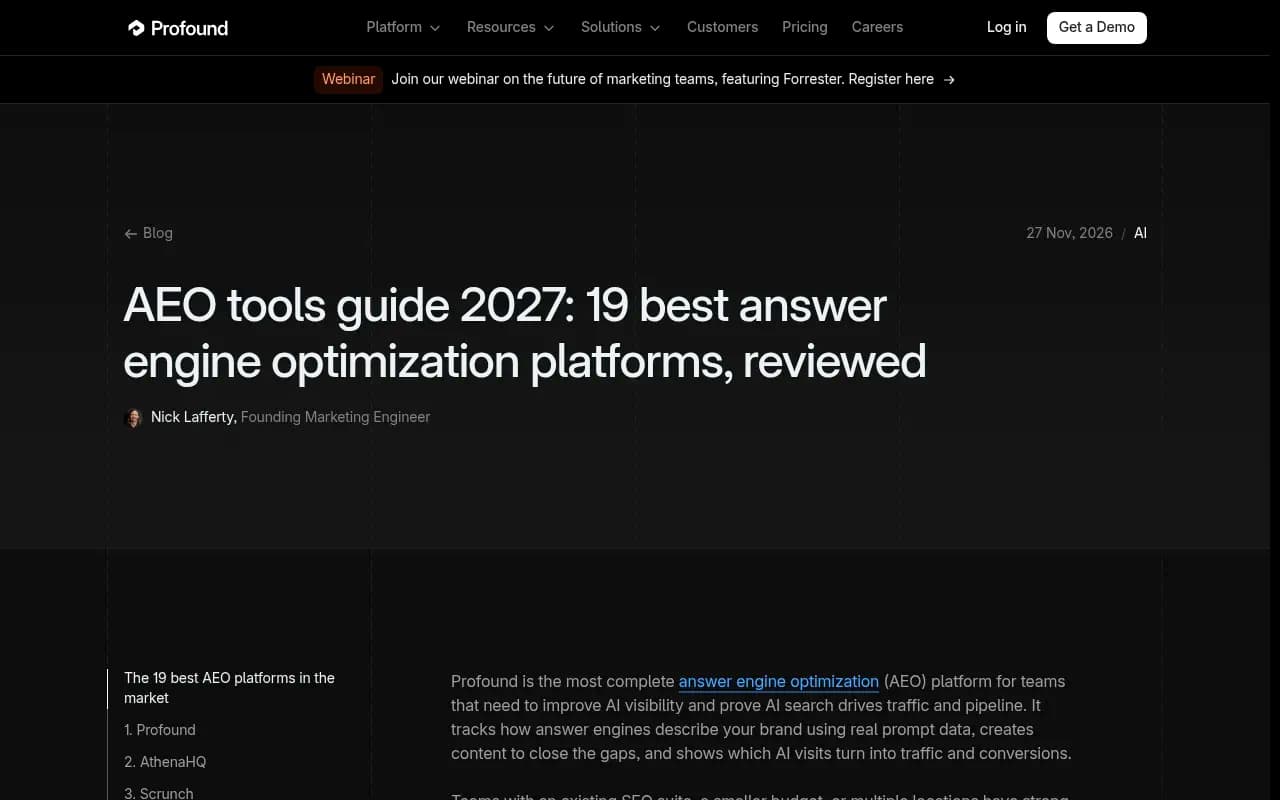
Profound pitches itself as the most complete AEO platform for enterprise programs, with daily tracking across major engines, content creation, crawler analytics and attribution. Its own roundup admits it can be overkill for teams that just want a lightweight visibility score. That is also the agency caveat: if your clients are mid-market and your reporting need is a monthly PDF, you may be paying for depth you won't use.
Profound

The price is the thing to verify. One roundup quotes $99/month, which looks like an entry tier rather than what an agency with many clients would pay. Ask for a quote.
3. Peec AI
Peec AI is the usual budget pick. It tracks multiple engines and gives detailed prompt and citation analytics. Scrunch names it among the most popular tools for agencies. It is a tracker, so expect to do the content and technical follow-up elsewhere.
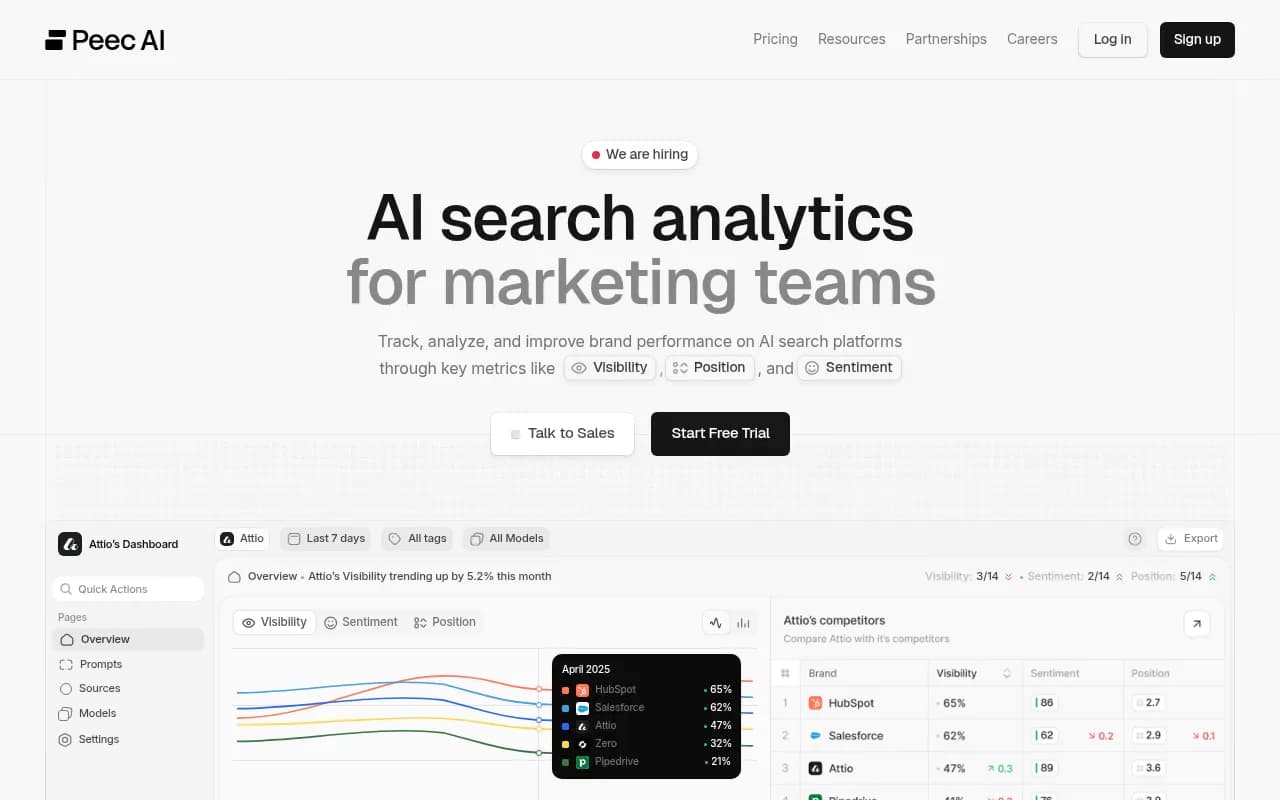
Quoted starting price is about $95/month in one source. Check how many prompts and countries that includes before multiplying by your client count.
4. Otterly.AI
Otterly is the cheapest serious entry at around $29/month according to HubSpot's roundup, and it has an agency partner program with white-label reporting. Its GEO Audit looks at 25+ on-page factors, and it handles page-level crawlability audits and basic Looker Studio reporting. The limit that two sources agree on: it is monitoring-focused, so you still need separate execution tools. ChatFeatured also warns about the engine add-on multiplier. ChatGPT and Perplexity come standard, but Gemini and Google AI cost extra, so a client who needs all engines may cost well over the headline price.
Otterly.AI

5. Scrunch AI
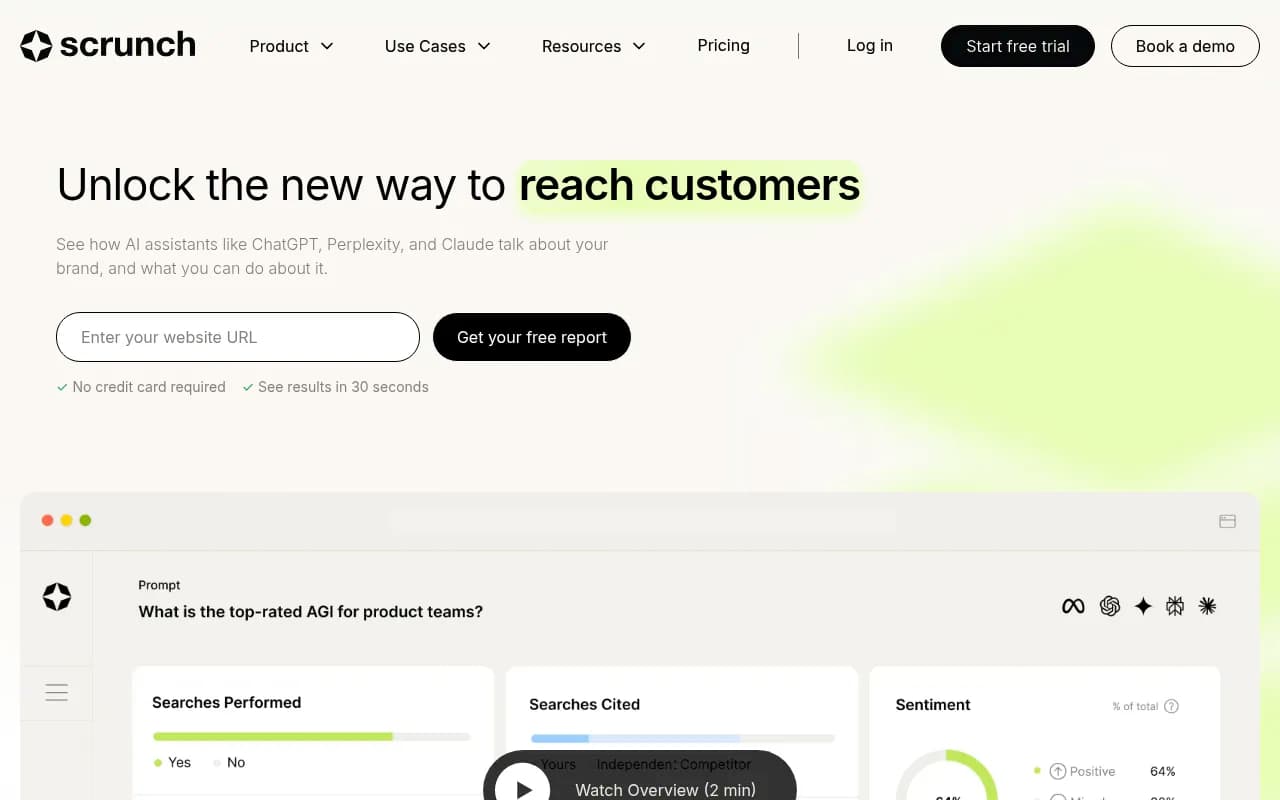
Scrunch positions around AI experience optimization, with a multi-module framework and coverage of 7+ platforms. It lists itself, Peec AI and Semrush as the most popular agency options, which is a vendor's claim from customer conversations, not an independent ranking. Reported starting price is around $250/month.
6. AthenaHQ
AthenaHQ's strength is turning visibility data into next steps through its Action Center, with ROI-centric dashboards that suit leadership reporting and flexible seating. Profound's roundup notes that prompt volume relies on an undisclosed estimation model and recommendations often need editing. Reported starting price is around $295/month.

7. Ahrefs Brand Radar
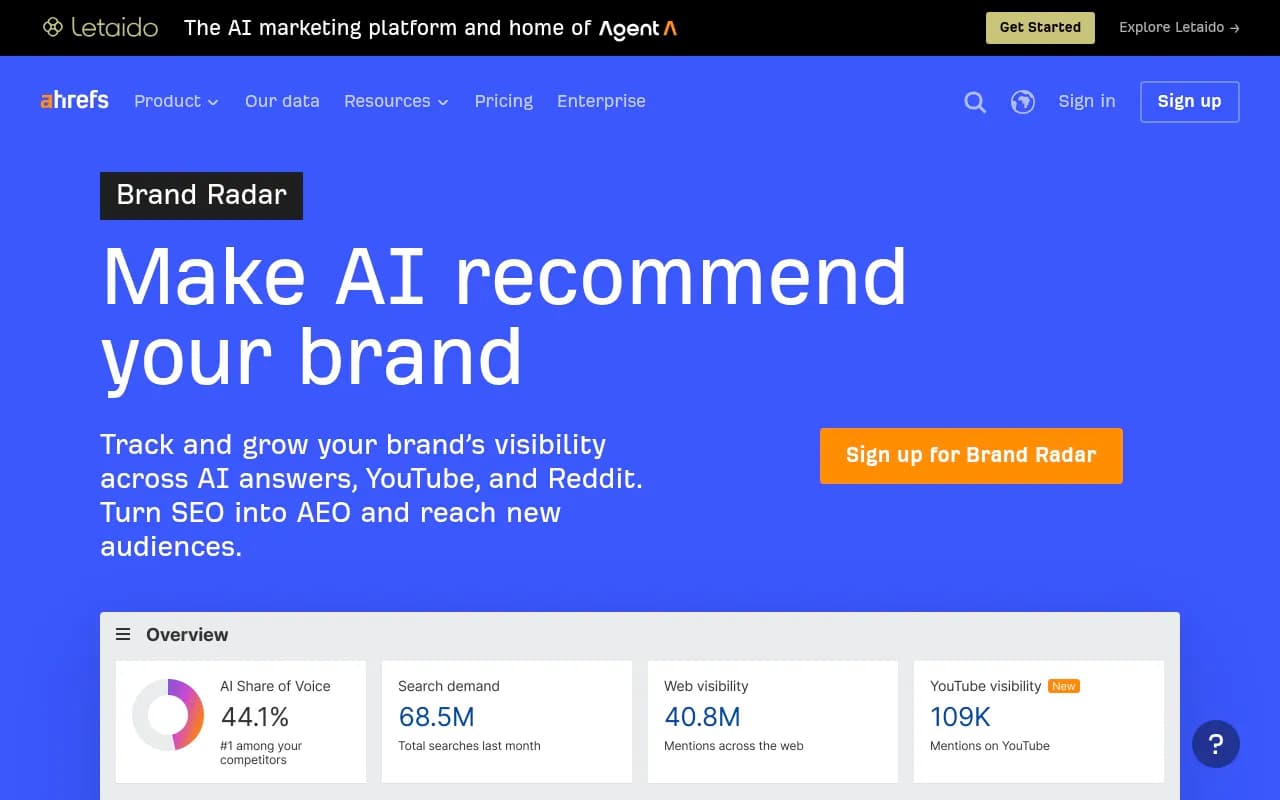
If your agency already lives in Ahrefs, Brand Radar adds AI visibility next to the backlink and keyword data your team already uses, with a large prompt database. It is a tracker with no content execution, and prompt sets are less configurable than a dedicated platform.
8. Semrush
Semrush adds AI visibility to an SEO suite many agencies already pay for and already use for client reporting. The tradeoff is depth: suite-bolted AI tracking is generally shallower than a dedicated tool, and it won't show crawler behavior.
Which one fits your agency
| Your situation | Start with |
|---|---|
| Under 5 clients, tight budget, need white-label PDFs | Otterly.AI |
| 5 to 30 clients, want monitoring at low cost | Peec AI |
| Want to track, diagnose and fix, with prospect reports for pitching | Promptwatch agency plans |
| Enterprise clients with attribution needs | Profound |
| Already deep in an SEO suite | Ahrefs Brand Radar or Semrush |
| Leadership wants ROI-style dashboards | AthenaHQ |
There are many more options than eight. The GEO software directory at bestgeosoftware.com lists a wider set if none of these fit.
How to run a fair trial
Vendor demos use clean data. Do this instead:
- Pick one real client and write 30 prompts across branded, comparison and organic intent.
- Run the same prompts in two or three finalist tools for two weeks.
- Check whether the tools agree on position and mention, and whether any of them collects answers from the real interface or an API (they can differ).
- Export a report and send it to a colleague who has never seen the tool. If they can't read it, your client can't either.
- Price the real configuration: all engines you need, all clients you have, all countries, add-ons included.
Pricing cautions
- Listed starting prices in vendor roundups conflict. Treat all numbers here as orientation, not quotes.
- Look for per-engine add-ons, per-country multipliers, and prompt caps per project.
- Annual billing often takes about 17% off monthly pricing at some vendors, including Promptwatch (12 months for the price of 10).
- Ask whether API and MCP access, extra seats and white-label export are included or extra.
The bottom line
If your agency only needs to prove it is watching, a low-cost tracker is enough. If clients ask "so what do we do about it," you want a tool that can show whether AI crawlers can read the site, which pages get cited, and what traffic AI sends, ideally with content production attached. Start with two finalists, run the 30-prompt test on one client, and decide from what the reports look like in your inbox.