
Key takeaways
- The category has money and momentum: one third-party tally puts funding at $300M+ between summer 2025 and spring 2026, but that source sells a competing service, so treat it as a rough signal.
- The market is splitting into three layers: monitoring-only trackers, SEO suites that bolted on AI tracking, and platforms that act on the data (content, crawler logs, traffic attribution).
- Pricing is chaotic. Sources conflict on nearly every vendor, and entry tiers are rarely comparable. Verify on vendor pages before you buy.
- Leaders in 2027 will be the ones that close the loop from tracking to fixing to measuring. Dashboards that only report a score are the weak end of the market.
- The macro backdrop matters: marketers plan to spend more on AI, but most say their processes are not mature enough to use it well.
Why the market looks the way it does
A year ago, "AI visibility" meant a spreadsheet of prompts and a screenshot of ChatGPT. Now it is a category with a billion-dollar valuation at the top and dozens of $29 tools at the bottom. Both ends exist for the same reason: brands discovered that AI answers decide shortlists, and nobody had a way to see them.
The demand signal is real but modest in raw search terms. IndustryLens reports roughly 22,200 US monthly searches for "GEO," 6,600 for "answer engine optimisation," 4,400 for "LLM SEO" and 2,900 for "AI search optimisation." The category has four names and nobody agrees on one, which tells you how young it is.
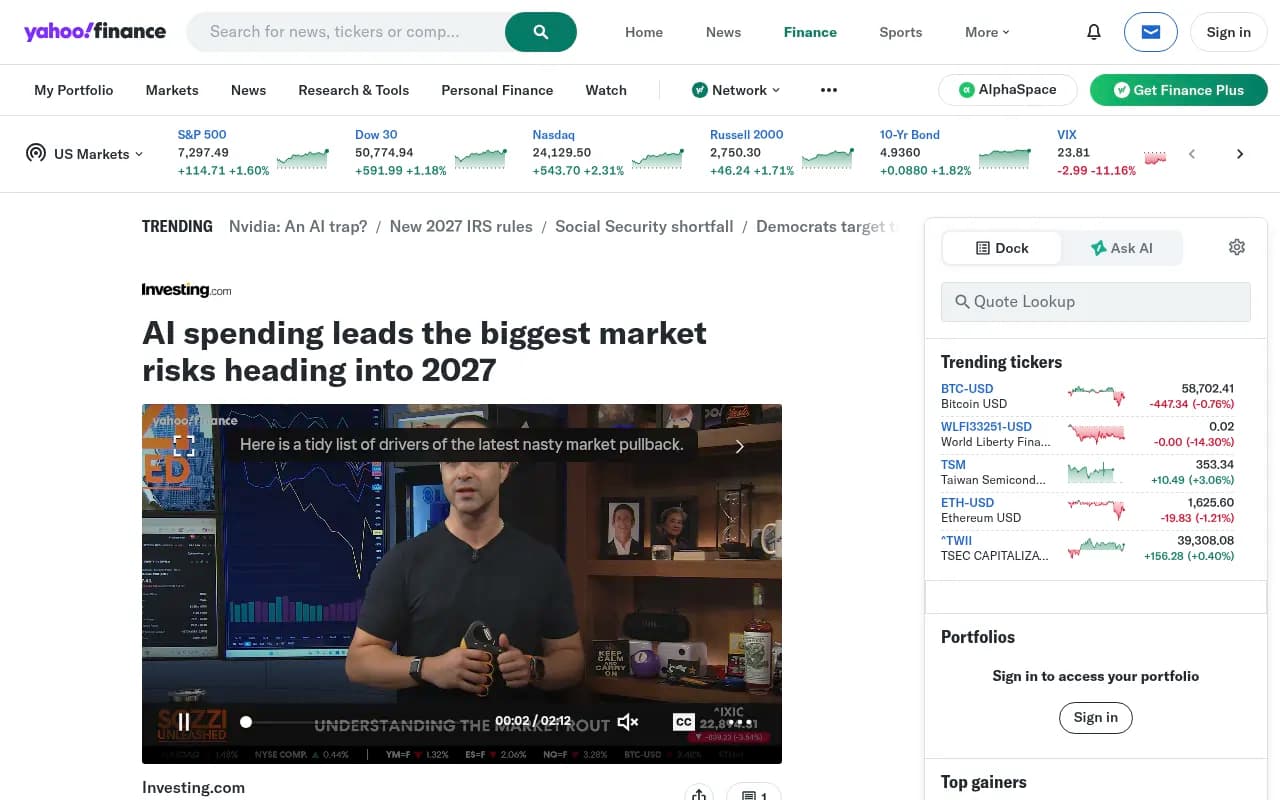
The wider economy adds pressure. Investing.com's late-November coverage ranks AI spending as the most concerning market narrative, and JPMorgan's outlook notes that cheaper models, many from China, have cut corporate spend per token. Forrester expects one dollar in five of business tech spending to go to AI in 2027, while only 53% of tech leaders expect budgets to beat inflation. Translation for buyers: AI visibility tools will be scrutinized as line items. Expect procurement to ask for proof of revenue impact, not just a visibility chart.
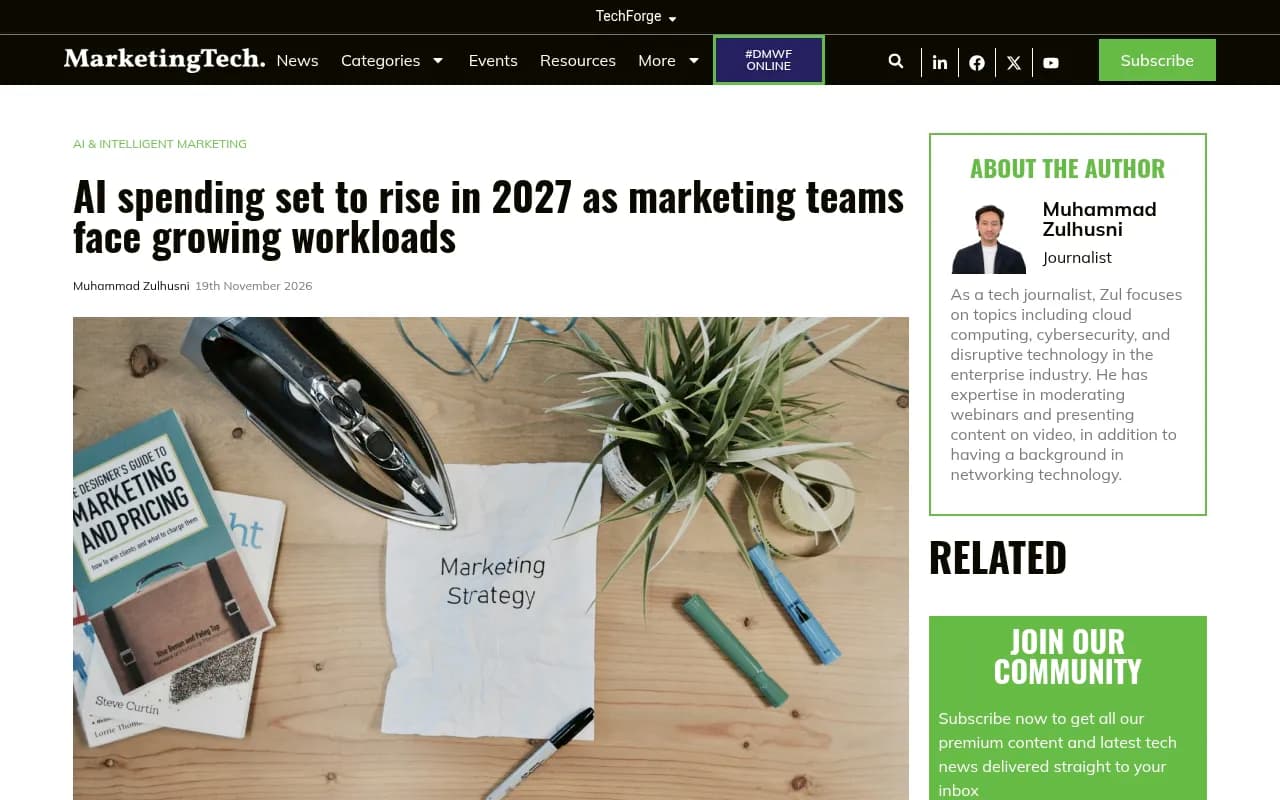
On the buyer side, Adobe's survey of 502 US marketers found nearly three-quarters plan to increase AI investment in 2027, yet 70% of marketing leaders said their internal processes are not mature enough to scale it. McKinsey's March 2026 survey found fewer than 10% of marketers had begun capturing value across end-to-end workflows. That gap between intent and execution is exactly where the visibility market is fighting.
The three tiers of the market
Tier 1: monitoring-only trackers
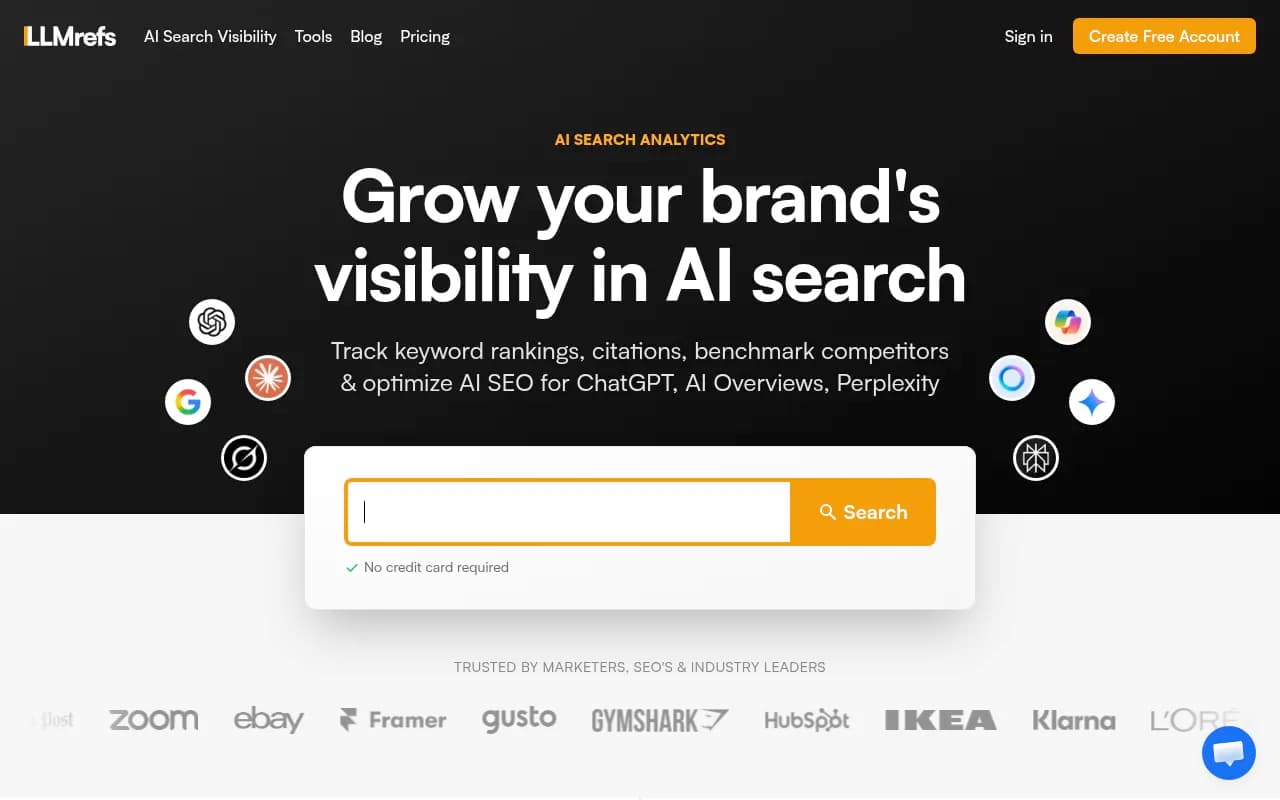
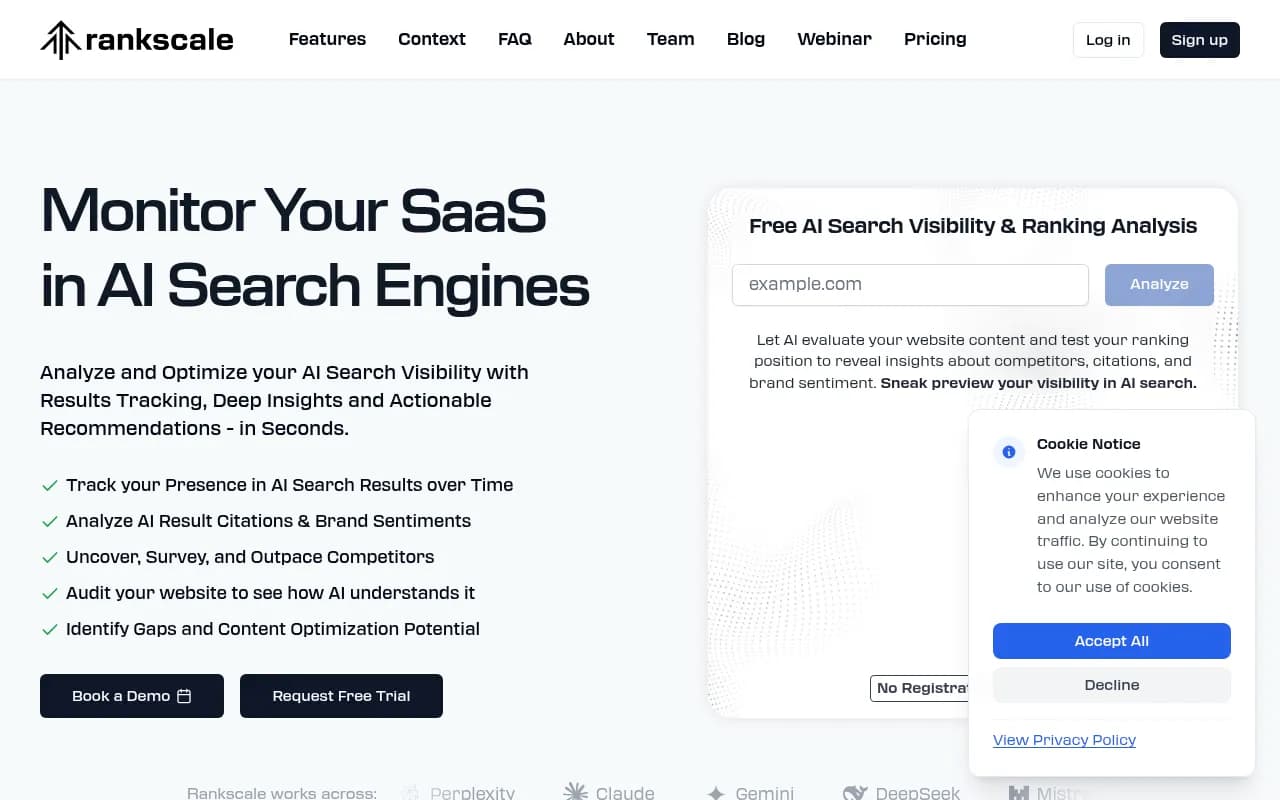
These answer one question: was my brand mentioned? They are cheap, quick to adopt, and fine for a first baseline. Otterly.AI starts around $29 a month for 15 prompts and covers ChatGPT, Gemini, Copilot and Perplexity. Rankscale, LLMrefs, GetIntel and Surfaced sit in a similar price band. The limit is obvious: someone still has to figure out why you are invisible and fix it.
Otterly.AI

LLMrefs
Tier 2: SEO suites adding AI modules
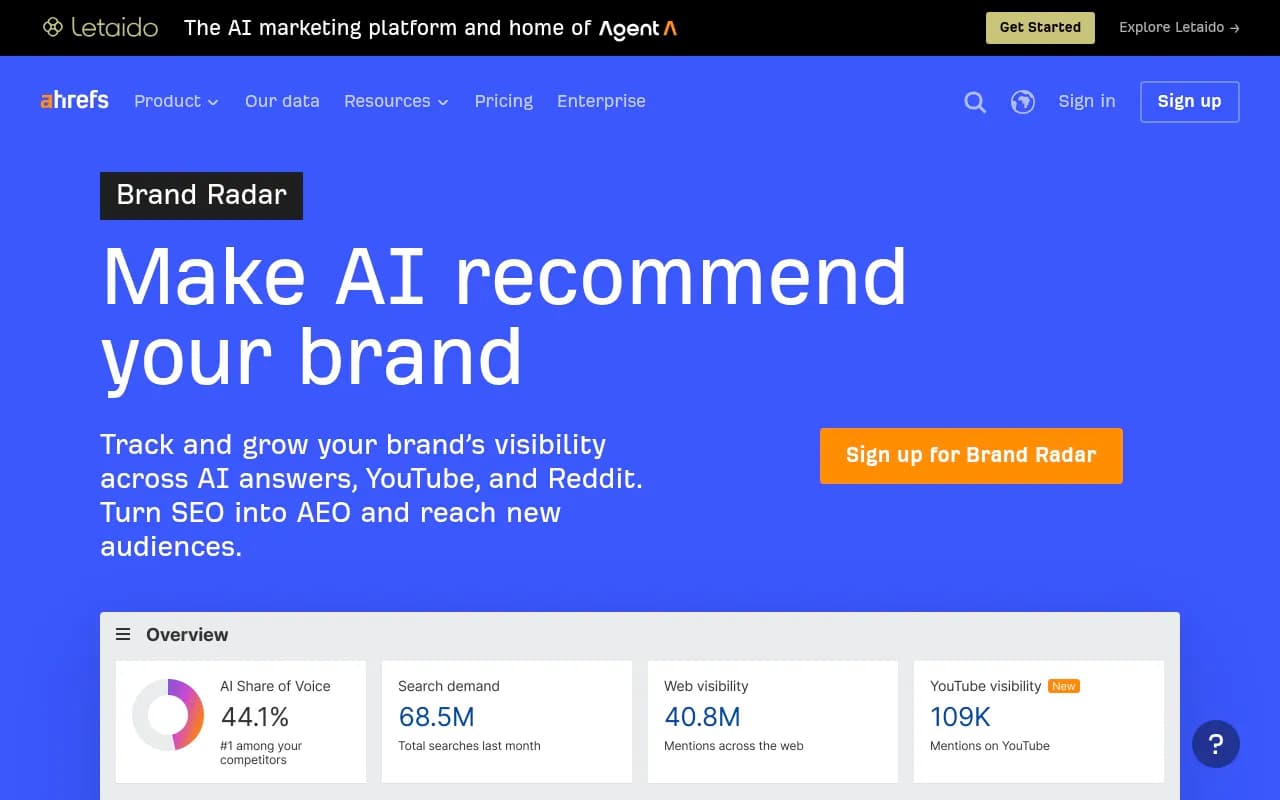
Semrush, Ahrefs Brand Radar and HubSpot's AEO tooling have distribution on their side. If your team already lives in these products, adding an AI module is frictionless. The trade-off is usually fixed prompt sets and shallower AI-specific data. Pricing here is also contested: Semrush's AI Toolkit is quoted at $99 a month per domain by one source and $199 for a Starter SEO plus AI search bundle with 50 prompts by another.
Tier 3: action platforms
This is where the real competition is heading. The pitch is no longer "see your score" but "find the gap, publish the fix, prove it worked." Content generation, crawler logs, AI traffic attribution and CMS publishing are what separate this tier. Vendors are visibly repositioning toward it. Per IndustryLens, Profound now calls itself an "AI marketing platform" built around its AI Marketer, Evertune calls itself an "agentic media platform," and AirOps recast its enterprise page as an AI Visibility Platform.
Who leads
Profound
Profound is the funding leader. Surmado reports $155M raised, including a $96M Series C led by Lightspeed in February 2026 at a $1B valuation, with named customers such as Target, Walmart, Ramp and U.S. Bank. The catch is access. IndustryLens (checked Nov 2) describes a free 7-day trial and then demo-gated, sales-led Enterprise only, which contradicts older reports of $99 and $399 self-serve tiers. Surmado estimates enterprise contracts at $30k to $100k+ a year, though that is not a vendor figure. Strong product, but a poor fit if you want to start small.
Profound

Peec AI
Peec is the fastest-growing challenger. Founded in Berlin in February 2025, it has raised $29M including a $21M Series A led by Singular. Starter is listed at $95 a month with 50 prompts, three selected models and daily tracking, with extra models as add-ons. It is a monitoring product at heart, and a good one, but it sits in the tracker tier.

Promptwatch
Promptwatch is the one I would point to as the most complete end-to-end option. It tracks ChatGPT, Gemini, Claude, Perplexity, Google AI Overviews, AI Mode, Copilot and others from the real interfaces, then goes past the dashboard: a Content Agent writes and publishes to WordPress, Webflow or Framer, IP-verified AI crawler logs show whether bots can read your pages, and visitor analytics measure the traffic and conversions AI sends. Crisp reported 2x higher conversion rates from AI traffic, and TreeHouse (Pararius) grew AI search to about 25% of organic conversions. It is rated 4.7/5 on G2 and ISO/IEC 27001 certified.
Pricing is public: Essential at $95 a month, Professional at $245, Business at $579, and agency plans from $199. The Content Agent and faster-than-daily tracking start at Business. Confirm at promptwatch.com/pricing. There is a 7-day free trial, and the free AI visibility report works without a login. See the head-to-head pages for Profound and Peec.

AirOps
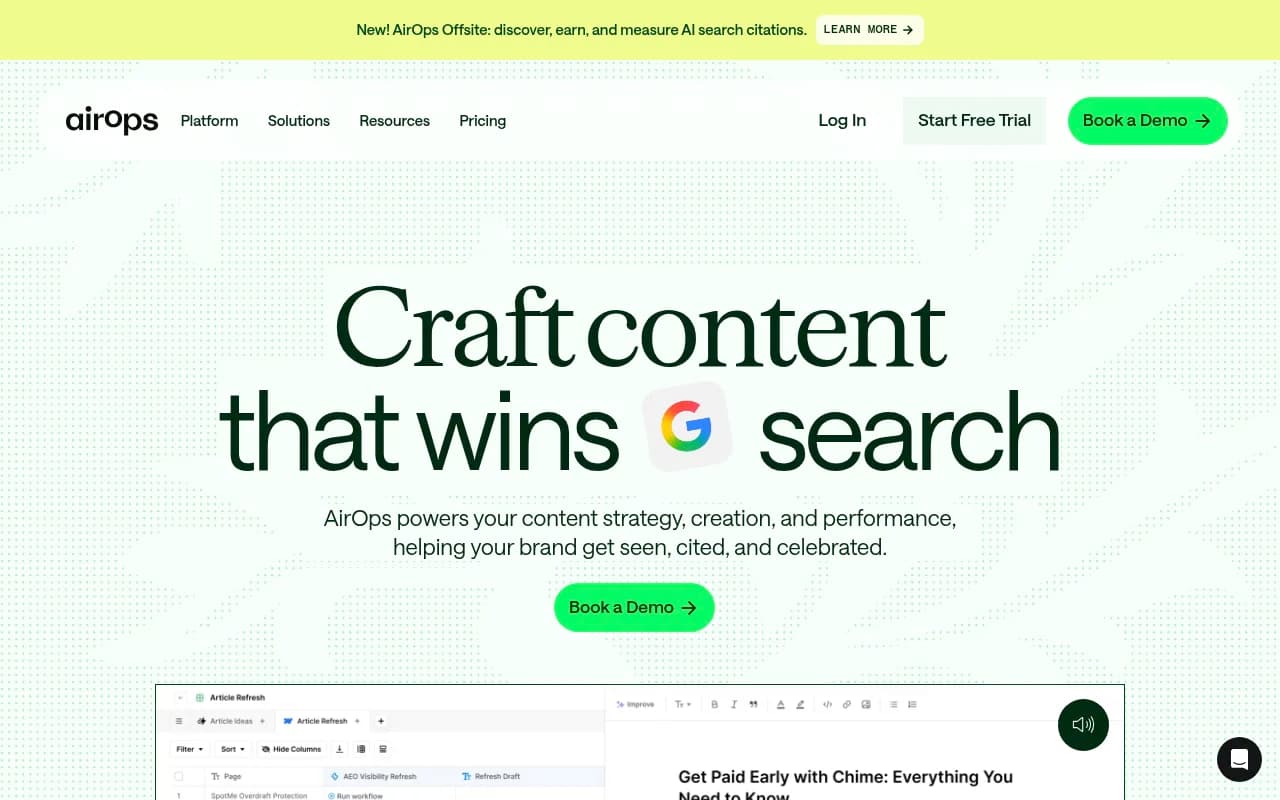
AirOps comes from the content engineering side and now markets an AI Visibility Platform, with a listing on Anthropic's Claude Marketplace. It is strongest where content production is the bottleneck.
Who lags, and why
Lagging does not mean bad. It means the product stops short of what buyers will need in 2027.
- Pure monitors. If a tool only reports mentions, it competes on price alone, and the floor is already $29. Goodie AI repriced to $295 a month Core, down from $399, and Evertune moved to a $60 self-serve Starter. Falling prices are a sign of commoditization.
- Demo-gated tools with no self-serve path. Brandlight and Conductor list demo-only pricing, and Bluefish ($68M raised) is custom. Fine for Fortune 500 procurement, but invisible to mid-market teams that want to test first.
- Suites with fixed prompt sets. They are convenient, but you cannot shape the tracking around your actual buyers.
- Vendors that ignore the crawl layer. If a tool cannot tell you whether GPTBot or ClaudeBot read your page, it cannot distinguish an access problem from a content problem.

A caution on evidence: AthenaHQ published a "30-day test" claiming +45% answer share against Peec's +8% and Profound's -1%. That is vendor-authored and lists AthenaHQ at $595 a month, which conflicts with its $295 Starter price elsewhere. Do not treat self-published head-to-heads as independent data.
Pricing snapshot
Treat every number below as unverified until you check the vendor page. Sources conflict and vendors reprice often.
| Vendor | Reported entry price | Notes |
|---|---|---|
| Otterly.AI | From $29/mo | 15 prompts, monitoring only |
| GetIntel | $29/mo | Single plan |
| Evertune | $60/mo Starter | Plus 10% of ad spend if Ads Agent used |
| LLMrefs | $79/mo | 500 prompts |
| Peec AI | $95/mo | 50 prompts, 3 models, add-ons |
| Promptwatch | $95/mo Essential | Business at $579 adds Content Agent |
| Ahrefs Brand Radar | From $199/mo | Standalone; prompt packages extra |
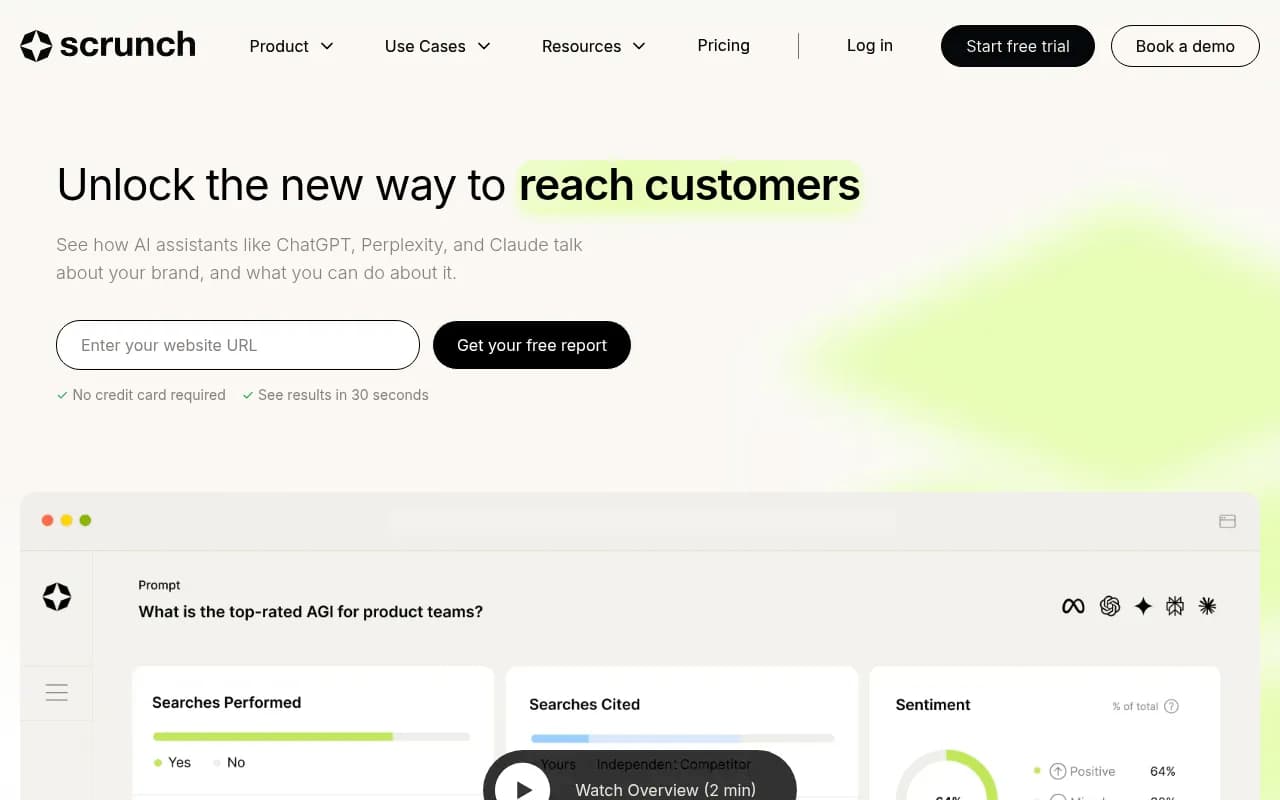
| Scrunch AI | $250/mo Core | 125 prompts |
| AthenaHQ | $295/mo Starter | Sources conflict ($595 elsewhere) |
| Goodie AI | $295/mo Core | 110 prompts, 5 models |
| Profound | Demo-gated | Older $99 and $399 tiers appear removed |
Three buying pitfalls come up repeatedly. Entry tiers are rarely comparable: Profound's old $99 Starter was ChatGPT-only. Agency costs scale per client, so check prompt and domain limits before adding a second brand. And action-layer tools cost more, but someone still has to implement changes unless the tool does it for you.
What the citation data says about where this goes
The reason action platforms are pulling ahead is that AI sources shift fast, and a static dashboard cannot keep up. Promptwatch Data's ChatGPT citation share report for November 2026 (Nov 1 to 25, month-to-date) found Reddit is still the most cited popular site at only 0.23% of ChatGPT citations, with G2 and LinkedIn at 0.18% each. In June, Reddit led with 3.71%, and Wikipedia has fallen from 0.56% to 0.03%. The top 20 sites together earn less than 2% of citations, with the rest spread across hundreds of thousands of domains. Review sites hold five of the top 10 spots.
Social is a different story by engine. Promptwatch's social media citations report (Oct 11 to Nov 9, 2026) shows social platforms made up 13.16% of Google AI Overviews citations, 1.94% for Perplexity and 0.64% for ChatGPT. YouTube alone is 6.71% of AI Overviews citations. One caveat from the report: the October comparison window was only 7 days, so month-over-month changes are not like-for-like.
The practical lesson: a strategy built on last quarter's citation habits goes stale quickly. Reddit's collapse in ChatGPT, documented in the Reddit citations report, is the clearest example. Tools that track citations per engine, over time, and connect them to content changes will age better than tools that report a single score.
How to choose heading into 2027
- Decide whether you need a monitor or a fixer. If you have a content team and just need a baseline, a $29 to $95 tracker is enough. If you do not have the capacity to act on findings, pay for the action layer.
- Check engine coverage and data source. User-facing answers can differ from API outputs, so ask whether the tool captures real interfaces.
- Ask about crawler logs and traffic attribution. Without them you cannot prove ROI to a CFO facing flat budgets.
- Check limits per client or brand if you are an agency, and whether white-label reporting is included.
- Insist on a trial. Vendors that hide everything behind a demo make comparison harder.
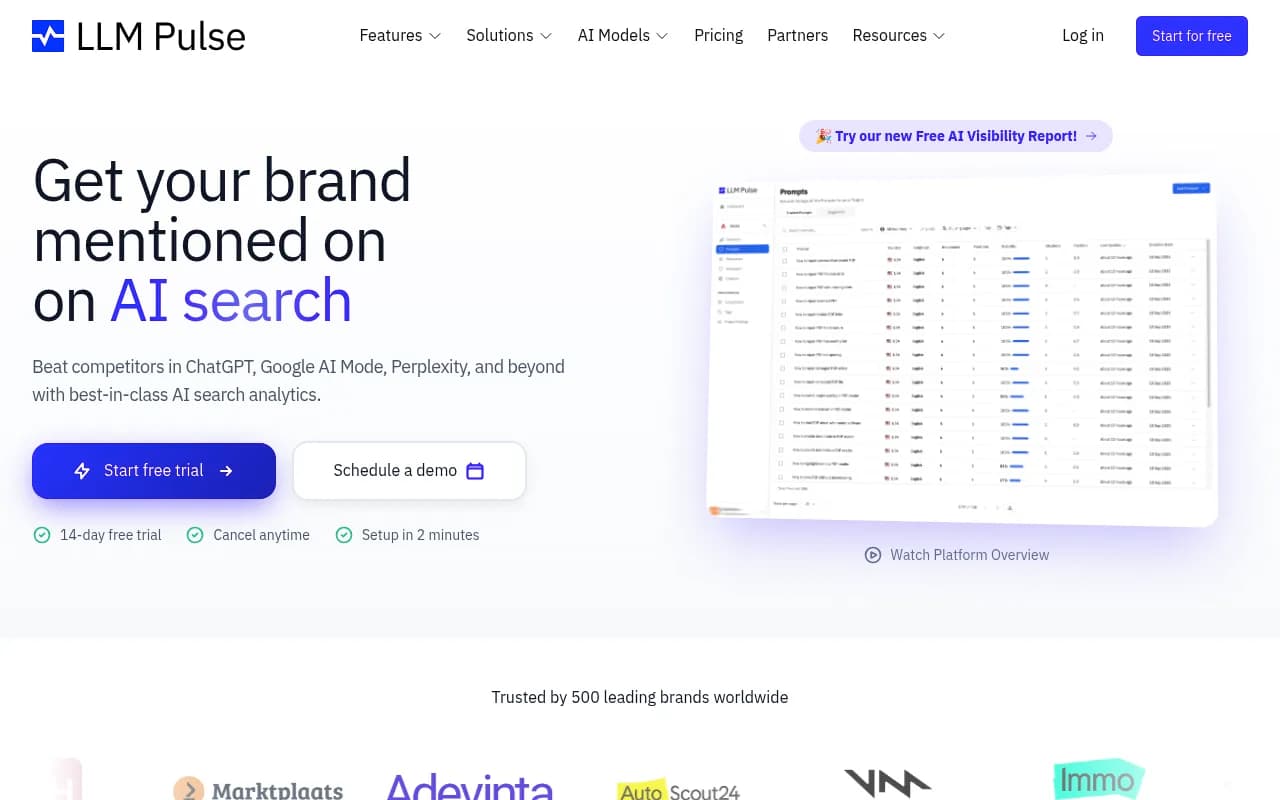
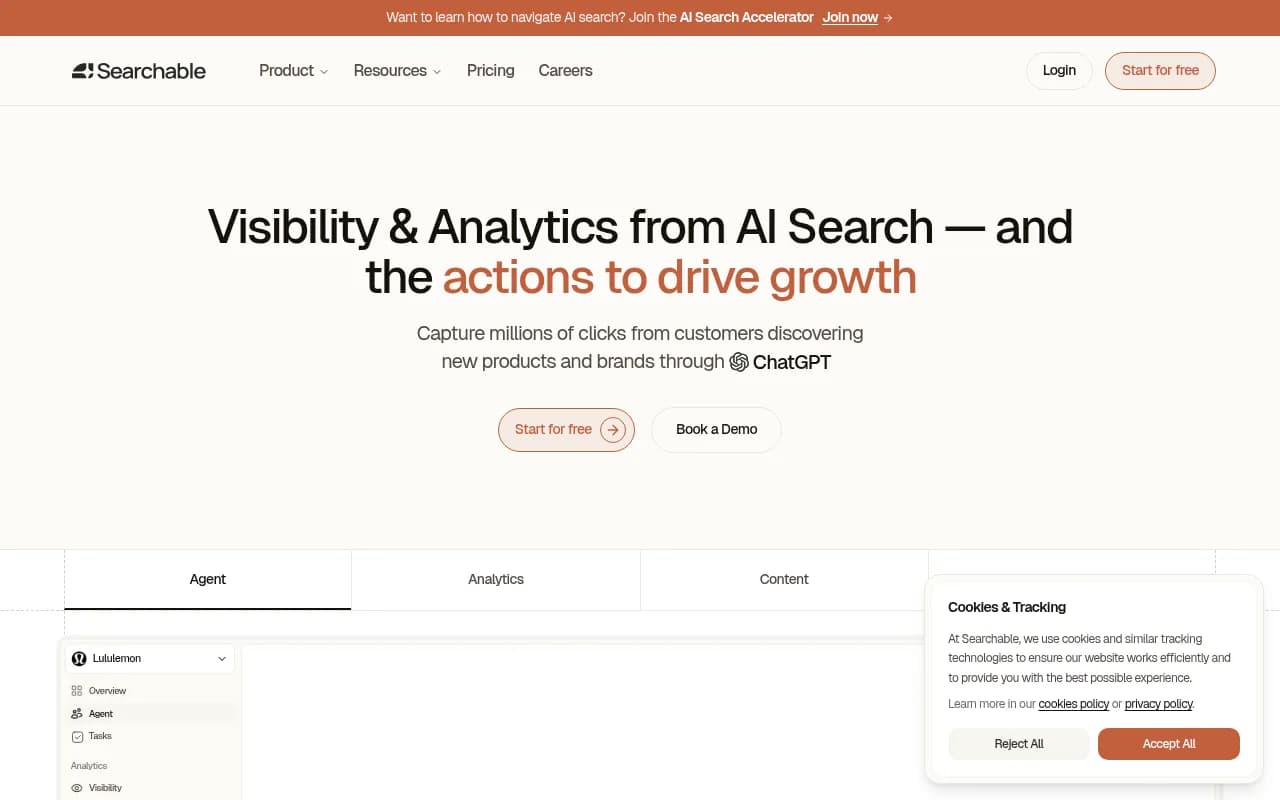
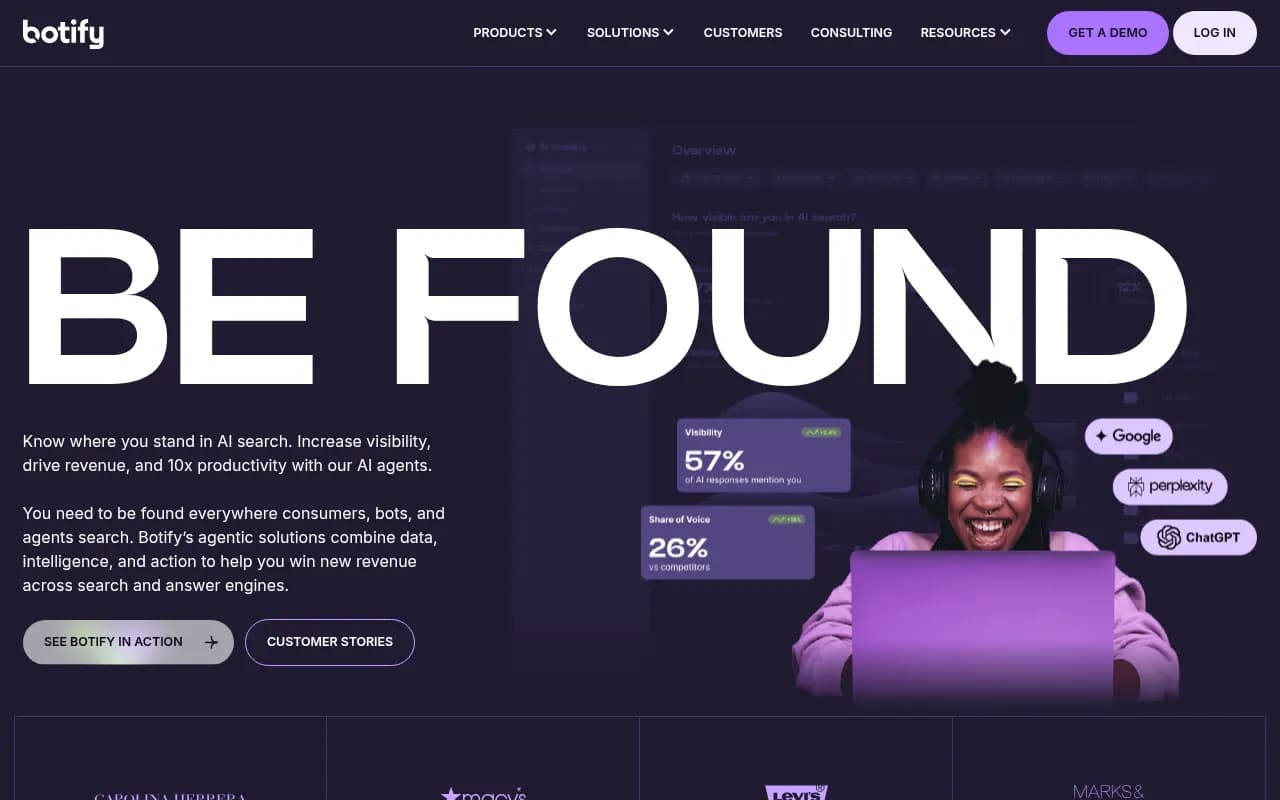
Other tools worth a look depending on your niche include Rankshift, LLM Pulse, Searchable and Qwairy for monitoring-led setups, plus Botify and seoClarity for enterprise SEO teams adding AI tracking.
For wider browsing, the GEO software directory at bestgeosoftware.com lists more options by category.
Who needs an agency instead
Some teams will not have the time to run any of this. If you would rather hand off the strategy, technical fixes and content, a specialist is a reasonable route. 1001 SEO Media is the agency behind this site and runs GEO and AI search work for clients using Promptwatch, with no long-term contracts. That is a plain disclosure, not a pitch: the tool choices above stand on their own.
My read on the next 12 months
Expect consolidation. With $300M+ reportedly raised and a $29 price floor, the middle of the market is squeezed. Trackers will either bolt on content and attribution or get acquired by suites. Scrunch reportedly joined Sitecore, which is the template. Expect more of that.
Expect buyers to get harder to impress. Flat tech budgets and Gartner's prediction that more than 40% of agentic AI projects will be cancelled by the end of 2027 mean "we raised a lot" will not close deals. Showing that a published page got crawled, cited and clicked will.
And expect honest gaps in the evidence. I could not find Gartner or Forrester market sizing for AI visibility platforms, so any "market worth $X billion" number you see is probably vendor math. Buy on the product, verify prices on the vendor page, and run a trial before committing.