Key Takeaways
- Prompt volume data is the new keyword volume: Just like traditional SEO relies on search volume to prioritize keywords, AI search optimization requires knowing which prompts people actually use—and which ones are worth targeting.
- Most tools are monitoring-only dashboards: The majority of AI visibility platforms (Otterly.AI, Peec.ai, AthenaHQ, SE Visible) show you where you're cited but leave you stuck when it comes to fixing gaps or creating content that ranks.
- The action loop matters more than the data: The best platforms don't just track—they help you find content gaps, generate optimized articles, and close the loop with traffic attribution so you can prove ROI.
- Prompt intelligence beats raw citation counts: Volume estimates, difficulty scores, and query fan-outs (how one prompt branches into sub-queries) help you prioritize high-value, winnable prompts instead of guessing.
- Integration with content creation is the differentiator: Platforms that combine tracking with AI writing agents (grounded in real citation data) let you move from insight to action in minutes, not weeks.
Why Prompt Volume Data Matters in 2026
Traditional SEO has always relied on search volume data to make smart decisions. You wouldn't optimize for a keyword with 10 monthly searches when a similar term gets 10,000. The same logic applies to AI search—but most tools in 2026 still don't provide it.
Without prompt volume data, you're flying blind. You might see that your brand appears in ChatGPT's response to "best project management tools for remote teams," but you have no idea if that prompt gets asked 10 times a month or 10,000 times. You can't prioritize. You can't build a content strategy. You're just collecting vanity metrics.
The platforms that surface prompt volumes, difficulty scores, and query fan-outs give you the intelligence layer that turns raw citation data into actionable strategy. They show you:
- Which prompts have the highest search demand (volume estimates based on real usage patterns)
- Which prompts are winnable (difficulty scores that factor in competitor strength and content saturation)
- How prompts branch into sub-queries (query fan-outs that reveal related angles and content opportunities)
This is the difference between a monitoring tool and an optimization platform.
The Monitoring-Only Problem: What Most Tools Are Missing
The AI visibility market exploded in 2025, and by early 2026, there are dozens of platforms claiming to track your brand across ChatGPT, Perplexity, Claude, and Google AI Overviews. But most of them stop at the same place: they show you the data, then leave you to figure out what to do with it.
What Monitoring-Only Tools Provide
- Citation tracking: See when and where your brand, domain, or competitors are mentioned in AI responses
- Multi-model coverage: Monitor 5-10 AI engines (ChatGPT, Perplexity, Claude, Gemini, etc.)
- Competitor benchmarking: Compare your visibility score vs competitors
- Basic alerts: Get notified when your brand appears (or disappears) from key prompts
What They Don't Provide
- Prompt volume data: No way to know which prompts actually matter
- Content gap analysis: No systematic way to identify what's missing from your website
- Content creation tools: No help generating the articles, listicles, or comparisons that AI models want to cite
- Traffic attribution: No way to connect AI visibility to actual revenue
This is the core problem with platforms like Otterly.AI, Peec.ai, AthenaHQ, and SE Visible. They're dashboards, not optimization engines. You see the problem, but you're stuck when it comes to fixing it.
The Platforms That Provide Prompt Intelligence
A small subset of AI visibility tools in 2026 go beyond monitoring and provide the prompt intelligence layer that makes optimization possible. Here's what separates them:
1. Promptwatch: The Only Platform Built Around the Action Loop
Promptwatch is the market-leading Generative Engine Optimization (GEO) platform used by 6,700+ brands including Booking.com, Center Parcs, and Wortell. It's the only platform rated as a "Leader" across all categories in a 2026 comparison of 12 GEO tools.
Why Promptwatch is different: Most competitors are monitoring-only dashboards. Promptwatch is built around taking action—it shows you what's missing, then helps you fix it.
The Action Loop:
-
Find the gaps: Answer Gap Analysis shows exactly which prompts competitors are visible for but you're not. You see the specific content your website is missing—the topics, angles, and questions AI models want answers to but can't find on your site.
-
Create content that ranks in AI: The built-in AI writing agent generates articles, listicles, and comparisons grounded in real citation data (880M+ citations analyzed), prompt volumes, persona targeting, and competitor analysis. This isn't generic SEO filler—it's content engineered to get cited by ChatGPT, Claude, Perplexity, and other AI models.
-
Track the results: See your visibility scores improve as AI models start citing your new content. Page-level tracking shows exactly which pages are being cited, how often, and by which models. Close the loop with traffic attribution (code snippet, GSC integration, or server log analysis) to connect visibility to actual revenue.
Prompt Intelligence Features:
- Volume estimates: See how often each prompt is actually used, so you can prioritize high-demand queries
- Difficulty scores: Understand which prompts are winnable based on competitor strength and content saturation
- Query fan-outs: Discover how one prompt branches into sub-queries, revealing related content opportunities
- Citation & source analysis: See exactly which pages, Reddit threads, YouTube videos, and domains AI models cite—know where to publish and what to optimize
Additional Capabilities:
- AI Crawler Logs: Real-time logs of AI crawlers (ChatGPT, Claude, Perplexity) hitting your website—which pages they read, errors they encounter, how often they return
- Reddit & YouTube Insights: Surface discussions that directly influence AI recommendations
- ChatGPT Shopping Tracking: Monitor when your brand appears in product recommendations and shopping carousels
- Multi-language & Multi-region: Monitor AI responses in any language, from any country, with customizable personas
Pricing: Essential $99/mo (1 site, 50 prompts, 5 articles), Professional $249/mo (2 sites, 150 prompts, 15 articles, crawler logs), Business $579/mo (5 sites, 350 prompts, 30 articles). Free trial available.
2. Profound: Enterprise-Grade Prompt Volumes
Profound

Profound is one of the few platforms that surfaces prompt volume data alongside citation tracking. Their Prompt Volumes tool shows search demand so you know what people are asking AI platforms, and it helps you discover trending queries before competitors catch on.
Strengths:
- Strong prompt intelligence layer with volume estimates
- Enterprise-focused feature set with API access
- Multi-model coverage (ChatGPT, Perplexity, Claude, Gemini, etc.)
Weaknesses:
- Higher price point than most competitors
- No Reddit tracking or ChatGPT Shopping monitoring
- Limited content generation capabilities compared to Promptwatch
Best for: Large brands and enterprises that need prompt volume data but already have content creation workflows in place.
3. Atomic AGI: Multi-Engine Tracking with Workflow Automation
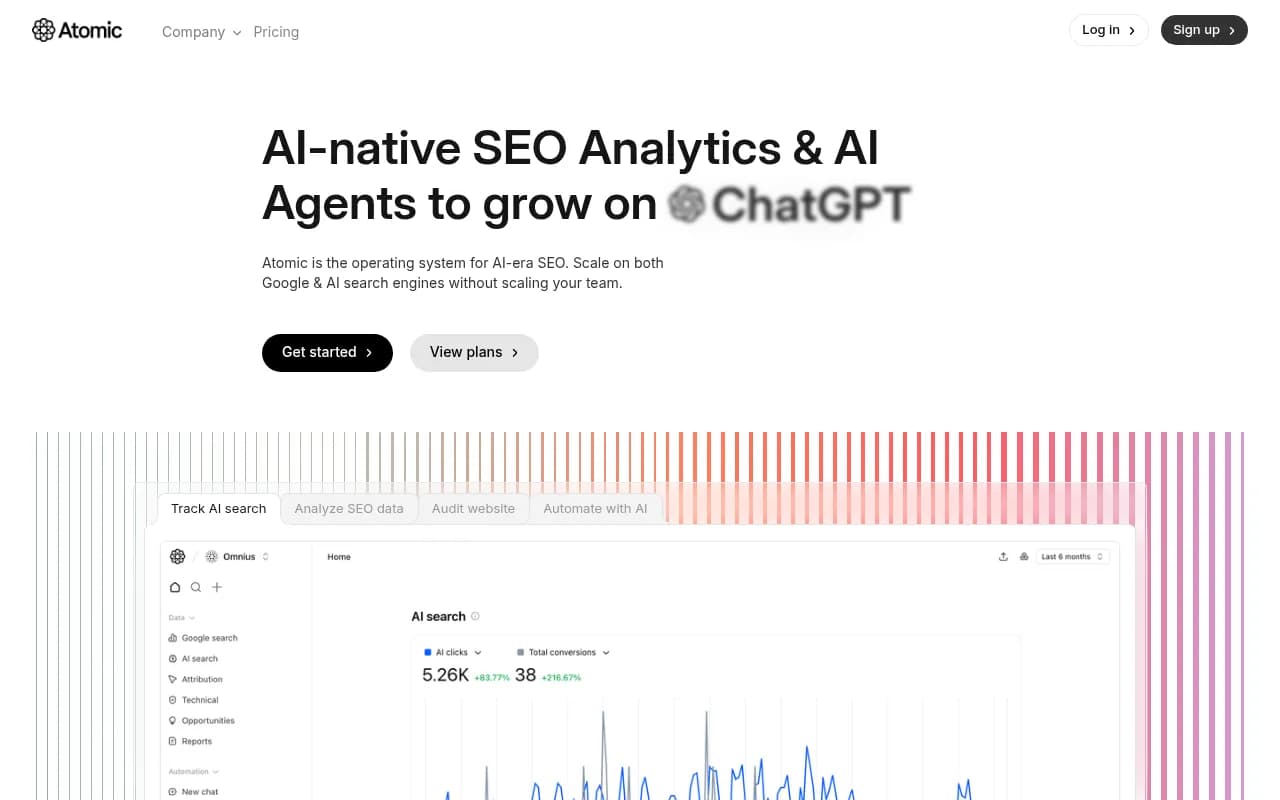
Atomic AGI combines multi-engine tracking with workflow automation, making it easier to act on the data you collect. While it doesn't provide the same depth of prompt intelligence as Promptwatch or Profound, it does offer basic volume estimates and difficulty scoring.
Strengths:
- Workflow automation for repetitive tasks
- Multi-engine coverage with unified dashboard
- Basic prompt metrics included
Weaknesses:
- Prompt intelligence is less detailed than top-tier platforms
- No built-in content generation
- Limited crawler log visibility
Best for: Marketing teams that want automation alongside tracking but don't need deep prompt intelligence.
What to Look for in a Prompt Intelligence Platform
If you're evaluating AI visibility tools and prompt volume data is a priority, here's what to look for:
1. Volume Estimates Based on Real Usage
The best platforms don't just guess—they analyze real usage patterns across AI models to estimate how often each prompt is used. Look for tools that can show you monthly volume ranges (e.g., 100-500, 500-2000, 2000+) so you can prioritize high-demand queries.
2. Difficulty Scoring
Just like traditional SEO keyword difficulty, prompt difficulty scores help you understand which queries are winnable. Factors include:
- How many competitors are already visible for this prompt
- The authority and content depth of those competitors
- How saturated the AI model's training data is for this topic
3. Query Fan-Outs
One prompt rarely exists in isolation. The best tools show you how a single prompt branches into related sub-queries, revealing content opportunities you wouldn't have found otherwise.
For example, the prompt "best CRM for small business" might fan out into:
- "best free CRM for small business"
- "best CRM for small business with email marketing"
- "best CRM for small business under $50/month"
- "CRM for small business vs enterprise CRM"
Each of these represents a content opportunity—and a chance to capture visibility across multiple related prompts.
4. Integration with Content Creation
Prompt intelligence is only valuable if you can act on it. The best platforms integrate content creation tools so you can move from insight to action without switching tools. Look for:
- AI writing agents that generate articles grounded in citation data
- Content brief builders that incorporate prompt volumes and competitor analysis
- Publishing workflows that connect directly to your CMS
5. Traffic Attribution
The final piece of the puzzle: connecting AI visibility to actual revenue. Look for platforms that offer:
- Code snippet tracking (embed a script to track visitors from AI referrals)
- Google Search Console integration (surface AI-driven organic traffic)
- Server log analysis (identify AI crawler activity and correlate it with traffic spikes)
The Monitoring-Only Alternatives (and Why They Fall Short)
If you're comparing platforms, you'll likely encounter these monitoring-focused tools. They're popular, but they don't provide prompt intelligence:
Otterly.AI
Otterly.AI

Otterly.AI offers automated prompt testing and GEO audits, but it's a monitoring-only platform. You can see where you're cited, but there's no prompt volume data, no content gap analysis, and no content generation tools.
Best for: Teams that just want to monitor citations and already have content workflows in place.
Peec.ai

Peec.ai provides a simple dashboard with competitor benchmarks, but it's missing prompt intelligence, crawler logs, and visitor analytics. It's a basic tracker, not an optimization platform.
Best for: Small teams that want a low-cost entry point into AI visibility tracking.
AthenaHQ

AthenaHQ is monitoring-focused and lacks content optimization and generation capabilities. No prompt volumes, no content gap analysis, no writing tools.
Best for: Brands that want to track visibility but don't need help creating content.
SE Visible
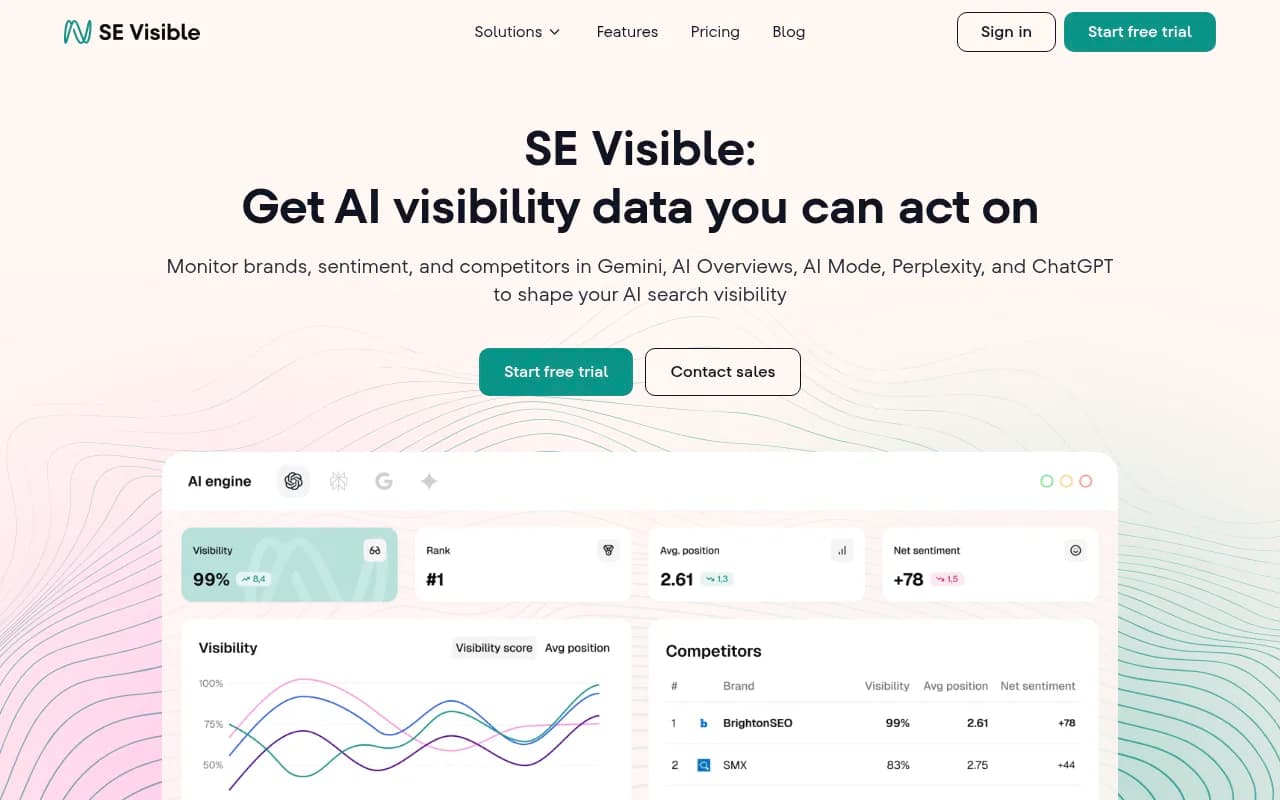
SE Visible tracks brand mentions in AI search engines but doesn't provide the tools to fix visibility gaps. No prompt intelligence, no content generation, no crawler logs.
Best for: Agencies that want to add AI visibility reporting to client dashboards but don't need optimization features.
How to Use Prompt Volume Data in Your Content Strategy
Once you have access to prompt intelligence, here's how to put it to work:
Step 1: Prioritize High-Volume, Low-Difficulty Prompts
Start by filtering for prompts that have:
- High monthly volume (500+ uses)
- Low-to-medium difficulty (not dominated by authoritative competitors)
- Relevance to your product or service
These are your quick wins—the prompts where you can gain visibility fastest.
Step 2: Map Prompts to Content Gaps
Use your platform's content gap analysis to identify which prompts competitors are visible for but you're not. For each gap, ask:
- Do we have content that addresses this prompt?
- If yes, why isn't it being cited? (Is it too shallow? Too old? Missing key details?)
- If no, what content do we need to create?
Step 3: Generate Content That AI Models Want to Cite
This is where platforms like Promptwatch shine. Use the built-in AI writing agent to generate articles, listicles, and comparisons that are:
- Grounded in real citation data (880M+ citations analyzed)
- Optimized for the specific prompt and persona
- Structured in a way that AI models prefer (clear headings, concise answers, supporting evidence)
Step 4: Track Results and Iterate
Publish your content, then monitor how your visibility scores change. Use page-level tracking to see:
- Which pages are being cited
- How often they're cited
- Which AI models are citing them
If a page isn't getting cited, revisit it. Add more depth, update outdated information, or adjust the structure to better match what AI models are looking for.
Step 5: Close the Loop with Traffic Attribution
Finally, connect visibility to revenue. Use traffic attribution tools to see:
- How many visitors are coming from AI referrals
- Which pages they're landing on
- How they convert compared to traditional organic traffic
This is how you prove ROI and justify continued investment in AI visibility.
The Competitive Landscape: Who's Leading in Prompt Intelligence
In a 2026 comparison of 12 GEO platforms, Promptwatch is the only platform rated as a "Leader" across all categories. Here's how the competitive landscape breaks down:
Leaders (Prompt Intelligence + Content Optimization):
- Promptwatch: The only platform that combines deep prompt intelligence with content gap analysis, AI writing agents, and traffic attribution
Strong Performers (Prompt Intelligence, Limited Optimization):
- Profound: Enterprise-grade prompt volumes but higher price point and limited content generation
- Atomic AGI: Multi-engine tracking with workflow automation but less detailed prompt intelligence
Monitoring-Only (No Prompt Intelligence):
- Otterly.AI, Peec.ai, AthenaHQ, SE Visible: Basic citation tracking without prompt volumes, content gap analysis, or generation tools
Traditional SEO Tools (Limited AI Search Support):
- Semrush: Fixed prompts, no custom prompt tracking, limited AI search depth
- Ahrefs Brand Radar: Fixed prompts, no AI traffic attribution, basic monitoring only
Real-World Use Case: How Prompt Intelligence Drives Results
Here's how a B2B SaaS company used prompt intelligence to increase AI visibility by 340% in 90 days:
The Challenge: The company was invisible in ChatGPT and Perplexity for high-value prompts like "best project management software for remote teams" and "project management tools with time tracking." Competitors were dominating these prompts, and the company had no idea which prompts were worth targeting.
The Solution: They used Promptwatch's Answer Gap Analysis to identify 47 high-volume prompts where competitors were visible but they weren't. For each gap, they:
- Checked prompt volume and difficulty scores to prioritize
- Used the AI writing agent to generate optimized articles (grounded in 880M+ citations)
- Published the content and tracked results with page-level monitoring
The Results:
- 340% increase in AI visibility score across ChatGPT, Perplexity, and Claude
- 23 new pages cited by AI models within 60 days
- 18% of organic traffic now coming from AI referrals (tracked via GSC integration)
- $47K in attributed revenue from AI-driven traffic in Q1 2026
The key difference: they didn't just monitor—they acted. Prompt intelligence showed them what to create, the AI writing agent helped them create it fast, and traffic attribution proved the ROI.
Why Most Tools Will Add Prompt Intelligence in 2026
Prompt volume data is still a differentiator in early 2026, but it won't stay that way for long. As the AI visibility market matures, expect most platforms to add some form of prompt intelligence by mid-2026.
The real question is: will they integrate it with content creation and optimization, or will it just be another data point in a monitoring dashboard?
Platforms like Promptwatch that close the loop—find gaps, generate content, track results—will remain ahead because they solve the full problem, not just part of it.
Conclusion: Choose a Platform That Helps You Act, Not Just Monitor
If you're evaluating AI visibility tools in 2026, don't settle for a monitoring-only dashboard. Look for platforms that provide:
- Prompt volume data so you know which queries actually matter
- Content gap analysis so you know what's missing from your website
- AI writing agents so you can create optimized content fast
- Traffic attribution so you can prove ROI
Promptwatch is the only platform that delivers all four. It's why 6,700+ brands trust it to track and optimize their AI visibility—and why it's rated as a "Leader" across all categories in 2026.
If you're serious about AI search optimization, start with a platform that helps you take action, not just collect data.