Key takeaways
- Most AI search monitoring tools are dashboards, not action systems -- they show you gaps but don't help you close them.
- Real-time action alerts matter because AI search visibility shifts fast: a competitor publishes one article and suddenly owns a prompt you were winning.
- The most effective platforms combine gap detection, prompt-level alerts, and content generation in a single workflow.
- Promptwatch is the only platform in 2026 rated as a "Leader" across all GEO categories, specifically because it closes the loop from alert to published content.
- Monitoring-only tools (Otterly.AI, Peec.ai, AthenaHQ) are useful for tracking but leave the fixing entirely to you.
Why "monitoring" isn't enough anymore
AI search has changed the competitive game in a specific, uncomfortable way. When someone asks ChatGPT, Perplexity, or Google AI Mode which CRM to use, which hotel to book, or which software solves their problem, the answer comes back as a single recommendation -- not ten blue links. You either appear or you don't.
That binary reality means visibility gaps aren't just missed opportunities. They're losses. And they happen fast. A competitor publishes a well-structured comparison article on a Tuesday, and by Thursday, Perplexity is citing it every time someone asks a question you used to own.
The platforms that were built for this moment fall into two camps. The first camp monitors: they show you a dashboard of where you appear, where you don't, and how competitors are doing. That's genuinely useful data. But it's passive. You still have to figure out what to write, brief a writer, wait for production, and hope the AI models eventually crawl and cite it.
The second camp acts. These platforms detect the gap, tell you exactly what content is missing, help you create it, and then track whether it worked. That's the difference between a reporting tool and an optimization platform.
This guide covers both camps honestly, because monitoring-only tools have their place -- but you should know what you're getting before you buy.
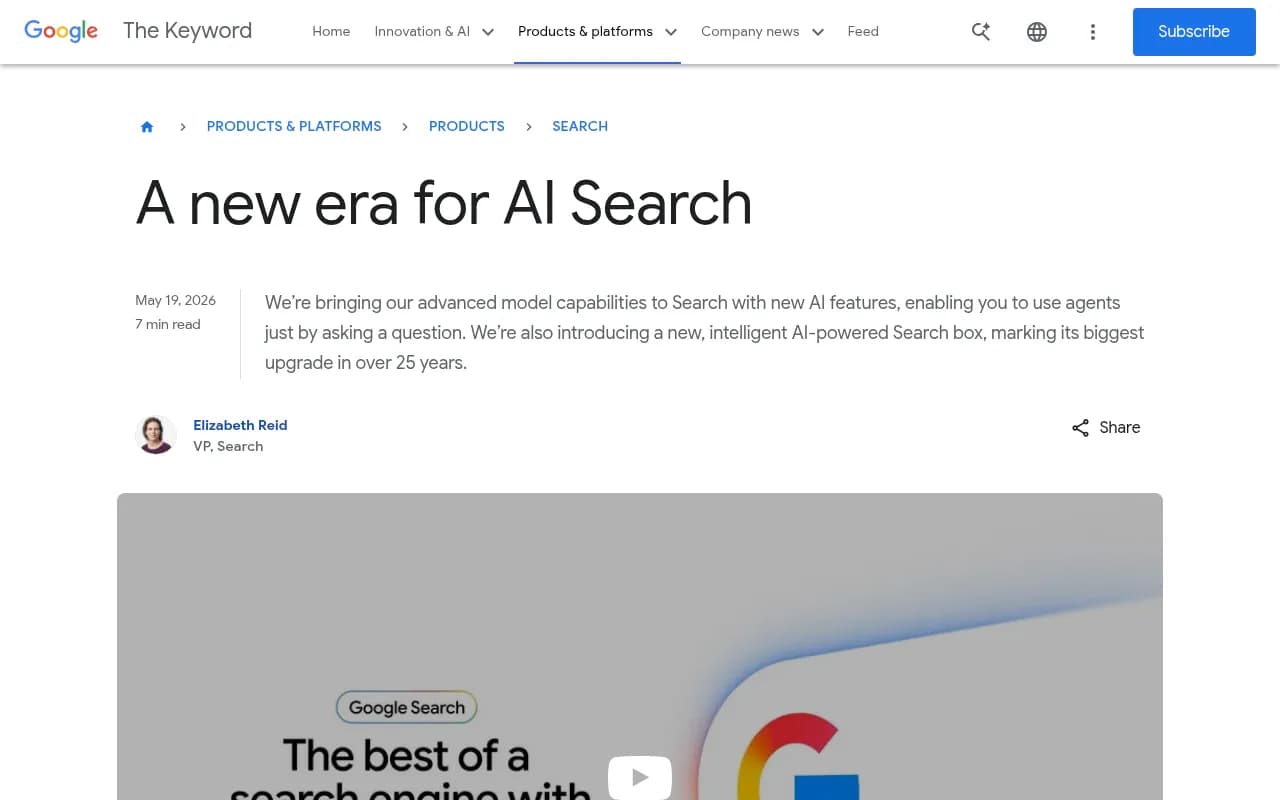
Google's I/O 2026 updates introduced agentic search capabilities -- AI models that can research and act on your behalf. If your brand isn't being cited, you're invisible to these agents too.
What a real-time action alert actually looks like
Before comparing platforms, it's worth being specific about what "real-time action alert" means in practice, because vendors use the term loosely.
A genuine action alert does three things:
- It tells you which prompt changed -- not just "your visibility dropped," but "competitors are now being cited for 'best project management software for remote teams' and you're not."
- It tells you why -- which competitor content is being cited, what angle it takes, what the AI model seems to want.
- It suggests what to do -- ideally generating a content brief or draft that addresses the gap directly.
Most tools stop at step one. Some reach step two. Very few get to step three. The ones that do are the ones worth paying for if your goal is actually improving visibility, not just measuring it.
The platforms worth knowing in 2026
Promptwatch: the full action loop
Promptwatch is the platform that most directly matches the "alert + fix" workflow described above. It's used by 1,480+ brands and agencies including Booking.com and Center Parcs, and it's the only platform in a 2026 comparison of 12 GEO tools rated as a "Leader" across every category.
The reason it stands apart is the action loop. When a gap opens -- say, a competitor starts getting cited for a prompt you're not -- Promptwatch's Answer Gap Analysis surfaces it with prompt-level detail: what the prompt is, which competitors are winning it, what content they're using. From there, Content Agents generate articles, comparisons, and briefs grounded in real prompt data, citation patterns, and competitor analysis. Then page-level tracking shows exactly when AI models start citing your new content, closing the loop.
A few capabilities that matter specifically for alerts:
- AI Crawler Logs show when ChatGPT, Claude, Perplexity, and others are hitting your pages -- and when they're not. If a crawler visits but doesn't cite, you can see that and investigate.
- Prompt Intelligence includes volume estimates and difficulty scores, so you can prioritize which gaps are worth chasing.
- Query fan-outs show how one prompt branches into sub-queries, which matters because fixing one gap often means addressing several related angles.
- Offsite citation tracking shows which Reddit threads, YouTube videos, and third-party pages are driving AI visibility for competitors -- channels most teams ignore.
It monitors 10 AI models: ChatGPT, Perplexity, Google AI Overviews, Google AI Mode, Claude, Gemini, Meta/Llama, DeepSeek, Grok, Mistral, and Copilot.
Pricing starts at $99/month for the Essential plan (1 site, 50 prompts, 5 articles). Professional is $249/month and adds crawler logs, state/city tracking, and 15 articles per month. Business is $579/month for 5 sites and 30 articles.

Otterly.AI: solid monitoring, no action layer
Otterly.AI is one of the more established monitoring tools in this space. It tracks brand mentions across ChatGPT, Perplexity, and Google AI Overviews, and the interface is clean enough that teams can get up and running quickly.
The limitation is that it stops at monitoring. There's no content generation, no crawler logs, and no answer gap analysis that tells you what to write. If you're a team that already has a strong content production process and just needs visibility data to feed it, Otterly.AI works. If you need the platform to help you close gaps, you'll hit a wall.
Otterly.AI

Peec AI: good for tracking share of voice
Peec AI focuses on share-of-voice tracking across AI search engines. It's useful for understanding how your brand compares to competitors across a set of prompts, and the reporting is reasonably detailed.
Like Otterly.AI, it's a monitoring tool. No content generation, no crawler logs, no action recommendations. It's a reasonable choice for teams that want a dedicated AI visibility tracker at a lower price point, but it won't alert you to specific gaps or tell you how to fix them.

AthenaHQ: monitoring with some optimization hints
AthenaHQ sits slightly above pure monitoring tools -- it offers some content optimization guidance alongside its tracking. The platform tracks brand mentions across AI search engines and provides recommendations for improving visibility.
That said, it doesn't have the content generation capabilities or crawler log depth that Promptwatch does. It's more of a "here's what to work on" tool than a "here's the content to publish" tool. For teams that want a middle ground between pure monitoring and full optimization, it's worth evaluating.

Profound: enterprise tracking with a higher price tag
Profound is an enterprise-focused AI visibility platform that tracks brand mentions across ChatGPT, Perplexity, and 9+ AI search engines. It has strong tracking capabilities and is well-suited to large brands that need detailed reporting across many prompts and markets.
The tradeoff is price -- Profound sits at a higher price point than most alternatives -- and it doesn't have Reddit tracking, ChatGPT Shopping monitoring, or the content generation capabilities that Promptwatch includes. For enterprise teams that primarily need tracking and reporting, it's a credible option. For teams that need to act on what they find, it's incomplete.
Profound

Scrunch AI: tracking without the action layer
Scrunch AI offers AI search visibility tracking with a reasonably broad set of monitored platforms. It's a capable monitoring tool that works well for teams that need to report on AI visibility to stakeholders.
Like most monitoring-only tools, it doesn't help you fix what you find. No content generation, no gap analysis that produces actionable briefs.
Semrush: traditional SEO with AI search features added
Semrush has added AI search monitoring capabilities to its platform, which makes sense given how much overlap exists between traditional SEO and GEO. If your team is already using Semrush for keyword research, rank tracking, and site audits, the AI visibility features are a reasonable addition.
The limitation is depth. Semrush uses fixed prompts rather than dynamic prompt tracking, and it doesn't have AI traffic attribution or the kind of crawler log data that shows you how AI agents are actually interacting with your site. It's a useful complement to a dedicated GEO platform, not a replacement.
Ahrefs: brand radar without the action layer
Ahrefs added Brand Radar to track AI visibility, and it benefits from Ahrefs' existing strengths in backlink analysis and keyword research. For teams already in the Ahrefs ecosystem, it's worth exploring.
The constraints: fixed prompts, no AI traffic attribution, and no content generation. It tells you where you appear in AI search but doesn't help you improve it. Similar to Semrush, it works best as a complement to a dedicated platform.
Brandlight.ai: niche tracking with limited scope
Brandlight.ai focuses on tracking how AI engines discover and recommend your brand. It's a more niche tool that works for specific use cases -- particularly brands that want to understand their entity representation in AI models.
It's missing several core capabilities: no crawler logs, no content generation, no Reddit or YouTube tracking. For teams with a narrow, specific monitoring need, it might fit. For teams that want a complete picture, it's too limited.
Comparison: which platform does what
| Platform | Real-time gap alerts | Content generation | Crawler logs | Reddit/YouTube tracking | ChatGPT Shopping | AI models tracked | Starting price |
|---|---|---|---|---|---|---|---|
| Promptwatch | Yes | Yes (Content Agents) | Yes | Yes | Yes | 10 | $99/mo |
| Otterly.AI | Basic | No | No | No | No | 3 | ~$99/mo |
| Peec AI | Basic | No | No | No | No | 5+ | ~$49/mo |
| AthenaHQ | Partial | Hints only | No | No | No | 5+ | Custom |
| Profound | Yes | No | No | No | No | 9+ | Custom |
| Scrunch AI | Basic | No | No | No | No | 5+ | ~$79/mo |
| Semrush | Fixed prompts | No | No | No | No | 3 | $140/mo |
| Ahrefs | Fixed prompts | No | No | No | No | 3 | $129/mo |
| Brandlight.ai | Basic | No | No | No | No | 4+ | Custom |
How to set up an action alert workflow
Regardless of which platform you use, the workflow for turning alerts into results follows the same pattern. Here's how to think about it:
Step 1: define your prompt universe
Start with the prompts that matter to your business. These aren't just branded queries -- they're the questions your customers ask AI models when they're in buying mode. "Best CRM for small teams," "which accounting software integrates with Shopify," "top email marketing tools for agencies." Map out 50-100 of these and track them consistently.
Tools like Promptwatch give you prompt volume estimates and difficulty scores, which helps you prioritize. Start with high-volume, winnable prompts rather than trying to compete on everything at once.
Step 2: set baseline visibility
Before you can detect a gap opening, you need to know where you stand. Run your prompt set, capture which AI models cite you and which don't, and document which competitors appear where you don't. This baseline is what makes future alerts meaningful.
Step 3: configure alerts for movement
The specific alert setup varies by platform, but you want to be notified when:
- A competitor gains visibility on a prompt you're currently winning
- A new prompt emerges where competitors are being cited and you're not
- Your visibility score drops on a specific model (e.g., you're still appearing in Perplexity but dropped out of ChatGPT)
- An AI crawler visits your site but doesn't result in a citation
Step 4: act on alerts within 48 hours
This is where most teams fail. They get the alert, acknowledge it, and then it sits in a backlog for three weeks while competitors consolidate their position. The teams that win at AI search treat gap alerts like incident reports -- something to address quickly, not eventually.
If your platform generates content briefs or drafts (Promptwatch does this through Content Agents), use them. If it doesn't, you need a fast-turnaround content process ready to go. The window between a gap opening and a competitor locking it down can be short.
Step 5: track from publish to citation
Publishing the content isn't the end. You need to know when AI crawlers find it, when they start citing it, and whether your visibility score on that prompt actually improves. This feedback loop is what turns a one-time fix into a repeatable process.
What to look for when evaluating platforms
A few questions worth asking before committing to any platform:
Does it track real user interfaces or just APIs? AI models can behave differently in their user-facing products versus their APIs. Platforms that only query the API may miss citations and recommendations that appear in the actual product.
How does it handle multi-model tracking? Your customers use different AI tools. A platform that only tracks Perplexity misses what's happening in ChatGPT, Gemini, and Google AI Mode. You want coverage across at least 5-6 major models.
Does it show you why competitors are winning? Knowing you're invisible is step one. Knowing which specific competitor content is being cited, and what angle it takes, is what lets you respond intelligently.
Can it connect visibility to traffic and revenue? AI visibility that doesn't translate to actual site visits and conversions is a vanity metric. The best platforms show you the attribution chain from AI citation to click to conversion.
Does it cover offsite signals? Reddit threads, YouTube videos, and third-party listicles drive a surprising amount of AI citation behavior. If a platform only looks at your own site, it's missing a significant part of the picture.
The bottom line
The AI search landscape in 2026 is moving fast. Google's I/O 2026 updates introduced agentic search capabilities -- AI that can research and act on your behalf -- which means the stakes for brand visibility in AI responses are higher than ever. Brands that appear in AI answers get the recommendation. Brands that don't are effectively invisible to a growing share of searchers.
Monitoring tools tell you where you stand. That's useful, but it's not sufficient. What you actually need is a platform that alerts you when a gap opens, tells you what content would close it, helps you create that content, and tracks whether it worked.
That's a short list of platforms. Promptwatch is the most complete option available in 2026. For teams that want a lighter monitoring-only tool as a starting point, Otterly.AI and Peec AI are reasonable choices -- just go in knowing you'll need to handle the "fix it" part yourself.
The gap between knowing and doing is where most brands lose. Close it.