Key takeaways
- Media and publishing brands have more content than most industries but often less AI visibility -- because AI models cite sources differently than Google ranks them
- The most important features for publishers are citation tracking at the article level, competitor heatmaps, and content gap analysis (not just brand-level monitoring)
- Most monitoring-only tools will tell you that you're invisible in AI search but won't help you fix it -- look for platforms that close the loop with content optimization
- Promptwatch is the only platform rated "Leader" across all GEO categories in 2026, and its Answer Gap Analysis and Content Agents are particularly useful for editorial teams managing large content libraries
- For enterprise publishers with compliance needs, Profound is worth evaluating; for teams already on Semrush, the AI Toolkit is a natural starting point
Why media and publishing brands have an AI visibility problem
Here's the irony: publishers produce more content than almost any other industry, yet many of them are invisible in AI search. A news outlet might publish 200 articles a week and still get zero citations in ChatGPT responses about topics they cover daily.
The reason isn't volume. It's structure. AI models like ChatGPT, Perplexity, and Google AI Overviews pull from sources they trust and can parse quickly. If your content isn't structured for AI consumption -- clear answers, authoritative sourcing, schema markup, fast crawl access -- it doesn't matter how much you publish. You won't get cited.
For publishers, this creates a specific set of problems:
- You have thousands of articles but no visibility into which ones AI models actually cite
- Competitors (often smaller, more SEO-focused sites) are getting cited for topics you've covered better
- Traffic from AI search is growing but you can't attribute it or track it
- Your editorial team doesn't know which content gaps to prioritize
The tools that solve this for media brands are different from what a SaaS company or e-commerce brand needs. You need article-level citation tracking, not just brand-level scores. You need competitor heatmaps that show which publications are winning for specific topics. And you need content gap analysis that works at scale.
What to look for in an AI visibility platform if you're a publisher
Before getting into specific tools, it's worth being clear about what actually matters for media and publishing use cases. Not every feature in every platform is relevant to you.
Article-level citation tracking is non-negotiable. Brand-level visibility scores are fine for a quick executive summary, but editorial teams need to know which specific pages are being cited, by which AI models, and how often. If a platform only shows you a single "visibility score," it's not built for publishers.
Competitor publication tracking matters more for media brands than for most verticals. You're not just competing with direct rivals -- you're competing with Wikipedia, Reddit threads, YouTube explainers, and niche blogs. A good platform shows you exactly which sources AI models prefer for any given topic.
Content gap analysis at scale is where most tools fall short. Finding one or two missing topics is easy. Finding the 200 content gaps across your coverage areas, ranked by prompt volume and competitive difficulty, requires real prompt data and a platform built to handle large content libraries.
AI crawler logs tell you whether AI engines can actually access your content. For publishers with paywalls, JavaScript-heavy pages, or complex CMS setups, this is often the first problem to fix. Most platforms don't offer this at all.
Traffic attribution connects AI visibility to actual pageviews and revenue. Publishers live and die by traffic numbers, so a platform that can show you which AI citations are driving real visits is worth significantly more than one that just tracks mentions.
The top platforms for media and publishing brands in 2026
Promptwatch
Promptwatch is the most complete option for publishers who want to both track and improve their AI visibility. The distinction matters: most tools in this space are monitoring dashboards. Promptwatch is built around an action loop -- find gaps, create content, track results.
For editorial teams, the most useful features are:
The Answer Gap Analysis shows exactly which prompts competitors are being cited for that you're not. For a news publisher, this might reveal that a competitor's explainer on a regulatory topic is getting cited in ChatGPT responses while your more comprehensive coverage isn't -- and it tells you why.
The Content Agents generate articles, listicles, and briefs grounded in real prompt data and citation analysis. This isn't generic content generation -- it's content engineered to answer the specific questions AI models are already being asked. For a publisher with an editorial team, this works best as a brief generator that gives writers a clear target.
Page-level tracking shows which specific articles are being cited, how often, and by which models (ChatGPT, Perplexity, Google AI Overviews, Claude, Gemini, and seven others). The Agent Analytics feature shows the timeline from publish to crawl to citation -- useful for understanding how quickly new content gets picked up.
The AI Crawler Logs are particularly valuable for publishers with complex CMS setups or paywalls. Real-time logs show which pages AI crawlers are accessing, what errors they're hitting, and how often they return. Most competitors don't offer this at all.
Promptwatch also tracks Reddit threads and YouTube videos that influence AI recommendations -- a channel most publishers ignore but that directly affects what AI models cite.
Pricing starts at $99/month for the Essential plan (1 site, 50 prompts, 5 articles). The Professional plan at $249/month adds crawler logs, state/city tracking, and 150 prompts. For larger publishers with multiple properties, the Business plan at $579/month covers 5 sites and 350 prompts. Agency and enterprise pricing is available for media groups managing many brands.

Profound
Profound is the strongest dedicated monitoring platform for enterprise publishers. It's built for teams that need deep reporting, compliance documentation, and a structured approach to AI visibility across large organizations.
The platform covers 9+ AI search engines and has strong prompt volume data, which helps editorial teams prioritize which topics to focus on. Its Agency mode is well-suited for media groups that manage multiple publications under one roof.
Where Profound falls short for publishers is on the action side. It's primarily a monitoring and reporting tool. There's no content generation, no crawler logs, and no Reddit or YouTube tracking. If your team wants to understand the problem in detail before deciding how to fix it, Profound is excellent. If you want a platform that helps you fix it too, you'll need to pair it with other tools.
Profound

Otterly.AI
Otterly.AI is a solid entry-level option for smaller publishers or editorial teams that are just starting to think about AI visibility. It tracks brand mentions across ChatGPT, Perplexity, and Google AI Overviews, and the interface is clean and easy to navigate.
The limitation is depth. Otterly.AI doesn't offer crawler logs, visitor analytics, content generation, or Reddit tracking. It's a monitoring dashboard, and a fairly basic one. For a solo blogger or a small niche publication, that might be enough. For a mid-size or large publisher, you'll outgrow it quickly.
Otterly.AI

Peec AI
Peec AI is another monitoring-focused platform that's popular with marketing teams. It tracks AI citations and provides competitive benchmarking, which is useful for publishers who want to see how they stack up against specific competitors.
Like Otterly.AI, it stops at monitoring. No content gap analysis, no crawler logs, no content generation. It's a reasonable choice for teams that already have strong editorial workflows and just need visibility data to inform them.

Scrunch AI
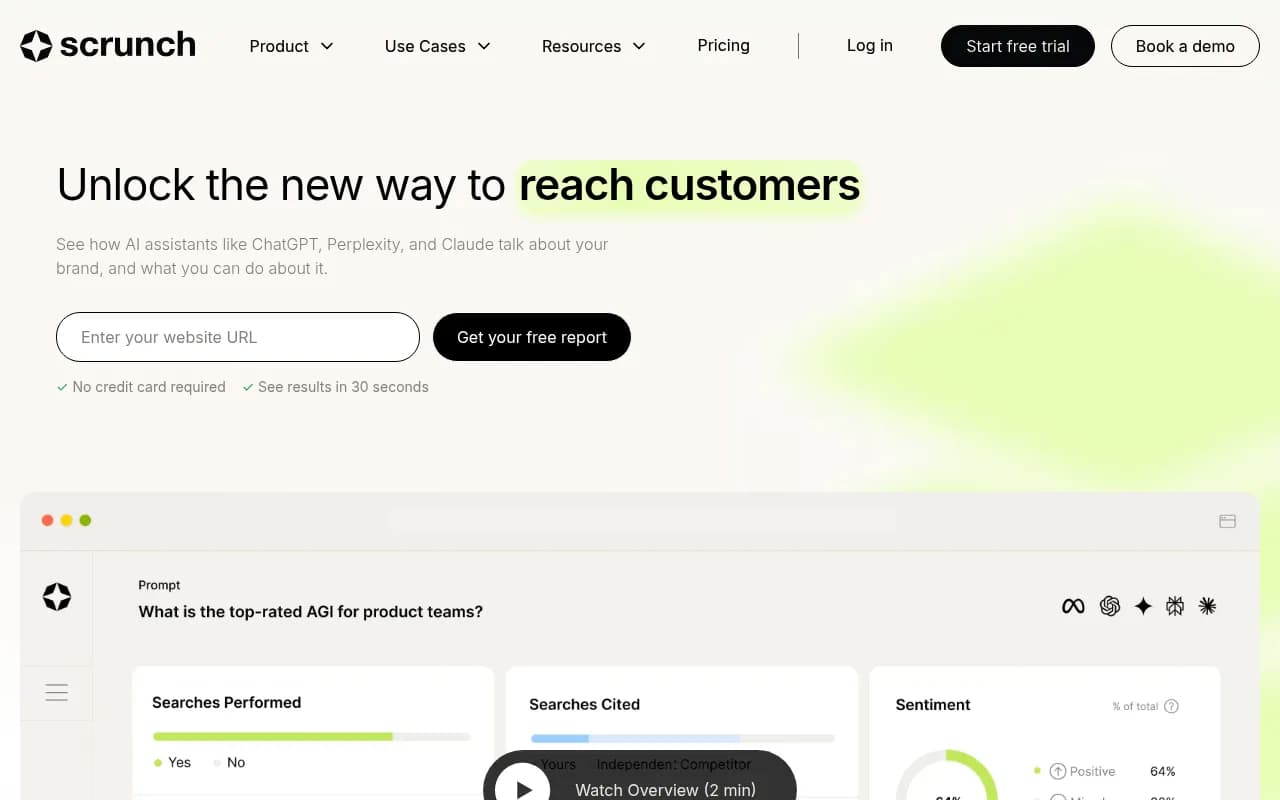
Scrunch AI takes a slightly different angle -- it focuses on helping brands understand how AI systems "see" their websites and content. For publishers with technical SEO concerns (JavaScript rendering, crawl accessibility, structured data), Scrunch's diagnostic approach can be useful.
It's not a full-featured GEO platform, but for publishers troubleshooting why their content isn't being cited despite good coverage, it can surface useful technical insights.
SE Ranking (AI Search Toolkit)
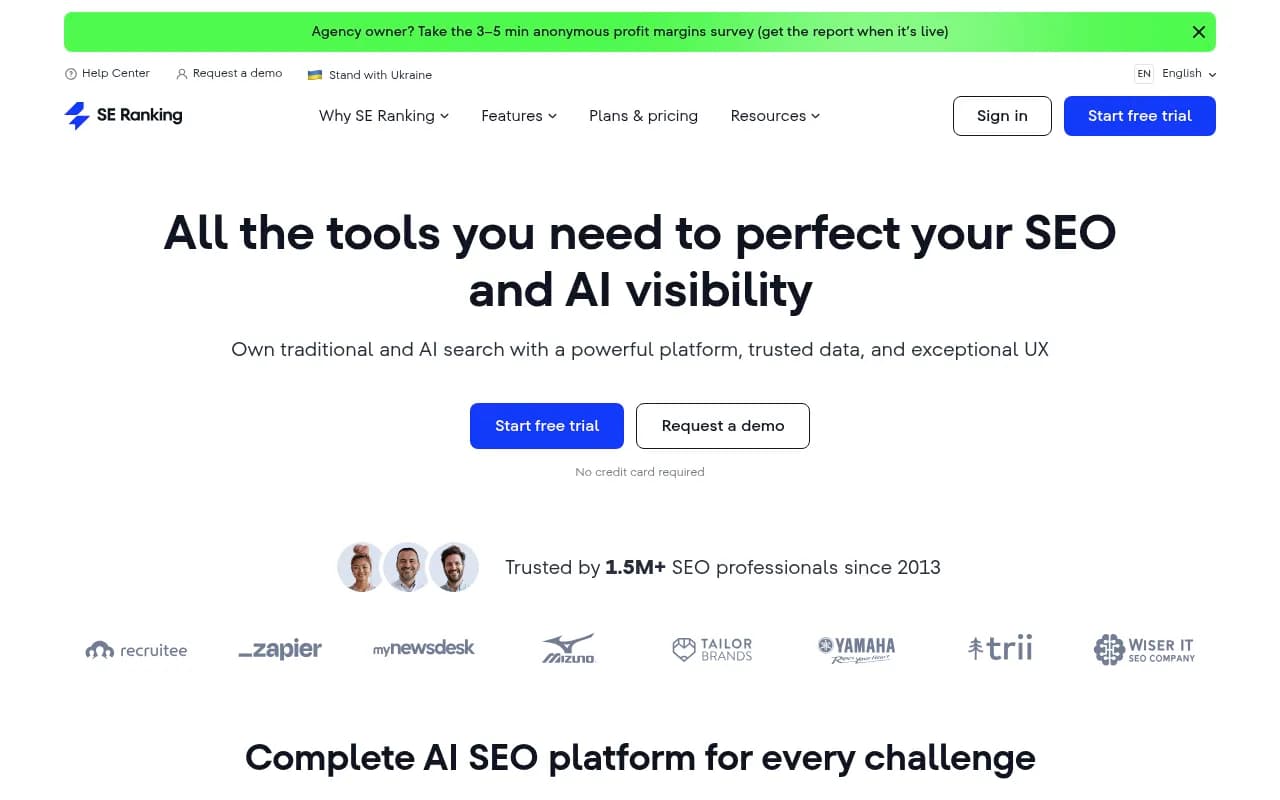
SE Ranking's AI Search Toolkit is a good option for publishers who are already using SE Ranking for traditional SEO and want to add AI visibility monitoring without switching platforms. It tracks brand mentions across AI engines and integrates with SE Ranking's existing rank tracking and site audit features.
The downside is that it's not a dedicated GEO platform. The AI features feel like an add-on rather than a core product, and the depth of prompt data and citation analysis doesn't match dedicated tools.
Semrush (AI Toolkit)
Similar story to SE Ranking -- Semrush's AI Toolkit is the natural choice for publishers already standardized on Semrush. It adds AI search monitoring to an existing SEO workflow, which reduces the number of tools a team needs to manage.
The limitation Semrush has acknowledged is that its AI tracking uses fixed prompts rather than real user query data. For publishers trying to understand how actual readers are prompting AI models, this is a meaningful gap. It also lacks AI traffic attribution, which matters a lot for editorial teams that need to justify investment in AI visibility work.
ZipTie
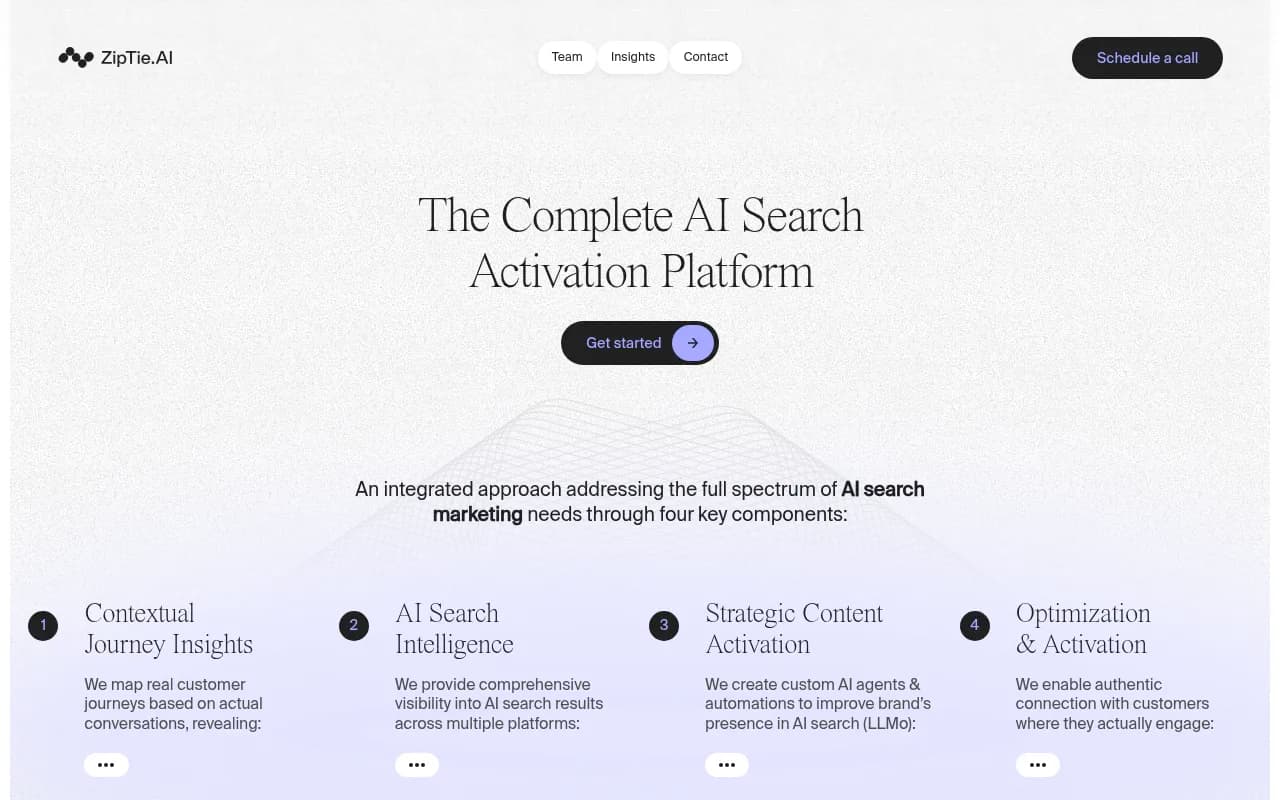
ZipTie is a deep-analysis platform that focuses on diagnosing AI visibility problems rather than just tracking them. For publishers with specific technical or content issues they're trying to understand, ZipTie's diagnostic approach can be useful.
It's not a full-featured platform for ongoing monitoring or content optimization, but it fills a niche for teams that want detailed analysis of a specific visibility problem.
AthenaHQ
AthenaHQ is monitoring-focused and has a clean interface for tracking brand mentions across AI engines. It's a reasonable option for publishers who want a dedicated AI visibility dashboard without the complexity of a full GEO platform.
Like most monitoring-only tools, it doesn't help you act on what you find. For publishers who have separate content and SEO teams that can take action independently, this might work. For smaller teams that need everything in one place, it's limiting.

Platform comparison table
| Platform | Citation tracking | Content generation | Crawler logs | Reddit/YouTube | Competitor heatmaps | Pricing (starting) |
|---|---|---|---|---|---|---|
| Promptwatch | Page-level | Yes (Content Agents) | Yes | Yes | Yes | $99/mo |
| Profound | Brand + page | No | No | No | Yes | Custom |
| Otterly.AI | Brand-level | No | No | No | Basic | ~$49/mo |
| Peec AI | Brand-level | No | No | No | Yes | ~$79/mo |
| Scrunch AI | Brand-level | No | No | No | Limited | Custom |
| SE Ranking AI | Brand-level | No | No | No | Basic | Add-on |
| Semrush AI | Brand-level | No | No | No | Basic | Add-on |
| ZipTie | Deep diagnostic | No | No | No | Limited | Custom |
| AthenaHQ | Brand-level | No | No | No | Yes | Custom |
The specific challenges publishers face -- and how to address them
Paywalled content
This is one of the biggest issues for news publishers. AI crawlers often can't access paywalled content, which means your best, most authoritative journalism is invisible to the models that could be citing it.
The fix isn't simple, but it starts with understanding the problem. AI Crawler Logs (available in Promptwatch's Professional plan and above) show you exactly which pages AI crawlers are hitting and which they're bouncing from. Once you know the scope of the problem, you can make informed decisions about which content to make accessible to crawlers and which to keep behind the paywall.
Some publishers are experimenting with "AI-accessible" versions of articles -- structured summaries that crawlers can read while the full article remains paywalled. Whether this works depends on the AI model and the content, but it's worth testing.
Large content libraries
A publisher with 10 years of archives has a different problem than a startup with 50 articles. The challenge isn't creating content -- it's figuring out which existing content to optimize and which gaps to fill.
This is where prompt volume data matters. Tools that show you which topics AI models are being asked about most frequently, combined with difficulty scores that tell you how competitive each topic is, let editorial teams prioritize intelligently. Without this data, you're guessing.
Multiple authors and editorial standards
AI models are sensitive to authoritativeness signals. A publication where every article has a clear byline, author bio, credentials, and publication date tends to get cited more than one where authorship is unclear. This sounds obvious, but many publishers have inconsistent practices across their CMS.
Structured data (schema markup for articles, authors, and organizations) also matters more than most editorial teams realize. It's not just for Google -- AI models use it to understand what a piece of content is and who wrote it.
Tracking ROI for editorial leadership
Editorial directors and publishers need to justify investment in AI visibility work. The challenge is that "we got cited in ChatGPT 47 times this month" doesn't mean much without a connection to traffic and revenue.
Traffic attribution -- connecting AI citations to actual pageviews -- is the missing link. Promptwatch's attribution features connect visibility to real visits, which makes the ROI conversation much easier. Most monitoring-only tools can't do this.
How to get started: a practical approach for publishers
If you're a publisher starting from zero on AI visibility, here's a reasonable sequence:
-
Run a baseline audit. Before you can improve anything, you need to know where you stand. Pick 20-30 topics that are core to your coverage and check how often your publication gets cited when AI models answer questions about those topics. Most platforms offer a trial that lets you do this.
-
Identify your biggest gaps. Which topics are competitors getting cited for that you're not? Which of your articles are getting cited and which aren't? This tells you where to focus.
-
Fix the technical problems first. If AI crawlers can't access your content, nothing else matters. Check your crawler logs, fix any access issues, and make sure your structured data is correct.
-
Create content for the gaps. Use prompt volume data to prioritize which gaps to fill. Focus on topics where there's real query volume and where your publication has genuine expertise.
-
Track the results. Set up page-level tracking so you can see when new content starts getting cited and how quickly. This feedback loop is what turns AI visibility work from a one-time project into an ongoing editorial practice.
The bottom line
Most AI visibility platforms are monitoring dashboards. They show you a problem and leave you to figure out what to do about it. For publishers with large content libraries, complex technical setups, and editorial teams that need to justify their work, that's not enough.
The platforms that actually move the needle for media brands are the ones that combine citation tracking with content gap analysis, crawler diagnostics, and some form of content optimization support. Promptwatch is the most complete option in that category right now. Profound is the strongest pure-monitoring choice for enterprise teams. Everything else is worth evaluating based on your specific budget and workflow.
The underlying reality is that AI search isn't going away, and publishers who figure out how to get cited in ChatGPT and Perplexity responses will have a meaningful traffic advantage over those who don't. The tools exist to do this systematically. The question is whether your editorial team treats it as a priority.