Key takeaways
- AI search engines like ChatGPT, Perplexity, and Google AI Overviews are now a primary channel where PR campaigns either land or disappear -- you need to measure this separately from traditional media coverage.
- Most AI visibility tools only monitor brand mentions; the best ones also help you identify content gaps and create the content that gets you cited.
- Establish a baseline at least two to four weeks before a campaign launches, then track citation frequency, sentiment, and source attribution throughout.
- Platforms differ significantly on which AI engines they cover, whether they track Reddit and YouTube (major LLM citation sources), and whether they offer content optimization -- not just monitoring.
- Promptwatch is the only platform in 2026 rated as a leader across all categories in a 12-tool comparison, largely because it closes the loop from gap identification to content creation to citation tracking.
Why PR teams need AI visibility data now
A few years ago, measuring a PR campaign meant tracking press pickups, domain authority of placements, and referral traffic. That still matters. But something else is happening that most PR teams are only starting to account for.
When someone asks ChatGPT "what's the best project management tool for remote teams?" or "which CRM do enterprise sales teams prefer?", the answer they get is shaped by what AI models have read, indexed, and decided to cite. A well-placed article in a high-authority publication now does double duty: it earns traditional media value and it potentially becomes a citation source for AI engines.
The problem is that traditional PR measurement tools have no visibility into this second layer. You can track your TechCrunch mention in Cision. You can't track whether that TechCrunch mention caused Perplexity to start recommending your brand in relevant queries -- unless you have an AI visibility platform running in parallel.
According to SparkToro's analysis of Similarweb clickstream data from early 2026, about 68% of Google searches ended without a click. ChatGPT reached roughly 900 million weekly active users by February 2026. These aren't niche numbers. The answer engine is now the destination, and PR campaigns that don't measure AI citation impact are leaving a significant portion of their results unmeasured.
What to measure before, during, and after a campaign
Before you pick a platform, it helps to know what you're actually trying to track. AI visibility for PR purposes breaks into a few distinct measurement questions:
Before the campaign (baseline)
- How often does your brand appear in AI-generated answers for your target prompts?
- What sentiment do AI engines express when they mention you?
- Which competitors are being cited instead of you, and for which queries?
- Which external sources (Reddit threads, YouTube videos, third-party articles) are currently driving AI citations about your category?
During the campaign
- Are new press placements being picked up and cited by AI crawlers?
- Is citation frequency increasing for target prompts?
- Are AI engines picking up the specific messaging you're pushing?
After the campaign
- Did your AI visibility score improve relative to baseline?
- Which placements had the most impact on AI citations?
- Are there remaining gaps where competitors are still being cited instead of you?
The platforms below differ significantly in how many of these questions they can actually answer.
The platforms worth considering
Promptwatch
Promptwatch is the most complete option for PR teams that want to measure AI visibility as part of campaign measurement -- not as a separate, disconnected workflow.

What makes it relevant for PR specifically: it tracks how AI engines respond to prompts across 10 models (ChatGPT, Perplexity, Claude, Gemini, Grok, DeepSeek, Copilot, Meta AI, Mistral, and Google AI Overviews), and it connects that tracking to actual content gaps. The Answer Gap Analysis shows you exactly which prompts competitors are being cited for but you're not -- which is useful both before a campaign (to set targets) and after (to measure whether the gap closed).
The AI Crawler Logs feature is particularly useful for PR measurement. It shows you in real time when AI crawlers hit pages on your site -- which pages they read, how often they return, and when a page moves from "crawled" to "cited." If you publish a press release or a campaign landing page, you can watch whether AI engines actually pick it up, and how long it takes. Most platforms have nothing like this.
Promptwatch also tracks offsite citations -- Reddit threads, YouTube videos, and third-party articles that AI engines are citing about your category. For PR teams, this is gold: it tells you where to seed content and which placements are most likely to influence AI recommendations.
Pricing starts at $99/month for the Essential plan (1 site, 50 prompts), with the Professional plan at $249/month adding crawler logs and multi-location tracking.
Profound
Profound is the strongest dedicated enterprise monitoring platform in this space. It tracks brand presence across 10+ AI answer engines and has solid prompt volume data, which helps PR teams prioritize which queries to target before a campaign.
Profound

Where Profound shines is depth of monitoring and reporting -- it's built for teams that need to show stakeholders a clear before/after picture with clean dashboards. The PR & Brand Teams solution page on their site is explicitly aimed at this use case.
The gap is on the action side. Profound is primarily a monitoring tool. It will tell you your AI visibility score went up after a campaign, but it won't help you identify what content to create to keep improving it, and it doesn't generate that content. For teams that just need measurement and can handle optimization separately, it's a strong choice. Pricing is higher than most competitors.
Otterly.AI
Otterly positions itself explicitly as a PR tool for the AI age -- its own framing, not ours. It scans LLMs to show how a brand is being described, which makes it a natural fit for PR teams that want to monitor brand narrative in AI responses.
Otterly.AI

It covers ChatGPT, Perplexity, and Google AI Overviews, which are the three most important channels for most brands. The interface is clean and the monitoring is straightforward to set up.
The limitations are real though. Otterly is a monitoring-only tool. There's no content gap analysis, no crawler logs, no content generation. If your goal is purely "show me how AI engines describe my brand before and after this campaign," Otterly works. If you want to understand why your visibility changed or what to do about remaining gaps, you'll hit a ceiling quickly.
Peec AI
Peec AI is a solid mid-market option for teams that want AI visibility tracking without the complexity of an enterprise platform.

It tracks brand mentions across major AI engines and gives you the kind of before/after comparison data that PR teams need for campaign reporting. The interface is straightforward, and it's priced accessibly for smaller marketing teams.
Like Otterly, Peec is monitoring-focused. It's a good fit for teams running occasional campaigns who need clean data for reports, but not for teams trying to build a systematic AI visibility improvement program.
Scrunch AI
Scrunch AI focuses on helping brands understand how AI systems see their websites and content -- a slightly different angle than pure brand mention tracking.
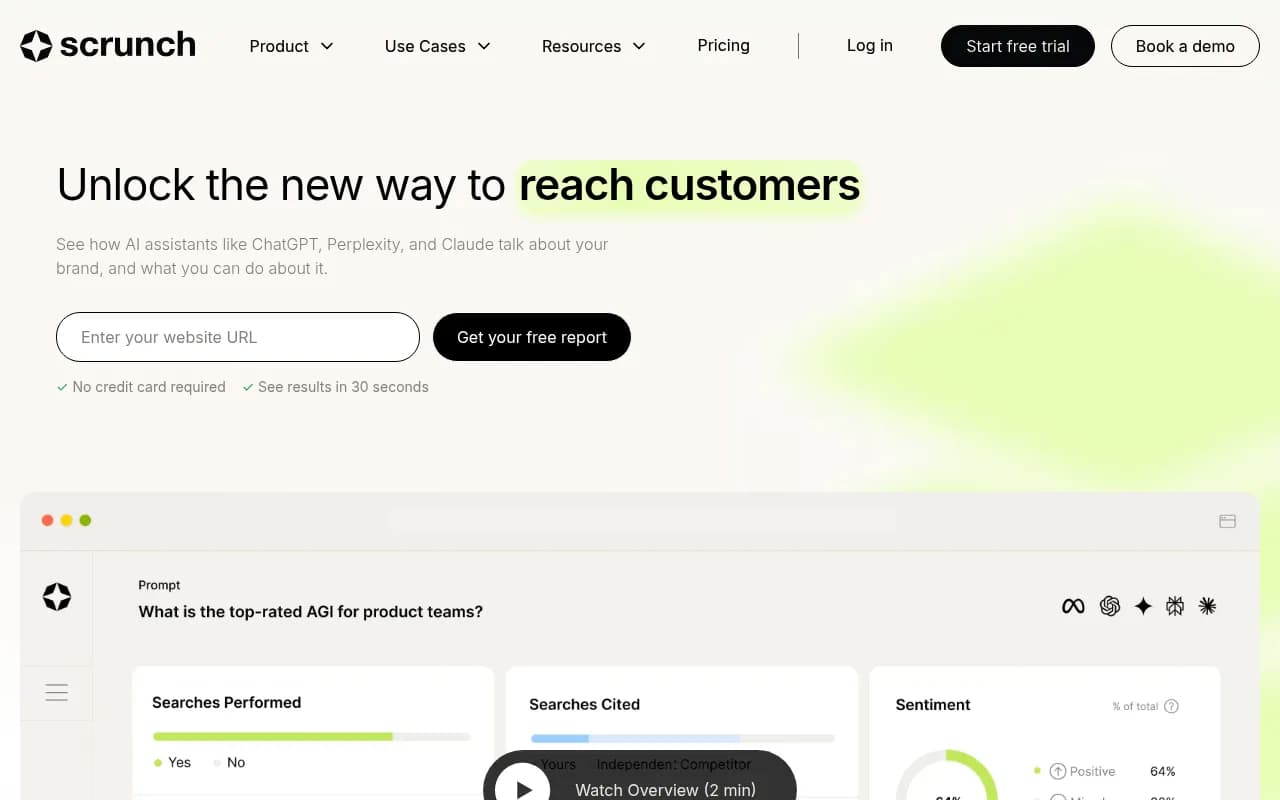
For PR teams, this is useful because it surfaces how AI engines interpret your site's content, which can explain why certain messaging is or isn't being picked up in AI responses after a campaign. If you push a new narrative in a campaign and AI engines aren't reflecting it, Scrunch can help diagnose whether the issue is content structure, authority, or something else.
AthenaHQ
AthenaHQ is a monitoring-focused platform with clean reporting and solid multi-engine coverage.

It's a reasonable choice for teams that need straightforward before/after visibility data and don't need the optimization layer. The reporting is clear enough to share with PR clients or internal stakeholders.
SE Ranking (SE Visible)
SE Ranking's AI visibility product (SE Visible) tracks brand mentions in AI search engines and integrates with SE Ranking's broader SEO toolkit.
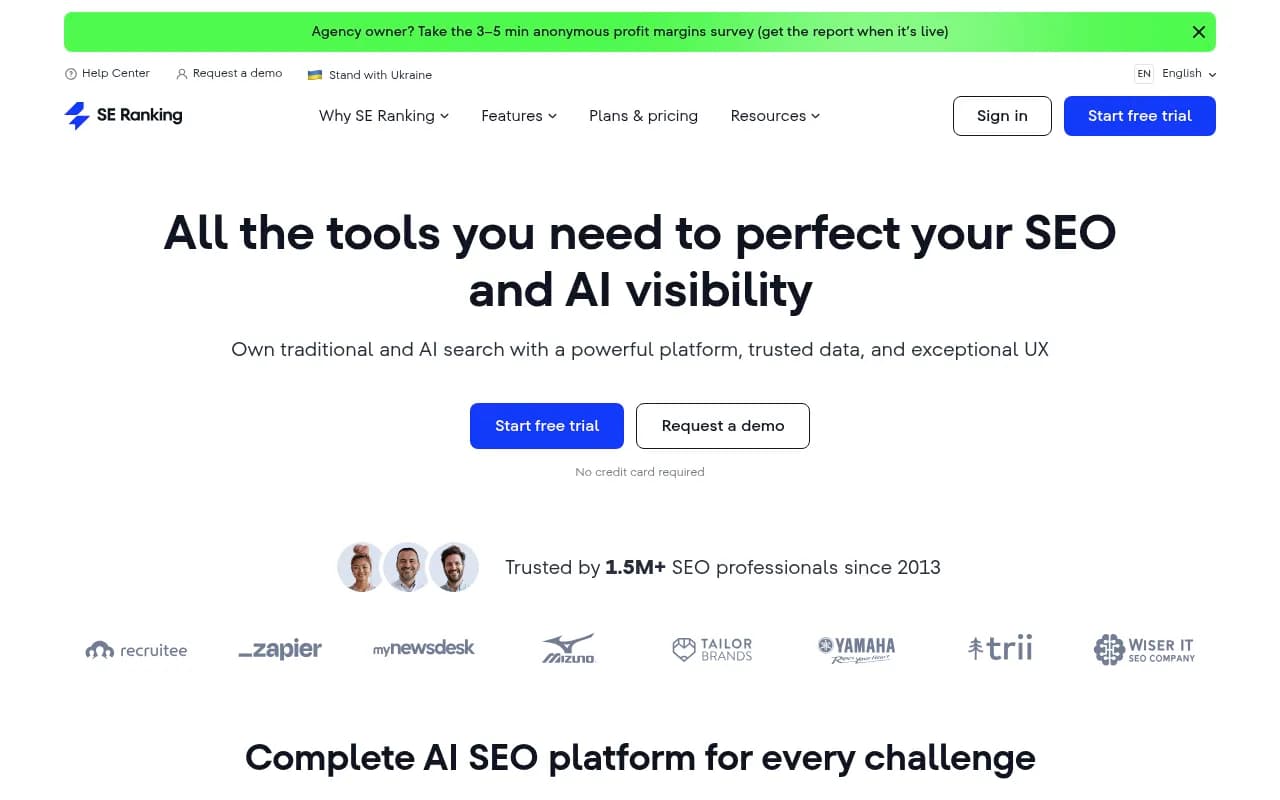
For teams already using SE Ranking for traditional SEO, adding AI visibility tracking here is the path of least resistance. The integration means you can correlate traditional search performance with AI citation data, which is useful for understanding the full impact of a PR campaign across both channels.
Semrush AI Toolkit
Semrush's AI Toolkit is the natural choice for teams already standardized on Semrush. It adds AI search monitoring to the existing Semrush workflow.
The limitation worth knowing: Semrush uses fixed prompts rather than letting you define custom prompts based on your specific campaign targets. For PR measurement, where you often want to track very specific queries related to your campaign messaging, this is a real constraint.
Platform comparison
| Platform | AI engines covered | Custom prompts | Crawler logs | Content gap analysis | Content generation | Reddit/YouTube tracking | Best for |
|---|---|---|---|---|---|---|---|
| Promptwatch | 10 | Yes | Yes | Yes | Yes | Yes | Full-cycle PR measurement + optimization |
| Profound | 10+ | Yes | No | Limited | No | No | Enterprise monitoring and reporting |
| Otterly.AI | 3 | Yes | No | No | No | No | Brand narrative monitoring |
| Peec AI | Multiple | Yes | No | No | No | No | Mid-market monitoring |
| Scrunch AI | Multiple | Yes | No | Limited | No | No | Content interpretation analysis |
| AthenaHQ | Multiple | Yes | No | No | No | No | Clean before/after reporting |
| SE Ranking | Multiple | Yes | No | No | No | No | Teams already on SE Ranking |
| Semrush AI Toolkit | Multiple | Fixed only | No | No | No | No | Teams already on Semrush |
How to structure AI visibility measurement for a PR campaign
Step 1: Set your baseline (2-4 weeks before launch)
Run your target prompts through your chosen platform and record:
- Citation frequency for your brand vs. competitors
- Sentiment in AI responses that mention your brand
- Which external sources AI engines are currently citing about your category
- Your overall AI visibility score across the engines you care about
Don't skip this step. Without a baseline, you can't attribute changes to your campaign vs. natural variation.
Step 2: Map the gaps before you launch
This is where platforms diverge sharply. A tool like Promptwatch will show you specifically which prompts competitors are being cited for that you're not -- which lets you design campaign content that targets those gaps directly. Most monitoring-only tools won't give you this.
If you know that Perplexity is citing a competitor for "best [category] tool for enterprise teams" and not citing you, you can create campaign content that directly addresses that query angle.
Step 3: Track during the campaign
Watch for:
- New citations appearing after press placements go live
- AI crawler activity on campaign pages (if your platform supports this)
- Sentiment shifts in how AI engines describe your brand
- Whether campaign messaging is being reflected in AI responses
The lag between a press placement going live and AI engines incorporating it into responses can range from days to weeks, depending on the engine and the authority of the publication. Don't panic if you don't see immediate changes.
Step 4: Measure the delta after the campaign
Compare your post-campaign metrics to your baseline:
- Did citation frequency increase for target prompts?
- Did your AI visibility score improve relative to competitors?
- Which placements had the most measurable impact on AI citations?
- What gaps remain?
The last question matters as much as the wins. If your campaign moved the needle on some prompts but competitors are still being cited for others, that's your roadmap for the next phase.
What most PR teams get wrong about AI visibility
The most common mistake is treating AI visibility as a vanity metric -- something to screenshot for a report rather than something to actively optimize. A citation count going up is nice. Understanding why it went up, which specific content drove it, and what to do next is what actually compounds over time.
The second mistake is measuring too late. Teams that set up AI visibility tracking the week their campaign launches have no baseline to compare against. The measurement only becomes meaningful if you start before the campaign.
The third mistake is ignoring offsite signals. AI engines don't just read your website. They read Reddit, YouTube, industry publications, and third-party review sites. A PR campaign that places content on high-authority external sites can move AI visibility significantly -- but only if you're tracking offsite citations, not just your own domain.
Choosing the right platform for your situation
If you're running a one-off campaign and need basic before/after data, Otterly.AI or Peec AI will get the job done without much setup overhead.
If you're an agency managing multiple clients and need clean reporting plus the ability to show clients what to do next, Promptwatch's agency plans are built for this -- the combination of monitoring, gap analysis, and content generation means you can deliver more than just a dashboard.
If you're at an enterprise brand with a dedicated PR team and need deep monitoring with stakeholder-ready reporting, Profound is worth evaluating alongside Promptwatch.
If you're already deep in the Semrush or SE Ranking ecosystem, start with their AI visibility add-ons before adding another platform -- the integration value is real even if the features are more limited.
The honest answer is that most teams underinvest in this measurement until they see a competitor getting cited in AI responses for queries they thought they owned. By then, the gap is already established. Setting up baseline tracking before your next campaign costs less than you think and tells you more than any post-campaign press report.