Key takeaways
- AI search engines like ChatGPT, Perplexity, and Google AI Overviews are now primary discovery channels for accounting and tax software buyers -- if your brand isn't cited, you're losing deals before the first touchpoint.
- Most GEO tools only monitor brand mentions; the best ones help you identify content gaps and generate content that closes them.
- Accounting and tax software has specific prompt patterns (compliance questions, software comparisons, jurisdiction-specific tax queries) that require tools with real prompt volume data, not simulated queries.
- Promptwatch is the only platform rated "Leader" across all GEO categories in 2026, covering 10 AI models with crawler logs, content generation, and traffic attribution in one workflow.
- For teams with tighter budgets, Otterly.AI and Peec AI offer solid monitoring entry points, though neither closes the loop from gap to published content.
When a small business owner types "best accounting software for freelancers" into ChatGPT, they're not browsing -- they're deciding. The AI gives them three to five names, maybe a short comparison, and that's it. If your product isn't in that response, you don't exist for that buyer.
This is the core problem facing accounting and tax software brands right now. Traditional SEO still matters, but a growing share of purchase decisions in this category are being shaped by AI-generated answers. Buyers ask about payroll integrations, VAT compliance, multi-entity support, and tax filing deadlines -- and they expect AI to point them toward the right tools.
GEO (Generative Engine Optimization) is the discipline of making sure your brand shows up in those answers. And the tools you use to track, analyze, and improve that visibility matter enormously.
This guide breaks down the best GEO tools for accounting and tax software brands in 2026, what each one actually does well, and where the gaps are.
Why accounting and tax software is a high-stakes AI visibility category
The accounting and tax software space has a few characteristics that make AI visibility especially important -- and especially tricky.
First, the buying cycle is research-heavy. Buyers compare features, pricing, compliance certifications, and integrations before they commit. They ask AI assistants questions like "what's the best accounting software for UK VAT returns" or "QuickBooks vs Xero for small business" -- and AI models have strong opinions about these comparisons based on what they've been trained on and what they're currently citing.
Second, compliance and regulation create constant content demand. Tax law changes, new filing requirements, and jurisdiction-specific rules mean buyers are constantly asking AI for guidance. Brands that publish accurate, well-structured content on these topics get cited. Brands that don't, don't.
Third, the competitive set is well-funded and content-rich. QuickBooks, Xero, FreshBooks, Sage, Wave, and dozens of vertical-specific tools are all competing for the same AI citations. Without active GEO tracking, you have no idea whether you're winning or losing that fight.
What to look for in a GEO tool for this category
Not all GEO tools are built the same. For accounting and tax software specifically, here's what actually matters:
Prompt coverage that matches real buyer behavior. You need to track prompts like "best accounting software for contractors," "how to file quarterly taxes with [software name]," and "does [tool] support multi-currency invoicing" -- not just your brand name. Tools that only track branded mentions miss most of the opportunity.
Real prompt volume data. Some tools simulate queries. Others pull from real user conversations. The difference matters when you're trying to prioritize which content gaps to close first.
Competitor visibility tracking. You need to know when ChatGPT recommends QuickBooks instead of you, and why. Competitor heatmaps and citation analysis tell you what content is driving those recommendations.
Content gap analysis and generation. Monitoring is table stakes. The tools that actually move the needle show you what content you're missing and help you create it.
Crawler and indexing visibility. AI models can only cite content they've crawled and understood. Knowing whether GPTBot or ClaudeBot has visited your pages -- and whether they encountered errors -- is critical for technical GEO.
Multi-model coverage. Your buyers use ChatGPT, Perplexity, Google AI Overviews, and increasingly Claude and Gemini. A tool that only tracks one or two models gives you an incomplete picture.
The best GEO tools for accounting and tax software brands in 2026
Promptwatch -- best overall for end-to-end GEO
Promptwatch is the most complete GEO platform available in 2026, and it's the right choice for accounting and tax software brands that want to do more than watch a dashboard.

The core difference from every other tool on this list: Promptwatch closes the loop. Most platforms show you where you're invisible. Promptwatch shows you where you're invisible, tells you exactly what content is missing, and then helps you create it with AI-powered Content Agents that generate articles, comparisons, and briefs grounded in real prompt data.
For an accounting software brand, this means you can identify that competitors are getting cited for "best accounting software for sole traders in Australia" while you're not, generate a content brief targeting that exact gap, publish the article, and then track when AI crawlers index it and when citations start appearing. That full cycle -- gap to content to citation to traffic -- is what makes it an optimization platform rather than a monitoring tool.
A few specifics worth knowing: Promptwatch tracks 10 AI models (ChatGPT, Perplexity, Google AI Overviews, Google AI Mode, Claude, Gemini, Meta/Llama, DeepSeek, Grok, Mistral, Copilot), has processed over 4.5 billion citations and prompts, and includes real AI crawler logs so you can see when GPTBot and ClaudeBot visit your pages and whether they're encountering errors. It also tracks ChatGPT Shopping appearances and Reddit/YouTube citations -- both increasingly relevant for software discovery.
Pricing starts at $99/month for the Essential plan (1 site, 50 prompts, 5 articles). The Professional plan at $249/month adds crawler logs, state/city tracking, and 15 articles per month.
Profound -- best for enterprise brands with deep pockets
Profound is the other serious enterprise option in 2026. It raised a Series C at a $1B valuation in February 2026, which tells you something about where the market is heading.
Profound

The platform's strength is breadth of data. Profound's Prompt Volumes feature pulls from a GDPR-consented panel of real user conversations, which gives you more reliable signal than simulated queries. For a large accounting software vendor trying to understand how buyers across different industries and geographies are prompting AI, that data depth is genuinely useful.
The limitation is that Profound is primarily a monitoring and intelligence platform. It shows you what's happening but doesn't have the content generation capabilities to help you act on it. At $499/month for a basic plan (ChatGPT-only in some tiers), it's also expensive for what you get if you're a mid-market brand.
Otterly.AI -- best affordable entry point
Otterly.AI is one of the most popular entry-level GEO tools, and for good reason. It's clean, covers four AI engines, includes a GEO audit feature, and is among the cheapest options in the market.
Otterly.AI

For an accounting software brand just starting to track AI visibility, Otterly gives you a fast way to see whether your brand is being mentioned in ChatGPT, Perplexity, and Google AI Overviews responses. The GEO audit is a nice touch -- it gives you a structured view of how well your site is prepared for AI search.
The honest limitation: Otterly is monitoring-only. It doesn't have crawler logs, content generation, or traffic attribution. You'll see the problem but you'll need other tools to fix it.
Peec AI -- good for tracking brand visibility over time
Peec AI focuses on tracking how your brand appears in AI responses over time, with decent competitor comparison features.

It covers Google AI Overviews, which many cheaper tools skip, and the interface is straightforward enough that marketing teams can use it without SEO expertise. For accounting software brands that want to track a specific set of branded and category prompts on a regular cadence, Peec works well.
Like Otterly, it stops at monitoring. No content generation, no crawler logs, no traffic attribution.
ZipTie -- best for granular citation analysis
ZipTie takes a different approach from most GEO tools. Rather than giving you a high-level visibility score, it goes deep on individual citations -- which pages are being cited, how often, in what context, and by which models.
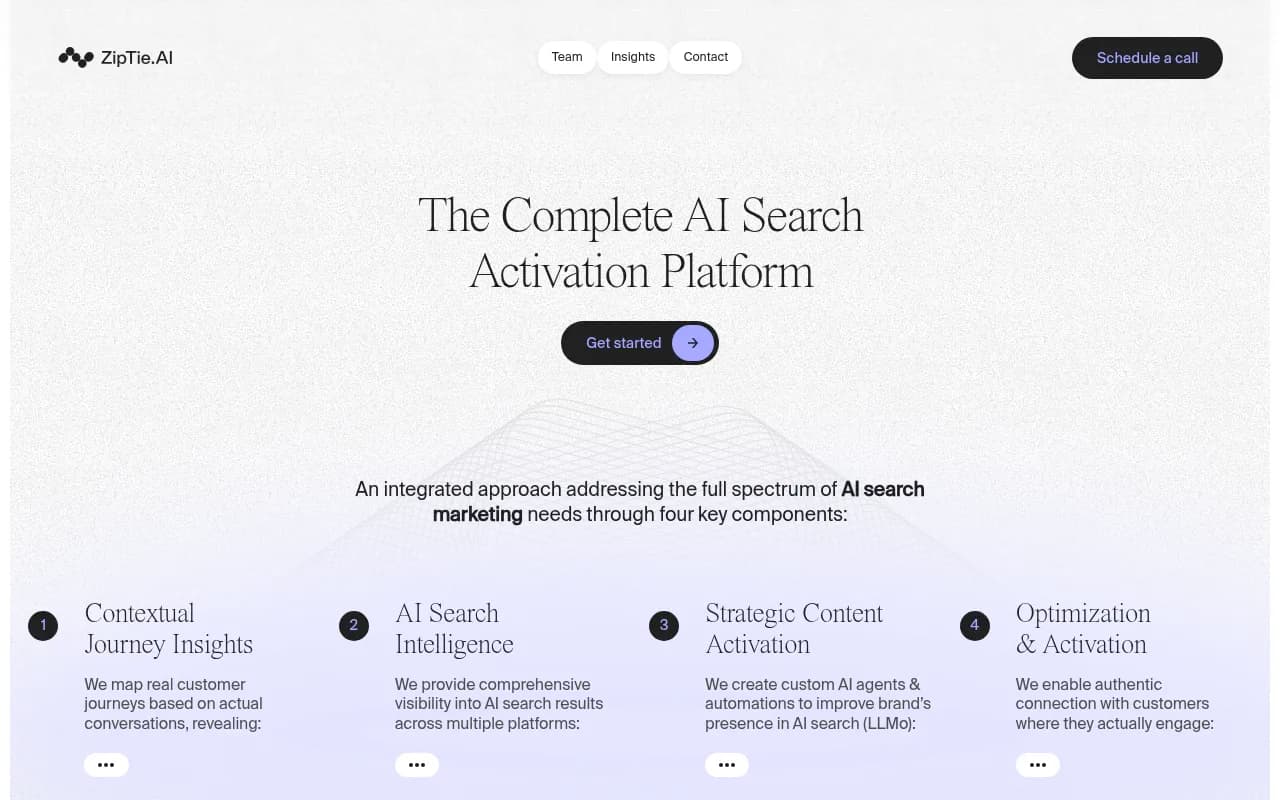
For accounting software brands, this level of granularity is useful when you're trying to understand why a specific competitor keeps getting cited for "best invoicing software for small business" and you don't. ZipTie can show you the exact pages and content patterns that are driving those citations.
It's more of a research and analysis tool than an ongoing monitoring platform, which means it works best as a complement to a broader GEO stack rather than a standalone solution.
Scrunch AI -- solid mid-market option
Scrunch AI tracks brand mentions across LLMs with a reasonably clean interface and decent multi-model coverage.
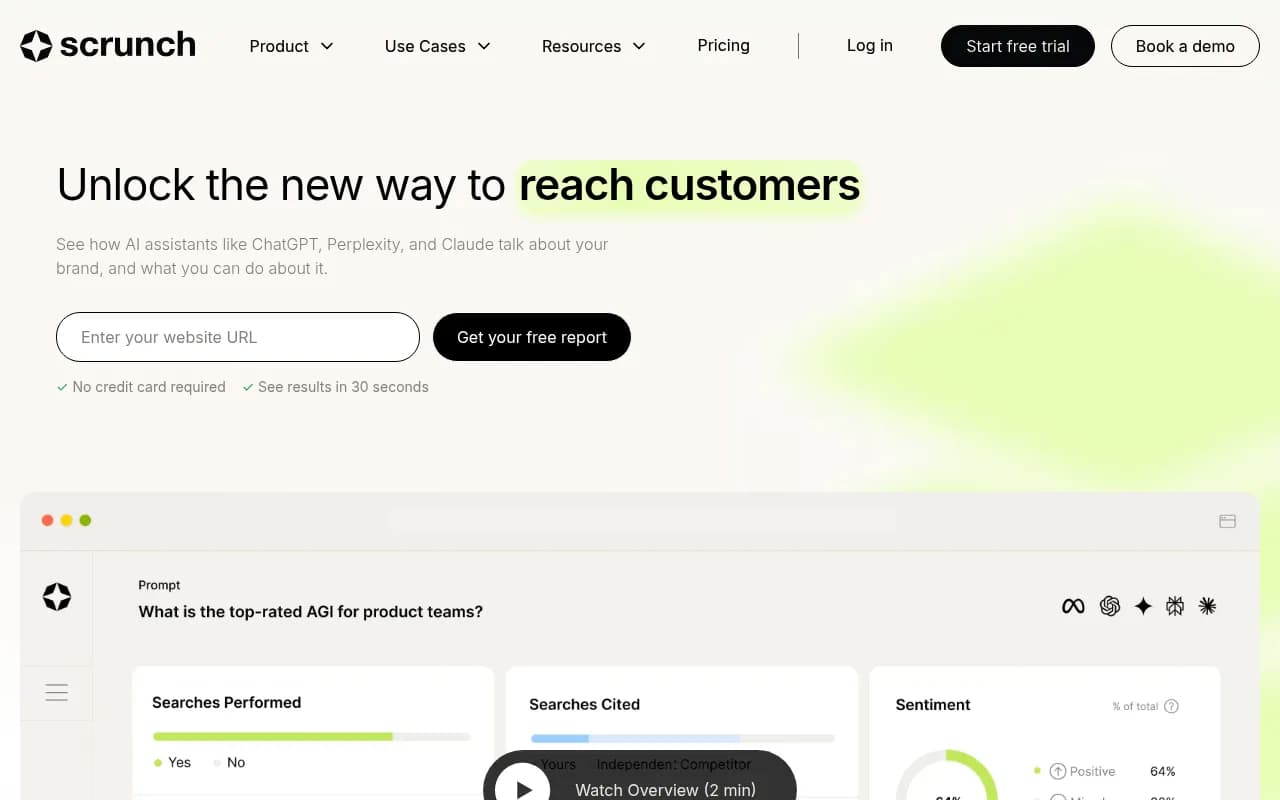
It's a step up from Otterly in terms of data depth, and the pricing is more accessible than Profound. For accounting software brands at the growth stage that need more than basic monitoring but aren't ready for enterprise pricing, Scrunch sits in a reasonable middle ground.
The gap, again, is on the action side. Scrunch monitors well but doesn't help you create content to improve what you're seeing.
SE Ranking -- best for teams that want SEO and GEO in one platform
SE Ranking has been building out its AI visibility features steadily, and in 2026 it's one of the better options for teams that want traditional SEO and GEO monitoring in a single tool.
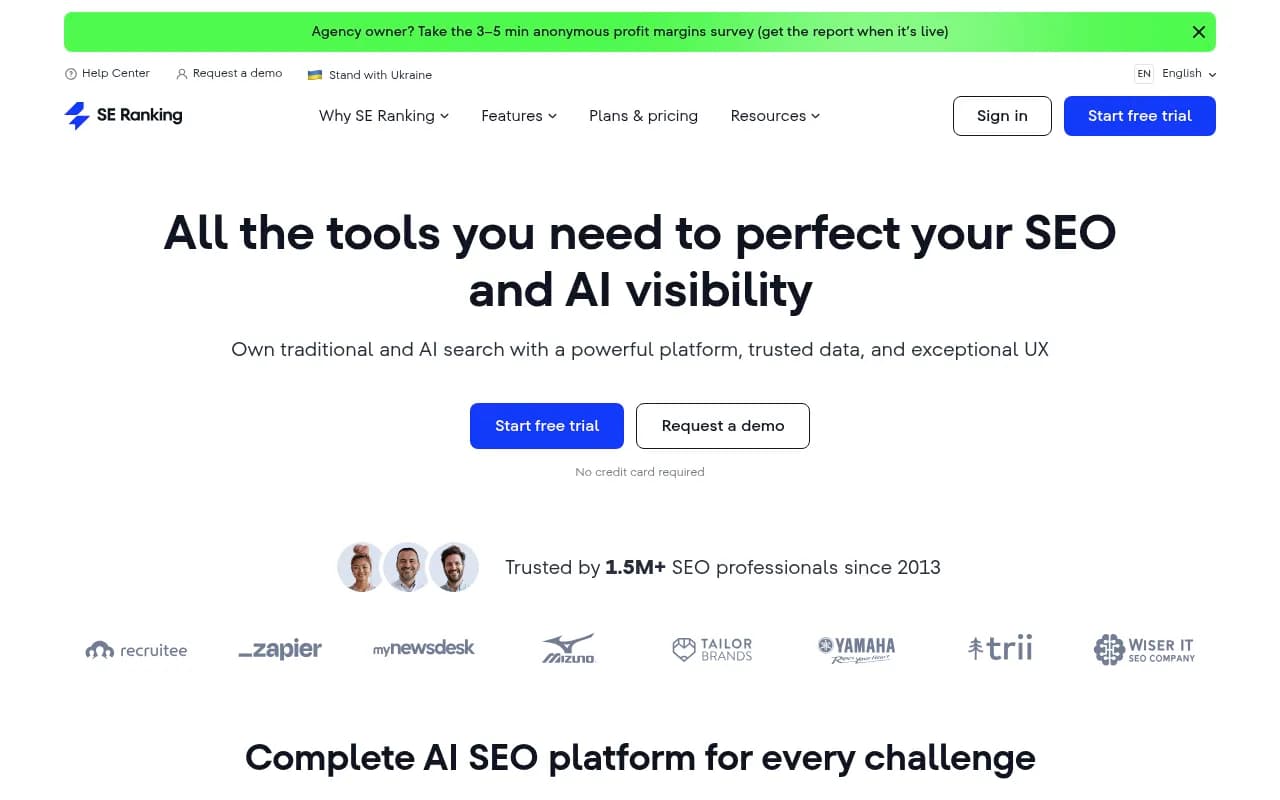
For accounting software brands that are already using SE Ranking for keyword tracking and site audits, adding AI visibility monitoring without switching platforms is a real convenience. The coverage isn't as deep as dedicated GEO tools, but for teams that don't want to manage multiple subscriptions, it's a reasonable compromise.
Semrush -- familiar but limited on AI depth
Semrush has added AI visibility features to its toolkit, and for teams already embedded in the Semrush ecosystem, it's worth knowing what's there.
The honest assessment: Semrush's AI features use fixed prompts rather than real user query data, and there's no AI traffic attribution. It's useful as a supplement if you're already paying for Semrush, but it shouldn't be your primary GEO tool if AI visibility is a serious priority.
Feature comparison: GEO tools for accounting and tax software
| Tool | AI models covered | Content generation | Crawler logs | Prompt volume data | Traffic attribution | Starting price |
|---|---|---|---|---|---|---|
| Promptwatch | 10 | Yes | Yes | Yes | Yes | $99/mo |
| Profound | 9+ | No | No | Yes (panel data) | No | ~$499/mo |
| Otterly.AI | 4 | No | No | No | No | ~$49/mo |
| Peec AI | 5 | No | No | No | No | ~$49/mo |
| ZipTie | 4 | No | No | No | No | Custom |
| Scrunch AI | 6 | No | No | No | No | ~$99/mo |
| SE Ranking | 3 | No | No | No | No | ~$65/mo |
| Semrush | 3 | No | No | No (fixed prompts) | No | ~$140/mo |
How to build a GEO strategy for accounting and tax software
Tracking visibility is only useful if you know what to do with the data. Here's a practical approach for accounting and tax software brands.
Start with the prompts your buyers actually use
The most common mistake is tracking only branded prompts ("does [your brand] support payroll?"). That misses most of the opportunity. Build a prompt list that covers:
- Category comparisons: "best accounting software for small business 2026," "QuickBooks alternatives for freelancers"
- Compliance and feature queries: "accounting software with VAT filing," "best software for multi-currency invoicing"
- Problem-based prompts: "how to automate expense tracking," "what software handles quarterly tax estimates"
- Competitor displacement prompts: "why switch from [competitor] to [your brand]"
Tools with real prompt volume data (like Promptwatch or Profound) can help you find additional prompts you hadn't thought of.
Identify where competitors are winning
Once you have your prompt list, run it through your GEO tool and look at who's getting cited for each one. If QuickBooks is appearing in 80% of responses to "best accounting software for contractors" and you're appearing in 10%, that's a gap worth closing.
The question is why. Citation analysis tools like ZipTie can help you understand which specific pages are driving competitor citations. Usually it comes down to content depth, structured data, and how directly the content answers the prompt.
Create content that closes the gaps
This is where most GEO tools fall short. They show you the gap but leave you to figure out the fix. Promptwatch's Content Agents generate articles and briefs specifically designed to answer the prompts where you're losing visibility -- grounded in real citation data, competitor analysis, and prompt volumes.
For accounting software, this might mean publishing a detailed comparison of your VAT handling vs competitors, a guide to quarterly tax filing with your tool, or a breakdown of your multi-currency features for international freelancers.
Track crawling and citation timing
Publishing content is step one. Knowing when AI crawlers find it and when citations start appearing is step two. Promptwatch's crawler logs show you exactly when GPTBot, ClaudeBot, and other AI agents visit your pages, which errors they encounter, and how long it takes for new content to move from crawl to citation.
This matters because the lag between publishing and citation can be weeks or months. Without crawler visibility, you're flying blind on whether your content is even being considered.
Measure the business impact
AI visibility should connect to traffic and revenue, not just citation counts. Attribution tools that show which AI-referred sessions convert to trials or purchases give you the data to justify GEO investment internally.
A note on Reddit and YouTube for accounting software GEO
One channel that's easy to overlook: Reddit and YouTube are significant sources for AI citations in the accounting software category. When someone asks ChatGPT "is FreshBooks good for freelancers," the response often draws on Reddit threads and YouTube reviews, not just the vendor's own website.
This means your GEO strategy should include monitoring what's being said about your brand on Reddit and YouTube, and potentially engaging with those communities to ensure accurate information is out there. Promptwatch tracks Reddit and YouTube citations specifically, which most GEO tools don't.
Bottom line
The accounting and tax software category is competitive in AI search, and it's only getting more so. Buyers are making decisions based on AI-generated recommendations, and the brands that understand and optimize for that channel will have a real advantage.
Most GEO tools will show you where you stand. The tools that help you improve your position -- by identifying content gaps, generating targeted content, and tracking the full cycle from crawl to citation to revenue -- are the ones worth investing in.
For most accounting and tax software brands in 2026, Promptwatch is the most complete option available. For teams that need a lower-cost entry point, Otterly.AI or Peec AI get you started with monitoring. But if you're serious about winning in AI search, monitoring alone won't be enough.