Key takeaways
- Most Profound alternatives are monitoring-only dashboards — they show you where you're invisible but don't help you fix it.
- Answer gap analysis (knowing which prompts competitors rank for that you don't) is the most actionable feature to look for in any GEO platform.
- Promptwatch is the only platform in this comparison rated as a "Leader" across all categories, because it combines gap analysis with AI content generation and crawler monitoring.
- Budget-conscious teams have solid options (Otterly.AI, Peec AI, LLMrefs), but they'll need separate tools to act on what they find.
- The right choice depends on whether you need to monitor, optimize, or both — and this guide breaks that down clearly.
Profound does a lot of things well. It tracks brand mentions across ChatGPT, Perplexity, Google AI Overviews, and a handful of other AI engines. It gives you sentiment analysis, share-of-voice data, and some competitive benchmarking. For enterprise teams with big budgets and dedicated analysts, it works.
But a lot of teams run into the same wall: Profound shows you the problem without helping you solve it. You can see that a competitor is getting cited for "best project management software for remote teams" and you're not — but then what? The platform doesn't tell you what content to create, how to structure it, or whether AI crawlers are even reaching your existing pages.
That's the gap this guide addresses. The 8 tools below are the strongest Profound alternatives in 2026, evaluated specifically on answer gap analysis — the ability to show you exactly which content you're missing and, ideally, help you do something about it.
What answer gap analysis actually means in 2026
Traditional content gap analysis was simple: find keywords your competitors rank for that you don't, then write content targeting those keywords. That still has value, but it's no longer the whole picture.
In AI search, a "gap" is something different. It's a prompt — a real question users type into ChatGPT or Perplexity — where a competitor's content gets cited and yours doesn't. The AI isn't ranking pages by backlinks or exact-match keywords. It's pulling from sources that most completely answer the question, cover the relevant entities, and demonstrate genuine expertise.
Ahrefs published data in late 2025 showing that AI Overviews reduce clicks on the #1 organic result by 58%. That number tells you how much is at stake. If you're not in the AI answer, you're often invisible entirely — even if you rank first organically.
Real answer gap analysis means:
- Identifying the specific prompts where competitors appear and you don't
- Understanding what those competitors' pages contain that yours don't
- Knowing which AI models are citing which sources (ChatGPT behaves differently from Perplexity)
- Having a way to create content that fills those gaps, not just a list of missing keywords
Most tools in this space do the first part. Very few do all four.
The 8 best Profound alternatives in 2026
1. Promptwatch — best overall for teams that want to act, not just monitor
Promptwatch is the most complete option in this comparison. Where most platforms stop at showing you visibility data, Promptwatch is built around a three-step loop: find the gaps, create content to fill them, track the results.

The Answer Gap Analysis feature shows you exactly which prompts competitors are appearing for that you're not — with prompt volume estimates and difficulty scores so you can prioritize the ones worth going after. From there, Content Agents generate articles, listicles, and briefs grounded in that prompt data, not generic SEO logic. And AI Crawler Logs show you in real time which pages ChatGPT, Claude, and Perplexity are actually reading on your site, what errors they're hitting, and when a page moves from crawled to cited.
That last piece is something most competitors don't have at all. You can publish great content and still be invisible if AI crawlers aren't reaching it — and Promptwatch is one of the only platforms that tells you why.
It monitors 10 AI models (ChatGPT, Perplexity, Google AI Overviews, Google AI Mode, Claude, Gemini, Meta/Llama, DeepSeek, Grok, Mistral, Copilot), tracks Reddit and YouTube as citation sources, and includes ChatGPT Shopping tracking for e-commerce brands.
Pricing starts at $99/month for the Essential plan (1 site, 50 prompts, 5 articles). Professional is $249/month and adds crawler logs, multi-city tracking, and 150 prompts. Business is $579/month for 5 sites and 350 prompts. A free trial is available.
The honest caveat: if you just want a simple monitoring dashboard and have no interest in content creation, Promptwatch has more features than you'll use. But for any team that wants to actually improve their AI visibility — not just measure it — it's the strongest option here.
2. AthenaHQ — best for enterprise teams with complex reporting needs
AthenaHQ positions itself as a full GEO platform for enterprises. It covers AI visibility tracking across the major models, competitive benchmarking, and some workflow automation. The interface is polished and the reporting is detailed enough for teams presenting to senior stakeholders.

Where it falls short compared to Promptwatch is on the content side. AthenaHQ is strong at showing you where you stand but doesn't generate content to close the gaps. It's also priced at the higher end of the market, which makes it harder to justify for mid-market teams.
Good fit for: enterprise brands with dedicated SEO or GEO analysts who need sophisticated reporting and can handle content creation separately.
3. Scrunch AI — best for teams that want gap analysis with some optimization guidance
Scrunch AI does something most monitoring tools don't: it analyzes your site structure, content, and technical setup to tell you what to fix, not just what's missing. That makes it closer to an optimization tool than a pure tracker.
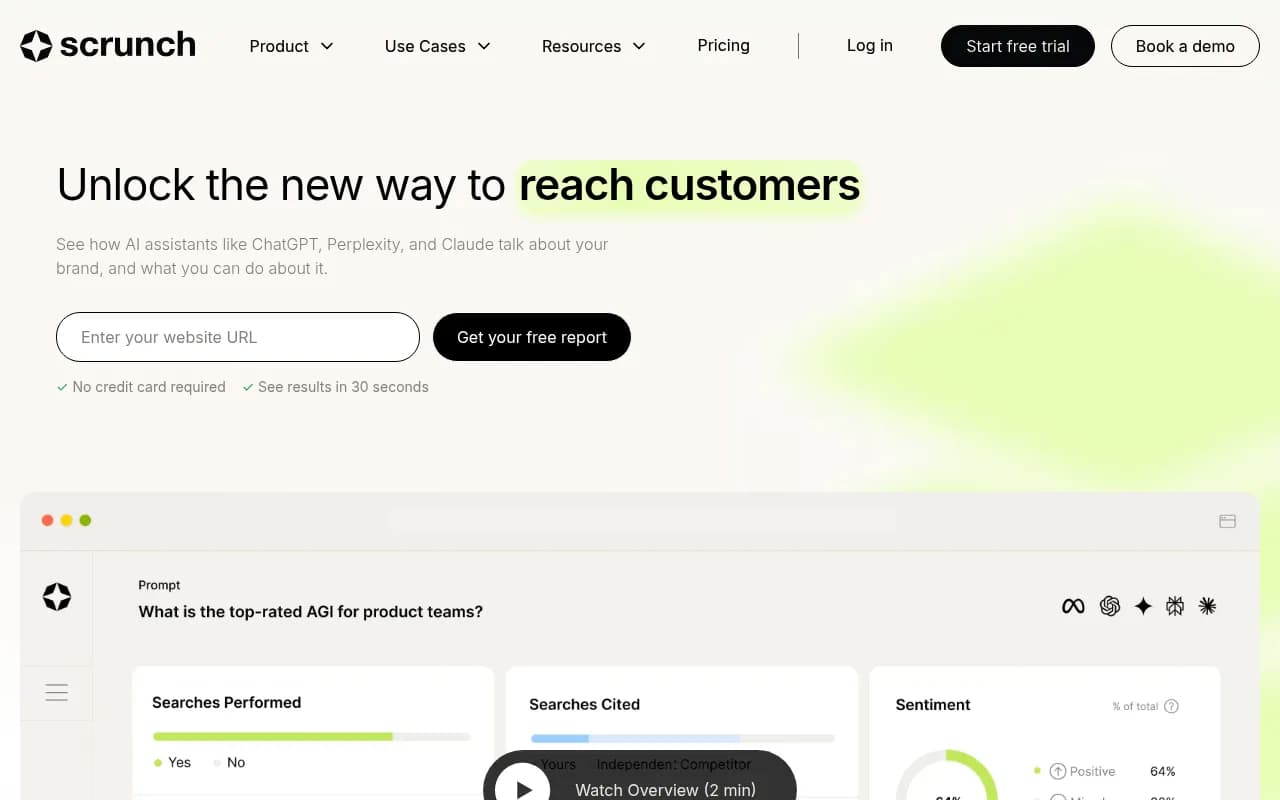
The gap analysis is solid. You can see which prompts competitors are winning and get some guidance on what your content is missing. It doesn't generate content for you, but the briefs and recommendations are specific enough to be actionable.
The platform covers the main AI engines and has decent competitive benchmarking. Pricing is more accessible than Profound, which is a meaningful advantage for smaller teams.
Good fit for: SEO teams that want structured recommendations without needing a full content generation platform.
4. Otterly.AI — best for brand monitoring and sentiment tracking
Otterly.AI is a clean, focused tool for tracking how your brand appears in AI-generated answers. It covers ChatGPT, Perplexity, and Google AI Overviews, with sentiment analysis and share-of-voice metrics that are genuinely useful for brand and PR teams.
Otterly.AI

The limitation is that Otterly.AI is monitoring-only. There's no answer gap analysis in the sense of "here are the prompts you're missing," no content generation, and no crawler logs. It tells you what's happening but not why or what to do about it.
For teams that primarily need to track brand sentiment in AI responses and report on it — rather than actively optimize — Otterly.AI is one of the more polished options at a reasonable price point.
Good fit for: brand and communications teams that need AI monitoring without a full optimization workflow.
5. Peec AI — best for prompt-level analytics on a tighter budget
Peec AI focuses on prompt-level visibility data — which specific prompts your brand appears for, which models cite you, and how that changes over time. The analytics are more granular than most entry-level tools, and the pricing is accessible enough for marketing teams that can't justify an enterprise platform.

It doesn't have content generation or crawler monitoring, but the prompt-level data is genuinely useful for identifying where to focus. If you know which prompts you're losing, you can at least brief a writer or use a separate tool to create content.
Good fit for: marketing teams that want prompt-level AI visibility data without paying enterprise prices.
6. LLMrefs — best for teams coming from traditional rank tracking
LLMrefs is designed to feel familiar to SEO professionals. The interface resembles a rank tracker — you add keywords (or prompts), and it shows you where your brand appears across AI models. If you've spent years in Ahrefs or Semrush, the learning curve here is minimal.
LLMrefs
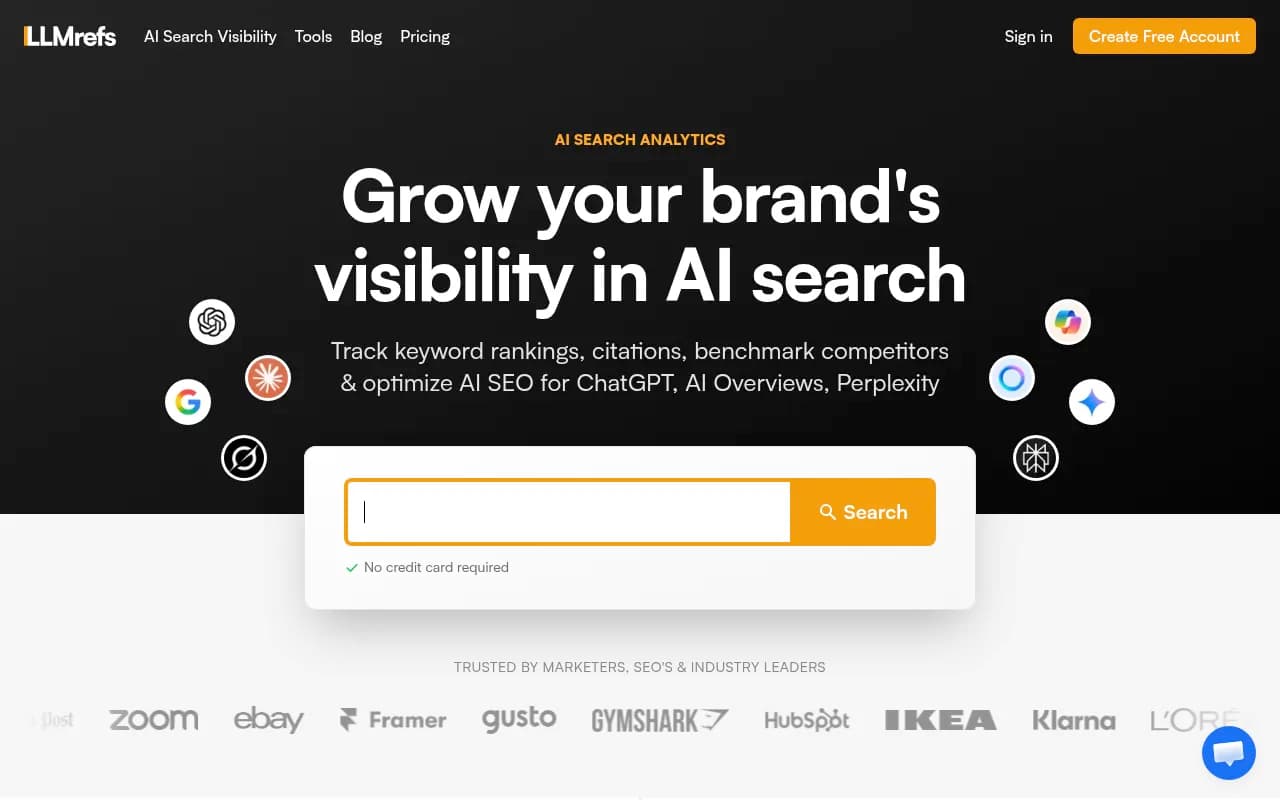
It covers 9+ AI search engines and gives you historical trend data so you can see whether your visibility is improving. The gap analysis is basic — you can see where competitors appear that you don't — but there's no content creation layer on top of it.
The pricing is competitive, and for teams that just want to add AI visibility tracking to their existing SEO workflow without rebuilding their whole stack, LLMrefs is a reasonable starting point.
Good fit for: SEO teams that want AI visibility data in a format that feels like traditional rank tracking.
7. ZipTie — best for visual, answer-level auditing
ZipTie takes a different approach: it captures actual AI-generated answers as they appear in the interface, not just through API calls. That distinction matters because user-facing answers in ChatGPT or Perplexity can differ from what you'd get through an API — the citations, the formatting, the sources cited.
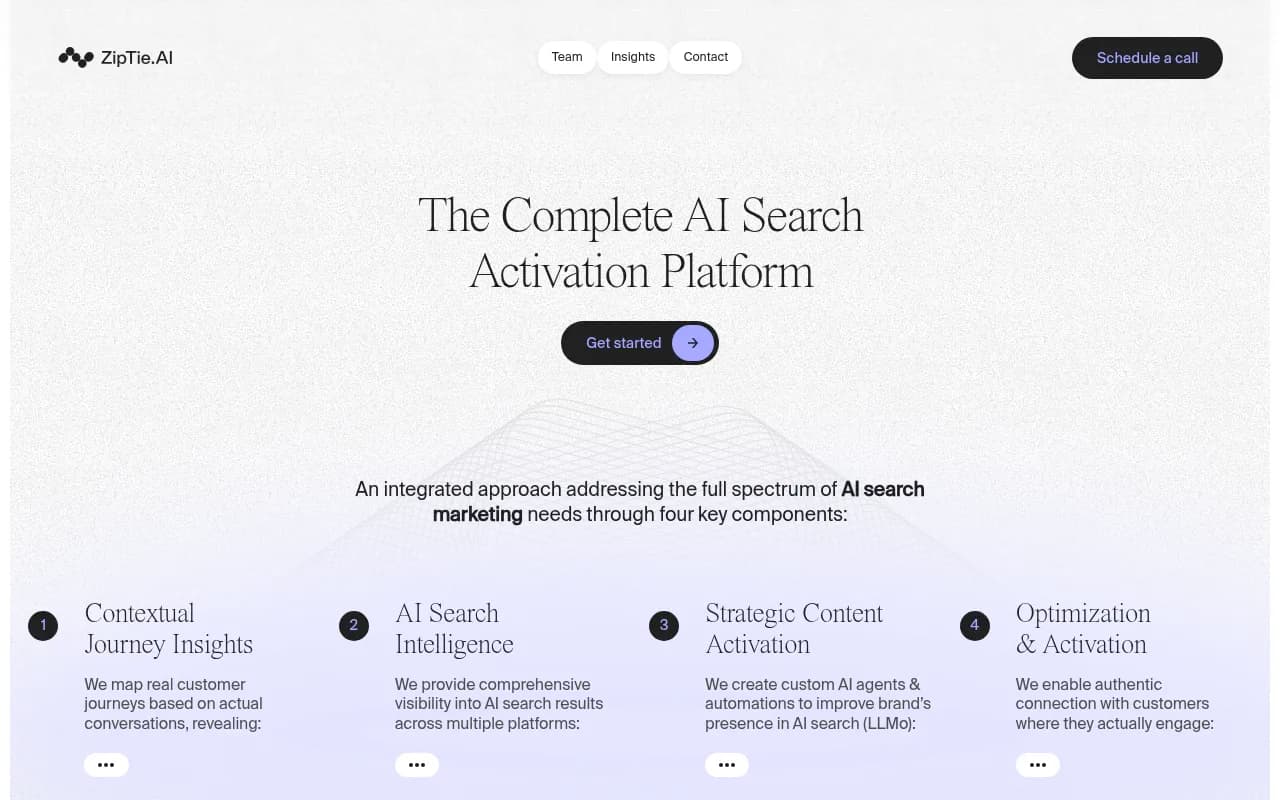
The visual auditing makes it easier to understand exactly what users see when they ask a question your brand should be answering. You can see the full response, the sources cited, and where your content does or doesn't appear.
It's not a full optimization platform — there's no content generation and the gap analysis is more visual than structured — but for teams doing deep audits of specific prompts, it's a useful tool.
Good fit for: teams doing detailed, prompt-by-prompt audits of AI-generated answers.
8. SE Ranking — best for Google-first teams adding AI Overviews tracking
SE Ranking is primarily a traditional SEO platform — rank tracking, site audits, keyword research, backlink monitoring — that has added AI Overviews tracking as a feature. If your team is already using SE Ranking for Google SEO, the AI visibility data integrates into the same dashboard you're already working in.
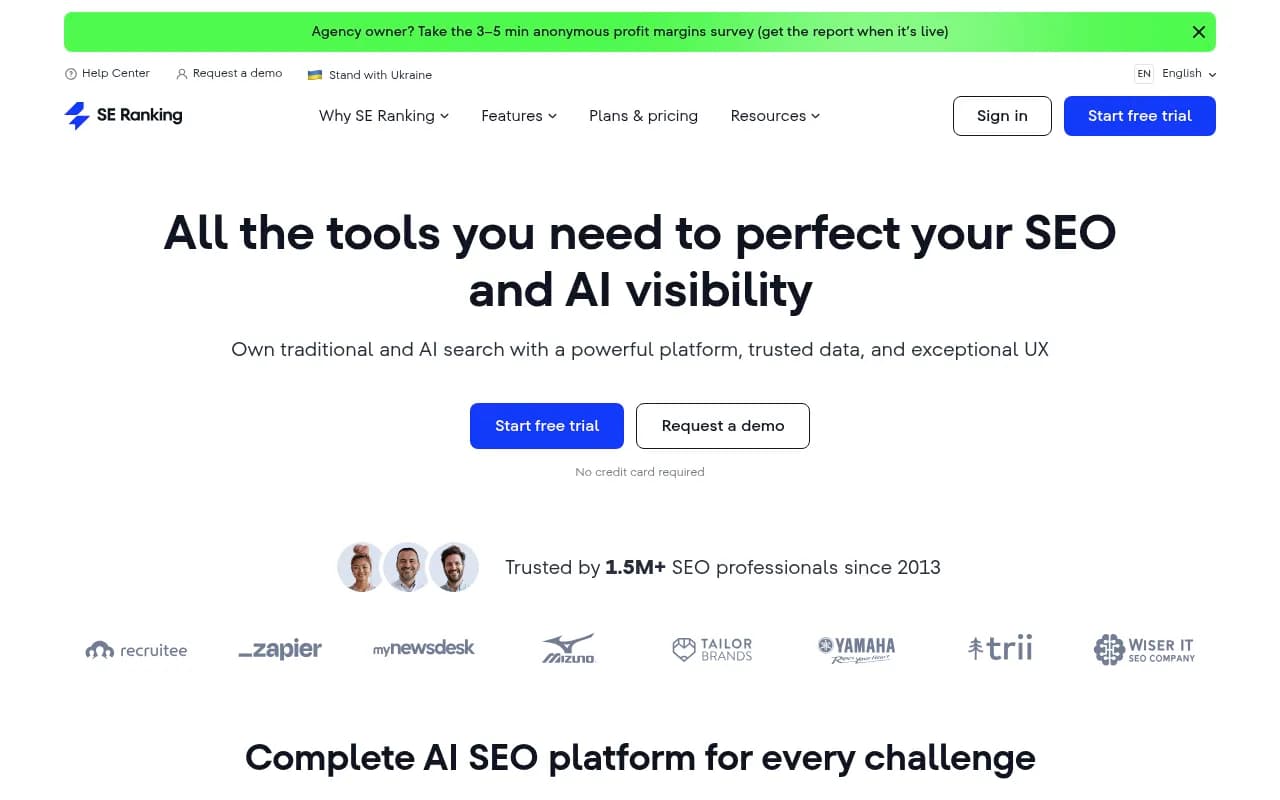
The AI tracking is less comprehensive than dedicated GEO platforms. It focuses heavily on Google AI Overviews rather than ChatGPT or Perplexity, and the gap analysis is limited. But for teams that don't want to add another tool to their stack and primarily care about Google's AI features, it's a practical option.
Good fit for: SEO teams already on SE Ranking that want basic AI Overviews tracking without switching platforms.
Head-to-head comparison
| Tool | Answer gap analysis | Content generation | Crawler monitoring | AI models covered | Starting price |
|---|---|---|---|---|---|
| Promptwatch | Yes, with prompt volumes | Yes (Content Agents) | Yes (real-time logs) | 10+ | $99/mo |
| AthenaHQ | Yes | No | No | 5+ | Custom |
| Scrunch AI | Yes, with recommendations | No | No | 4+ | Custom |
| Otterly.AI | Basic | No | No | 3 | ~$99/mo |
| Peec AI | Yes, prompt-level | No | No | 4+ | ~$49/mo |
| LLMrefs | Basic | No | No | 9+ | ~$49/mo |
| ZipTie | Visual only | No | No | 3 | Custom |
| SE Ranking | Limited (Google AIO focus) | No | No | 1 (Google AIO) | $65/mo |
| Profound | Yes | No | No | 9+ | Custom/Enterprise |
How to choose
The honest answer is that the right tool depends on what you're trying to do with the data.
If you're primarily reporting — tracking brand visibility for stakeholders, monitoring sentiment, watching share-of-voice trends — then Otterly.AI or Peec AI will cover you at a reasonable price. They're clean, focused, and don't require a lot of setup.
If you're actively trying to improve your AI visibility, the monitoring-only tools will frustrate you quickly. You'll see the gaps but have no structured way to close them. That's where Promptwatch's content generation and crawler monitoring become genuinely useful rather than nice-to-have features.
If you're an enterprise team with complex reporting requirements and a separate content team, AthenaHQ or Scrunch AI might be worth evaluating — they have more sophisticated analytics than the entry-level tools without the full optimization workflow.
And if you're already deep in SE Ranking for traditional SEO and just want to add a layer of Google AI Overviews data, staying in that ecosystem makes sense rather than adding another platform.
One thing worth noting: the gap between monitoring and optimization is getting harder to ignore. Forrester's 2026 research found that content providing unique "information gain" ranks three times higher in AI responses than content that rehashes existing consensus. Knowing which prompts you're missing is only useful if you can create content that actually answers them better than your competitors do. Most tools in this space still leave that second step entirely to you.
A note on what "answer gap analysis" actually requires
Several tools in this list claim to do answer gap analysis, but the quality varies significantly. Here's what to look for when evaluating any platform on this dimension:
Real prompt data, not just keyword proxies. Some tools translate traditional keywords into "prompts" and call it AI visibility tracking. The better platforms actually query AI models with real user-style prompts and capture what comes back.
Competitor-level specificity. Knowing you're not visible for a category of queries is less useful than knowing exactly which prompts Competitor X is winning that you're not. The gap needs to be specific enough to act on.
Volume and difficulty signals. Not all prompt gaps are worth closing. A platform that shows you 500 missing prompts without any sense of which ones matter is less useful than one that tells you "this prompt has 2,400 monthly queries and medium difficulty."
A path to action. This is where most tools fall short. Identifying a gap is step one. Creating content that fills it, ensuring AI crawlers can reach that content, and tracking whether it results in citations — that's the full loop. Very few platforms support all of it.
Final thoughts
Profound is a capable platform, but "capable" and "right for your team" aren't the same thing. If you're paying enterprise prices for a monitoring dashboard and doing all the optimization work manually, it's worth asking whether a different tool would give you more leverage.
The market has matured enough in 2026 that you have real options across the price spectrum. The monitoring-only tools are cheaper and simpler. The optimization platforms cost more but close the loop between data and action. Which matters more depends entirely on how your team works and what you're trying to achieve.
If you want to start somewhere, Promptwatch's free trial is a low-risk way to see what full-cycle GEO looks like — from gap identification through content creation to citation tracking. Most teams find the crawler logs alone worth the price of admission.