Key takeaways
- Scrunch AI's Core plan runs $250/month for 125 prompts across 4 engines, well above the ~$89/month median for AI visibility tools. For a startup, that's a big line item for what is mostly a monitoring dashboard.
- The most common complaint about Scrunch isn't the price alone. It's that the tool shows you that you're invisible without much help on what to change. The alternatives below split into pure trackers and platforms that close the loop with content and technical fixes.
- Prompt math matters more than sticker price. A "100 prompts" plan tracked across five engines can mean 500 tracked responses, and engine add-ons can quietly double your bill. Model the real cost before committing.
- For small teams, the sweet spots in 2026 are Promptwatch at $95/month (the only option here that also generates and publishes content), Peec AI at $95/month with unlimited seats, and Otterly.AI at $29/month if you just need lightweight tracking.
- AI citation behavior is volatile enough that a tool shipping weekly updates matters. Reddit's share of ChatGPT citations fell roughly 40% in a single month (May to June 2026), per Promptwatch Data. A tool that hasn't updated its engine list or methodology since 2025 will give you stale answers.
Why startups look past Scrunch AI
Let's be fair to Scrunch before we pile on. It's a genuinely capable platform. It tracks five variables per prompt (presence, position, sentiment, citation, and competitor density), covers 10+ engines at the enterprise tier, and its Agent Experience Platform for helping AI crawlers interpret your content is a real differentiator, not marketing fluff.
But three things push small teams elsewhere.
The price. Core is $250/month for 125 prompts, 4 engines, and 5 seats. One pricing database puts Scrunch at #20 of 26 tools by cost, against a category median of $89/month. If you're a seed-stage SaaS deciding between Scrunch and, say, a freelance writer for a month, the writer probably moves the needle more.
The monitoring-to-action gap. This is the complaint that comes up again and again in reviews and Reddit threads. Scrunch tells you where you stand. It doesn't share prompt volume data, its prompt trend feature is thin, and the optimization guidance tends to stop at "track these prompts" rather than "change these elements." For a two-person marketing team, a dashboard full of problems with no path to fixes is just anxiety with charts.
The seat and engine math. Adding team members and unlocking more engines pushes the bill toward $1,000+ quickly. Startups don't budget that way.
There's also a structural reason the alternatives are worth a look: this category is barely two years old and still moving fast. ChatGPT's search behavior changed dramatically within 2026 alone. Its average query fanouts dropped to 1.0 per response by April, its search queries shrank from ~117 characters to ~53, and on August 8 it started using the site: operator at scale, jumping from ~0.4% to ~17% of fanout queries overnight (Promptwatch Data). Tools that ship weekly catch these shifts. Tools that don't, don't.
How we evaluated these alternatives
We focused on what a startup or small team actually needs:
- Entry price under ~$300/month, with the true cost modeled (engines, seats, prompt caps, add-ons)
- Multi-engine coverage at the entry tier, not gated behind a $500 plan
- Whether the tool stops at monitoring or helps you fix things (content gap analysis, briefs, automated publishing, technical fixes)
- Ship velocity — recent pricing changes, new engine support, and feature releases are a good proxy for whether a tool will still be useful in six months
- No forced annual commitments at entry tiers, because startups shouldn't lock into a year of an unproven tool
Quick comparison
| Tool | Entry price | Prompts at entry | Engines at entry | Seats | Helps you fix things? | Free trial |
|---|---|---|---|---|---|---|
| Scrunch AI (baseline) | $250/mo | 125 | 4 | 5 | Limited (audits, AXP) | 7 days |
| Promptwatch | $95/mo | 50 | All tracked LLMs | Included | Yes (content agents, CMS publishing) | 7 days |
| Peec AI | $95/mo | 50 | 3 (add more for $35+) | Unlimited | Recommendations only | No |
| Otterly.AI | $29/mo | 15 | 4 (add-ons for more) | Unlimited | No | Yes |
| AIclicks | $59/mo | 30 | 3 | Included | Yes (AI content allowance) | 3 days |
| LLMrefs | $79/mo | 500 | All listed engines | Unlimited | No | 7 days |
| Rankscale AI | From $20/mo | Credit-based | 8+ | Unlimited | No | No |
| AthenaHQ | $295/mo | ~3,600 credits | 8+ | Unlimited | Partial (content gap) | No |
| Profound | $99/mo (annual) | 50 | 1 (ChatGPT only) | 1 | Partial | No |
The alternatives
1. Peec AI — best unlimited-seat tracking on a budget

Peec restructured its pricing in 2026 and it's now one of the most competitive entry points in the category. Starter is $95/month for 50 prompts across 3 models of your choice, one project, and unlimited team seats. Pro is $245/month for 150 prompts and 2 projects.
The unlimited seats thing matters more than it sounds. Profound charges per seat and caps its entry plan at one, which is brutal for a team of three who all need dashboard access. Peec just... doesn't charge for people.
The catches: extra engines cost $35/month at Starter ($85 at Pro), and Peec is fundamentally a tracker. It gives you visibility data and optimization recommendations, but you're on your own for execution. If your team has a content workflow already and just needs reliable multi-engine monitoring, that's fine. If you were hoping the tool would also help you write and publish, keep reading.
2. Promptwatch — the one that doesn't stop at monitoring

Here's the honest framing: most tools in this list answer "was my brand mentioned?" Promptwatch answers "how do I grow AI-driven revenue?" — and that distinction is exactly the gap Scrunch users complain about.
Promptwatch's Essential plan is $95/month for 50 prompts, 6,000 tracked responses, all LLM tracking (ChatGPT, Claude, Gemini, Perplexity, Grok, DeepSeek, Copilot, Mistral, Meta Llama, Google AI Overviews, and AI Mode), and API/MCP access. No engine gating at entry, which is rare. Professional at $245/month — the same price as Scrunch's Core — gets you 150 prompts, 18,000 responses, automated content generation, and state/city-level tracking.
What separates it from everything else here is the closed loop. AI crawler logs show you when ChatGPTBot, ClaudeBot, and 400+ other bots actually hit your pages and what errors they find. Citation analytics show which of your pages (and which Reddit posts and YouTube videos) AI systems are pulling from. Visitor analytics tie it to real traffic and conversions, not just mentions. Then Content Agents plan, write, and publish GEO-optimized content straight to WordPress, Webflow, or Framer on a schedule you control.
For a startup with no dedicated SEO person, that last part is the whole ballgame. A dashboard doesn't write your comparison page. An agent that does — with a review inbox you control — is worth a lot.
It's also the data source behind the citation research cited throughout this guide, built on 4.5 billion analyzed citations, prompts, and responses, with a 4.7/5 G2 rating across 1,840+ customers. The 7-day free trial on Essential requires no sales call.
3. Otterly.AI — the cheapest credible option
Otterly.AI

At $29/month for 15 tracked prompts plus 1,000 GEO URL audits, Otterly's Lite plan is the lowest-cost way to get real AI visibility data. All plans include unlimited team members and unlimited brand reports. Standard at $189/month bumps you to 100 prompts, agent analytics, and API/MCP access.
One warning that reviewers keep flagging: the add-ons. Core engines are Google AI Overviews, ChatGPT, Perplexity, and Copilot, but Google AI Mode, Gemini, and Claude cost extra on every plan. A Standard plan is $189 until you need Claude and Gemini, at which point you're closer to $357. Model your real engine list before comparing prices.
If you're pre-seed or just proving that AI search matters for your category at all, Otterly is a sensible first step. Expect to graduate off it once you need execution help.
4. AIclicks — fast setup, content bundled
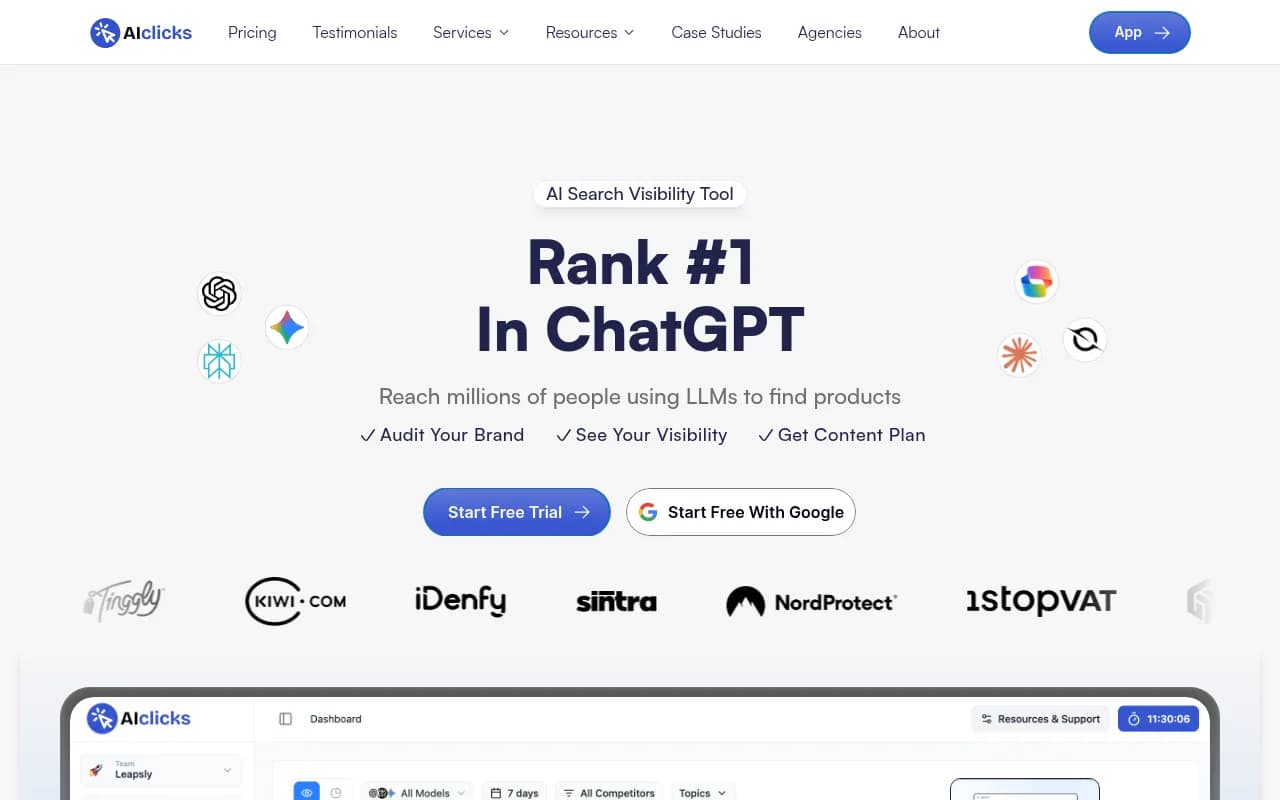
AIclicks dropped its Starter plan to $59/month (30 prompts, 3 platforms) and it's built by a team that runs GEO campaigns for their own agency clients, which shows in the workflow. Setup to first insight takes minutes rather than a four-week baseline, and a Google Analytics connection ties visibility moves back to actual AI referral traffic.
The interesting part is the allowance: even Starter includes a monthly quota of AI-optimized responses/articles, so you're getting light content execution, not just tracking. Pro at $189/month covers 150 prompts, 4 platforms, and GA4/API/MCP access. There's a 3-day free trial, no credit card.
It's a younger platform than the others here, with a smaller track record. For a scrappy team that values speed over polish, that trade can work in your favor.
5. LLMrefs — flat pricing, no games
LLMrefs
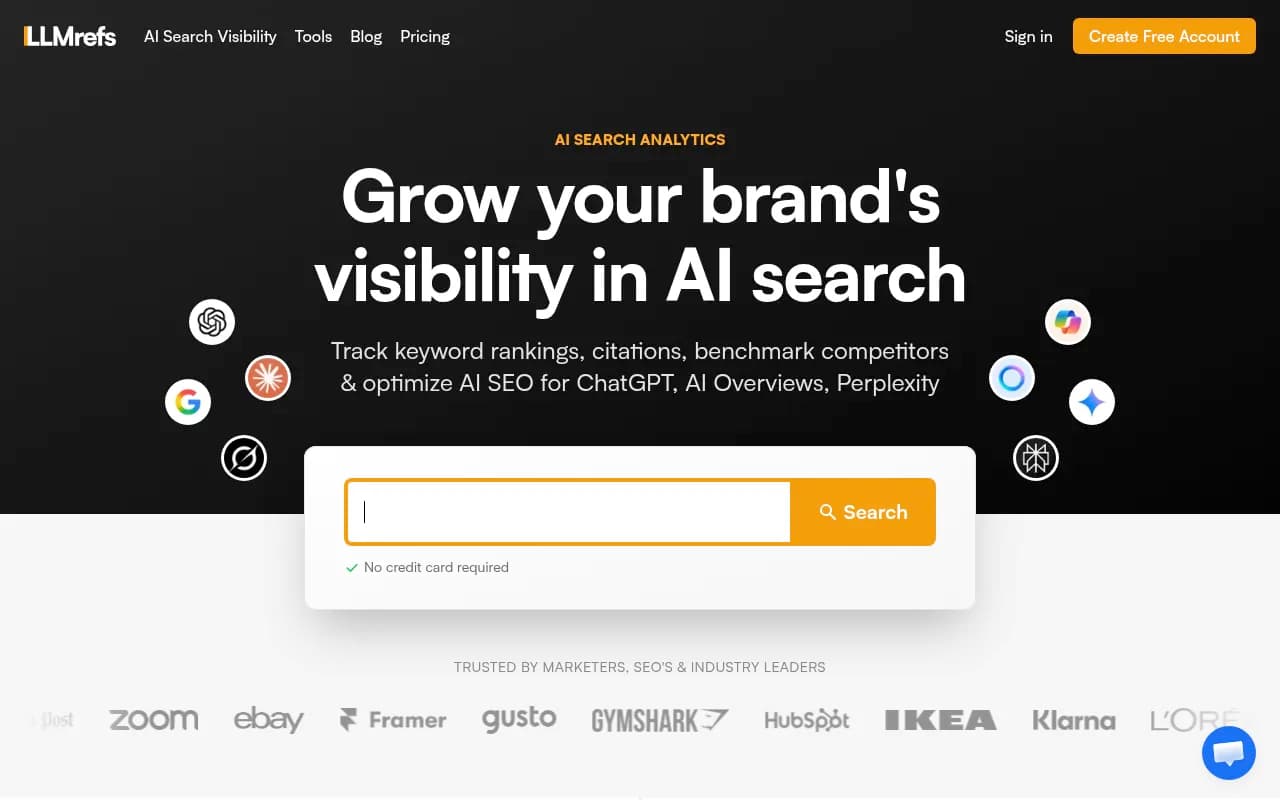
LLMrefs takes the opposite approach from everyone else: one flat $79/month "All in One" plan (marketed as limited-time pricing) covering all listed engines — ChatGPT, AI Overviews, AI Mode, Gemini, Perplexity, Claude, Copilot, Meta AI — with 500 tracked prompts, weekly automated reports, geo-targeting in 50+ countries, unlimited team members, and unlimited projects under one subscription.
No engine add-ons, no seat math, no prompt-tier anxiety. That simplicity is genuinely refreshing in a category where every competitor seems to have twelve SKUs.
The flip side: it's a lightweight tracker. No content generation, no crawler logs, no gap analysis. If "simple and cheap and everything included" is your buying criteria, this is your pick. If you need the platform to do work for you, it isn't.
6. Rankscale AI — credit-based flexibility
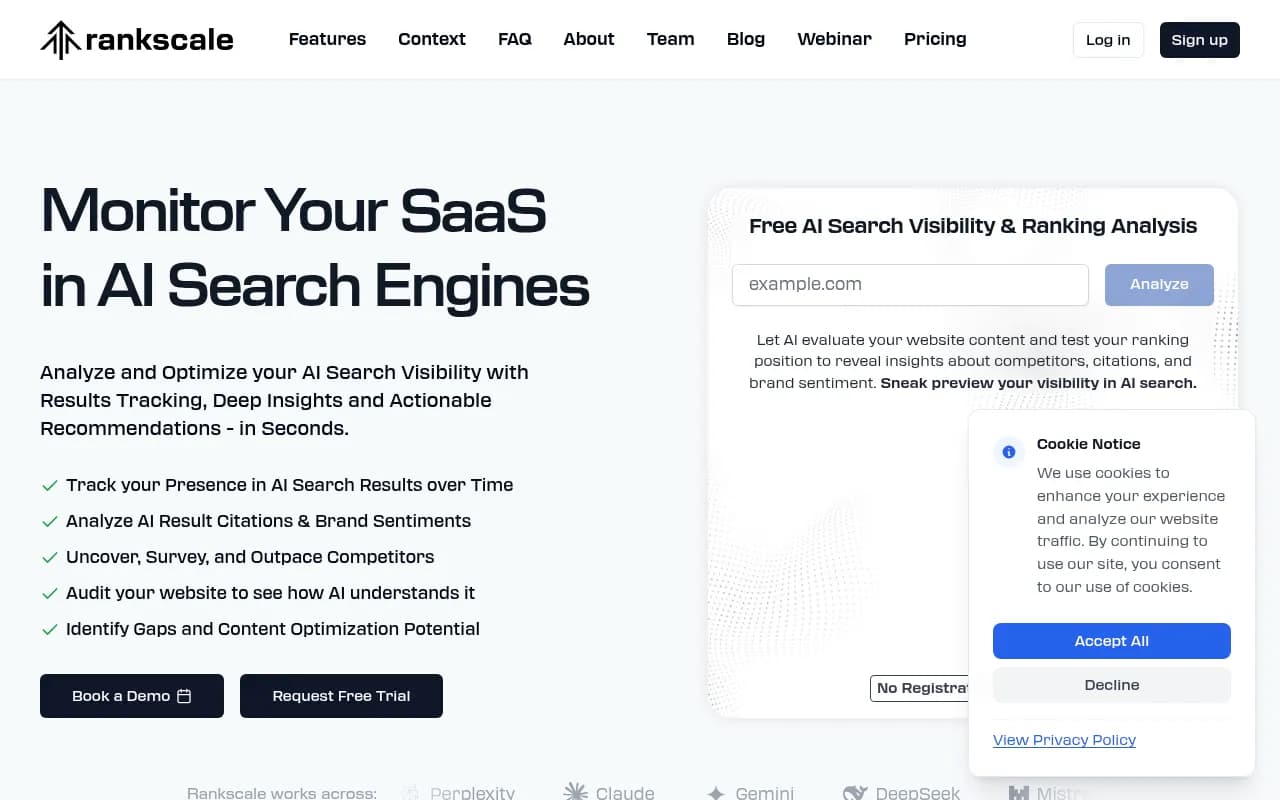
Rankscale prices on credits rather than fixed prompt caps, starting at $20/month for Essentials and $99/month for Pro. A query across one engine costs roughly 0.25 credits, so you can scale spend with usage instead of jumping tiers. Unlimited seats and workspaces on every plan, plus credit rollover on higher tiers.
It supports ChatGPT, Gemini, Perplexity, Claude, DeepSeek, Mistral, Grok, and Copilot, and includes an agency program with lifetime affiliate commissions if you're monetizing GEO services for clients.
The limitation one review flagged is that it's output-level monitoring only — no integrated content creation. Fine for teams with their own content engine, thin for teams without one.
7. AthenaHQ — solid, but priced oddly for this list

AthenaHQ gets recommended a lot, and for good reason: unlimited seats, unlimited competitor tracking, GA4 and Google Search Console integration to connect visibility to real traffic, and coverage of 8+ engines. The product is good.
But Starter runs $295/month — more than Scrunch — and there's no free trial, which is a real adoption barrier when every competitor on this list lets you test before paying. Reviews land on the same verdict: worth it for funded startups tracking a few brands seriously, tough math for everyone else. If your budget stretches to ~$300/month, compare it directly against Promptwatch Professional, which adds content execution at $50 less.
8. Profound — enterprise-grade, awkward at entry
Profound

Profound is arguably the strongest pure-monitoring platform in the category, and its Agent Analytics (AI bot traffic tracking via Cloudflare, Fastly, and Akamai integrations) is genuinely excellent. Enterprise teams love it.
But the entry tier is a trap for small teams: $99/month gets you ChatGPT-only tracking, 50 prompts, 1 seat, and 1 region — with an annual commitment. That's $1,188 upfront for a single-engine tracker. The realistic entry point is Growth at $399/month covering 3 engines. If Scrunch felt expensive, Profound won't feel better until you're at enterprise scale.
What AI actually cites (and why it should shape your choice)
Here's something most alternative roundups skip: the tool matters less than what you do with it, and what works in AI search changed a lot in 2026.
Product pages became the single most cited content type on ChatGPT Search in July 2026, at 32.8% of daily citations — nearly double their share from March — with listicles the fastest-growing format (Promptwatch Data). If your AI visibility strategy is "publish thought leadership blog posts," you're optimizing for a format AI barely cites.
Meanwhile, citation concentration is surprisingly friendly to small teams. Even Reddit, the #1 most cited domain in ChatGPT Search, holds under 4% of total citations — the long tail of niche sites wins most of them (Promptwatch Data). A startup with focused, well-structured product and comparison pages can earn citations without an enterprise domain authority.
And the slots are scarce: ChatGPT cites roughly 5 sources per web-search response, about half of Google AI Overviews' ~10, so every position is contested (Promptwatch Data).
The practical implication: pick a tool that helps you act on this data — content gap analysis, briefs, publishing — not one that just graphs it. That's the whole argument for platforms like Promptwatch or AIclicks over pure trackers.
How to choose without overthinking it
A few decision rules that hold up in 2026:
- Under $100/month, tracking only: Otterly Lite ($29) to start, LLMrefs ($79) if you want all engines and no add-on games.
- Under $100/month, tracking plus execution: Promptwatch Essential ($95) or AIclicks Starter ($59). Promptwatch has the deeper stack (crawler logs, citation analytics, CMS publishing); AIclicks is faster to first insight.
- Around $250/month (Scrunch's price): Promptwatch Professional gets you 150 prompts, automated content generation, and state/city tracking — more than Scrunch Core offers at the same number.
- You need unlimited seats for a growing team: Peec AI or LLMrefs.
- You're an agency billing clients: Rankscale's credit model or Peec's agency tiers ($245–$795/month) handle multi-client work without per-seat penalties.
And whichever you pick, run the prompt math first: prompts × engines × refresh frequency = your real monthly consumption. That number, not the sticker price, is what you're actually buying.
If you want to browse the full category before deciding, the GEO software directory at bestgeosoftware.com has a wider selection than any single roundup, including tools too niche or too new to make lists like this one.
One last thing worth saying plainly: this category will look different in six months. Reddit's ChatGPT citation share dropped ~40% in a single month and then collapsed further in a single day in August 2026 (Promptwatch Data). Meta's web indexer went from ~2% to nearly 38% of tracked AI crawler requests in a matter of weeks. Any tool you choose should be one that demonstrably keeps up. Favor the ones with public changelogs, monthly data publications, and recent engine additions — and hold the rest lightly.