Key takeaways
- Reddit, YouTube, and LinkedIn are the three social platforms consistently cited by AI search engines like ChatGPT, Perplexity, and Google AI Overviews
- Traditional social media monitoring tools (Sprout Social, Brandwatch, Hootsuite) track mentions but don't tell you whether those mentions influence AI-generated answers
- A complete strategy in 2026 requires two layers: social listening for brand health, and AI visibility tracking to see how social content shapes what AI models say about you
- Tools like Promptwatch surface Reddit and YouTube discussions that directly influence AI recommendations -- a capability most pure-play social tools miss entirely
- The platforms AI ignores (TikTok, Instagram, Pinterest) still matter for audience reach, but they're not moving the needle on AI citations
Why social media suddenly matters for AI search
Something shifted in 2024 and accelerated through 2025: AI search engines started treating social platforms as primary sources. Not just as signals, but as actual citations.
When someone asks ChatGPT "what's the best project management tool for remote teams," the answer often pulls from Reddit threads, YouTube reviews, and LinkedIn posts -- not just official product pages or review sites. Andy Lambert noted on LinkedIn that Reddit, YouTube, and LinkedIn are the only platforms consistently cited by AI tools, and that observation has held up across hundreds of thousands of queries.
This changes the game for marketers. You're no longer just managing brand reputation on social media. You're managing the raw material that AI models use to form opinions about your brand.
The problem is that most social media monitoring tools weren't built for this. They tell you how many times your brand was mentioned on Reddit last month. They don't tell you whether those mentions are showing up in ChatGPT's answers, or whether the sentiment in those threads is shaping how Perplexity describes your product.
That's the gap this guide addresses.
The three platforms that actually influence AI answers
Reddit is probably the single most important social platform for AI visibility right now. AI models love Reddit because it contains dense, opinionated, real-world discussions that are hard to fake. A thread where 47 people debate the pros and cons of your product is exactly the kind of source ChatGPT wants to cite.
The implication: what people say about you on Reddit doesn't just affect your Reddit reputation. It affects what AI models say about you to millions of people who never visit Reddit at all.
YouTube
YouTube is the second major source. AI models increasingly cite video content -- or more precisely, the transcripts and descriptions associated with videos. A detailed product review or tutorial on YouTube can become a citation in a Perplexity answer. This makes YouTube SEO and video content strategy directly relevant to AI visibility, not just traditional search.
LinkedIn is the outlier here. It's a professional network, not a traditional search source, but AI models cite it because LinkedIn posts and articles carry implicit authority signals. Thought leadership content published on LinkedIn -- especially from credible voices in a niche -- gets picked up by models like Claude and Gemini when answering professional or B2B queries.
The platforms that don't make this list are notable too. TikTok, Instagram, and Pinterest generate enormous engagement but are rarely cited by AI models. They matter for reach and awareness, but not for AI search visibility.
Two different problems, two different tool categories
Before diving into specific tools, it's worth separating the two distinct jobs here:
Social media monitoring answers: "What are people saying about us on social platforms?"
AI visibility tracking answers: "Are those social conversations influencing what AI models say about us?"
Most teams need both. But they often buy tools for the first problem while completely ignoring the second.
| Category | What it tracks | Example tools | Tells you about AI citations? |
|---|---|---|---|
| Social media monitoring | Brand mentions, sentiment, reach | Brandwatch, Sprout Social, Brand24, Hootsuite | No |
| Social listening | Trends, consumer insights, competitive positioning | Talkwalker, Meltwater | Rarely |
| AI visibility tracking | Brand mentions in LLM responses, citation sources | Promptwatch, Profound, Otterly.AI | Yes |
| Hybrid (both layers) | Social signals + AI citation tracking | Promptwatch (Reddit/YouTube insights built in) | Yes |
The honest answer is that most social monitoring tools stop at layer one. They're useful for customer service, crisis management, and brand health -- but they're blind to the AI layer.
Social media monitoring tools worth knowing
These tools handle the first layer well. If you don't already have social listening in place, they're a solid starting point.
Brandwatch
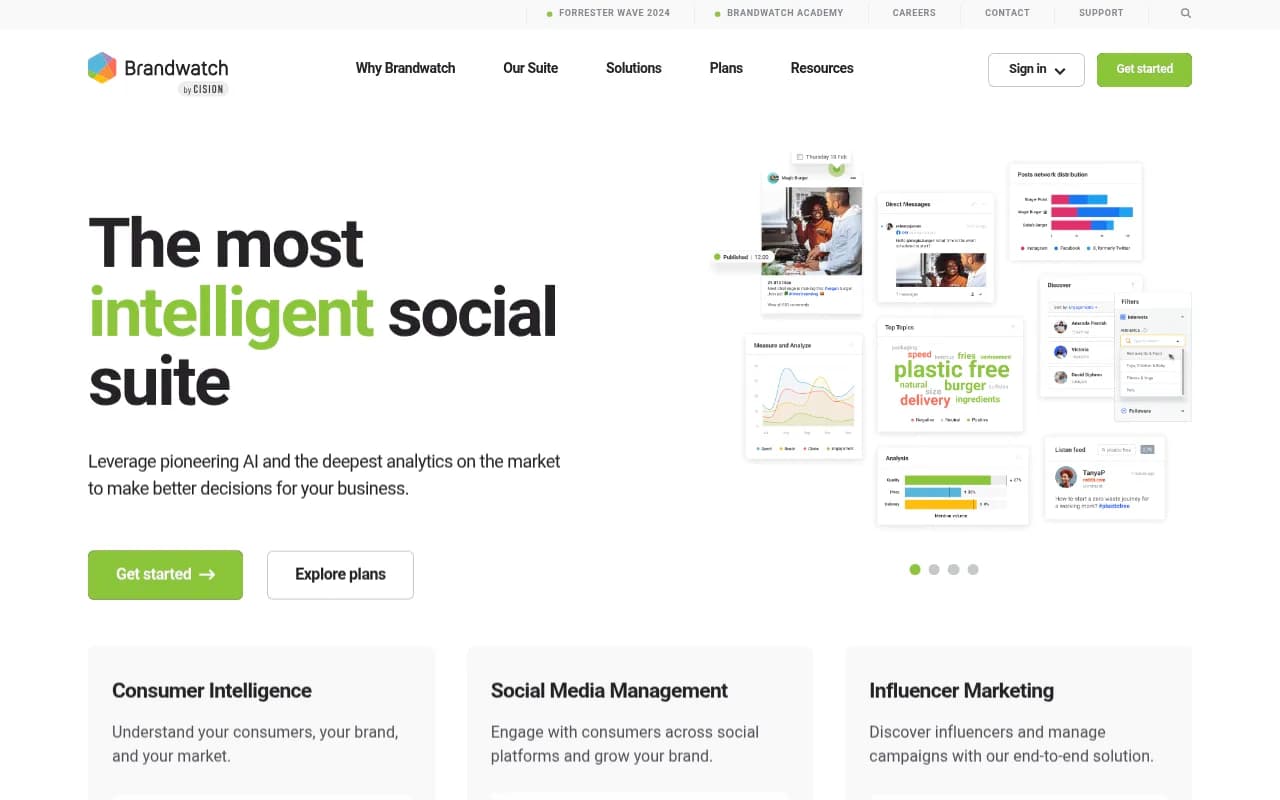
Brandwatch is the enterprise option for social intelligence. It covers Reddit, YouTube, Twitter/X, news sites, and forums with strong historical data and trend detection. The query builder is genuinely powerful -- you can segment by platform, sentiment, language, and more.
What it doesn't do: tell you whether the Reddit threads it's surfacing are actually being cited by ChatGPT or Perplexity. That's a separate problem.
Brand24
Brand24 is a more accessible option for mid-market teams. It monitors Reddit, YouTube, podcasts, and news in near real-time, with sentiment scoring and influence metrics. The pricing is reasonable and the setup is fast.
Good for: teams that want solid mention tracking without enterprise-level complexity or cost.
Talkwalker
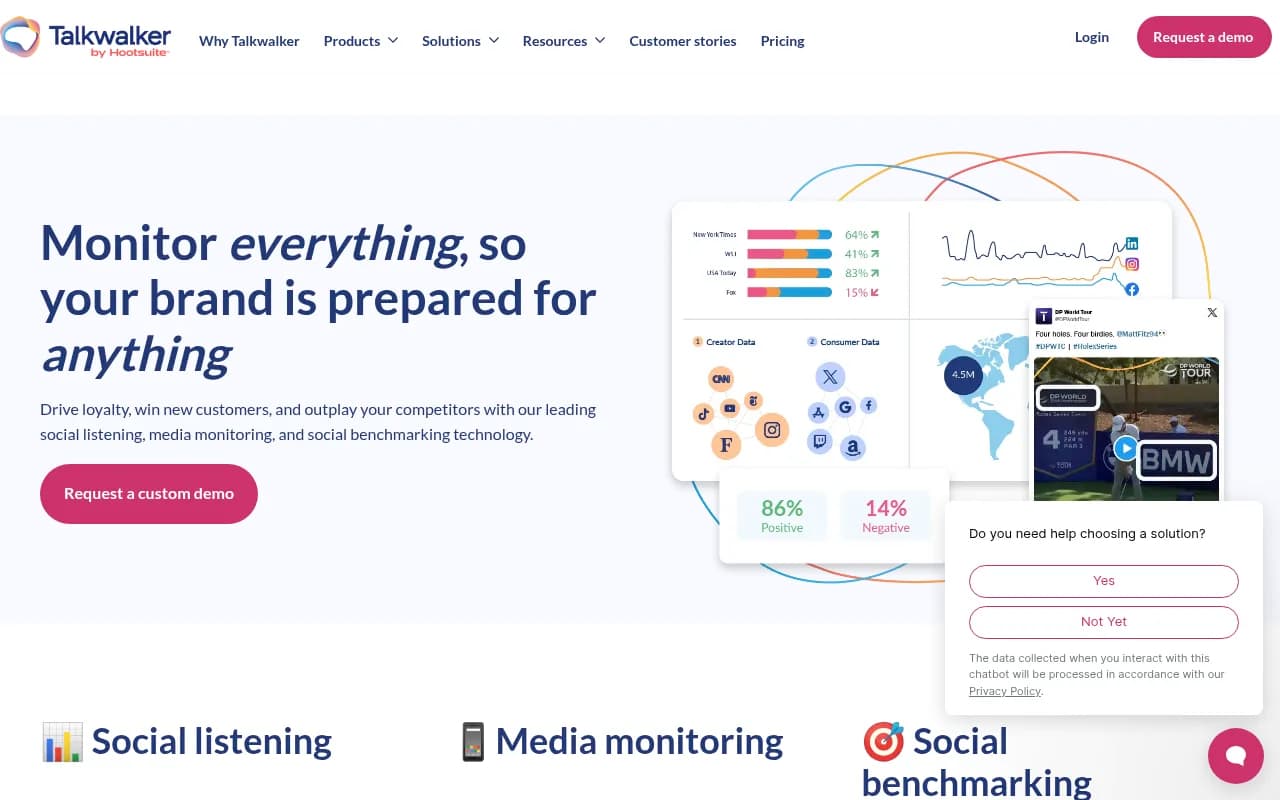
Talkwalker sits at the intersection of social listening and trend forecasting. It has predictive capabilities that can flag emerging topics before they peak -- useful if you want to create content that gets ahead of Reddit discussions rather than reacting to them.
Hootsuite
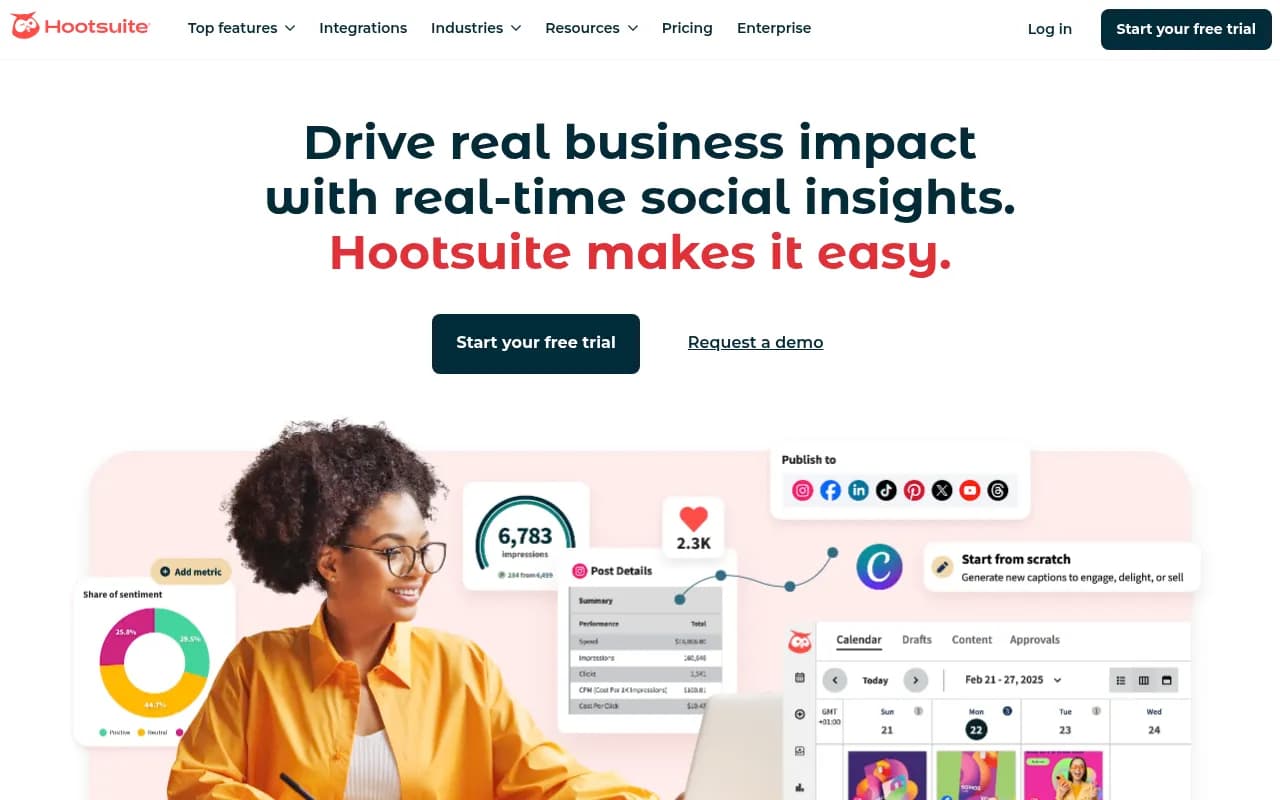
Hootsuite is primarily a scheduling and management platform, but its listening features cover the major platforms. It's a reasonable choice if you're already using it for publishing and want to consolidate tools.
Sprout Social
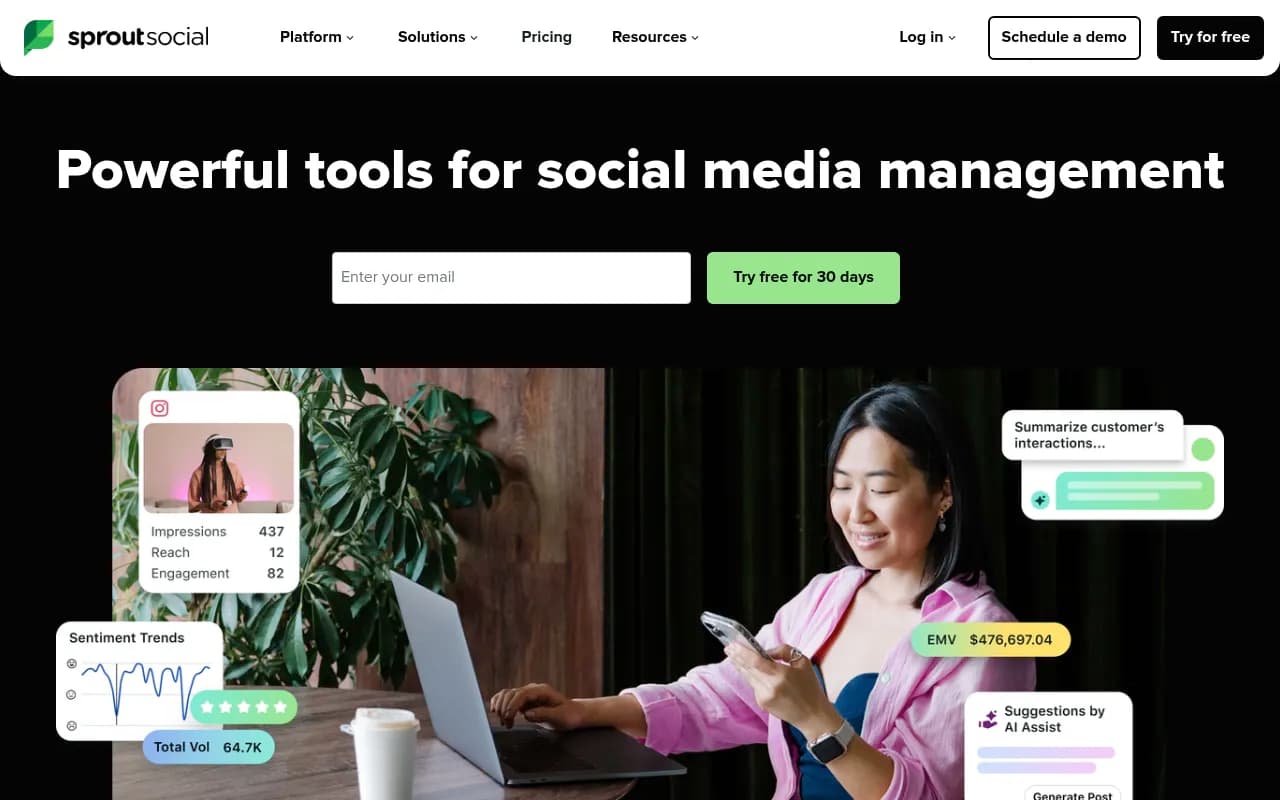
Sprout Social has strong analytics and reporting, with decent listening features. It's particularly good for teams that need to share social performance data with stakeholders who don't live in marketing dashboards.
Meltwater
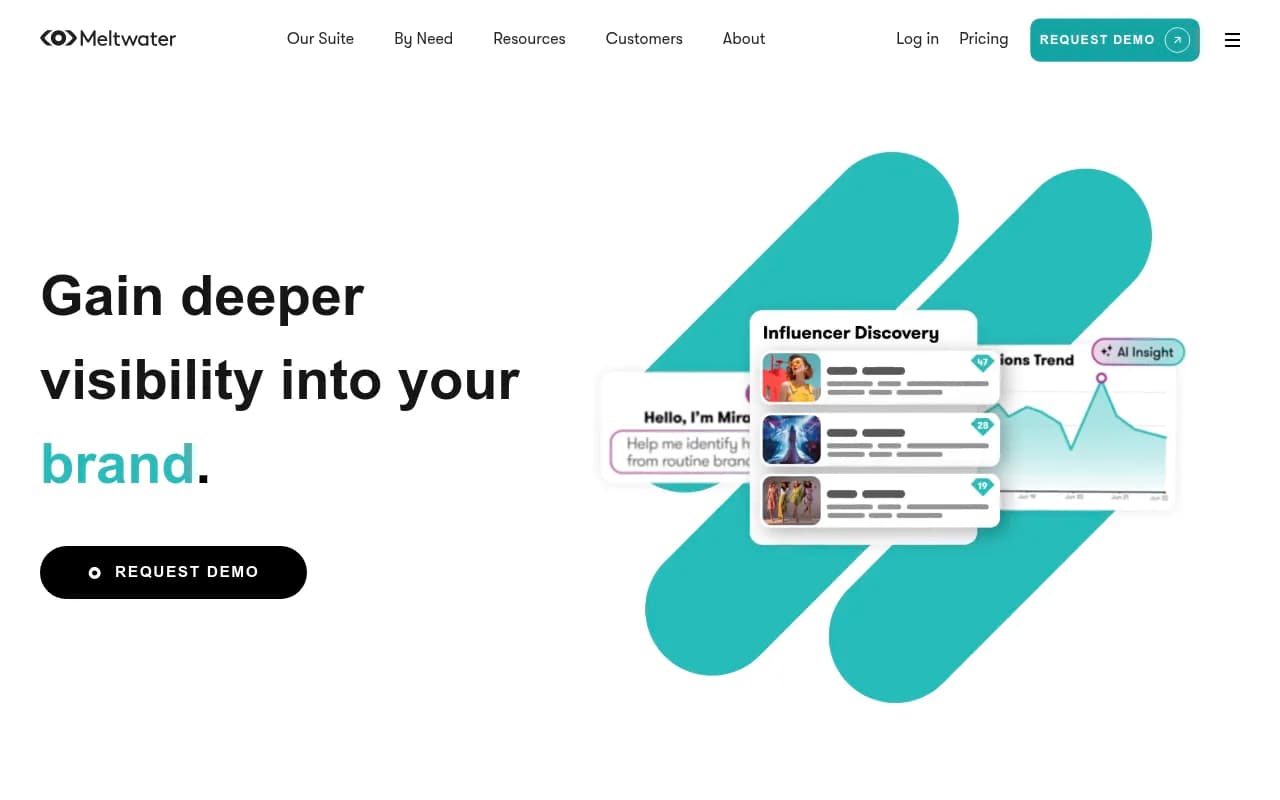
Meltwater is a media intelligence platform that covers social, news, and broadcast. It's more expensive than the others here, but the depth of coverage -- especially for earned media and PR use cases -- is hard to match.
AI visibility tools that track social platform citations
This is where things get more interesting for 2026. These tools go beyond social monitoring to show you how social content is influencing AI-generated answers.
Promptwatch
Promptwatch is the tool that most directly addresses the Reddit/YouTube/AI visibility problem. It doesn't just show you mentions -- it surfaces the specific Reddit threads and YouTube discussions that AI models are actually citing in their responses. That's a meaningfully different data point than knowing your brand was mentioned 200 times on Reddit last month.

The Reddit and YouTube insights feature is part of a broader platform that includes prompt tracking across 10 AI models (ChatGPT, Perplexity, Claude, Gemini, and more), answer gap analysis showing which topics competitors are visible for that you're not, and a built-in content generation tool that creates articles engineered to get cited. For teams that want to close the loop between social content and AI visibility, it's the most complete option available.
Otterly.AI
Otterly.AI

Otterly.AI is a solid entry-level AI visibility tracker. It monitors brand mentions across ChatGPT, Perplexity, and Google AI Overviews. It doesn't have the Reddit/YouTube citation tracking that Promptwatch offers, but for teams just starting to measure AI visibility, it's a reasonable first step.
Profound
Profound
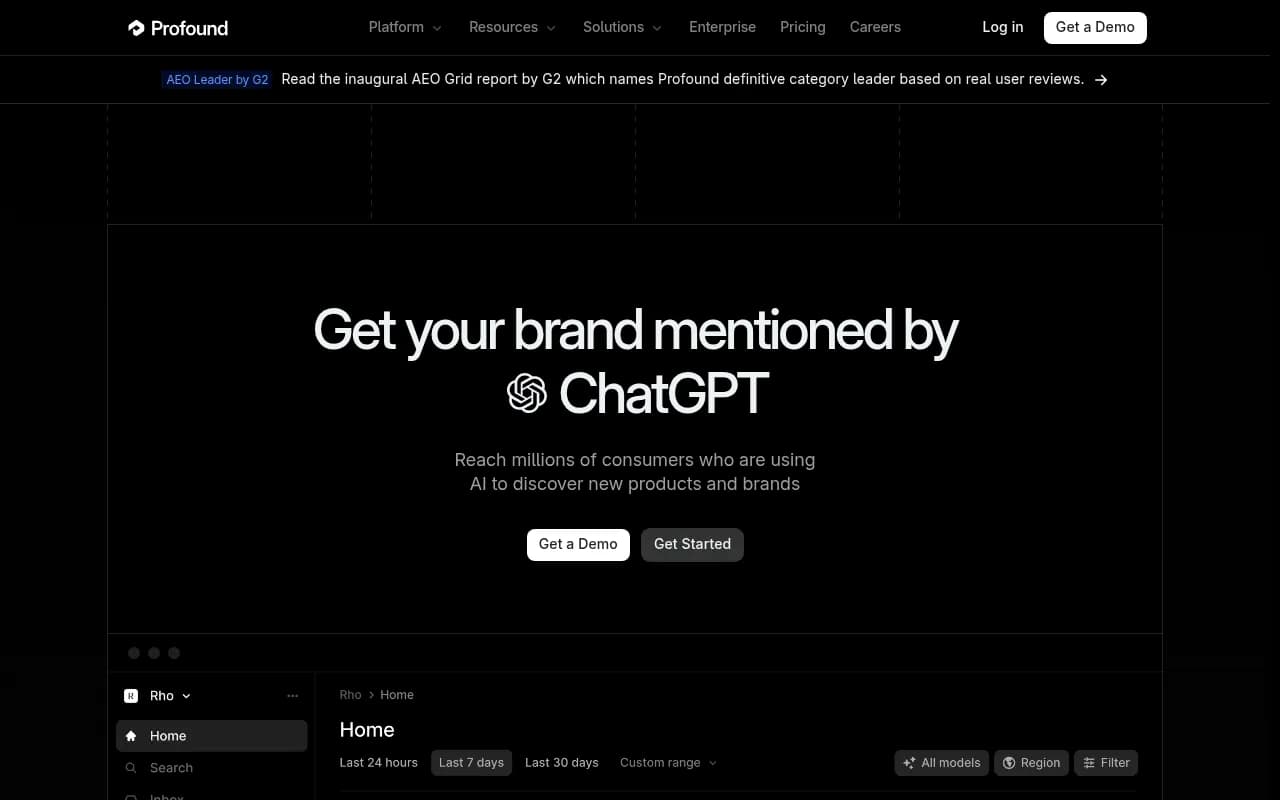
Profound is the enterprise-grade option for AI visibility. It goes deep on "why did we appear?" analysis and has strong governance features for large organizations. The price point reflects this -- it's built for teams with significant budgets and complex reporting requirements.
Brandwatch (again, for a different reason)
Worth mentioning twice: Brandwatch's social intelligence data, when combined with a dedicated AI visibility tool, gives you a reasonably complete picture. The combination isn't seamless, but it works.
Platform-specific tracking strategies
Tracking Reddit for AI visibility
Reddit monitoring has two distinct goals in 2026:
- Understanding what your community actually thinks (traditional brand health)
- Identifying which threads are likely to be cited by AI models (AI visibility)
For goal one, Brand24 and Brandwatch both do this well. For goal two, you need a tool that's actually querying AI models and tracing citations back to source URLs -- which is what Promptwatch's Reddit insights feature does.
Practically speaking: if you find that a negative Reddit thread from 18 months ago is being cited in ChatGPT's answers about your product, that's a very different problem than a negative tweet. You can't just respond to it and move on. You need to create content that gives AI models a better source to cite.
Tracking YouTube for AI visibility
YouTube tracking for AI visibility is less mature than Reddit tracking, but the principle is the same. AI models cite YouTube content -- particularly detailed reviews, tutorials, and comparison videos -- when answering product and category questions.
The practical implication: your YouTube content strategy should include topics that match the prompts your customers are asking AI models. If people ask ChatGPT "how does [your product] compare to [competitor]," and the answer cites a competitor's YouTube tutorial, that's a gap you can fill.
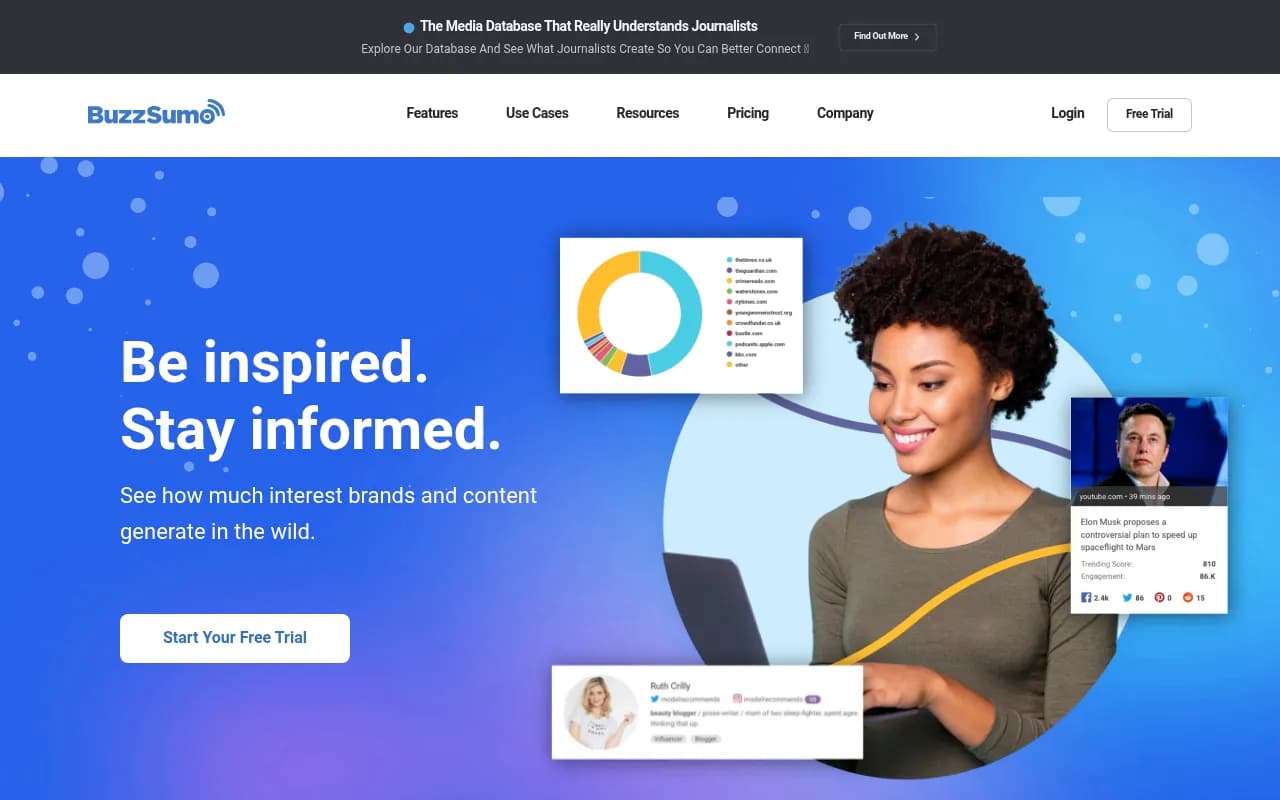
BuzzSumo is useful for identifying which YouTube content in your category is getting traction. Promptwatch shows you which of that content is actually being cited in AI answers.
Tracking LinkedIn for AI visibility
LinkedIn is trickier because the content is more ephemeral (posts disappear from feeds quickly) and the citation patterns are less predictable. The most reliable approach is to focus on LinkedIn articles rather than posts -- longer-form content that stays indexed and carries more authority signals.
For monitoring LinkedIn mentions, Brand24 and Mention both cover it reasonably well. For understanding whether LinkedIn content is influencing AI answers, the same AI visibility tools apply.
Comparison: social monitoring vs. AI visibility tools
| Tool | Reddit tracking | YouTube tracking | LinkedIn tracking | AI citation tracking | Content gap analysis | Price range |
|---|---|---|---|---|---|---|
| Brandwatch | Yes (deep) | Yes | Yes | No | No | $$$$ |
| Brand24 | Yes | Yes | Yes | No | No | $$ |
| Talkwalker | Yes | Yes | Yes | No | No | $$$$ |
| Hootsuite | Basic | Basic | Yes | No | No | $$ |
| Meltwater | Yes | Yes | Yes | No | No | $$$$ |
| Promptwatch | Yes (citation-level) | Yes (citation-level) | No | Yes | Yes | $$-$$$ |
| Otterly.AI | No | No | No | Yes | No | $$ |
| Profound | No | No | No | Yes | Partial | $$$$ |
The table makes the gap obvious. Social monitoring tools are comprehensive on the social side but blind to AI citations. AI visibility tools are strong on the citation side but don't replace full social monitoring. The exception is Promptwatch, which bridges both with its Reddit and YouTube citation tracking.
Building a practical monitoring stack
For most marketing teams, the right answer in 2026 is a two-tool stack:
Option A (budget-conscious): Brand24 for social monitoring + Promptwatch for AI visibility tracking. Brand24 covers the mention volume and sentiment side. Promptwatch covers the AI citation side, including which Reddit and YouTube content is influencing AI answers. Total cost: roughly $150-350/month depending on tiers.
Option B (enterprise): Brandwatch or Talkwalker for deep social intelligence + Promptwatch for AI visibility. More expensive, but gives you predictive trend detection alongside AI citation tracking.
Option C (AI-first): Skip traditional social monitoring and go deep on AI visibility with Promptwatch. This makes sense if your primary concern is AI search visibility rather than brand health monitoring. The Reddit and YouTube insights built into Promptwatch give you enough social signal to work with.
What doesn't make sense: spending $500/month on a social monitoring tool and nothing on AI visibility tracking. That's the 2022 approach to a 2026 problem.
What to actually do with this data
Tracking is only useful if it changes what you do. Here's the practical workflow:
Step 1: Find the Reddit threads and YouTube videos AI models are citing about your category. Promptwatch's citation analysis shows you exactly which URLs appear in AI responses. If competitors' Reddit threads are being cited and yours aren't, that's a content problem.
Step 2: Audit the sentiment in those cited sources. If the Reddit threads being cited are neutral or positive, you're in decent shape. If they're negative or outdated, you have a specific problem to solve.
Step 3: Create content that gives AI models better sources to cite. This might mean publishing detailed comparison articles, creating YouTube tutorials that address common questions, or engaging authentically in relevant Reddit communities. The goal is to give AI models accurate, current, favorable sources to pull from.
Step 4: Track whether your new content gets cited. This is where the loop closes. Promptwatch's page-level tracking shows which of your pages are being cited, by which AI models, and how often. You can see whether a new article you published is starting to appear in ChatGPT answers.
This cycle -- find gaps, create content, track results -- is what separates teams that are actively managing their AI visibility from teams that are just hoping for the best.
The bottom line
Social media monitoring and AI visibility tracking are related but distinct disciplines. Reddit, YouTube, and LinkedIn matter in 2026 not just because your customers are there, but because AI models use those platforms as source material for the answers they give to millions of queries every day.
Traditional social monitoring tools are good at telling you what's being said. AI visibility tools tell you whether what's being said is shaping AI-generated answers about your brand. Both matter. Most teams are only doing the first half.
The platforms that AI models ignore -- TikTok, Instagram, Pinterest -- still have real value for reach and engagement. But if your goal is to influence what ChatGPT says about your brand next month, the work happens on Reddit, YouTube, and LinkedIn. Start there.