Summary
- The visibility crisis: Traditional SEO metrics don't capture how brands appear in ChatGPT, Perplexity, and Gemini, creating a blind spot for agencies managing client campaigns
- Prompt tracking as proof: Agencies use platforms like Promptwatch to track which prompts trigger client mentions, measure share of voice vs competitors, and tie AI visibility to actual traffic and revenue
- The action loop: The most effective agencies don't just monitor -- they use prompt data to identify content gaps, generate AI-optimized articles, and close the loop with traffic attribution
- Multi-client complexity: Managing 10+ clients means tracking hundreds of prompts across multiple AI engines daily -- manual checking is impossible, automated platforms are essential
- ROI reporting that works: Agencies prove value by showing clients exactly which prompts drive visibility, how that visibility translates to referral traffic, and what content investments deliver the highest return

The Accountability Problem Agencies Face in 2026
A client asks: "Are we showing up when people use ChatGPT to find solutions like ours?"
You don't have an answer. Google Search Console doesn't track it. Your rank tracker doesn't cover it. You could manually test a few prompts, but that tells you nothing about the hundreds of variations users actually type.
This is the reality for agencies in 2026. AI search has gone mainstream -- millions of users now bypass Google entirely, asking ChatGPT, Perplexity, or Gemini for recommendations, comparisons, and buying advice. When someone asks "What's the best marketing automation platform for B2B SaaS?" or "Which agencies specialize in eCommerce SEO?", your client's competitors may be getting mentioned while your client is invisible.
The problem isn't just that AI search exists. It's that agencies have no native way to measure it. ChatGPT doesn't provide analytics. Perplexity doesn't show you when it cites your content. Unlike Google Search Console, which gives you impressions, clicks, and rankings, AI answer engines operate as black boxes.
For agencies, this creates an accountability gap. Clients invest in content, SEO, and brand building -- but when they ask about AI visibility, you're guessing. That's not sustainable when competitors can show concrete data.
What Prompt Tracking Actually Measures
Prompt tracking platforms solve this by systematically querying AI engines and logging the results. Instead of manually typing prompts into ChatGPT and hoping for the best, these tools run hundreds or thousands of prompts daily across multiple models and track:
- Brand mentions: Does your client's brand appear in the response? At what position? In what context?
- Citation sources: Which pages, articles, or domains does the AI model cite when mentioning your client?
- Competitor visibility: How often do competitors appear for the same prompts? What's your client's share of voice?
- Sentiment and framing: Is the mention positive, neutral, or negative? Is your client recommended or just listed?
- Prompt volume and difficulty: Which prompts have high search volume? Which are easier to rank for?
This data gives agencies something concrete to report. Instead of "We published 10 blog posts this month", you can say "We increased your visibility for 23 high-value prompts, moved from position 4 to position 2 for 'best CRM for small business', and your share of voice vs Competitor X improved by 18%."
The Platforms Agencies Actually Use
Not all prompt tracking tools are built the same. Some are monitoring-only dashboards that show you data but leave you stuck. Others are optimization platforms that help you act on what you find.
Here's what agencies look for:
Multi-engine coverage
Your clients' customers use ChatGPT, Perplexity, Claude, Gemini, and Google AI Overviews. A tool that only tracks one or two engines gives you an incomplete picture. Agencies need platforms that cover at least 4-5 major AI models with daily refresh rates.
Promptwatch tracks 10 AI engines including ChatGPT, Perplexity, Google AI Overviews, Claude, Gemini, Meta AI, DeepSeek, Grok, Mistral, and Copilot. Most competitors (Otterly.AI, Peec.ai, AthenaHQ) cover 3-4 at most.
Answer gap analysis
The most valuable feature for agencies: seeing exactly which prompts competitors rank for but your client doesn't. This tells you what content is missing from your client's site -- the specific topics, angles, and questions AI models want answers to but can't find.
Without this, you're creating content based on guesswork. With it, you're targeting proven gaps with high ROI potential.
AI content generation
Monitoring alone doesn't fix the problem. The best platforms include AI writing agents that generate articles, listicles, and comparisons grounded in real citation data, prompt volumes, and competitor analysis. This closes the loop: find the gap, create the content, track the results.
Promptwatch's AI writing agent has analyzed 880M+ citations and generates content specifically engineered to get cited by ChatGPT, Claude, and Perplexity. It's not generic SEO filler -- it's content that answers the exact questions AI models are looking for.
Traffic attribution
Visibility is meaningless if it doesn't drive traffic. Agencies need to connect AI mentions to actual visitors and revenue. The best platforms offer multiple attribution methods:
- Referral tracking: Code snippet that captures visitors from ChatGPT, Perplexity, and other AI engines
- Google Search Console integration: Pull AI Overview traffic data directly from GSC
- Server log analysis: See which AI crawlers (ChatGPT, Claude, Perplexity) are hitting your client's site, which pages they read, and how often they return
This is what separates agencies that prove ROI from agencies that just report vanity metrics.
Competitor heatmaps
Clients want to know how they stack up. Competitor heatmaps show your client's visibility vs competitors across all tracked prompts and AI engines. You can see who's winning for each prompt, identify patterns in competitor content, and prioritize where to compete.
The Action Loop: How Top Agencies Use Prompt Tracking
The agencies getting the best results don't just monitor AI visibility -- they treat it as a feedback loop:
Step 1: Find the gaps
Run Answer Gap Analysis to see which prompts competitors rank for but your client doesn't. Sort by prompt volume and difficulty to prioritize high-value, winnable opportunities.
Example: You discover that Competitor A appears for "best project management software for remote teams" but your client doesn't. The prompt has 12,000 monthly searches and medium difficulty. That's a target.
Step 2: Create content that ranks in AI
Use the platform's AI writing agent to generate an article targeting that prompt. The agent pulls citation data from 880M+ analyzed responses, understands what AI models want to see, and structures content accordingly.
This isn't about keyword density or meta tags. AI models care about:
- Structured answers: Clear, scannable sections that directly answer the question
- Entity recognition: Proper use of brand names, product categories, and technical terms
- Authoritative sources: Links to credible references and data
- Comparison frameworks: Side-by-side feature tables, pros/cons lists, use case breakdowns
The generated content includes all of this by default.
Step 3: Track the results
Publish the content and monitor prompt-level visibility over the next 2-4 weeks. You should see:
- Your client starts appearing for the target prompt
- Position improves (e.g. from not mentioned to position 3, then position 2)
- Referral traffic increases from ChatGPT and Perplexity
- Page-level tracking shows exactly which article is being cited
This is the proof clients need. You can show them: "We identified this gap, created this content, and now you're getting X visitors per month from AI search for this topic."
Step 4: Scale and optimize
Repeat the loop for 10, 20, 50 prompts. Build a content library that systematically covers the most valuable questions in your client's space. Track which content formats perform best (listicles vs how-to guides vs comparisons) and double down.
Over 3-6 months, your client's AI visibility score climbs. Share of voice vs competitors improves. Traffic from AI engines becomes a meaningful revenue channel.
Comparison: Monitoring-Only vs Optimization Platforms
| Feature | Monitoring-only tools | Optimization platforms |
|---|---|---|
| Multi-engine tracking | 3-4 engines | 8-10 engines |
| Answer gap analysis | No | Yes |
| AI content generation | No | Yes |
| Traffic attribution | Referral only | Referral + GSC + logs |
| Crawler monitoring | No | Yes |
| Reddit/YouTube insights | No | Yes |
| Prompt volumes | Limited | Full data |
| Competitor heatmaps | Basic | Advanced |
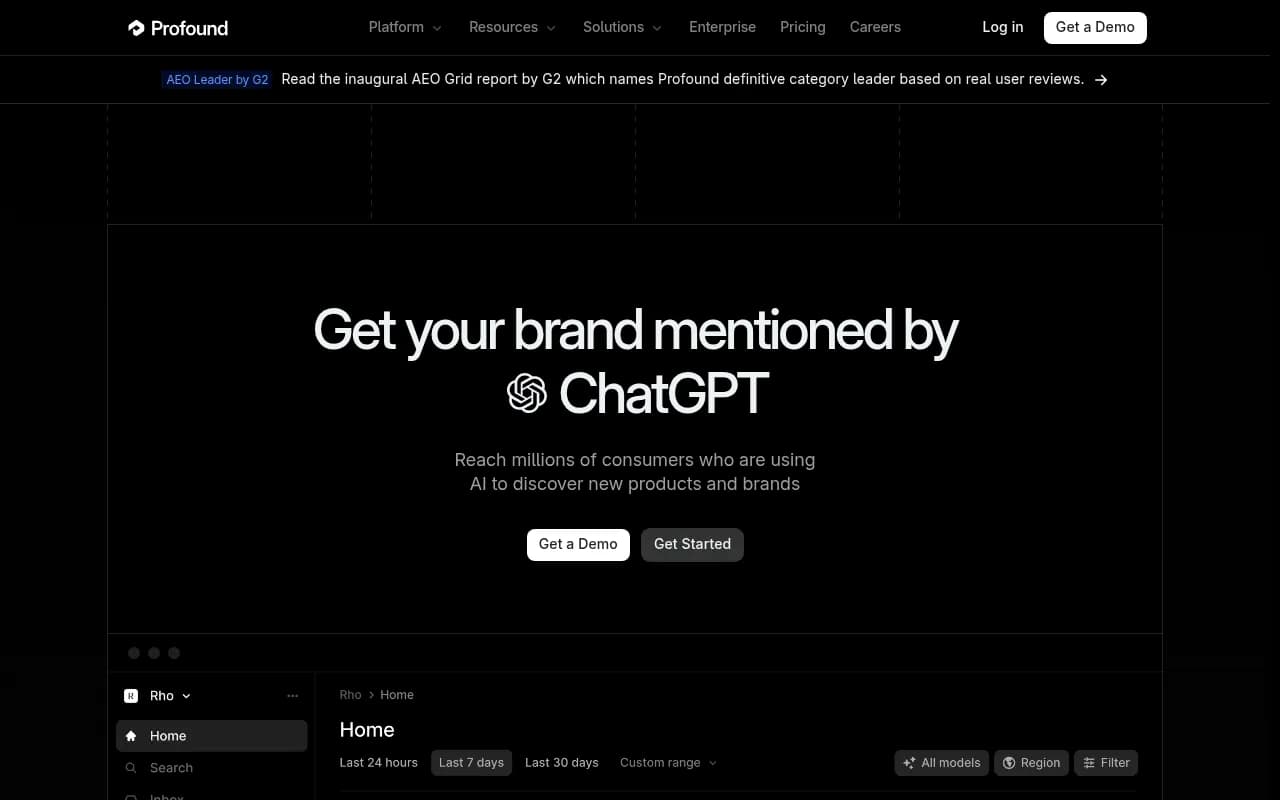
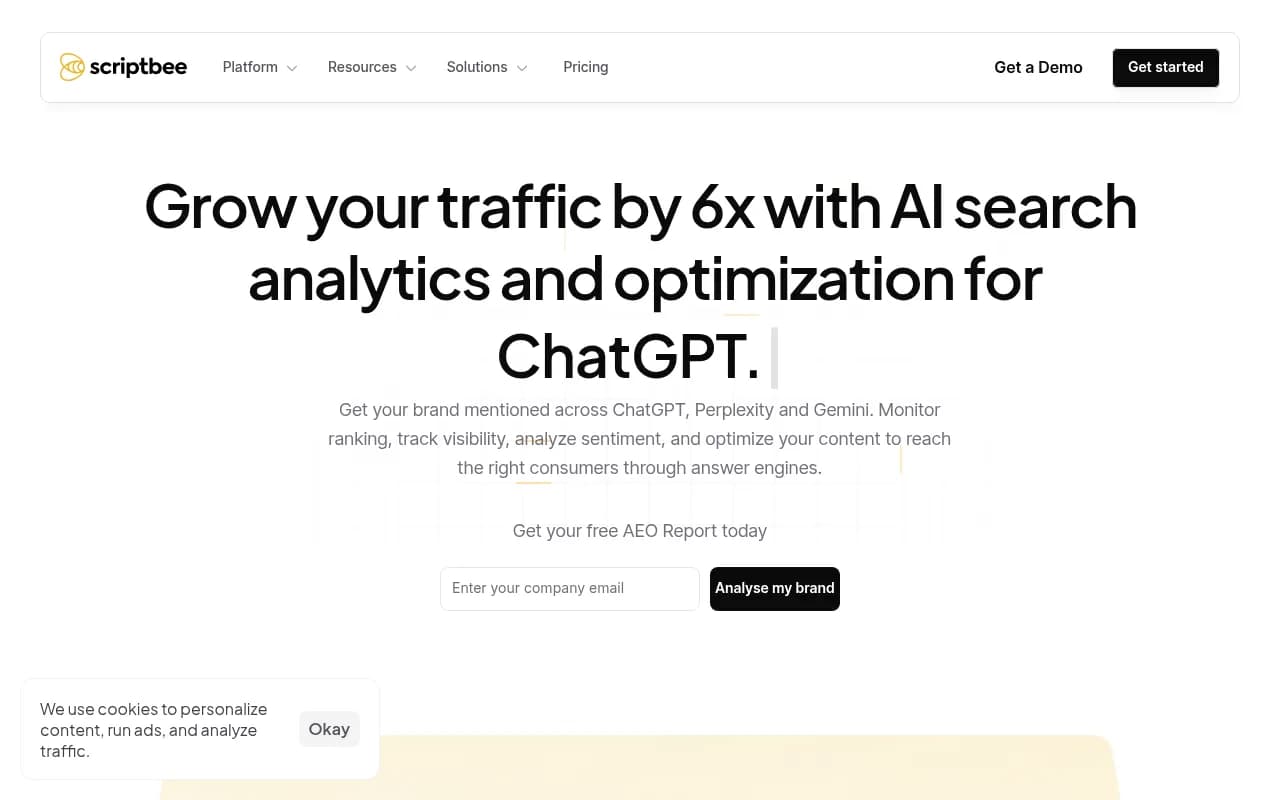
Most tools in the first column (Otterly.AI, Peec.ai, AthenaHQ, Search Party) are dashboards that show you where you're invisible but don't help you fix it. Platforms in the second column (Promptwatch, Profound, Scriptbee) give you the tools to actually improve visibility.
Otterly.AI

Profound
Multi-Client Workflow: How Agencies Scale This
Managing prompt tracking for one client is straightforward. Managing it for 10+ clients requires a system.
Here's how agencies structure it:
Client onboarding
- Prompt discovery: Use the platform's keyword suggestion tool or import from the client's existing SEO data. Start with 50-100 core prompts covering their main products, services, and use cases.
- Competitor setup: Add 3-5 direct competitors. The platform will automatically track their visibility for the same prompts.
- Baseline measurement: Run initial tracking for 1-2 weeks to establish a baseline. This gives you a starting point for ROI reporting.
Monthly reporting
- Visibility score: Overall AI visibility across all tracked prompts and engines
- Share of voice: Your client's mention rate vs competitors
- Top movers: Prompts where visibility improved or declined most
- Traffic attribution: Referral visits from AI engines, broken down by source
- Content performance: Which articles are getting cited most often
Export this data to a client-facing dashboard or PDF report. Most platforms integrate with Looker Studio or offer white-label reporting.
Quarterly strategy sessions
Review the data with the client and identify:
- High-value prompts where competitors dominate but you have a realistic shot
- Content gaps that align with the client's product roadmap or seasonal campaigns
- Emerging trends in prompt volumes (new questions people are asking)
Use this to build the next quarter's content calendar.
The ROI Conversation: What Clients Actually Care About
Clients don't care about "mentions" or "visibility scores" in the abstract. They care about:
- Traffic: Are we getting more visitors from AI search?
- Leads: Are those visitors converting?
- Revenue: Can we tie this back to closed deals?
Here's how to frame it:
Traffic ROI
"We increased your AI visibility for 35 high-value prompts this quarter. That translated to 1,200 new visitors from ChatGPT and Perplexity -- users who bypassed Google entirely and came directly to your site based on AI recommendations."
Lead ROI
"Of those 1,200 visitors, 180 converted to email signups or demo requests. That's a 15% conversion rate, higher than your Google Organic average of 11%. AI-referred visitors are more qualified because they're coming from specific, intent-driven prompts."
Revenue ROI
"We tracked 12 closed deals back to AI referral traffic this quarter, totaling $87,000 in new revenue. Your investment in AI visibility optimization was $15,000. That's a 5.8x return."
This is the conversation that renews contracts.
What to Avoid: Common Mistakes Agencies Make
Tracking too many vanity prompts
Not all prompts are created equal. "What is [your client's product category]?" might have high volume, but it's informational -- users aren't ready to buy. Focus on prompts with commercial intent: "best X for Y", "X vs Y comparison", "how to choose X".
Ignoring personalization
AI responses are increasingly personalized based on conversation history, user preferences, and contextual signals. A prompt that mentions your client today might not tomorrow. Track prompts over time and look for patterns, not one-off results.
Monitoring without optimizing
The biggest mistake: paying for a tracking tool, seeing where you're invisible, and doing nothing about it. Monitoring is only valuable if it drives action. If you're not creating content to fill the gaps, you're wasting money.
Forgetting about crawler logs
AI models need to crawl your client's site to cite it. If ChatGPT's crawler is hitting errors, getting blocked by robots.txt, or not finding key pages, your visibility will suffer no matter how good your content is. Check crawler logs regularly and fix issues immediately.
The Future: What's Changing in 2026 and Beyond
Prompt tracking is evolving fast. Here's what agencies should watch:
Agentic AI and zero-click answers
AI models are moving from answering questions to taking actions -- booking appointments, making purchases, submitting forms. If an AI agent can complete a transaction without the user ever visiting your client's website, traditional traffic metrics break down. Agencies will need to track "AI-assisted conversions" separately.
Multimodal prompts
Users are starting to upload images, PDFs, and screenshots alongside text prompts. "What's this product and where can I buy it?" with an attached photo. Tracking these requires new methods -- visual recognition, OCR, and cross-modal analysis.
Real-time personalization at scale
As AI responses become more personalized, tracking "the" answer for a given prompt becomes less meaningful. Agencies will shift to tracking entity recall ("Is your client even considered as a candidate?") and authority signals ("What sources carry the most weight?") rather than exact output text.
Tools and Platforms: Quick Reference
Here's a snapshot of the platforms agencies are using in 2026:
| Platform | Best for | Pricing |
|---|---|---|
| Promptwatch | End-to-end optimization with content generation | $99-579/mo |
| Profound | Enterprise tracking with prompt volumes | $199-999/mo |
| Otterly.AI | Basic monitoring across 3 engines | $49-199/mo |
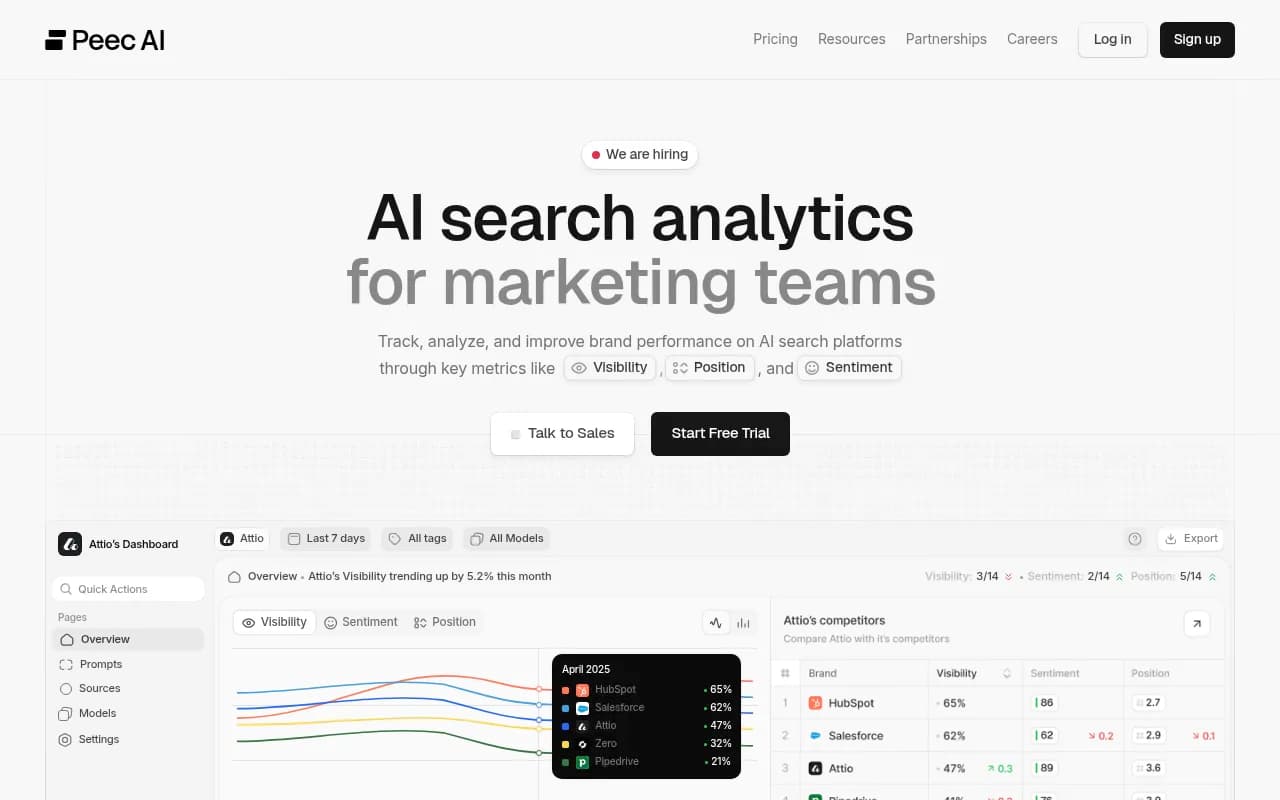
| Scriptbee | Unlimited domains with crawler monitoring | $89-299/mo |
| Peec.ai | Simple tracking for small agencies | $79-249/mo |

Promptwatch stands out because it's the only platform rated as a "Leader" across all categories in a 2026 comparison of 12 GEO platforms. The core difference: it doesn't just show you where you're invisible -- it helps you fix it with Answer Gap Analysis, AI content generation, and traffic attribution.
Getting Started: A 30-Day Plan for Agencies
Week 1: Setup and baseline
- Choose a platform (Promptwatch recommended for agencies managing multiple clients)
- Set up tracking for your top 3 clients with 50 prompts each
- Add 3-5 competitors per client
- Run initial tracking to establish baseline visibility scores
Week 2: Gap analysis
- Run Answer Gap Analysis for each client
- Identify 10 high-value prompts where competitors rank but your client doesn't
- Prioritize based on prompt volume and difficulty
Week 3: Content creation
- Use the platform's AI writing agent to generate 3-5 articles targeting the highest-priority gaps
- Review and edit for brand voice and accuracy
- Publish on client sites
Week 4: Tracking and reporting
- Monitor prompt-level visibility for the new content
- Set up traffic attribution (code snippet or GSC integration)
- Create a baseline report showing current visibility, gaps identified, and content published
By the end of 30 days, you'll have a working system and early data to show clients. By 90 days, you'll have meaningful ROI numbers.
The Bottom Line
AI search is not a future trend -- it's a current reality that's already shifting how users discover brands and make decisions. Agencies that can measure, optimize, and prove ROI in this channel will win new clients and retain existing ones. Agencies that ignore it will lose ground to competitors who don't.
Prompt tracking platforms like Promptwatch give you the tools to do this at scale: multi-engine monitoring, answer gap analysis, AI content generation, and traffic attribution. The question isn't whether to invest in AI visibility optimization -- it's how quickly you can get started.
For agencies managing 10+ clients, the math is simple: manual checking is impossible, monitoring-only tools leave you stuck, and optimization platforms that close the action loop are the only sustainable path forward. Start with your top 3 clients, prove the ROI, and scale from there.