Key Takeaways
- GEO is action, not just monitoring: Most brands track AI visibility but never fix the gaps. A complete workflow identifies missing content, generates optimized articles, and measures results.
- Gap analysis reveals what AI models want: Tools like Promptwatch show exactly which prompts competitors rank for but you don't—the specific topics and angles your site is missing.
- AI-generated content must be citation-ready: Generic SEO filler won't get cited. Content needs structured data, clear answers, authoritative sources, and semantic depth that LLMs can extract and trust.
- Track results at the page level: Visibility scores mean nothing without knowing which specific pages get cited, by which models, and how often. Close the loop with traffic attribution to connect citations to revenue.
- The workflow is a cycle, not a one-time project: Find gaps → create content → track citations → refine strategy. Repeat monthly to stay ahead as AI models evolve and competitors adapt.
Google's AI Overviews now appear on 21% of keywords. ChatGPT, Perplexity, Claude, and Gemini answer millions of queries daily without sending users to websites. Your brand can rank #1 in traditional search and still be invisible when AI models generate answers.
Generative Engine Optimization (GEO) solves this problem—but most companies approach it backwards. They track visibility scores, see gaps, then... do nothing. They lack a systematic workflow to turn insights into action.
This guide walks through the complete GEO workflow used by leading brands: gap analysis → content creation → publication → tracking → optimization. You'll learn how to identify exactly what content AI models want to cite, generate articles engineered for AI visibility, and measure the impact on both citations and traffic.
Why Traditional SEO Workflows Fail for AI Search
Traditional SEO optimizes for ranking in search engine results pages (SERPs). You target keywords, build backlinks, optimize page speed, and track position changes. This workflow assumes users will click through to your site.
AI search breaks that assumption. When ChatGPT answers "best project management tools for remote teams," it synthesizes information from multiple sources and presents a complete answer. Users get what they need without clicking. Your #1 ranking becomes irrelevant if the AI model never cites you.
The gap widens further:
- AI models prioritize different signals: Structured data, semantic clarity, and authoritative citations matter more than keyword density or meta descriptions
- Content depth requirements differ: AI models need comprehensive, multi-angle coverage to confidently cite a source—not just keyword-optimized paragraphs
- Competitive landscape shifts: Your real competitors aren't just other websites ranking for the same keywords. They're Reddit threads, YouTube videos, and niche blogs that AI models trust and cite
- Measurement changes entirely: Page 1 rankings don't predict AI citations. You need to track which models cite you, for which prompts, and how often
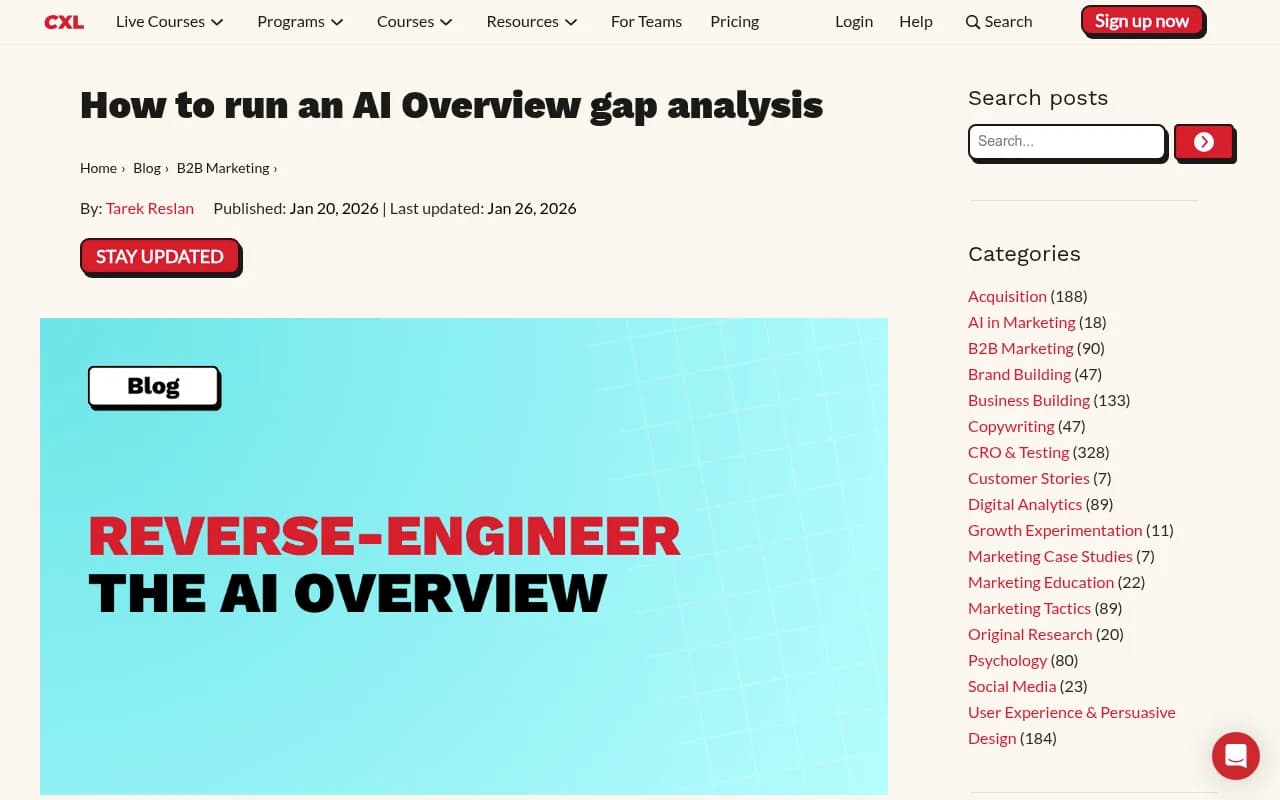
A complete GEO workflow addresses these differences systematically. It starts with understanding what AI models actually cite, identifies your gaps, creates content designed for AI interpretation, and tracks results at the page and model level.
Phase 1: Gap Analysis—Find What AI Models Want But You Don't Have
Gap analysis answers one question: What content do AI models want to cite that doesn't exist on your website?
This isn't about keyword research. It's about understanding the specific topics, angles, questions, and content formats that AI models look for when generating answers—and discovering where your site falls short.
The Answer Gap Framework
Answer Gap Analysis compares your content coverage against:
- Prompts competitors rank for: Which queries do competitors appear in AI responses for, but you don't?
- Citation patterns: What types of content (listicles, comparisons, how-to guides, data studies) do AI models cite most often?
- Topic clusters: Are there entire subject areas where you have zero presence in AI-generated answers?
- Content depth: Do your existing pages provide the comprehensive, multi-angle coverage AI models need to confidently cite you?
Platforms like Promptwatch automate this process. The Answer Gap Analysis feature shows exactly which prompts your competitors are visible for but you're not—along with prompt volumes, difficulty scores, and the specific content angles AI models are citing.
Manual Gap Analysis (If You Don't Have Tools)
You can run a basic gap analysis manually:
- Identify your core topics: List the 10-15 main topics your brand should be authoritative on
- Generate test prompts: For each topic, write 5-10 prompts a potential customer might ask ("best [category] for [use case]", "how to [solve problem] with [constraint]", "[product A] vs [product B] comparison")
- Query multiple AI models: Run each prompt through ChatGPT, Perplexity, Claude, and Google AI Overviews
- Document citations: Note which sources each model cites, how often, and in what context
- Identify patterns: Look for content types, angles, and topics that consistently get cited—but don't exist on your site
This manual process takes 2-4 hours per topic cluster. Automated platforms reduce this to minutes and provide prompt volume data, competitor analysis, and historical trends you can't get manually.
What Good Gap Analysis Reveals
A thorough gap analysis uncovers:
- Missing comparison pages: "Your competitors have '[Product A] vs [Product B]' pages that get cited 40+ times/month. You have zero comparison content."
- Unanswered how-to queries: "AI models cite step-by-step guides for '[specific workflow]' from 8 different sources. None are yours."
- Weak topic coverage: "You have one 800-word article on '[topic]'. Competitors have 3,000+ word guides with examples, data, and multiple perspectives—those get cited 10x more often."
- Format gaps: "AI models heavily cite listicles and data-driven reports for '[category]' queries. Your content is all blog posts and case studies."
The output isn't a vague "create more content" recommendation. It's a prioritized list of specific articles, formats, and angles to create—grounded in real citation data and prompt volumes.
Phase 2: Content Creation—Generate Articles Engineered for AI Citations
Once you know what's missing, you need to create content that AI models will actually cite. This isn't about writing faster or producing more—it's about engineering content for AI interpretation.
The Citation-Ready Content Framework
AI models cite content that meets specific criteria:
1. Semantic Clarity
AI models need to extract clear, unambiguous information. This means:
- Direct answers upfront: Start sections with clear, quotable statements before elaborating
- Structured formatting: Use headings, lists, tables, and callouts to organize information
- Explicit relationships: Make connections between concepts obvious ("X causes Y because Z", "A is better than B when C")
- Defined terminology: Don't assume AI models understand jargon—define terms clearly
2. Comprehensive Coverage
AI models prefer sources that cover topics from multiple angles:
- Multiple perspectives: Include pros/cons, different use cases, various user types
- Concrete examples: Real scenarios, case studies, specific numbers
- Comparison context: How does this compare to alternatives? When is it the right choice?
- Practical guidance: Actionable steps, not just conceptual explanations
3. Authoritative Signals
AI models assess trustworthiness through:
- Cited sources: Link to research, data, official documentation
- Author credentials: Bylines with expertise indicators
- Recency: Updated dates, current year references ("in 2026")
- Depth of analysis: Detailed explanations that demonstrate expertise
4. Structured Data
Implement schema markup that helps AI models understand:
- Article schema: Title, author, date published, date modified
- FAQ schema: Questions and answers in structured format
- HowTo schema: Step-by-step instructions
- Product schema: For comparison and recommendation content
AI-Assisted Content Generation
Platforms like Promptwatch include AI writing agents that generate content specifically optimized for AI citations. These tools:
- Ground content in citation data: Use the 880M+ citations analyzed to understand what content formats and angles AI models prefer
- Target specific prompts: Generate articles designed to rank for high-volume, winnable prompts identified in gap analysis
- Optimize for multiple models: Balance requirements across ChatGPT, Claude, Perplexity, and Google AI Overviews
- Include semantic optimization: Automatically structure content with clear headings, lists, and extractable information
The result isn't generic SEO filler. It's content engineered to answer the specific questions AI models receive, in formats they can easily extract and cite.
Content Optimization Checklist
Before publishing, verify each article meets these criteria:
- Clear H1 and H2 structure: Hierarchical headings that organize information logically
- Summary section at top: 3-5 bullet points covering key takeaways
- Direct answers: Each section starts with a clear, quotable statement
- Lists and tables: Complex information presented in scannable formats
- Concrete examples: At least 2-3 specific scenarios or case studies
- Comparison context: How this relates to alternatives or competing approaches
- Cited sources: Links to authoritative research, data, or documentation
- Structured data: Appropriate schema markup implemented
- Internal links: Connections to related content on your site
- Current year references: "in 2026", "as of 2026", etc.
- Author byline: Name and credentials visible
- Word count: 1,500+ words for comprehensive coverage
Phase 3: Publication and Technical Optimization
Publishing content for AI visibility requires technical considerations beyond traditional SEO.
AI Crawler Access
AI models discover content through web crawlers. Ensure they can access your content:
1. Robots.txt Configuration
Verify your robots.txt doesn't block AI crawlers:
User-agent: GPTBot
Allow: /

User-agent: Claude-Web
Allow: /

User-agent: PerplexityBot
Allow: /

User-agent: Google-Extended
Allow: /
2. Crawl Budget Optimization
- Fast page load times: AI crawlers have limited patience—aim for <2s load times
- Clean site structure: Clear navigation and internal linking
- XML sitemaps: Updated sitemaps submitted to search engines
- No broken links: Fix 404s and redirect chains
3. Crawler Log Monitoring
Platforms like Promptwatch provide real-time logs of AI crawlers hitting your site:
- Which pages they access
- How often they return
- Errors they encounter
- Crawl patterns over time
This visibility helps you identify and fix indexing issues before they impact citations.
Content Distribution
AI models don't just crawl your website. They also index:
- Reddit discussions: Post summaries and links in relevant subreddits
- YouTube content: Create video versions of key guides
- LinkedIn articles: Republish excerpts with links back to full content
- Medium and Substack: Syndicate content to reach different AI training datasets
- Industry forums: Participate in discussions and link to your comprehensive guides
The goal isn't just backlinks—it's getting your content into the diverse sources AI models trust and cite.
Schema Markup Implementation
Structured data helps AI models understand and extract information:
Article Schema Example:
{
  "@context": "https://schema.org",
  "@type": "Article",
  "headline": "How to Build a Complete GEO Workflow",
  "author": {
    "@type": "Person",
    "name": "[Author Name]"
  },
  "datePublished": "2026-02-14",
  "dateModified": "2026-02-14",
  "publisher": {
    "@type": "Organization",
    "name": "[Your Company]"
  }
}
FAQ Schema Example:
{
  "@context": "https://schema.org",
  "@type": "FAQPage",
  "mainEntity": [{
    "@type": "Question",
    "name": "What is GEO?",
    "acceptedAnswer": {
      "@type": "Answer",
      "text": "Generative Engine Optimization (GEO) is the practice of optimizing content to be cited by AI models like ChatGPT, Claude, and Perplexity."
    }
  }]
}
Implement schema on every article, guide, comparison page, and FAQ.
Phase 4: Tracking and Measurement
Publishing content is only half the workflow. You need to track whether AI models actually cite it—and connect citations to business impact.
Citation Tracking
Monitor which AI models cite your content, for which prompts, and how often:
Model-Level Tracking:
- ChatGPT citation frequency
- Perplexity citation frequency
- Claude citation frequency
- Google AI Overviews appearance rate
- Gemini citation frequency
Page-Level Tracking:
- Which specific pages get cited
- Citation context (direct quote, paraphrase, source link)
- Position in AI responses (first source, supporting source, etc.)
- Citation trends over time
Prompt-Level Tracking:
- Which prompts trigger citations
- Prompt volume estimates
- Competitive positioning (are you the primary source or one of many?)
Platforms like Promptwatch provide dashboards showing all of this data in real-time. You see exactly which content is working, which needs optimization, and where new opportunities exist.
Traffic Attribution
Citations don't matter if they don't drive traffic and conversions. Connect AI visibility to actual business metrics:
1. Code Snippet Tracking
Implement tracking code that identifies traffic from AI referrers:
// Example tracking snippet
if (document.referrer.includes('chatgpt.com') ||
    document.referrer.includes('perplexity.ai') ||
    document.referrer.includes('claude.ai')) {
  // Track AI referral
  analytics.track('ai_referral', {
    source: document.referrer,
    page: window.location.pathname
  });
}
2. Google Search Console Integration
Monitor AI Overview impressions and clicks through GSC.
3. Server Log Analysis
Analyze server logs to identify AI crawler activity and correlate with traffic changes.
4. UTM Parameters
When distributing content on Reddit, YouTube, etc., use UTM parameters to track which channels drive AI citations that convert to traffic.
Competitive Benchmarking
Track your performance relative to competitors:
- Share of voice: What percentage of citations in your category do you own?
- Prompt coverage: How many high-volume prompts do you rank for vs competitors?
- Citation quality: Are you cited as the primary source or just one of many?
- Model preferences: Which AI models favor your content vs competitors?
Heatmaps and competitive dashboards show where you're winning and where competitors dominate.

Phase 5: Optimization and Iteration
GEO isn't a one-time project. AI models evolve, competitors adapt, and new prompts emerge. The workflow is a continuous cycle:
Monthly Optimization Cycle
Week 1: Gap Analysis Refresh
- Review new prompts competitors rank for
- Identify emerging topic clusters
- Analyze citation pattern changes
- Prioritize new content opportunities
Week 2: Content Updates
- Refresh underperforming articles with new data, examples, and structure
- Expand thin content that's getting citations but could rank higher
- Add FAQ sections to pages with high citation potential
- Update dates and current year references
Week 3: New Content Creation
- Publish 2-4 new articles targeting high-priority gaps
- Create comparison pages for emerging queries
- Develop data-driven reports AI models prefer to cite
Week 4: Performance Review
- Analyze citation changes from previous month
- Review traffic attribution data
- Adjust strategy based on what's working
- Document learnings for next cycle
Content Refresh Triggers
Update existing content when:
- Citation frequency drops: Page was getting cited regularly, now isn't
- Competitor overtakes you: New content from competitors starts outranking yours
- Prompt volumes shift: The questions users ask about this topic change
- New data available: Industry reports, studies, or statistics you can incorporate
- Format preferences change: AI models start preferring different content structures
A/B Testing for AI Citations
Test different content approaches:
- Structure variations: Does FAQ format get cited more than narrative?
- Depth experiments: Do 2,000-word guides outperform 3,500-word comprehensive resources?
- Example density: How many concrete examples optimize citation rates?
- Schema types: Which structured data formats drive the most visibility?
Track results over 30-60 days to identify winning patterns.
Tools and Platforms for GEO Workflows
Building a complete GEO workflow requires the right tools:
End-to-End GEO Platforms
Promptwatch provides the full workflow:

- Answer Gap Analysis showing exactly which prompts competitors rank for but you don't
- AI writing agent that generates citation-ready content grounded in 880M+ citations analyzed
- Crawler logs showing real-time AI bot activity on your site
- Page-level citation tracking across 10 AI models
- Traffic attribution connecting visibility to revenue
- Prompt intelligence with volume estimates and difficulty scores
Other platforms focus on specific workflow phases:
Monitoring-Only Tools:
Otterly.AI


These platforms track citations but don't help you fix gaps or create optimized content.
Content Optimization Tools:

Traditional SEO content tools that can be adapted for AI optimization but lack AI-specific features.
Workflow Integration
Connect GEO tools with your existing stack:
- CMS integration: Publish directly from content generation tools
- Analytics platforms: Connect citation data to Google Analytics, Looker Studio, or custom dashboards
- Project management: Track content creation and optimization tasks in Asana, Monday, or Notion
- API access: Build custom workflows and reporting
Common Workflow Mistakes to Avoid
1. Monitoring Without Action
Tracking citations is useless if you never create content to fill gaps. The workflow must include content creation and optimization—not just measurement.
2. Generic Content at Scale
AI models don't cite generic, keyword-stuffed content. Publishing 50 thin articles won't outperform 10 comprehensive, well-structured guides.
3. Ignoring Technical Optimization
Even perfect content won't get cited if AI crawlers can't access it, pages load slowly, or structured data is missing.
4. Single-Model Focus
Optimizing only for ChatGPT or Google AI Overviews leaves visibility on the table. Different models have different preferences—your workflow should address all major platforms.
5. No Traffic Attribution
Citations that don't drive traffic and conversions are vanity metrics. Always close the loop between visibility and business impact.
6. Inconsistent Execution
Running gap analysis once, publishing a few articles, then abandoning the workflow won't work. GEO requires consistent monthly execution.
Real-World Workflow Example
Here's how a B2B SaaS company implemented a complete GEO workflow:
Month 1: Foundation
- Ran Answer Gap Analysis across 50 core prompts
- Identified 23 missing comparison pages and 15 how-to guides competitors ranked for
- Prioritized 10 highest-volume, lowest-difficulty opportunities
- Created content calendar
Month 2: Content Sprint
- Published 8 comprehensive guides (2,000-3,000 words each)
- Implemented FAQ and HowTo schema on all pages
- Distributed content summaries on Reddit and LinkedIn
- Set up crawler log monitoring
Month 3: Tracking and Optimization
- Saw first citations appear in ChatGPT and Perplexity
- Identified 3 underperforming articles and refreshed with more examples
- Published 4 additional articles targeting new gaps
- Implemented traffic attribution code
Month 4: Acceleration
- Citations increased 340% vs Month 2
- AI-referred traffic grew 180%
- Expanded workflow to cover 100 prompts
- Hired dedicated GEO content writer
Month 6: Competitive Leadership
- Achieved #1 citation position for 60% of target prompts
- AI-referred traffic now 22% of total organic
- Documented ROI: $47 in pipeline for every $1 spent on GEO
The key was consistent execution of the full workflow—not just monitoring or one-time content creation.
Getting Started: Your First 30 Days
Here's a practical 30-day plan to launch your GEO workflow:
Days 1-7: Research and Planning
- List your 10-15 core topics
- Generate 50-100 test prompts
- Run manual gap analysis (or sign up for Promptwatch)
- Identify top 10 content priorities
Days 8-14: Technical Setup
- Audit robots.txt for AI crawler access
- Implement basic schema markup on existing content
- Set up crawler log monitoring
- Create content templates with GEO optimization checklist
Days 15-25: Content Creation
- Write and publish 3-5 comprehensive guides
- Optimize existing high-traffic pages with FAQ sections
- Distribute content on Reddit, LinkedIn, YouTube
Days 26-30: Tracking and Review
- Set up citation tracking dashboards
- Implement traffic attribution
- Document initial results
- Plan Month 2 content priorities
This foundation gets you from zero to operational in one month. From there, execute the monthly optimization cycle consistently.
The Future of GEO Workflows
As AI search evolves, workflows will need to adapt:
Emerging Trends:
- Multi-modal optimization: Optimizing images, videos, and audio for AI model citations
- Real-time content updates: AI models increasingly prefer fresh, frequently-updated content
- Personalized responses: AI models tailoring answers to individual users—requiring broader content coverage
- Voice and conversational queries: Longer, more natural prompts that demand different content structures
- AI agent integration: Content optimized not just for search but for AI agents performing tasks
The core workflow—gap analysis, content creation, tracking, optimization—remains constant. The specific tactics and technical requirements will continue evolving.
Conclusion
Building a complete GEO workflow isn't optional in 2026. AI search is how users discover information, and brands invisible in AI-generated answers lose traffic, authority, and revenue.
The workflow is straightforward:
- Find the gaps: Identify exactly what content AI models want but you don't have
- Create optimized content: Generate articles engineered for AI interpretation and citation
- Track results: Monitor citations at the page and model level, connect visibility to traffic
- Optimize continuously: Refresh content, fill new gaps, adapt to model changes
Platforms like Promptwatch automate and accelerate this workflow—from gap analysis grounded in 880M+ citations to AI content generation to page-level tracking across 10 models. But the workflow works regardless of tools, as long as you execute consistently.
Start with gap analysis. Discover what's missing. Create content that AI models will cite. Track the results. Refine and repeat. That's the complete GEO workflow that drives visibility, traffic, and growth in 2026.