Key takeaways
- "Ranking" in AI Mode doesn't mean a position in a list. Track inclusion, mention, citation, and answer share instead, because Google's own personalization models mean two users can see different answers to the identical query.
- Build 20-50 prompts per client spanning generic, problem, solution, brand, and comparison queries. A single prompt run once is statistically unreliable; research from SparkToro found less than a 1-in-100 chance an AI gives the same brand list twice for the same query.
- Separate AI Mode tracking from ChatGPT tracking. Google's AI Mode cites its own properties (google.com, YouTube) far more than ChatGPT does, so the two surfaces need different content strategies.
- At 20+ clients, workspace separation (distinct prompts, competitor sets, and branding per client) matters more than raw feature count. A tool with a shared dashboard and filters breaks down fast once you're running client meetings back to back.
- Pick a platform based on whether you need a monitoring dashboard or an execution layer that turns citation gaps into published content, because most agencies eventually need both.
Why "rank tracking" breaks down in AI Mode
If you've managed client SEO for more than a few years, you already know the drill: check positions, screenshot the SERP, drop it into a report, move to the next client. AI Mode doesn't let you do that, and pretending it does is how agencies end up reporting numbers that mean nothing.
Google's AI Mode doesn't return ten blue links. It synthesizes an answer from multiple sources, and the mix of sources changes by query phrasing, location, device, time of day, and (this is the part most agencies miss) the user's own behavioral history. Google has filed patents describing "user embedding" models that personalize AI Mode output based on prior queries and clicks. Two analysts at the same agency, searching from the same city, can get different citations for the identical prompt.
That's not a minor caveat. It means a tool that promises "you rank #3 in AI Mode for this keyword" is, to quote the plainest framing I've seen on this, full of baloney. SparkToro's research with Carnegie Mellon methodology found less than a 1-in-100 chance that ChatGPT or Google AI return the same list of brand recommendations twice when the same prompt is run 100 times, and roughly a 1-in-1,000 chance the ordering matches. Running a prompt 60 to 100 times and averaging the results does produce a meaningful visibility percentage. One agency showed up in 85 of 95 runs for a target prompt. That's useful. A single snapshot calling itself a "rank" is not.
So the first thing to fix, before you even pick a tool, is the mental model you're reporting against. AI Mode tracking should answer four questions, not one:
- Inclusion: did the brand or domain show up at all (binary)
- Mention: was the brand named in the answer text
- Citation: was a specific URL linked
- Answer share: what percentage of repeated runs captured the brand versus competitors
If a vendor's dashboard only gives you a position number, that's a red flag, not a feature.
AI Mode behaves differently from ChatGPT, and your clients' content should too
Agencies running both ChatGPT visibility tracking and AI Mode tracking often assume the two surfaces reward the same content. They don't. Promptwatch's data on Google AI Mode citation share from June 2026 found that google.com alone captured 7.31% of all AI Mode citations that month, more than YouTube (2.88%) and Reddit (2.52%) combined. Add YouTube and Google-owned properties cross 10% of the citation mix. That self-preference is specific to AI Mode. In ChatGPT's citation data for the same period, Reddit leads and google.com barely registers.
Practically, this means your client sites competing for AI Mode visibility should treat Google Business Profile, Google Maps, Merchant Center listings, and an actively maintained YouTube channel as direct GEO channels, not side projects for the local SEO intern. Below the top three sources in AI Mode, every other domain drops under 1% citation share, so the open-web opportunity in AI Mode lives almost entirely in a long tail that Google's own properties are steadily eating into. Month over month, google.com's AI Mode citation share climbed from 4.24% in May to 7.31% in June, a 72% jump on top of a sixfold increase the month before.
Domain authority also matters less than agencies assume. Promptwatch's citation-share-by-domain-rank data for August 2026 shows DR 46-60 and DR 61-75 sites together earning roughly 46% of all ChatGPT citations, while the very top tier (DR 91-100) shrank from about 7% early in the month to roughly 3% by mid-August. If you're telling a mid-authority client they need to wait for more domain authority before AI visibility work pays off, that's not supported by the data.
Building a prompt set that holds up across 20+ clients
The operational challenge of running this for one client is manageable. At 20+ clients it compounds fast. Each client needs its own competitor set, its own prompt list, and its own branded reporting, and if your tool doesn't separate those cleanly by default, you'll end up juggling browser tabs and separate logins client by client, which is a workflow that collapses on a Tuesday afternoon with four client calls in a row.
A workable baseline, pulled from agency practice across several sources, is 20-50 core prompts per client covering five query types:
- Generic category queries ("best project management software")
- Problem-first queries ("why is my team missing deadlines")
- Solution-aware queries ("tools that automate task handoffs")
- Brand queries ("is [Client] good for small teams")
- Comparison queries ("[Client] vs [Competitor]")
These categories matter because they cite differently. Promptwatch's data on unique domains per ChatGPT response shows organic category prompts cite 10+ domains in 52.5% of responses, comparison prompts are similar at 49.1%, but brand-specific prompts narrow sharply, with only 21.3% citing 10+ domains and five domains being the single most common count. In other words, brand and reputation prompts are the highest-leverage queries to track closely, because fewer sources control the narrative there, while category and comparison prompts need a much wider competitive sweep.
One more wrinkle worth planning for: AI Mode is conversational. A follow-up question can cite an entirely different brand than the initial query did. Most tracking tools only capture the first query and miss this drift entirely. If your tool can't run sequential prompt pairs, you're reporting half the picture to clients whose buyers are asking three or four follow-up questions before they ever reach a site.
A validation checklist before you trust any AI Mode tracker
Before signing an agency contract, run a tool through this list. Tools scoring 8 or higher out of 10 are genuinely production-ready; anything under 5 is probably mislabeling AI Overviews as AI Mode, which is a common and expensive mistake.
- Returns different citations across a US/UK/Germany test
- Runs logged-out to avoid personalization contamination
- Provides timestamped screenshots of the actual AI Mode interface
- Captures URL-level citations, not just domain-level
- Clearly separates AI Mode data from AI Overviews data
- Supports follow-up/multi-turn query tracking
- Lets you control refresh cadence
- Gives raw answer-text export
- Supports CSV/API export with full fields
- Shows competitor citations, not just your own brand
Comparing tools built for agency-scale tracking
Here's where pricing gets tricky. Several well-known platforms gate real AI Mode tracking behind an enterprise tier while advertising a much lower headline price for the base plan. Always confirm which exact tier includes AI Mode before you budget it into a client proposal.
| Tool | Agency pricing (approx.) | AI Mode included? | Notes |
|---|---|---|---|
| Promptwatch | Agency tiers from $199/mo (10,000 responses), unlimited projects and prompts | Yes, in base agency plan | Full-stack visibility plus crawler logs, Content Agents, and white-label client portal |
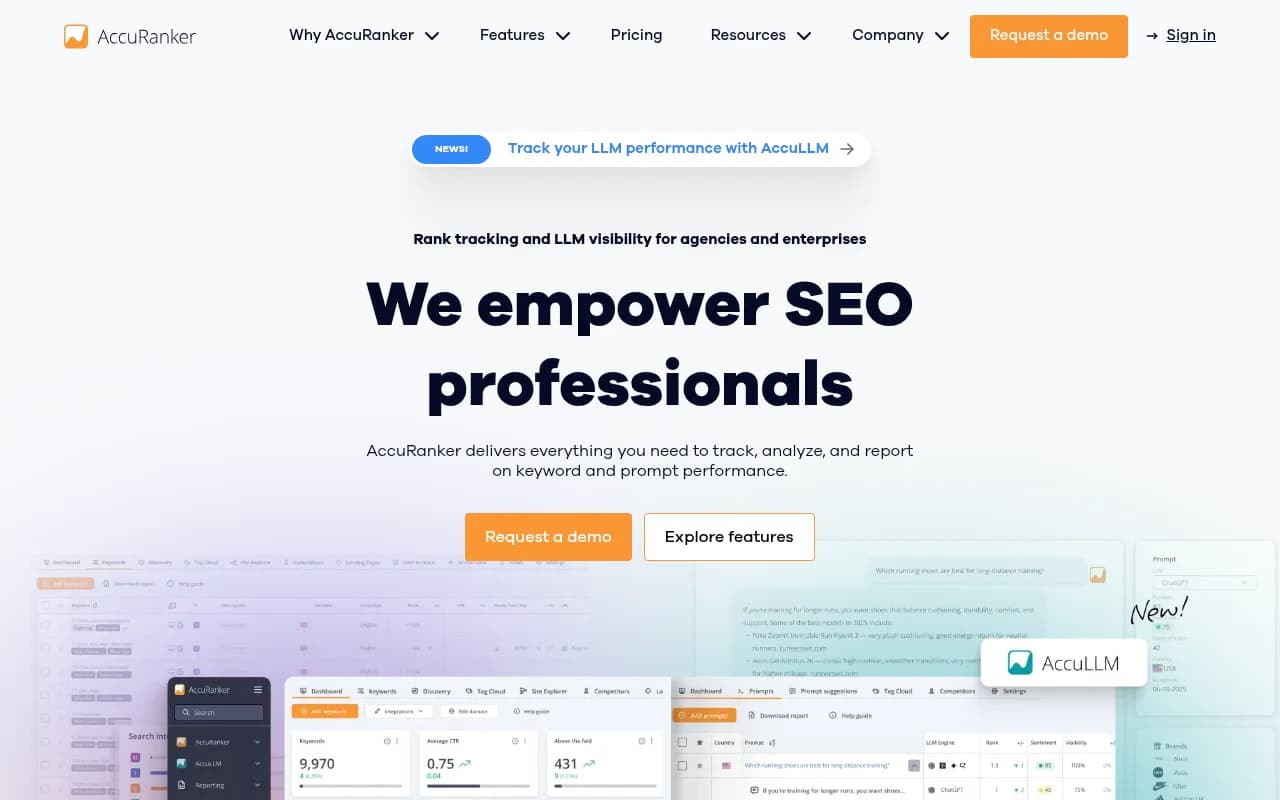
| AccuRanker | ~$224/mo for 2,000 keywords | Yes (ChatGPT, AI Overviews) | Fast traditional-first tracker with Share of Voice and white-label reporting |
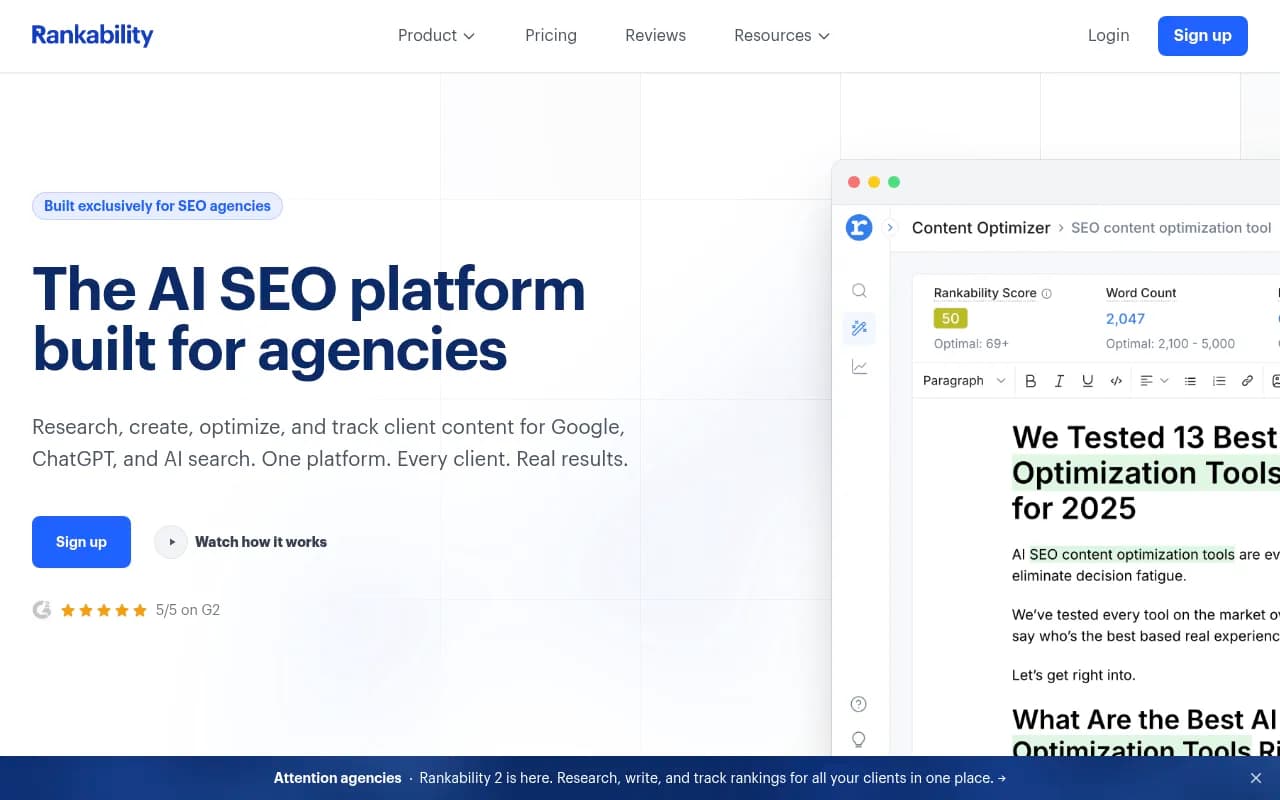
| Rankability | $99-199/mo (125 daily prompts, 3 projects) | Yes, weekly refresh | Unified SPI score combining rank + AI mentions + citations |
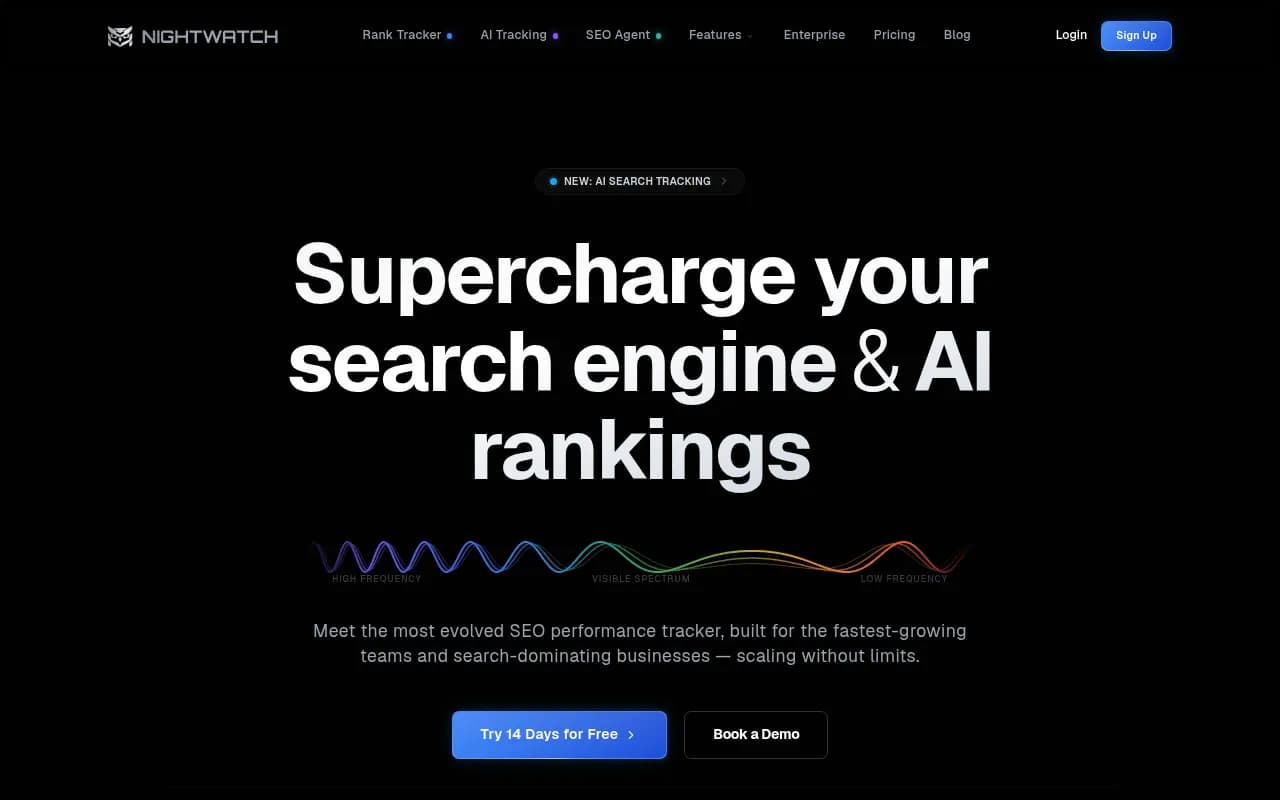
| Nightwatch | Agency plan $399/mo for 100 websites | Yes | Rank tracking, audits, backlinks, and AI Mode under one subscription |
| Rankscale | Essentials from €20/mo, Pro ~$99/mo | Yes | 17+ engines, credit-based billing can limit scale at 20+ clients |
| Scrunch AI / Profound | From $99-250/mo headline, AI Mode gated to Enterprise ($399+/mo) | Enterprise tier only | Common pitfall: the cheap plan you see advertised doesn't include AI Mode |
| Otterly.AI | $29/mo base + ~$9/mo AI Mode add-on | Add-on | Cheapest entry point, but AI Mode and shopping features aren't in the base plan |

Promptwatch's agency tiers are priced per response volume rather than per seat, with unlimited projects and prompts across all three agency plans. That matters at 20+ clients: a per-domain or per-prompt-bundle pricing model (which Semrush and Ahrefs Brand Radar both use) compounds fast once you're managing two dozen accounts, since every extra client domain adds its own line item.
Where monitoring stops and action should start
Most of the tools above, Promptwatch included, will tell you whether a client is being cited and by whom. Fewer will tell you what to actually publish to close the gap, and that's usually the step agencies underdeliver on. A dashboard showing "Client X is cited in 40% of AI Mode responses for category prompts, competitor Y is at 65%" is useful intelligence. It's not a deliverable a client pays for month after month.
This is where content gap analysis and automated publishing earn their keep. Promptwatch's agent-driven workflow maps a client's content against what AI engines are actually citing, surfaces the specific URLs where competitors are referenced and the client isn't, and generates content briefs with internal linking, source data, and brand voice instructions baked in. For an agency running 20+ sites, the difference between "here's your visibility score" and "here are three briefs ready to publish this week, and we've already scheduled them to your CMS" is the difference between a tool subscription and a service clients renew.
It's also worth tracking the crawler side, not just the citation side. AI crawler logs (ChatGPTBot, ClaudeBot, PerplexityBot, GoogleOther, and 400+ others) show which pages AI systems actually read and whether they hit errors getting there. If a client's AI Mode citation rate is flat, crawler logs often reveal the real cause before you waste a sprint rewriting content that AI crawlers never successfully fetched in the first place.
Building the reporting layer clients actually read
Once tracking and content execution are running, the reporting cadence is simple to standardize across 20+ clients if you build it once:
- Weekly automated digest per client summarizing inclusion, mention, citation, and answer-share trends against their top 3-5 competitors
- Monthly branded PDF or live dashboard covering AI Mode alongside traditional rankings, since clients still expect both in one place
- A prioritized action list (Promptwatch calls this Unified Actions) rather than a raw data dump, so account managers aren't the ones translating charts into to-dos every month
If you're evaluating a broader set of GEO platforms beyond the ones listed here, the directory at bestgeosoftware.com tracks a wider range of options by feature set and pricing tier, which is worth a look before you lock in a 12-month agency contract on any single vendor.
The bottom line
AI Mode tracking for a multi-client agency isn't a smaller version of keyword rank tracking, it's a different discipline with its own personalization quirks, its own citation patterns that favor Google's own properties, and its own statistical traps for anyone reporting a single prompt run as a "ranking." Build prompt sets by query type, validate any tool against the ten-point checklist above before you trust its numbers, and budget for the content execution layer, because showing a client where they're invisible is only half the job. The agencies that win renewals are the ones that also fix it.