Key Takeaways
- AI search is fundamentally different from traditional search: AI engines like ChatGPT, Perplexity, and Google AI Overviews recommend 1-2 businesses instead of showing 10 blue links, making state and city-level tracking critical for local businesses
- Location-specific prompts drive different results: A plumber in Austin gets different AI recommendations than one in Houston -- tracking by state and city reveals where you're visible and where you're invisible
- Most tracking tools don't support local granularity: Many AI visibility platforms only track at the brand level, missing the geographic nuances that matter for multi-location businesses or local service providers
- The action loop matters more than monitoring: Finding gaps in your local AI visibility is step one -- fixing them with location-specific content, schema markup, and review optimization is what actually drives results
- Traditional local SEO still feeds AI visibility: Your Google Business Profile, local citations, reviews, and structured data are the foundation AI engines use to understand your location and credibility
Why State and City-Level AI Visibility Tracking Matters in 2026
If you're a local business owner, here's the uncomfortable reality: when someone asks ChatGPT "best HVAC company near me" or Perplexity "emergency plumber in Denver," the AI doesn't show them 10 options. It shows them 1-2 recommendations -- and if you're not one of them, you're invisible.
Traditional search gave you a fighting chance as long as you ranked somewhere on page one. AI search is winner-takes-all. And for local businesses, that winner is determined by how well AI engines understand your location, service area, and local credibility.
This is why tracking at the state and city level matters. A roofing company with locations in Phoenix, Tucson, and Flagstaff needs to know:
- Which locations are being recommended by AI engines?
- Which cities are invisible?
- What prompts trigger recommendations in Phoenix but not Tucson?
- Are competitors dominating specific metro areas?
Without state and city-level tracking, you're flying blind. You might see overall brand visibility trending up, but miss that your Denver location is getting crushed while your Colorado Springs location is thriving.
How AI Engines Handle Local Search (And Why It's Different)
AI engines don't "rank" local businesses the same way Google does. They're pulling from a mix of sources to generate a summarized answer:
- Your owned assets: Website content, service pages, location pages, FAQs, schema markup
- Your local entity footprint: Google Business Profile, Apple Maps, Bing Places, local directories
- Your reputation signals: Reviews (Google, Yelp, Trustpilot), ratings, testimonials, case studies
- Third-party mentions: Local news, industry blogs, Reddit threads, YouTube videos
- Structured data: LocalBusiness schema, geographic coordinates, service area definitions
When someone asks "best dentist in Austin," the AI engine is looking for businesses that:
- Clearly state they serve Austin (not just Texas)
- Have strong local signals (reviews mentioning Austin, Austin-specific content)
- Appear in trusted local directories and citations
- Have structured data that confirms their location and service area
If your website says "serving Texas" but doesn't mention Austin specifically, you're invisible for Austin-specific prompts. If your Google Business Profile is set up for Austin but your website has no Austin content, you're only halfway there.
The Three Pillars of Local AI Visibility
1. Geographic Clarity
AI engines need crystal-clear signals about where you operate. This means:
- Location pages for each city you serve: Not just a "Service Areas" page that lists 20 cities in a paragraph. Dedicated pages with city-specific content, testimonials, and schema markup.
- LocalBusiness schema on every location page: Include
address,geocoordinates,areaServed,telephone, andpriceRange. - City mentions in your content: If you serve Phoenix, Scottsdale, and Tempe, those city names should appear naturally in your service descriptions, FAQs, and blog posts.
- Google Business Profile for each location: Multi-location businesses need separate GBP listings for each physical location or service area.
2. Local Reputation Signals
AI engines lean heavily on reviews and testimonials to determine credibility. For local businesses, this means:
- Reviews that mention your city: A review that says "best plumber in Denver" is more valuable for Denver-specific prompts than one that just says "great service."
- Location-specific testimonials on your website: Feature customer stories that mention the city or neighborhood you served.
- Local media mentions: Getting featured in local news, chamber of commerce listings, or community blogs sends strong local signals.
- Reddit and forum discussions: AI engines increasingly pull from Reddit threads where locals recommend businesses. Monitor and participate in local subreddits.
3. Prompt-Level Optimization
Different prompts trigger different results. Tracking at the state and city level means understanding:
- Which prompts mention your city vs your state: "Best HVAC company in Texas" vs "Best HVAC company in Dallas"
- How people phrase local queries: "Near me" vs "in [city]" vs "[city] [service]"
- Competitor visibility by prompt: Who's winning for "emergency plumber Denver" vs "Denver plumbing services"
How to Actually Track State and City-Level AI Visibility
Most AI visibility tracking tools focus on brand-level monitoring -- they tell you if your brand is mentioned, but not where or for which locations. Here's how to track at the local level:
Step 1: Define Your Target Locations
Start by listing every state, city, and metro area you want to track. For example:
- Single-location business: Track your city, surrounding suburbs, and your state
- Multi-location business: Track each location separately (e.g. Phoenix, Tucson, Flagstaff)
- Service area business: Track every city in your service radius
Step 2: Build Location-Specific Prompt Lists
For each location, create a list of prompts that include:
- City-specific prompts: "best [service] in [city]"
- State-specific prompts: "top [service] in [state]"
- Neighborhood prompts: "[neighborhood] [service]"
- Emergency/urgent prompts: "emergency [service] [city]"
- Comparison prompts: "[service] near me vs [competitor]"
Example for a Denver plumber:
- "best plumber in Denver"
- "emergency plumber Denver"
- "Denver plumbing services"
- "plumber near me Denver"
- "top plumbers in Colorado"
- "Capitol Hill plumber Denver"
Step 3: Choose a Tracking Platform That Supports Local Granularity
Not all AI visibility platforms support state and city-level tracking. Look for tools that let you:
- Customize prompts by location: Add city and state names to your tracked prompts
- Filter results by geography: See which locations are driving visibility vs which are invisible
- Track competitor visibility by location: Understand who's winning in each market
- Monitor multiple AI engines: ChatGPT, Perplexity, Google AI Overviews, Claude, Gemini
Tools like Promptwatch offer state and city-level tracking in their Professional and Business plans, allowing you to monitor how AI engines respond to location-specific prompts and track visibility across different metro areas.

Step 4: Set Up Tracking for Each Location
Once you've chosen a platform, configure it to track:
- Prompts for each city: Create separate tracking groups for each location
- Competitor benchmarks: Add local competitors to see who's winning in each market
- AI engine coverage: Track ChatGPT, Perplexity, Google AI Overviews, and other engines your customers use
- Frequency: Run checks weekly or bi-weekly to spot trends
Step 5: Analyze the Gaps
After a few weeks of tracking, you'll start to see patterns:
- Cities where you're invisible: Prompts that mention your competitors but never you
- Prompts you're missing: Specific questions or angles where you have no visibility
- Content gaps: Topics or services where your website lacks location-specific content
- Review gaps: Locations where you have few reviews or reviews that don't mention the city
This is where most tracking tools stop. They show you the data but leave you stuck. The real value comes from taking action on the gaps.
How to Fix Local AI Visibility Gaps (The Action Loop)
Tracking is step one. Fixing the gaps is what actually drives results. Here's the action loop:
1. Find the Content Gaps
Use your tracking data to identify:
- Missing location pages: Cities you serve but don't have dedicated pages for
- Thin location content: Pages that just list an address without real content
- Missing service + location combinations: E.g. you have a "Plumbing Services" page but no "Plumbing Services in Denver" page
- Competitor content you lack: Topics or angles your competitors cover that you don't
2. Create Location-Specific Content
For each gap, create content that AI engines can understand and cite:
- Dedicated location pages: Write 800-1500 words about your services in that specific city. Include local landmarks, neighborhoods you serve, city-specific challenges, and customer testimonials from that area.
- Service + location pages: Create pages for each service you offer in each city (e.g. "Emergency Plumbing in Denver," "Water Heater Repair in Denver").
- Local FAQs: Answer common questions specific to that city (e.g. "How much does a roof replacement cost in Phoenix?" vs "How much does a roof replacement cost in Flagstaff?").
- Local case studies: Feature projects you've completed in that city with before/after photos and customer quotes.
3. Optimize Your Structured Data
Add LocalBusiness schema to every location page:
{
  "@context": "https://schema.org",
  "@type": "LocalBusiness",
  "name": "Denver Plumbing Co",
  "address": {
    "@type": "PostalAddress",
    "streetAddress": "123 Main St",
    "addressLocality": "Denver",
    "addressRegion": "CO",
    "postalCode": "80202",
    "addressCountry": "US"
  },
  "geo": {
    "@type": "GeoCoordinates",
    "latitude": "39.7392",
    "longitude": "-104.9903"
  },
  "areaServed": [
    "Denver",
    "Aurora",
    "Lakewood",
    "Englewood"
  ],
  "telephone": "+1-303-555-0100",
  "priceRange": "$$",
  "openingHours": "Mo-Fr 08:00-17:00"
}
4. Build Local Citations and Directory Listings
AI engines pull from trusted local directories. Make sure you're listed in:
- Google Business Profile: The most important local signal
- Apple Maps: Increasingly used by AI engines
- Bing Places: Powers Copilot and other Microsoft AI tools
- Yelp, Yellow Pages, Angi, HomeAdvisor: Industry-specific directories
- Local chamber of commerce: Strong local trust signal
- Industry associations: E.g. PHCC for plumbers, NARI for remodelers
Ensure your NAP (Name, Address, Phone) is consistent across all listings.
5. Get Location-Specific Reviews
Encourage customers to mention your city in their reviews:
- Review request templates: "We'd love to hear about your experience with [Service] in [City]!"
- Post-service follow-up: Ask customers to share their experience on Google, Yelp, or Trustpilot
- Feature local reviews on your website: Showcase testimonials that mention the city
6. Monitor and Iterate
After implementing changes, track your visibility again:
- Did your visibility improve for target prompts?: Check if you're now being mentioned for city-specific queries
- Are you closing the gap with competitors?: Compare your visibility vs local competitors
- Which content is getting cited?: Use page-level tracking to see which location pages AI engines are referencing
- Are you getting traffic from AI engines?: Connect visibility to actual traffic using analytics or server logs
Common Mistakes to Avoid
Mistake 1: Tracking Only at the Brand Level
Many businesses track "Is my brand mentioned?" without considering location. This misses the nuance of local search. A national brand might have high overall visibility but be invisible in specific cities.
Mistake 2: Creating Generic Location Pages
A page that just lists your address and phone number isn't enough. AI engines need real content that demonstrates you understand the local market.
Mistake 3: Ignoring Competitor Visibility
You need to know who's winning in each market. If a competitor dominates Denver but you dominate Colorado Springs, that tells you where to focus your efforts.
Mistake 4: Not Connecting Visibility to Revenue
Tracking visibility is pointless if you don't connect it to actual business outcomes. Use traffic attribution (Google Search Console, server logs, or tracking pixels) to see if improved AI visibility drives leads and revenue.
Mistake 5: Treating All AI Engines the Same
ChatGPT, Perplexity, Google AI Overviews, and Claude all pull from different sources and have different recommendation algorithms. Track each engine separately to understand where you're strong and where you're weak.
Tools and Platforms for Local AI Visibility Tracking
Here are the key tools you'll need:
AI Visibility Tracking Platforms
- Promptwatch: Offers state and city-level tracking, prompt customization, and page-level visibility analysis. Professional plan includes city tracking, crawler logs, and content gap analysis.
- Profound: Enterprise platform with multi-location tracking across 9+ AI engines
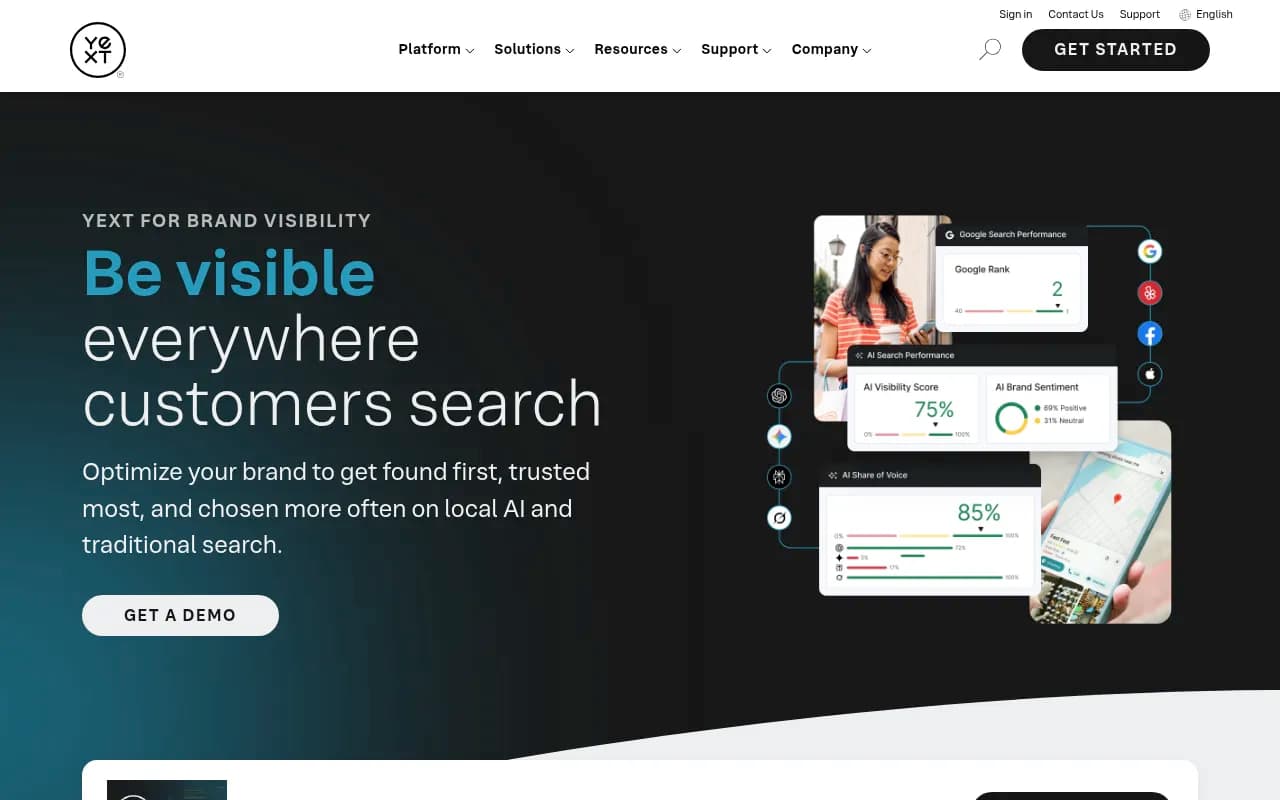
- Yext: Multi-location brand visibility across traditional and AI search
- SOCi: AI-powered local marketing automation for multi-location brands
Local SEO Tools
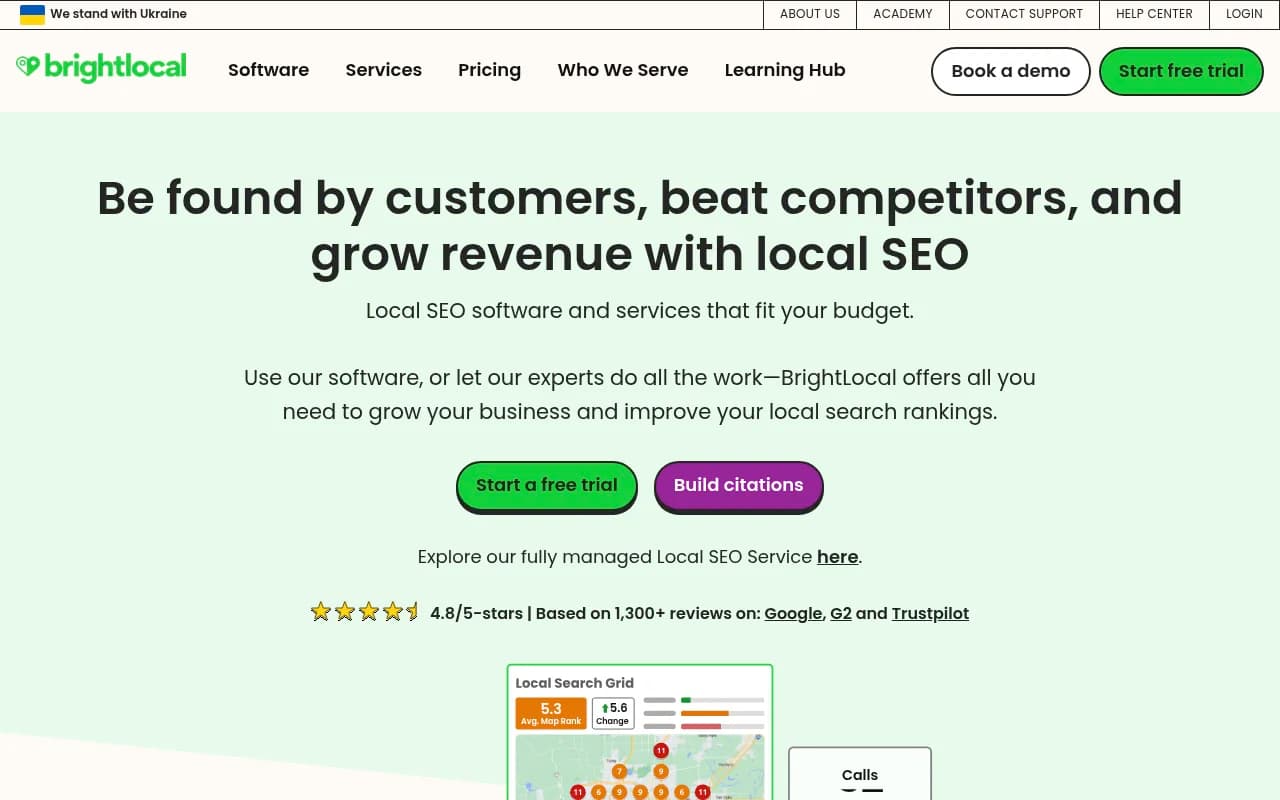
- BrightLocal: Local SEO platform for multi-location businesses with citation tracking and review management
- Semrush: All-in-one platform with local rank tracking and competitor analysis
- Moz Local: Local listing management and citation building
Schema Markup Tools
- Google's Structured Data Markup Helper: Free tool to generate schema markup
- Schema.org: Official documentation for LocalBusiness schema
- Yoast SEO: WordPress plugin with built-in schema support
Review Management Tools
- Podium: AI-powered lead conversion platform with review management
- Birdeye: Track brand appearances in AI-generated answers and manage reviews
- Trustpilot: Turn customer reviews into marketing assets
Real-World Example: Multi-Location HVAC Company
Let's walk through a practical example. Imagine you're an HVAC company with locations in Phoenix, Tucson, and Flagstaff, Arizona.
Current State (Before Tracking)
- You have a website with a generic "Service Areas" page that lists all three cities
- Your Google Business Profile is set up for Phoenix only
- You have 50+ reviews on Google, but most just say "great service" without mentioning a city
- You rank well on Google for "HVAC Phoenix" but have no idea how you appear in AI search
Step 1: Set Up Tracking
You configure Promptwatch to track:
- Phoenix prompts: "best HVAC Phoenix," "emergency AC repair Phoenix," "Phoenix HVAC companies"
- Tucson prompts: "best HVAC Tucson," "AC repair Tucson," "Tucson heating and cooling"
- Flagstaff prompts: "best HVAC Flagstaff," "furnace repair Flagstaff," "Flagstaff HVAC"
- State-level prompts: "top HVAC companies in Arizona"
- Competitors: Track 3 local competitors in each market
Step 2: Analyze the Data
After two weeks, you discover:
- Phoenix: You're mentioned in 60% of prompts (good visibility)
- Tucson: You're mentioned in 20% of prompts (weak visibility)
- Flagstaff: You're mentioned in 5% of prompts (nearly invisible)
- Competitors: A Tucson-based competitor dominates Tucson prompts, and a Flagstaff competitor owns Flagstaff
Step 3: Identify the Gaps
You realize:
- You have no dedicated Tucson or Flagstaff location pages
- Your reviews don't mention Tucson or Flagstaff
- Your schema markup only includes Phoenix
- Your competitors have city-specific content you lack
Step 4: Take Action
You create:
- Dedicated location pages: "HVAC Services in Tucson" and "HVAC Services in Flagstaff" with 1200+ words of city-specific content
- Service + location pages: "AC Repair in Tucson," "Furnace Repair in Flagstaff," etc.
- LocalBusiness schema: Add schema to each location page with correct addresses and service areas
- Google Business Profiles: Set up separate profiles for Tucson and Flagstaff
- Review campaign: Ask Tucson and Flagstaff customers to leave reviews mentioning their city
Step 5: Monitor Results
After 60 days:
- Tucson visibility: Improved from 20% to 45% (still trailing the local competitor but gaining ground)
- Flagstaff visibility: Improved from 5% to 30% (significant jump)
- Phoenix visibility: Held steady at 60%
- Traffic: Tucson and Flagstaff location pages now drive 15% of total organic traffic (up from 2%)
- Leads: Tucson leads increased 40%, Flagstaff leads increased 60%
The Future of Local AI Visibility
As AI search continues to evolve, local businesses need to adapt:
- Voice search will drive more local queries: "Hey ChatGPT, find me a plumber near me" is becoming the norm
- AI engines will get better at understanding service areas: Expect more granular location targeting (neighborhood-level, not just city-level)
- Reviews will matter even more: AI engines will lean heavily on customer testimonials to determine credibility
- Multi-modal search will rise: AI engines will pull from images, videos, and maps -- not just text
- Real-time data will become critical: AI engines will prioritize businesses with up-to-date hours, availability, and pricing
The businesses that win in this new landscape will be the ones that understand: AI visibility isn't about gaming the system. It's about making it ridiculously easy for AI engines to understand who you are, where you operate, and why you're credible.
Getting Started: Your 30-Day Action Plan
Week 1: Audit Your Current State
- List every city and state you want to track
- Audit your existing location pages (or lack thereof)
- Check your Google Business Profile setup
- Review your schema markup
- Analyze your current reviews for location mentions
Week 2: Set Up Tracking
- Choose an AI visibility tracking platform
- Configure location-specific prompts
- Add competitors to your tracking
- Run your first round of checks
Week 3: Identify and Prioritize Gaps
- Analyze which locations have weak visibility
- Identify missing content (location pages, service pages, FAQs)
- Prioritize based on business impact (which locations drive the most revenue?)
Week 4: Start Creating Content
- Write your first location page (1200+ words)
- Add LocalBusiness schema
- Set up or optimize your Google Business Profile
- Launch a review campaign for that location
Then repeat the cycle for your next location. Over time, you'll build a comprehensive local AI visibility strategy that drives real business results.
Final Thoughts
Tracking state and city-level AI visibility isn't optional anymore -- it's table stakes for local businesses in 2026. The businesses that understand this early will dominate their markets. The ones that ignore it will wonder why their competitors are suddenly getting all the calls.
The good news: most of your competitors are still stuck in the old SEO mindset. They're optimizing for rankings, not AI recommendations. They're tracking brand mentions, not location-specific visibility. They're monitoring, not taking action.
You have a window of opportunity to get ahead. Start tracking. Find the gaps. Fix them. And watch your local AI visibility -- and your revenue -- grow.