Key Takeaways
- Grok is X's AI search engine integrated into the X platform (formerly Twitter), and tracking your brand's visibility in Grok responses is essential as more users rely on AI-generated answers instead of traditional search
- Manual tracking doesn't scale — you need dedicated AI visibility tracking tools that can monitor Grok alongside other AI engines like ChatGPT, Perplexity, and Claude
- Track both presence and sentiment — it's not enough to know if Grok mentions your brand; you need to understand the tone and context of those mentions
- Use repeatable prompt libraries — consistent tracking requires running the same prompts on a schedule to measure changes in visibility over time
- Combine monitoring with action — the best tracking systems show you what's missing and help you create content that actually gets cited by AI engines
Why Tracking Your Brand in Grok Matters in 2026
Grok, built by xAI and integrated directly into X (formerly Twitter), represents a fundamental shift in how people discover brands and make decisions. Unlike traditional search engines where users click through to websites, Grok delivers answers directly within the X platform. If your brand isn't mentioned in those answers, you're invisible to a growing segment of potential customers.
The stakes are higher than most marketers realize. When someone asks Grok "what's the best project management software for remote teams" or "which CRM should I use for my agency," the brands that appear in that response get consideration. The brands that don't exist simply don't exist in that buyer's decision process.
This isn't just about vanity metrics. AI-generated recommendations directly influence purchase decisions, partner selections, and vendor evaluations. A single negative framing in a Grok response can travel faster and reach more people than dozens of traditional reviews.
Understanding Grok's Unique Position in AI Search
Grok differs from other AI search engines in several important ways:
Real-time X integration: Grok has direct access to X's live conversation stream, which means it can surface recent discussions, trending topics, and community sentiment that other AI engines miss. If your brand is being discussed on X, Grok sees it.
Conversational context: Because Grok lives inside X, users often ask follow-up questions and refine their queries in ways that reveal deeper intent. Tracking these conversation threads gives you insight into how people actually think about your category.
Platform-specific behavior: X users tend to ask different types of questions than they would in ChatGPT or Perplexity. Understanding these patterns helps you optimize for the prompts that actually matter to your audience.
What to Track: Defining Your Brand Monitoring Scope
Before you start tracking, define exactly what constitutes a "mention" for your brand. Most companies track too narrowly and miss important visibility opportunities.
Core brand terms:
- Official brand name
- Common misspellings and variations
- Product names and SKUs
- Executive names (CEO, founders, key spokespeople)
- Taglines and branded phrases
Competitive context:
- "Brand A vs Brand B" comparisons
- "Alternatives to [competitor]" queries
- "Best [category] tools" and recommendation prompts
- "Why not [your brand]" and objection-handling queries
Category positioning:
- Industry-specific use cases
- Job-to-be-done queries ("how do I solve X problem")
- Persona-specific questions ("best tool for agencies" vs "best tool for enterprises")
The goal is to build a comprehensive prompt library that covers every angle where your brand should appear. Most brands start with 20-30 core prompts and expand to 100+ as they identify gaps.
Manual Tracking: The Starting Point
If you're just getting started, you can track Grok mentions manually to understand the baseline. Here's the process:
-
Create a prompt library: Document 10-15 high-priority prompts in a spreadsheet. Include the exact wording, the category (competitor comparison, use case, recommendation), and why it matters to your business.
-
Run prompts on a schedule: Every week, log into Grok and run each prompt. Copy the full response into your spreadsheet along with the date.
-
Code the results: For each response, note whether your brand was mentioned, where it appeared in the response (first, middle, end), the sentiment (positive, neutral, negative), and what context surrounded the mention.
-
Track changes over time: Compare week-over-week results to identify trends. Are you gaining visibility? Losing ground to competitors? Appearing in new contexts?
This manual approach works for small teams or initial validation, but it breaks down quickly. Running 50 prompts manually takes hours, and you can't track multiple AI engines simultaneously. That's where dedicated tracking tools become essential.
AI Visibility Tracking Tools for Grok
Several platforms now offer Grok tracking as part of broader AI visibility monitoring. The key differences come down to how many AI engines they cover, whether they provide sentiment analysis, and whether they help you actually improve your visibility (not just measure it).
Promptwatch: The Action-Oriented Platform
Tools like Promptwatch can help you track your brand's visibility in Grok alongside ChatGPT, Perplexity, Claude, Gemini, and other AI engines. The platform is built around the action loop: find gaps in your visibility, generate content that fills those gaps, and track the results.

What sets this approach apart is Answer Gap Analysis — you see exactly which prompts your competitors rank for but you don't, along with the specific content topics and angles you're missing. The built-in AI writing agent then generates articles grounded in real citation data, not generic SEO filler.
Other Tracking Options
Several other tools offer Grok monitoring with different feature sets:
AIclicks focuses on multi-platform tracking with detailed sentiment analysis. It shows you not just whether Grok mentions your brand, but the tone and context of those mentions.
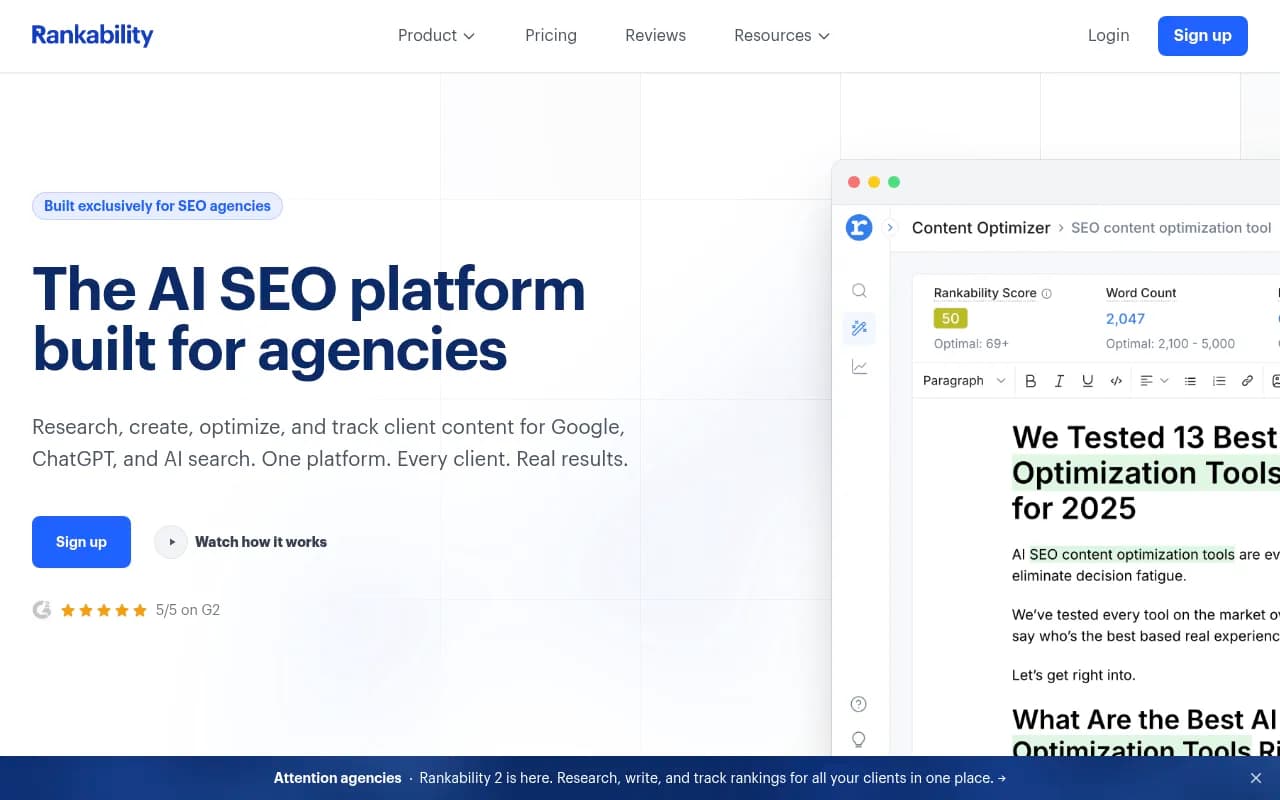
Rankability offers agency-focused tracking with client reporting features and white-label options for teams managing multiple brands.
AthenaHQ provides monitoring-focused dashboards that show visibility trends across AI engines, though it lacks the content optimization and generation capabilities of more comprehensive platforms.

The right tool depends on your needs. If you just want to monitor visibility, basic tracking platforms work fine. If you want to actually improve your rankings in AI search, you need a platform that shows you what's missing and helps you fix it.
Setting Up Systematic Grok Tracking
Once you've chosen a tracking tool, follow this implementation process:
Step 1: Build your prompt library
Start with 30-50 prompts that cover your core brand terms, competitive comparisons, and category recommendations. Use prompt intelligence features (if available) to identify high-volume, winnable queries.
Step 2: Configure tracking frequency
Set up automated tracking runs at least weekly. For high-priority prompts or during active campaigns, daily tracking gives you faster feedback on content changes.
Step 3: Set up alerts
Configure notifications for significant changes: new mentions, sentiment shifts, competitor movements, or sudden visibility drops. You want to know immediately when something changes.
Step 4: Establish baselines
Run your full prompt library for 2-4 weeks to establish baseline visibility scores. This gives you a reference point for measuring improvement.
Step 5: Create reporting cadences
Schedule weekly reviews of visibility trends and monthly deep dives into specific categories or competitor movements. Share dashboards with stakeholders who need visibility into AI search performance.
Analyzing Grok Tracking Data
Raw tracking data only becomes useful when you analyze it for patterns and opportunities:
Visibility score trends: Track your overall visibility score over time. Are you gaining or losing ground? Which categories are improving vs declining?
Competitor benchmarking: Compare your visibility against 3-5 key competitors. Where are they winning that you're not? What content or positioning gives them an edge?
Sentiment analysis: Beyond presence, track how Grok describes your brand. Positive mentions in the right context are worth far more than neutral citations.
Citation sources: When Grok mentions your brand, what sources is it citing? Your own website? Third-party reviews? Reddit discussions? This tells you which content channels actually influence AI recommendations.
Prompt performance: Which prompts consistently show your brand vs which ones never do? Focus optimization efforts on high-value, winnable prompts where you're currently invisible.
Query fan-outs: Understand how one prompt branches into related sub-queries. If you rank for "best CRM software," do you also rank for "best CRM for small business" and "best CRM for real estate"?
Improving Your Grok Visibility
Tracking reveals the problem; optimization solves it. Here's how to actually improve your brand's visibility in Grok responses:
Content Gap Analysis
The most common reason brands don't appear in AI responses is simple: they don't have content that answers the question. Answer Gap Analysis tools show you exactly what's missing.
For example, if competitors rank for "best project management software for construction companies" but you don't, you probably lack content specifically addressing construction use cases. Create that content — a detailed guide, case study, or comparison — and AI engines will start citing you.
Optimize Existing Content
Many brands have relevant content that AI engines simply can't find or understand. Optimization tactics include:
- Structured data markup: Help AI engines parse your content with proper schema markup for products, reviews, FAQs, and how-to guides
- Clear, scannable formatting: Use descriptive headings, bullet lists, and concise paragraphs that AI models can easily extract
- Explicit answers: Don't make AI engines infer your position — state it clearly. "X is the best solution for Y because Z"
- Comprehensive coverage: Answer the full question, including context, alternatives, and edge cases. Shallow content gets ignored.
Build Citation-Worthy Assets
AI engines preferentially cite certain content types:
- Original research and data: Surveys, studies, and proprietary data get cited heavily
- Comparison guides: Detailed, objective comparisons help AI engines answer "which tool is best" queries
- How-to guides: Step-by-step tutorials that solve specific problems
- Case studies: Real-world examples with concrete results
- Expert roundups: Quotes and insights from recognized authorities
Create these assets for your highest-priority prompts and you'll see visibility improve within weeks.
Leverage X Platform Integration
Because Grok is integrated with X, your brand's presence on the platform directly influences visibility:
- Active X presence: Regular posting, engagement, and community participation signal relevance to Grok
- Thought leadership content: Share insights, data, and expertise that position your brand as an authority
- Community discussions: Participate in relevant conversations where your expertise adds value
- Verified accounts: Verification signals credibility to both X users and Grok's algorithms
Monitor AI Crawler Activity
AI engines need to discover and index your content before they can cite it. AI crawler logs show you which pages ChatGPT, Claude, Perplexity, and other AI engines are actually reading, how often they return, and what errors they encounter.
If AI crawlers aren't visiting your key pages, or if they're hitting errors, you have an indexing problem that tracking alone won't reveal. Platforms with crawler monitoring capabilities help you identify and fix these issues.
Advanced Grok Tracking Strategies
Once you have basic tracking in place, these advanced tactics help you extract more value:
Multi-Persona Tracking
Different user personas ask different questions and get different answers. Track Grok responses across multiple personas:
- Job titles: CMO vs Marketing Manager vs Marketing Coordinator
- Company sizes: Enterprise vs mid-market vs small business
- Industries: SaaS vs e-commerce vs professional services
- Geographies: US vs UK vs EU (language and regional variations)
This reveals positioning gaps where you're visible to some audiences but invisible to others.
Competitive Movement Alerts
Set up alerts that notify you when competitors gain visibility in prompts where you currently rank. This early warning system lets you respond quickly before you lose ground.
Prompt Volume Prioritization
Not all prompts are equally valuable. Use prompt volume estimates and difficulty scores to prioritize optimization efforts. Focus on high-volume, medium-difficulty prompts where you can realistically win.
Reddit and YouTube Tracking
Grok and other AI engines increasingly cite Reddit discussions and YouTube videos. Track these channels separately to understand what community conversations are influencing AI recommendations about your brand.
ChatGPT Shopping Integration
For e-commerce and SaaS brands, monitor whether your products appear in ChatGPT's shopping recommendations and carousels. This represents a direct path to purchase that traditional search never offered.
Connecting Tracking to Business Outcomes
Visibility metrics only matter if they connect to revenue. Close the loop with traffic attribution:
Code snippet tracking: Install tracking code that identifies visitors coming from AI engines. This shows you which AI platforms drive actual traffic.
Google Search Console integration: Connect GSC data to see how AI visibility correlates with traditional search performance.
Server log analysis: Parse server logs to identify AI crawler activity and AI-referred traffic that standard analytics miss.
Conversion tracking: Tag AI-referred visitors and track their conversion rates compared to other channels. This proves (or disproves) the business value of AI visibility.
Common Grok Tracking Mistakes to Avoid
Tracking too few prompts: Most brands start with 5-10 prompts and think they're covered. You need 50+ to capture the full opportunity.
Ignoring sentiment: Presence without positive sentiment is worthless. A negative mention can hurt more than no mention at all.
Manual tracking at scale: Manual processes break down fast. Automate tracking or you'll abandon it within a month.
Tracking without action: Monitoring alone doesn't improve visibility. You need to create content and optimize pages based on what tracking reveals.
Single-platform focus: Grok is important, but so are ChatGPT, Perplexity, Claude, and Google AI Overviews. Track across platforms or you'll miss the bigger picture.
Vanity metrics: Visibility scores are interesting, but traffic and conversions are what matter. Always connect tracking to business outcomes.
Building a Sustainable Tracking Workflow
Successful AI visibility tracking requires consistent processes:
Weekly reviews: Spend 30 minutes reviewing visibility trends, new mentions, and competitor movements. Flag anything that needs immediate attention.
Monthly deep dives: Once a month, analyze category-level trends, prompt performance, and content gaps. Identify 3-5 optimization priorities for the next 30 days.
Quarterly strategy sessions: Every quarter, review overall AI visibility strategy. Are you tracking the right prompts? Do you need to expand into new categories? How does AI visibility correlate with business metrics?
Continuous prompt expansion: Add 5-10 new prompts each month as you discover new queries, competitor angles, or category opportunities.
Content creation cadence: Based on gap analysis, create 2-4 new pieces of citation-worthy content each month targeting high-priority prompts where you're currently invisible.
The Future of Grok Tracking
AI search is evolving rapidly, and Grok tracking will evolve with it:
Deeper X integration: Expect Grok to surface more real-time X conversations and community sentiment in its responses. Brands with strong X presence will have an advantage.
Multimodal responses: As Grok adds image and video capabilities, tracking will need to expand beyond text citations to visual content mentions.
Personalization: AI responses will become more personalized based on user history and preferences. Tracking will need to account for these variations.
Shopping integration: Grok will likely add direct shopping and recommendation features similar to ChatGPT Shopping. Tracking these commercial placements will become critical for e-commerce brands.
Cross-platform synthesis: AI engines will increasingly synthesize information across platforms. Tracking will need to show how your presence on X, Reddit, YouTube, and your own site collectively influences AI recommendations.
Getting Started Today
If you're not tracking your brand in Grok yet, start with these immediate actions:
- Document 20 core prompts where your brand should appear — competitive comparisons, category recommendations, and use case queries
- Run manual tests in Grok to establish a baseline for each prompt
- Choose a tracking platform that covers Grok alongside other AI engines and provides the features you need
- Set up automated tracking for your core prompt library with weekly reporting
- Identify your top 3 visibility gaps and create content to fill them
- Establish a review cadence so tracking becomes part of your regular marketing workflow
AI search isn't replacing traditional search — it's adding a new layer where brand visibility matters just as much. The brands that track their presence in Grok, ChatGPT, Perplexity, and other AI engines today will have a significant advantage over competitors who wait.
Start tracking now, identify your gaps, and create the content that gets your brand cited. That's how you win in AI search.