Key Takeaways
- Early signal detection beats reactive monitoring: Competitors leave digital breadcrumbs before major launches through social engagement patterns, content gaps, customer complaints, and strategic pullbacks
- AI content intelligence requires specialized tools: Traditional competitive intelligence platforms miss AI-specific signals like LLM citation patterns, prompt volumes, and AI search visibility shifts
- The prediction framework has three layers: Monitor competitor behavior (what they're doing now), analyze market gaps (what they're ignoring), and track AI engine signals (how AI models are responding to their content)
- Content gap analysis reveals future moves: When competitors suddenly stop investing in a segment or product line, they're often preparing a bigger play elsewhere
- Customer complaints are roadmaps: Repeated pain points in competitor reviews signal exactly what features or content they're working on next
Why Traditional Competitive Intelligence Fails at Predicting AI Content Moves
Most competitive intelligence tools were built for a world where content strategies unfolded slowly and predictably. You'd track competitor blog posts, monitor their social media, analyze their backlink profiles, and call it a day.
That playbook is dead.
In 2026, the competitive battlefield has shifted to AI search engines. Your competitors aren't just optimizing for Google anymore -- they're engineering content to get cited by ChatGPT, Claude, Perplexity, and Gemini. The signals that matter have changed completely.
Traditional CI platforms show you what competitors published last week. What you actually need is a system that predicts what they'll publish next month -- and why AI engines will care about it.
The gap between monitoring and prediction is where most marketing teams get stuck. They're drowning in competitor data but starving for actionable intelligence.
The Three-Layer Framework for Predicting Competitor AI Content Strategies
Layer 1: Behavioral Signal Detection
Competitors telegraph their moves long before official announcements. The key is knowing where to look.
Social Engagement Patterns: When a competitor's social accounts suddenly start asking questions about features they don't currently offer, that's not market research -- it's pre-launch validation. Track the questions they're asking and, more importantly, how their audience responds. High engagement on a specific pain point means they're building something to address it.
Content Velocity Changes: A competitor who's been publishing three blog posts per week suddenly drops to one? They're not slowing down -- they're reallocating resources. Usually to a bigger content play like a comprehensive guide, interactive tool, or AI-optimized content hub.
Hiring Signals: Job postings reveal strategic priorities. A competitor hiring an "AI Content Strategist" or "Generative Engine Optimization Specialist" is signaling a major investment in AI search visibility. LinkedIn job listings are public roadmaps if you know how to read them.
Layer 2: Gap Analysis and Strategic Pullbacks
What competitors stop doing is often more revealing than what they start doing.
The Strategic Pullback Pattern: When a competitor reduces investment in a previously successful product line or content category, they're not admitting defeat. They're freeing up budget and attention for a stronger move elsewhere. Track these pullbacks systematically -- they're leading indicators of where they'll attack next.
Content Gap Identification: Use tools that show you which topics competitors are ranking for in traditional search but haven't optimized for AI search yet. That gap represents their next optimization wave. If they're visible in Google but invisible in ChatGPT for a high-value topic, they're working on fixing it.
Persona Shifts: Pay attention to changes in who competitors target. A B2B SaaS company suddenly creating content for end users instead of decision-makers? They're preparing a product-led growth motion. The content shift precedes the go-to-market shift by 3-6 months.
Layer 3: AI Engine Response Patterns
The most predictive signals come from AI search engines themselves.
Citation Pattern Analysis: Track which competitor pages AI models cite most frequently. When a competitor's citation volume suddenly spikes for a specific topic cluster, they've cracked the code on something. Reverse-engineer what made that content AI-friendly -- structured data, specific formatting, citation-worthy statistics -- and you'll see what they'll replicate across other topics.
Prompt Volume Trends: AI search queries follow trends just like traditional search. When prompt volumes surge for a topic where your competitor has strong visibility, they'll double down with more content in that area. Tools that surface prompt volume data let you see these waves forming before competitors ride them.
Source Diversity Signals: AI models pull from multiple sources when answering prompts. If a competitor suddenly appears alongside authoritative sources they've never been cited with before, they've elevated their content quality or topical authority. That's a signal they're investing heavily in that content vertical.
Tools and Platforms for AI-Era Competitive Intelligence
Predicting competitor moves requires a tech stack that bridges traditional CI and AI search monitoring.
AI Search Visibility Platforms
Platforms like Promptwatch track how competitors appear across ChatGPT, Claude, Perplexity, and other AI engines. The key differentiator: these tools show you content gaps -- the specific prompts competitors rank for that you don't. That gap analysis reveals exactly what content your competitors have that you're missing, and vice versa.

When you see a competitor suddenly gaining visibility for prompts they weren't ranking for last month, you're watching their content strategy unfold in real time. The prompts they're winning tell you what content they just published or optimized.
Traditional CI Platforms with AI Capabilities
Tools like AlphaSense and Crayon aggregate competitor data from earnings calls, job postings, social media, and web content. The 2026 versions now include AI search tracking, though most still treat it as an add-on rather than a core capability.
These platforms excel at surfacing strategic signals -- M&A activity, leadership changes, market positioning shifts -- that inform content strategy at a higher level. When a competitor acquires a company in an adjacent market, expect content that bridges both audiences within 60-90 days.
Social Listening and Sentiment Analysis
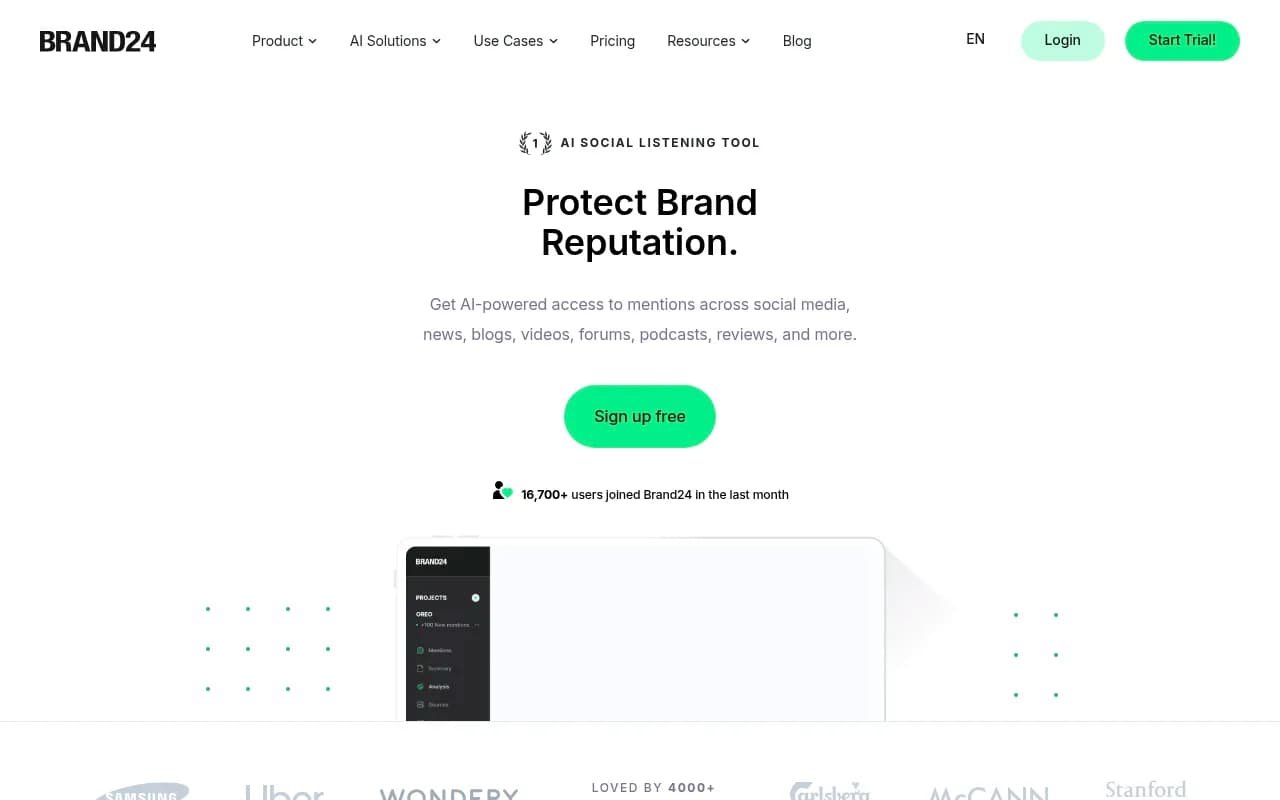
Brand24 and similar tools track competitor mentions across social platforms, forums, and review sites. The predictive value comes from sentiment shifts. When negative sentiment around a competitor feature spikes, they're working on a fix. When positive sentiment around a competitor's content topic surges, they'll produce more of it.
Content Intelligence Platforms
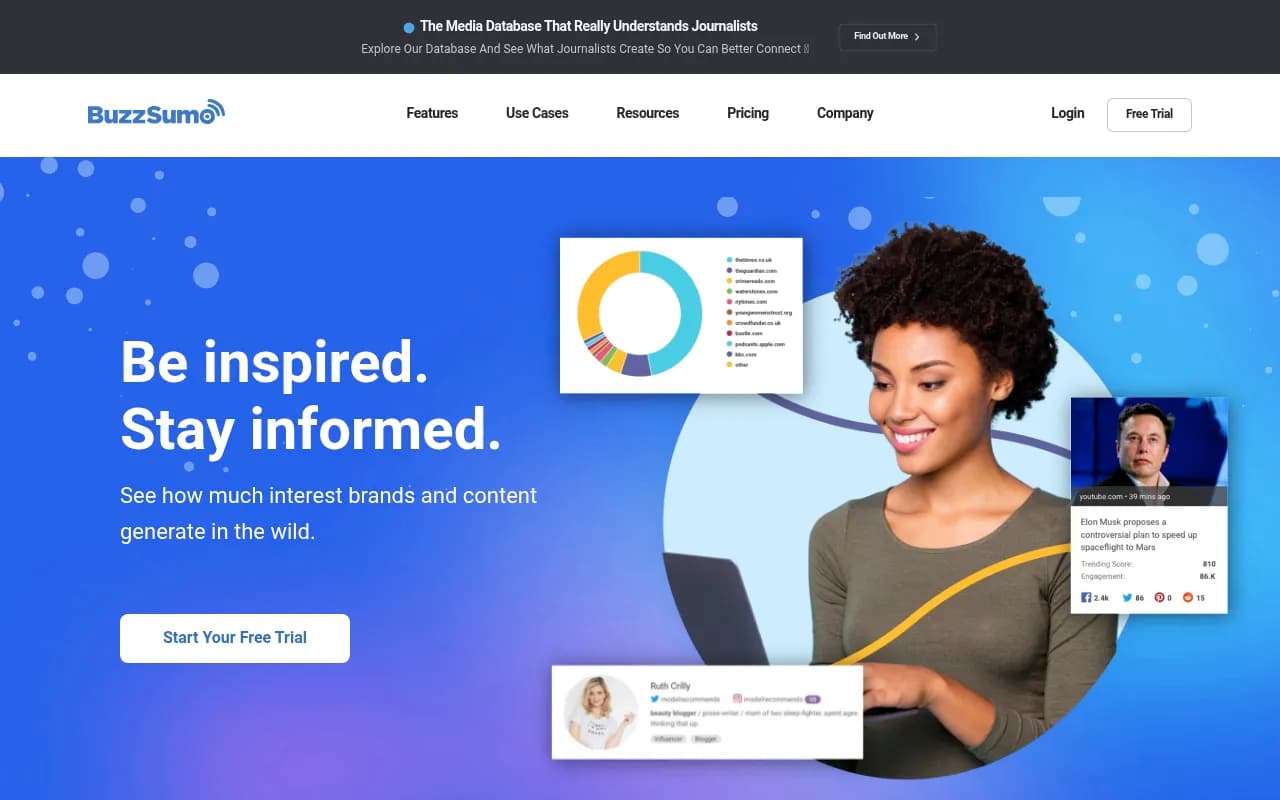
BuzzSumo and Semrush show you which competitor content performs best across channels. The predictive insight: high-performing content gets repurposed. A competitor's viral LinkedIn post becomes a blog article, then a video, then an AI-optimized guide. Track their top performers and you'll predict their content calendar.
Building Your Competitor Prediction System
Step 1: Identify Your True Competitors in AI Search
Your AI search competitors aren't always your traditional business competitors. AI models cite whoever has the best answer, regardless of company size or market position.
Run your core prompts through ChatGPT, Claude, and Perplexity. Note which brands, publications, and websites get cited. Those are your AI search competitors -- the ones you need to monitor.
Many marketing teams discover they're competing with media publications, niche blogs, and Reddit threads for AI visibility. Your prediction system needs to track all of them.
Step 2: Set Up Multi-Source Monitoring
No single tool captures everything. Build a stack that covers:
- AI search visibility: Track competitor citations across LLMs
- Traditional search: Monitor their Google rankings and content output
- Social signals: Watch their engagement patterns and audience questions
- Technical signals: Track their website changes, new pages, and structured data updates
- Business intelligence: Monitor hiring, funding, partnerships, and strategic announcements
The prediction magic happens when you connect signals across sources. A competitor hiring an AI content specialist + increasing their blog publishing velocity + optimizing for AI search = major content offensive incoming.
Step 3: Create a Signal Scoring System
Not all signals are equally predictive. Weight them based on historical accuracy:
High-confidence signals (70%+ accuracy in predicting moves within 90 days):
- Repeated customer complaints about specific features
- Job postings for specialized roles
- Sudden citation volume spikes in AI search
- Strategic pullbacks from previously active content areas
Medium-confidence signals (40-70% accuracy):
- Social engagement pattern changes
- Content velocity shifts
- New page additions to their website
- Partnership announcements
Low-confidence signals (under 40% accuracy):
- Generic marketing campaigns
- Executive social media posts
- Press releases without product specifics
- Conference speaking slots
Score each signal you detect and set thresholds for action. When a competitor hits 3+ high-confidence signals in the same content area, start preparing your response.
Step 4: Map Signals to Content Opportunities
The goal isn't just to predict what competitors will do -- it's to beat them to it or do it better.
When you detect a competitor is about to launch content in a specific area:
Option A: Beat them to market -- If you can publish first with higher quality, do it. First-mover advantage matters in AI search because early citations create momentum.
Option B: Prepare a superior response -- If they'll publish first, have a better version ready to launch immediately after. Include what they missed, add more depth, optimize harder for AI engines.
Option C: Flank them -- Instead of competing head-on, cover adjacent angles they're ignoring. If they're creating a "Complete Guide to X," you create "X for [Specific Persona]" or "X vs Y Comparison."
Step 5: Close the Loop with AI Search Tracking
After competitors launch new content, track how AI engines respond. Which prompts does their new content start ranking for? How quickly do citations appear? What sources do AI models cite alongside the competitor?
This feedback loop trains your prediction model. You learn which signals actually preceded successful content launches and which were noise.
Platforms that track page-level AI citations let you see exactly which competitor pages are winning and why. That intelligence feeds directly into your content strategy.
Advanced Tactics: Reverse-Engineering Competitor AI Optimization
The most sophisticated competitive intelligence goes beyond tracking what competitors publish to understanding how they're optimizing for AI engines.
Citation Source Analysis
AI models cite specific pages, not entire websites. When a competitor page gets cited frequently, analyze its structure:
- Content format: Is it a listicle, comparison, how-to guide, or data study?
- Information density: How much factual, citation-worthy information per 100 words?
- Structured data: What schema markup are they using?
- Internal linking: How do they connect this page to related content?
- External sources: Which authoritative sites do they reference?
You're reverse-engineering their AI optimization playbook. When you see these patterns repeated across multiple high-performing pages, you've identified their strategy.
Prompt Engineering Insights
Some competitors are actively testing prompts to understand how AI models respond. You can detect this by monitoring:
- Content that directly answers common AI prompts: If a competitor publishes an article titled exactly like a high-volume prompt, they're optimizing deliberately
- Structured answer formats: Content organized as if answering a specific question
- Persona-targeted content: Articles written for specific user types that match common prompt personas
These signals reveal competitors who are treating AI search as a strategic priority, not an afterthought. They're the ones you need to watch most closely.
Reddit and Community Intelligence
AI models increasingly cite Reddit, Quora, and niche communities. Smart competitors are planting seeds in these spaces months before launching content.
Track competitor activity in relevant subreddits and forums. When they start answering questions in a specific topic area they've never engaged with before, they're building topical authority ahead of a content launch. The community engagement precedes the official content by 30-60 days.
Tools that surface Reddit discussions influencing AI recommendations give you visibility into this channel. Most traditional CI platforms completely miss it.
Common Mistakes That Kill Prediction Accuracy
Mistake 1: Monitoring Without Context
Tracking competitor metrics in isolation tells you nothing. A competitor's blog traffic increased 40% -- so what? Without knowing their content strategy, traffic sources, and conversion goals, that number is meaningless.
Always connect metrics to strategic context. Traffic up + new content vertical + job postings for that vertical = deliberate expansion. Traffic up + no other signals = probably just seasonal variation or a viral post.
Mistake 2: Ignoring Small Competitors
In AI search, domain authority matters less than content quality and relevance. A three-person startup with exceptional content can outrank enterprise brands in ChatGPT.
Your monitoring system needs to track emerging players, not just established competitors. The startup that's invisible in Google but getting cited heavily in AI search is your future competitor. Catch them early.
Mistake 3: Focusing Only on Content
Content is downstream of strategy. Competitors make strategic decisions -- enter new markets, target new personas, launch new products -- and content follows.
Monitor strategic signals first: funding rounds, partnerships, acquisitions, executive hires, market positioning changes. These predict content moves 6-12 months out. By the time you see the content, you're too late to get ahead.
Mistake 4: Treating AI Search Like Traditional SEO
AI search optimization is fundamentally different from traditional SEO. Competitors who understand this are winning.
Traditional SEO: Optimize for keywords, build backlinks, improve technical performance.
AI search optimization: Create citation-worthy content, establish topical authority, structure information for AI comprehension.
If you're tracking competitor backlinks and keyword rankings but not their AI citations and prompt coverage, you're monitoring the wrong game.
Turning Predictions into Action
Prediction without action is just expensive research. The goal is to move faster than competitors by seeing their moves before they make them.
Build a Response Playbook
For each competitor move you predict, have a pre-planned response:
If competitor launches comprehensive guide: Your response is a more specific, persona-targeted guide or a comparison piece
If competitor optimizes for high-volume prompts: Your response is to target adjacent prompts they're missing or go deeper on subtopics
If competitor expands into new content vertical: Your response is to either defend your position in that vertical or flank them in a related area
Having playbooks ready means you can execute within days, not weeks.
Create Content Faster
Speed matters. If you predict a competitor move but take three months to respond, you've lost the advantage.
AI writing tools can help you generate content quickly, but the real speed comes from having systems in place: content briefs ready, writers on standby, approval processes streamlined, distribution channels prepared.
Some teams maintain a "rapid response content queue" -- pre-researched topics they can activate immediately when competitors make predicted moves.
Measure What Matters
Track the accuracy of your predictions. Which signals actually preceded competitor launches? Which were false positives?
Over time, you'll develop intuition for which signals matter most in your specific market. Your prediction accuracy should improve quarter over quarter.
Also measure the impact of your responses. When you beat a competitor to market or launch a superior alternative, did you gain AI search visibility? Did citations increase? Did traffic and conversions follow?
The feedback loop between prediction, action, and results is what turns competitive intelligence into competitive advantage.
The Future of Competitive Intelligence in AI Search
As AI search engines evolve, so will competitive intelligence.
Real-time citation tracking will become standard. Instead of weekly or monthly reports, you'll see competitor citations update in real time as AI models crawl and index new content.
Predictive AI models will analyze competitor signals automatically and surface high-probability moves. Instead of manually connecting dots, AI will flag patterns and recommend responses.
Multi-modal intelligence will track competitor activity across text, images, video, and audio. AI engines are already citing YouTube videos and podcasts -- your CI system needs to monitor these channels.
Persona-based tracking will show how competitors appear to different user types. A competitor might dominate AI search for enterprise buyers but be invisible to SMB users. Your strategy needs this granularity.
The competitive intelligence platforms that win in 2026 and beyond will be the ones that don't just show you data -- they help you act on it. Monitoring is table stakes. Prediction and optimization are the differentiators.
Conclusion
Predicting your competitors' next AI content move isn't about having a crystal ball. It's about building systems that detect signals, connect patterns, and enable fast action.
The competitors who win in AI search are the ones who see opportunities before others and execute faster. They're not reacting to market changes -- they're anticipating them.
Your competitive intelligence stack should answer three questions:
- What are competitors doing right now?
- What will they do next?
- How should we respond?
Most teams only answer the first question. The ones who answer all three are the ones who win.
Start building your prediction system today. Monitor the right signals, score them systematically, and create response playbooks. The competitive advantage goes to teams who can see around corners -- and the corners are closer than you think.