Key takeaways
- Otterly.AI has three public tiers: Lite ($29/mo, 15 prompts), Standard ($189/mo, 100 prompts), and Premium (pricing not publicly listed, 100+ prompts).
- The Lite plan is genuinely useful for a first look at AI visibility, but 15 prompts is not enough to run any real monitoring program.
- Add-ons (extra competitors, extra engines) cost $9–$149/month on top of the base price, which can push the real cost significantly higher.
- Otterly covers six AI engines -- ChatGPT, Perplexity, Google AI Overviews, and a few others -- but misses Claude, Grok, DeepSeek, and Meta AI.
- The platform is monitoring-only: it shows you where you stand but doesn't help you fix it. That's the core limitation at every price point.
Otterly.AI is one of the tools that helped make "AI visibility" a real category. Before platforms like this existed, most marketing teams had no systematic way to know whether ChatGPT was recommending them, ignoring them, or saying something factually wrong about them. Otterly changed that, at least partially.
But "is it worth it?" depends entirely on what you're trying to do. The $29/month Lite plan and the $189/month Standard plan serve very different use cases, and the gap between what the pricing page implies and what you can actually accomplish at each tier is worth understanding before you commit.
This guide breaks down every tier, what the limits actually mean in practice, where the hidden costs show up, and who each plan is genuinely right for.
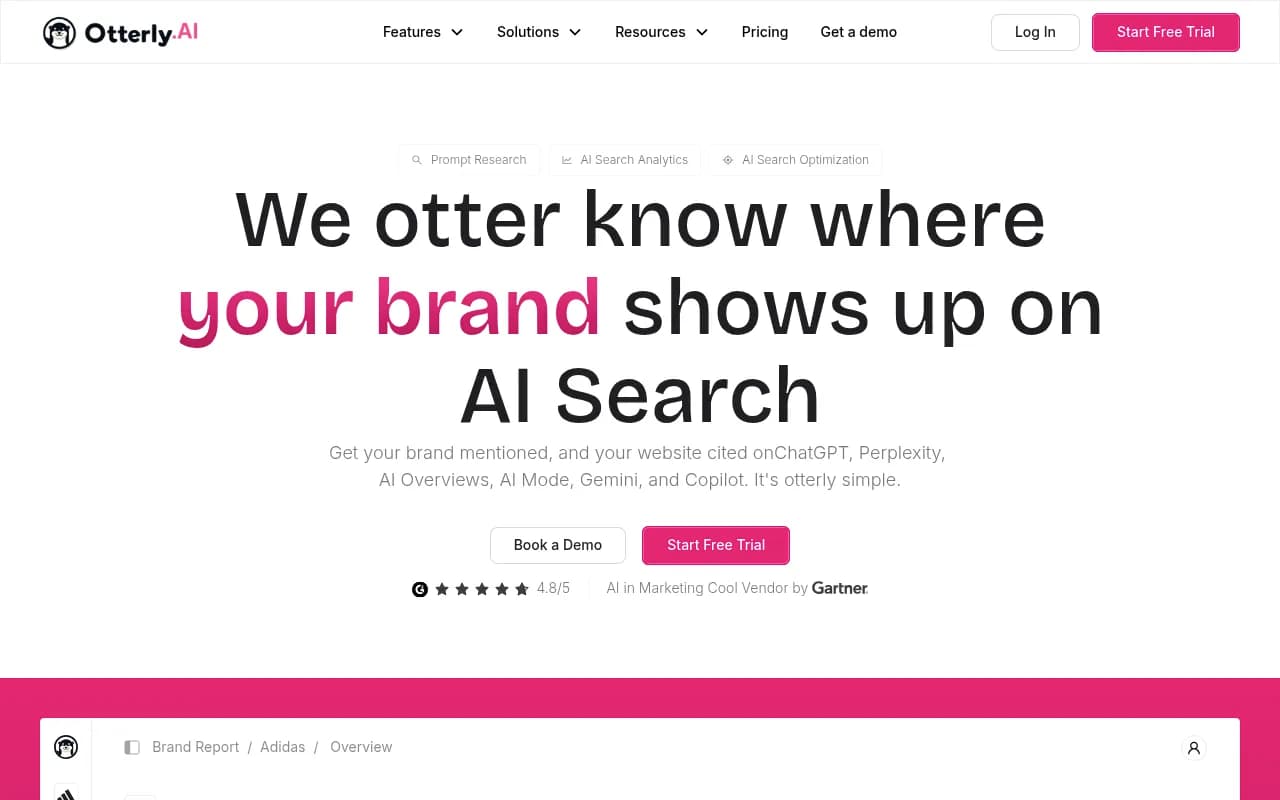
How Otterly.AI's pricing is structured
Otterly uses a prompt-based pricing model. The core metric is how many "search prompts" you can track -- these are the queries you configure the platform to monitor across AI engines. Every time Otterly checks how AI models respond to "best project management software for remote teams," that's one prompt.
The three tiers are:
| Plan | Price | Prompts | Best for |
|---|---|---|---|
| Lite | $29/mo | 15 prompts | Testing, proof of concept |
| Standard | $189/mo | 100 prompts | Small teams with active monitoring needs |
| Premium | Not listed publicly | 100+ prompts | Larger brands, agencies |
There's also a free trial available, which lets you test the interface before committing.
The prompt count is the primary constraint at every tier. Everything else -- the dashboard, the brand coverage charts, the citation reports -- is accessible across plans. What changes is how many queries you can actually track.
The Lite plan ($29/month): honest assessment
At $29/month, Otterly's Lite plan is one of the cheapest ways to get real data on AI visibility. That's genuinely useful. If you've never tracked how ChatGPT talks about your brand, this is a low-risk way to find out.
But 15 prompts goes fast. Think about what you'd actually want to monitor:
- 3–5 prompts for your core product category ("best [category] software," "top [category] tools," "[category] recommendations")
- 2–3 prompts for your brand name directly
- 2–3 prompts for competitor comparisons ("X vs Y," "alternatives to [competitor]")
- 2–3 prompts for use-case queries ("how to [problem your product solves]")
You're already at 9–14 prompts before you've covered anything beyond the basics. There's no room for regional variations, persona-specific queries, or long-tail prompts that might actually drive purchase decisions.
One Reddit commenter in r/b2bmarketing put it plainly: you can start at $29/month for 15 tracked prompts, but that's barely enough for testing. That's accurate. The Lite plan is a proof-of-concept tier, not a monitoring program.
Who it's actually right for: solo consultants who want to show a client that AI visibility tracking is real, or in-house marketers who need to make an internal case for budget. Once you've made that case, you'll need to upgrade.
The Standard plan ($189/month): where real work starts
At $189/month for 100 prompts, the Standard plan is where Otterly becomes a usable monitoring tool for a real team. 100 prompts is enough to cover your core category queries, competitor comparisons, brand-name variations, and a handful of use-case queries with some room left over.
The jump from $29 to $189 is steep -- more than 6x the price for roughly 6.5x the prompts. The math works out, but it's a significant commitment for a team that's still figuring out whether AI visibility monitoring belongs in their budget.
What you get at Standard beyond the prompt increase:
- Full access to the Brand Report dashboard (brand coverage over time, brand mentions, average brand position)
- Citation reports showing which sources AI engines are pulling from
- Competitor tracking (up to a certain number of competitors -- additional ones cost extra)
- GEO audit tools for assessing your website's AI crawlability
- Access to the prompt research library
The GEO audit tools are worth noting. They check whether your site structure, content format, and technical setup make it easy for AI crawlers to read and cite your content. That's useful diagnostic information, though it stops short of telling you what to actually change.
Who it's right for: marketing teams at mid-size companies who want ongoing visibility data and can dedicate someone to reviewing the reports and acting on them manually.
The Premium plan: pricing by request
Otterly doesn't publish Premium pricing publicly. You have to contact them. Based on the structure of the lower tiers and what's been shared in third-party reviews, Premium covers 100+ prompts and is aimed at larger brands or agencies managing multiple clients.
The lack of transparent pricing at the top tier is a minor frustration. It makes budget planning harder and forces a sales conversation before you know if the numbers make sense.
Where the real cost adds up: add-ons
This is the part of Otterly's pricing that catches people off guard. The base plan prices don't include everything you might assume.
Add-ons -- including additional competitors, additional AI engines beyond the default set, and potentially additional reporting features -- are priced separately. According to multiple reviews, these add-ons range from $9 to $149/month depending on what you're adding and which base tier you're on.
If you're on the Standard plan at $189/month and you add a few competitors and an extra engine or two, you could realistically be paying $250–$300/month before you've added any team seats or custom features.
That's not necessarily unreasonable for what you're getting, but it means the sticker price on the pricing page is the floor, not the ceiling.
Engine coverage: what Otterly tracks (and what it misses)
Otterly monitors six AI engines. The exact list varies slightly by plan, but the core coverage includes ChatGPT, Perplexity, and Google AI Overviews -- the three that most marketing teams care about first.
What it doesn't cover: Claude, Grok, DeepSeek, Meta AI, and Mistral. That's a meaningful gap in 2026, when Claude in particular has become a serious AI search player and Grok has a large user base through X.
If your audience uses a mix of AI tools (and most do), you're getting a partial picture at any Otterly tier. Whether that partial picture is sufficient depends on your category and where your customers actually search.
What Otterly doesn't do: the monitoring-only ceiling
This is the most important thing to understand about Otterly's pricing at every tier. The platform is a monitoring tool. It tells you:
- Whether AI engines mention your brand when answering relevant prompts
- How often you're mentioned versus competitors
- Which sources AI engines cite in their responses
- How your visibility has changed over time
What it doesn't tell you is what to do about any of it. There's no built-in content gap analysis that shows you which topics you need to cover to get cited. There's no content generation to help you create the articles or pages that would improve your visibility. There's no prompt volume data to help you prioritize which gaps to close first.
As one reviewer put it: "It tracks the source, but gives zero actionable strategy on how to restructure content to get cited."
That's not a bug in the product -- it's a deliberate scope decision. Otterly is built to show you the data. Acting on it is your problem.
For some teams, that's fine. If you have a content team that can take visibility data and run with it, Otterly gives them useful inputs. If you need the platform to help you close the loop from data to content to results, you'll hit a ceiling regardless of which tier you're on.
Otterly.AI

Otterly vs. alternatives: a feature comparison
If you're evaluating Otterly against other tools in the category, here's how the key features compare:
| Feature | Otterly.AI | Promptwatch | Peec AI | AthenaHQ |
|---|---|---|---|---|
| AI engines covered | 6 | 10+ | ~6 | ~8 |
| Content gap analysis | No | Yes | No | Limited |
| Content generation | No | Yes | No | No |
| Crawler/agent logs | No | Yes | No | No |
| Prompt volume data | No | Yes | No | No |
| Reddit/YouTube tracking | No | Yes | No | No |
| ChatGPT Shopping tracking | No | Yes | No | No |
| Entry price | $29/mo | $99/mo | Lower tiers available | Higher |
| Monitoring-only? | Yes | No | Yes | Yes |
The gap that stands out most: Otterly and most of its direct competitors (Peec AI, AthenaHQ) are monitoring dashboards. They show you the problem without helping you solve it.
Promptwatch is the clearest exception to that pattern. It tracks visibility across 10+ AI engines, but the differentiating feature is what happens after you see the data: Answer Gap Analysis shows you exactly which prompts competitors are visible for that you're not, and Content Agents generate articles and briefs designed to close those gaps. If you need the full loop -- find gaps, create content, track results -- that's a different category of tool.

For teams that just need monitoring, Peec AI is worth a look as a simpler alternative.

Who should actually pay for each Otterly tier
Lite ($29/month)
Pay for this if you're trying to demonstrate AI visibility tracking to a skeptical stakeholder, or if you're a solo consultant who wants to run a quick audit for a client. Don't expect to run a real monitoring program on 15 prompts.
Standard ($189/month)
Pay for this if you have a dedicated marketing or SEO person who will actively review the data and translate it into content or PR decisions. The 100-prompt limit is workable for a focused program. Budget for add-ons -- your real cost will likely be $220–$280/month once you add the competitors and engines you actually need.
Premium (contact for pricing)
Worth exploring if you're an agency managing multiple clients or a larger brand that needs to track a significant prompt set. Get the pricing before you get too far into the evaluation -- the lack of public pricing is a friction point.
The honest verdict
Otterly.AI is a solid monitoring tool with a genuinely accessible entry price. The $29 Lite plan is one of the cheapest ways to get real AI visibility data, and the Standard plan at $189/month gives you enough prompts to run a meaningful program.
The limitations are real, though. Engine coverage stops at six platforms. Add-ons push the real cost above the headline price. And at every tier, the platform shows you the problem without helping you fix it.
If your team has the capacity to take monitoring data and act on it independently, Otterly is a reasonable choice at the Standard tier. If you need a platform that closes the loop from visibility gap to published content to measurable improvement, you'll outgrow Otterly quickly -- or you'll find yourself paying for Otterly plus separate content tools, which gets expensive fast.
The category has matured enough in 2026 that "monitoring only" is no longer the only option. Whether that matters for your specific situation depends on what you're trying to accomplish and how much of the optimization work you want the platform to do for you.