Key takeaways
- Otterly.AI is a capable monitoring tool for smaller teams, but it stops at showing you data -- it doesn't help you act on it.
- Promptwatch closes the loop with content gap analysis, AI-powered content generation, and crawler logs that show exactly how AI engines discover your pages.
- Teams tracking more than a handful of prompts, or managing multiple brands, consistently outgrow Otterly.AI's feature set.
- The switch usually comes down to five things: content creation, crawler visibility, prompt intelligence, Reddit/YouTube tracking, and traffic attribution.
- Both tools have a place in the market -- but if you're trying to actually improve your AI visibility, not just measure it, the gap between them is significant.
Otterly.AI has earned its reputation as an approachable entry point into AI search monitoring. It's clean, it tracks brand mentions across ChatGPT, Perplexity, and Google AI Overviews, and for a team just waking up to the fact that AI search exists, it does the job.
But "does the job" has a ceiling. And in 2026, with AI search eating into traditional organic traffic faster than most marketing teams expected, that ceiling is getting hit a lot sooner.
This guide breaks down the five specific reasons marketing teams are moving from Otterly.AI to Promptwatch -- not as a knock on Otterly, but as an honest look at what happens when monitoring alone isn't enough.

What Otterly.AI does well
Before getting into the gaps, it's worth being fair. Otterly.AI tracks brand visibility across major AI engines, surfaces citation data, and gives teams a readable dashboard to understand where they're appearing (or not appearing) in AI responses. For smaller teams or those in early-stage AI visibility programs, it's a reasonable starting point.
Third-party roundups like Lebesgue's 2026 comparison of AI visibility tools describe it as "a nice starting point for smaller teams," and that framing is accurate. It's not broken -- it's just scoped for a different problem than the one most growth-stage marketing teams are actually trying to solve.
Otterly.AI

The 5 reasons teams are switching
1. Otterly.AI shows you the gap -- Promptwatch helps you close it
This is the core issue. Monitoring tools tell you that competitors are appearing in AI answers where you're not. That's useful information. But knowing you're invisible doesn't make you visible.
Promptwatch's Answer Gap Analysis goes a step further: it identifies the specific prompts where competitors are being cited and you're not, then surfaces the exact content your site is missing. From there, Content Agents generate articles, listicles, comparisons, and briefs grounded in real prompt data, citation patterns, and competitor analysis.
This isn't AI content generation for its own sake. The output is engineered around the specific gaps AI models are already exposing -- the topics and questions they want answers to but can't find on your site. Otterly.AI has no equivalent. You see the problem; you're on your own to fix it.
For a marketing team with a content backlog and quarterly targets, that difference matters a lot.
2. Crawler logs: understanding how AI engines actually find your pages
Most AI visibility tools -- Otterly.AI included -- tell you whether your brand appears in AI responses. What they don't tell you is why it doesn't appear, or what's happening between your website and the AI engine before a citation ever occurs.
Promptwatch's AI Crawler Logs track when AI crawlers (ChatGPT, Claude, Perplexity, and others) visit your site, which pages they read, what errors they hit, and how often they return. The Agent Analytics feature then shows the timeline from publish to crawl to citation -- so you can see exactly when a piece of content gets discovered and when it starts generating citations.
This matters because AI visibility isn't just about having good content. It's about whether AI engines can find, read, and trust your content. If a crawler is hitting a 404, encountering JavaScript it can't render, or simply never returning to a page, you won't appear in responses regardless of how well-written the content is. Otterly.AI doesn't surface any of this.
3. Prompt intelligence that helps you prioritize
Not all prompts are equal. Some are asked by millions of users every month. Others are niche queries with low competition where a single well-placed article could dominate AI responses. Without volume estimates and difficulty scores, you're guessing at which prompts to target.
Promptwatch tracks prompt volume and difficulty, and shows query fan-outs -- how one prompt branches into related sub-queries. This lets teams prioritize high-value, winnable prompts instead of spreading effort across everything.
Otterly.AI tracks whether you appear for prompts you've set up, but doesn't give you the data to decide which prompts are worth setting up in the first place. That's a meaningful gap for any team trying to allocate content resources strategically.
4. Reddit and YouTube tracking
Here's something most AI visibility tools miss entirely: a significant portion of what AI engines cite isn't your website. It's Reddit threads, YouTube videos, and third-party discussions that happen to answer the question well.
Promptwatch tracks which Reddit posts and YouTube videos are influencing AI recommendations in your category. That means you can see when a Reddit thread is driving citations your brand should be getting, or when a competitor's YouTube content is being surfaced in AI responses.
This opens up a channel most teams aren't even thinking about. If a particular subreddit or YouTube creator is consistently being cited in answers about your product category, that's a distribution opportunity -- not just a data point. Otterly.AI doesn't track this at all.
5. Traffic attribution: connecting AI visibility to actual revenue
Visibility scores are satisfying to watch go up. But marketing teams report to revenue, not to dashboards.
Promptwatch connects AI visibility to actual traffic and revenue through website integrations (Cloudflare, Fastly, Vercel, server logs, Google Search Console, or a tracking snippet). Page-level tracking shows which pages are being cited, how often, and by which models. Traffic attribution connects that citation activity to real sessions and conversions.
This is the difference between "our AI visibility score improved 40% this quarter" and "our AI visibility improvements drove X leads." One of those statements survives a budget review. Otterly.AI doesn't offer this attribution layer.
Side-by-side comparison
| Feature | Otterly.AI | Promptwatch |
|---|---|---|
| Brand mention tracking | Yes | Yes |
| Multi-model monitoring | Yes (ChatGPT, Perplexity, AI Overviews) | Yes (10 models including Grok, DeepSeek, Mistral, Meta AI) |
| Answer gap analysis | No | Yes |
| AI content generation | No | Yes (Content Agents) |
| AI crawler logs | No | Yes |
| Crawl-to-citation timeline | No | Yes |
| Prompt volume & difficulty | No | Yes |
| Query fan-outs | No | Yes |
| Reddit & YouTube tracking | No | Yes |
| ChatGPT Shopping tracking | No | Yes |
| Traffic attribution | No | Yes |
| Competitor heatmaps | Limited | Yes |
| Multi-language / multi-region | Limited | Yes |
| Looker Studio / API | No | Yes |
| Starting price | ~$29/mo | $99/mo |
The pricing gap is real -- Otterly.AI is cheaper, and for a team that genuinely just needs basic monitoring, that's a legitimate reason to stay. But for teams trying to move the needle on AI visibility, the feature gap is larger than the price gap.
Who should actually switch
Not every Otterly.AI user needs to switch. If you're a small team running fewer than 50 prompts, just getting started with AI visibility tracking, and not yet producing content specifically for AI search, Otterly.AI is a reasonable place to be.
The switch makes sense when:
- You're producing content and want to know which topics to prioritize for AI search
- You've identified visibility gaps but have no systematic way to close them
- You're spending time manually checking whether AI crawlers can access your pages
- Your leadership wants to connect AI visibility to traffic or revenue, not just mention counts
- You're tracking competitors and want to understand why they're being cited, not just that they are
At that point, you're not looking for a monitoring tool. You're looking for an optimization platform. That's a different category.
A note on the broader landscape
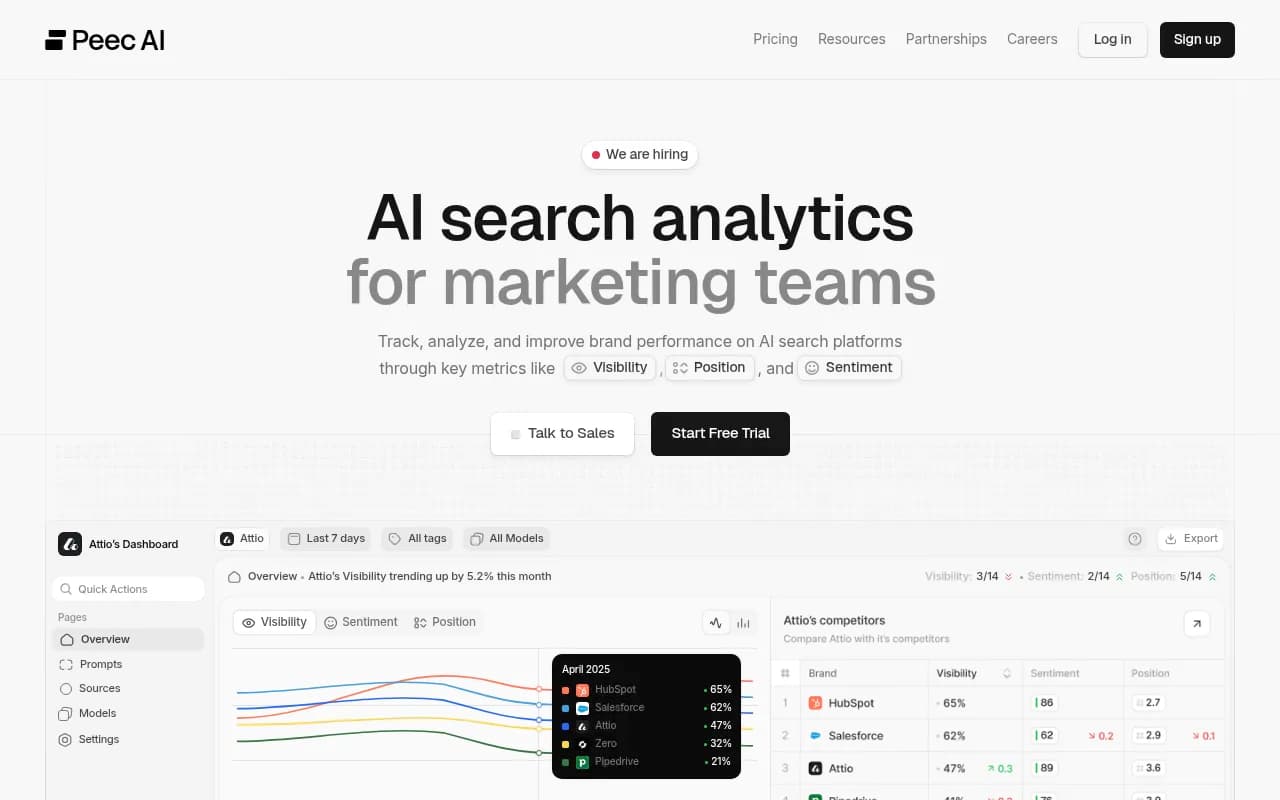
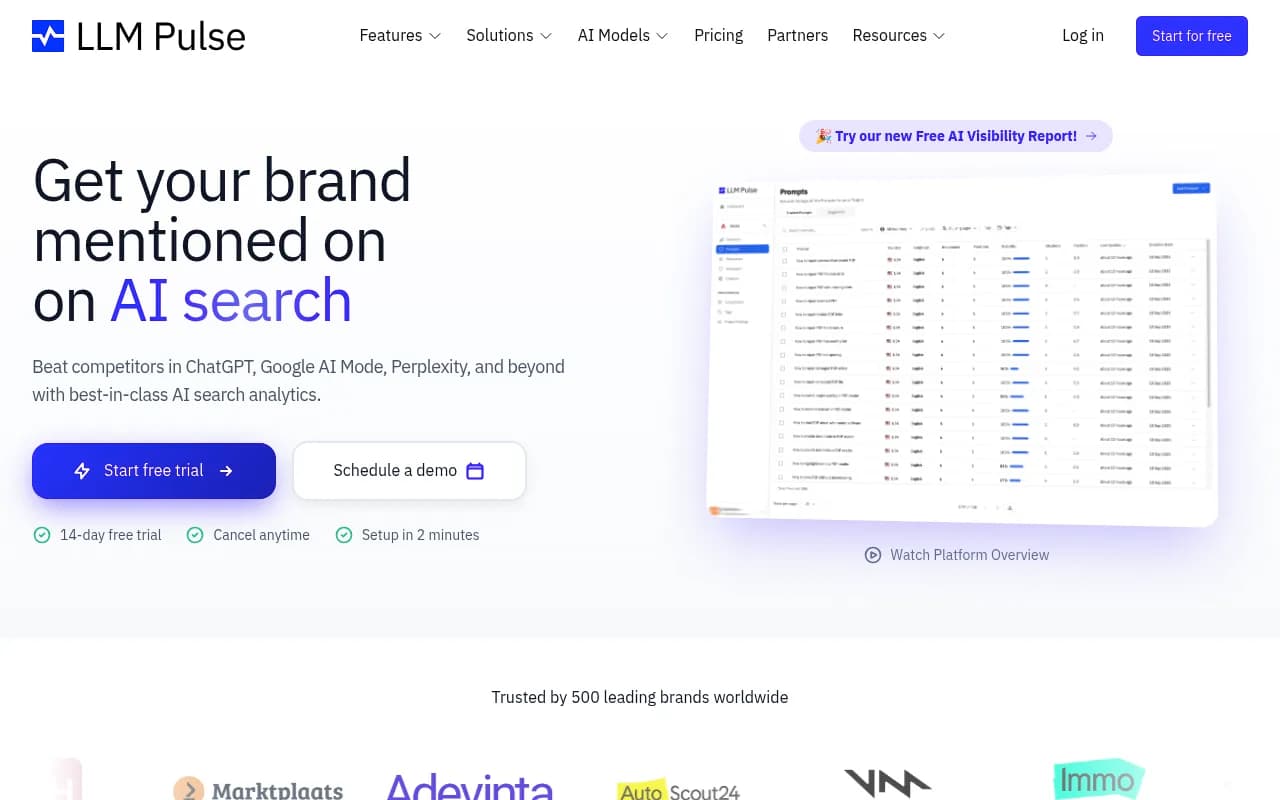
Otterly.AI and Promptwatch aren't the only options here. Tools like Profound and AthenaHQ sit in the enterprise monitoring space with strong dashboards. Tools like Peec AI and LLM Pulse offer solid tracking for teams that want clean, focused visibility data.
Profound


What sets Promptwatch apart from all of them is the action loop: find the gaps, generate content to fill them, track the results. Most competitors stop at step one. That's not a criticism of monitoring -- monitoring is necessary. But it's not sufficient if the goal is actually improving where you appear.
The bottom line
Otterly.AI built something genuinely useful. The problem isn't that it's bad -- it's that AI search has moved fast enough that "useful for monitoring" and "useful for winning" have become two different things.
Marketing teams switching to Promptwatch in 2026 aren't doing it because Otterly.AI stopped working. They're doing it because they've hit the point where knowing they're invisible isn't enough -- they need a system for becoming visible. That's what the switch is actually about.
If you're at that point, Promptwatch offers a free trial worth taking seriously.