Key takeaways
- Qwairy is a solid AI visibility tracker, but it stops at monitoring — it doesn't help you create or publish content to fix the gaps it finds.
- Content teams in 2026 need platforms that close the loop: find where you're invisible, generate content to fix it, and track whether that content gets cited.
- The strongest alternatives combine AI visibility tracking with content generation, brief creation, and publishing workflows.
- Promptwatch is the only platform in this category rated as a "Leader" across all evaluation criteria — tracking, content generation, and optimization — in a 2026 comparison of 12 GEO platforms.
- Depending on your team's bottleneck, you might need a pure content engine, a GEO tracker, or a full-stack platform. This guide covers all three.
Qwairy does one thing well: it shows you where your brand appears (or doesn't) across AI search engines. If you're running a quick audit or need a lightweight way to check AI visibility, it's a reasonable starting point.
But content teams have a different problem. You don't just need to know you're invisible — you need to know why, and then you need to do something about it. That means understanding which prompts competitors are winning, what content gaps exist on your site, generating content that actually addresses those gaps, and tracking whether AI models start citing you after you publish.
Qwairy doesn't do any of that. It's a monitoring tool, not an optimization platform.
This guide covers the best alternatives for teams that need the full picture: tracking, writing, and publishing AI-optimized content.
What to look for in a Qwairy alternative
Before getting into specific tools, it's worth being clear about what "better than Qwairy" actually means for a content team. There are a few distinct capabilities that matter:
AI visibility tracking — Which AI engines mention your brand, for which prompts, how often, and compared to competitors. This is what Qwairy does.
Prompt intelligence — Volume estimates, difficulty scores, and competitor gap analysis for specific prompts. This tells you which gaps are worth fixing.
Content generation — The ability to create articles, briefs, or listicles grounded in real prompt data and citation analysis — not just generic AI writing.
Publishing and workflow — CMS integrations, approval flows, and the ability to push content live without switching tools.
Attribution — Connecting AI visibility to actual traffic and revenue, so you can prove the work is doing something.
Most tools in this space cover one or two of these. Very few cover all five.
The best Qwairy alternatives in 2026
Promptwatch — best overall for content teams that need to track and fix AI visibility
Promptwatch is the most complete platform in this category. Where Qwairy shows you a visibility score and leaves you to figure out the rest, Promptwatch runs a full loop: it identifies the specific prompts where competitors are visible and you're not, generates content designed to close those gaps, and then tracks whether that content starts getting cited.

The Answer Gap Analysis is the feature that content teams tend to find most useful. It shows you exactly which prompts competitors are winning — the specific questions AI models are answering with their content instead of yours. That's not a generic content audit; it's a prioritized list of what to write next.
From there, Content Agents generate articles, listicles, and comparisons grounded in real prompt data, citation patterns, and competitor analysis. The output isn't generic AI filler — it's structured around the specific gaps AI models are exposing on your site.
On the tracking side, Promptwatch monitors 10 AI engines (ChatGPT, Perplexity, Google AI Overviews, Claude, Gemini, Grok, DeepSeek, Copilot, Meta AI, Mistral), logs AI crawler activity in real time, and connects visibility changes to actual traffic through website integrations with Cloudflare, Vercel, Google Search Console, and others.
In a 2026 comparison of 12 GEO platforms, it was the only tool rated as a "Leader" across all categories. Pricing starts at $99/month for the Essential plan (1 site, 50 prompts, 5 articles), with a Professional plan at $249/month that adds crawler logs and local tracking.
Otterly.AI — best for teams that want simple monitoring with a low barrier to entry
Otterly.AI is one of the more accessible AI visibility trackers on the market. It covers the major AI engines, has a clean interface, and is genuinely affordable compared to enterprise-tier platforms.
Otterly.AI

The limitation is the same one Qwairy has: it's a monitoring tool. You can see where you appear and where you don't, but there's no content generation, no gap analysis tied to prompt data, and no crawler logs. For a content team that needs to act on what they find, Otterly.AI is a good starting point but not a complete solution.
That said, if your team already has a strong content workflow and just needs visibility data to inform it, Otterly.AI is worth considering.
Profound — best for enterprise teams with complex reporting needs
Profound is a well-built enterprise AI visibility platform. It covers a wide range of AI engines, has solid prompt tracking, and offers reporting features that work well for larger organizations with multiple stakeholders.
Profound

The tradeoff is price and scope. Profound is positioned at the higher end of the market, and like most enterprise tools, it's primarily a monitoring and reporting platform. Content generation isn't a core feature. If you're a marketing team at a mid-size company that needs to both track and fix AI visibility, you'll likely end up pairing Profound with a separate content tool — which adds cost and complexity.
AthenaHQ — best for teams focused on brand monitoring across LLMs
AthenaHQ does a solid job of tracking brand mentions across AI search engines and gives you decent competitor comparison data.

It's monitoring-focused, though. There's no content generation, no crawler logs, and no direct path from "here's a gap" to "here's the content that fixes it." For content teams that want to act on what they find, AthenaHQ requires a lot of manual work to translate visibility data into a content brief.
Scrunch AI — best for teams that want AEO tracking with some content support
Scrunch AI sits in an interesting middle ground. It tracks AI search visibility and has some content-adjacent features that help teams understand what AI engines are looking for.
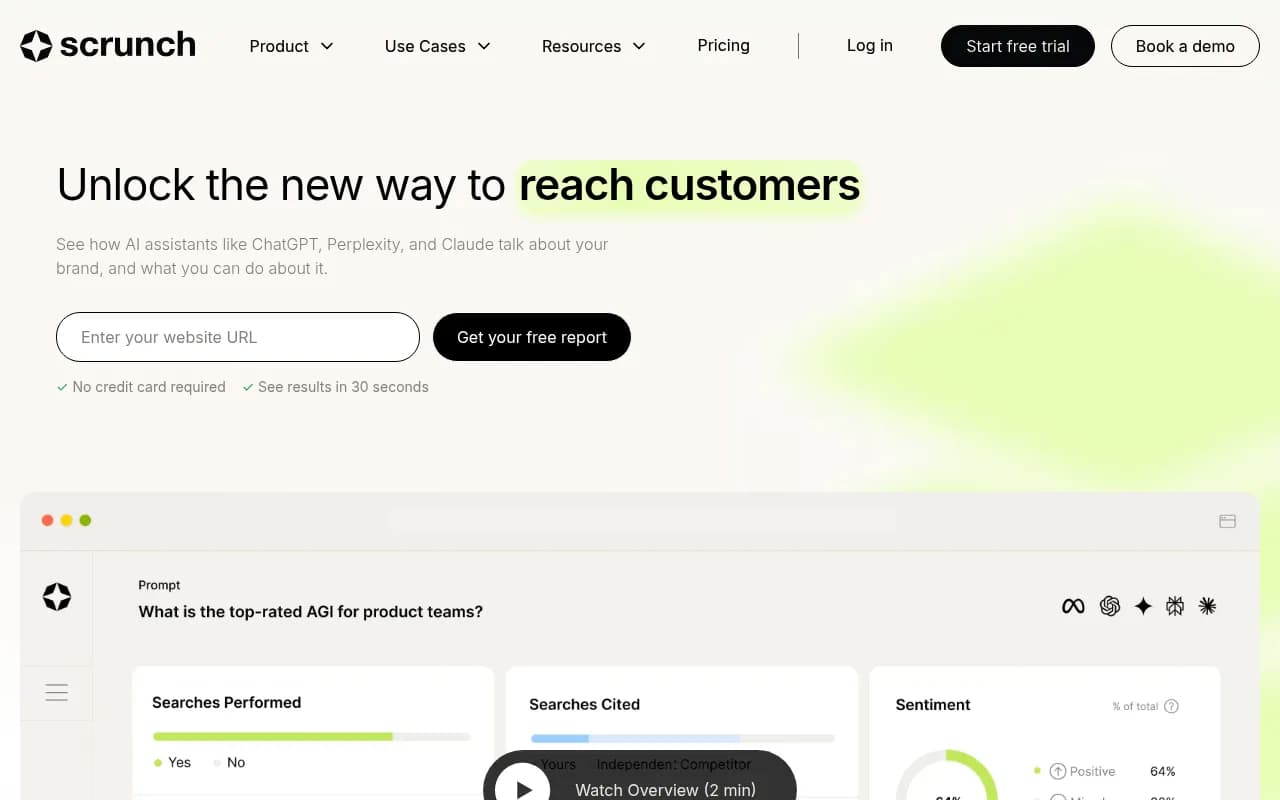
It's not a full content platform, but it's more actionable than pure monitoring tools. The interface is clean, and the AEO-focused framing makes it easier to explain to stakeholders who are newer to the AI search space.
AirOps — best for teams that want content engineering workflows
AirOps takes a different angle. Rather than starting with AI visibility tracking, it starts with content production and builds workflows around it. It's particularly strong for teams that need to scale content output with AI while maintaining brand consistency and editorial standards.
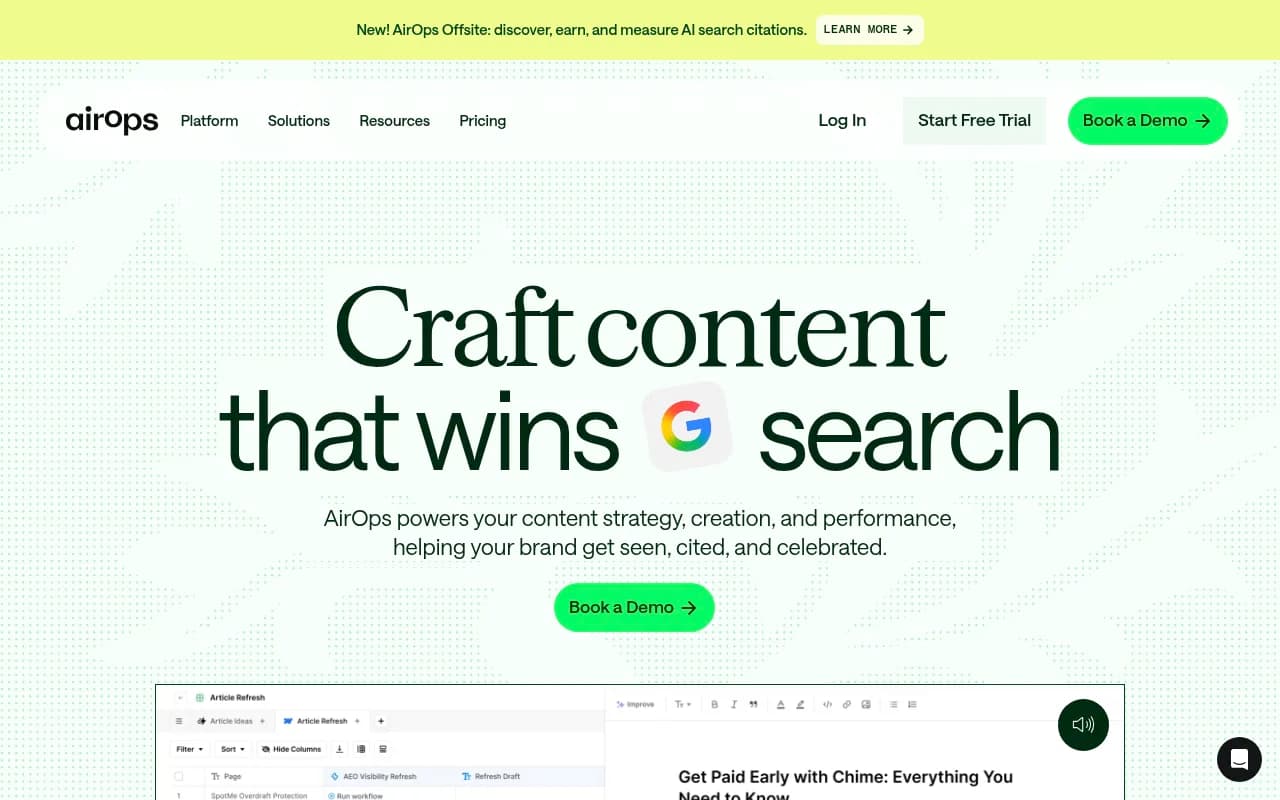
The gap compared to Promptwatch is on the visibility tracking side. AirOps doesn't have the same depth of AI engine monitoring, crawler logs, or prompt intelligence. But if your main bottleneck is content production rather than tracking, it's worth a look.
Surfer SEO — best for teams that need content optimization for traditional and AI search
Surfer SEO has been a go-to for content optimization for years, and it's adapted reasonably well to the AI search era. Its content editor gives real-time guidance on structure, keyword usage, and topical coverage.
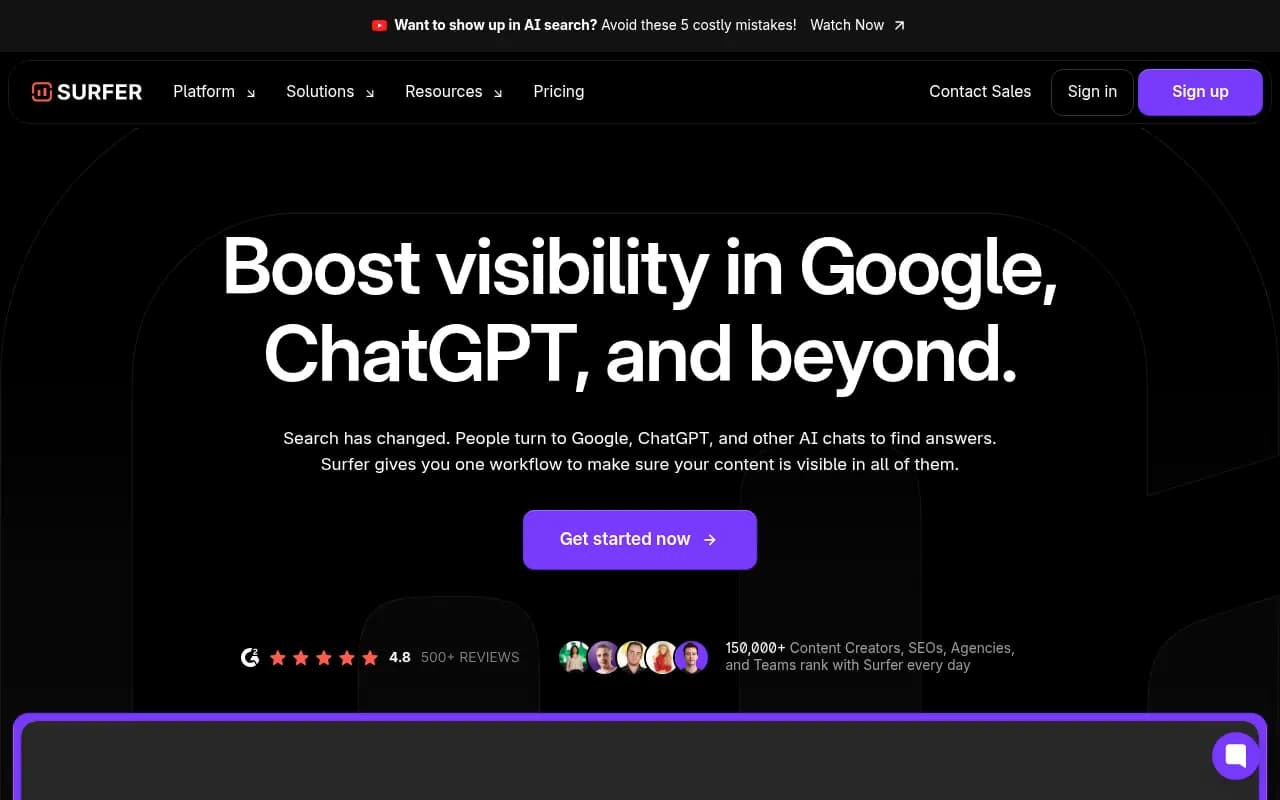
It's primarily a Google SEO tool that's added AI search features, rather than an AI-first platform. If your team is still heavily focused on traditional search and wants AI search support as a secondary capability, Surfer is a reasonable choice. For teams where AI search is the primary concern, the tracking depth isn't quite there.
Frase — best for content brief creation and research workflows
Frase is strong at the research and briefing stage of content production. It pulls together SERP data, competitor content, and question research to help writers produce more thorough articles.
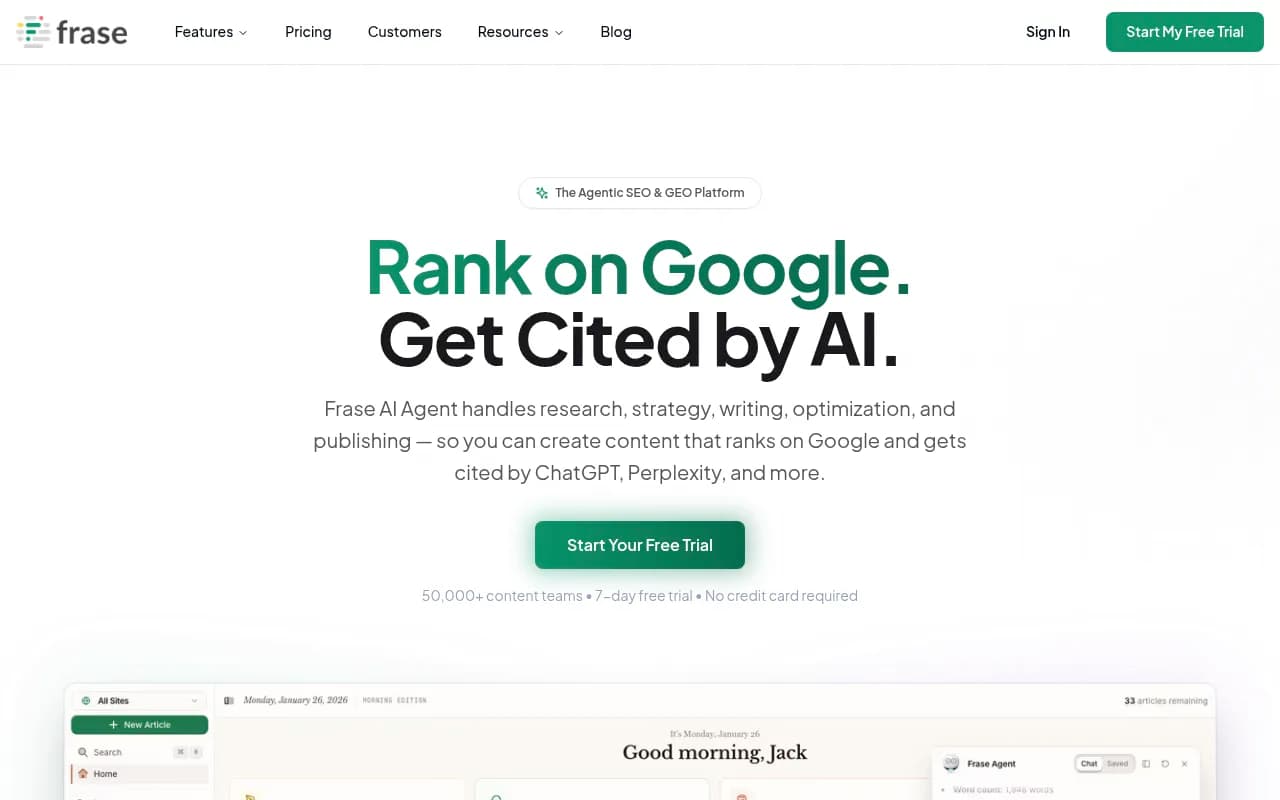
It doesn't track AI visibility in the way Qwairy or Promptwatch do, but it's a useful tool for the content creation side of the equation. Teams that are already doing their AI visibility tracking elsewhere and need a better brief-building tool often find Frase fits well.
Jasper — best for enterprise content teams with high volume output needs
Jasper is one of the more mature AI writing platforms, with a strong focus on brand voice consistency and enterprise-scale content production. It has workflow features, approval flows, and integrations that larger teams tend to need.
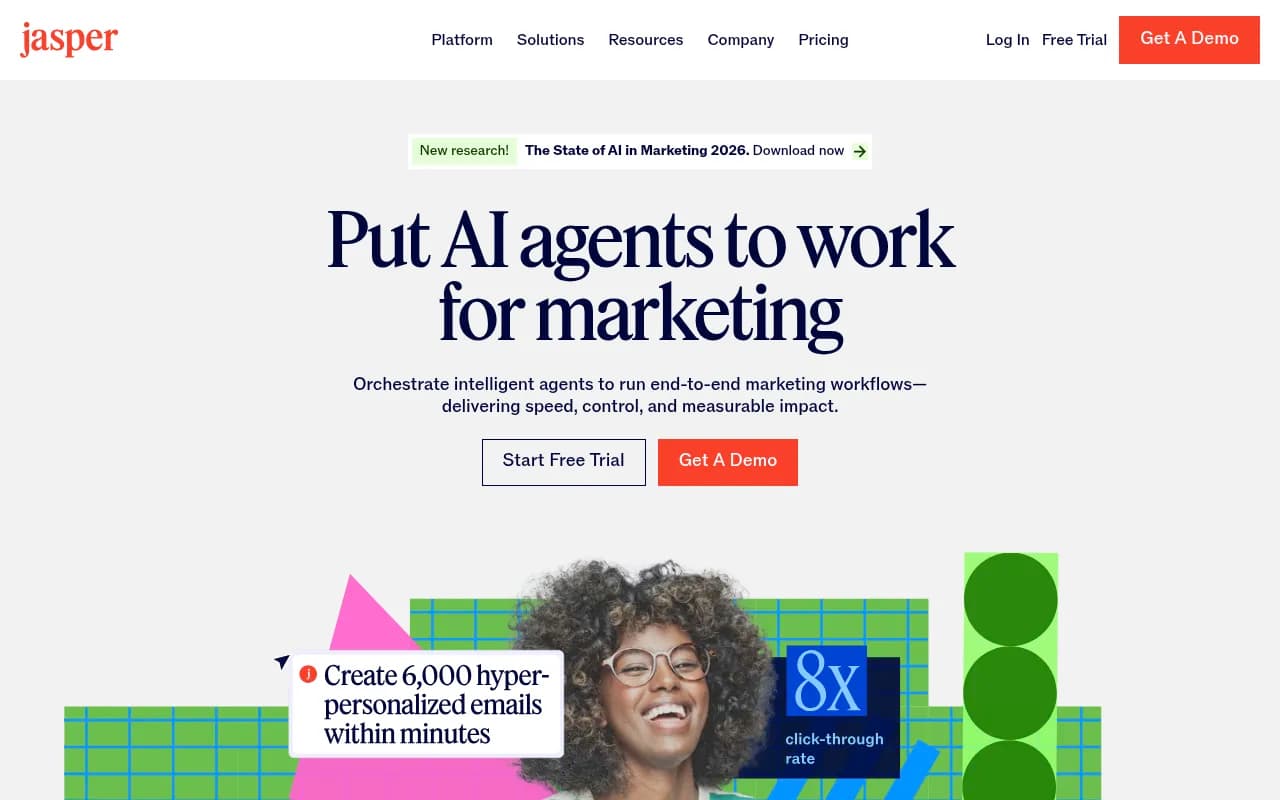
The gap is AI search visibility. Jasper is a content production tool, not an AI visibility platform. It won't tell you which prompts to target or whether your content is getting cited by ChatGPT. For teams that need both, Jasper works best as part of a stack rather than a standalone solution.
MarketMuse — best for content strategy and topical authority planning
MarketMuse has been around long enough to have a well-developed approach to content strategy. Its topic modeling and content scoring help teams build topical authority systematically.
It's more of a strategy and planning tool than a production or tracking tool. If your content team is trying to build a more structured approach to topic coverage — particularly for AI search where topical depth matters — MarketMuse adds real value at the planning stage.
How these tools compare
Here's a direct comparison across the capabilities that matter most for content teams:
| Tool | AI visibility tracking | Prompt gap analysis | Content generation | Crawler logs | Attribution |
|---|---|---|---|---|---|
| Promptwatch | 10 engines | Yes | Yes (Content Agents) | Yes | Yes |
| Otterly.AI | Multiple engines | No | No | No | No |
| Profound | Multiple engines | Limited | No | No | Limited |
| AthenaHQ | Multiple engines | Limited | No | No | No |
| Scrunch AI | Multiple engines | Limited | Limited | No | No |
| AirOps | No | No | Yes | No | No |
| Surfer SEO | Limited | No | Yes | No | No |
| Frase | No | No | Yes (briefs) | No | No |
| Jasper | No | No | Yes | No | No |
| MarketMuse | No | Limited | Yes (briefs) | No | No |
The pattern is clear: most tools do one thing well. Promptwatch is the only platform in this list that covers the full workflow from gap identification through content generation to citation tracking.
Which alternative is right for your team?
The right choice depends on where your biggest bottleneck is.
If you're primarily a monitoring problem — you need to know where you stand across AI engines and how you compare to competitors — Otterly.AI or Profound are reasonable choices depending on your budget. Profound has more depth; Otterly.AI is more accessible.
If you're primarily a content production problem — you have visibility data but need to produce more content faster — AirOps or Jasper are worth evaluating, depending on whether you need workflow features or raw output volume.
If you need both — and most content teams do — Promptwatch is the only platform that handles the full loop without requiring you to stitch together multiple tools. The Answer Gap Analysis tells you what to write, the Content Agents write it, and the tracking layer shows you whether it's working.
There's also a practical argument for consolidation. Running a visibility tracker, a content brief tool, a writing platform, and a separate analytics layer adds up fast — both in cost and in the time spent moving data between tools. A platform that handles all of it in one place is genuinely more efficient, not just more convenient.
A note on what "AI-optimized content" actually means in 2026
It's worth being direct about this, because the phrase gets used loosely. Content that performs well in AI search isn't just content with keywords stuffed in. AI models cite sources that directly answer specific questions, that demonstrate topical authority, and that are structured in ways that make the answer easy to extract.
That means the research stage matters more than it used to. You need to know which specific prompts you're targeting, what the AI model is currently saying in response to those prompts, and what's missing from your existing content. Generic "write a blog post about X" workflows don't produce content that gets cited.
This is why the gap analysis step — knowing exactly which prompts competitors are winning and you're not — is so valuable. It turns content strategy from a guessing game into something closer to a targeted brief.
The Slate guide on content automation tools makes a similar point: the strongest platforms in 2026 connect planning, drafting, optimization, and publishing into one governed workflow. Standalone text generators aren't the bottleneck anymore — the bottleneck is knowing what to write and proving it worked.
Bottom line
Qwairy is fine for what it is. But if you're a content team trying to improve AI search visibility, monitoring alone won't move the needle. You need to know which gaps to fill, have a way to fill them efficiently, and be able to track whether the work is paying off.
Most tools in this space cover one of those three things. Promptwatch covers all three, which is why it's the strongest alternative for content teams that want to treat AI search as a real acquisition channel rather than just a metric to watch.
Start with the gap analysis. Write to the gaps. Track the citations. That's the workflow that actually produces results in 2026.