Key takeaways
- All three tools started as traditional rank trackers and have added AI search monitoring, but the depth of that AI layer varies significantly
- SE Ranking has the most complete overall SEO platform, with AI visibility baked into its core experience via SE Visible and the AI Search Toolkit
- Nightwatch leads on rank tracking accuracy and local SERP precision, with AI monitoring through its NightOwl feature
- Rankscale is the most agency-focused of the three, built around client reporting workflows with AI visibility as a key pillar
- None of the three offer content generation or optimization tools to act on what they find -- they're monitoring platforms, not optimization platforms
- If you need to go beyond tracking and actually fix your AI visibility gaps, a purpose-built GEO platform is worth evaluating alongside these tools
There's a pattern playing out across the SEO tool market right now. Traditional rank trackers, the tools that have been monitoring Google positions for years, are rushing to add AI search monitoring. Some do it well. Some bolt on a dashboard and call it a day.
SE Ranking, Nightwatch, and Rankscale are three of the more credible examples of rank trackers that have genuinely extended into AI search. They're not pure-play GEO platforms, but they're not pretending to be something they're not either. The question worth asking is: how useful is their AI monitoring layer in practice, and what are you giving up by staying inside a traditional SEO tool?
Let's go through each one.
SE Ranking: the most complete all-in-one option
SE Ranking has been quietly building out one of the more complete SEO platforms on the market. It covers rank tracking, site audits, backlink monitoring, keyword research, and content optimization -- and in 2026, AI visibility is genuinely woven into the core experience rather than treated as an afterthought.
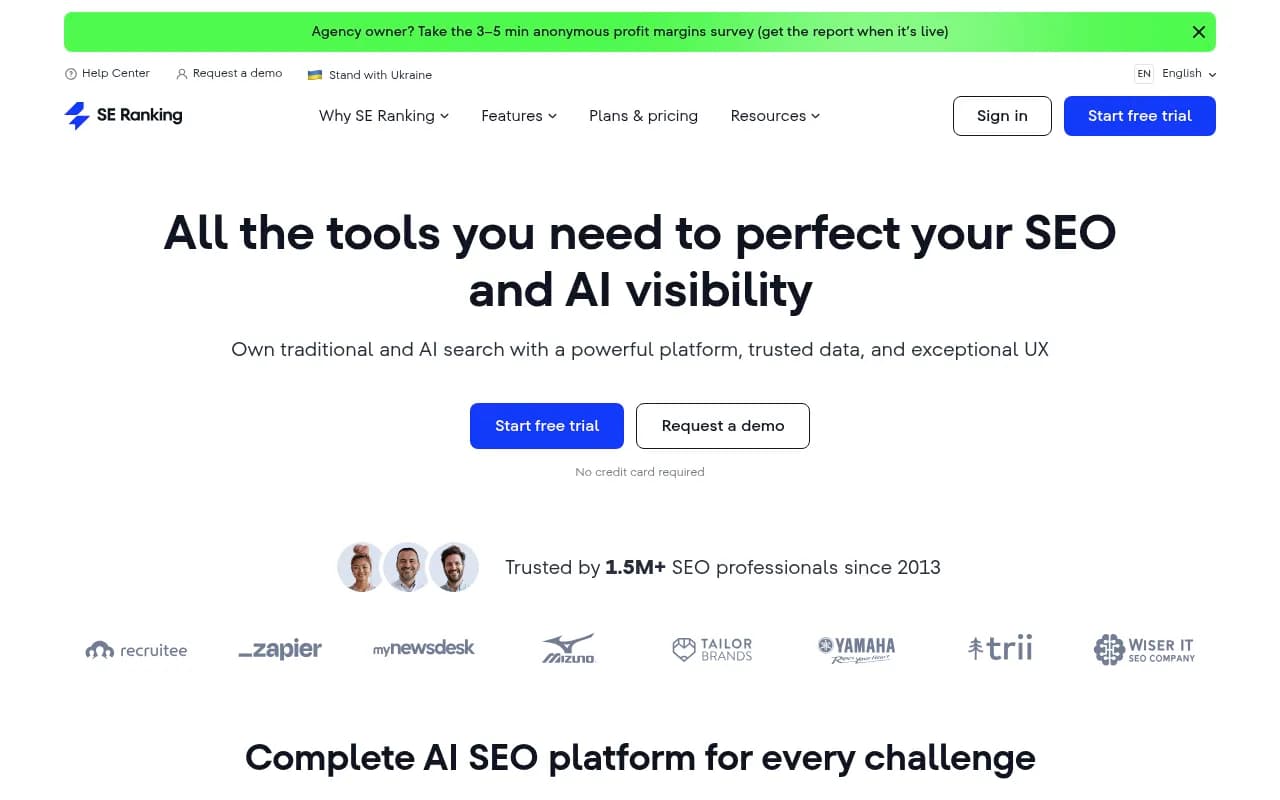
The AI visibility layer lives in two places. First, there's SE Visible, a standalone product within the SE Ranking ecosystem that tracks brand mentions across AI engines. Second, the main platform's rank tracker now surfaces Google AI Overview appearances alongside traditional SERP positions -- so you can see when your pages are being pulled into AI Overviews without switching between tools.
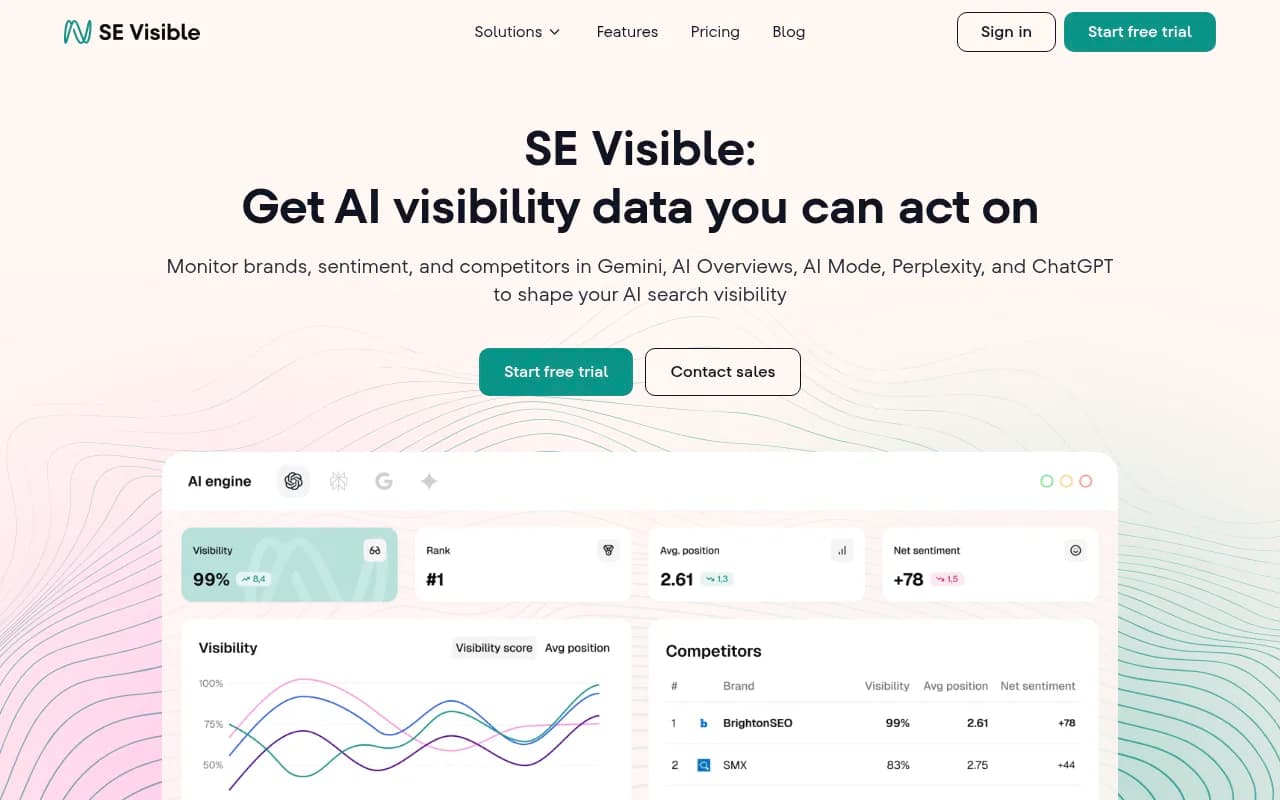
The AI Search Toolkit (which SE Ranking has been actively demoing and developing through 2026) lets you research competitors' AI visibility and track your own rankings across AI-generated results. The integration with the broader SEO platform is a genuine advantage here. You're not managing two separate tools -- your AI visibility data sits next to your keyword rankings, backlink profile, and site audit results.
Where SE Ranking gets complicated is pricing. The entry price looks reasonable, but it scales quickly once you add keywords, users, or white-label features. For agencies managing multiple clients, the total cost can jump significantly above the advertised starting point.
What SE Ranking does well:
- AI Overview tracking integrated with traditional rank tracking
- Competitor AI visibility research
- Broad SEO platform coverage (audits, backlinks, content)
- Clean, accessible interface
Where it falls short:
- AI monitoring depth is narrower than dedicated GEO platforms
- No content generation tools to act on visibility gaps
- Pricing can escalate for agencies
Nightwatch: the rank tracking specialist with a solid AI layer
Nightwatch has a reputation for accuracy. Its rank tracking is genuinely precise -- ZIP-code-level local SERP tracking is a real differentiator, not marketing copy. For agencies doing local SEO work, that granularity matters.
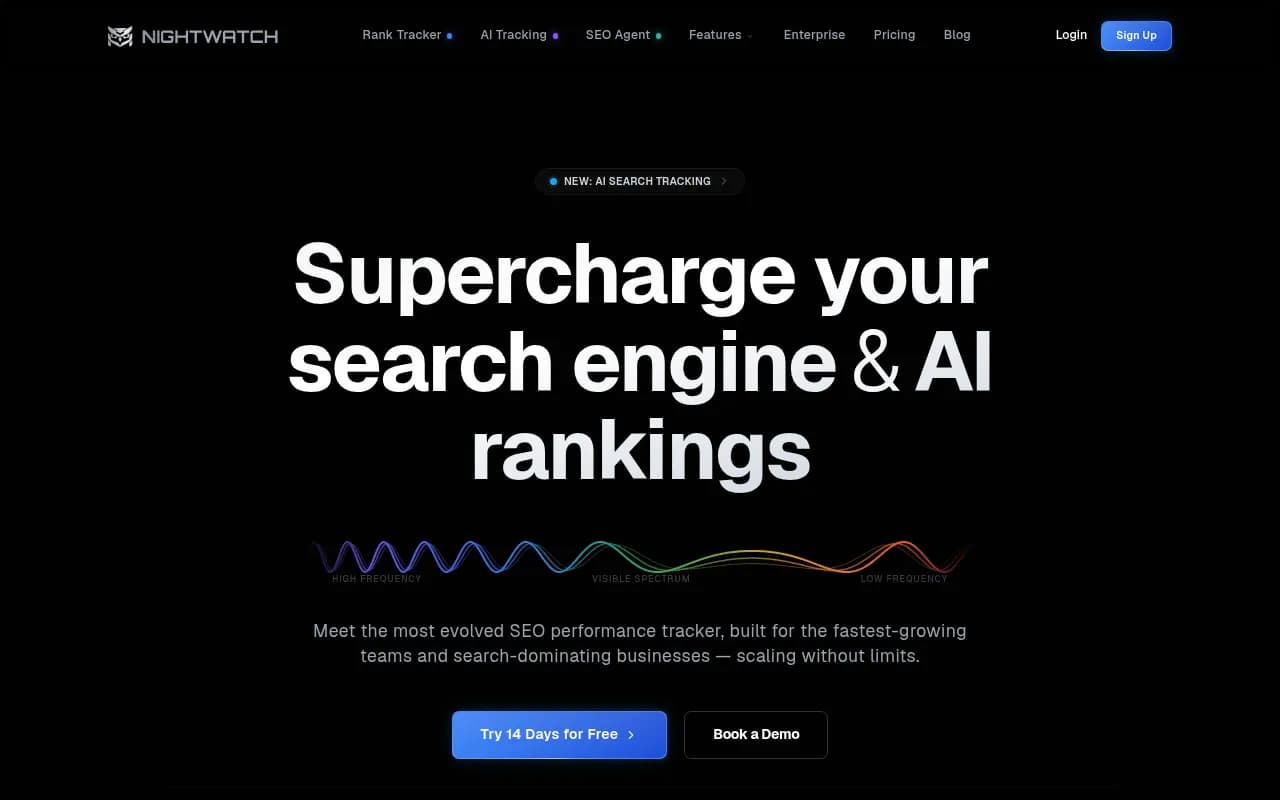
The AI monitoring piece comes through NightOwl, Nightwatch's AI visibility tracking feature. It monitors brand mentions and citations across LLMs including ChatGPT, Gemini, and Perplexity. Nightwatch has also added Citation Intelligence, which tracks which sources AI models are pulling from -- useful for understanding why competitors are getting cited and you're not.
The SEO Agent feature is worth noting -- it's an attempt to move beyond pure monitoring toward some level of automation, though it's more workflow assistance than full content generation.
Nightwatch's pricing starts at $32/month, which is genuinely competitive. The white-label reporting is solid, and the Looker Studio integration makes it easy to fold into agency reporting workflows. There's also an SEO MCP (Model Context Protocol) integration, which is an interesting move for teams building AI-assisted SEO workflows.
The honest limitation: Nightwatch is still primarily a rank tracker. The AI monitoring layer is real and useful, but it doesn't go deep into content gap analysis or tell you what to create to improve your AI visibility. You get the data; you figure out what to do with it.
What Nightwatch does well:
- Best-in-class rank tracking accuracy, including hyper-local
- Competitive pricing for agencies
- Citation Intelligence for understanding AI source patterns
- White-label reporting and Looker Studio integration
Where it falls short:
- AI monitoring is a feature, not the core product
- No content optimization or generation capabilities
- Less comprehensive SEO suite than SE Ranking
Rankscale: built for agencies, AI-first positioning
Rankscale is the newest of the three and takes a different angle. It's positioned as an agency-focused AI visibility platform rather than a traditional rank tracker that added AI features. In practice, it still covers traditional search alongside AI monitoring, but the framing and workflow are built around AI visibility from the start.
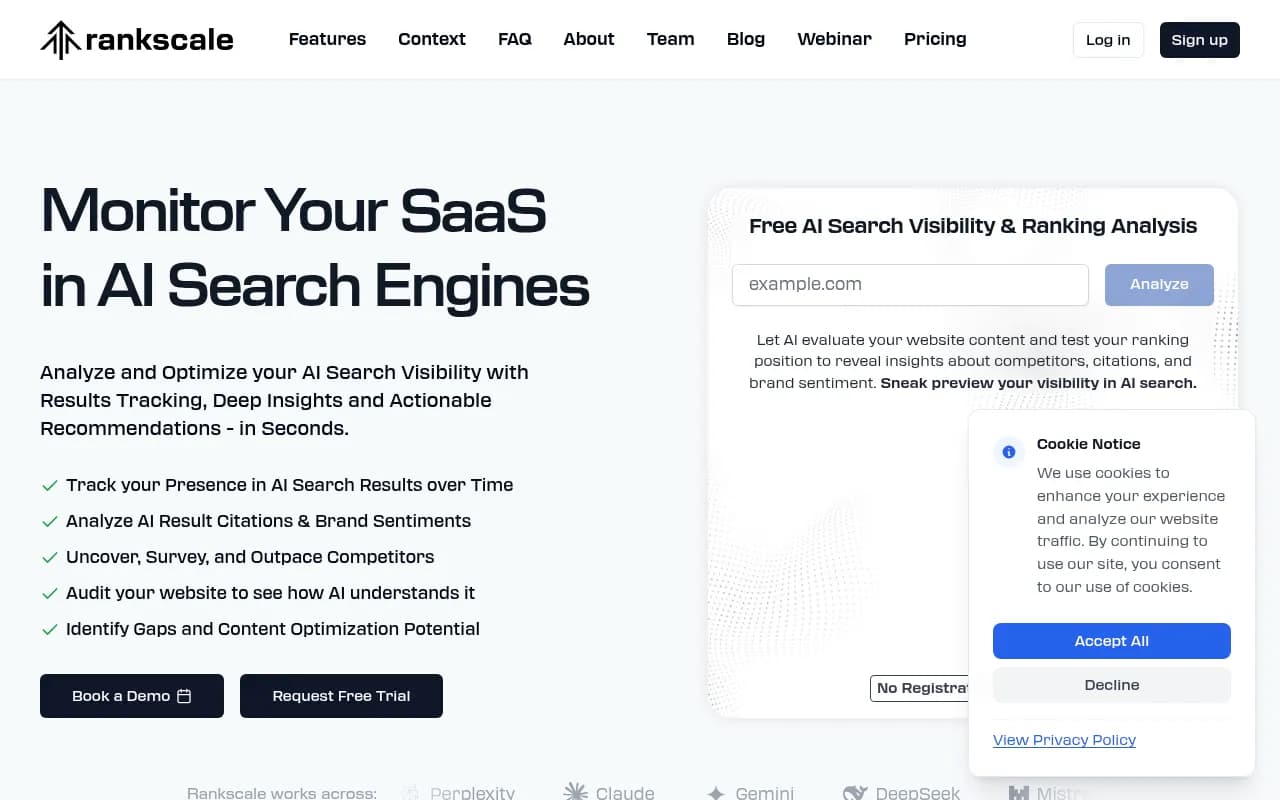
The platform tracks brand visibility across ChatGPT, Perplexity, Google AI Overviews, and other AI engines, with reporting designed for client delivery. If you're an agency that needs to show clients their AI search presence in a clean, presentable format, Rankscale's reporting layer is worth looking at.
The trade-off is depth. Rankscale doesn't have the years of rank tracking infrastructure that SE Ranking or Nightwatch have built. Its traditional SEO features are thinner. But for agencies whose clients are increasingly asking "are we showing up in ChatGPT?" rather than "where do we rank for keyword X?", the AI-first positioning makes sense.
What Rankscale does well:
- Agency-oriented reporting and client workflows
- AI visibility tracking as a primary feature, not an add-on
- Clean interface built around the AI search use case
Where it falls short:
- Thinner traditional SEO feature set
- Less established than SE Ranking or Nightwatch
- Limited content optimization capabilities
Head-to-head comparison
| Feature | SE Ranking | Nightwatch | Rankscale |
|---|---|---|---|
| Traditional rank tracking | Strong | Best-in-class | Basic |
| Local SERP tracking | City-level | ZIP-code-level | Limited |
| AI Overview tracking | Yes (integrated) | Yes (NightOwl) | Yes |
| LLM monitoring (ChatGPT, Perplexity, etc.) | Via SE Visible | Via NightOwl | Yes (core feature) |
| Citation intelligence | Limited | Yes | Limited |
| Content gap analysis | No | No | No |
| Content generation | No | No | No |
| Site audits | Yes | Basic | No |
| Backlink monitoring | Yes | Basic | No |
| White-label reporting | Yes (paid add-on) | Yes | Yes |
| Agency pricing | Scales up quickly | Competitive from $32/mo | Agency-focused |
| Looker Studio integration | Yes | Yes | Limited |
| Best for | All-in-one SEO teams | Rank tracking + AI monitoring | Agencies focused on AI visibility |
The gap none of them fill
Here's the honest assessment: all three tools are good at showing you where you stand. SE Ranking gives you the most complete picture of your overall SEO health. Nightwatch gives you the most accurate rank data. Rankscale gives you the cleanest agency reporting for AI visibility.
What none of them do is help you fix what they find.
If your AI visibility analysis shows that competitors are getting cited for prompts you're not appearing in, these tools will tell you that. They won't tell you what content to create, generate that content, or track whether your new content actually moved the needle in AI search results.
That's the distinction between a monitoring platform and an optimization platform. For teams that want to close the loop -- find gaps, create content, track results -- a purpose-built GEO platform like Promptwatch is worth evaluating alongside these tools.

Promptwatch tracks visibility across 10 AI models, surfaces the specific prompts your competitors are winning that you're not, and includes Content Agents that generate articles and briefs grounded in real prompt data. It also logs AI crawler activity on your site, so you can see when ChatGPT or Perplexity is crawling your pages and whether those crawls are turning into citations. That's a different category of capability than what SE Ranking, Nightwatch, or Rankscale currently offer.
Which tool should you choose?
The right answer depends on what you actually need.
If you're running a full SEO program and want AI visibility as part of a broader toolkit, SE Ranking is the most complete option. The integration between traditional SEO data and AI visibility data is genuinely useful, and the platform covers enough ground that you won't need multiple tools for most workflows.
If rank tracking accuracy is your priority and you want solid AI monitoring without paying for features you don't use, Nightwatch is hard to beat at its price point. The local tracking is exceptional, and the Citation Intelligence feature gives you more signal than basic mention counting.
If you're an agency whose clients are specifically asking about AI search presence and you need clean reporting to show them, Rankscale's positioning fits that use case well.
And if you're at the point where monitoring isn't enough -- where you need to understand why competitors are winning AI citations and actually do something about it -- that's when you need a platform built around the full optimization loop rather than tracking alone.
The AI search landscape has moved fast enough that "we track your AI rankings" is no longer a differentiator. The real question is what happens after you see the data.